Gantry Shear Purchase Guide: How to Evaluate Accuracy, Durability, and Productivity

Introduction to Gantry Shear Procurement
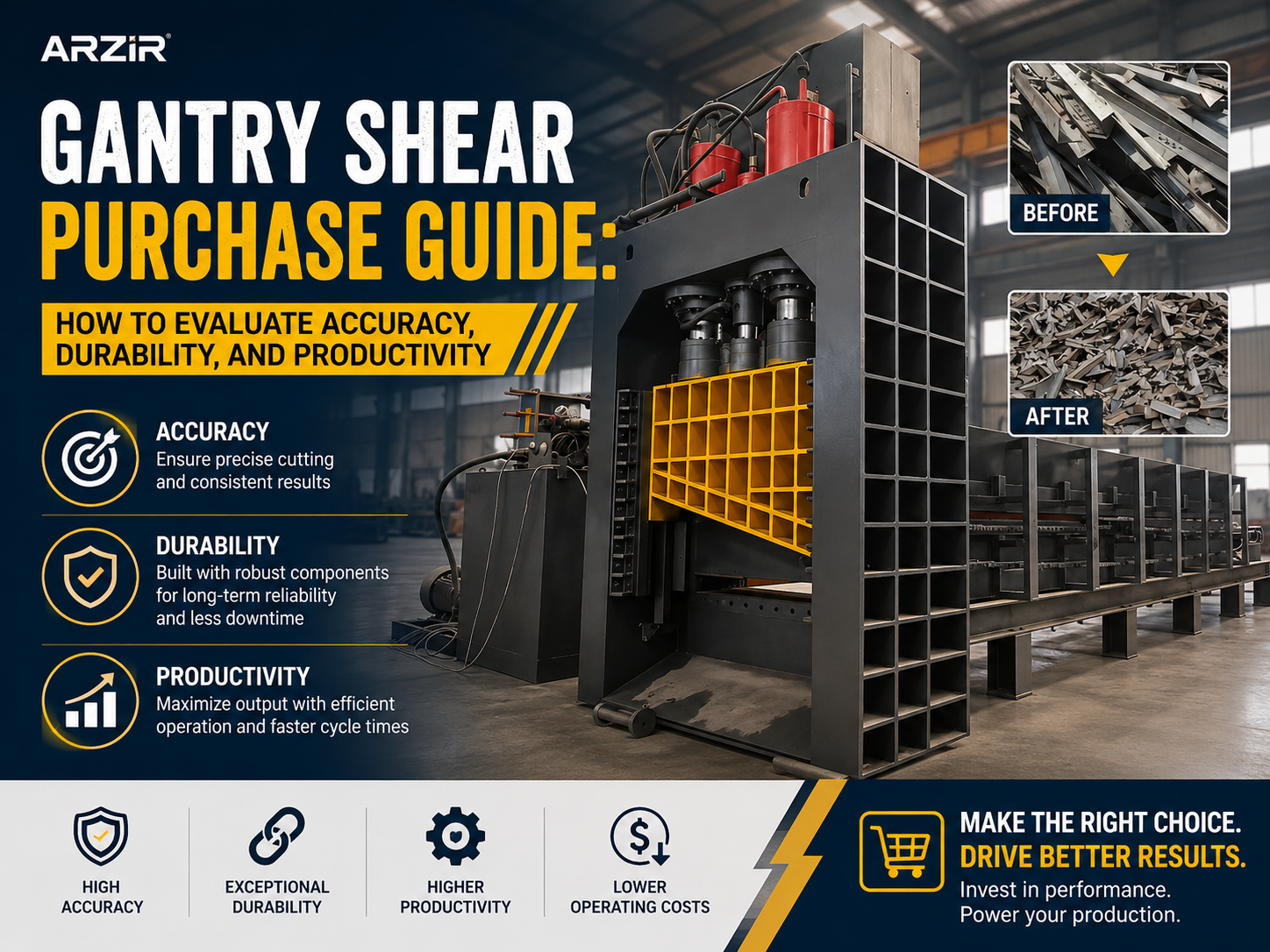
In the heavy-duty world of metal recycling and industrial fabrication, the gantry shear stands as a titan of efficiency. Designed to process massive volumes of scrap metal, structural steel, and decommissioned industrial components, selecting the right machine is a high-stakes decision. A Gantry Shear Purchase: Evaluate Accuracy, Durability, Productivity is not just a procurement task; it is a strategic investment that dictates the operational throughput and profitability of a facility for decades. Whether you are upgrading an existing yard or establishing a new processing plant, understanding the nuances of these machines is critical.
HARSLE, a leader in metal fabrication machinery, recognizes that buyers often struggle to balance upfront costs with long-term performance. This guide is designed to demystify the technical specifications and market variables that influence the performance of a gantry shear. We will explore how to assess the structural integrity of the frame, the sophistication of the hydraulic systems, and the automation features that drive modern productivity. By the end of this article, you will have a comprehensive framework for evaluating potential equipment and ensuring your investment yields the highest possible return.
Price Range Overview: Understanding the Market Landscape
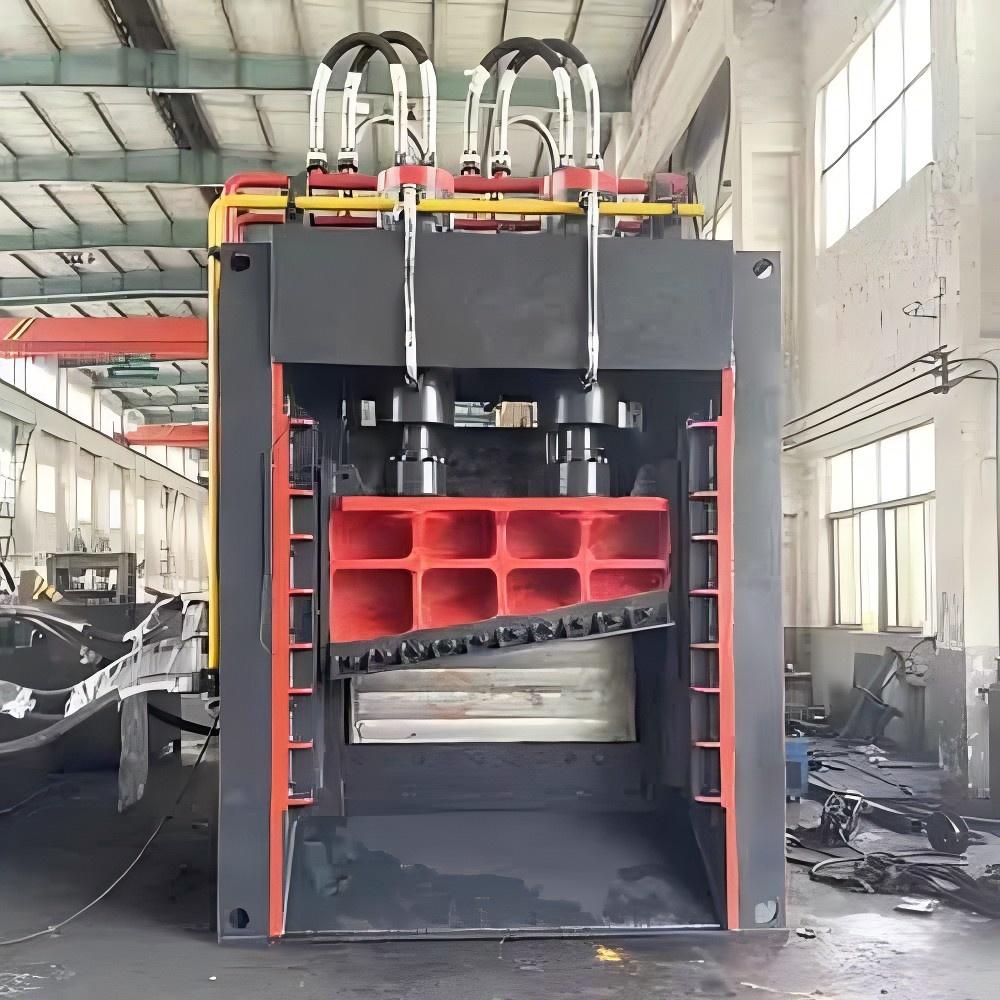
The price of a gantry shear is primarily dictated by its shearing force, which typically ranges from 400 tons to over 2000 tons. However, tonnage is only the starting point. The market is generally divided into three tiers: entry-level/utility shears, mid-range industrial shears, and high-capacity heavy-duty systems. Understanding where your needs fall within this spectrum is the first step in a successful Gantry Shear Purchase: Evaluate Accuracy, Durability, Productivity.
Entry-level shears (400T – 600T) are often priced between $50,000 and $120,000. These are suitable for smaller scrap yards processing light structural steel, pipes, and non-ferrous metals. While they offer a lower barrier to entry, they may lack the cycle speed and automated feeding systems found in larger models. Mid-range shears (800T – 1250T) typically fall in the $150,000 to $350,000 range. These are the workhorses of the industry, capable of handling heavy HMS (Heavy Melting Scrap) and demolition debris with high efficiency.
At the top end, heavy-duty gantry shears (1600T – 2500T+) can exceed $500,000 to $1,000,000. These machines are massive installations designed for shipbreaking, heavy industrial demolition, and high-volume steel mill preparation. The price variance in this category is often driven by custom configurations, such as extra-long feeding boxes, advanced PLC integration, and specialized cooling systems for 24/7 operation in extreme climates.
| Shear Force (Tons) | Typical Application | Estimated Price Range (USD) | Target Productivity |
|---|---|---|---|
| 400T – 600T | Light scrap, aluminum, thin pipes | $50,000 – $120,000 | 4-8 tons/hour |
| 800T – 1250T | HMS 1/2, structural steel, demolition | $150,000 – $350,000 | 10-20 tons/hour |
| 1600T – 2000T+ | Shipbreaking, heavy plate, mill scrap | $450,000+ | 25+ tons/hour |
Main Cost Drivers: What Are You Actually Paying For?
When evaluating a quote, it is essential to look beyond the bottom line. Several key components drive the cost and, more importantly, the performance of the machine. The first major driver is the quality of the raw materials. A gantry shear operates under immense pressure; the frame must be constructed from high-grade Q345B or Q355B steel, often with reinforced stress points. Cheaper machines may use lower-grade steel or thinner plates, leading to frame warping or cracking over time.
The hydraulic system is the heart of the gantry shear. High-end manufacturers like HARSLE utilize components from world-renowned brands such as Rexroth, Parker, or Vickers. These systems offer better pressure stability, faster response times, and longer service lives compared to generic alternatives. A sophisticated hydraulic manifold block reduces the number of external pipes, which in turn minimizes the risk of leaks—a common cause of downtime in scrap yards.
Blade quality and the blade-holding mechanism also significantly impact cost. High-chrome, high-carbon tool steel blades (such as Cr12MoV or 6CrW2Si) are necessary for longevity. Furthermore, the precision of the blade gap adjustment system determines the accuracy of the cut. A machine that allows for easy, precise adjustment will produce cleaner cuts and experience less wear on the hydraulic cylinders. Finally, the inclusion of a PLC (Programmable Logic Controller) from brands like Siemens or Schneider adds to the cost but enables automated cycles, remote diagnostics, and safety interlocks that are vital for modern productivity.
Configuration Impact: Tailoring the Machine to Your Workflow
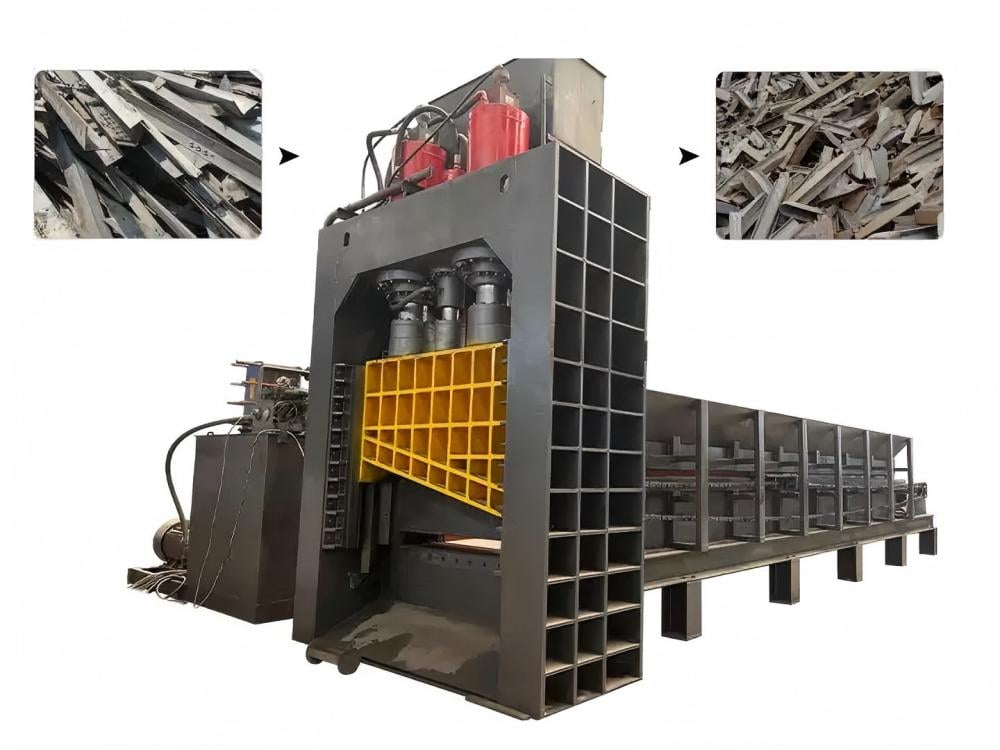
The configuration of a gantry shear can drastically change its throughput. One of the most significant choices is the feeding system. Standard models may use a simple gravity feed or a manual push, but high-productivity environments require an automatic conveyor or a hydraulic pusher box. A pusher box with a pre-compression lid can significantly increase the density of the scrap before it reaches the blades, allowing for faster shearing of bulky items like car bodies or large tanks.
Another critical configuration factor is the cooling and filtration system. In high-volume operations, hydraulic oil can heat up rapidly. An oversized air or water cooling system is essential to maintain oil viscosity and protect the pump. Furthermore, advanced filtration systems that remove micro-particles from the oil can extend the life of hydraulic valves by years. If your facility operates in extreme temperatures, these “optional” upgrades become mandatory for maintaining durability.
Control systems also vary widely. While manual lever controls are durable and simple, they rely heavily on operator skill. Modern gantry shears often feature touch-screen interfaces with pre-set programs for different material types. This reduces the learning curve for new operators and ensures consistent productivity across shifts. Remote control capabilities are also becoming standard, allowing the crane operator to trigger shearing cycles without leaving the cab, thereby streamlining the entire yard workflow.
Hidden Costs: Beyond the Initial Purchase Price
A Gantry Shear Purchase: Evaluate Accuracy, Durability, Productivity must account for the total cost of ownership (TCO). One of the most overlooked hidden costs is the civil engineering required for installation. A 1000-ton gantry shear can weigh over 60 tons and exerts massive dynamic forces during operation. This requires a specialized reinforced concrete foundation, often involving deep piling. Depending on your soil conditions, these foundation works can cost between $10,000 and $50,000.
Shipping and logistics are another major factor. Because of their size, gantry shears are often shipped as “Oversized Loads” or require multiple flat-rack containers. The cost of ocean freight, inland trucking, and heavy-lift cranes for offloading can add a significant percentage to the total project budget. Additionally, buyers must consider the electrical infrastructure. These machines require high-voltage power (often 380V-480V) and significant amperage. Upgrading your facility’s transformer or wiring to handle a 100kW+ motor is a cost that should be calculated early in the process.
Finally, consider the cost of consumables and spare parts. Blades are the most frequent expense; a set of high-quality blades can cost several thousand dollars. Having a backup set on hand is essential to avoid downtime during sharpening. Other hidden costs include hydraulic oil (which can require hundreds of gallons), seal kits, and regular professional calibration to maintain cutting accuracy. Choosing a manufacturer like HARSLE, which provides a clear maintenance schedule and accessible spare parts, helps mitigate these ongoing expenses.
ROI Calculation: Measuring the Value of Productivity
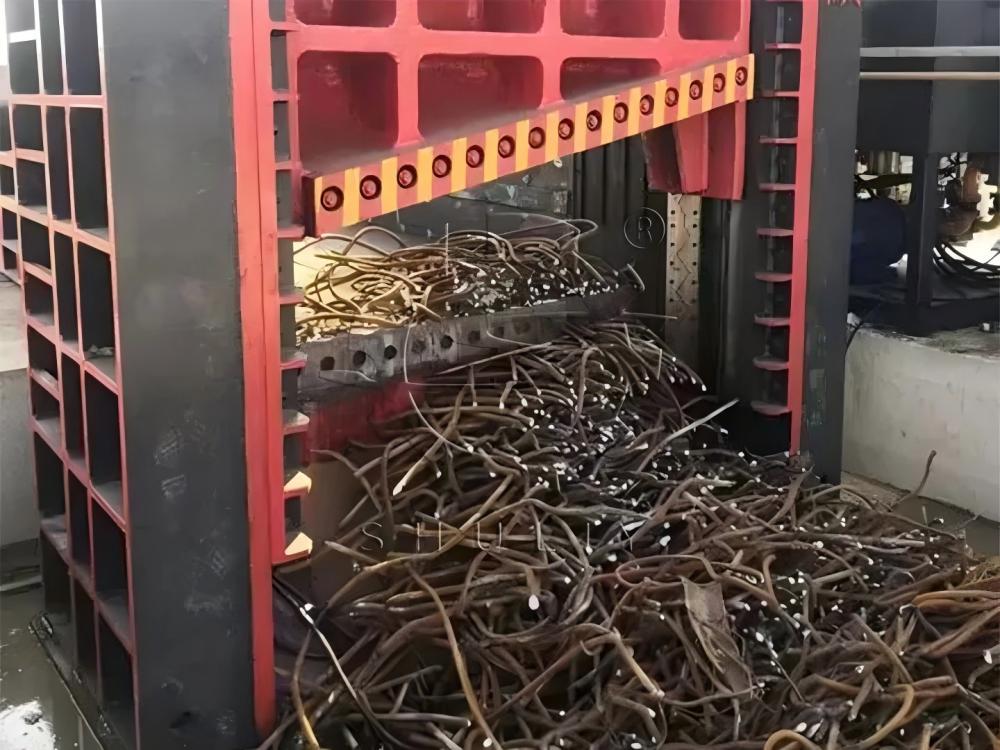
Calculating the Return on Investment (ROI) for a gantry shear involves more than just looking at the purchase price versus the scrap resale value. The primary driver of ROI is “Throughput per Man-Hour.” A highly automated gantry shear allows a single operator (often the crane operator) to process significantly more tons per day than a manual shear or a torch-cutting crew. For example, if a manual crew processes 5 tons of HMS per day and a gantry shear processes 50 tons, the labor savings alone can pay for the machine within 18 to 24 months.
Furthermore, gantry shears increase the value of the scrap itself. Steel mills pay a premium for “Prepared Scrap” that meets specific size and density requirements. By converting oversized demolition scrap into uniform 2-foot or 3-foot pieces, you can increase your margin per ton by 15-25%. This “value-add” is a direct result of the machine’s accuracy and productivity. When evaluating a machine, ask for the “Cycle Time” (the time it takes for the blade to descend and retract). A difference of just 5 seconds per cycle can result in hundreds of tons of lost production over a year.
Downtime is the enemy of ROI. A cheaper machine that breaks down once a month is far more expensive than a premium machine that runs consistently. When calculating ROI, factor in a “Reliability Coefficient.” A machine with a 95% uptime rating versus one with an 80% rating can represent a difference of tens of thousands of dollars in annual revenue. This is why evaluating durability is just as important as evaluating the initial price tag.
Buying Advice: How to Vet Manufacturers and Machines
When you are ready to move forward with a Gantry Shear Purchase: Evaluate Accuracy, Durability, Productivity, the vetting process is crucial. Start by requesting a detailed technical specification sheet that lists the brands of all major components (pumps, valves, PLC, motors). If a manufacturer is vague about these details, it is often a red flag. HARSLE prides itself on transparency, using globally recognized components to ensure that customers can find local support and parts if needed.
Request a video of the machine in operation, or better yet, visit a site where the model is currently in use. Pay attention to the smoothness of the hydraulic movement and the noise level. Excessive vibration or jerky movements often indicate poor hydraulic tuning or structural weaknesses. Ask about the “Blade Change Procedure.” A well-designed gantry shear should allow for blade rotation or replacement with minimal effort. If the process is overly complex, your maintenance team will likely neglect it, leading to poor cut quality and increased wear.
Finally, evaluate the after-sales support. Does the manufacturer offer remote troubleshooting? What is the lead time for critical spare parts? A gantry shear is a long-term asset, and your relationship with the manufacturer will last for years. Ensure that the warranty terms are clear and that there is a documented process for technical support. Choosing a reputable brand like HARSLE ensures that you are not just buying a machine, but partnering with a company dedicated to your operational success.
Frequently Asked Questions (FAQ)
What is the difference between a gantry shear and an alligator shear?
An alligator shear is a smaller, jaw-like machine used for cleaning scrap and cutting smaller pieces of metal. It is typically manually fed. A gantry shear is a large, vertical-cutting machine designed for high-volume processing of heavy and bulky scrap. Gantry shears offer much higher tonnage and are usually automated.
How often do the blades need to be sharpened?
Blade life depends entirely on the material being cut. For standard structural steel, blades may last for 500 to 1,000 tons before needing to be rotated or sharpened. Most gantry shear blades have four cutting edges, meaning they can be rotated three times before requiring a full regrind. Proper blade gap adjustment is the most important factor in extending blade life.
Can a gantry shear be used outdoors?
Yes, most gantry shears are designed for outdoor use in scrap yards. However, they require protection for the electrical cabinet and the hydraulic power unit. In extreme climates, heaters for the hydraulic oil (for cold weather) or oversized coolers (for hot weather) are necessary to maintain performance and prevent damage.
What kind of maintenance is required daily?
Daily maintenance typically includes checking hydraulic oil levels, inspecting for leaks, greasing the guide rails, and checking the tightness of the blade bolts. It is also important to clear any small debris from the shearing area to prevent it from jamming the sensors or the pusher box.
Is it better to buy a new or used gantry shear?
While used machines have a lower initial cost, they often come with hidden wear in the hydraulic pumps and structural fatigue in the frame. Given the high cost of repairs and the critical nature of the machine to yard operations, most high-volume processors prefer new machines with warranties and modern, energy-efficient hydraulic systems.