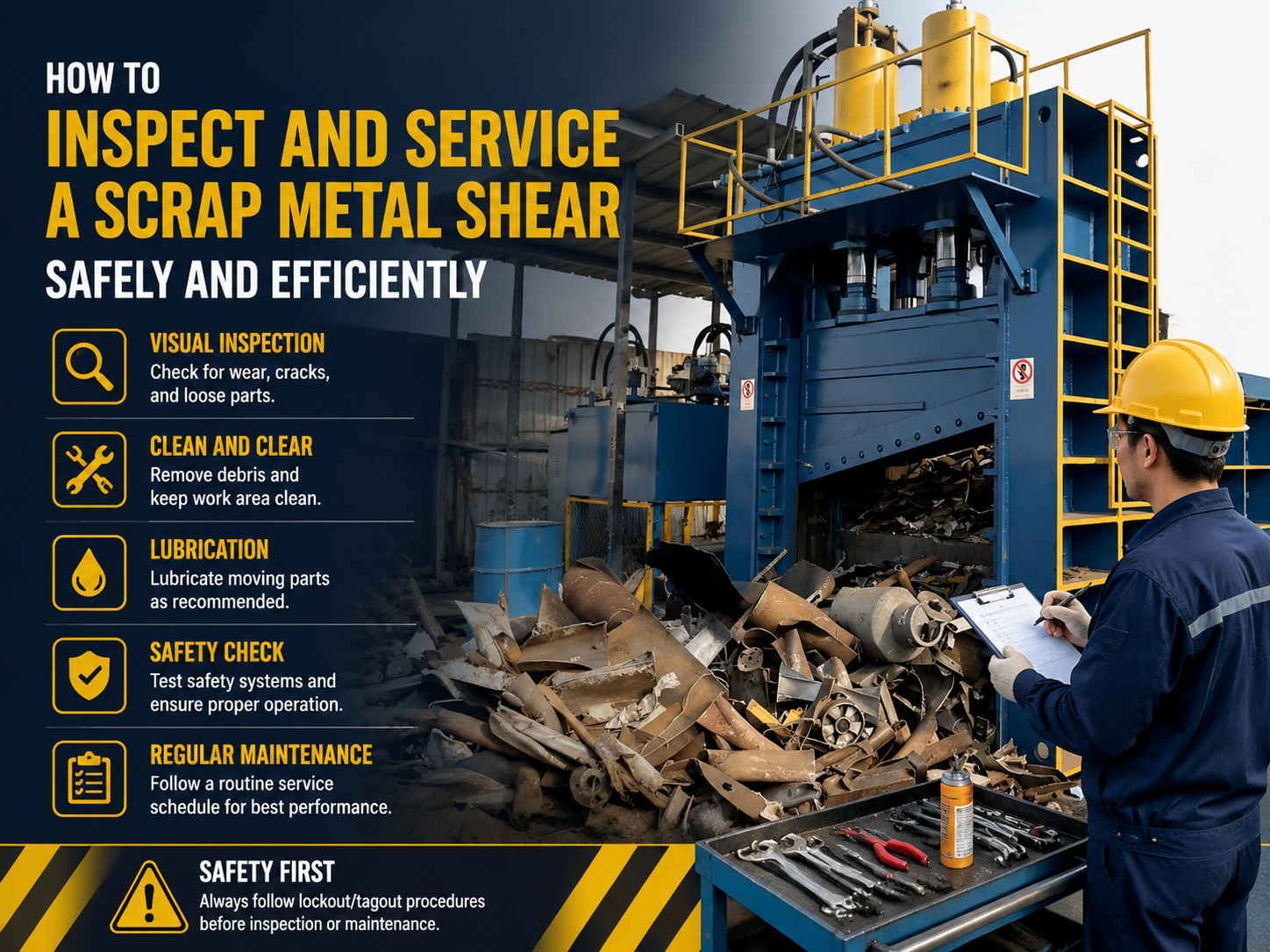
How to Inspect and Service a Scrap Metal Shear Safely and Efficiently

The Critical Importance of Regular Maintenance for Scrap Metal Shears
In the high-intensity world of metal recycling and industrial fabrication, the scrap metal shear stands as a cornerstone of productivity. These robust machines are designed to exert hundreds of tons of force to slice through heavy steel beams, automotive frames, and industrial waste. However, the very nature of their work—processing abrasive, heavy, and often unpredictable materials—puts immense stress on every component. To inspect and service a scrap metal shear safely and efficiently is not merely a recommendation; it is a fundamental requirement for operational longevity and personnel safety.
Neglecting maintenance leads to a cascade of failures. What begins as a minor hydraulic leak can escalate into a pump failure, and a slightly loose blade bolt can result in a catastrophic frame fracture. For companies utilizing HARSLE equipment, maintaining the precision engineering of the machine ensures that the return on investment remains high. A well-maintained shear operates with higher cycle speeds, consumes less energy, and produces cleaner cuts, which in turn increases the value of the processed scrap.
Safety is the most compelling reason for a rigorous inspection protocol. Scrap metal shears involve high-pressure hydraulics and massive moving parts. A mechanical failure during operation can lead to flying debris or structural collapses that endanger operators. By following a systematic approach to service, facilities can mitigate these risks, ensuring that the machine remains a productive asset rather than a liability. This guide provides a deep dive into the technical requirements of keeping your shear in peak condition.
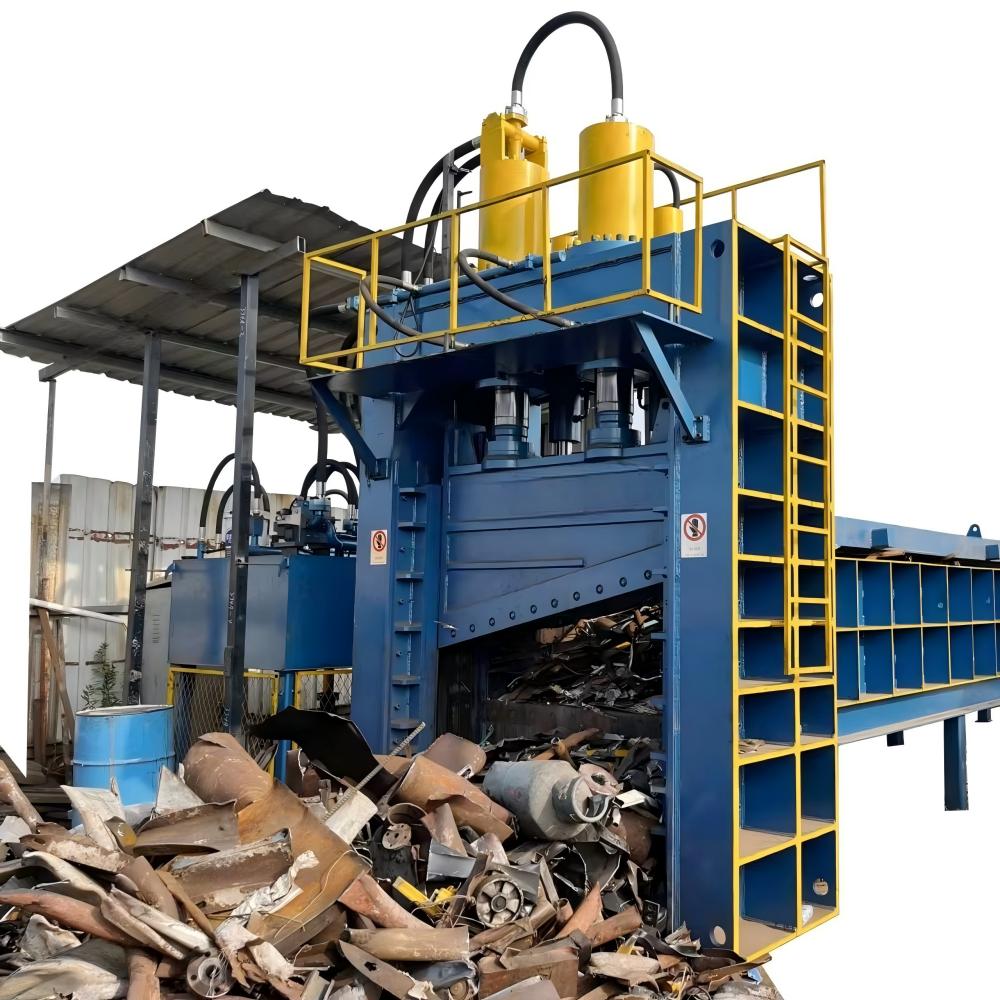
Daily Inspection: The First Line of Defense
The daily inspection is a proactive habit that identifies potential issues before they cause downtime. Before the shift begins, the operator should perform a comprehensive walk-around. This starts with a visual check of the work area. Ensure that the floor is clear of debris that could interfere with the machine’s movement or cause tripping hazards. Check the machine’s exterior for any signs of structural fatigue, such as cracks in the weldments or deformation in the feeding hopper.
Next, focus on the blades. The cutting edges are the most abused parts of the machine. Inspect the blades for chips, cracks, or excessive rounding. If the blades are dull, the shear will require more hydraulic pressure to cut, which puts unnecessary strain on the motor and pump. Check the blade bolts to ensure they are torqued to the manufacturer’s specifications. Loose blades can shift during a cut, leading to a “jam” that can damage the internal guides of the shear head.
Fluid levels are another critical daily check. Verify the hydraulic oil level in the reservoir. Low oil levels can lead to aeration, where air bubbles are pulled into the pump, causing cavitation and rapid wear. Additionally, check the cooling system. In high-ambient temperature environments, the hydraulic oil can overheat quickly if the heat exchanger is clogged with dust or debris. A quick wipe-down of the piston rods is also essential; removing abrasive dust prevents the seals from being scored as the cylinders retract.
Hydraulic System: The Heart of the Shear
The hydraulic system is what provides the raw power for the shearing action. To inspect and service a scrap metal shear safely and efficiently, one must have a thorough understanding of hydraulic health. Start by inspecting all hoses and fittings. Look for “weeping” or damp spots, which indicate a slow leak. In high-pressure systems, a pinhole leak can be extremely dangerous, potentially causing injection injuries. Never use your hand to check for leaks; use a piece of cardboard instead.
Oil quality is just as important as oil quantity. Over time, hydraulic oil breaks down due to heat and shear stress, losing its lubricating properties. It also accumulates microscopic metal particles and moisture. Regularly sample the oil for laboratory analysis to check for contamination levels. The hydraulic filters should be replaced according to the hour meter, or sooner if the bypass indicator shows a clog. Using high-quality, genuine HARSLE filters ensures that the delicate valves in the manifold remain free of contaminants.
Pressure settings must be checked periodically using a calibrated pressure gauge. If the system pressure is too low, the shear will stall on heavy material. If it is too high, it can blow seals or damage the structural integrity of the cylinders. Listen to the pump during operation. A high-pitched whining or growling sound often indicates that the pump is struggling, possibly due to a clogged suction strainer or an internal mechanical failure. Addressing these sounds early can save thousands of dollars in pump replacement costs.
Electrical and Control System Integrity
Modern scrap metal shears are controlled by sophisticated PLC (Programmable Logic Controller) systems and a network of sensors. The electrical cabinet should be kept clean and dry. Dust accumulation on electrical components can lead to overheating or short circuits. During your monthly deep-service, use compressed air (at low pressure) or a vacuum to remove dust from the cabinet. Check all wiring connections to ensure they are tight; vibrations from the shearing process can loosen terminal screws over time.
Safety interlocks and emergency stop buttons are the most critical electrical components. Test every E-stop on the machine to ensure it immediately halts all motion. Check the limit switches that define the stroke of the shear and the position of the hold-down clamp. If a limit switch fails or becomes misaligned, the cylinder might over-travel, causing mechanical damage. Ensure that the control panel displays are functioning correctly and that there are no active error codes or warnings.
Sensors, such as pressure transducers and proximity switches, should be cleaned and inspected for physical damage. In the harsh environment of a scrap yard, it is common for flying metal to strike a sensor or its conduit. Protecting these components with heavy-duty shielding can prevent frequent electrical faults. If the machine features a remote control system, check the battery health and the integrity of the antenna to prevent signal loss during operation.
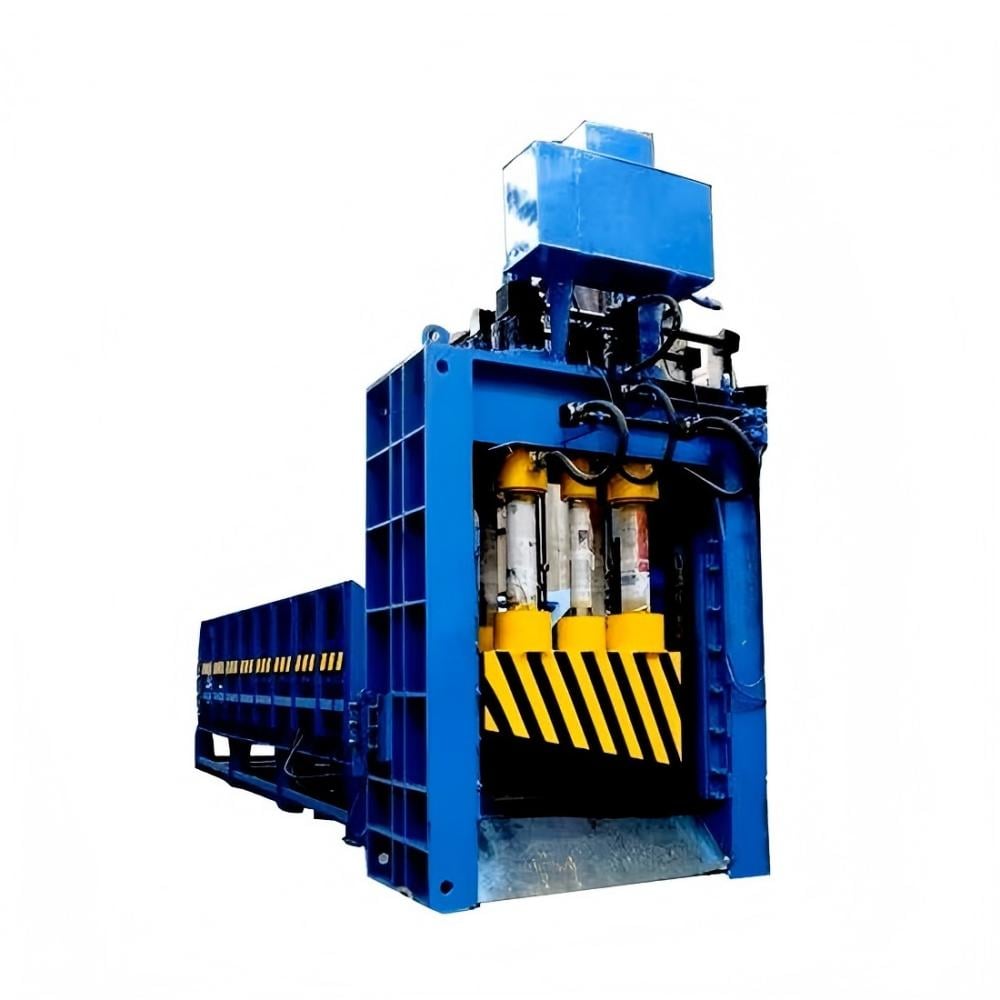
Mechanical Components and Blade Maintenance
The mechanical structure of the shear, including the pivot pins, bushings, and the slide ways, requires constant attention. The slide ways (or guides) ensure that the moving shear head travels in a perfectly straight line. If these guides become worn, the blade gap will increase, leading to “folding” of the metal rather than cutting. This not only produces poor quality scrap but also exerts massive lateral forces on the machine frame. Measure the blade gap regularly with feeler gauges and adjust the wear plates as necessary to maintain the tight tolerances specified by HARSLE.
Blade rotation is a key part of the service cycle. Most scrap shear blades are four-sided, meaning they can be rotated to a new sharp edge before they need to be professionally reground. When rotating blades, thoroughly clean the blade seat. Any debris trapped behind the blade will prevent it from seating flat, leading to uneven wear and potential breakage. Use a torque wrench to tighten the blade bolts in the specific sequence recommended in the manual.
Inspect the main pivot pin and its associated bushings. These components carry the full force of the shearing action. Look for signs of excessive play or movement. If the bushings are allowed to wear down to the metal of the frame, the repair becomes significantly more expensive, often requiring line-boring. Keeping these areas well-lubricated is the best way to prevent premature wear. Also, check the hold-down mechanism. The hold-down must apply sufficient pressure to keep the scrap from kicking up during the cut, which protects the operator and the machine’s feeding system.
Comprehensive Lubrication Plan
Lubrication is the simplest yet most frequently overlooked aspect of machine maintenance. A scrap metal shear has numerous moving parts that operate under extreme pressure. Without a consistent film of grease, metal-on-metal contact will destroy components in a matter of weeks. Develop a lubrication map that identifies every grease nipple on the machine. This should include the main pivot, cylinder trunnions, slide ways, and the feeding ram guides.
The choice of lubricant is vital. Use a high-pressure (EP) grease that can withstand the shock loads typical of shearing operations. In colder climates, ensure the grease remains pumpable at low temperatures; in hot environments, choose a grease with a high drop point so it doesn’t melt and run out of the bearings. If your HARSLE shear is equipped with an automatic lubrication system, your job is easier, but not finished. You must still check the grease reservoir daily and inspect the distribution lines to ensure none are pinched or broken.
For manual lubrication, consistency is key. It is better to apply a small amount of grease frequently (e.g., every 4-8 hours of operation) than a large amount once a week. This keeps the grease fresh and helps push out any contaminants that may have entered the bearing or bushing. Pay special attention to the “hidden” grease points that might require the machine to be in a specific position to access. Documenting each lubrication cycle in a maintenance log helps ensure no point is missed.
Troubleshooting Signals: Listening to Your Machine
Experienced operators can often “feel” when a shear is not performing correctly. Unusual vibrations are a major red flag. Vibration can stem from a loose foundation bolt, an imbalanced motor, or internal damage to the hydraulic pump. If the machine starts to vibrate excessively, stop operation immediately and investigate. Similarly, changes in the sound of the cut—such as a loud “bang” instead of a crisp “crunch”—can indicate that the blade gap is too wide or that the material being processed is beyond the machine’s rated capacity.
Heat is another diagnostic tool. Use an infrared thermometer to check the temperature of hydraulic components and bearings. If one bearing is significantly hotter than the others, it is likely failing or under-lubricated. If the hydraulic oil temperature exceeds 60-65°C (140-150°F), the cooling system is failing, or there is an internal leak in a valve or cylinder that is generating heat through friction. Slow cycle times are often the first sign of a worn pump or a leaking internal seal in the main cylinder.
Watch for foaming in the hydraulic oil sight glass. Foaming is a sign that air is entering the system, usually through a leak in the suction line or a failing pump shaft seal. Air in the hydraulics causes “spongy” operation and can lead to erratic movements of the shear head. By catching these signals early, you can perform a controlled shutdown and repair, avoiding the chaos of an emergency breakdown during a busy production shift.
Maintenance Schedule Table
| Frequency | Task Description | Component |
|---|---|---|
| Daily | Check oil levels, inspect blades for chips, test E-stops. | Hydraulics, Blades, Safety |
| Weekly | Grease all manual points, check blade bolt torque, clean coolers. | Mechanical, Cooling |
| Monthly | Inspect electrical connections, check blade gap, sample oil. | Electrical, Precision, Oil |
| 6 Months | Replace hydraulic filters, inspect cylinder seals, calibrate pressure. | Hydraulic System |
| Yearly | Full hydraulic oil change, structural weld inspection, PLC backup. | Total System |
Safety Protocols During Service
Safety is paramount when you inspect and service a scrap metal shear safely and efficiently. The most important protocol is Lockout/Tagout (LOTO). Before any technician enters the machine’s work envelope or opens a maintenance hatch, the main power supply must be disconnected and locked with a physical padlock. All residual energy must be dissipated; this includes bleeding off hydraulic pressure stored in accumulators and ensuring that the shear head is either fully lowered or mechanically blocked to prevent accidental descent.
Personal Protective Equipment (PPE) is non-negotiable. Technicians should wear puncture-resistant gloves, safety glasses, and steel-toed boots. When working around hydraulic systems, a face shield is recommended to protect against high-pressure fluid bursts. Because scrap yards are noisy environments, hearing protection is also essential. Ensure that the service area is well-lit so that small cracks or leaks can be easily spotted.
Never work alone on a heavy shear. A second person should be present to monitor the situation and provide assistance in an emergency. Furthermore, only trained and authorized personnel should perform maintenance. HARSLE provides detailed technical manuals and training for their machinery; following these specific instructions ensures that the service is done correctly and that the machine’s warranty remains valid. Proper documentation of all service activities provides a safety trail and helps in future troubleshooting.
Frequently Asked Questions (FAQ)
How often should I rotate the blades on my scrap shear?
Blade rotation frequency depends entirely on the volume and type of material you are processing. On average, for high-volume operations, blades should be inspected daily and rotated every 200-400 hours of operation. If you are cutting particularly hard or abrasive alloys, this interval may be shorter. Always rotate the blades as soon as you notice a decrease in cutting quality or an increase in the pressure required to make a cut.
What type of hydraulic oil is best for HARSLE scrap shears?
Most HARSLE scrap shears use a high-quality anti-wear (AW) hydraulic oil, typically ISO 46 or ISO 68 grade, depending on your local climate. It is crucial to use oil that meets the specific viscosity requirements of the pump manufacturer. In extremely cold environments, a multi-grade oil with a high viscosity index may be necessary to ensure smooth start-ups. Always consult your machine’s manual for the exact specification.
Why is my shear losing power during the middle of a cut?
Power loss during a cut is usually caused by one of three things: a failing hydraulic pump that cannot maintain pressure under load, an internal leak in the main cylinder (bypassing the piston seal), or an incorrectly set relief valve. First, check the system pressure with a gauge. If the pressure drops significantly as the blade meets resistance, the pump or a major valve is likely the culprit. If the pressure remains high but the blade doesn’t move, the issue may be mechanical or related to the cylinder seals.
Can I weld cracks on the shear frame myself?
Structural welding on a scrap shear frame should only be performed by a certified professional welder using the correct electrodes and pre-heating procedures. The frames are made of specific high-strength steel alloys, and improper welding can introduce stress points that lead to even larger cracks or total structural failure. Always contact HARSLE technical support before attempting any major structural repairs to ensure the integrity of the machine is maintained.
How do I know if my blade gap is too wide?
The most obvious sign of an excessive blade gap is “burring” or “folding” of the scrap metal. Instead of a clean, sheared edge, the metal will look torn or will be wedged between the blades. You can also measure the gap directly using feeler gauges while the machine is safely locked out. Compare your measurements to the factory specifications. If the gap exceeds the limit, you must adjust the wear plates or replace the guides to bring the blades back into alignment.