Industrial Shredder Uses for Scrap Metal Reduction and Recovery: A Comprehensive Guide

Introduction to Industrial Shredders in Modern Metal Recycling
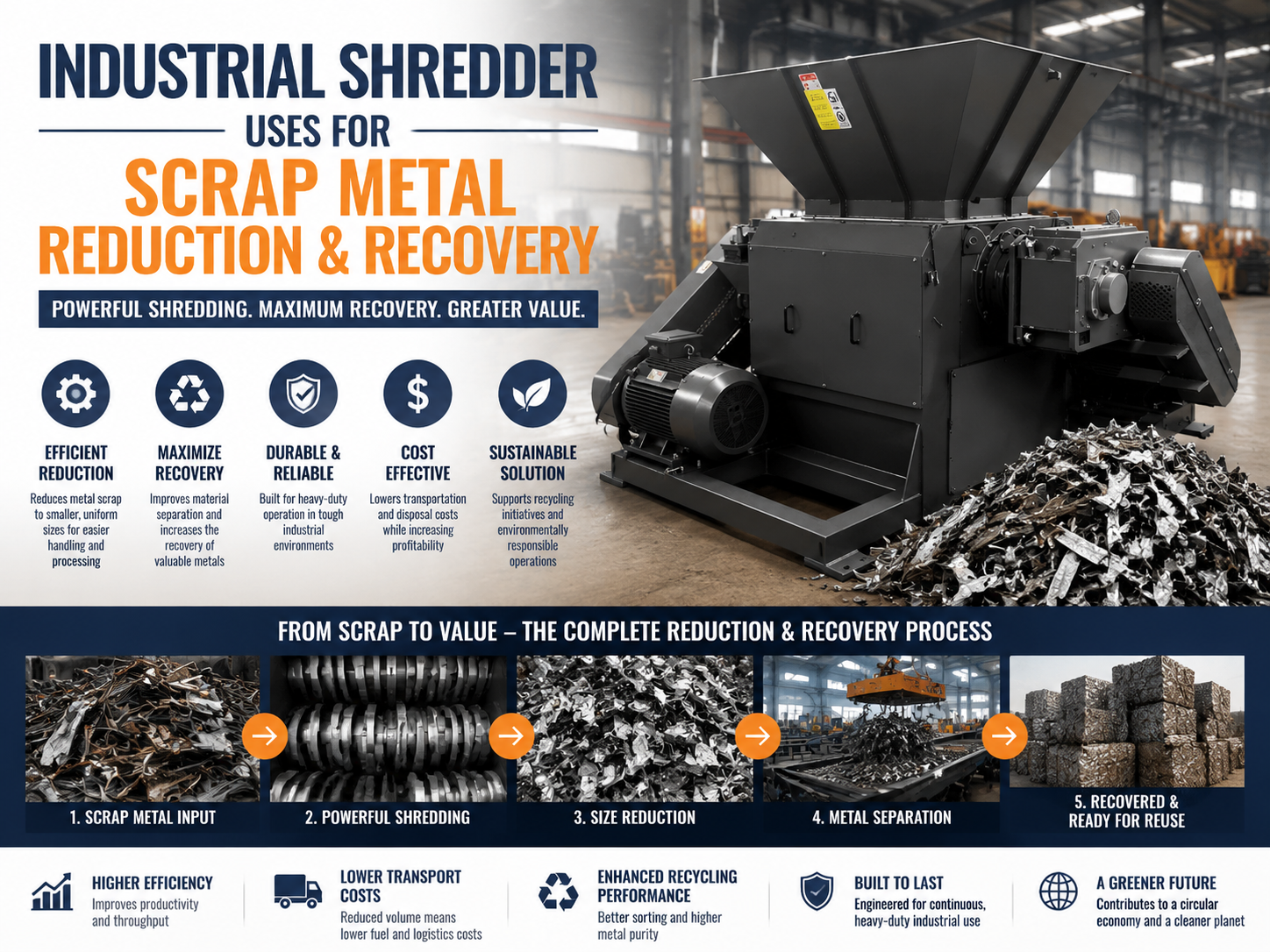
In the contemporary industrial landscape, the management of scrap metal has evolved from a simple waste disposal problem into a sophisticated resource recovery industry. The core of this transformation is the industrial shredder. Understanding the various industrial shredder uses for scrap metal reduction and recovery is essential for facilities looking to minimize environmental impact while maximizing the economic value of their waste streams. As global demand for recycled steel, aluminum, and copper continues to rise, the efficiency of the shredding process determines the profitability of recycling operations.
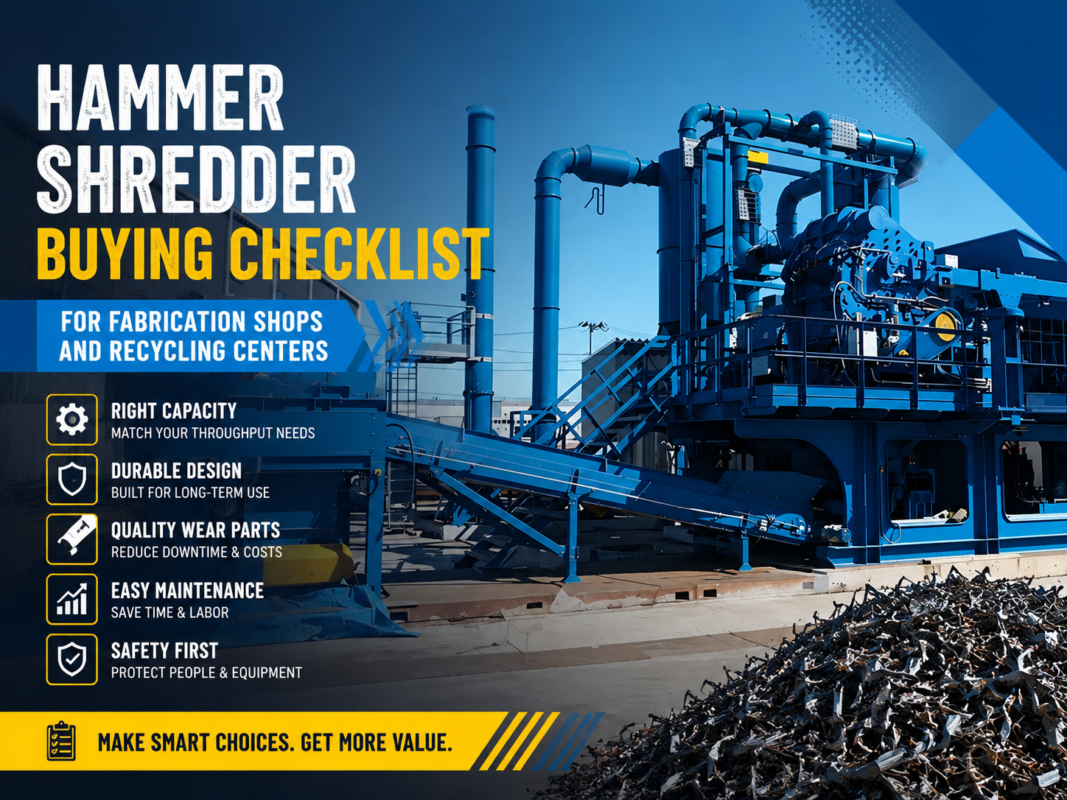
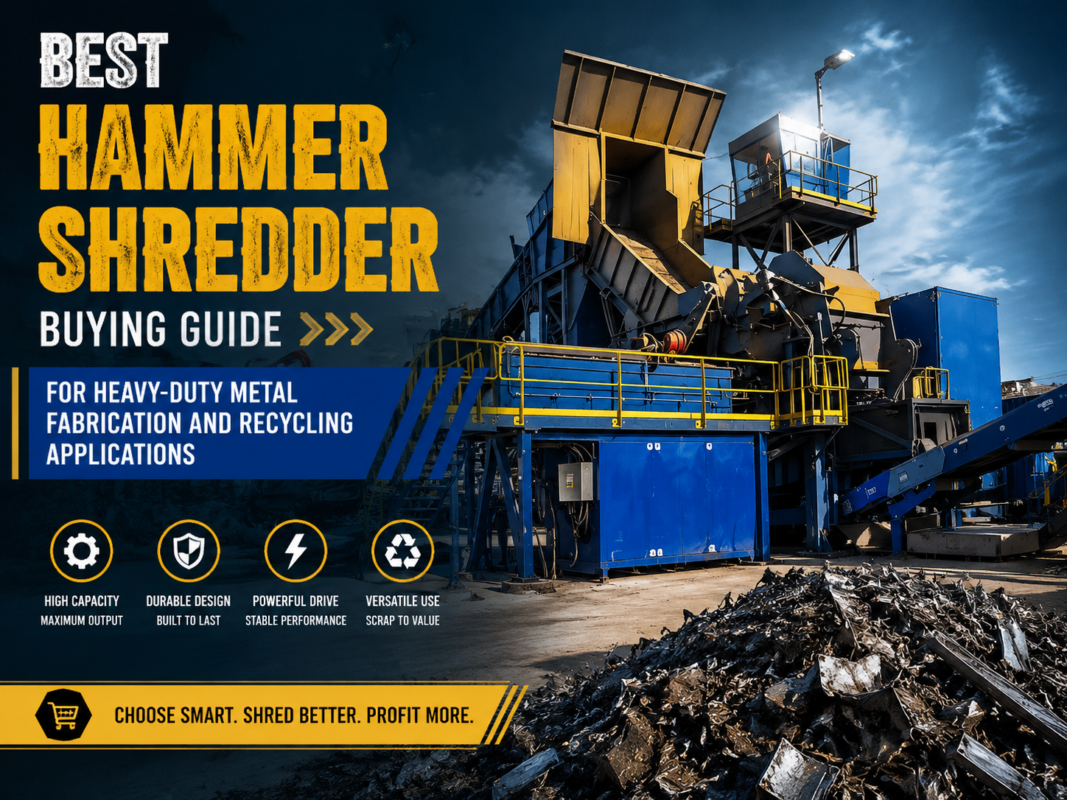
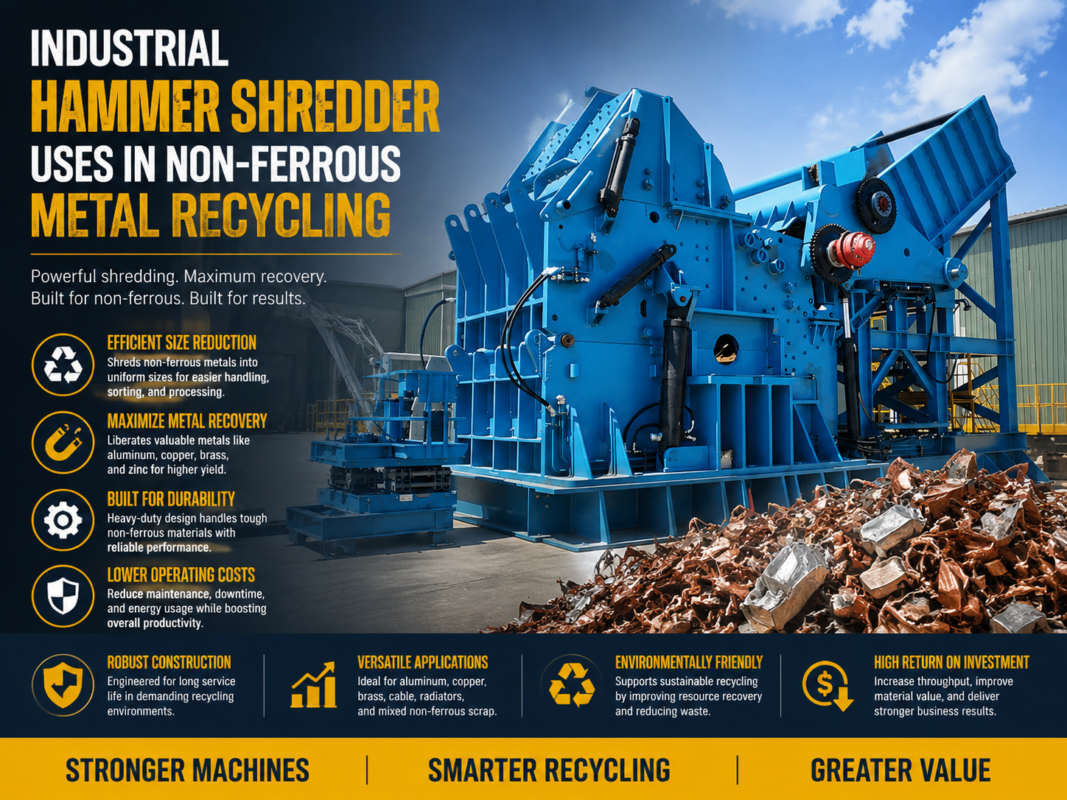
Industrial shredders are heavy-duty machines designed to break down large volumes of metal waste into smaller, manageable pieces. This process is not merely about size reduction; it is about liberation. By shredding complex assemblies—such as automotive components or electronic devices—different materials are separated, allowing for high-purity recovery of valuable metals. HARSLE, a leader in metal fabrication machinery, provides the robust technology required to handle the high-torque demands of metal shredding, ensuring that scrap is processed with minimal energy consumption and maximum throughput.
The shift toward a circular economy has made scrap metal reduction and recovery a priority for manufacturers and dedicated recycling centers alike. By implementing advanced shredding solutions, companies can reduce the logistical costs associated with transporting bulky scrap, improve the melting efficiency of furnaces, and contribute to a more sustainable industrial ecosystem. This guide explores the technical nuances, application scenarios, and productivity benefits of utilizing industrial shredders in the metal sector.
Application Scenarios for Industrial Shredder Uses for Scrap Metal Reduction and Recovery
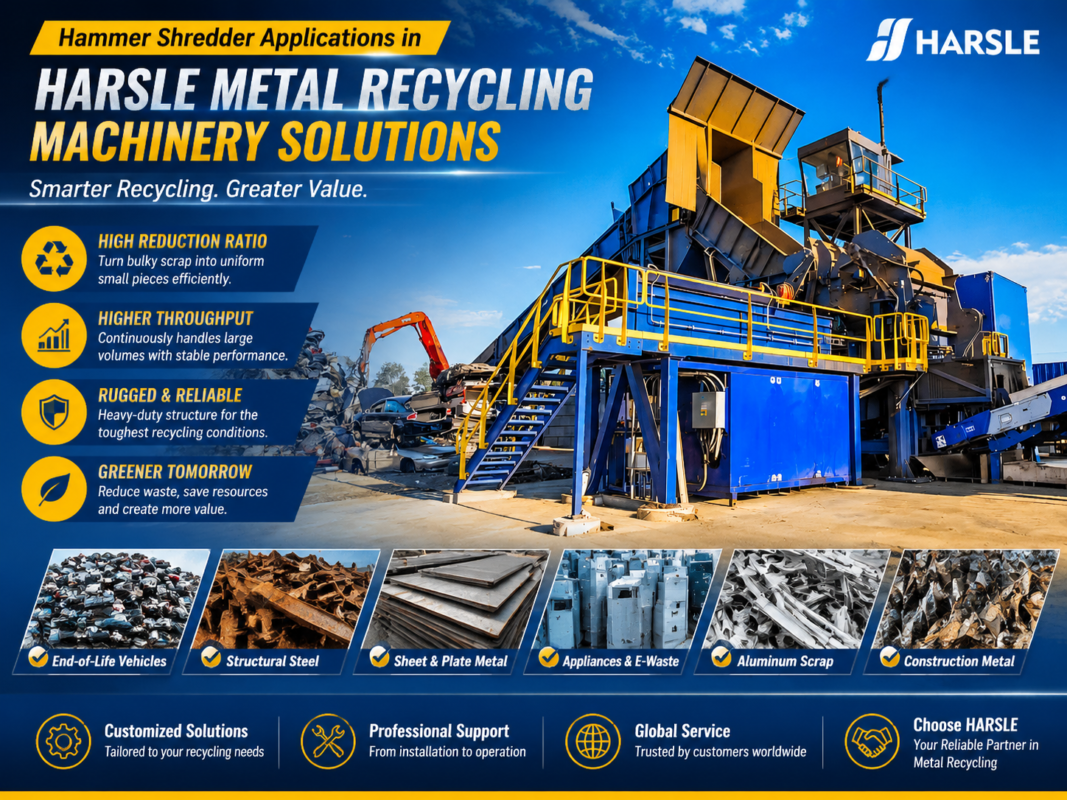
The versatility of industrial shredders allows them to be deployed across a wide range of sectors. One of the most prominent application scenarios is in the automotive recycling industry. End-of-life vehicles (ELVs) contain a mix of ferrous and non-ferrous metals, plastics, and glass. A high-torque double-shaft shredder can reduce an entire car chassis or engine block into small fragments, which are then easily sorted using magnetic and eddy current separators. This process is vital for recovering high-grade steel and aluminum from the automotive stream.
Another critical scenario is the processing of electronic waste (e-waste). Modern electronics are dense with precious metals like gold, silver, and palladium, alongside significant amounts of copper and aluminum. Industrial shredders used for e-waste are designed to handle delicate circuit boards and bulky casings simultaneously. By reducing these items to a uniform size, the shredder facilitates the downstream chemical and mechanical processes required to extract high-value materials, preventing hazardous components from entering landfills.
In the construction and demolition (C&D) sector, shredders are used to process rebar, aluminum window frames, and copper piping recovered from building sites. These materials are often contaminated with concrete or wood. The shredding process helps strip away these contaminants, leaving behind clean metal that commands a higher market price. Furthermore, industrial manufacturing plants use on-site shredders to process stamping skeletons, metal turnings, and offcuts directly at the source, reducing the footprint of waste storage and simplifying internal logistics.
Material and Process Requirements
To achieve optimal results in scrap metal reduction and recovery, one must understand the specific requirements of the materials being processed. Metal scrap varies significantly in terms of tensile strength, thickness, and elasticity. For instance, shredding thin-gauge aluminum cans requires a different approach than processing thick-walled steel pipes. The primary requirement for any metal shredding process is high torque. Unlike plastic or wood shredders, metal shredders must overcome the high shear resistance of alloys without stalling or damaging the cutting blades.
Process requirements also include the desired final particle size. If the goal is simply volume reduction for transport, a coarse shred (75-150mm) may suffice. However, if the goal is material recovery for smelting, a finer, more uniform output (20-50mm) is often required to ensure rapid melting and minimal dross formation. This necessitates a multi-stage shredding process where a primary shredder breaks down large items and a secondary granulator or vertical shredder refines the size.
Contamination management is another critical factor. Scrap metal is rarely pure; it often arrives mixed with oil, grease, rubber, or plastic. The shredder must be robust enough to handle these non-metallic inclusions without excessive wear. Additionally, the process must account for the heat generated during shredding. High-speed shredding of certain metals, like magnesium or fine aluminum dust, can pose fire risks, requiring integrated cooling systems or inert gas blankets in specialized applications.
Recommended Machine Configuration
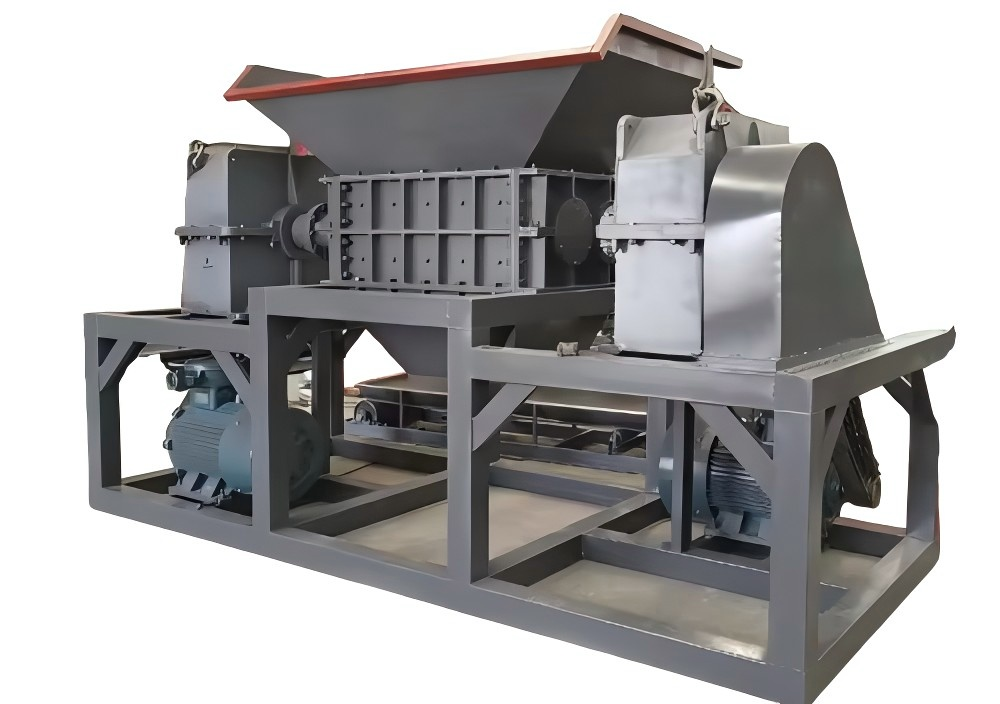
Choosing the right machine configuration is the difference between a profitable recycling line and a maintenance nightmare. For most scrap metal reduction and recovery tasks, a double-shaft (twin-shaft) shredder is the industry standard. These machines operate at low speeds but generate immense torque. The counter-rotating shafts pull material into the cutting chamber, where hooked blades shear the metal against spacers and the opposing shaft.
Key configuration components include:
- Blade Material: For metal applications, blades are typically crafted from high-strength alloys like D2, SKD-11, or DC53. These materials are heat-treated to achieve a balance between hardness (to maintain a sharp edge) and toughness (to prevent cracking under impact).
- Drive System: Heavy-duty metal shredders often utilize hydraulic drive systems or high-torque electric motors with planetary gearboxes. Hydraulic drives offer the advantage of variable speed and the ability to reverse instantly if a non-shreddable object (like a solid steel shaft) is encountered.
- Screening: While many double-shaft shredders are screenless to prevent clogging, some configurations include a screen below the shafts to ensure that only material of the correct size exits the machine.
- Feeding Mechanism: For bulky scrap, a hydraulic pusher or ram is often integrated to force material into the cutters, ensuring consistent throughput.
The Workflow of a Scrap Metal Shredding Line
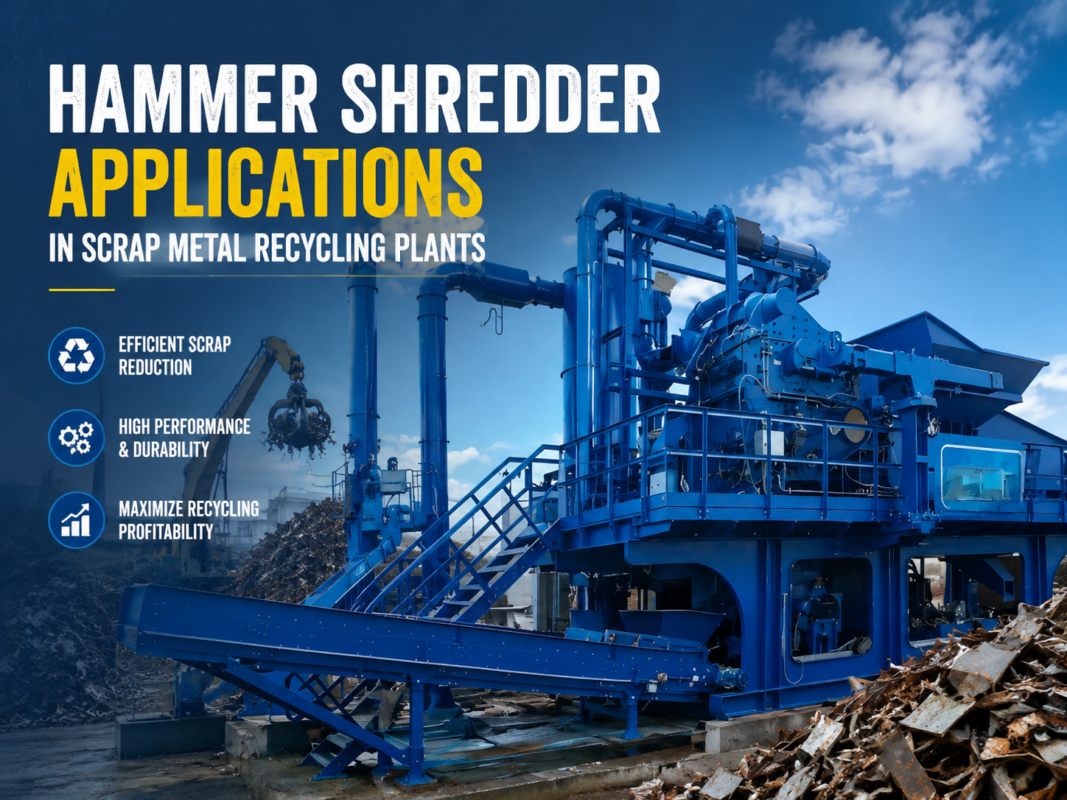
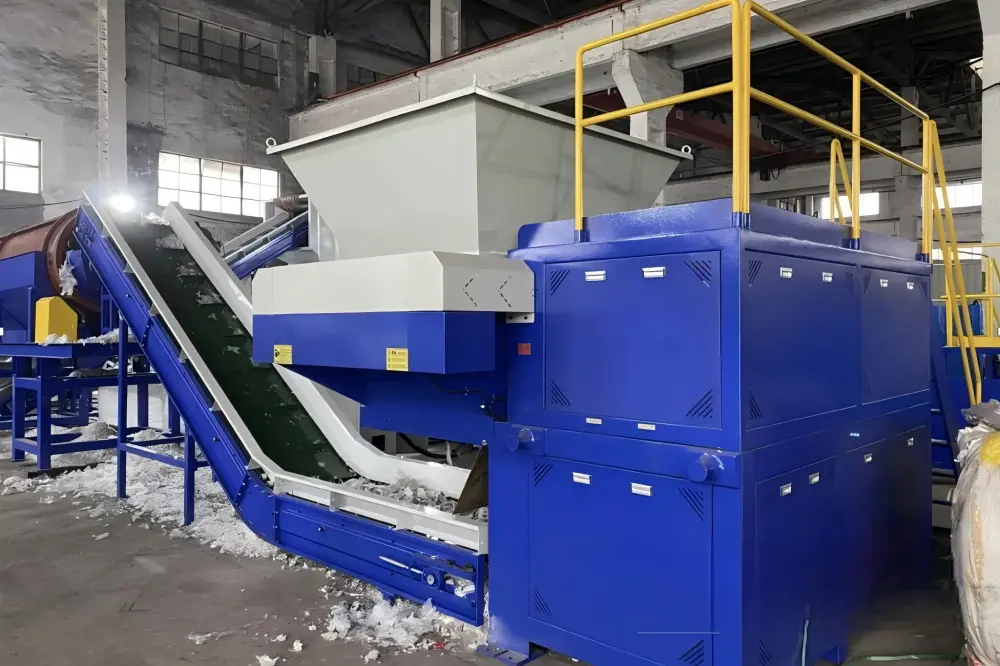
A professional scrap metal recovery workflow involves several integrated stages to ensure the highest purity of the final product. The process begins with Pre-sorting and Inspection, where large non-shreddable items or hazardous materials (like pressurized tanks) are removed manually or via crane. This protects the shredder from catastrophic failure and ensures safety.
The second stage is Primary Shredding. The scrap is fed into the industrial shredder via a heavy-duty conveyor or grapple. The machine reduces the bulk material into smaller fragments. During this stage, the mechanical bond between different materials (e.g., plastic coatings on copper wire) is broken. Following shredding, the material moves to Magnetic Separation. Over-belt magnets or magnetic drums extract ferrous metals (iron and steel) from the stream, which usually constitutes the largest volume of the scrap.
The remaining non-ferrous stream then passes through an Eddy Current Separator. This device uses a rapidly rotating magnetic field to induce currents in non-ferrous metals like aluminum and copper, physically repelling them away from non-metallic waste like plastics and glass. Finally, the recovered metals are Compacted or Briquetted. Shredded metal has a high surface-area-to-volume ratio, which can lead to oxidation during melting. Compacting the shredded fragments into dense briquettes reduces oxidation and improves the efficiency of the secondary smelting process.
Productivity and Economic Benefits
The implementation of industrial shredder uses for scrap metal reduction and recovery offers profound economic advantages. The most immediate benefit is Logistics Optimization. Raw scrap metal is incredibly bulky and inefficient to transport. By shredding the material, facilities can increase the bulk density of their shipments by up to 500%, drastically reducing the number of truckloads or shipping containers required. This directly lowers fuel costs and carbon emissions.
From a recovery standpoint, shredded metal is significantly more valuable than unprocessed scrap. Clean, sized, and separated metal fragments allow smelters to bypass several pre-processing steps, leading to higher “melt yields.” For example, shredded aluminum that has been cleaned of plastic contaminants will result in much less dross (waste) during the melting process compared to whole, contaminated scrap. This purity allows the recycler to command a premium price in the commodities market.
Furthermore, automation in shredding lines reduces labor costs. Instead of manual dismantling, which is slow and dangerous, a single operator can oversee a shredding line that processes tons of material per hour. The safety benefits are also noteworthy; shredders are enclosed systems that reduce the need for workers to handle sharp, heavy, or jagged metal pieces manually, significantly lowering the risk of workplace injuries.
Case Example: Aluminum Extrusion Recovery
Consider a medium-sized aluminum fabrication plant that generates 50 tons of scrap per month in the form of long extrusions and window frame offcuts. Previously, this scrap was sold as “loose mixed scrap” at a low price because it was bulky and contained thermal break plastics and steel screws. By installing a HARSLE double-shaft industrial shredder, the plant transformed its waste management strategy.
The new workflow involved feeding the 6-meter long extrusions directly into the shredder. The machine reduced the aluminum to 40mm chips. An integrated magnetic separator removed the steel screws, and a simple air-classification system blew away the lighter plastic thermal breaks. The result was a 99% pure aluminum chip product. The plant was able to sell this processed material for 30% more per ton than the loose scrap. Within 14 months, the increased revenue from the scrap sales completely covered the capital investment of the shredder, while also freeing up 200 square meters of floor space previously used for bulky scrap storage.
Maintenance and Longevity of Industrial Shredders
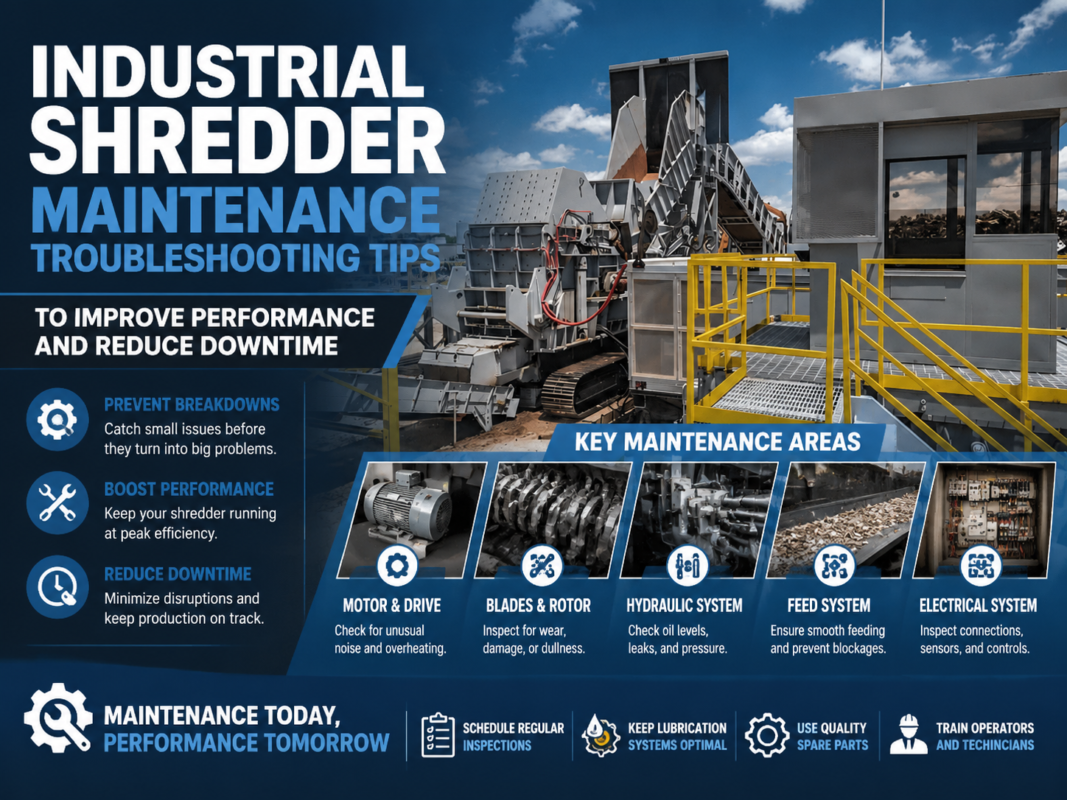
To maintain the efficiency of industrial shredder uses for scrap metal reduction and recovery, a rigorous maintenance schedule is mandatory. The most critical component is the Blade Maintenance. Metal-on-metal shearing causes natural wear. Depending on the material being shredded, blades may need to be hard-faced (welded with a hard layer) or replaced periodically. Many modern HARSLE shredders feature modular blade designs that allow for individual blade replacement without dismantling the entire shaft, significantly reducing downtime.
Lubrication of the main bearings and the gearbox is equally important. Given the dusty and often metallic environment, seals must be checked regularly to prevent metal fines from entering the lubrication system. Operators should also perform daily inspections for “tramp metal”—solid pieces of hardened steel that are too thick for the shredder to cut. While most machines have auto-reverse safety features, repeated impacts with non-shreddables can cause fatigue in the drive shaft and gearbox over time.
Frequently Asked Questions (FAQ)
| Question | Answer |
|---|---|
| Can one shredder handle all types of metal? | While versatile, a shredder must be sized for the toughest material it will encounter. A shredder designed for aluminum cans will fail if fed heavy steel rebar. Always specify your thickest material when choosing a machine. |
| How long do the blades last? | Blade life depends on the abrasiveness of the scrap. For clean aluminum, blades can last 1,000+ hours. For contaminated steel scrap, they may require inspection every 200-400 hours. |
| What is the difference between a single-shaft and double-shaft shredder for metal? | Double-shaft shredders are better for bulky, hollow scrap (drums, cars) because they grab and pull. Single-shaft shredders are better for achieving a precise, small output size using a screen. |
| Is shredding metal noisy? | Yes, the shearing of metal is inherently noisy. Most industrial shredders are installed with sound-dampening enclosures or in dedicated areas of the facility to meet OSHA standards. |
| Does shredding help with e-waste? | Absolutely. It is the primary method for liberating copper and precious metals from plastic casings and circuit boards, making downstream separation possible. |
Conclusion: Investing in the Future of Metal Recovery
The strategic application of industrial shredder uses for scrap metal reduction and recovery is no longer optional for competitive metal fabrication and recycling businesses. By converting bulky, low-value waste into dense, high-purity raw materials, companies can unlock new revenue streams while significantly reducing their environmental footprint. The key to success lies in selecting a machine configuration that matches the specific material challenges of the operation—prioritizing torque, blade durability, and integrated separation technologies.
HARSLE continues to innovate in the field of metal processing, offering shredding solutions that are built to withstand the rigors of heavy industrial use. Whether you are processing automotive scrap, industrial offcuts, or complex e-waste, our equipment is designed to provide the reliability and efficiency needed to thrive in the modern recycling market. Investing in high-quality shredding technology is an investment in the long-term sustainability and profitability of your enterprise.
Ready to optimize your scrap metal recovery process? Contact HARSLE today to speak with our technical experts about the ideal shredder configuration for your specific needs. Let us help you turn your waste into wealth with precision-engineered machinery.