Industrial Shredder Applications in Steel Scrap Processing: A Comprehensive Guide

Introduction to Industrial Shredder Applications in Steel Scrap Processing
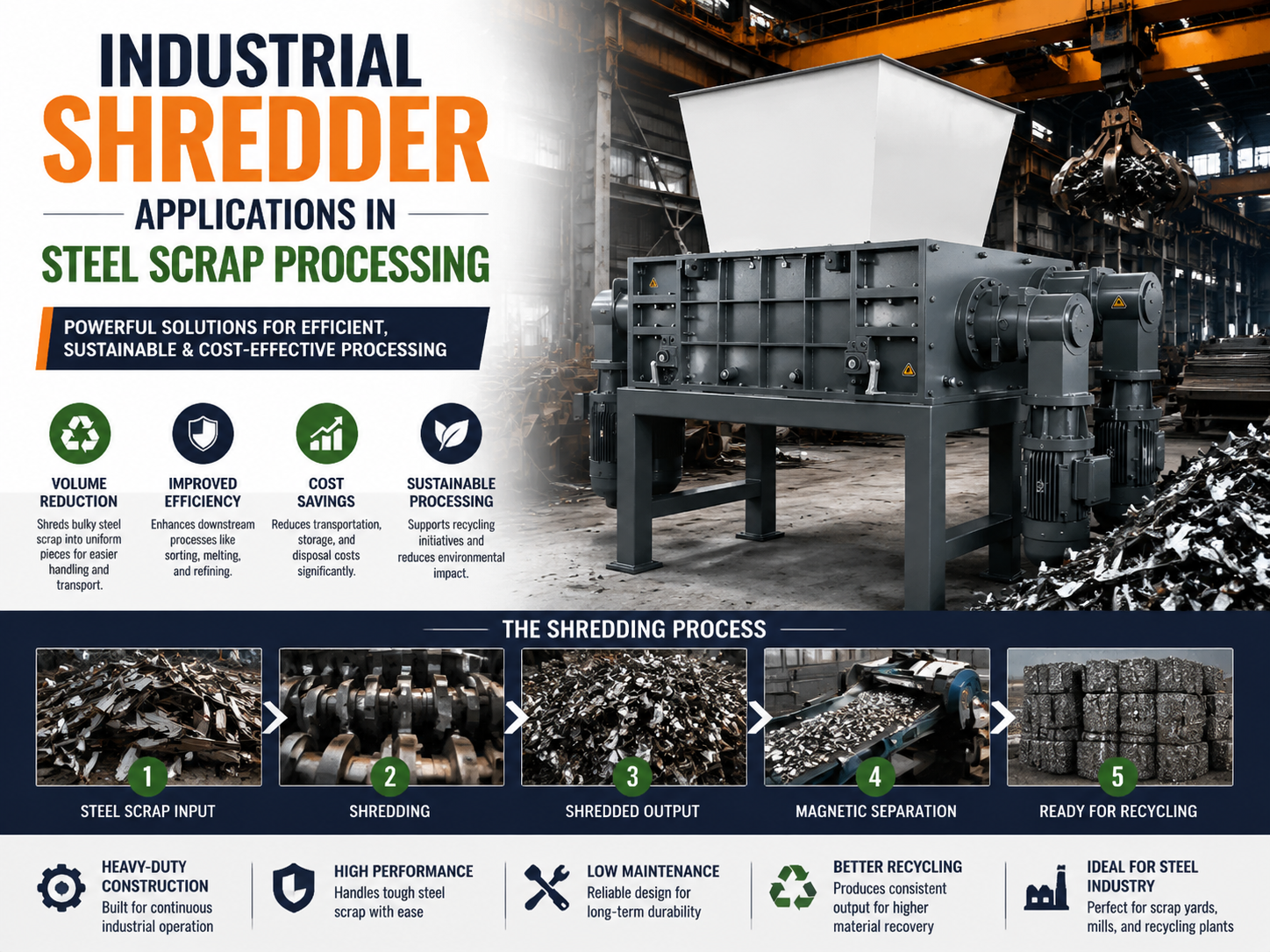
The global steel industry is increasingly leaning toward circular economy models, where the recycling of scrap metal plays a pivotal role. Central to this transformation is the industrial shredder. Industrial Shredder Applications In Steel Scrap Processing are not merely about breaking down large objects; they are about transforming heterogeneous waste into high-quality, furnace-ready raw materials. As steel manufacturers seek to reduce carbon footprints and energy consumption, the efficiency of the shredding process becomes a critical factor in the profitability of recycling operations.
HARSLE, a leader in metal fabrication machinery, recognizes that the demands of the modern recycling yard require more than just brute force. Today’s industrial shredders must offer precision, durability, and smart integration. Whether dealing with End-of-Life Vehicles (ELVs), industrial offcuts, or structural steel from demolition sites, the application of shredding technology determines the final purity and density of the scrap, which in turn dictates its market value. This guide explores the multifaceted applications and technical nuances of using industrial shredders in the steel scrap sector.
Application Scenarios for Steel Scrap Shredding
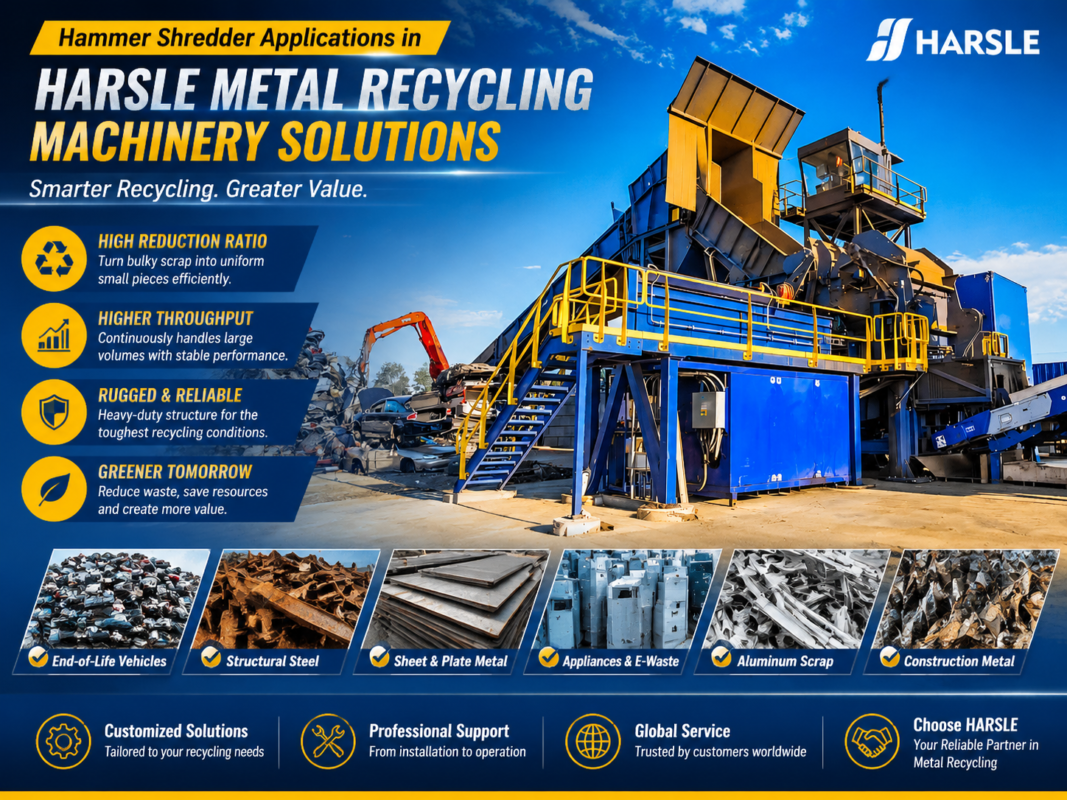
The versatility of industrial shredders allows them to be deployed across various sectors of the metal recycling industry. One of the most prominent application scenarios is the processing of automotive scrap. Modern vehicles are a complex mix of high-strength steel, aluminum, plastics, and electronics. Industrial shredders are used to reduce entire car bodies into small, manageable fragments, allowing for the subsequent mechanical separation of ferrous and non-ferrous metals. This process is essential for recovering high-grade steel that can be reintroduced into the automotive supply chain.
Another critical scenario involves construction and demolition (C&D) waste. Structural steel beams, rebar, and metal roofing materials are often bulky and difficult to transport. By applying industrial shredding technology on-site or at a centralized processing facility, these materials are reduced in volume by up to 80%. This not only lowers transportation costs but also prepares the material for secondary processing. The ability to handle contaminated steel—such as rebar with concrete remnants—is a testament to the robust engineering of modern shredding equipment.
Industrial manufacturing offcuts also represent a significant portion of the scrap market. Factories producing appliances, machinery, and metal components generate large volumes of skeleton scrap and punchings. While these materials are often high-purity, their irregular shapes make them difficult to charge into a furnace. Industrial shredders normalize these shapes, creating a uniform product known as ‘shredded scrap’ or ‘fragmentized scrap,’ which is highly sought after by Electric Arc Furnace (EAF) operators for its consistent melting characteristics.

Material and Process Requirements
Processing steel scrap is significantly more demanding than shredding plastics or wood. The primary requirement is high torque. Steel has high tensile strength and elasticity, meaning the shredder must exert immense pressure to shear the material rather than just tearing it. The thickness of the material is a primary constraint; while light gauge steel (under 4mm) can be processed by standard twin-shaft shredders, heavy melting scrap (HMS) requires reinforced frames and specialized alloy blades to prevent catastrophic failure.
Material purity is another essential process requirement. The shredding process is often the first step in a multi-stage separation line. Therefore, the shredder must break the material down to a size that ‘liberates’ different components. For example, in appliance recycling, the shredder must separate the steel casing from the internal insulation and copper wiring. If the output size is too large, the downstream magnetic and eddy-current separators cannot function effectively, leading to contaminated scrap that fetches a lower price.
Furthermore, the throughput requirements of a facility dictate the scale of the machinery. A small-scale recycler might process 5-10 tons per hour, whereas a large industrial hub may require systems capable of handling 50-100 tons per hour. This requires not only a powerful motor but also a sophisticated cooling system for the hydraulic or electric drives, as the friction generated during steel shredding produces significant heat. Maintaining the structural integrity of the blades under these thermal and mechanical stresses is a core challenge in Industrial Shredder Applications In Steel Scrap Processing.
Recommended Machine Configuration
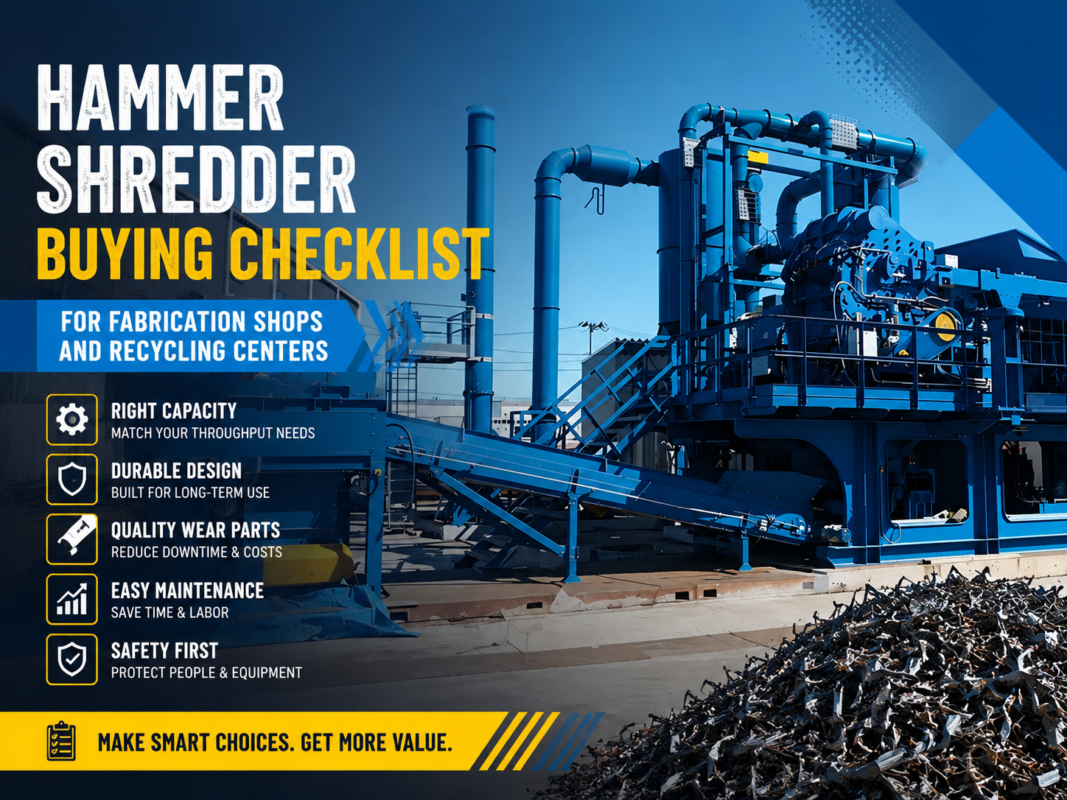
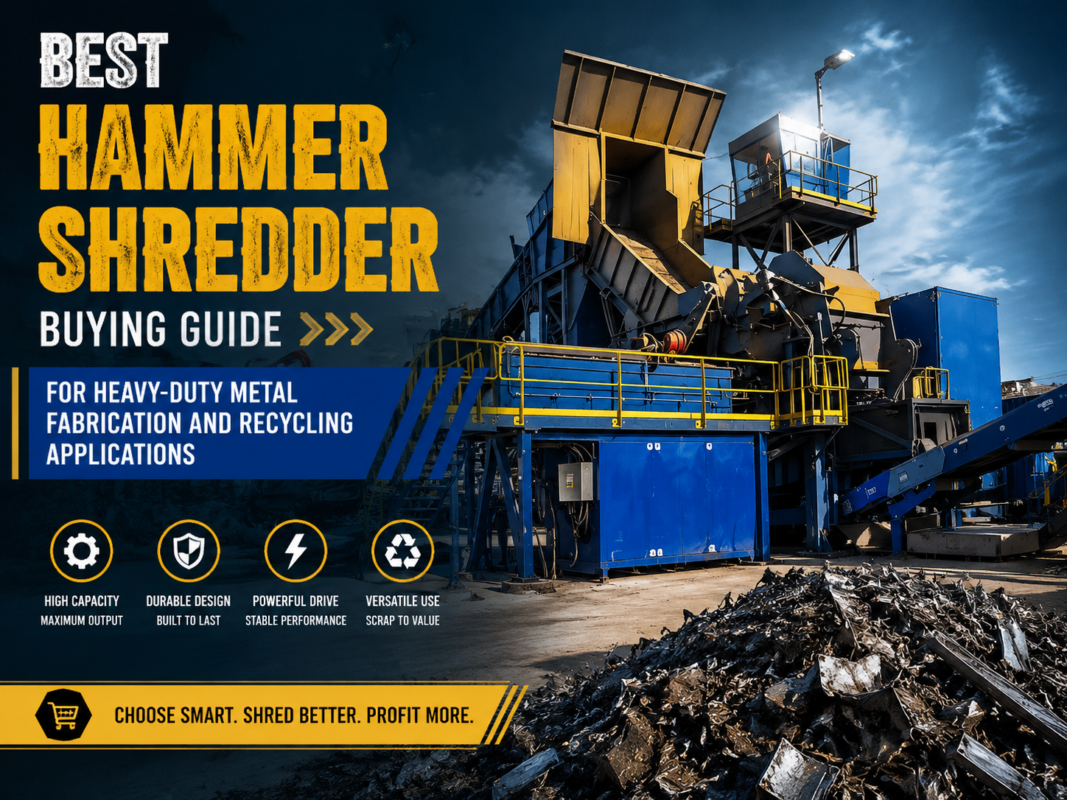
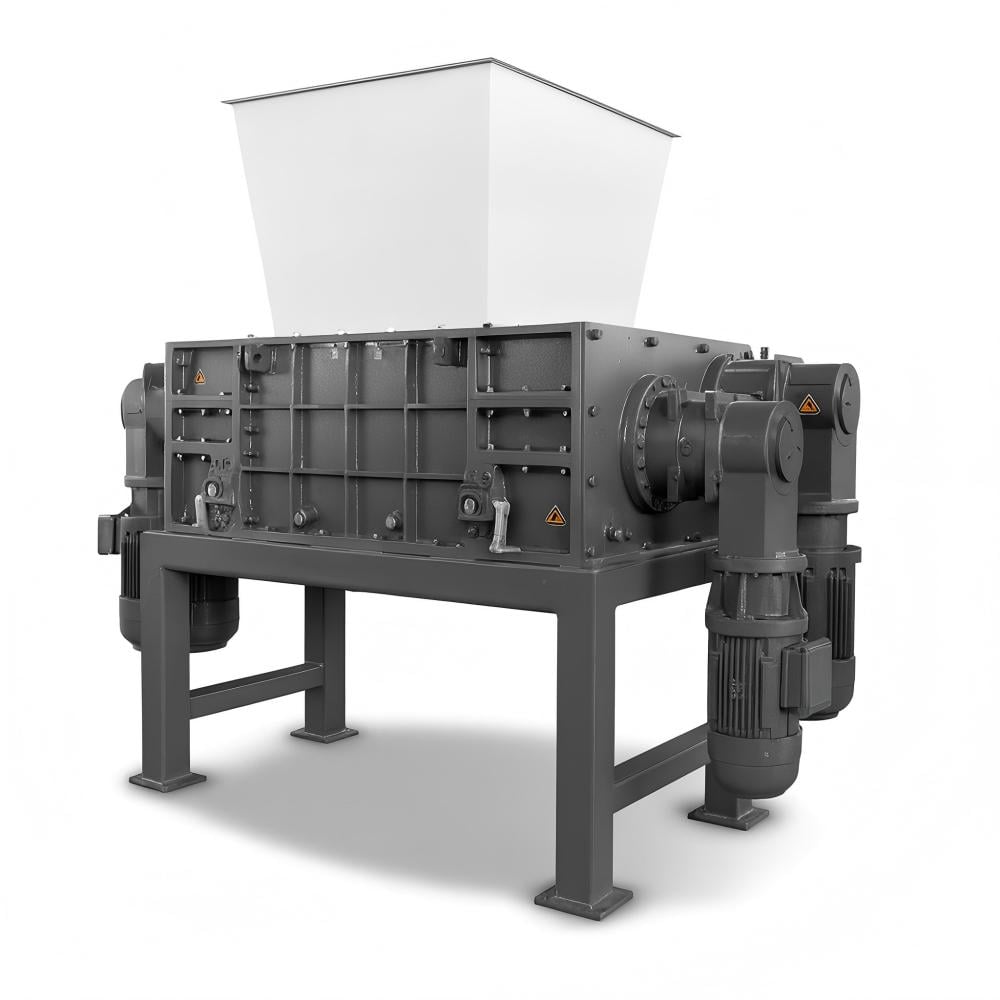
Choosing the right configuration is vital for operational efficiency. For most steel scrap applications, a Double-Shaft or Four-Shaft Shredder is recommended. Double-shaft shredders are the workhorses of the industry, featuring two counter-rotating shafts equipped with hooked blades. This design is excellent for ‘grabbing’ bulky items like drums, car doors, and light structural steel. The high-torque, low-speed operation minimizes dust and noise while maximizing the shearing force applied to the metal.
For applications requiring a specific, uniform output size, a Four-Shaft Shredder is often the superior choice. The additional two shafts act as a secondary cutting layer and help push the material through a sizing screen located beneath the cutters. This configuration is ideal for processing electronic waste (e-waste) and complex industrial scrap where a consistent particle size is necessary for high-efficiency downstream sorting. HARSLE’s four-shaft models are engineered with independent drives for each shaft, allowing for variable speeds that can be adjusted based on the material density.
Technical Specifications Table
| Feature | Double-Shaft Configuration | Four-Shaft Configuration |
|---|---|---|
| Primary Use | Volume reduction, bulky scrap | Precise sizing, complex liberation |
| Torque Level | Very High | High |
| Output Size Control | Blade width dependent | Screen controlled (Adjustable) |
| Typical Motor Power | 45kW – 315kW | 75kW – 400kW |
| Blade Material | Hardened Alloy Steel (D2/SKD-11) | Tungsten Carbide Tipped or Alloy Steel |
Workflow of Steel Scrap Shredding
The workflow begins with the feeding stage. In a professional setup, a heavy-duty conveyor or a hydraulic grab loader feeds the scrap into a large hopper. It is crucial that the hopper is designed to prevent ‘bridging,’ where bulky scrap gets stuck and prevents further material from reaching the blades. Many HARSLE shredders include a hydraulic pusher or ‘ram’ that forces the scrap into the cutting chamber, ensuring a continuous and efficient feed rate.
Once inside the chamber, the counter-rotating shafts engage the material. The blades are designed with specific geometries—often featuring multiple ‘hooks’ or ‘teeth’—that pull the steel into the gap between the shafts. As the steel passes through, it is subjected to intense shearing forces. If the shredder encounters an unshreddable object (like a solid steel shaft that exceeds the machine’s capacity), an intelligent PLC-controlled ‘auto-reverse’ function kicks in. This reverses the shafts to clear the jam and then attempts to shred the material from a different angle, protecting the motor and gearbox from damage.
After the material passes through the blades, it falls onto a discharge conveyor. In a complete processing line, this is where the sorting begins. A magnetic overbelt separator is typically the first downstream component, pulling the ferrous steel away from non-metallic contaminants. In more advanced setups, an eddy-current separator follows to recover valuable non-ferrous metals like aluminum and copper. The final result is a clean, dense, and uniform steel product ready for the melting furnace.
Productivity and Economic Benefits
The primary productivity benefit of Industrial Shredder Applications In Steel Scrap Processing is the dramatic increase in bulk density. Loose scrap is incredibly inefficient to transport; a truck filled with uncrushed car bodies is mostly carrying air. Shredded scrap, however, can reach densities of over 1 ton per cubic meter. This reduces the number of truckloads required to move the same amount of metal, directly lowering fuel costs and carbon emissions. For large-scale operations, these logistics savings can pay for the shredder within a few years of operation.
From a metallurgical perspective, shredded scrap is superior to baled or sheared scrap. Because the shredding process breaks the material into small pieces, it allows for much better removal of non-metallic impurities. When this clean scrap is fed into an Electric Arc Furnace, it melts more quickly and predictably. This reduces the ‘tap-to-tap’ time in steel production and lowers energy consumption per ton of steel produced. Steel mills often pay a premium for high-quality shredded scrap because it simplifies their chemistry control and increases furnace yield.
Furthermore, the use of industrial shredders enhances safety in the recycling yard. Manually cutting large steel structures with torches is dangerous, labor-intensive, and environmentally hazardous due to fumes. Automating the size reduction process with a shredder removes workers from the immediate vicinity of the cutting action and centralizes the processing into a controlled environment. This leads to fewer workplace injuries and a more streamlined, professional operation.
Case Example: High-Volume Steel Recycling Facility
A prominent recycling company in Southeast Asia recently upgraded their facility with a HARSLE heavy-duty double-shaft shredder system to handle an influx of industrial and automotive scrap. Prior to the installation, they relied on manual sorting and hydraulic shears, which resulted in inconsistent output and high labor costs. The goal was to process 20 tons of mixed steel scrap per hour while achieving a 95% purity rate for the ferrous output.
By integrating the shredder with a magnetic separation line, the facility was able to automate 70% of their sorting process. The HARSLE shredder’s auto-reverse feature proved essential, as the incoming scrap often contained heavy engine blocks that would have stalled lesser machines. Within the first six months, the company reported a 40% reduction in transportation costs due to the increased density of their outgoing shipments. Additionally, they secured a long-term contract with a local steel mill that specifically requested their ‘fragmentized’ scrap for its EAF operations, resulting in a 15% increase in their selling price per ton.
Frequently Asked Questions (FAQ)
How long do the blades last in a steel shredder?
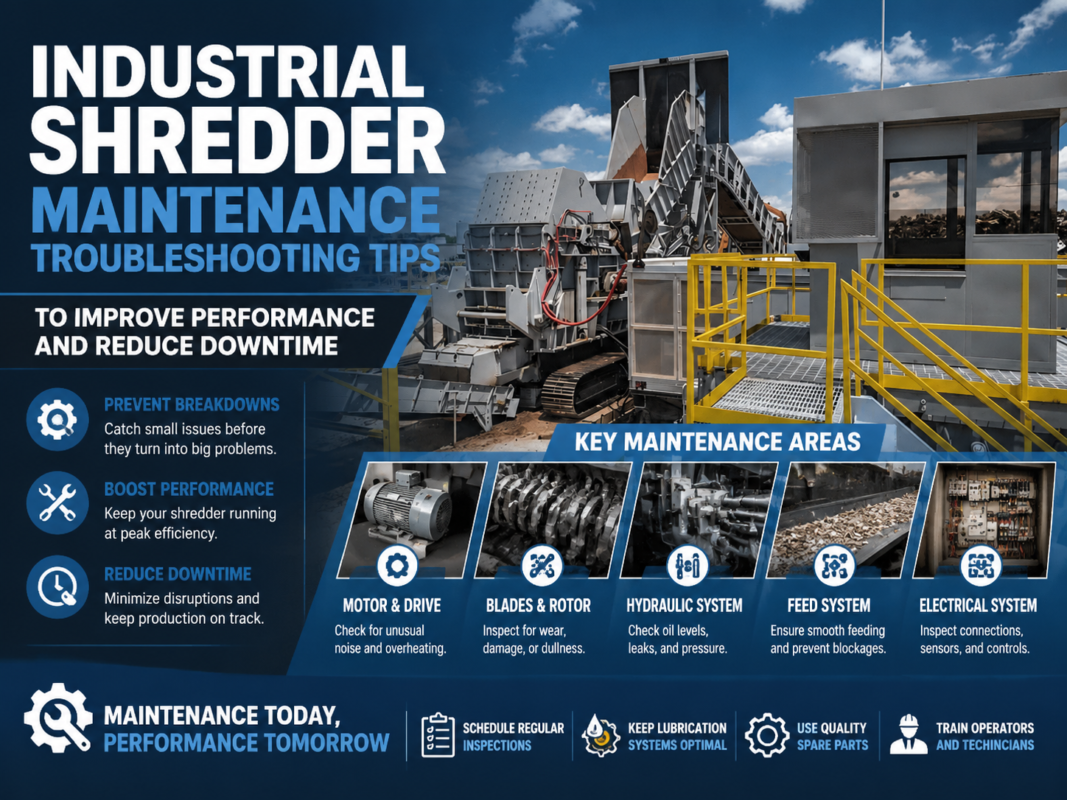
Blade life depends heavily on the type of scrap being processed. For light-to-medium steel scrap, blades can typically last between 1,000 and 3,000 hours before requiring sharpening or replacement. Processing highly abrasive materials or heavy structural steel will shorten this interval. Regular maintenance and ensuring that ‘unshreddables’ are kept out of the machine are key to extending blade life.
What is the difference between a shredder and a granulator?
In the context of metal, a shredder is used for the initial breakdown of large, bulky items into smaller chunks (typically 50mm to 150mm). A granulator is a high-speed machine used for further reducing those chunks into very small granules or powders (under 10mm). For most steel scrap applications, a shredder is the primary tool, while granulators are reserved for specialized copper wire recovery or powder metallurgy.
Can an industrial shredder handle stainless steel?
Yes, but it requires a more robust configuration. Stainless steel is significantly harder and more prone to work-hardening than standard carbon steel. Shredding stainless steel requires blades made from premium alloys and a machine with higher torque-to-horsepower ratios to ensure the blades can bite into the material without slipping or dulling prematurely.
What power supply is required for a heavy-duty metal shredder?
Industrial metal shredders are high-power machines. Small units may start at 45kW, but heavy-duty models often require 200kW to 400kW or more. It is essential to ensure your facility’s electrical infrastructure can handle the high startup current (often mitigated by soft-starters or VFDs) and the continuous load of the motors.
Conclusion and Call to Action
Industrial Shredder Applications In Steel Scrap Processing are the backbone of the modern metal recycling industry. By investing in the right technology, recyclers can transform low-value waste into a high-demand commodity, all while improving operational safety and environmental sustainability. HARSLE provides the engineering expertise and robust machinery needed to tackle the toughest steel processing challenges, from automotive recycling to industrial scrap management.
Are you looking to optimize your scrap processing line or increase your facility’s throughput? Contact HARSLE today to speak with our technical experts. We offer customized shredding solutions tailored to your specific material requirements and production goals. Let us help you turn your scrap into profit with the industry’s most reliable industrial shredders.