How to Evaluate Car Body Baler Specifications for Maximum Recycling Efficiency

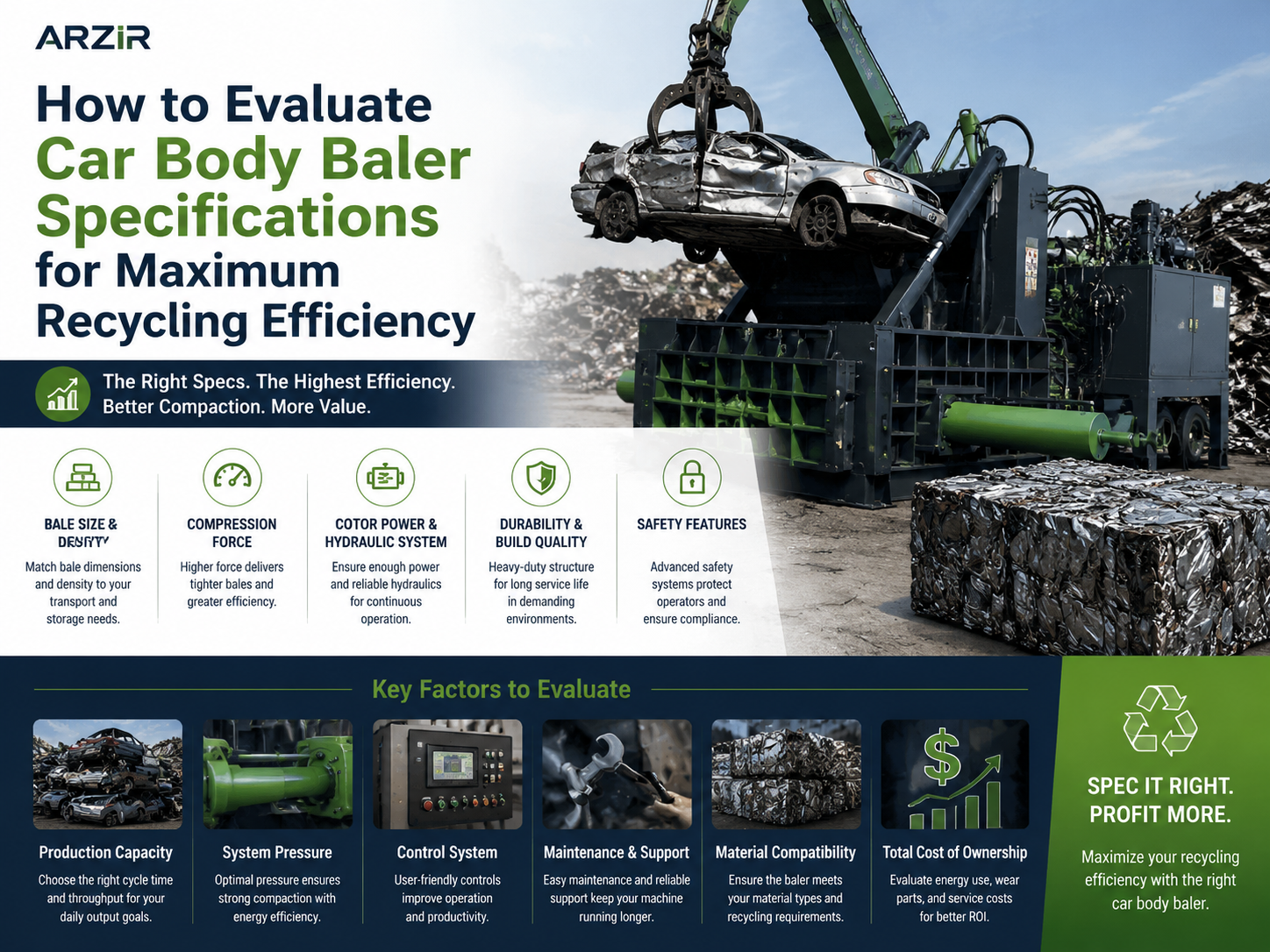
Introduction to Car Body Baler Efficiency
In the modern scrap metal industry, the ability to process End-of-Life Vehicles (ELVs) quickly and densely is the difference between a profitable operation and a struggling one. To evaluate car body baler specifications for maximum recycling efficiency, one must look beyond the surface-level price tag and delve into the technical nuances that dictate throughput, durability, and operational costs. A car body baler is a significant investment for any scrap yard or recycling facility, and choosing the wrong configuration can lead to bottlenecks that stifle growth for years.
Efficiency in car body baling is measured by how many tons of material can be processed per hour and how densely that material is packed. High-density bales reduce transportation costs—often the largest overhead in the recycling business—by allowing more weight to be loaded onto a single trailer. This guide provides a deep dive into the specifications that matter, helping you navigate the complex landscape of hydraulic pressures, chamber dimensions, and automation levels to find the perfect HARSLE solution for your needs.
Price Range Overview: Investing in Quality
When you begin to evaluate car body baler specifications for maximum recycling efficiency, the first hurdle is understanding the price spectrum. Car body balers are not one-size-fits-all machines; they range from entry-level portable units to massive, high-speed stationary installations. Generally, the market is divided into three primary tiers based on capacity and features.
Entry-level balers, often designed for smaller yards or those processing fewer than 10 cars per day, typically range from $40,000 to $80,000. These machines usually feature manual controls and slower cycle times. Mid-range balers, which are the most common for professional scrap yards, fall between $90,000 and $180,000. These units offer semi-automatic operation, better hydraulic cooling, and the ability to handle 20-40 cars per day. High-end, heavy-duty industrial balers can exceed $250,000, offering fully automated cycles, massive compression forces, and the durability to run 24/7 in high-volume environments.
It is crucial to remember that the purchase price is only the beginning. A cheaper machine with a slow cycle time may end up costing more in labor and missed opportunities than a more expensive, high-efficiency model. When evaluating price, always calculate the cost per ton of processed material over a five-year period to get a true sense of the machine’s value.
Main Cost Drivers in Car Body Balers
Several technical factors drive the cost of a car body baler. Understanding these allows you to prioritize features that contribute most to your specific operational goals. The primary cost driver is the hydraulic system. High-quality piston pumps and large-diameter cylinders are expensive but essential for generating the hundreds of tons of force required to crush a vehicle frame. A machine using premium components like Rexroth or Vickers hydraulics will command a higher price but offer significantly better reliability.
Another major factor is the quality of the steel and the wear liners used in the compression chamber. To evaluate car body baler specifications for maximum recycling efficiency, you must look for high-tensile steel construction and replaceable wear plates made of materials like Hardox. These liners protect the main structure of the machine from the abrasive nature of scrap metal. While they increase the initial cost, they prevent catastrophic structural failure and simplify long-term maintenance.
Automation and control systems also play a role. A basic manual valve system is inexpensive but relies heavily on operator skill. In contrast, a PLC-controlled system (Programmable Logic Controller) with a touch-screen interface allows for consistent bale density and faster cycle times by optimizing the movement of the rams. This technology adds to the upfront cost but pays for itself through increased throughput and reduced operator fatigue.
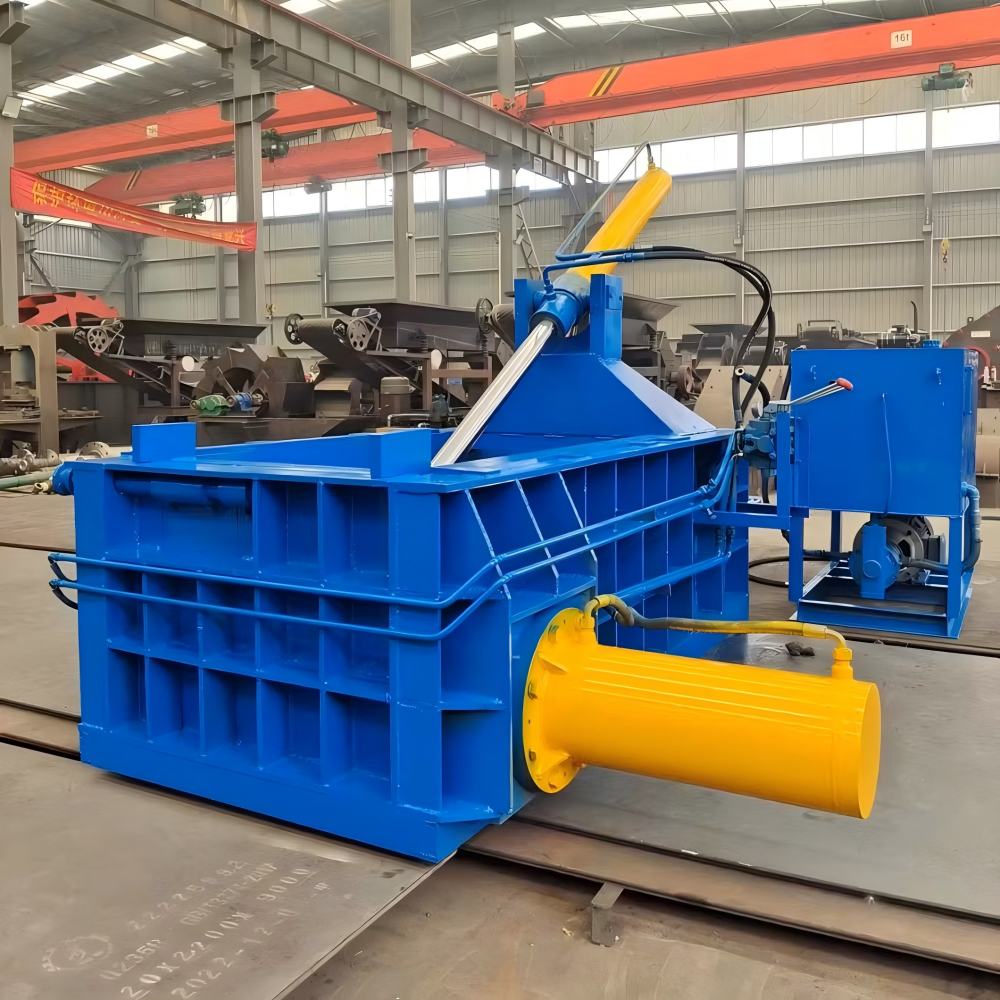
Configuration Impact on Recycling Throughput
The configuration of the baler is where the “efficiency” part of the equation is truly decided. To evaluate car body baler specifications for maximum recycling efficiency, you must analyze the relationship between chamber size, ram force, and cycle time. If the chamber is too small, you will spend excessive time prepping cars (removing engines or pre-cutting frames). If the ram force is too low, the bales will be loose, leading to inefficient shipping.
Chamber Dimensions and Loading
The length and width of the charging box should ideally accommodate a standard passenger vehicle without extensive modification. A box length of 5 to 6 meters is standard for car balers. A wider box allows for easier loading with a grapple or crane, reducing the time spent positioning the scrap. Efficiency is lost every second the machine sits idle while an operator struggles to fit a car into a cramped chamber.
Cycle Time and Hydraulic Flow
Cycle time refers to the duration it takes for the rams to extend, compress the material, and retract. A fast cycle time (under 60 seconds) is achieved through high-flow hydraulic systems. Look for machines with dual or triple pump configurations that can shift high volumes of oil quickly during the low-pressure approach and then switch to high-pressure for the final squeeze. This “hi-lo” circuit design is a hallmark of an efficient baler.
Bale Density and Transport
The ultimate goal of baling is to maximize the weight of a truckload. To evaluate car body baler specifications for maximum recycling efficiency, check the “Specific Pressure” (PSI or kg/cm²) exerted on the face of the bale. Higher specific pressure results in denser bales. For car bodies, a bale density of 60-80 lbs per cubic foot is often the target for maximizing container or trailer weights. This reduces the number of trips required to move your product to the steel mill, directly impacting your bottom line.
Hidden Costs of Operation and Maintenance
When buyers fail to evaluate car body baler specifications for maximum recycling efficiency, they often overlook the hidden costs that emerge after the machine is installed. One of the most significant is energy consumption. A massive motor provides great power, but if the hydraulic system is inefficient, much of that energy is wasted as heat. This requires larger cooling systems and results in higher monthly electricity bills.
Maintenance is another area where costs can hide. Balers with proprietary parts can be a nightmare to service if the manufacturer is located overseas with no local support. HARSLE emphasizes the use of globally recognized components to ensure that seals, filters, and electrical components are easily sourced. Furthermore, the cost of “wear parts” like cutting blades (if the baler has a shear feature) and chamber liners must be factored into the annual budget. A machine that is easy to reline will have much less downtime than one with a complex, welded-in liner system.
Installation costs are also frequently underestimated. A heavy-duty stationary baler requires a reinforced concrete pad capable of withstanding both the weight of the machine and the vibration of the hydraulic pulses. You may also need to upgrade your facility’s electrical transformer to handle the high amperage draw during the motor start-up. Always ask for the site preparation requirements before finalizing a purchase.
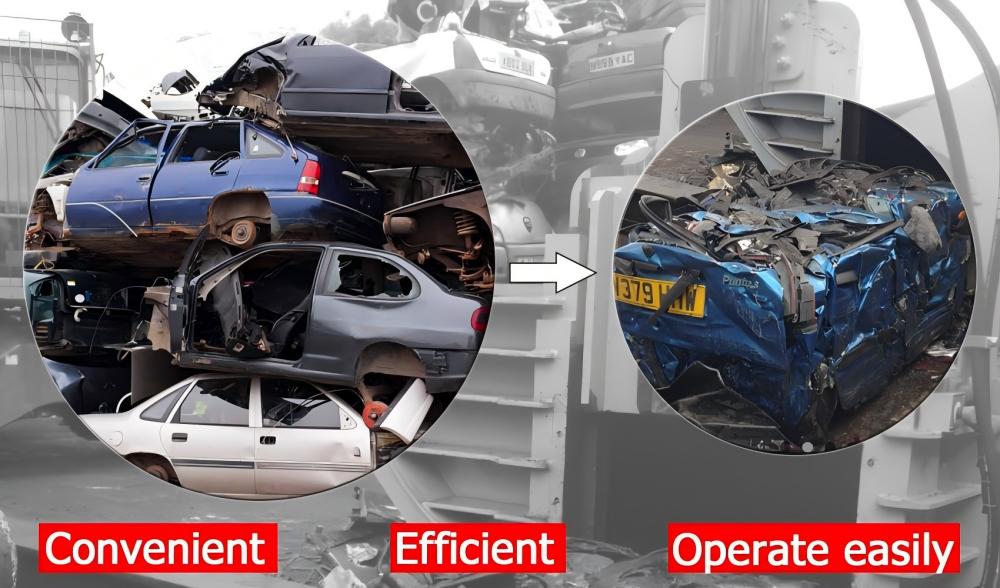
Calculating ROI: The Path to Profitability
To truly evaluate car body baler specifications for maximum recycling efficiency, you must perform a Return on Investment (ROI) calculation. This moves the conversation from “how much does it cost?” to “how much will it make me?” The ROI of a car body baler is driven by three main factors: labor savings, logistics savings, and material value increases.
Consider a yard that currently ships loose car shells. They might only fit 10-12 tons on a trailer. With a high-efficiency HARSLE baler, they can increase that to 22-25 tons per load. If shipping costs $500 per load, the yard effectively cuts its freight cost in half per ton. Over a year of processing 5,000 tons, this logistics saving alone could amount to over $100,000—potentially paying for the machine in less than two years.
Furthermore, many steel mills pay a premium for “No. 1 Bundles” or high-density bales compared to loose mixed scrap. This price spread, often $20-$40 per ton, adds another significant revenue stream. When you combine these factors with the reduced labor required to manage a tidy, baled yard versus a chaotic pile of loose cars, the financial argument for a high-spec baler becomes undeniable.
Buying Advice: Choosing the Right HARSLE Baler
When you are ready to evaluate car body baler specifications for maximum recycling efficiency and make a purchase, follow this checklist to ensure you get the best machine for your specific needs:
- Assess Your Volume: Don’t buy a machine for the volume you have today; buy for the volume you want to have in three years. Over-speccing slightly is better than outgrowing a machine in six months.
- Check the Cooling System: If you operate in a hot climate or plan to run multiple shifts, ensure the baler has an oversized industrial oil cooler. Overheated oil destroys seals and pumps.
- Verify the Safety Features: Modern balers should have emergency stops, safety interlocks on access doors, and ideally, a remote control option so the loader operator can trigger the cycle from the safety of their cab.
- Request a Component List: Ensure the PLC, motors, and hydraulic valves are from reputable brands. This ensures long-term serviceability.
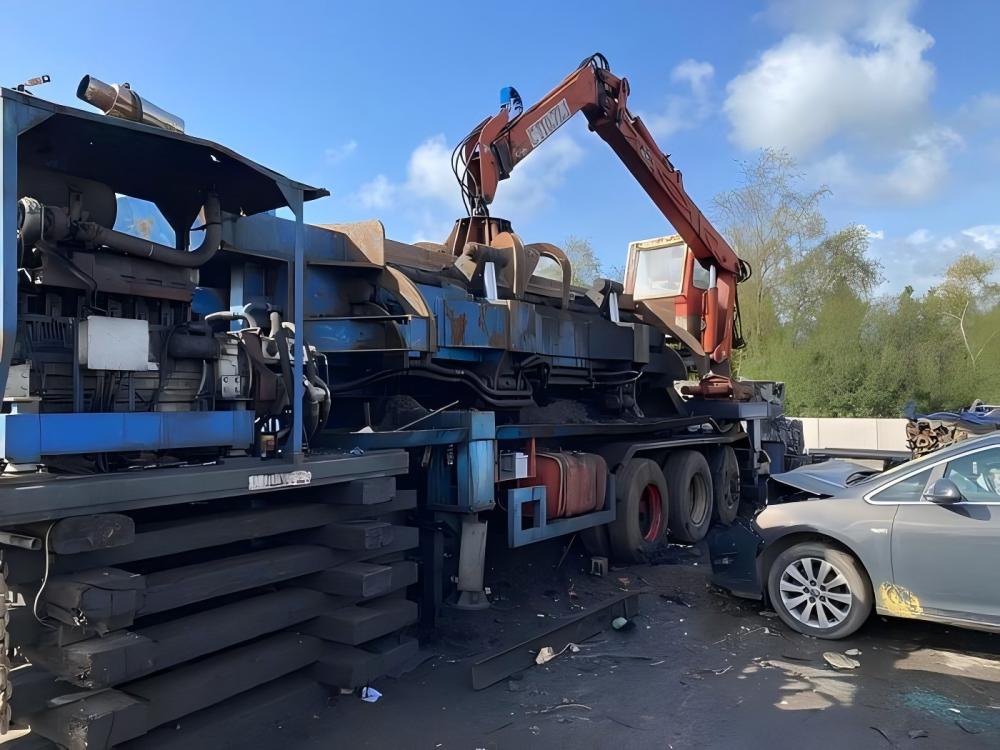
- Consider Portability: If you have multiple yards or do on-site cleanups, a trailer-mounted portable baler might be more efficient than a stationary one, despite the higher initial cost.
HARSLE offers a range of car body balers designed with these efficiency metrics in mind. By focusing on robust structural engineering and high-efficiency hydraulics, HARSLE machines provide the reliability needed to keep your recycling operation running at peak performance.
Frequently Asked Questions (FAQ)
What is the average lifespan of a car body baler?
With proper maintenance, a high-quality car body baler from a reputable manufacturer like HARSLE can last 15 to 20 years. The key to longevity is regular hydraulic oil changes, timely replacement of wear liners, and ensuring the structure is not stressed beyond its rated capacity.
Can a car body baler handle other types of scrap?
Yes, most car body balers are versatile. They can process “white goods” (appliances), light structural steel, sheet metal clippings, and aluminum scrap. However, they are not designed for heavy HMS1 (Heavy Melting Scrap) like thick I-beams or engine blocks, which should be processed with a shear.
How much maintenance does a hydraulic baler require?
Daily maintenance includes checking oil levels and greasing pivot points. Weekly tasks involve inspecting wear plates and tightening bolts. A major service, including hydraulic filter changes and oil analysis, should be performed every 1,000 to 2,000 operating hours to ensure maximum recycling efficiency.
Is a semi-automatic or fully automatic baler better?
For most scrap yards, a semi-automatic system is ideal. It allows the operator to control the loading and ensure no prohibited items (like gas tanks or tires) enter the chamber, while the machine handles the complex compression sequence automatically. Fully automatic systems are best for consistent, pre-sorted industrial waste streams.
How does bale size affect shipping?
Bale size is critical for logistics. Most car body balers produce a bale that is approximately 40x60x80cm or similar. The goal is to produce a size that stacks perfectly in a standard shipping container or on a flatbed trailer without leaving empty “air space,” thereby maximizing the weight-to-volume ratio.
Conclusion
To evaluate car body baler specifications for maximum recycling efficiency, one must take a holistic view of the machine’s performance, durability, and operational costs. By focusing on high-quality hydraulics, robust chamber construction, and the right level of automation, you can transform your scrap yard into a high-throughput profit center. HARSLE remains committed to providing the industry with the tools necessary to meet the growing demands of the global recycling market, ensuring that every bale produced contributes to a more efficient and sustainable future.