Understanding the Working Principle of a Four-Shaft Shredder in Metal Recycling: A Technical Guide

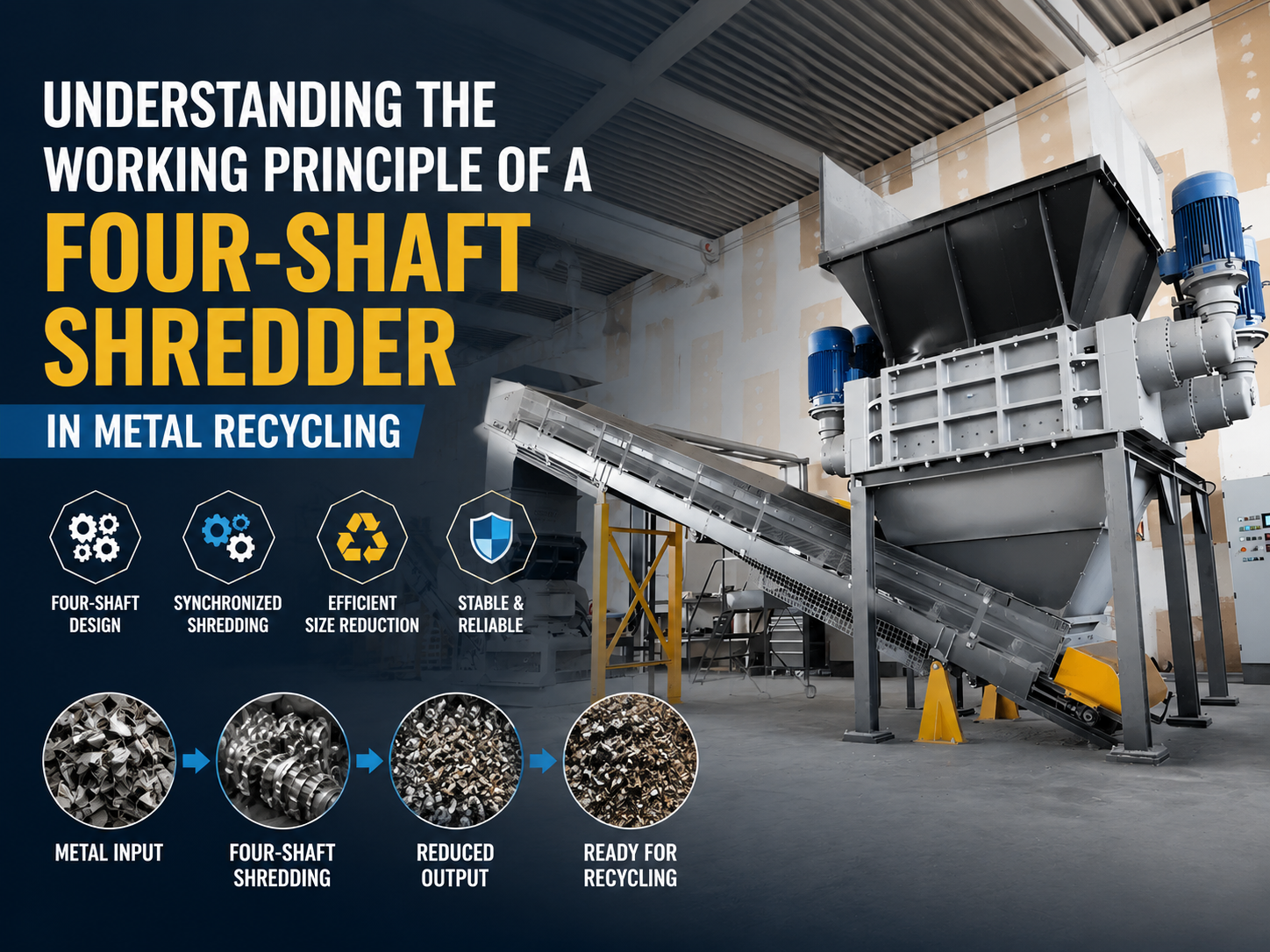
Technical Overview of Four-Shaft Shredders
In the modern landscape of metal recycling, the efficiency of material reduction determines the profitability of the entire operation. The four-shaft shredder stands as a pinnacle of engineering designed to handle the most demanding scrap materials, from aluminum extrusions to electronic waste and light steel scrap. Unlike its single or double-shaft counterparts, the four-shaft shredder utilizes a sophisticated multi-axial cutting system that ensures consistent output size and high throughput. Understanding the working principle of a four-shaft shredder in metal recycling is essential for operators looking to optimize their production lines.
The fundamental architecture of a four-shaft shredder consists of two main cutting shafts and two auxiliary (or secondary) shafts. These shafts are equipped with interlocking blades that rotate at relatively low speeds but with immense torque. The primary function of the upper two shafts is to grab the bulky material and force it down into the lower cutting chamber. This ‘active feeding’ mechanism is what sets the four-shaft design apart, as it prevents material from ‘bridging’ or floating on top of the cutters, a common issue in two-shaft designs when dealing with hollow or lightweight metal containers.
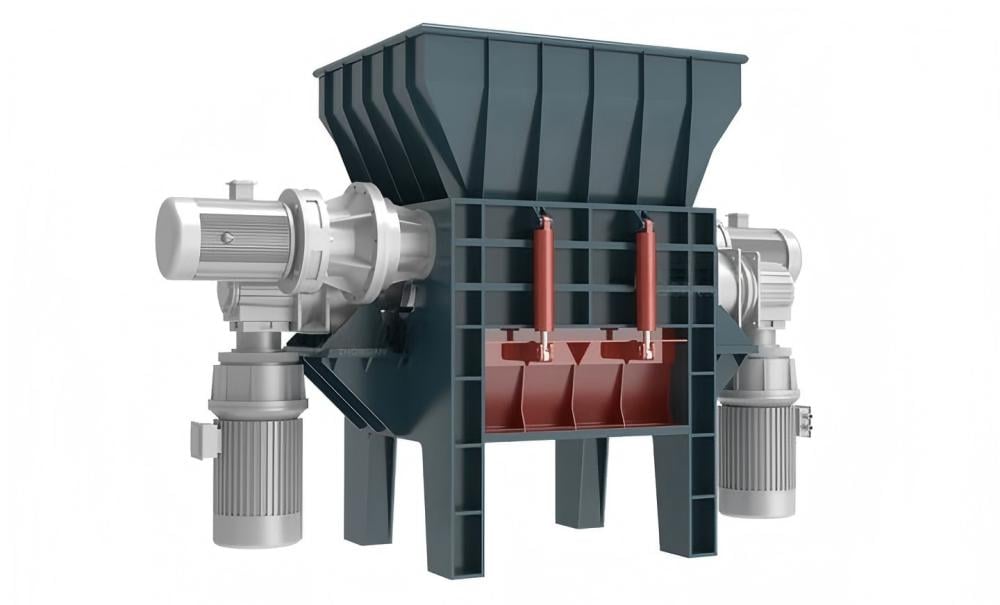
As the material is pulled into the center, the four sets of blades work in tandem to shear, tear, and cut the metal. The lower shafts are typically responsible for the final sizing. A critical component of the four-shaft shredder is the screen located beneath the cutting chamber. Material that has been shredded to a size smaller than the screen mesh falls through, while larger pieces are carried back up by the teeth of the blades to be re-shredded. This internal recirculation loop guarantees a uniform end-product, which is vital for downstream processes like magnetic separation or smelting.
From a mechanical perspective, the four-shaft shredder is often driven by either high-torque electric motors or hydraulic drive systems. Electric drives are favored for their energy efficiency and ease of maintenance in standard applications, while hydraulic drives offer superior shock absorption and variable speed control, making them ideal for processing unpredictable scrap streams that might contain non-shreddable ‘tramp’ metal. The integration of PLC (Programmable Logic Controller) systems allows the machine to automatically reverse the shafts if a jam is detected, protecting the blades and drive train from catastrophic failure.
Core Parameters of Four-Shaft Shredding Systems
To fully grasp the working principle of a four-shaft shredder in metal recycling, one must analyze the core parameters that dictate its performance. The first and most significant parameter is Torque. In metal recycling, the shear strength of the material is high; therefore, the machine must generate enough force to overcome the molecular bonds of the metal. Torque is a product of the motor power and the gear reduction ratio. High torque at low RPM (revolutions per minute) is the hallmark of an effective industrial shredder, as it minimizes heat generation and dust production while maximizing cutting force.
The second parameter is Blade Geometry and Material. The blades, or cutters, are the primary wear parts. In four-shaft systems, the thickness, number of hooks, and diameter of the blades are customized based on the target material. For metal recycling, blades are typically manufactured from high-strength alloy steels like D2 or SKD-11, heat-treated to a specific Rockwell hardness (HRC). The hook design is crucial; more hooks allow for better grabbing of thin-walled materials, while fewer, larger hooks are better for thick, heavy scrap. The spacing between the blades (the ‘clearance’) must be precisely maintained to ensure a clean shear rather than a wasteful tearing action.
Shaft Speed (RPM) is another critical factor. Unlike high-speed granulators that operate at 400-600 RPM, four-shaft shredders usually operate between 10 and 35 RPM. This low-speed operation is intentional. It reduces the risk of fire (especially when shredding magnesium or aluminum fines), lowers noise pollution, and significantly reduces the wear and tear on the machine’s structural frame. The differential speed between the upper and lower shafts also aids in the ‘tearing’ action, which is particularly effective for processing tangled bundles of wire or metal turnings.
Finally, the Screen Size determines the final granularity of the output. The screen is a perforated plate that wraps around the bottom half of the cutting chamber. The diameter of the holes in the screen directly correlates to the size of the shredded metal flakes. In a four-shaft shredder, the ability to swap screens allows the operator to switch between producing coarse 50mm shreds for general recycling and fine 15mm shreds for specialized recovery processes. The interaction between the blade sweep and the screen surface ensures that material is continuously agitated, preventing the screen from clogging.
Calculation Method for Shredder Performance
Engineering a four-shaft shredder requires precise calculations to ensure the machine meets the required throughput without overloading the drive system. The primary calculation involves determining the Required Torque (T). This is calculated based on the maximum shear strength of the material being processed. The formula is generally expressed as:
T = F × r
Where F is the cutting force required to shear the metal and r is the radius of the cutter blade. The cutting force F is further defined by the cross-sectional area of the cut (A) and the shear strength of the material (τ): F = A × τ. For example, if shredding a 3mm thick steel plate with a blade width of 20mm, the area A is 60mm². Multiplying this by the shear strength of steel (approx. 350 N/mm²) gives the force required for a single cut.
Another vital calculation is the Throughput Capacity (Q). This is an estimate of how much material the machine can process per hour. It is influenced by the volume of the cutting chamber, the RPM of the shafts, and the bulk density of the material. A simplified formula for throughput is:
Q = V × n × η × ρ
Where V is the volume displaced by the blades per revolution, n is the RPM, η is the filling efficiency factor (usually between 0.2 and 0.5 for scrap metal), and ρ is the bulk density of the scrap. Understanding these calculations allows engineers to size the motors correctly. If the calculated torque exceeds the motor’s peak capacity, the machine will frequently stall, leading to inefficiency and potential electrical damage.
Parameter Table for Industrial Four-Shaft Shredders
The following table provides a comparison of typical specifications for different classes of four-shaft shredders used in metal recycling applications. These values are representative and can vary based on specific manufacturer designs.
| Parameter | Light-Duty (E-Waste) | Medium-Duty (Aluminum) | Heavy-Duty (Steel Scrap) |
|---|---|---|---|
| Motor Power (kW) | 22 – 45 | 55 – 110 | 132 – 250+ |
| Shaft Speed (RPM) | 20 – 35 | 15 – 25 | 10 – 18 |
| Cutting Chamber (mm) | 600 x 500 | 1000 x 800 | 1500 x 1200 |
| Blade Diameter (mm) | 250 – 300 | 400 – 500 | 600 – 800 |
| Torque (Nm) | 5,000 – 12,000 | 25,000 – 60,000 | 100,000+ |
| Throughput (t/h) | 0.5 – 1.5 | 2.0 – 5.0 | 8.0 – 15.0 |
| Screen Size (mm) | 15 – 30 | 30 – 60 | 50 – 100 |
Common Engineering Mistakes in Shredder Operation
One of the most frequent mistakes in the application of four-shaft shredders is Over-feeding or ‘Slug Loading’. While the four-shaft design is excellent at grabbing material, dumping a massive, dense bale of metal into the hopper can create a mechanical shock that exceeds the structural limits of the shafts. This often leads to twisted shafts or broken gear teeth. Operators should use a metered feeding system, such as a vibrating feeder or a conveyor belt, to ensure a steady flow of material that matches the machine’s processing rate.
Another common error is Neglecting Blade Maintenance and Clearance. As blades wear down, the gap between the interlocking teeth increases. Instead of shearing the metal, the blades begin to ‘pinch’ it, which drastically increases the friction and the power required to operate. This not only reduces throughput but also generates excessive heat, which can soften the blade material and accelerate wear. Regularly checking and shimming the blades to maintain the manufacturer’s specified clearance is vital for longevity.
Ignoring the ‘Tramp’ Metal Risk is a significant engineering oversight. Even the strongest four-shaft shredder has limits. If a solid steel shaft or a heavy engine block (tramp metal) enters a machine designed for light aluminum, it can cause catastrophic failure. Many operators fail to install pre-sorting equipment or magnetic head pulleys on the feed conveyor. While the PLC’s auto-reverse function provides some protection, the physical impact of non-shreddable items eventually leads to fatigue cracks in the shredder housing.
Finally, Inadequate Lubrication and Cooling of the main bearings and gearbox is a silent killer of industrial machinery. Four-shaft shredders operate under extreme pressures. The bearings supporting the shafts are subjected to massive radial loads. Using the wrong type of grease or failing to adhere to a strict lubrication schedule will lead to bearing seizure. In high-capacity operations, the gearbox oil can also overheat, losing its viscosity and failing to protect the gears. Implementing an automated lubrication system and monitoring oil temperatures are essential best practices.
Selection Checklist for a Four-Shaft Shredder
Choosing the right equipment requires a systematic approach. Use the following checklist when evaluating a four-shaft shredder for your metal recycling facility:
- Material Characterization: What is the toughest material you will process? (e.g., 6000 series aluminum vs. mild steel). Ensure the shredder’s torque rating exceeds the shear requirements of your toughest material.
- Output Requirements: What is the target particle size? Ensure the machine can accommodate the necessary screen size without a massive drop in throughput.
- Drive System Choice: Do you need the energy efficiency of an electric drive or the shock-load resilience of a hydraulic drive?
- Blade Accessibility: How easy is it to change the blades? Look for designs with ‘swing-out’ screens or easy-access chambers to minimize downtime during maintenance.
- PLC and Automation: Does the machine include an intelligent control system with auto-reverse, load sensing, and remote monitoring capabilities?
- Structural Integrity: Check the thickness of the machine frame and the quality of the welds. A shredder is only as strong as the box that holds the shafts.
- Spare Parts Availability: Are the blades and screens standard sizes, or are they proprietary? Ensure you have a reliable supply chain for wear parts.
- Safety Features: Does the machine include emergency stops, hopper extensions, and safety interlocks on all access doors?
Frequently Asked Questions (FAQ)
How long do the blades last in a metal recycling application?
Blade life varies significantly based on the material being shredded. For clean aluminum, blades may last 1,000 to 2,000 hours before requiring sharpening or replacement. For contaminated scrap or electronic waste containing glass and abrasive plastics, blade life may drop to 500-800 hours. Regular hard-facing (welding) can sometimes extend the life of the hooks.
Can a four-shaft shredder handle long metal pipes?
Yes, the four-shaft design is particularly good for long items. The upper shafts act to pull the pipe down and break it into manageable lengths before the lower shafts perform the final shredding. However, very thick-walled pipes may require a heavy-duty model with high torque to prevent stalling.
What is the advantage of a four-shaft shredder over a two-shaft shredder?
The primary advantage is the integrated screen and the recirculation of material. A two-shaft shredder produces ‘strips’ of material that can vary in length. A four-shaft shredder ensures that no piece of metal leaves the machine until it is smaller than the screen holes, providing a much more consistent and smaller output size.
Is noise a major concern with these machines?
Because four-shaft shredders operate at low speeds, they are significantly quieter than high-speed hammer mills or granulators. The noise level is generally between 80 and 95 decibels during operation. However, the ‘cracking’ of large metal pieces can create intermittent loud noises, so hearing protection is always recommended for operators.
How does the auto-reverse function work?
The PLC monitors the current draw of the electric motors (or the pressure in a hydraulic system). If the load spikes above a pre-set limit (indicating a jam), the controller stops the shafts and rotates them in the opposite direction for a few seconds to clear the material, then attempts to shred again. If the jam persists after three attempts, the machine will shut down and trigger an alarm for manual intervention.