
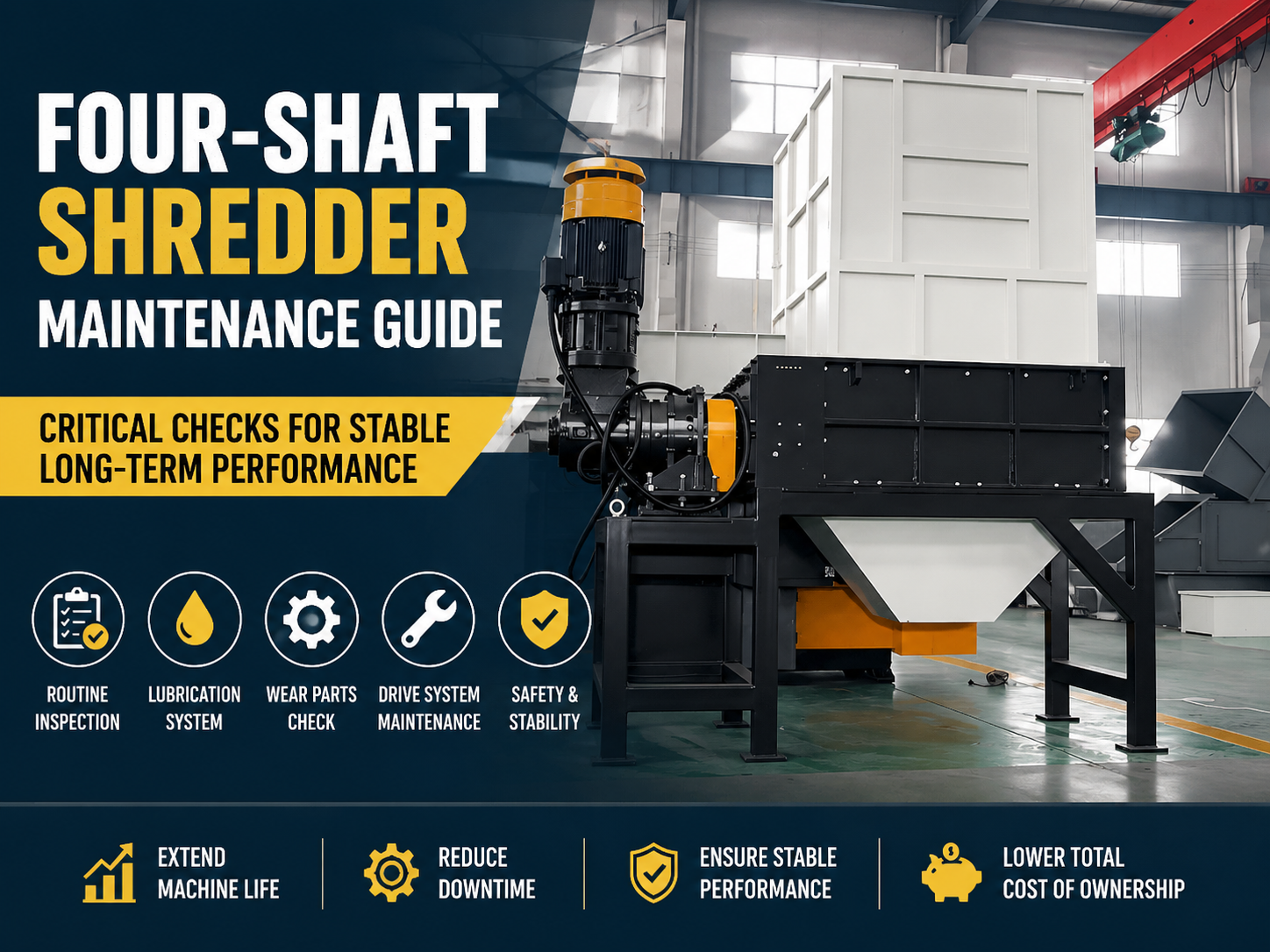
Four-Shaft Shredder Maintenance Guide: Critical Checks for Stable Long-Term Performance

Technical Overview of Four-Shaft Shredders
The four-shaft shredder represents the pinnacle of industrial size-reduction technology, specifically engineered for high-torque, low-speed applications where uniform particle size is paramount. Unlike single or double-shaft variants, the four-shaft design utilizes two main cutting shafts and two auxiliary cleaning/feeding shafts. This configuration allows for a unique ‘internal circulation’ of material, where oversized pieces are continuously pulled back into the cutting zone until they are small enough to pass through the integrated screen. This makes the four-shaft shredder indispensable in industries ranging from e-waste recycling and tire processing to hazardous waste management and metal scrap reduction.
From a mechanical perspective, the four-shaft shredder operates on the principle of shearing and tearing. The blades are arranged in a staggered pattern, creating a multi-point contact system that maximizes the efficiency of every rotation. The primary advantage of this system is its ability to handle bulky, hollow, or resilient materials that might ‘bridge’ or bounce on top of a two-shaft shredder. By providing a positive feed mechanism through the auxiliary shafts, the machine ensures a consistent throughput, which is critical for downstream processing equipment. However, the complexity of having four synchronized shafts, multiple gearboxes, and a high-density blade arrangement necessitates a rigorous maintenance protocol to ensure Four-Shaft Shredder Maintenance : Critical Checks Stable Long-Term Performance.
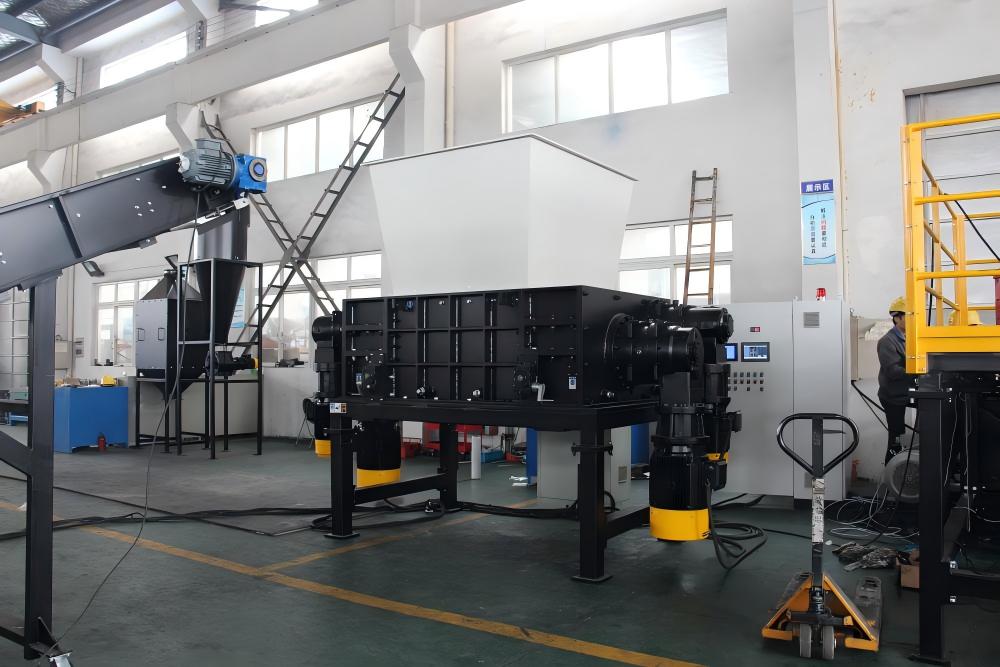
Maintenance is not merely a reactive measure to fix broken components; it is a proactive strategy to preserve the structural integrity of the machine and optimize its energy consumption. In a four-shaft system, the interaction between the blades, spacers, and the screen is highly sensitive to tolerances. Even a minor misalignment or a dull blade edge can lead to increased friction, higher motor temperatures, and a significant drop in output quality. For operators, understanding the technical nuances of shaft synchronization and blade geometry is the first step toward achieving stable long-term performance.
Core Parameters for Operational Excellence
To maintain a four-shaft shredder effectively, one must first understand the core parameters that define its performance. These parameters serve as the baseline for all maintenance checks and troubleshooting efforts. The most critical parameter is Torque. Because these machines operate at low speeds (typically 10-40 RPM), they rely on massive torque to shear through tough materials like steel-reinforced tires or thick-walled plastic drums. Monitoring the torque output via the PLC (Programmable Logic Controller) can provide early warnings of blade dullness or internal obstructions.
Another vital parameter is the Shaft Speed Ratio. In many four-shaft designs, the auxiliary shafts rotate at a different speed than the main cutting shafts to facilitate better material grabbing and cleaning. If the synchronization between these shafts drifts due to belt slippage or gearbox wear, the machine’s efficiency will plummet. Furthermore, the Blade Thickness and Profile are essential. The gap between the blades on opposing shafts determines the precision of the cut. As blades wear down, this gap increases, leading to ‘tearing’ rather than ‘shearing,’ which consumes more power and generates excessive heat.
The Screen Mesh Size also plays a pivotal role. The screen is what differentiates the four-shaft shredder from other types by ensuring a calibrated output size. However, the screen is a high-wear component. If the screen becomes clogged (blinded) or the holes become enlarged due to abrasion, the recirculating load within the shredder increases, putting unnecessary strain on the bearings and motors. Regular inspection of the screen’s structural integrity is a cornerstone of Four-Shaft Shredder Maintenance : Critical Checks Stable Long-Term Performance.
Calculation Method for Shredder Performance and Wear
Quantifying the performance of a shredder allows maintenance teams to predict when components will fail. One of the most useful calculations is the Theoretical Throughput (Q). This is calculated by the formula: Q = n × V × ρ × η, where ‘n’ is the shaft speed (RPM), ‘V’ is the volume of material displaced per revolution, ‘ρ’ is the bulk density of the material, and ‘η’ is the efficiency factor (usually between 0.6 and 0.8 depending on material type). By comparing the actual throughput to the theoretical throughput, operators can identify if the machine is underperforming due to blade wear or feeding issues.
Another critical calculation involves Blade Wear Life. This is often measured in ‘Tons Processed per Millimeter of Blade Wear.’ By measuring the blade tip diameter at regular intervals (e.g., every 500 operating hours), maintenance managers can plot a wear curve. When the wear rate accelerates, it indicates that the material hardness has changed or that the blade material is no longer suitable for the application. This data-driven approach prevents catastrophic blade failure and allows for scheduled sharpening, which is significantly cheaper than full blade replacement.
Lastly, calculating the Specific Energy Consumption (SEC) is vital for long-term stability. SEC is the energy used per ton of material processed (kWh/ton). An increasing SEC is a definitive indicator that the machine is working harder to achieve the same results, usually due to dull blades, increased friction in the bearings, or a clogged screen. Monitoring SEC helps in justifying the costs of preventive maintenance to management by showing direct savings in utility bills.
Technical Parameter Table
| Parameter | Unit | Standard Range (Medium Duty) | Heavy Duty Range |
|---|---|---|---|
| Main Shaft Speed | RPM | 15 – 25 | 10 – 20 |
| Auxiliary Shaft Speed | RPM | 20 – 35 | 15 – 30 |
| Motor Power | kW | 37 – 75 | 90 – 250+ |
| Max Torque | Nm | 15,000 – 40,000 | 50,000 – 150,000+ |
| Blade Diameter | mm | 300 – 450 | 500 – 800 |
| Screen Size | mm | 20 – 60 | 40 – 100 |
| Cutting Chamber Size | mm | 800 x 700 | 1500 x 1200 |
| Throughput (Plastic) | t/h | 1.5 – 3.0 | 5.0 – 15.0 |
Common Engineering Mistakes in Shredder Maintenance
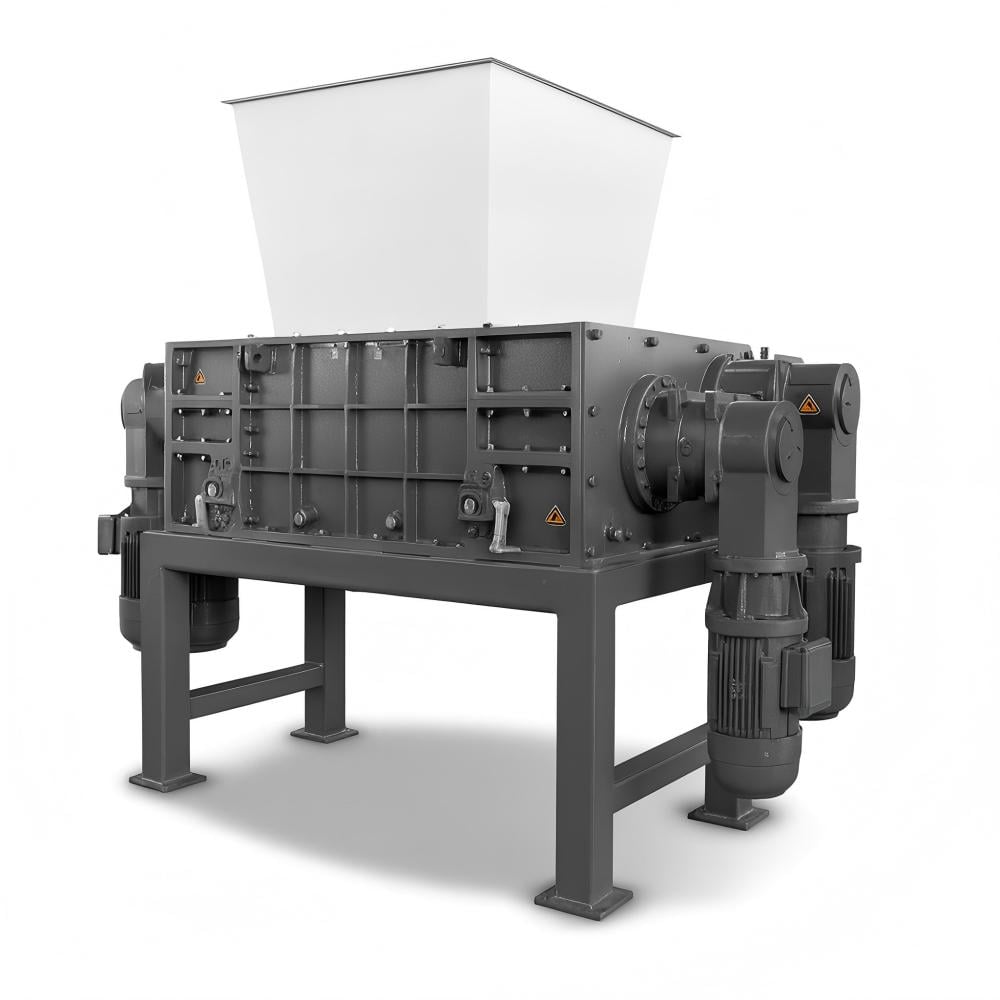
One of the most frequent mistakes in Four-Shaft Shredder Maintenance : Critical Checks Stable Long-Term Performance is the neglect of the Shaft Sealing System. In many applications, such as e-waste or glass recycling, fine abrasive dust is generated. If the seals between the cutting chamber and the bearing housings are compromised, this dust acts as a grinding paste, rapidly destroying the bearings and shafts. Operators often focus on the blades while ignoring the seals, leading to expensive shaft repairs that could have been avoided with a simple seal replacement.
Another common error is Improper Blade Tightening. The blades and spacers on a four-shaft shredder are held in place by massive end-nuts or hydraulic clamping systems. Over time, the vibration and thermal expansion can cause these to loosen. If the blades are not perfectly tight, they will begin to ‘chatter’ or move slightly on the shaft. This micro-movement rounds off the hex or keyway of the shaft, eventually requiring the entire shaft to be replaced. Regular checking of the axial clamping force is a non-negotiable maintenance task.
Furthermore, many facilities fail to Calibrate the Auto-Reverse Logic. Four-shaft shredders are designed to reverse the shafts when a jam is detected. If the pressure threshold for this reverse is set too high, the machine will sustain structural stress before reversing. If set too low, the machine will constantly reverse, reducing throughput and causing excessive wear on the motor starters and gearboxes. The auto-reverse should be tuned specifically to the material being processed to ensure a balance between protection and productivity.
Comprehensive Selection Checklist for Four-Shaft Shredders
- Material Compatibility: Does the blade alloy (e.g., D2, SKD-11, or specialized tungsten carbide) match the abrasiveness and hardness of your input material?
- Drive System: Is the machine equipped with a hydraulic drive for high-shock loads or an electric motor with a high-service-factor gearbox for steady-state efficiency?
- Ease of Access: Does the design allow for ‘swing-out’ screens or easy removal of the shaft assembly for maintenance? A machine that is hard to service will inevitably be neglected.
- PLC and Monitoring: Does the control system include amperage monitoring, temperature sensors for bearings, and a logged history of fault codes?
- Blade Configuration: Are the blades individual or integrated? Individual blades are easier to replace, while integrated ‘multi-claw’ disks might offer more rigidity for specific materials.
- Frame Rigidity: Is the main frame constructed from heavy-gauge, stress-relieved steel to withstand the immense torsional forces during a jam?
- Seal Protection: Are there secondary seals or air-purge systems to keep contaminants out of the bearing chambers?
- Spare Parts Availability: Can the manufacturer guarantee the availability of wear parts like blades, spacers, and screens within a 48-hour window?
Maintenance Schedule: Daily, Weekly, and Monthly Checks
Daily Maintenance Tasks
Every shift should begin with a visual inspection of the cutting chamber. Look for any foreign metal objects that might have been accidentally introduced. Check the oil levels in the gearboxes and ensure the automatic lubrication system (if equipped) is functioning and has sufficient grease. Listen for unusual noises during startup, such as high-pitched squealing or heavy thumping, which could indicate bearing failure or loose blades. Finally, clear any debris from the motor cooling fans to prevent overheating.
Weekly Maintenance Tasks
Once a week, the screen should be removed and cleaned. Inspect the screen for cracks or thinning of the metal. Check the tension of all drive belts and the tightness of the main shaft nuts. It is also advisable to inspect the electrical cabinet for any loose connections caused by machine vibration. Use an infrared thermometer to check the operating temperature of the bearings; a significant difference between the four main bearings usually indicates a misalignment or lubrication issue.
Monthly and Quarterly Tasks
Monthly checks should focus on the blade condition. Measure the gap between the cutting edges and compare it to the manufacturer’s specifications. If the gap has exceeded the limit, schedule a blade rotation or sharpening. Quarterly, perform a full oil change on the gearboxes and inspect the internal gears for wear or pitting. This is also the time to check the structural integrity of the hopper and the support frame for any stress cracks in the welds.
Frequently Asked Questions (FAQ)
How often should I sharpen the blades on a four-shaft shredder?
The frequency of sharpening depends entirely on the material. For soft plastics, blades may last 2,000+ hours. For abrasive materials like glass-filled nylon or contaminated e-waste, sharpening might be required every 500-800 hours. The best indicator is a 20% increase in power consumption or a noticeable decrease in throughput.
Can I shred metal with a four-shaft shredder?
Yes, four-shaft shredders are excellent for light to medium metal scrap, such as aluminum extrusions, copper wire, and thin-walled steel containers. However, they are not intended for heavy structural steel or large solid castings, which can cause catastrophic shaft breakage.
Why is my shredder constantly reversing?
Constant reversing is usually caused by one of three things: the screen is clogged, the blades are too dull to grab the material, or the PLC torque limit is set too low. Start by cleaning the screen and checking the blade edges. If those are fine, consult the manual to adjust the amperage threshold for the auto-reverse function.
What is the advantage of a four-shaft shredder over a two-shaft one?
The primary advantage is the integrated screen and the two auxiliary shafts. This allows the four-shaft shredder to produce a consistent, small particle size in a single pass, whereas a two-shaft shredder often produces long strips or large chunks that require secondary processing.
What type of lubricant should I use for the main bearings?
Most high-torque shredders require a heavy-duty, extreme-pressure (EP) grease, typically NLGI Grade 2 with molybdenum disulfide additives. Always refer to the manufacturer’s lubrication chart, as using the wrong grease can lead to overheating and premature bearing failure.


