
Four-Shaft Shredder Blade Design Explained: Materials, Geometry, and Wear Resistance

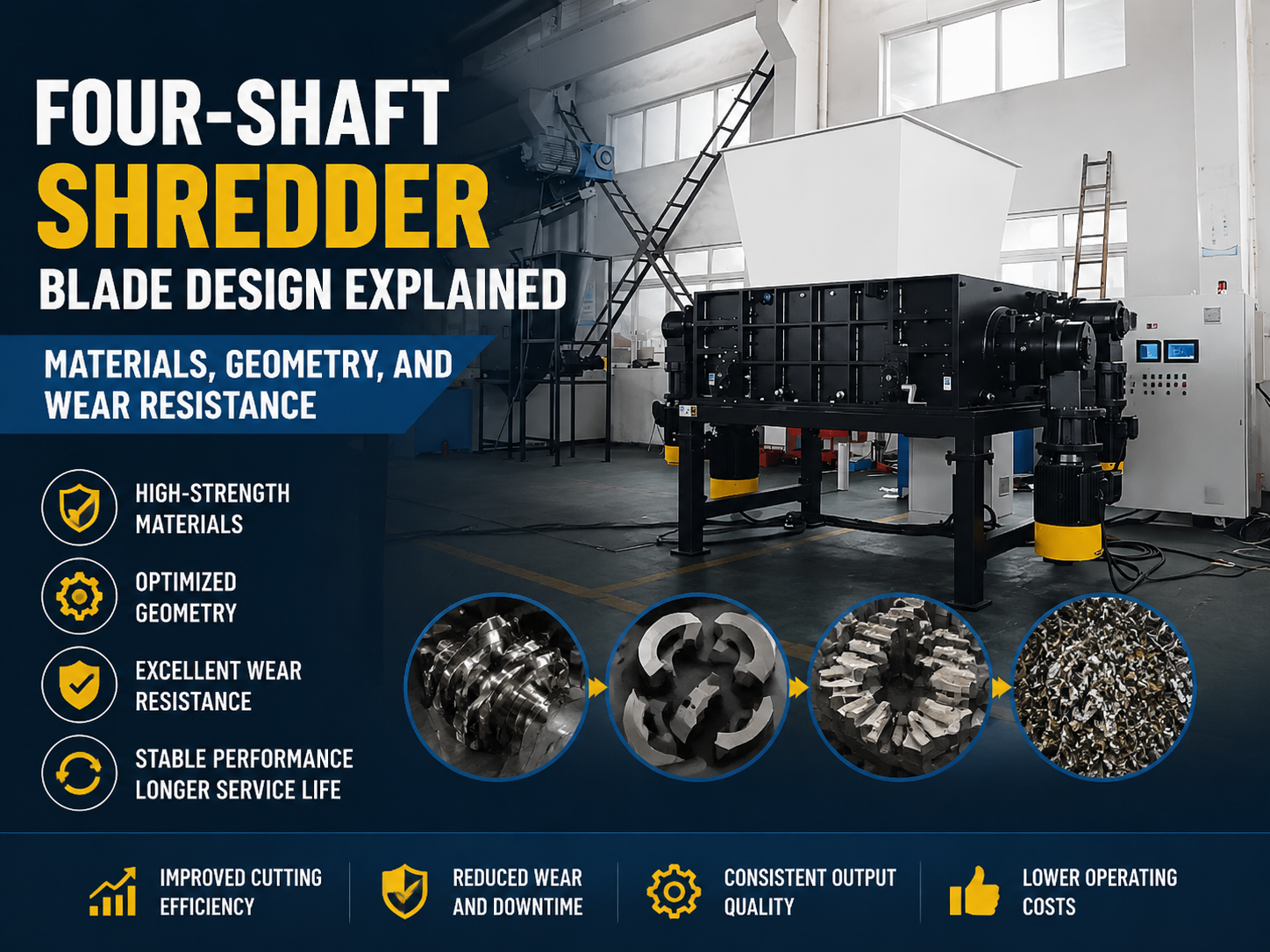
Technical Overview of Four-Shaft Shredder Blade Systems
In the realm of industrial size reduction, the four-shaft shredder stands as a pinnacle of engineering efficiency, particularly when uniform particle size and high throughput are required. Unlike its two-shaft counterparts, the four-shaft shredder utilizes two main cutting shafts and two auxiliary shafts. The blades on these shafts work in a synchronized, complex kinematic dance to grab, tear, and shear material through a sizing screen located beneath the cutting chamber. The design of these blades is not merely a matter of choosing a sharp edge; it is a sophisticated balance of metallurgy, geometry, and mechanical engineering.
The primary advantage of the four-shaft design is its ability to recirculate oversized material. Blades on the upper shafts grab the material and feed it to the lower shafts. If the material is not small enough to pass through the screen, the blades carry it back up for another pass. This continuous cycle places immense stress on the blade edges, requiring a design that can withstand both high-impact forces and constant abrasive wear. HARSLE engineers emphasize that the blade is the ‘heart’ of the shredder, and its design directly dictates the machine’s operational cost and efficiency.
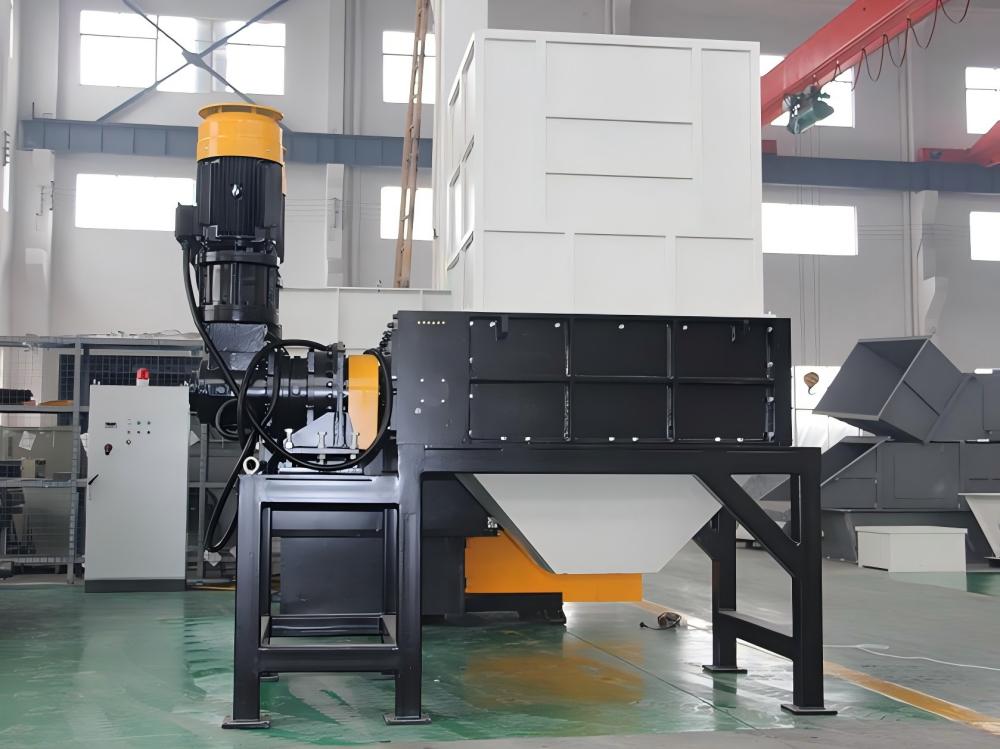
Technically, the four-shaft system operates at varying speeds. The auxiliary shafts often rotate faster to facilitate material intake, while the main shafts provide the high-torque shearing force. This differential speed means that blades on different shafts may require different geometric profiles to optimize the ‘grab’ versus the ‘cut.’ Understanding the interaction between these four sets of blades is essential for any facility looking to optimize their recycling or waste processing line.
Core Parameters in Blade Design
1. Material Selection and Metallurgy
The choice of material is the most critical factor in determining the lifespan of a shredder blade. In industrial applications, the most common materials include D2 (DIN 1.2379), SKD11, and H13. D2 tool steel is favored for its high carbon and high chromium content, providing an excellent balance of hardness and wear resistance. However, for applications involving heavy metal scrap or contaminated waste, tougher alloys like DC53 are often employed to prevent chipping and catastrophic failure under high-impact loads.
Heat treatment is the silent partner of material selection. A blade made of the finest D2 steel will fail if the vacuum quenching and tempering processes are not executed perfectly. Typically, blades are hardened to 55-60 HRC (Rockwell Hardness). While higher hardness increases wear resistance, it also increases brittleness. HARSLE utilizes a multi-stage tempering process to ensure that the core of the blade retains enough toughness to absorb shocks while the surface remains hard enough to resist abrasion.
2. Geometric Configuration
The geometry of a four-shaft shredder blade is defined by its diameter, thickness, and the number of hooks (or teeth). The number of hooks determines the ‘bite’ size. A single-hook blade provides a deep, aggressive bite suitable for large, bulky items like plastic drums or tires. Conversely, multi-hook blades (3, 5, or even 8 hooks) are designed for smaller, more consistent output, often used in e-waste or document destruction.
The rake angle and clearance angle are also vital. The rake angle determines how easily the blade penetrates the material, while the clearance angle prevents excessive friction between the blade and the material being processed. In a four-shaft system, the blades must also be designed to interface with the spacers and the cleaning fingers, ensuring that material does not wrap around the shafts and cause heat buildup or mechanical jams.
3. Wear Resistance and Surface Treatments
Beyond the base material, modern blade design often incorporates surface enhancements. Cryogenic treatment, which involves cooling the blades to sub-zero temperatures after heat treatment, helps transform retained austenite into martensite, significantly improving wear resistance and dimensional stability. Additionally, some high-end blades feature hard-facing or specialized coatings like Titanium Nitride (TiN) to further reduce friction and extend the interval between sharpenings.
Calculation Method for Blade Performance
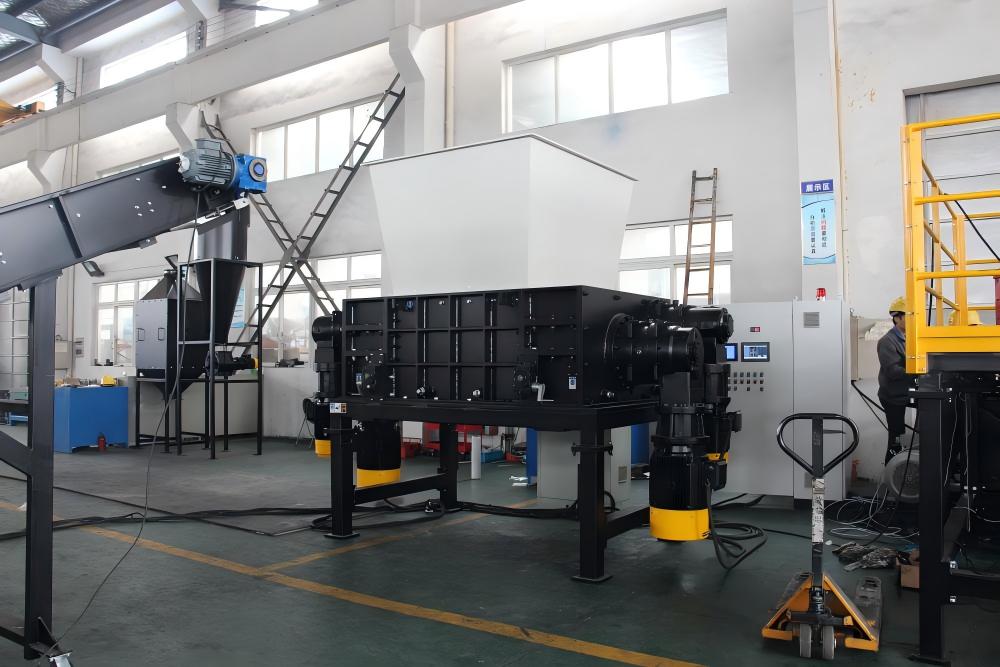
Designing a blade set requires precise calculations to ensure the motor’s torque is effectively translated into shearing force. The fundamental formula for shear force (F) is F = τ × A, where τ is the shear strength of the material being shredded and A is the cross-sectional area of the cut. In a four-shaft shredder, this calculation must account for the simultaneous engagement of multiple teeth.
To calculate the required torque (T) for a shaft, engineers use T = F × r, where r is the radius of the blade. However, because the four-shaft shredder uses a screen, the ‘recirculation load’ must be factored in. This is often expressed as a percentage of the primary throughput. If the recirculation load is high, the blades will experience more wear per ton of finished product. Designers must balance the blade thickness (which determines the width of the cut) with the available torque to prevent the machine from stalling during peak loads.
Another critical calculation is the ‘tip speed.’ The peripheral speed of the blade hooks must be optimized to grab the material without simply ‘polishing’ it. For plastics, a lower tip speed with high torque is often preferred to prevent melting, whereas for brittle materials like glass or certain electronics, higher speeds can be utilized to encourage fracturing.
Parameter Table: Material and Application Comparison
| Material Grade | Hardness (HRC) | Primary Application | Key Advantage |
|---|---|---|---|
| D2 / SKD11 | 58-60 | General Plastics, Rubber, E-Waste | High wear resistance, holds edge well. |
| H13 (Chromium-Moly) | 52-54 | Light Metals, Contaminated Waste | Excellent toughness, resists thermal cracking. |
| DC53 | 60-62 | Heavy-Duty Scrap, Hard Plastics | Superior fatigue strength over D2. |
| 42CrMo | 50-55 | Wood, Soft Plastics, Textiles | Cost-effective for non-abrasive materials. |
Common Engineering Mistakes in Blade Design
One of the most frequent mistakes in four-shaft shredder blade design is over-prioritizing hardness at the expense of toughness. While a very hard blade stays sharp longer, it is prone to ‘micro-chipping.’ Once a chip occurs, the structural integrity of the hook is compromised, leading to a rapid failure. Engineers must find the ‘sweet spot’ where the blade can deflect slightly under extreme load rather than snapping.
Another common error is neglecting the axial clearance between the blades and the spacers. If the clearance is too wide, the shredder will ‘fold’ thin materials like film or paper rather than cutting them, leading to massive heat generation and eventual shaft deflection. Conversely, if the clearance is too tight, the friction between blades will cause premature wear and unnecessary energy consumption. Precision grinding of the blade thickness and the spacer width is mandatory for a high-functioning four-shaft system.
Finally, many operators fail to consider the ‘hook profile’ in relation to the material density. Using a high-hook-count blade for low-density, bulky waste often results in the material ‘bridging’ over the shafts rather than being pulled in. The blade design must be matched to the bulk density and the coefficient of friction of the specific waste stream to ensure consistent feeding.
Selection Checklist for Four-Shaft Shredder Blades
- Identify the Primary Material: Is it abrasive (glass-filled plastic), tough (tires), or brittle (e-waste)?
- Determine Desired Particle Size: This dictates the blade thickness and the number of hooks.
- Verify Shaft Torque: Ensure the blade diameter and hook depth do not exceed the motor’s capacity.
- Check Chemical Compatibility: If shredding wet waste or chemicals, consider stainless steel or specialized coatings to prevent corrosion.
- Evaluate Maintenance Capabilities: Can your team sharpen these blades in-house, or do they require specialized CNC grinding?
- Assess Impact Risk: If ‘unshreddables’ (like heavy steel chunks) might enter the chamber, prioritize toughness (H13/DC53) over extreme hardness.
- Review Screen Size: The blade geometry must work in harmony with the screen hole diameter to prevent clogging.
Frequently Asked Questions (FAQ)
How often should four-shaft shredder blades be sharpened?
The frequency depends entirely on the material being processed. For clean plastics, blades may last 1,000 to 2,000 hours. For abrasive materials like glass-reinforced polymers or sandy agricultural film, sharpening may be required every 500 hours. Monitoring the motor’s amp draw is a good way to tell; as blades dull, the energy required to cut increases.
Can I mix different blade designs on the same shaft?
While possible, it is generally not recommended unless specifically designed by the manufacturer. Mixing designs can lead to uneven loading on the shaft and bearings. However, some specialized applications use a ‘staggered’ hook arrangement to reduce the peak torque required by ensuring that not all hooks engage the material at the exact same millisecond.
What is the difference between a ‘solid’ blade and a ‘bolted’ insert?
Solid blades are made from a single piece of tool steel and are generally more robust for heavy-duty applications. Bolted inserts allow you to change only the cutting edge, which can save money on material costs. However, in high-vibration four-shaft environments, the bolts can loosen, leading to catastrophic internal damage. HARSLE typically recommends solid blades for maximum reliability in industrial settings.
Why is my four-shaft shredder overheating?
Overheating is usually caused by friction. This could be due to dull blades, incorrect axial clearance (blades rubbing against spacers), or material wrapping around the shafts. In a four-shaft system, if the screen is clogged, the blades will continue to work the material without discharging it, leading to rapid heat buildup through friction.
How does blade thickness affect the final product?
In a four-shaft shredder, the blade thickness primarily determines one dimension of the output particle. If you use 20mm thick blades, the resulting shreds will generally be 20mm wide. The other dimensions are controlled by the hook frequency and the sizing screen. Choosing the right thickness is a balance between the desired output and the mechanical strength of the blade itself.


