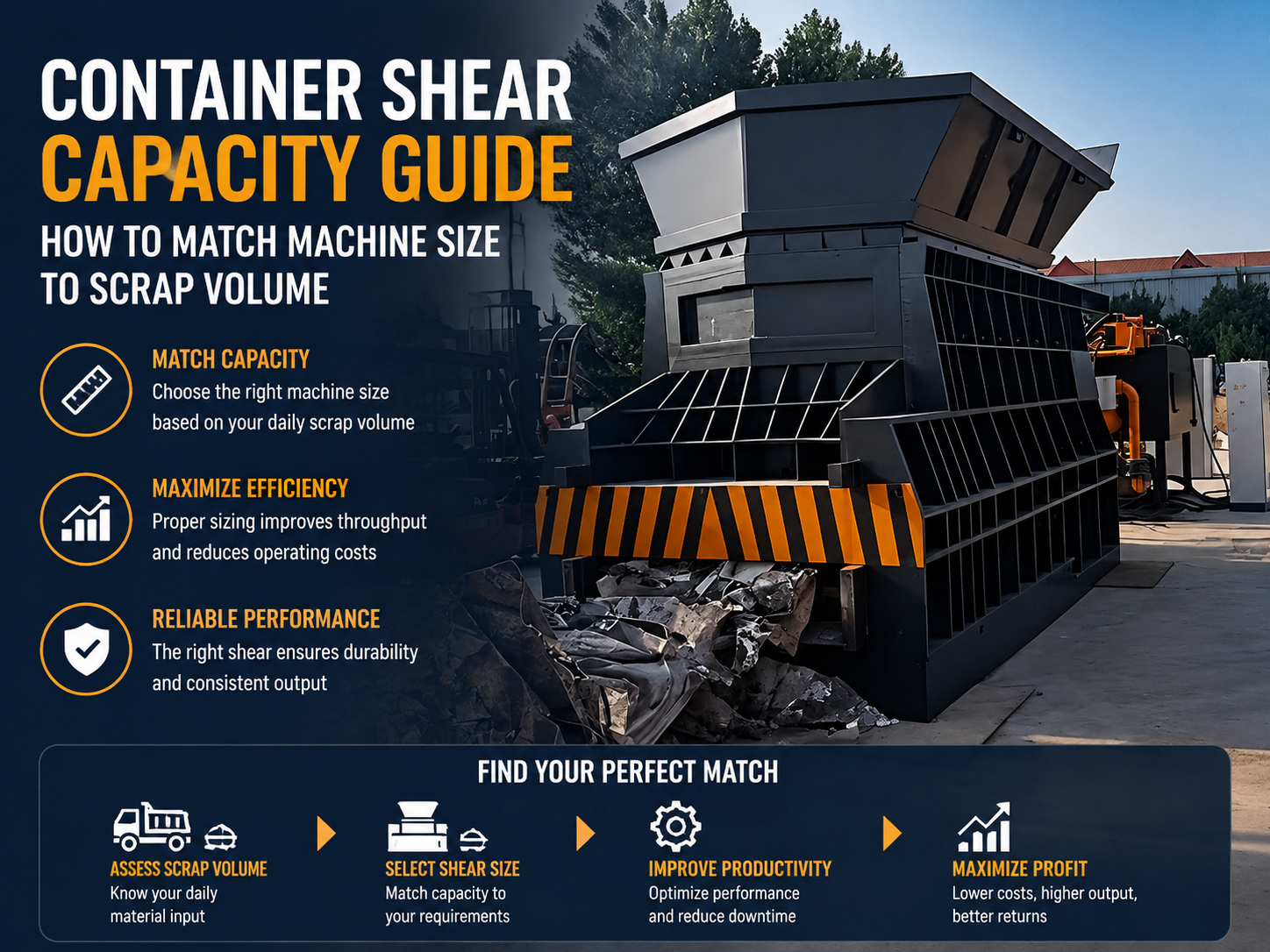
Container Shear Capacity Guide: How to Match Machine Size to Scrap Volume

Technical Overview: The Mechanics of Container Shears
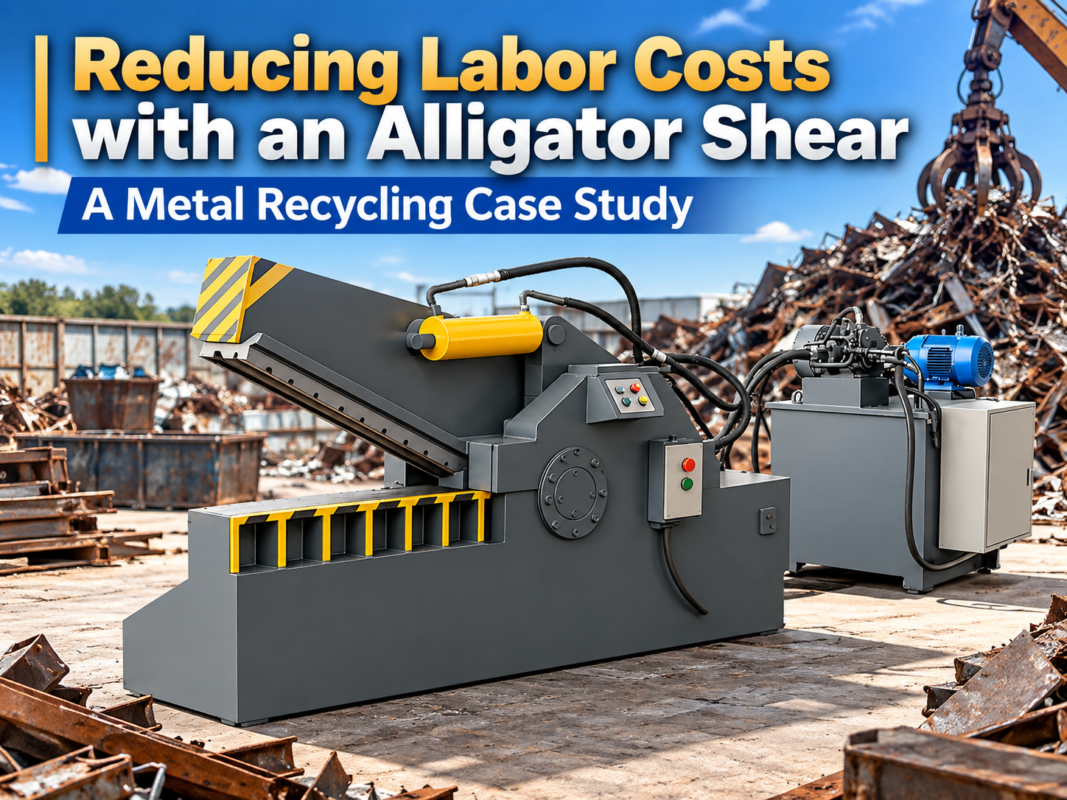
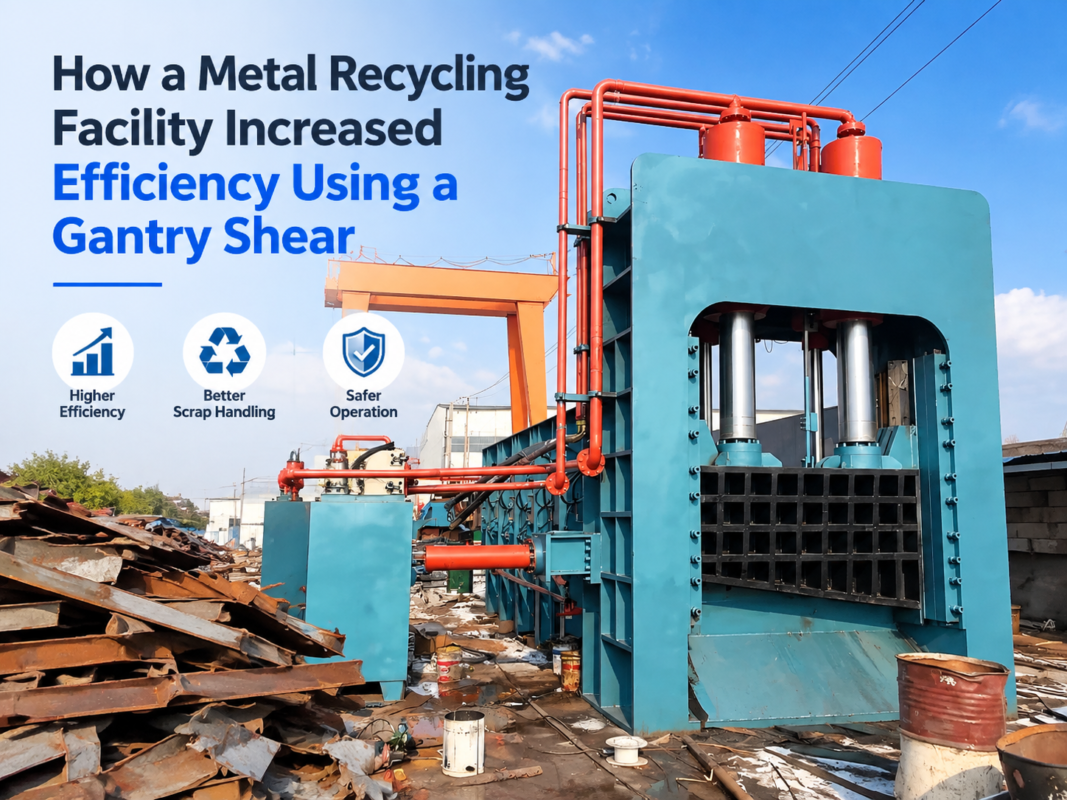
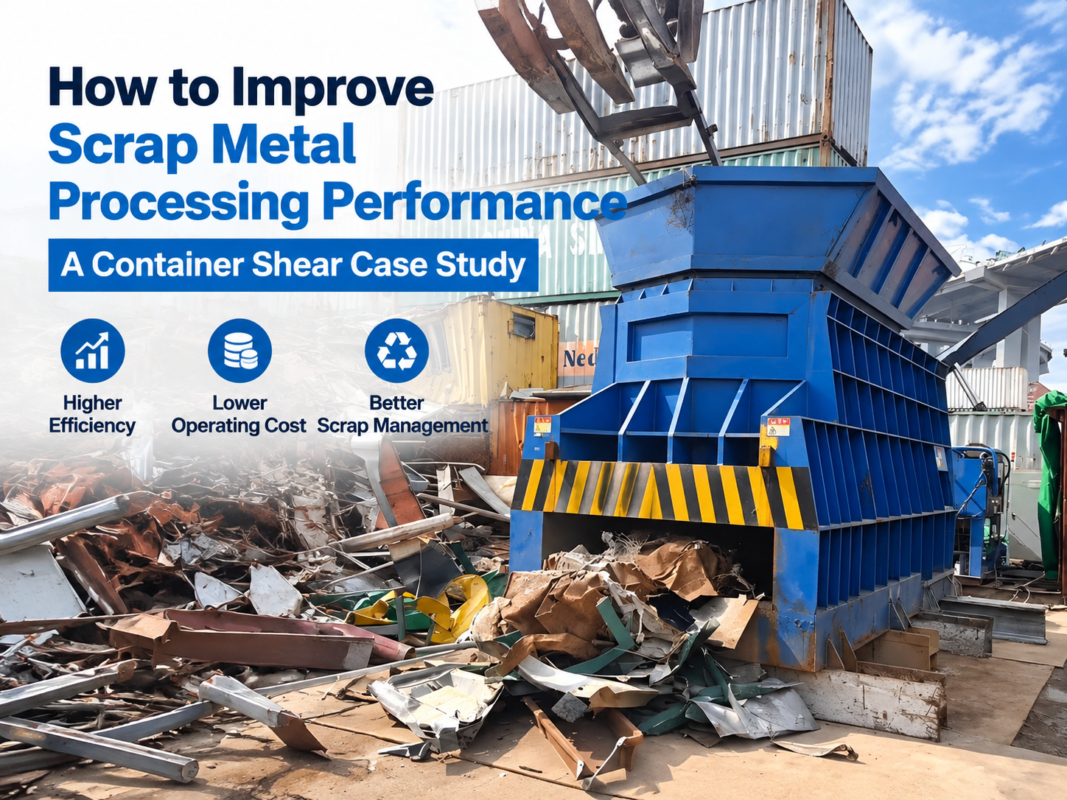
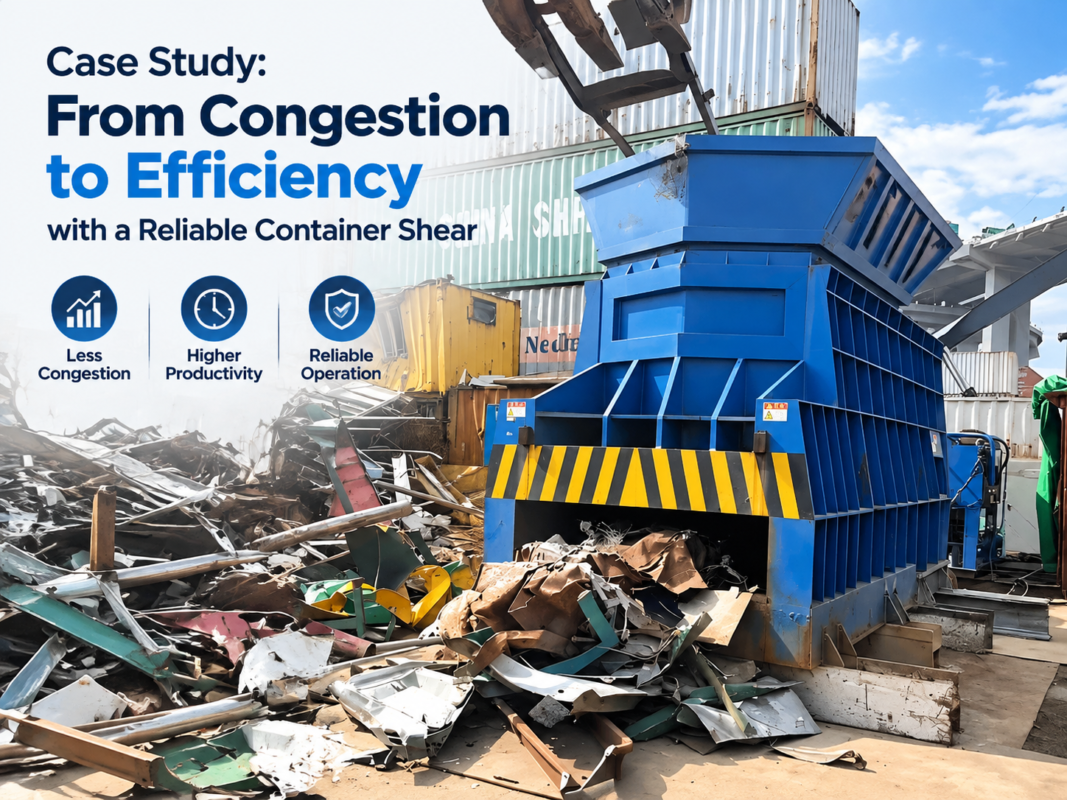
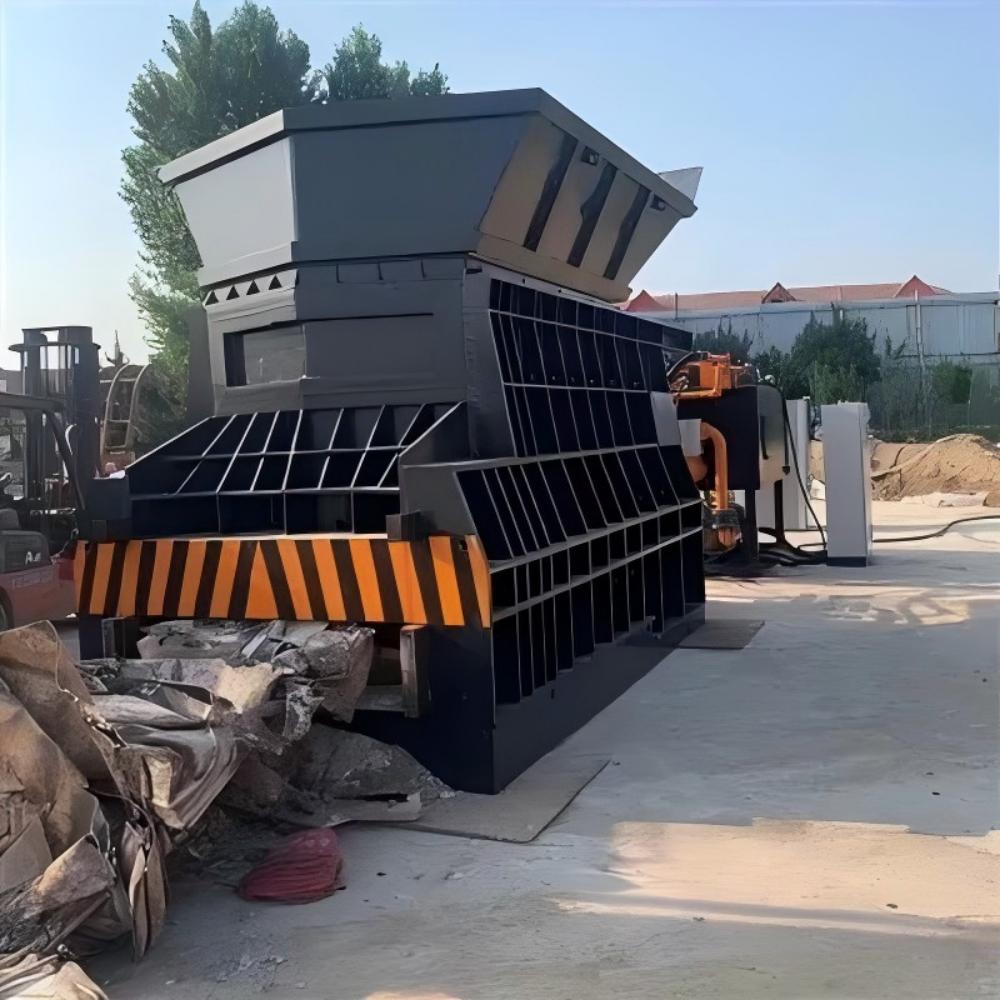
In the modern metal recycling industry, the container shear (also known as a horizontal scrap shear) has emerged as a cornerstone of efficiency. Unlike traditional gantry shears that require massive civil engineering foundations and permanent installations, the container shear is designed for versatility, often featuring a self-contained, box-like structure that can be transported or moved within a scrap yard. The primary function of this machine is to compress and cut bulky metal scrap into manageable, high-density pieces suitable for furnace charging.
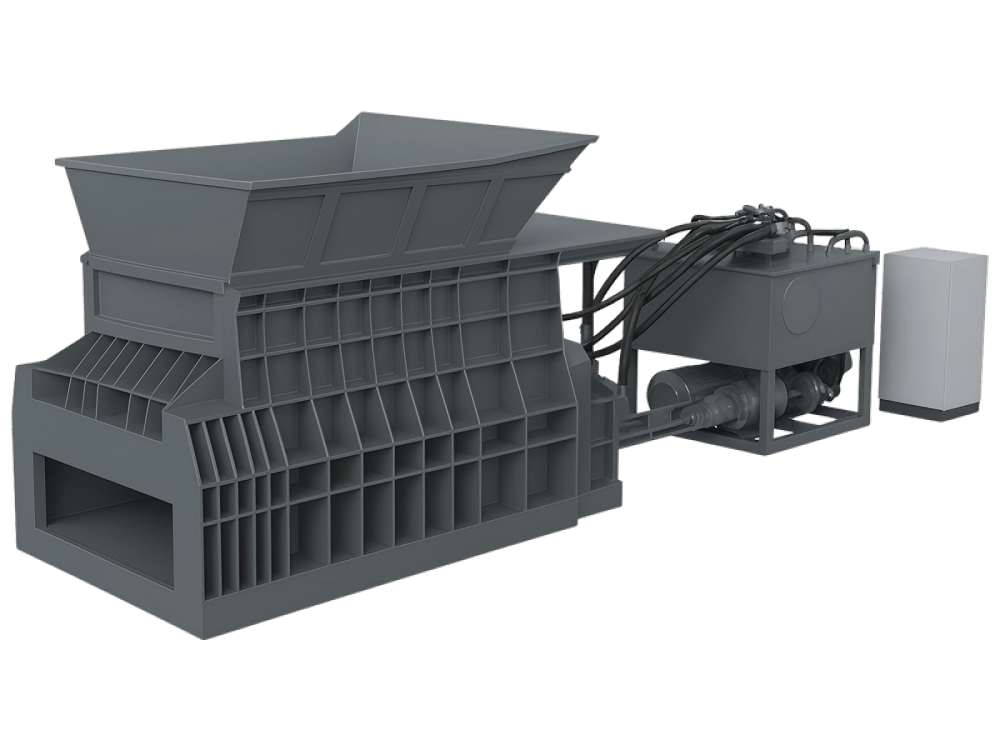
The technical superiority of a container shear lies in its integrated feeding and shearing mechanism. The machine typically consists of a large charging box where loose scrap is loaded. A hydraulic pusher then moves the material toward the shearing head. As the material reaches the blade, a vertical or horizontal hydraulic cylinder exerts immense pressure to shear the metal. This process is continuous, allowing for high throughput compared to manual torch cutting or smaller alligator shears. Understanding the mechanical limits and hydraulic capabilities is the first step in determining the right Container Shear Capacity : Match Machine Size Scrap Volume for your specific operation.
From an engineering perspective, these machines are rated by their shearing force, usually measured in metric tons. Common sizes range from 400 tons to over 1250 tons. However, capacity isn’t just about the force of the blade; it involves the volume of the feeding box, the speed of the hydraulic cycle, and the structural integrity of the frame. A machine with a high shearing force but a small feeding box will struggle with bulky structural steel, while a large box with insufficient force will fail to cut through thick-walled pipes or heavy plates. Therefore, matching the machine to the scrap profile is a multi-dimensional engineering challenge.
Furthermore, the hydraulic system is the heart of the container shear. High-pressure piston pumps, sophisticated valve blocks, and cooling systems ensure that the machine can operate under heavy loads for extended shifts. Modern HARSLE container shears often incorporate PLC (Programmable Logic Controller) systems to automate the shearing cycle, optimizing the pusher speed and blade stroke based on the resistance encountered. This level of technical sophistication allows for a more precise match between the machine’s output and the yard’s processing requirements.
Core Parameters Influencing Capacity
When evaluating Container Shear Capacity : Match Machine Size Scrap Volume, several core parameters must be analyzed in detail. The most prominent is the Shearing Force. This is the maximum pressure the hydraulic cylinder can apply to the blades. For light scrap like aluminum extrusions or thin sheet metal, a 400-500 ton shear is often sufficient. However, for HMS 1 (Heavy Melting Scrap) or structural beams, forces exceeding 800 tons are required to ensure clean cuts and prevent machine stalling.
The second critical parameter is the Feeding Box Dimensions. The length, width, and depth of the box determine the maximum size of the scrap pieces that can be loaded without prior preparation. If your scrap stream consists of long pipes or large automotive frames, a box length of 5 to 7 meters is essential. A mismatch here leads to increased labor costs, as operators must use torches or smaller shears to pre-cut material before it can even enter the container shear. Efficiency is lost when the machine is waiting for material to be resized manually.
Thirdly, the Cycle Time defines the machine’s speed. This is the time taken for the pusher to advance, the blade to shear, and the system to reset for the next cut. Cycle time is influenced by the motor power (kW) and the flow rate of the hydraulic pumps. A faster cycle time directly translates to higher hourly tonnage. For high-volume yards processing over 100 tons per day, a machine with a rapid-return valve system and high-flow pumps is non-negotiable. Conversely, a smaller yard might prioritize lower energy consumption over raw speed.
Finally, the Blade Length and Opening Height determine the cross-sectional area the machine can handle in a single stroke. A wider blade allows for more material to be processed at once, but it also spreads the shearing force over a larger area, potentially reducing the effective cutting pressure on very thick items. Engineering the balance between blade width and hydraulic pressure is what separates industrial-grade container shears from entry-level models. HARSLE focuses on optimizing this ratio to ensure that the machine can handle a diverse scrap mix without losing efficiency.
Calculation Method: Estimating Throughput and Volume
To accurately match a container shear to your scrap volume, you must perform a throughput calculation. The basic formula for estimating hourly production is: T = (V × D × 60 × E) / C. In this formula, T is the throughput in tons per hour, V is the volume of the feeding box in cubic meters, D is the average density of the scrap after compression (tons/m³), 60 represents minutes per hour, E is the efficiency factor (usually 0.7 to 0.85), and C is the total cycle time in minutes.
Let’s break down the density factor (D). Loose scrap has a very low density, but the container shear’s pusher and side-press (if equipped) compress the material before the cut. For HMS 2, the compressed density might range from 0.5 to 0.8 tons per cubic meter. For heavier structural scrap, this can exceed 1.2 tons per cubic meter. Accurately estimating the density of your specific scrap mix is vital. If you overestimate density, you will buy a machine that underperforms your expectations; if you underestimate it, you may overspend on a machine that is too large for your needs.
The efficiency factor (E) accounts for real-world variables such as the time taken to load the box with a crane or grapple, operator breaks, and minor maintenance checks. In a well-organized yard with a skilled crane operator, efficiency can reach 85%. However, if the crane is underpowered or the scrap is tangled and difficult to load, efficiency might drop to 60%. When calculating Container Shear Capacity : Match Machine Size Scrap Volume, always plan for the “bottleneck” in your operation, which is often the loading speed rather than the shearing speed itself.
Another calculation to consider is the Annual Processing Goal. If your yard intends to process 20,000 tons per year, and you operate 250 days a year for 8 hours a day, you need a machine capable of a consistent 10 tons per hour. However, you should never buy a machine that meets your exact requirement at 100% load. It is standard engineering practice to select a machine with a rated capacity 20-30% higher than your average requirement to account for peak volumes and to reduce wear and tear on the hydraulic system by not running it at maximum pressure constantly.
Parameter Table: Common Machine Sizes and Capacities
The following table provides a general guideline for matching machine specifications to typical scrap processing requirements. Note that these are average values and can vary based on material type and machine configuration.
| Model Class (Force) | Box Length (m) | Motor Power (kW) | Est. Throughput (Tons/Hr) | Best For… |
|---|---|---|---|---|
| 400 – 500 Tons | 4.5 – 5.0 | 45 – 75 | 4 – 8 | Light scrap, aluminum, thin sheet, small yard |
| 600 – 630 Tons | 5.0 – 6.0 | 75 – 110 | 8 – 12 | HMS 2, mixed light/medium scrap, auto bodies |
| 800 Tons | 6.0 – 7.0 | 110 – 160 | 12 – 18 | HMS 1, structural steel, heavy pipes, industrial scrap |
| 1000 – 1250 Tons | 7.0 – 8.0 | 160 – 250+ | 18 – 30+ | Heavy demolition scrap, thick plate, high-volume yards |
When using this table, consider the “Best For” column as a starting point. A 600-ton machine might be able to cut a heavy beam occasionally, but if 50% of your scrap is heavy beams, you will experience frequent blade jams and hydraulic overheating. Conversely, using a 1000-ton machine for light aluminum is an inefficient use of electricity and capital investment. The goal of Container Shear Capacity : Match Machine Size Scrap Volume is to find the “sweet spot” where the machine operates at 70-80% of its maximum capability most of the time.
Common Engineering Mistakes in Selection
One of the most frequent mistakes in selecting a container shear is underestimating the material hardness. Not all steel is created equal. Alloy steels, hardened shafts, or manganese-rich components require significantly more shearing force than standard carbon steel. If your scrap stream includes industrial machinery parts or railway scrap, a standard 600-ton shear will likely fail or sustain damage. Engineers must analyze the metallurgical properties of the scrap to ensure the blade material and hydraulic pressure are sufficient.
Another common error is ignoring the “Duty Cycle”. Some machines are designed for intermittent use, while others are built for continuous 24/7 operation. A machine with an undersized cooling system will perform well for the first two hours but will then slow down as the hydraulic oil thins due to heat. When matching machine size to volume, ensure the cooling capacity (air or water cooling) is rated for your climate and expected shift length. Overheating is the leading cause of premature seal failure and pump damage in hydraulic shears.
Poor site layout and logistics also negate the benefits of a high-capacity shear. If you purchase a 20-ton-per-hour machine but your yard layout only allows one crane to feed it, the machine will spend half its time idling. The “capacity” of the system is the capacity of the entire workflow, including loading, shearing, and the removal of processed material. Engineers should design the area around the container shear to allow for a continuous flow of material, ensuring that the machine’s potential is fully realized.
Finally, many buyers overlook maintenance accessibility. A machine that is difficult to service will have more downtime, effectively reducing its annual capacity. When selecting a machine, check the ease of blade rotation and replacement, the accessibility of hydraulic filters, and the robustness of the lubrication system. A machine that requires 4 hours of maintenance for every 8 hours of work is not a high-capacity machine, regardless of its tonnage rating. HARSLE designs emphasize accessible components to maximize “uptime,” which is a critical component of the Container Shear Capacity : Match Machine Size Scrap Volume equation.
Selection Checklist: Matching Machine to Volume
To ensure you select the right container shear, follow this engineering-focused checklist:
- Analyze Scrap Mix: Categorize your scrap by thickness, material type, and dimensions. What is the maximum thickness you need to cut daily?
- Determine Daily/Monthly Tonnage: Calculate your current volume and project your growth for the next 3-5 years.
- Evaluate Loading Capabilities: Do you have a grapple or magnet crane capable of keeping up with the shear’s cycle time?
- Check Power Supply: Does your facility have the electrical amperage to support 110kW+ motors, or do you need a diesel-powered unit?
- Assess Space Constraints: Measure the footprint for the machine, including the space needed for the pusher to retract and for the processed scrap pile.
- Review Hydraulic Specs: Look for reputable pump brands (like Rexroth or Parker) and ensure the system includes high-quality filtration and cooling.
- Blade Replacement Cost: Inquire about the cost and lifespan of the shearing blades. High-volume processing requires durable, reversible blades.
- Automation Requirements: Decide if you need remote control operation or fully automated cycles to reduce labor costs.
By systematically going through this checklist, you move away from guesswork and toward a data-driven procurement process. The goal is to achieve the lowest cost-per-ton of processed scrap, which is only possible when the machine size is perfectly matched to the scrap volume and type.
FAQ: Frequently Asked Questions
1. How often do the blades need to be changed in a container shear?
Blade life depends heavily on the material being processed. For standard HMS, blades can typically be rotated (using all four edges) every 200-500 hours of operation. Total replacement occurs once all edges are worn. Processing sandy or dirty scrap will accelerate wear significantly.
2. Can a container shear handle stainless steel or copper?
Yes, but stainless steel is much harder than carbon steel and requires more shearing force. When processing non-ferrous metals, the volume capacity remains the same, but you must ensure the hydraulic pressure is adjusted to prevent work-hardening of the material during the cut.
3. Is a stationary or portable container shear better?
Stationary units are generally more robust and easier to maintain due to fixed plumbing and power. Portable (containerized) units are ideal if you have multiple yards or need to process scrap at a demolition site. For most fixed scrap yards, a stationary unit offers better long-term ROI.
4. What is the difference between a container shear and a gantry shear?
A gantry shear is a vertical shear, usually much larger (up to 2000+ tons), requiring a deep foundation. A container shear is a horizontal unit that is more compact, easier to install, and generally more cost-effective for small to medium-sized operations processing up to 30 tons per hour.
5. How does the pusher speed affect capacity?
The pusher speed determines how quickly the box is emptied. However, pushing too fast against heavy resistance can cause hydraulic spikes. A machine with a variable-speed pusher (controlled by a PLC) optimizes the cycle by moving fast when there is no resistance and slowing down to provide maximum force during the cut.
6. What kind of foundation is required for a HARSLE container shear?
While they are more “portable” than gantry shears, a reinforced concrete pad is still required to handle the vibration and the weight of the machine (which can exceed 40-80 tons). Proper leveling is crucial to prevent frame twisting and uneven blade wear.