Essential Safety Checks Before Maintaining An Industrial Shredder

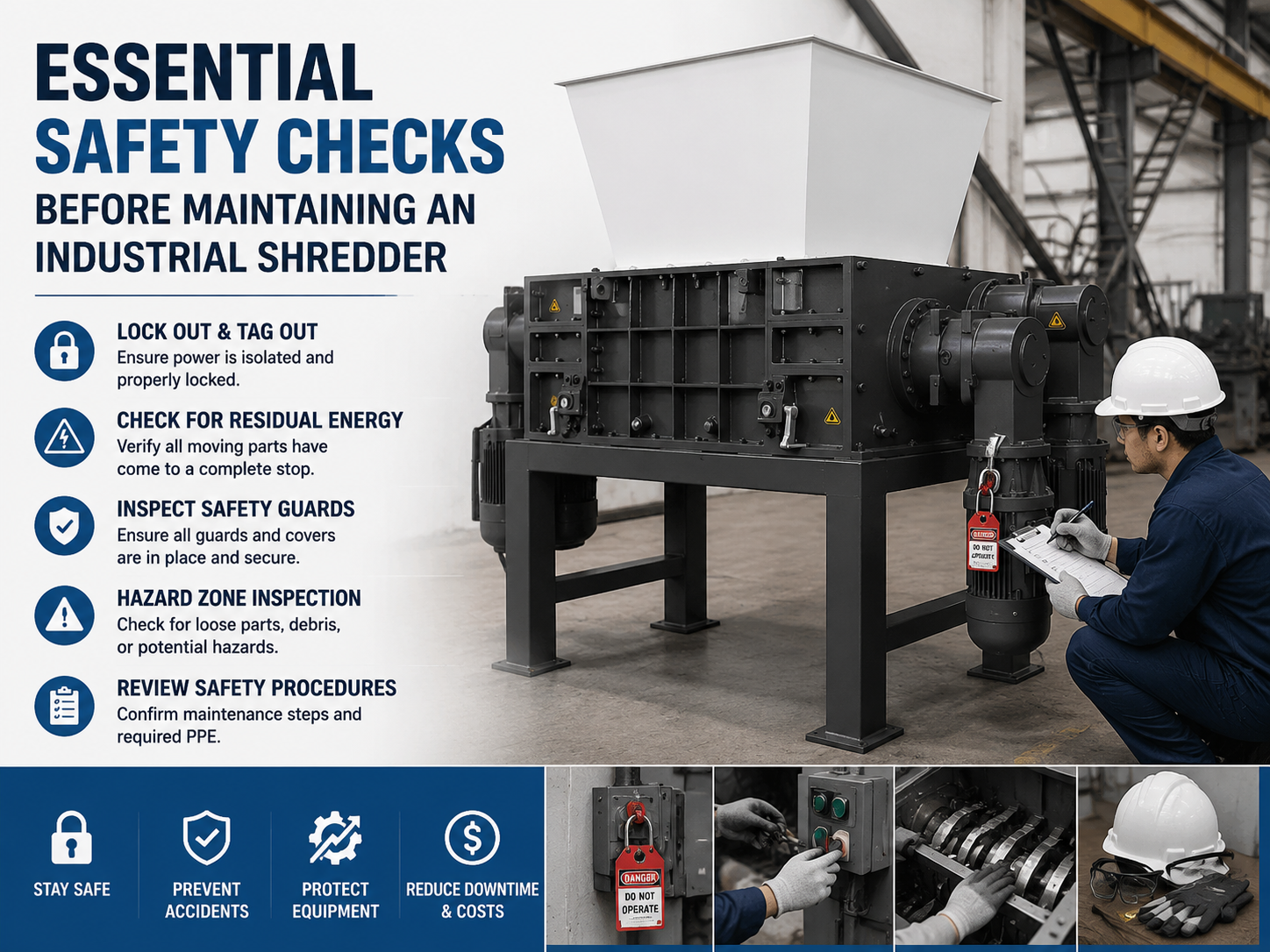
The Critical Importance of Industrial Shredder Maintenance
In the world of heavy-duty recycling and waste management, the industrial shredder stands as a cornerstone of productivity. Whether you are processing scrap metal, plastics, or electronic waste, these machines are designed to exert massive amounts of torque and shear force. However, the very power that makes them effective also makes them inherently dangerous if not handled with the utmost care. At HARSLE, we emphasize that maintenance is not just about keeping the machine running; it is about ensuring the safety of the operators and the longevity of the investment. Neglecting essential safety checks before maintaining an industrial shredder can lead to catastrophic mechanical failure or, worse, severe workplace injuries.
Regular maintenance serves as the first line of defense against unplanned downtime. In an industrial setting, every hour a machine is offline translates to lost revenue. By implementing a rigorous safety and maintenance protocol, facilities can identify minor issues—such as a loose bolt or a slightly worn seal—before they escalate into major repairs. Furthermore, a well-maintained shredder operates more efficiently, consuming less energy and producing a more consistent output size. This efficiency is critical for downstream processes, such as sorting or smelting, where material uniformity is key.
Safety, however, remains the primary driver for pre-maintenance checks. Industrial shredders utilize high-speed rotating shafts and hardened steel blades that can easily crush or sever. Before any technician even touches a wrench to the machine, a series of non-negotiable safety steps must be completed. This guide will walk you through the comprehensive process of preparing an industrial shredder for service, ensuring that every bolt turned and every filter changed is done within a framework of total safety.
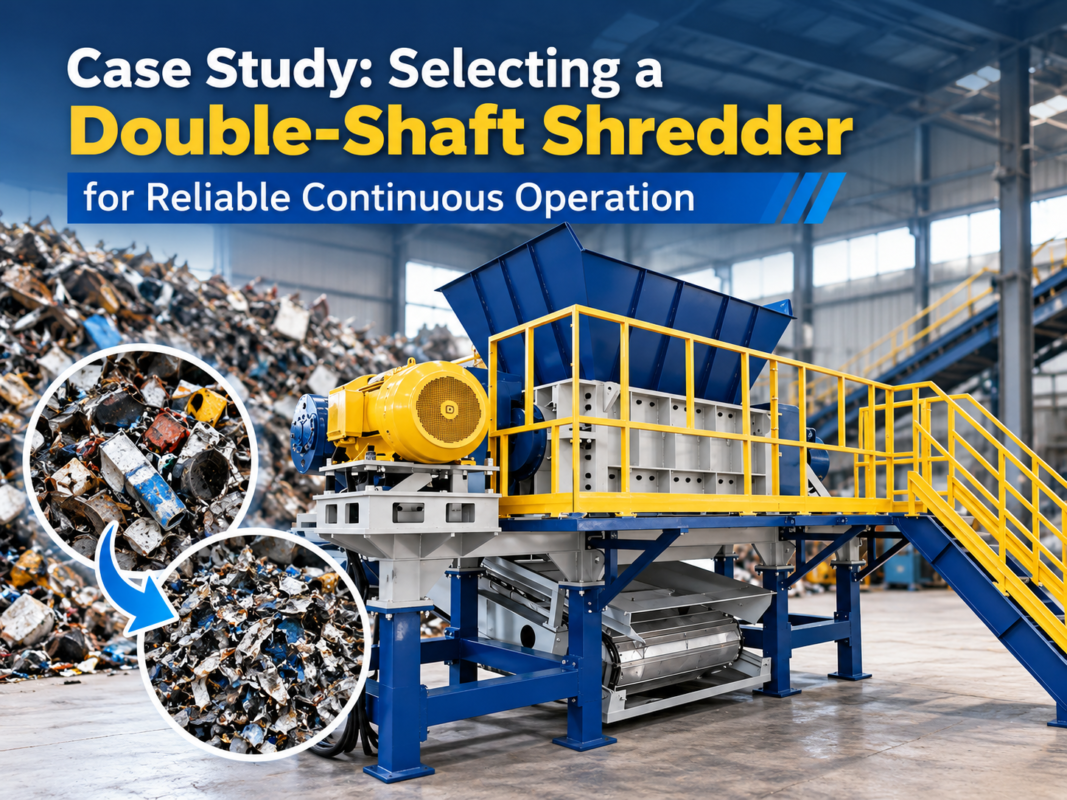
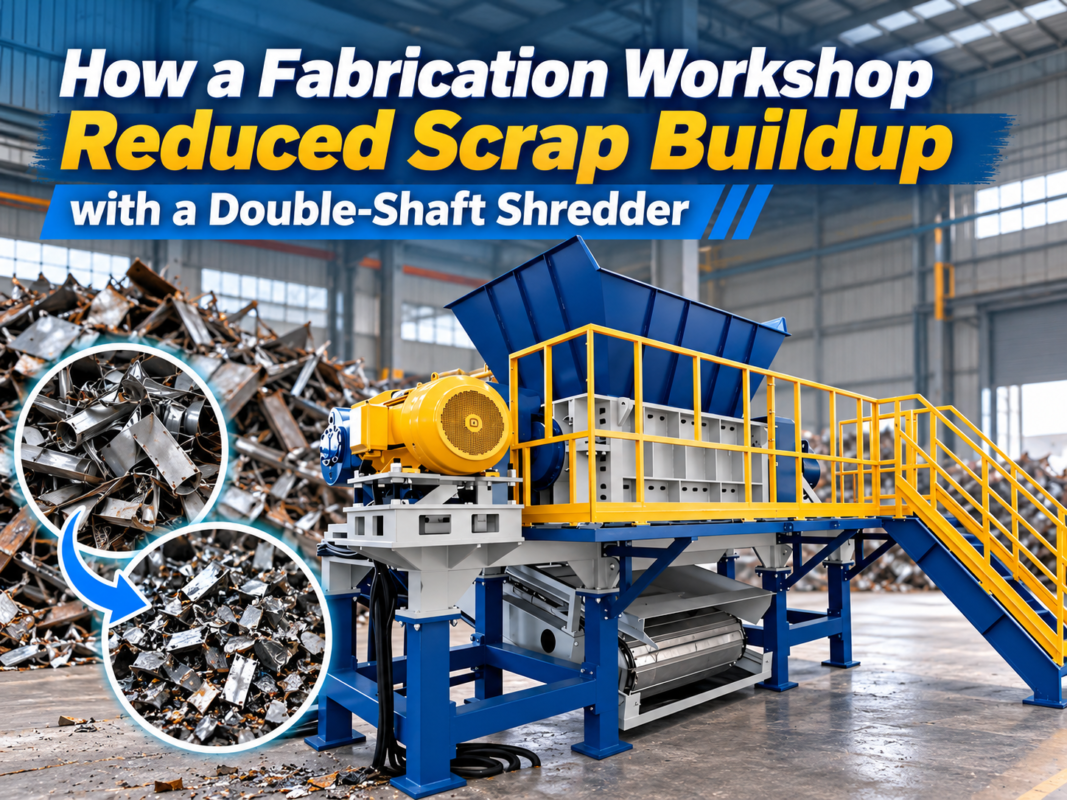
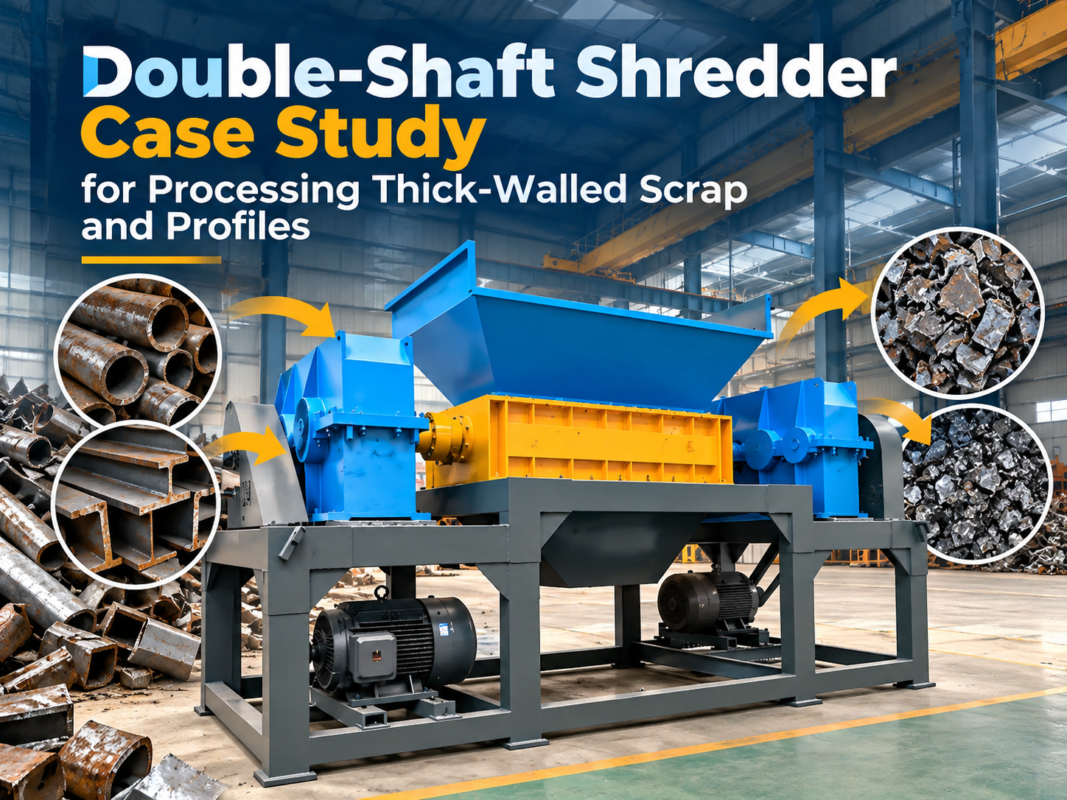
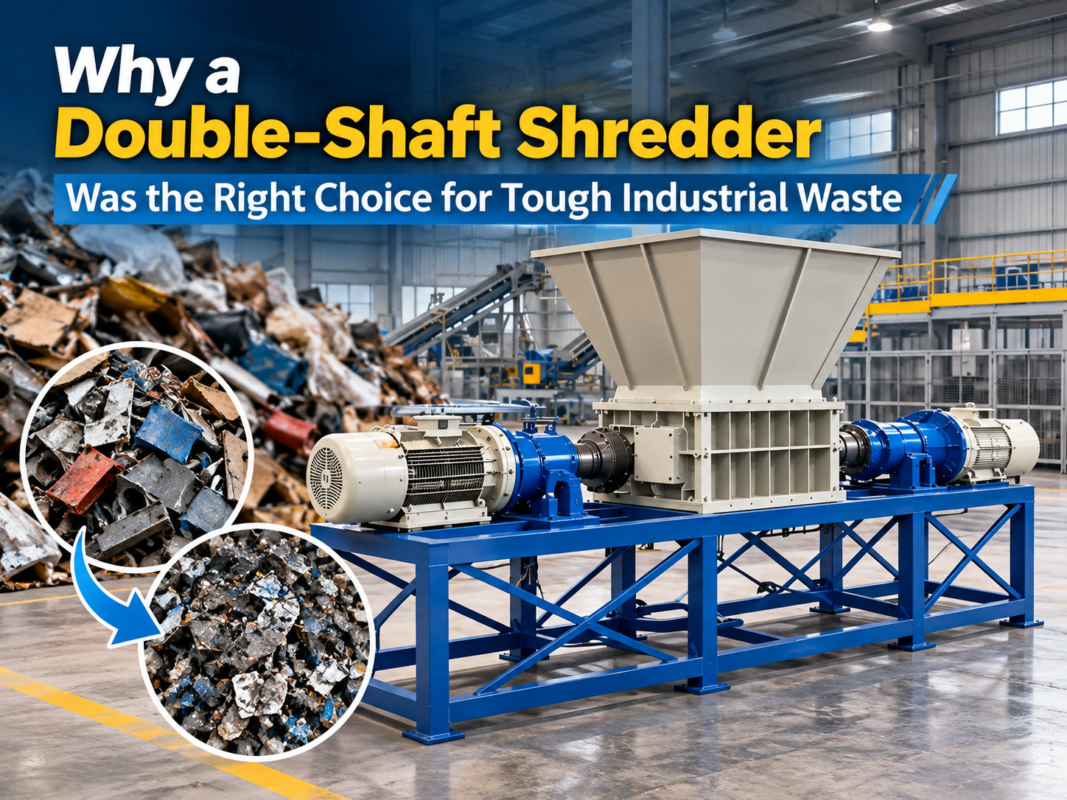
Finally, understanding the specific engineering of your HARSLE equipment is vital. Different models, such as single-shaft, double-shaft, or four-shaft shredders, have unique maintenance requirements. However, the fundamental safety principles remain the same across the board. By fostering a culture of safety-first maintenance, companies can protect their most valuable assets: their people and their machinery.
Daily Inspection: The Foundation of Shredder Longevity
The daily inspection is a proactive approach to machinery health. It should be performed at the start of every shift and again before any scheduled maintenance activity. This visual and auditory sweep allows the operator to catch anomalies that might have developed during the previous production cycle. Start by examining the hopper and the cutting chamber. Ensure there are no foreign objects or unshreddable materials wedged between the blades. Even a small piece of hardened tool steel or an oversized alloy chunk can cause significant damage if the machine is restarted without clearing it.
Next, inspect the exterior of the machine for any signs of structural stress. Look for cracks in the frame, loose mounting bolts, or signs of oil leakage around the bearing housings. Industrial shredders vibrate naturally during operation, but excessive vibration can lead to the loosening of critical fasteners. Checking these daily prevents the ‘domino effect’ where one loose component causes the misalignment of others. Pay close attention to the discharge area as well; accumulated dust or debris can pose a fire hazard or interfere with the conveyor systems.
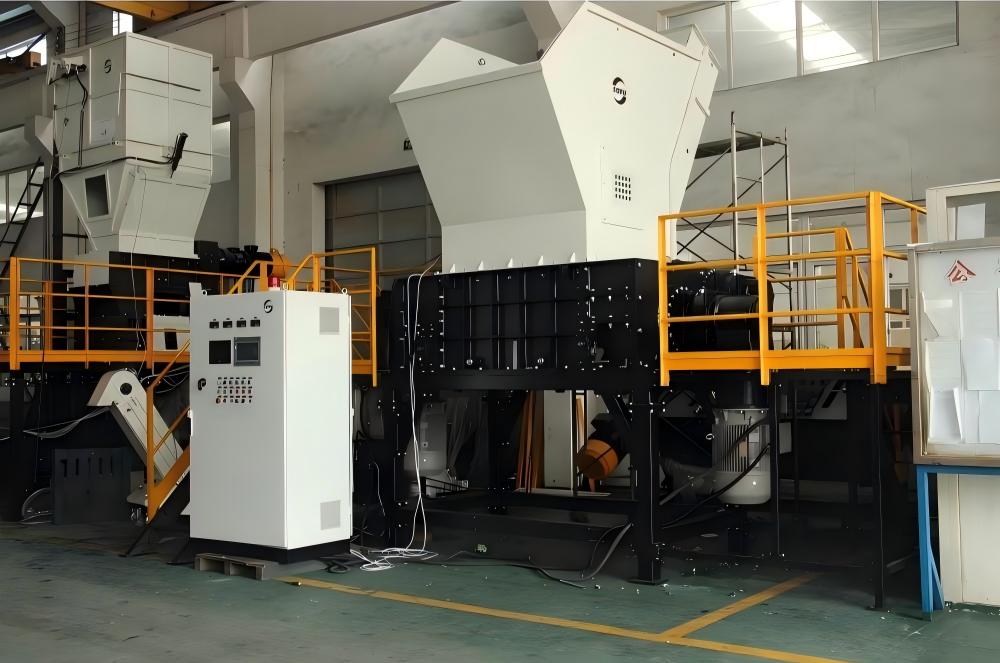
Auditory checks are equally important. Before shutting down for maintenance, listen to the machine while it is idling. Are there any grinding, squealing, or rhythmic thumping sounds? These are often the first indicators of bearing wear or gear misalignment. Documenting these sounds helps maintenance teams pinpoint the source of the problem more quickly once the machine is locked out. A daily logbook should be kept to track these observations, providing a historical record that can be invaluable for long-term troubleshooting.
Lastly, check the status of all safety guards and emergency stop buttons. An emergency stop that is stuck or a guard that is improperly bypassed is a major safety violation. These components must be in perfect working order before any maintenance begins. If a guard must be removed for service, it should be the very last thing taken off and the first thing put back on. The daily inspection is not just a checklist; it is a mindset that prioritizes the integrity of the machine and the safety of the environment.
Hydraulic System Checks: Pressure and Fluid Integrity
Many industrial shredders rely on hydraulic systems to drive the shafts or to power the ram feeders that push material into the cutters. Because hydraulic systems operate under extreme pressure, they require specific safety checks before maintenance. The first step is to check the hydraulic fluid level and its condition. Fluid that appears milky or dark may be contaminated with water or oxidized by heat, indicating that a fluid change and system flush are necessary. Maintaining clean oil is the single most effective way to extend the life of hydraulic pumps and motors.
Before performing any work on the hydraulic circuit, it is imperative to bleed off any residual pressure. Even when the pump is turned off, pressure can remain trapped in the lines or accumulators. Opening a pressurized line can result in a high-velocity oil spray that can penetrate the skin, causing serious injury. Technicians should use the machine’s designated pressure release valves and verify that the pressure gauges read zero before loosening any fittings. This is a critical component of the ‘Essential Safety Checks Before Maintaining An Industrial Shredder’.
Inspect all hoses and fittings for signs of wear, such as fraying, kinking, or ‘weeping’ at the crimped ends. In the high-vibration environment of a shredder, hoses can rub against the frame, leading to thin spots that are prone to bursting. HARSLE recommends using protective sleeves on all hydraulic lines to minimize this risk. If a hose shows any sign of damage, it should be replaced immediately rather than patched. Furthermore, check the hydraulic oil cooler for blockages. A shredder that runs too hot will cause the hydraulic seals to harden and fail prematurely.
Finally, examine the hydraulic cylinders and valves. Look for scoring on the cylinder rods, which can damage seals and lead to internal bypassing. Ensure that the solenoid valves are firing correctly and that there are no leaks around the valve manifold. A well-maintained hydraulic system provides the smooth, consistent power necessary for heavy-duty shredding, but it must be treated with the respect that high-pressure systems demand.
Electrical Safety and Lockout/Tagout (LOTO) Protocols
Electrical safety is perhaps the most critical aspect of pre-maintenance checks. Industrial shredders typically operate on high-voltage power supplies that can be lethal. The cornerstone of electrical safety is the Lockout/Tagout (LOTO) procedure. Before any maintenance begins, the main power source must be disconnected and physically locked in the ‘off’ position. Each technician working on the machine must apply their own personal lock and tag. This ensures that the machine cannot be accidentally restarted while someone is still working inside the cutting chamber or near the drive train.
Once the power is locked out, a ‘try-out’ test must be performed. Attempt to start the machine using the normal operator controls to verify that the power is indeed disconnected. This step confirms that the correct breaker was thrown and that there are no secondary power sources or stored energy in capacitors that could cause an unexpected movement. Only after the machine fails to start can it be considered safe for maintenance. This protocol is a non-negotiable standard in any professional metal fabrication or recycling facility.
Beyond LOTO, the electrical cabinet itself requires inspection. Open the control panel and look for signs of overheating, such as discolored wire insulation or a burnt smell. Dust and metallic particles can accumulate inside the cabinet, leading to short circuits or arc flashes. Use compressed air or a specialized vacuum to clean the components. Check that all terminal screws are tight, as vibrations can loosen electrical connections over time, leading to intermittent faults or increased resistance and heat.
Sensors and limit switches also play a vital role in shredder safety. These devices detect if a hopper is open or if a screen is out of place, preventing the machine from operating in an unsafe configuration. During maintenance, verify that these sensors are clean and properly aligned. If a sensor is bypassed for testing purposes, it must be restored to its functional state before the machine is returned to production. Electrical integrity is the brain of the shredder; keeping it healthy ensures the entire machine operates logically and safely.
Mechanical Checks: Blades, Shafts, and Bearings
The mechanical heart of the shredder—the blades and shafts—bears the brunt of the daily workload. Before maintenance, a thorough mechanical inspection is required to assess the wear and tear on these components. Start with the cutting blades (or knives). Depending on the material being processed, blades will eventually dull or chip. Dull blades increase the load on the motor and reduce throughput. Check the gap between the rotating blades and the counter-knives; if the clearance is too wide, the material will be ‘smeared’ rather than cut, leading to heat buildup and potential jams.
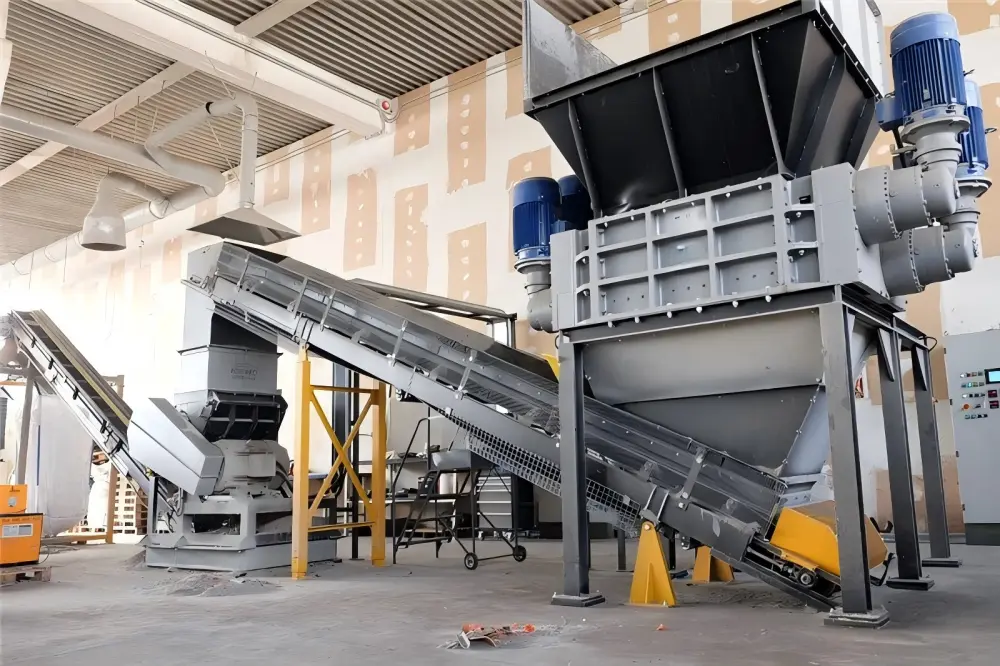
Shaft alignment is another critical mechanical check. If the shafts are not perfectly parallel (in multi-shaft designs), the gears and bearings will experience uneven loading. This can lead to premature bearing failure or even a snapped shaft. Use precision measuring tools to verify alignment according to the HARSLE technical manual. While inspecting the shafts, look for any signs of ‘wrapping’—where thin materials like wire or plastic film have wound tightly around the shaft. This can create friction, melt the material, and eventually damage the shaft seals.
Bearings are the silent workhorses of the shredder. During the pre-maintenance check, look for signs of grease leakage or metallic flakes in the lubricant, which indicate internal bearing damage. If the machine is equipped with an automatic lubrication system, ensure the lines are clear and the pump is functioning. For manual systems, verify that each grease point is accepting lubricant. A seized bearing can cause the shaft to lock up, leading to catastrophic damage to the drive motor and gearbox. Mechanical checks require a keen eye and a systematic approach to ensure every moving part is accounted for.
Don’t forget the drive system. Whether your shredder uses belts, chains, or direct-drive gearboxes, these components need inspection. Check belt tension and look for cracks or glazing. For chain drives, ensure proper lubrication and check for ‘stretch’ or worn sprockets. Gearboxes should be checked for oil levels and any unusual noise during the coast-down period. By addressing these mechanical elements during scheduled maintenance, you prevent the ’emergency’ repairs that always seem to happen at the worst possible time.
Developing a Comprehensive Lubrication Plan
Lubrication is the lifeblood of industrial machinery, and for a shredder, it is the difference between a long service life and a premature trip to the scrap yard. A comprehensive lubrication plan should be part of your ‘Essential Safety Checks Before Maintaining An Industrial Shredder’. Not all greases are created equal; high-torque, low-speed applications like shredding require lubricants with high film strength and extreme pressure (EP) additives. Consult your HARSLE manual to ensure you are using the correct grade of grease and oil for each specific component.
The lubrication plan should specify the frequency of application for every grease point. Bearings, gear couplings, and pivot points on ram feeders all have different requirements. Over-lubrication can be just as damaging as under-lubrication, as it can lead to seal failure and the accumulation of heat. An effective plan includes cleaning the grease fittings before applying the grease gun to prevent pushing dirt and grit into the bearing. This simple step is often overlooked but is vital for maintaining the purity of the lubricant.
For machines with automated lubrication systems, maintenance involves checking the reservoir levels and ensuring the timer or PLC-controlled cycles are functioning correctly. These systems are excellent for providing ‘small and frequent’ doses of lubricant, which is ideal for bearings under constant load. However, they are not ‘set and forget.’ Technicians must still visually verify that grease is actually reaching the destination points. A blocked line in an automated system can lead to a bearing failure that goes unnoticed until it is too late.
Finally, consider the environmental conditions of your facility. If the shredder is operating in a very dusty or wet environment, lubrication intervals may need to be shortened. Contaminants can work their way into housings, emulsifying the oil or turning grease into an abrasive paste. Regular oil analysis is a high-level maintenance strategy that can detect these issues early. By analyzing the wear metals and contaminant levels in the oil, you can predict component failure before it happens, allowing for truly proactive maintenance.
Troubleshooting Signals: Identifying Problems Early
Being able to read the ‘body language’ of an industrial shredder is a skill that every maintenance technician should develop. Troubleshooting signals are the machine’s way of telling you that something is wrong before a total breakdown occurs. One of the most common signals is a change in the sound profile. A high-pitched whine often points to a hydraulic pump issue or a bearing starting to fail. A deep, rhythmic thud might indicate a broken tooth on a gear or a loose blade. These sounds should never be ignored.
Vibration is another key indicator. While all shredders vibrate, a sudden increase in vibration intensity or a change in its frequency suggests an imbalance. This could be caused by uneven blade wear, a bent shaft, or a failing motor mount. Using a handheld vibration meter can help quantify these changes and provide data for more accurate troubleshooting. Heat is also a major red flag. Use an infrared thermometer to check the temperature of bearings, motors, and hydraulic reservoirs. If one bearing is significantly hotter than the others, it is likely under-lubricated or failing.
The quality of the shredded output is a direct reflection of the machine’s internal health. If the output size becomes inconsistent or if the machine is ‘stalling’ more frequently on material it used to handle easily, the blades are likely dull or the clearance is out of spec. Monitoring the motor’s amperage draw during operation can also provide clues. If the motor is consistently drawing more current than usual for the same load, it is working harder to overcome internal friction or dull cutting edges. These signals are the early warning system that, if heeded, can save thousands of dollars in repair costs.
Industrial Shredder Maintenance Schedule Table
A structured maintenance schedule is essential for keeping track of the various tasks required to maintain an industrial shredder. Below is a recommended schedule based on standard operating hours.
| Frequency | Component | Action Required | Safety Note |
|---|---|---|---|
| Daily | Cutting Chamber | Visual inspection for debris/unshreddables | Ensure machine is stopped |
| Daily | Safety Systems | Test E-stops and interlocks | Do not bypass any sensors |
| Weekly | Hydraulic System | Check fluid levels and hose integrity | Watch for weeping fittings |
| Weekly | Drive Belts/Chains | Check tension and wear | LOTO required |
| Monthly | Bearings | Manual lubrication (if not automated) | Clean fittings before greasing |
| Monthly | Electrical Cabinet | Vacuum dust and check connections | Power must be locked out |
| Quarterly | Blades/Knives | Check clearance and sharpness | Wear cut-resistant gloves |
| Quarterly | Gearbox | Check oil quality and levels | Sample oil for analysis |
| Annually | Structural Frame | Inspect welds and mounting bolts | Check for stress fractures |
| Annually | Hydraulic Oil | Full system flush and filter change | Dispose of oil responsibly |
Frequently Asked Questions (FAQ)
1. Why is Lockout/Tagout (LOTO) so important for shredder maintenance?
LOTO is the only way to guarantee that the machine cannot be energized while a technician is in a danger zone. Given the high torque and cutting power of industrial shredders, an accidental start-up is almost always fatal or results in permanent disability. It is the foundation of all ‘Essential Safety Checks Before Maintaining An Industrial Shredder’.
2. How often should I sharpen or replace the shredder blades?
The frequency depends entirely on the material being processed. Abrasive materials like glass or contaminated plastics will dull blades faster than clean aluminum. Monitor the output quality and motor amperage; when performance drops by 15-20%, it is time to rotate, sharpen, or replace the blades.
3. What should I do if I find metal shavings in the hydraulic oil?
Metal shavings are a sign of catastrophic internal wear in the pump, motor, or cylinders. Stop the machine immediately, flush the system, and inspect the components. Continuing to run the machine will spread the contamination and destroy the entire hydraulic circuit.
4. Can I use any high-pressure grease for the bearings?
No. You must use the specific grease recommended by HARSLE. Shredder bearings face unique loads and temperatures. Using the wrong grease can lead to ‘soap’ buildup, which blocks new grease from reaching the bearing surfaces, leading to failure.
5. Why does my shredder vibrate more than usual?
Excessive vibration is usually caused by an imbalance in the rotating mass (the shafts and blades) or a misalignment in the drive train. Check for missing blade bolts, unevenly worn blades, or a failing bearing. It is important to address vibration early to prevent structural damage to the frame.
Conclusion: A Culture of Safety and Precision
Maintaining an industrial shredder is a complex task that requires a balance of technical knowledge and a disciplined approach to safety. By following the ‘Essential Safety Checks Before Maintaining An Industrial Shredder’ outlined in this guide, you can ensure that your HARSLE machinery remains a productive and safe part of your operation. Remember that maintenance is an investment, not an expense. The time spent checking a hydraulic hose or verifying a LOTO procedure is a fraction of the time and cost associated with a major failure or a workplace accident.
At HARSLE, we are committed to providing not only the highest quality metal fabrication and recycling equipment but also the knowledge needed to operate it successfully. We encourage all operators and maintenance teams to stay updated on the latest safety standards and to never take shortcuts when it comes to machinery integrity. A well-maintained shredder is a powerful tool that can serve your business for decades, providing the reliability and performance you need to stay competitive in a demanding industry.