Best Maintenance Practices to Improve Aluminium Extrusion Press Efficiency

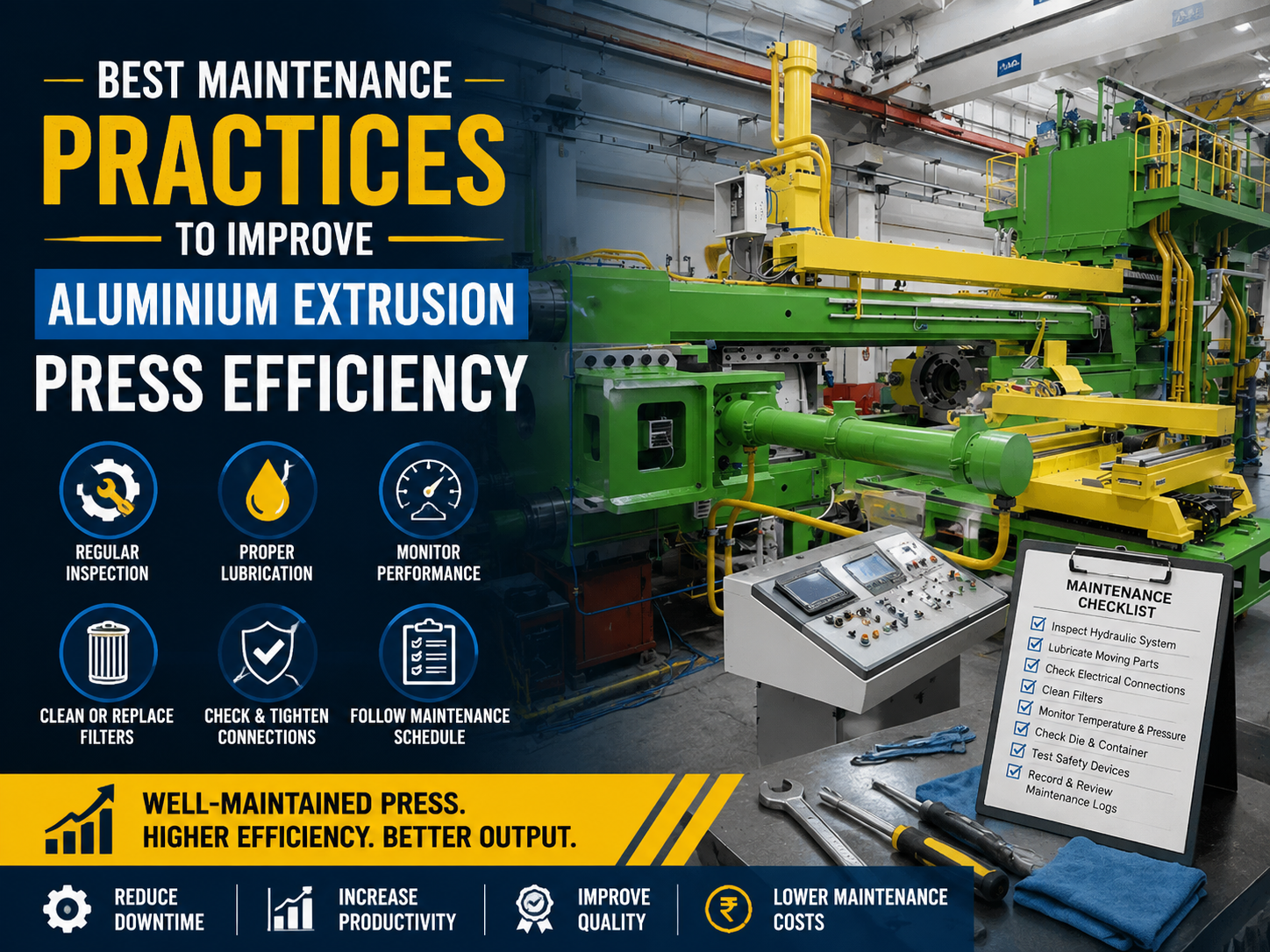
The Critical Role of Maintenance in Aluminium Extrusion
In the high-stakes world of metal fabrication, the aluminium extrusion press stands as a cornerstone of production. However, the efficiency of this massive machinery is not a static attribute; it is a direct result of rigorous, disciplined upkeep. Implementing the Best Maintenance Practices Improve Aluminium Extrusion Press Efficiency by reducing unplanned downtime, ensuring consistent profile quality, and extending the operational lifespan of the equipment. For manufacturers using HARSLE technology, understanding the synergy between mechanical precision and proactive care is essential for maintaining a competitive edge.
The environment of an extrusion plant is inherently harsh. High temperatures, immense hydraulic pressures, and the presence of abrasive aluminium dust create a perfect storm for component wear. Without a structured maintenance framework, small issues—such as a minor hydraulic leak or a slight misalignment of the extrusion stem—can quickly escalate into catastrophic failures. These failures do not just result in repair costs; they lead to lost production hours, wasted raw materials, and potential safety hazards for operators. Therefore, maintenance must be viewed not as a cost center, but as a strategic investment in operational excellence.
Efficiency in extrusion is measured by the ‘dead cycle’ time and the ‘recovery rate’ of the material. A well-maintained press operates smoothly, with rapid transitions between cycles and minimal friction. When the Best Maintenance Practices Improve Aluminium Extrusion Press Efficiency, the machine achieves its designed tonnage with less energy consumption, and the resulting aluminium profiles meet tighter tolerances. This guide provides a comprehensive deep dive into the daily, weekly, and long-term strategies required to keep your extrusion press running at peak performance.
Daily Inspection: The First Line of Defense
The foundation of any successful maintenance program is the daily walk-around inspection. This routine should be performed at the start of every shift to identify visible signs of distress before the machine is fully pressurized. Operators should be trained to look for ‘abnormalities’—anything that differs from the machine’s standard operating state. This includes checking for oil puddles under hydraulic lines, listening for unusual hissing sounds indicating air leaks, and observing the smoothness of the loader and die slide movements.
Key focus areas during daily checks include the lubrication of the guide rails and the condition of the extrusion stem. The stem must be perfectly centered; even a millimeter of deviation can cause uneven wear on the container liner and lead to ‘back-end’ defects in the aluminium profile. Furthermore, the container heating system should be verified. If the container is not at the optimal temperature, the aluminium billet will not flow correctly, placing undue stress on the hydraulic pumps and increasing the risk of a ‘sticker’ (a billet stuck in the container).
Safety systems must also be tested daily. This includes emergency stop buttons, light curtains, and interlock switches on the safety gates. In an industrial environment, a mechanical failure can be dangerous, but a failed safety system is a liability. By documenting these daily checks in a centralized log, management can track recurring issues and predict when a component is nearing the end of its functional life. This proactive approach is a core component of how the Best Maintenance Practices Improve Aluminium Extrusion Press Efficiency.
Hydraulic System Maintenance: The Heart of the Press
The hydraulic system is the lifeblood of the aluminium extrusion press. It generates the thousands of tons of force required to push solid aluminium through a die. Consequently, hydraulic health is paramount. The primary enemy of any hydraulic system is contamination. Microscopic particles of metal, dust, or moisture can degrade the hydraulic fluid, leading to pump cavitation, valve sticking, and internal erosion of the cylinders. Regular oil analysis is non-negotiable; it provides a ‘blood test’ for the machine, revealing the presence of wear metals and the remaining chemical stability of the oil.
Filtration systems must be checked and serviced with religious frequency. High-efficiency filters should be used to maintain an ISO cleanliness level appropriate for high-pressure piston pumps. If the filters are bypassed or clogged, the entire system is at risk. Additionally, the hydraulic cooling system must be monitored. Aluminium extrusion generates significant heat; if the hydraulic oil exceeds its recommended operating temperature (usually around 50-60°C), its viscosity drops, leading to poor lubrication and accelerated seal wear. Heat exchangers should be cleaned regularly to ensure maximum thermal transfer.
Accumulators, which store energy for rapid movements, also require periodic nitrogen pre-charge checks. An undercharged accumulator causes the hydraulic pumps to work harder, leading to increased energy costs and jerky machine movements. By ensuring the hydraulic system is clean, cool, and properly pressurized, the Best Maintenance Practices Improve Aluminium Extrusion Press Efficiency by providing the steady, reliable force necessary for high-quality extrusion.
Electrical and Control System Integrity
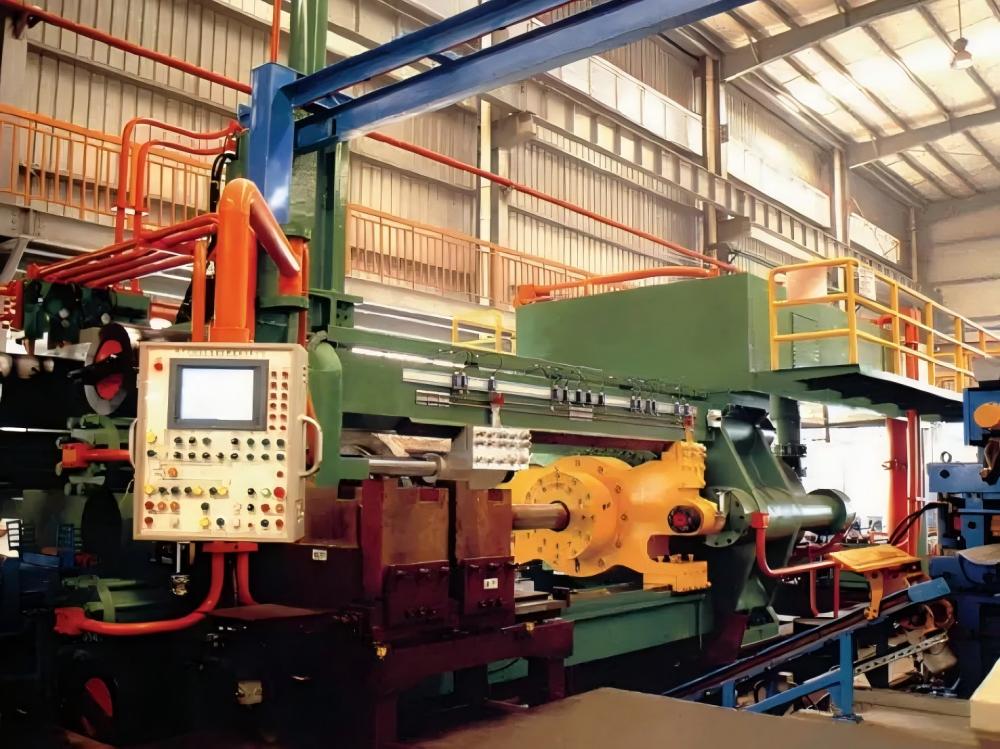
Modern HARSLE extrusion presses rely on sophisticated PLC (Programmable Logic Controller) systems and a network of sensors to manage the complex sequence of the extrusion cycle. Electrical maintenance is often overlooked until a ‘ghost in the machine’ causes an unexpected shutdown. To prevent this, electrical cabinets should be kept clean and cool. Dust accumulation on circuit boards can cause overheating or short circuits, while loose wiring connections—often caused by machine vibration—can lead to intermittent signal loss.
Sensors, such as linear transducers and pressure transmitters, are the ‘eyes’ of the control system. If a transducer providing feedback on the stem position is slightly out of calibration, the press may not complete its stroke correctly, or it may slam into the end-of-travel limits. Periodic calibration of these sensors ensures that the PLC is receiving accurate data. Furthermore, software backups should be performed regularly. In the event of a lightning strike or a power surge that corrupts the PLC memory, having a recent backup can mean the difference between a one-hour fix and a week of downtime.
Thermal imaging is an excellent tool for electrical maintenance. By scanning the electrical cabinet with an infrared camera while the press is under load, technicians can identify ‘hot spots’—connectors or breakers that are overheating due to high resistance. Addressing these issues before they fail is a prime example of how the Best Maintenance Practices Improve Aluminium Extrusion Press Efficiency through predictive rather than reactive action.
Mechanical Components and Alignment
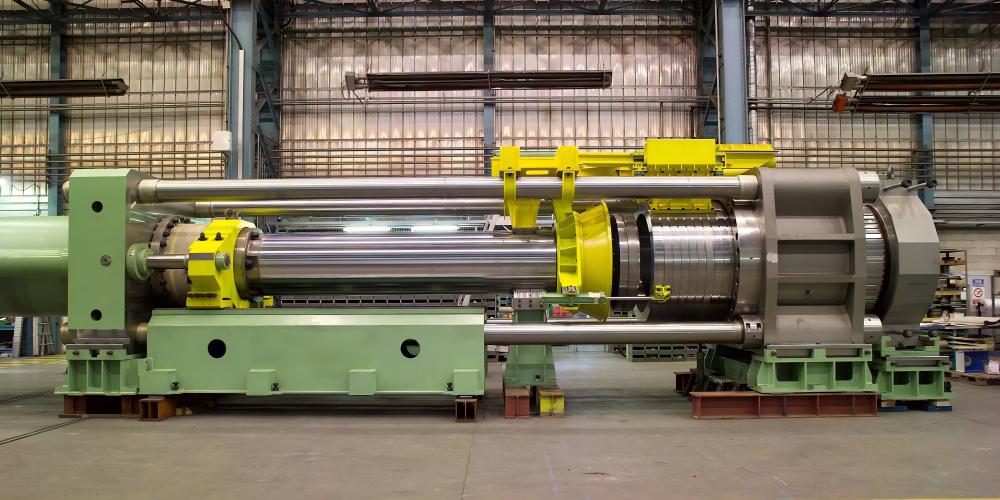
The mechanical structure of an extrusion press is designed to withstand massive stresses, but it is not immune to wear. The ‘Big Three’ of mechanical maintenance are alignment, lubrication, and fastener integrity. The alignment of the main cylinder, the stem, the container, and the die platen must be checked using precision laser tools or dial indicators. Misalignment causes ‘eccentric loading,’ which can crack the main cylinder or cause the container to wear into an oval shape. This not only ruins the equipment but also results in profiles with uneven wall thickness.
The container itself is a wear item. The internal liner is subjected to extreme friction and heat. Technicians should regularly measure the internal diameter of the liner to check for ‘bellying’ or excessive wear. Once the wear exceeds a certain threshold, the liner must be replaced or refurbished. Similarly, the shear blade—used to cut the ‘butt’ end of the billet—must be kept sharp and properly adjusted. A dull shear blade will tear the aluminium rather than cutting it, leading to contamination of the next billet and potential die damage.
Finally, the tie rods—the massive bolts that hold the press together—must be checked for tension. Over time, the cyclic loading of the press can cause tie rod nuts to loosen or the rods themselves to develop fatigue cracks. Ultrasonic testing of the tie rods is a common practice in high-volume plants to ensure structural integrity. Maintaining these mechanical tolerances ensures that the Best Maintenance Practices Improve Aluminium Extrusion Press Efficiency by keeping the ‘dead cycle’ short and the product quality high.
Comprehensive Lubrication Plan
Lubrication is the simplest yet most frequently botched aspect of machine maintenance. An extrusion press has dozens of moving parts that require different types of lubricants. The guide rails for the container and the moving crosshead require a high-temperature, extreme-pressure grease that won’t break down under the heat of the extrusion process. Conversely, the smaller linkages on the loader or the saw may require a lighter oil.
An effective lubrication plan specifies the type of lubricant, the quantity, and the frequency of application for every point on the machine. Automated lubrication systems are highly recommended, as they deliver small, consistent amounts of grease while the machine is in motion. However, these systems must be monitored to ensure that lines aren’t blocked and that the reservoir is never empty. Over-lubrication can be just as damaging as under-lubrication, as excess grease can attract aluminium dust, creating an abrasive paste that grinds away at the metal surfaces.
Troubleshooting Signals: What the Machine is Telling You
Experienced operators and maintenance technicians develop an ‘ear’ for the machine. However, relying on intuition isn’t enough. There are specific signals that indicate the efficiency of the press is dropping. Increased vibration is often the first sign of bearing failure or hydraulic cavitation. If the press starts to ‘shudder’ during the main extrusion stroke, it may indicate air in the hydraulic cylinders or a failing pump. Monitoring the ‘cycle time’ is another critical metric. If the dead cycle (the time when the press is not actually extruding) begins to creep up, it suggests that the hydraulic valves are becoming sluggish or the PLC logic is being delayed by sensor errors.
Another signal is the temperature of the hydraulic oil and the motor casings. A sudden spike in temperature usually points to an internal leak in a valve or a pump that is working at reduced efficiency. By tracking these signals and performing root-cause analysis, facilities can ensure that the Best Maintenance Practices Improve Aluminium Extrusion Press Efficiency by catching problems in their infancy.
Maintenance Schedule Table
| Frequency | Component | Action Required |
|---|---|---|
| Daily | Hydraulic System | Check oil levels, look for leaks, monitor operating temperature. |
| Daily | Safety Systems | Test E-stops, light curtains, and interlocks. |
| Daily | Lubrication | Verify auto-lube reservoir levels and grease guide rails. |
| Weekly | Filters | Inspect hydraulic and air filters; replace if indicators show red. |
| Weekly | Alignment | Visual check of stem-to-container centering. |
| Monthly | Oil Analysis | Send hydraulic oil sample to lab for particle and chemical analysis. |
| Monthly | Electrical | Clean cabinet filters and check for loose terminal connections. |
| Quarterly | Mechanical | Check tie rod tension and inspect shear blade sharpness. |
| Yearly | Major Systems | Calibrate all sensors, perform ultrasonic testing on tie rods, and flush heat exchangers. |
Frequently Asked Questions (FAQ)
1. How often should I change the hydraulic oil in my extrusion press?
Oil should not be changed based on time alone, but rather on the results of professional oil analysis. Generally, with high-quality filtration and cooling, oil can last several years. However, if the analysis shows high oxidation or metal content, it must be changed immediately to protect the pumps.
2. Why is my extrusion press losing tonnage?
Loss of tonnage is usually caused by internal leakage in the main cylinder seals or a failing high-pressure pump. It can also be caused by a malfunctioning relief valve that is opening prematurely. A pressure test of the individual components is required to isolate the leak.
3. What is the most common cause of downtime in aluminium extrusion?
Hydraulic failure due to oil contamination is statistically the most common cause. This is followed closely by mechanical misalignment and electrical sensor failures. Implementing a strict filtration and alignment schedule can eliminate up to 80% of unplanned downtime.
4. Can I use standard grease for the container guides?
No. The container operates at very high temperatures (often above 400°C). Standard grease will melt and run off, leaving the guides unprotected. You must use a specialized high-temperature lubricant, often containing graphite or molybdenum disulfide.
5. How does maintenance affect the quality of the aluminium profile?
Maintenance directly impacts dimensional stability. If the stem or container is misaligned, the wall thickness of the profile will vary. If the heating system is inconsistent, the surface finish of the aluminium will be poor. Good maintenance ensures the ‘process window’ remains stable.
Conclusion: The HARSLE Commitment to Efficiency
Maximizing the output of an aluminium extrusion plant requires more than just high-quality machinery; it requires a culture of maintenance excellence. By following the Best Maintenance Practices Improve Aluminium Extrusion Press Efficiency, companies can ensure that their HARSLE equipment delivers the precision and speed it was designed for. From the cleanliness of the hydraulic oil to the calibration of the PLC, every detail matters. In the long run, the time spent on preventive maintenance is reclaimed ten-fold through uninterrupted production and superior product quality. Invest in your machine today, and it will power your business for decades to come.