Comprehensive Guide to Preventive Maintenance for Scrap Metal Shear Machines


The Critical Role of Preventive Maintenance for Scrap Metal Shear Machines
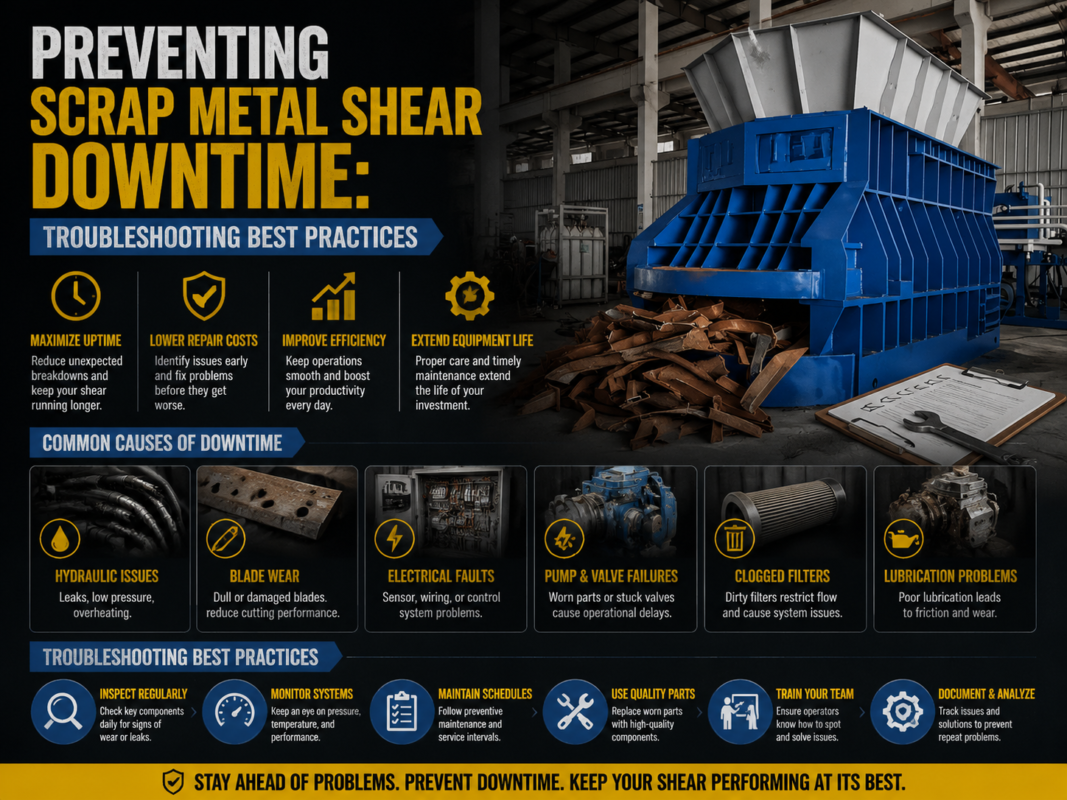
In the high-intensity world of metal recycling and industrial fabrication, the scrap metal shear machine stands as a cornerstone of productivity. Whether you are operating a heavy-duty hydraulic alligator shear, a container shear, or a guillotine shear, these machines are subjected to immense mechanical stress and harsh operating environments. Preventive maintenance for scrap metal shear machines is not merely a recommendation; it is a fundamental operational strategy designed to prevent catastrophic failures, ensure operator safety, and maximize the return on investment (ROI) for your equipment.
HARSLE understands that every minute of downtime in a recycling yard translates directly into lost revenue. When a shear fails, the entire processing line often grinds to a halt. By implementing a rigorous preventive maintenance (PM) program, operators can transition from a reactive ‘fix-it-when-it-breaks’ mindset to a proactive ‘prevent-it-from-breaking’ approach. This guide provides an exhaustive look at the technical requirements and best practices for maintaining these powerful machines, ensuring they remain in peak condition for years to come.
The importance of maintenance extends beyond simple mechanical reliability. It also encompasses energy efficiency. A well-maintained hydraulic system operates with less friction and internal leakage, consuming less electricity or fuel to achieve the same cutting force. Furthermore, consistent maintenance preserves the structural integrity of the machine frame, preventing the micro-fractures and misalignments that can occur when a machine is forced to operate with dull blades or contaminated fluid.
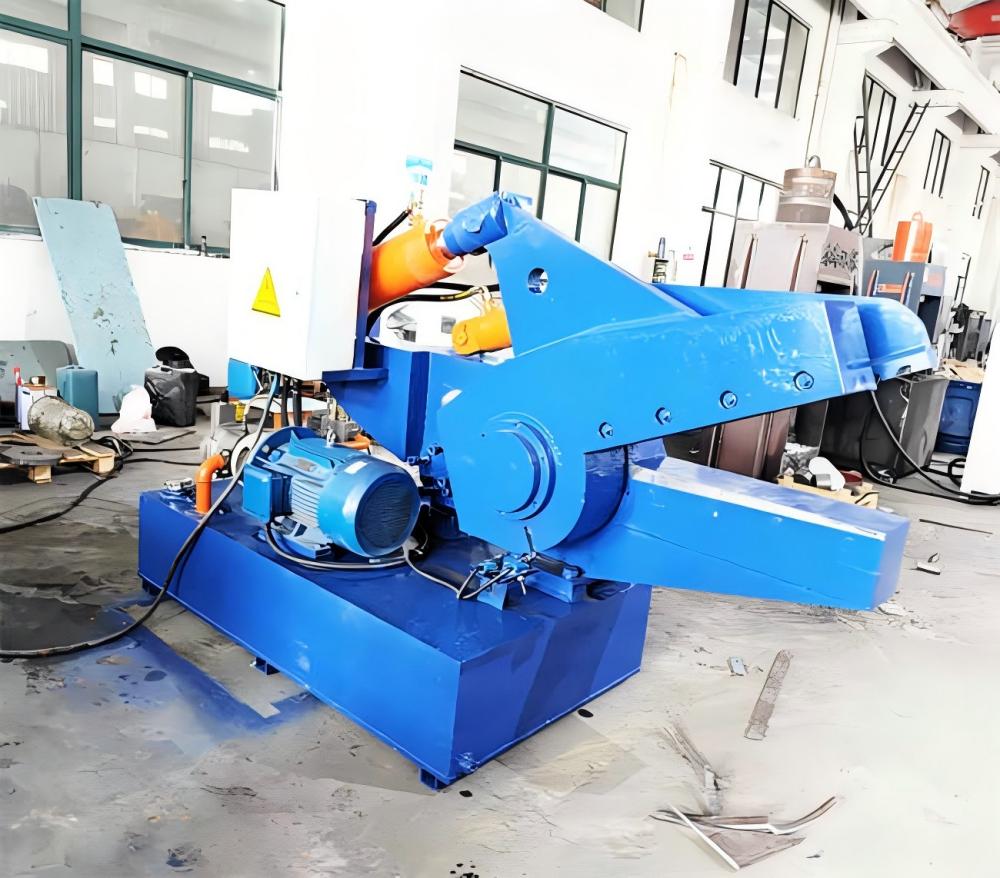
Daily Inspection Protocols: The First Line of Defense
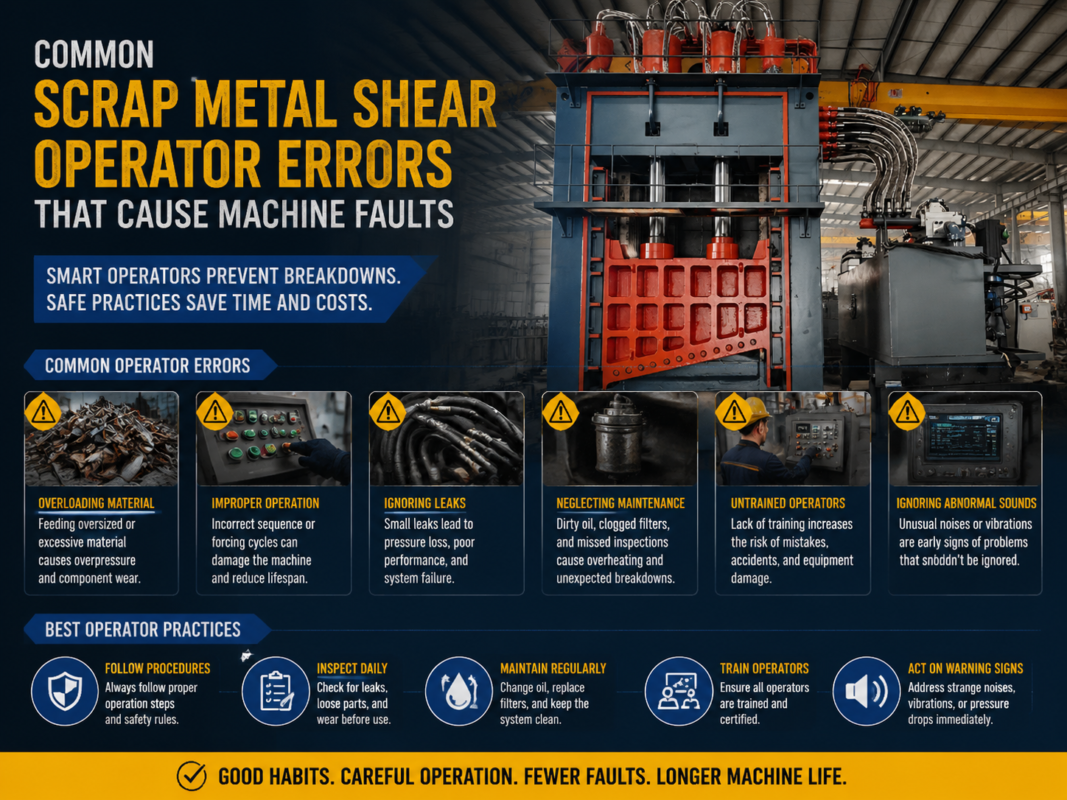
The daily inspection is the most effective way to catch minor issues before they escalate into major repairs. This routine should be performed at the start of every shift by a trained operator or maintenance technician. The goal is to identify visual and audible signs of wear or malfunction. Start with a comprehensive ‘walk-around’ of the machine, looking for any signs of hydraulic fluid leaks on the floor or around the cylinder seals. Even a small drip can indicate a failing O-ring or a loose fitting that could lead to a sudden loss of pressure.
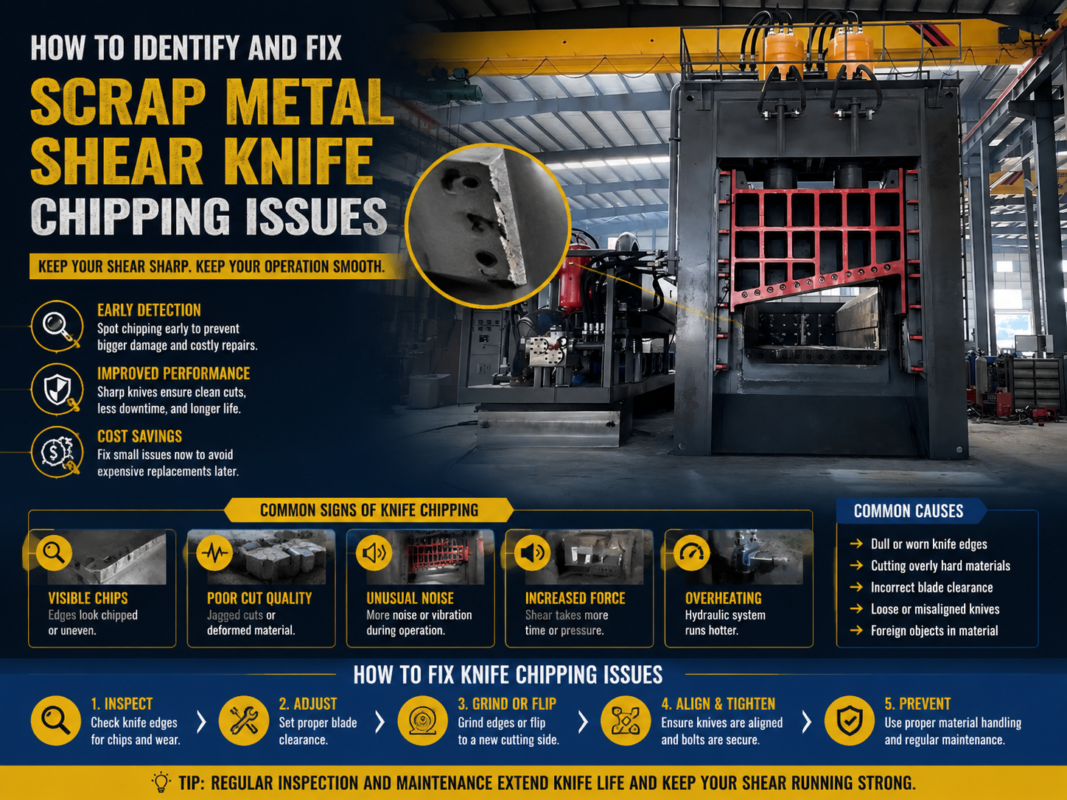
Next, focus on the cutting area. Inspect the shear blades for chips, cracks, or excessive rounding of the edges. Cutting with dull blades increases the load on the hydraulic system and the machine frame, leading to premature wear of the bushings and pins. Ensure that the work area is clear of debris that could interfere with the moving parts of the shear. Metal dust and small offcuts can accumulate in the guide rails, causing friction and potential jamming.
Safety features must also be tested daily. This includes emergency stop buttons, light curtains (if equipped), and mechanical guards. If any safety device is found to be non-functional, the machine must be locked out and tagged out immediately. Never bypass safety sensors to continue production. Finally, listen to the machine as it starts up. Unusual whining, grinding, or knocking sounds are often the first indicators of pump cavitation or bearing failure. Documenting these daily checks in a logbook creates a valuable history that can help diagnose recurring issues.
Hydraulic System Maintenance: The Heart of the Shear
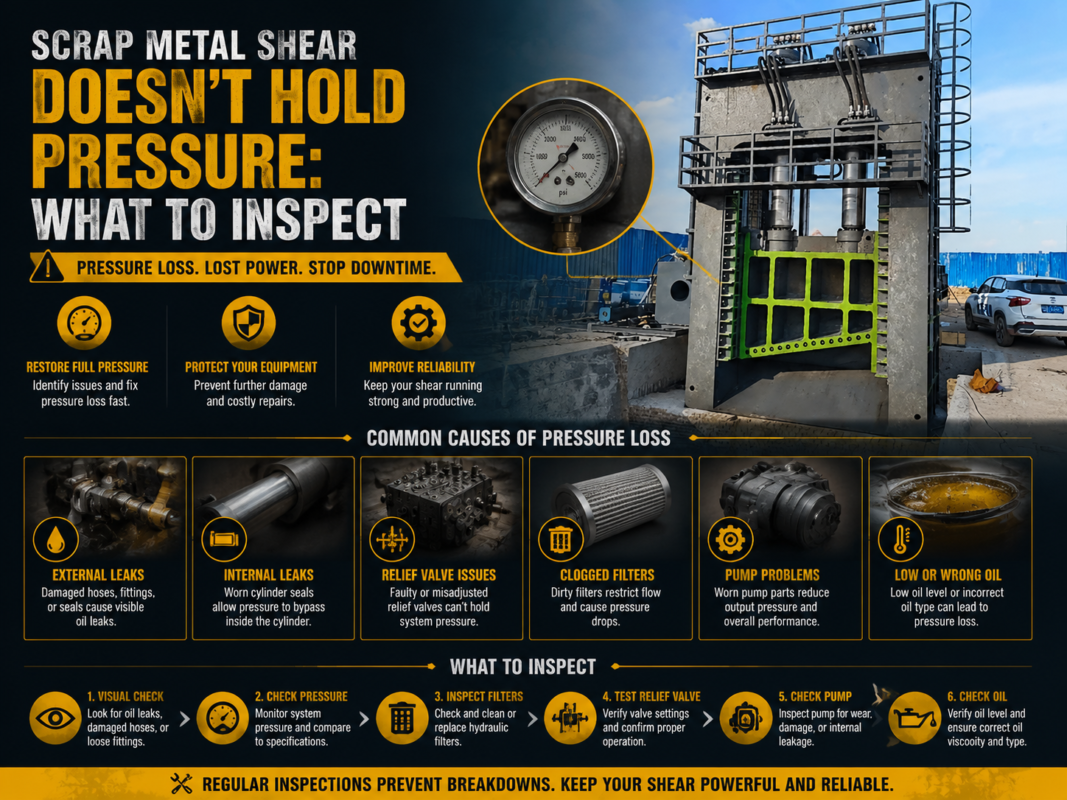
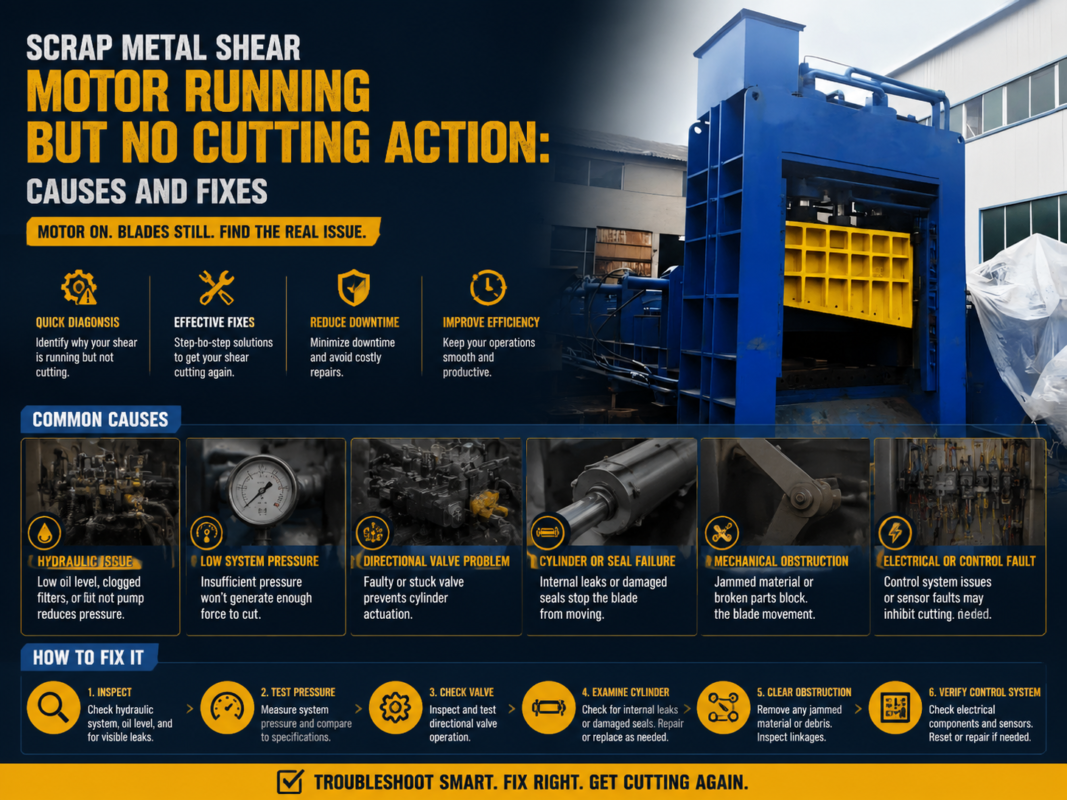
The hydraulic system is the lifeblood of any scrap metal shear. It provides the massive force required to slice through structural steel and heavy plate. Consequently, hydraulic fluid health is the single most important factor in the machine’s longevity. Preventive maintenance for scrap metal shear machines must prioritize oil cleanliness. Contaminants such as metal particles, moisture, and dust act as abrasives, wearing down the precision-machined surfaces of valves and pumps.
Regularly check the hydraulic oil level and color. If the oil appears milky, it indicates water contamination; if it smells burnt or looks dark, it has likely oxidized due to overheating. We recommend performing a professional oil analysis every six months to check for microscopic contaminants and additive depletion. Filters should be replaced according to the manufacturer’s schedule, or sooner if the filter-clogging indicator is triggered. Using high-quality, high-viscosity-index hydraulic oil is essential for maintaining consistent performance across varying temperature ranges.
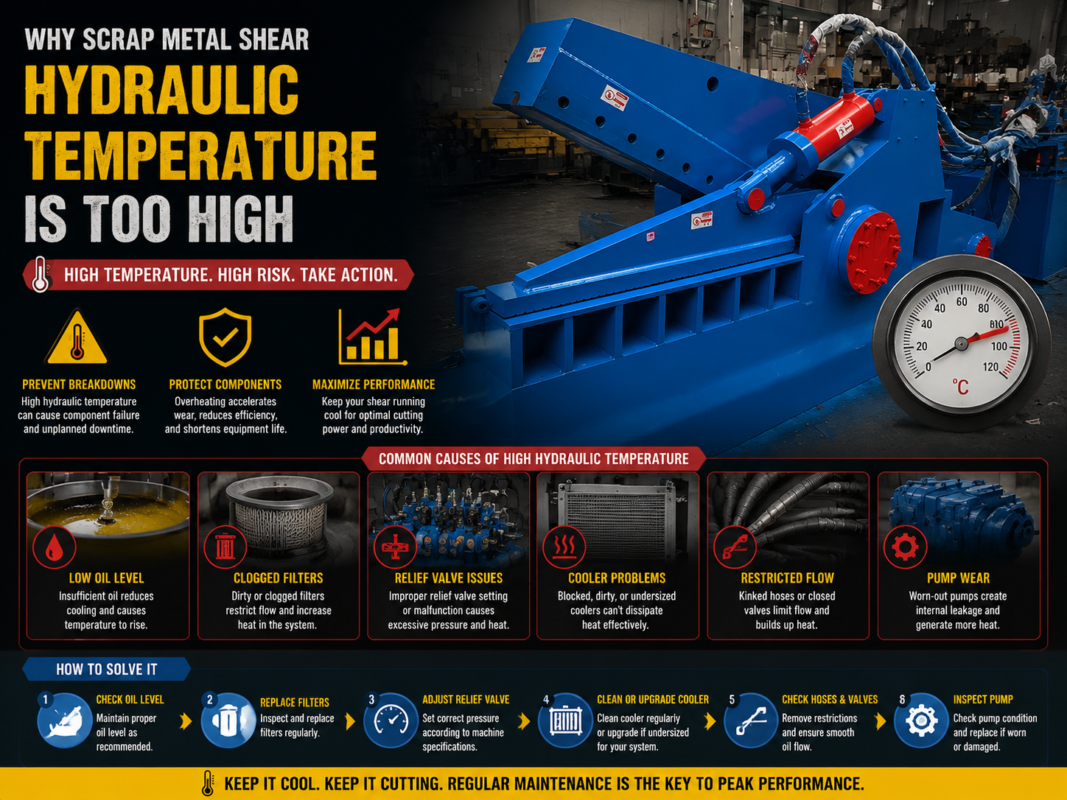
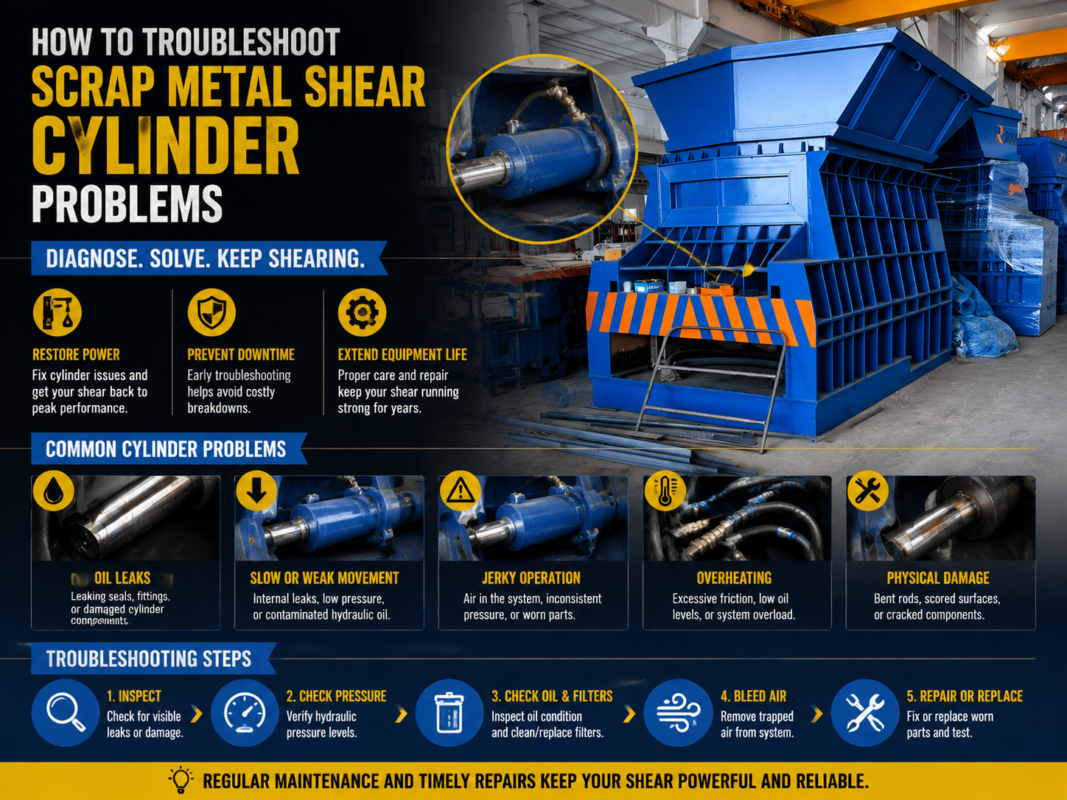
Hose and cylinder maintenance is equally critical. Inspect hydraulic hoses for signs of abrasion, bulging, or cracking. A high-pressure hose failure can be extremely dangerous to nearby personnel. Ensure that all cylinders are operating smoothly without ‘stuttering,’ which could indicate air in the system or internal seal bypass. Check the heat exchanger or cooling system to ensure it is free of dust and debris; an overheating hydraulic system will quickly degrade the oil and damage the seals throughout the entire machine.
Electrical System and Control Unit Checks
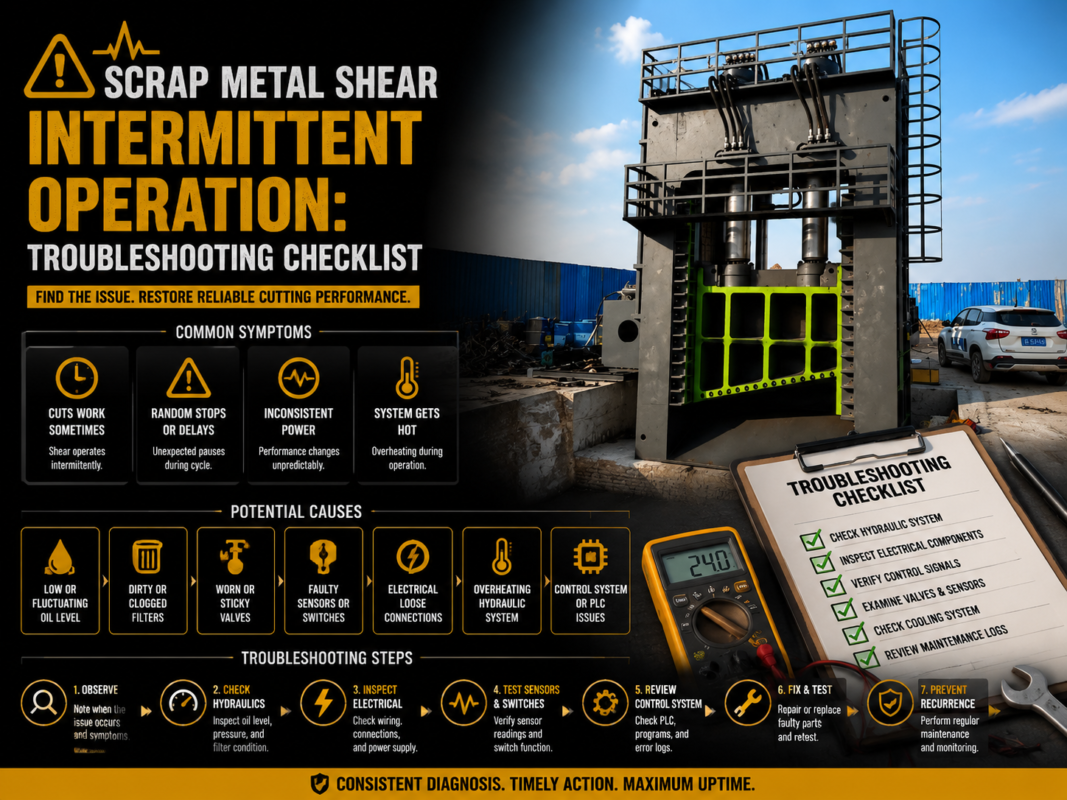
Modern scrap metal shears often utilize sophisticated PLC (Programmable Logic Controller) systems and electronic sensors to manage the cutting cycles. While these systems are generally robust, they are susceptible to the vibrations and dust common in metalworking environments. Monthly inspections should include checking the electrical cabinet for dust accumulation. Use compressed air or a vacuum to clean the components, as dust can cause overheating and short circuits.
Check all wiring connections for tightness. Vibrations from the shearing process can cause terminals to loosen over time, leading to intermittent faults or ‘ghost’ errors in the control system. Inspect the insulation on all external cables for signs of wear or damage from falling scrap metal. If the machine uses limit switches or proximity sensors to control the stroke of the shear, ensure they are securely mounted and correctly aligned. A misaligned sensor can cause the cylinder to over-travel, potentially damaging the mechanical stops.
It is also important to verify the integrity of the grounding system. Proper grounding protects the sensitive electronic components from power surges and static electricity. If your shear is equipped with a remote control or foot pedal, inspect the cables and connectors for any signs of fraying. Keeping the software updated (if applicable) and ensuring the control panel buttons are responsive and clean will prevent operational errors and improve the user experience.
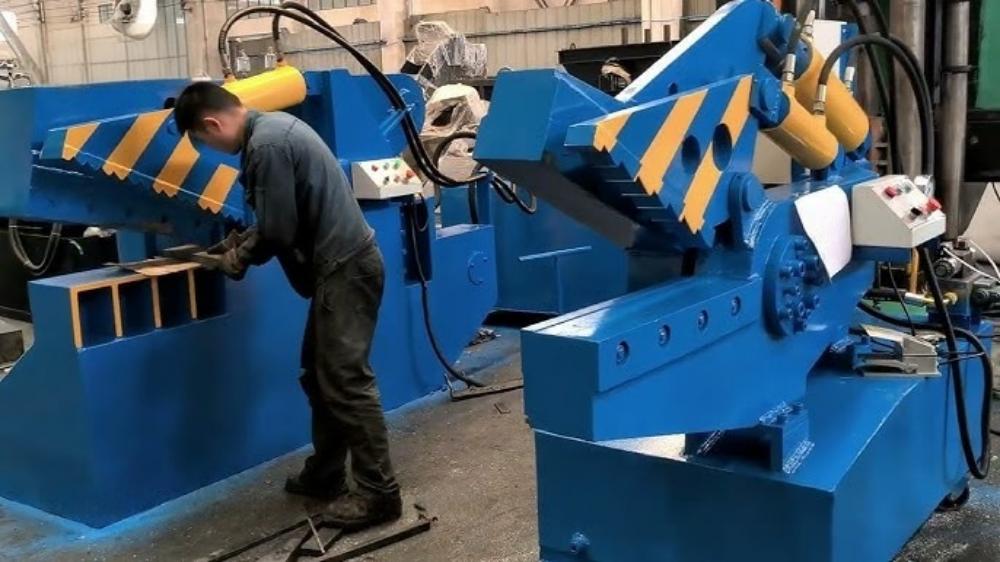
Mechanical Integrity and Blade Management
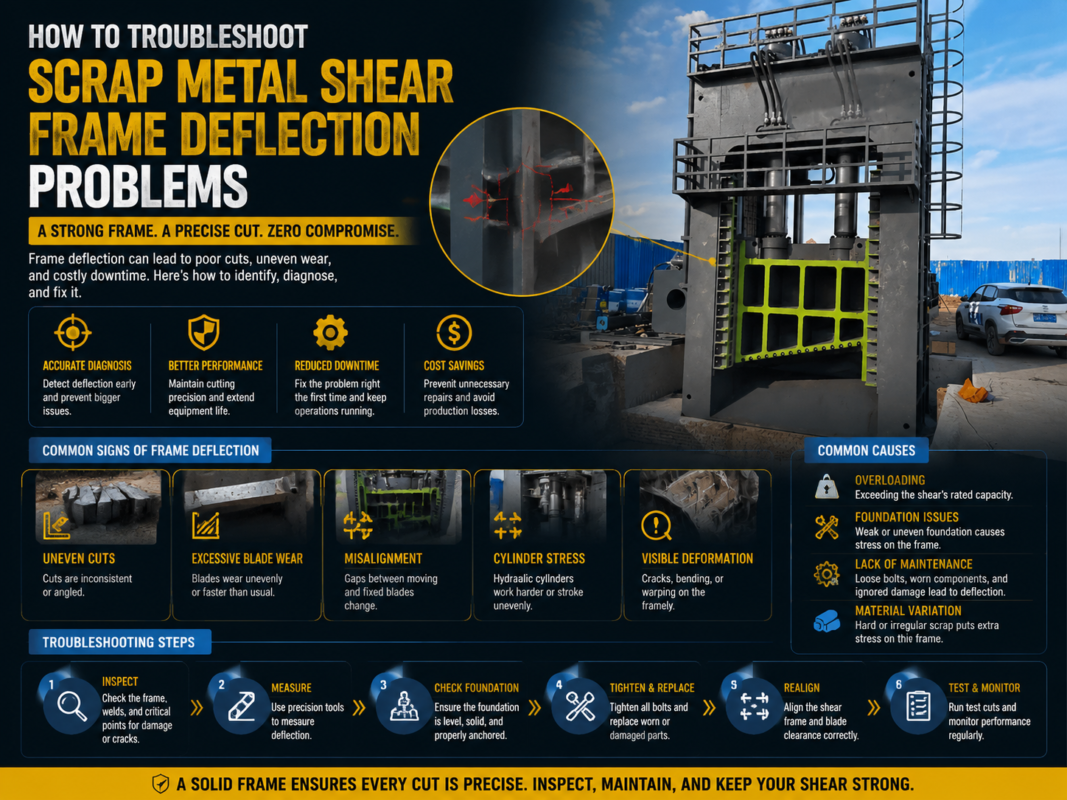
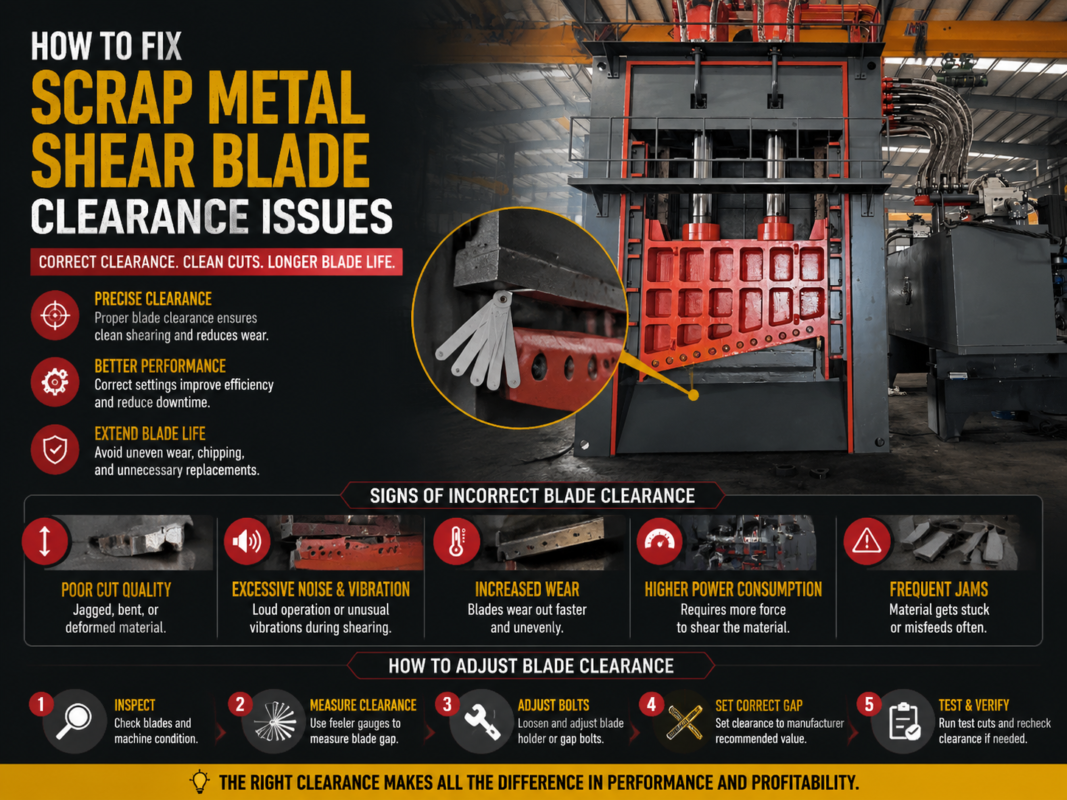
The mechanical structure of the shear—the frame, the pivot pins, and the blade seats—bears the brunt of the force during every cut. One of the most critical aspects of preventive maintenance for scrap metal shear machines is maintaining the correct blade clearance (the gap between the upper and lower blades). If the gap is too wide, the metal will fold rather than cut, causing immense lateral stress on the machine. If it is too tight, the blades may clash, leading to catastrophic breakage.
Regularly measure the blade gap using feeler gauges and adjust according to the manufacturer’s specifications. As blades wear, they will need to be rotated or sharpened. Most HARSLE shear blades feature multiple cutting edges; once one edge is dull, the blade can be flipped to a fresh edge. When all edges are worn, the blades should be professionally reground. Always use high-quality shims to ensure the blades are seated perfectly flat and secure in their holders.
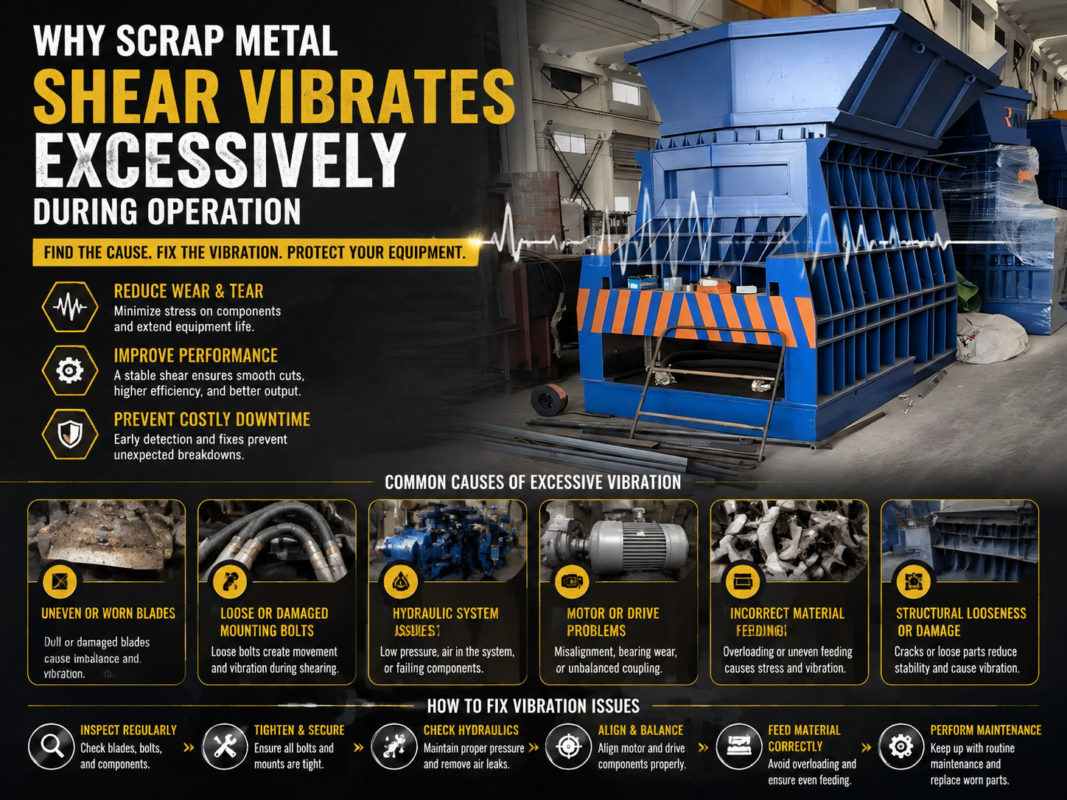
Inspect the pivot pins and bushings for signs of excessive play. If the main pivot of an alligator shear becomes loose, the blades will not track correctly, leading to poor cut quality and increased wear. Check all structural bolts, especially those securing the blades and the main cylinder mounts, using a torque wrench to ensure they meet the required specifications. A single loose bolt in a high-stress area can lead to a chain reaction of mechanical failures.
Comprehensive Lubrication Plan
Lubrication is the simplest yet most frequently overlooked aspect of machine maintenance. Without proper lubrication, metal-on-metal contact will rapidly destroy bushings, pins, and guide slides. A comprehensive lubrication plan should specify the type of lubricant to be used (usually a heavy-duty lithium-based grease for pivot points) and the frequency of application. Many heavy-duty shears feature centralized lubrication systems that can be manual or automatic.
If your machine has an automatic lubrication system, check the reservoir daily and ensure that grease is actually reaching all the points. Blocked lines are a common issue; if one point looks dry while others are greasy, the line may be clogged or broken. For manual systems, follow a strict schedule—often every 4 to 8 hours of operation for high-friction areas like the main pivot pin. Do not over-grease, as excess lubricant can attract abrasive metal dust, creating a ‘grinding paste’ that accelerates wear.
In addition to the main pivot points, ensure that the guide rails for the ram (in guillotine-style shears) are lightly lubricated. This reduces the load on the motor and ensures a smooth, consistent cutting stroke. Always clean the grease nipples before attaching the grease gun to prevent pushing dirt into the bearing surfaces. Using the correct grade of lubricant for your specific climate is also vital; thinner grease may be needed in winter, while a thicker, high-temperature grease is better for summer operations.
Troubleshooting Signals: What to Watch For
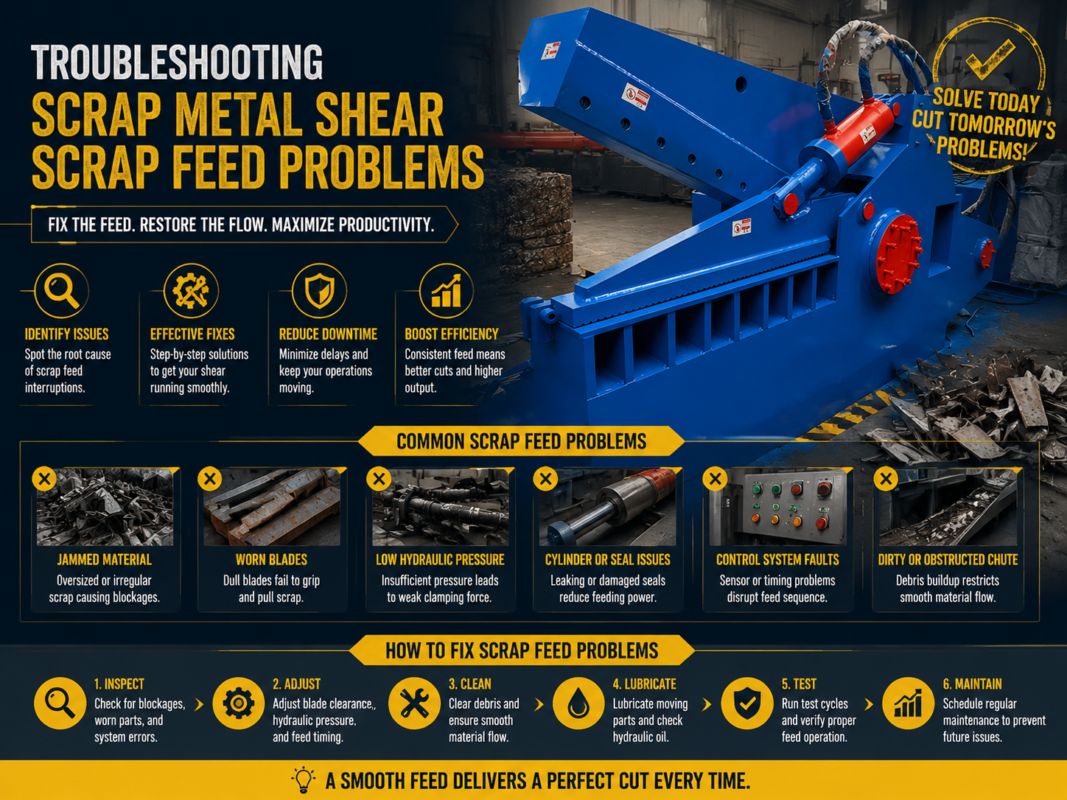
Even with the best preventive maintenance, components will eventually wear out. The key is to recognize the signals of impending failure. One of the most common signs is a change in the ‘cycle time.’ If the shear is taking longer to complete a cut or the return stroke is sluggish, it may indicate a failing hydraulic pump, a clogged filter, or internal leakage in the cylinder. Monitoring these times can provide an early warning of system degradation.
Excessive heat is another major red flag. If the hydraulic tank or the cylinders feel unusually hot to the touch, the system is working too hard. This could be due to dull blades, a malfunctioning relief valve, or a cooling system failure. Similarly, pay attention to the quality of the cut. If the metal is showing ‘burrs’ or the shear is struggling with material it previously cut easily, the blades are likely dull or the clearance needs adjustment.
Listen for ‘cavitation’ in the pump—a high-pitched metallic screaming sound. This occurs when air enters the hydraulic line or the pump is starved of oil, and it can destroy a pump in a matter of hours. Vibration is also a key indicator; if the machine starts vibrating more than usual during a cut, check for loose mounting bolts or structural cracks in the frame. Addressing these signals immediately can save thousands of dollars in replacement parts and lost production time.
Preventive Maintenance Schedule Table
To help organize your maintenance efforts, use the following table as a baseline for your scrap metal shear maintenance program. Note that high-volume operations may need to perform these tasks more frequently.
| Frequency | Component | Action Required |
|---|---|---|
| Daily | Hydraulic System | Check oil levels, look for leaks, monitor operating temperature. |
| Daily | Shear Blades | Visual inspection for chips/cracks, clear debris from cutting area. |
| Daily | Safety Systems | Test E-stops, foot pedals, and safety guards. |
| Weekly | Lubrication | Grease all manual points, check auto-lube reservoir and lines. |
| Weekly | Mechanical | Check blade clearance (gap) and tighten blade bolts. |
| Monthly | Electrical | Clean control cabinet, inspect cables, check sensor alignment. |
| Monthly | Filters | Inspect hydraulic return and suction filters; replace if necessary. |
| Quarterly | Structure | Inspect frame welds for cracks, check main pivot pin play. |
| Bi-Annually | Hydraulic Oil | Perform oil analysis, check for contamination and oxidation. |
| Annually | Full Service | Change hydraulic oil, replace all filters, professional blade sharpening. |
Frequently Asked Questions (FAQ)
How often should I sharpen my scrap metal shear blades?
The frequency of sharpening depends entirely on the volume and type of material you are cutting. For heavy-duty recycling, blades may need to be rotated every 2-4 weeks and professionally reground every 6-12 months. Always monitor the cut quality; if you see excessive burring or the machine is laboring, it is time to service the blades.
What type of hydraulic oil is best for scrap metal shears?
Most industrial shears require a high-quality anti-wear hydraulic oil, typically ISO VG 46 or 68, depending on your ambient operating temperature. Always consult your HARSLE manual for the specific grade recommended for your machine model to ensure optimal valve and pump performance.
Why is my shear losing cutting power?
Loss of power is usually attributed to three main factors: dull blades, incorrect blade clearance, or a drop in hydraulic pressure. Check the pressure gauge during a cut; if it doesn’t reach the specified PSI, the issue may be a worn pump or a faulty relief valve. If pressure is normal, the problem is likely mechanical (blades).
Can I weld a cracked shear frame?
Welding a structural crack in a shear frame should only be done by a certified professional welder following the manufacturer’s specific repair procedures. Because the frame is under immense tension, an improper weld can lead to a sudden and dangerous structural failure. In many cases, frame replacement or specialized reinforcement is required.
How do I prevent hydraulic oil from overheating?
Ensure the heat exchanger (oil cooler) is clean and the fan is functioning. Avoid ‘dead-heading’ the cylinders (holding the lever after the stroke is complete), as this forces oil through the relief valve at high pressure, generating heat. Also, ensure the oil is at the correct level and the blades are sharp to reduce the overall workload on the system.
Conclusion: The HARSLE Commitment to Longevity
Preventive maintenance for scrap metal shear machines is an investment in the future of your business. By following the structured approach outlined in this guide—focusing on daily inspections, hydraulic health, mechanical precision, and consistent lubrication—you can ensure that your HARSLE equipment remains a reliable asset in your recycling operations. A well-maintained machine is safer, more efficient, and significantly more profitable over its operational lifespan.
Remember that maintenance is a team effort. Train your operators to be the ‘eyes and ears’ of the maintenance department, and provide them with the time and tools necessary to perform their daily checks thoroughly. With proper care, your scrap metal shear will continue to deliver the powerful performance and precision cutting that HARSLE machinery is known for worldwide.