Common Scrap Metal Shear Problems and How Maintenance Fixes Them: A Comprehensive Guide

The Critical Role of Maintenance in Scrap Metal Processing
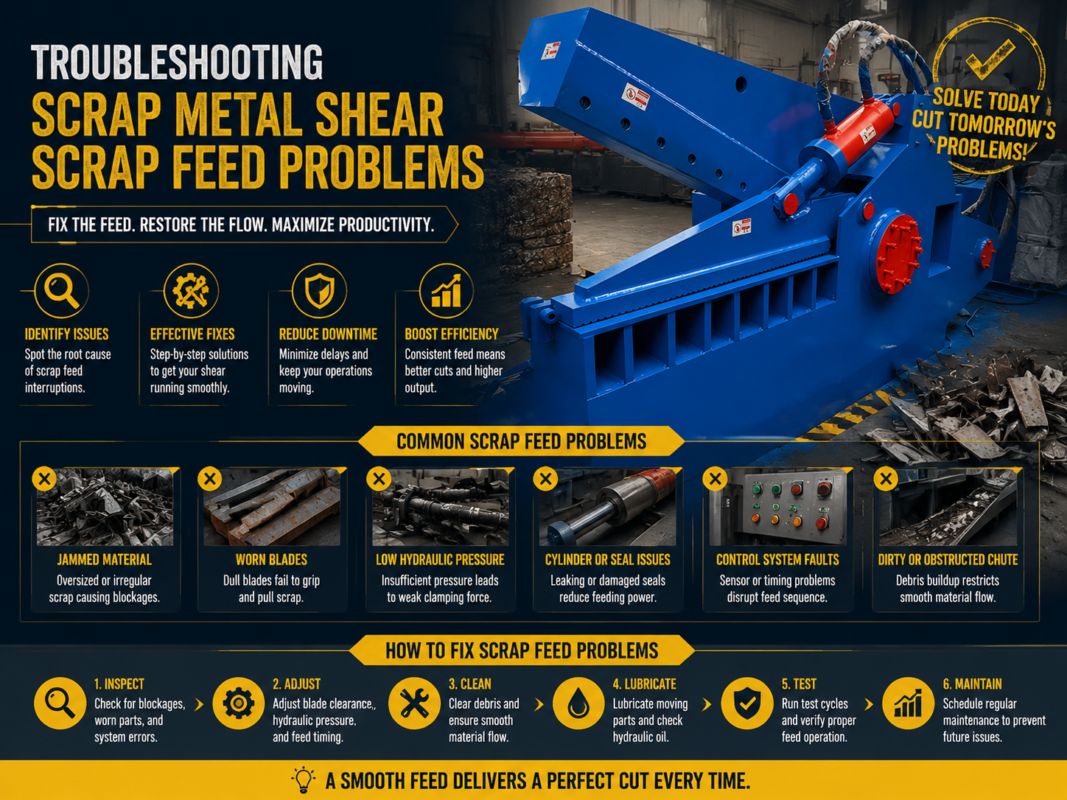
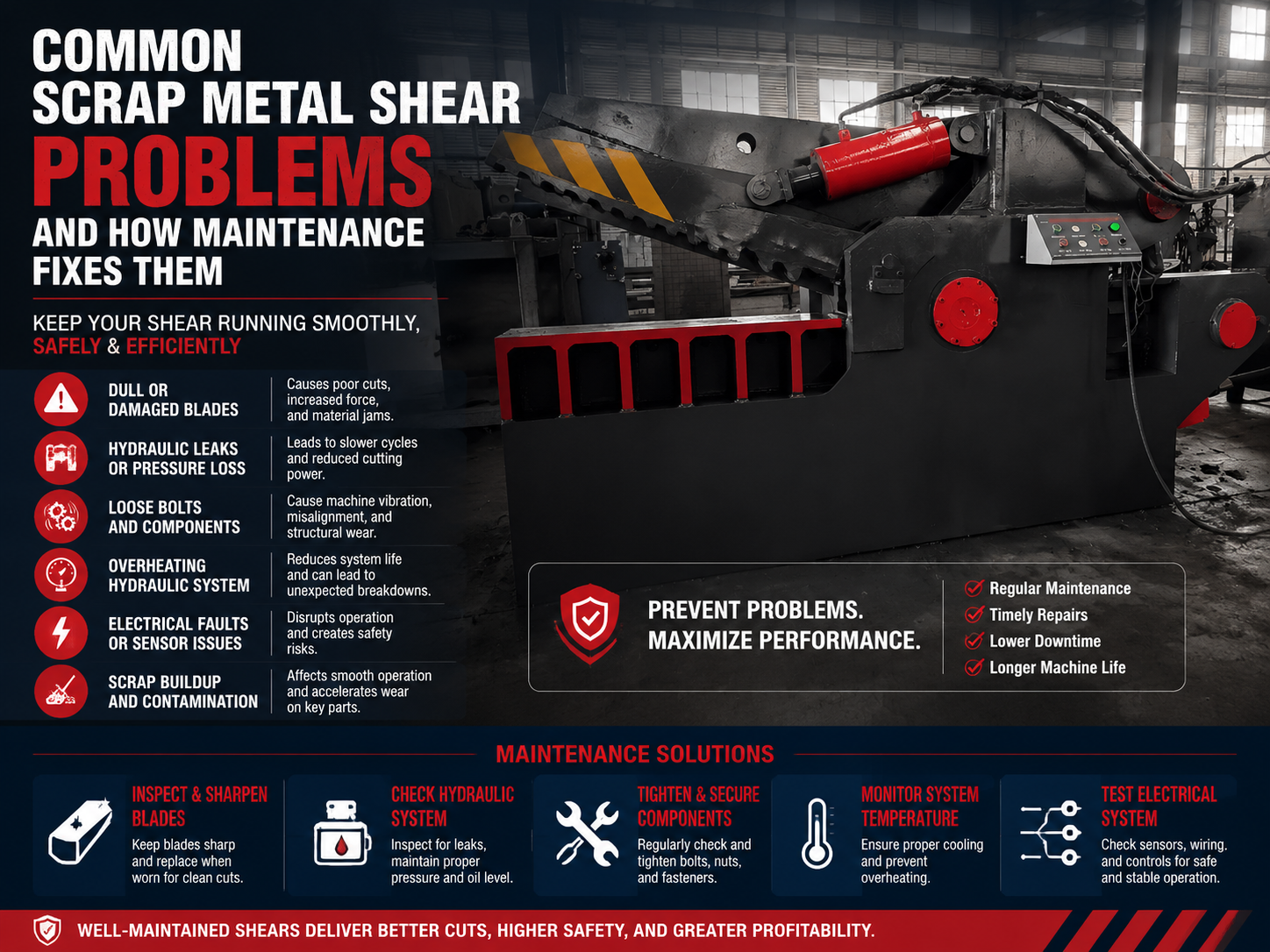
In the high-intensity world of metal recycling, the scrap metal shear is the workhorse of the yard. Whether it is an alligator shear, a container shear, or a massive gantry shear, these machines are subjected to extreme forces, abrasive dust, and fluctuating temperatures. Understanding common scrap metal shear problems and how maintenance fixes them is not just about keeping the machine running; it is about protecting a significant capital investment and ensuring the safety of the operators. When a shear fails, production grinds to a halt, leading to missed deadlines and lost revenue. However, most catastrophic failures are preceded by minor issues that could have been resolved through a disciplined maintenance regimen.
Maintenance in the context of scrap metal shears goes beyond simple oil changes. It involves a holistic approach to mechanical integrity, hydraulic efficiency, and electrical reliability. Because these machines often operate in outdoor environments, they are exposed to moisture, grit, and varying thermal conditions that accelerate wear and tear. A well-maintained shear operates with higher precision, consumes less energy, and produces cleaner cuts, which in turn increases the value of the processed scrap. By prioritizing preventative care, facility managers can transform their maintenance department from a reactive cost center into a proactive asset management team.
Furthermore, the evolution of modern shears, such as those manufactured by HARSLE, has introduced sophisticated PLC controls and high-pressure hydraulic circuits. While these advancements increase productivity, they also require a more nuanced understanding of system diagnostics. This guide will delve deep into the technical aspects of shear maintenance, providing actionable insights into identifying symptoms before they lead to system-wide failures. We will explore the synergy between daily inspections and long-term mechanical health, ensuring your equipment remains at peak performance for years to come.
The Importance of a Proactive Maintenance Strategy
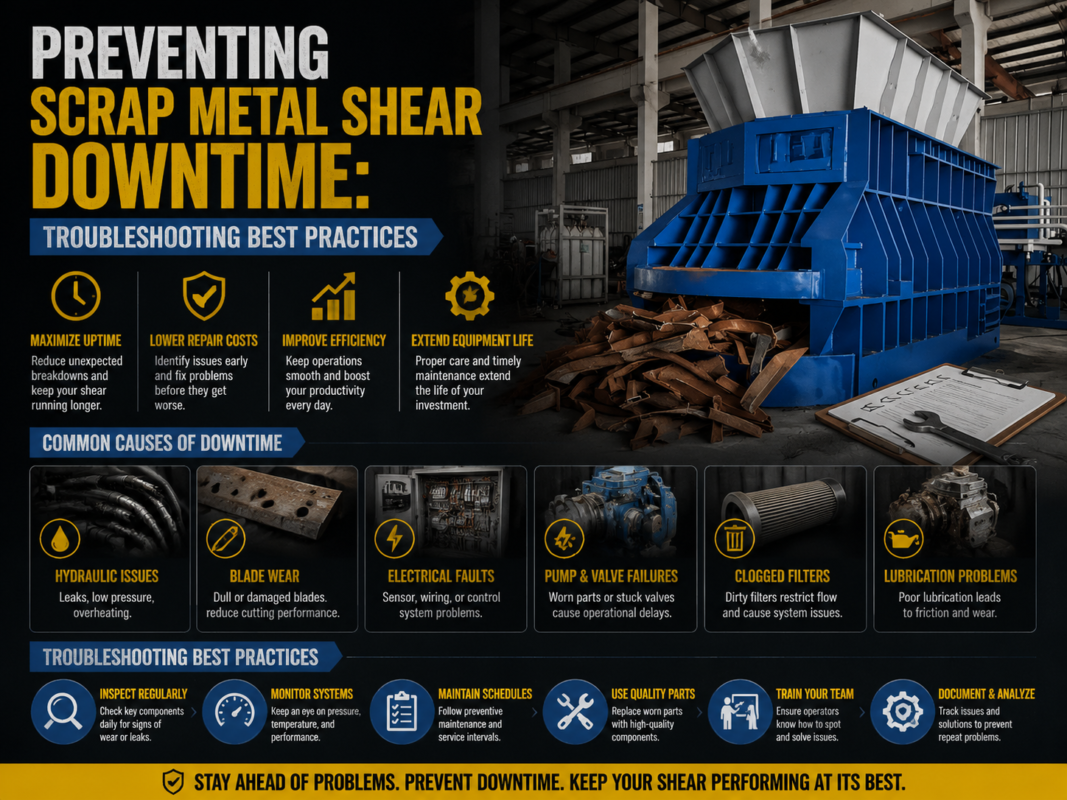
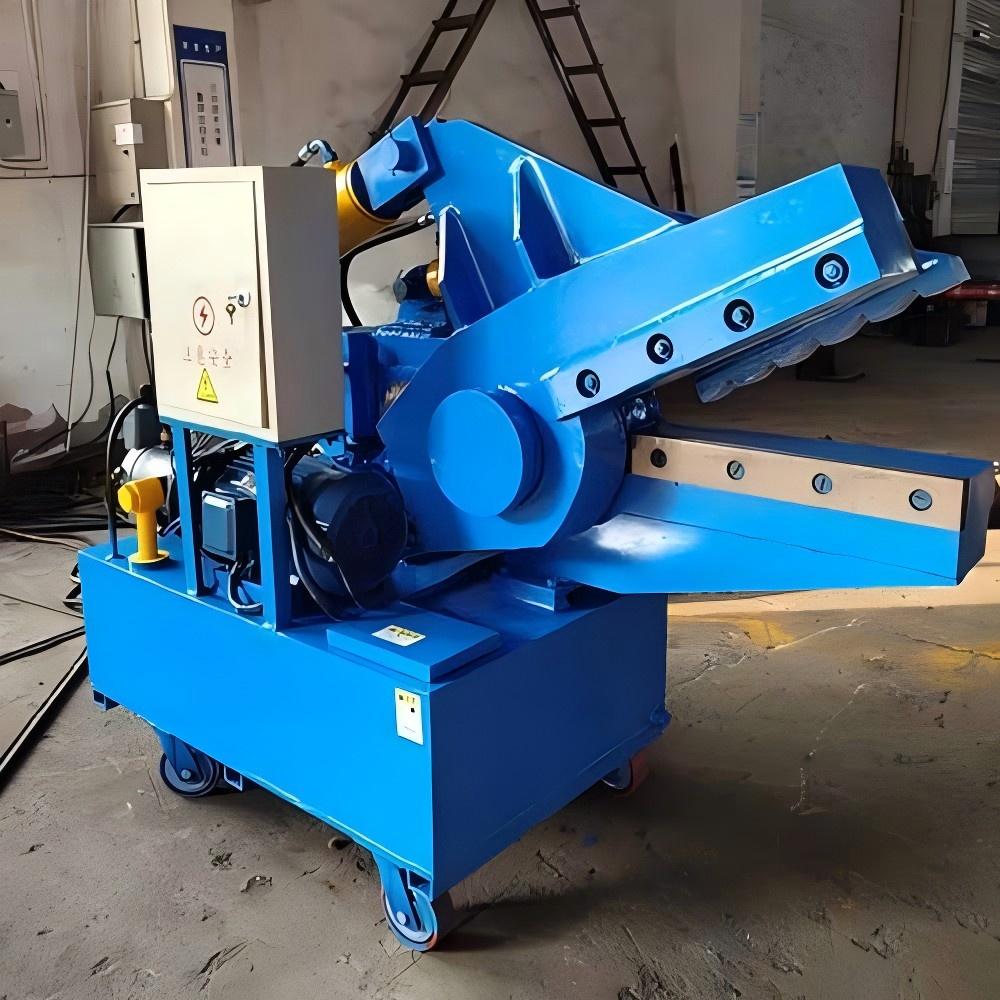
The primary goal of any maintenance program is to minimize downtime. In the scrap industry, downtime is exceptionally costly because the flow of material is often continuous. If the shear is down, the entire yard can become congested. A proactive strategy focuses on “predictive” rather than “reactive” actions. By monitoring the machine’s performance metrics—such as cycle time, operating temperature, and noise levels—operators can detect the early stages of component fatigue. This allows for repairs to be scheduled during planned shutdowns rather than during peak production hours.
Safety is another paramount reason for rigorous maintenance. Scrap metal shears exert hundreds of tons of force. A loose bolt, a frayed hydraulic hose, or a dull blade can lead to unpredictable material behavior, such as “kickback” or flying debris. Regular maintenance ensures that all safety guards are in place, emergency stops are functional, and the structural integrity of the machine is uncompromised. In many jurisdictions, documented maintenance logs are also a legal requirement for industrial safety compliance.
Finally, maintenance directly impacts the quality of the output. A shear with poorly adjusted blades or insufficient hydraulic pressure will produce ragged, uneven cuts. This can lead to issues in downstream processes, such as smelting or baling. By maintaining the sharp edge of the blades and the correct clearance between them, the shear produces uniform pieces that meet the strict specifications of foundries and steel mills. In essence, maintenance is the bridge between a raw scrap pile and a high-value commodity.
Daily Inspection: The First Line of Defense
The daily inspection is perhaps the most critical part of a maintenance routine. It should be performed at the start of every shift and takes no more than 15 to 20 minutes. The focus here is on visual and auditory cues. Operators should begin by checking the oil levels in the hydraulic reservoir. Low oil levels can lead to aeration, which causes the pump to cavitate and eventually fail. Additionally, the color and clarity of the oil should be noted; milky oil indicates water contamination, while dark, burnt-smelling oil suggests overheating.
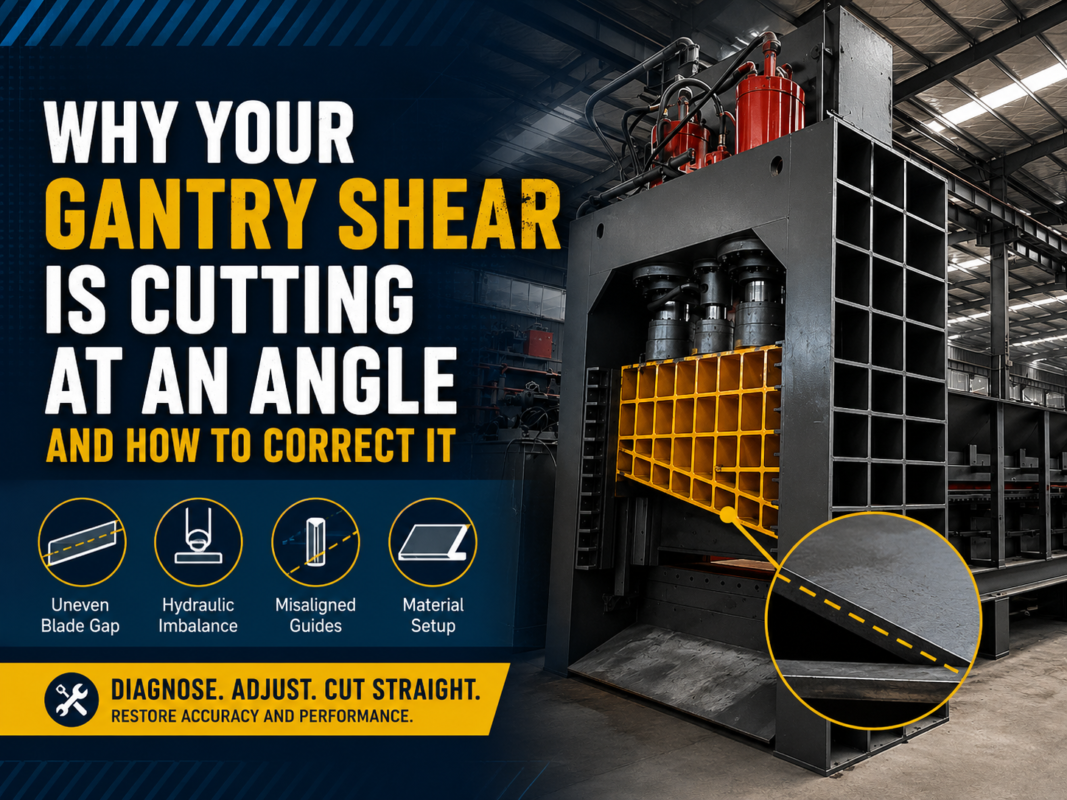
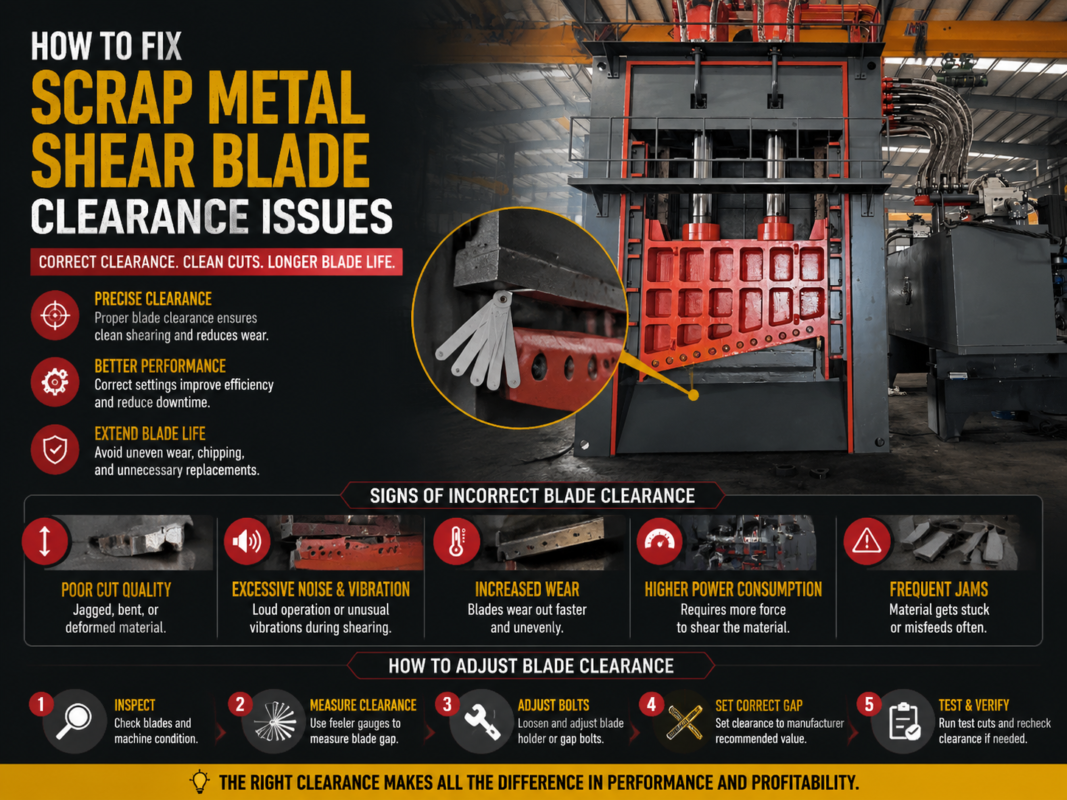
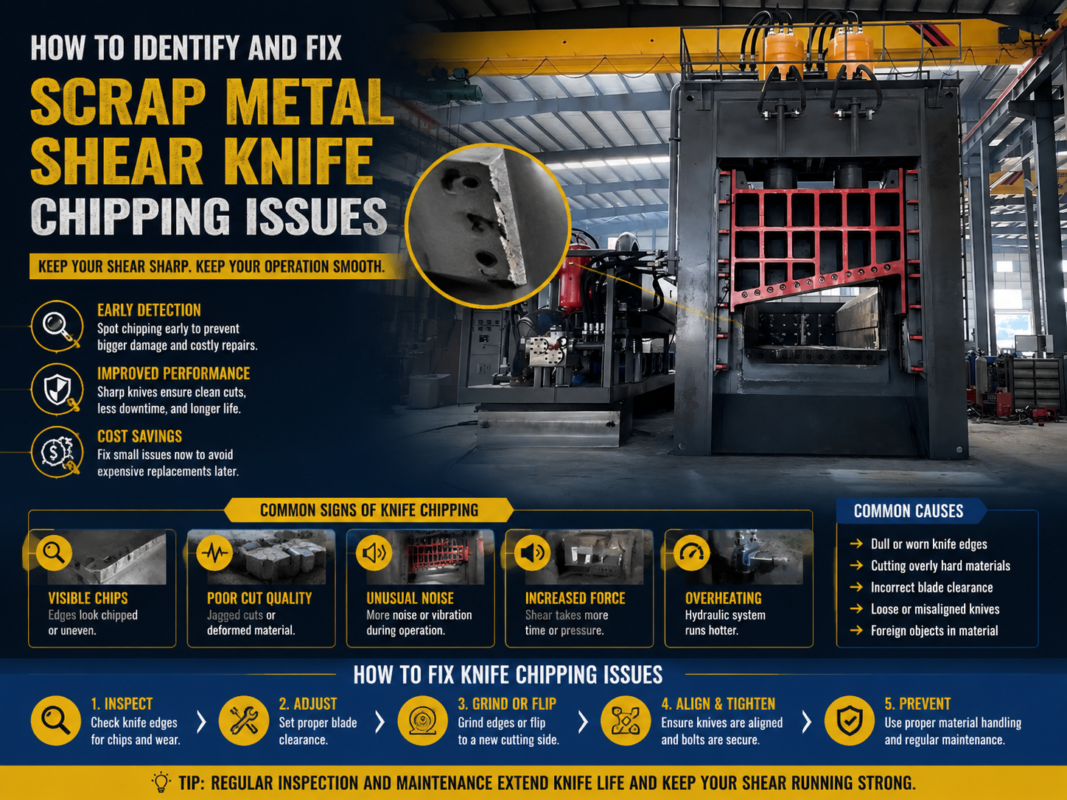
Next, the blades must be inspected. Look for chips, cracks, or excessive rounding of the cutting edges. Scrap metal is often unpredictable, and a stray piece of hardened steel can easily damage a standard shear blade. If the blades are dull, the machine has to work harder, increasing the load on the hydraulic system and the frame. The gap between the blades (the clearance) should also be checked. If the gap is too wide, the metal will fold rather than cut, which can jam the machine and cause structural stress.
External components like hoses and fittings require a close look. Look for “weeping” at the joints or any signs of abrasion on the hose jackets. Because the shear moves during operation, hoses are subject to constant flexing. A small leak today can become a high-pressure burst tomorrow, posing a significant fire and injection injury hazard. Finally, ensure the work area is clear of debris that could interfere with the moving parts of the shear or the operator’s footing.
Hydraulic System Maintenance: The Heart of the Shear
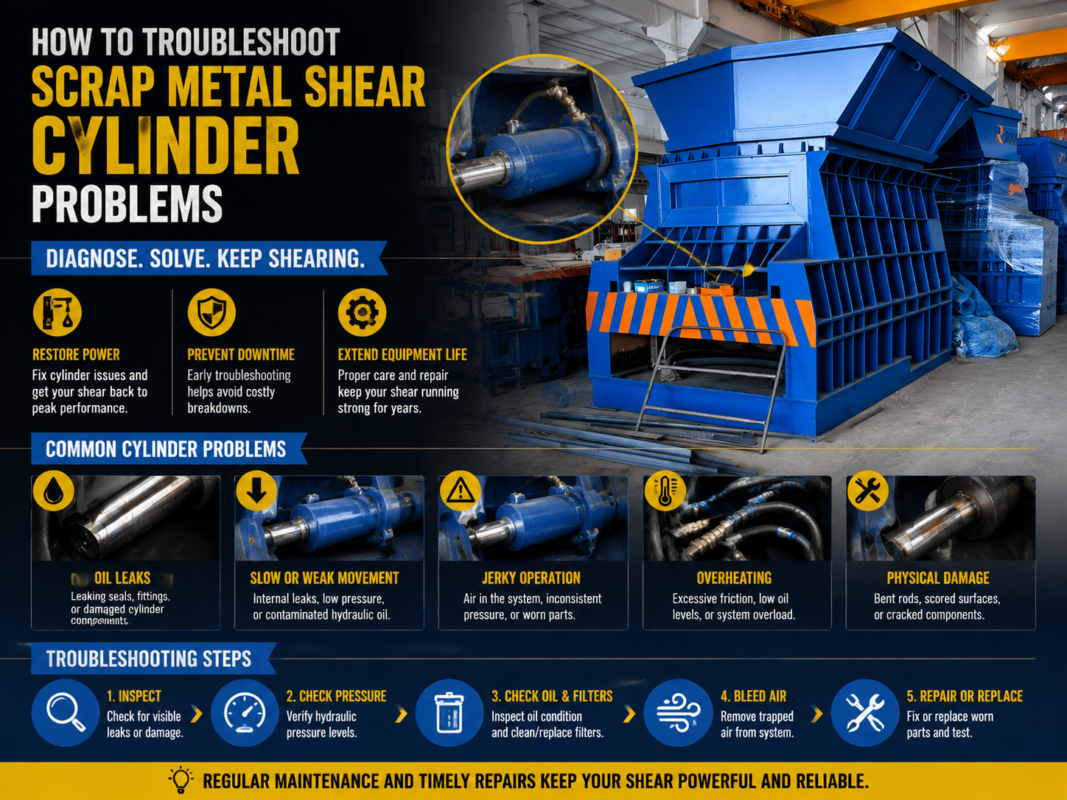
The hydraulic system is the lifeblood of the scrap metal shear. It converts electrical energy into the massive mechanical force required to slice through steel. The most common hydraulic problems stem from contamination. Even microscopic particles of metal or dirt can score the precision-ground surfaces of valves and cylinders. To combat this, high-quality filters must be used and replaced according to the manufacturer’s schedule. Many modern HARSLE shears include pressure gauges that indicate when a filter is becoming bypassed, signaling an immediate need for replacement.
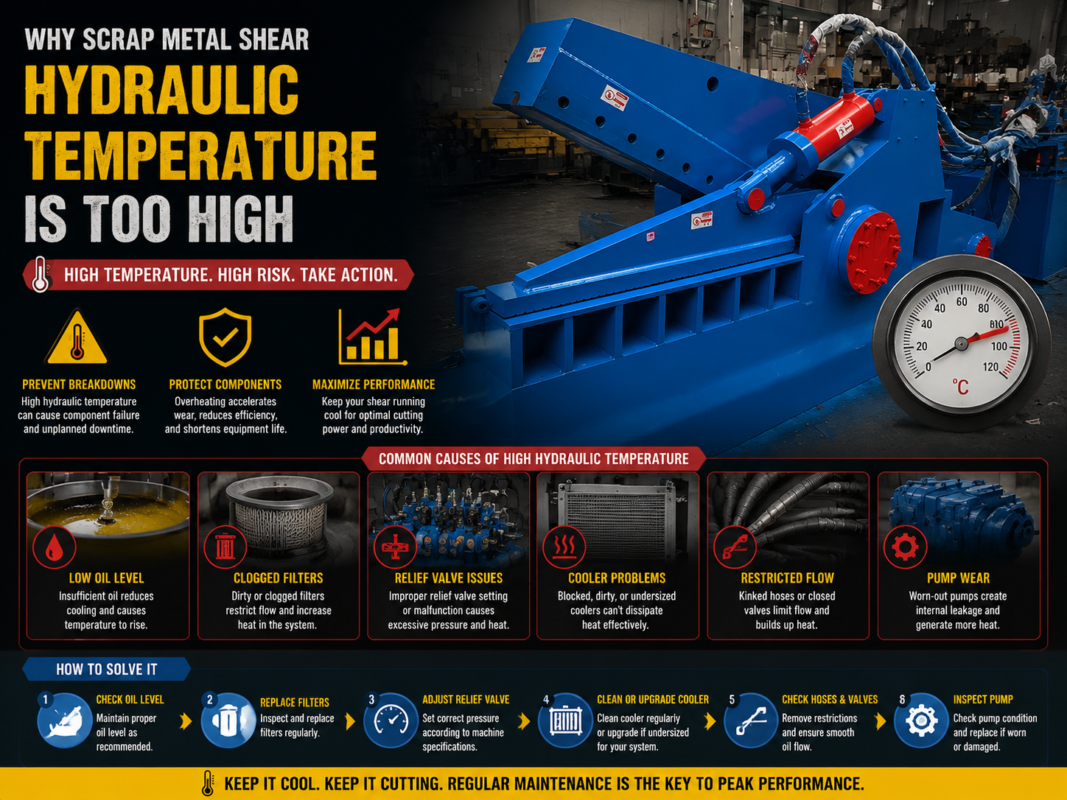
Temperature management is equally vital. Hydraulic oil is designed to operate within a specific temperature range (usually 40°C to 60°C). If the oil gets too hot, its viscosity drops, leading to increased internal leakage and reduced cutting force. Overheating is often caused by a clogged oil cooler or a malfunctioning relief valve that is constantly dumping high-pressure oil back to the tank. Maintenance fixes this by ensuring the cooling fans are operational and the heat exchanger fins are free of dust and debris.
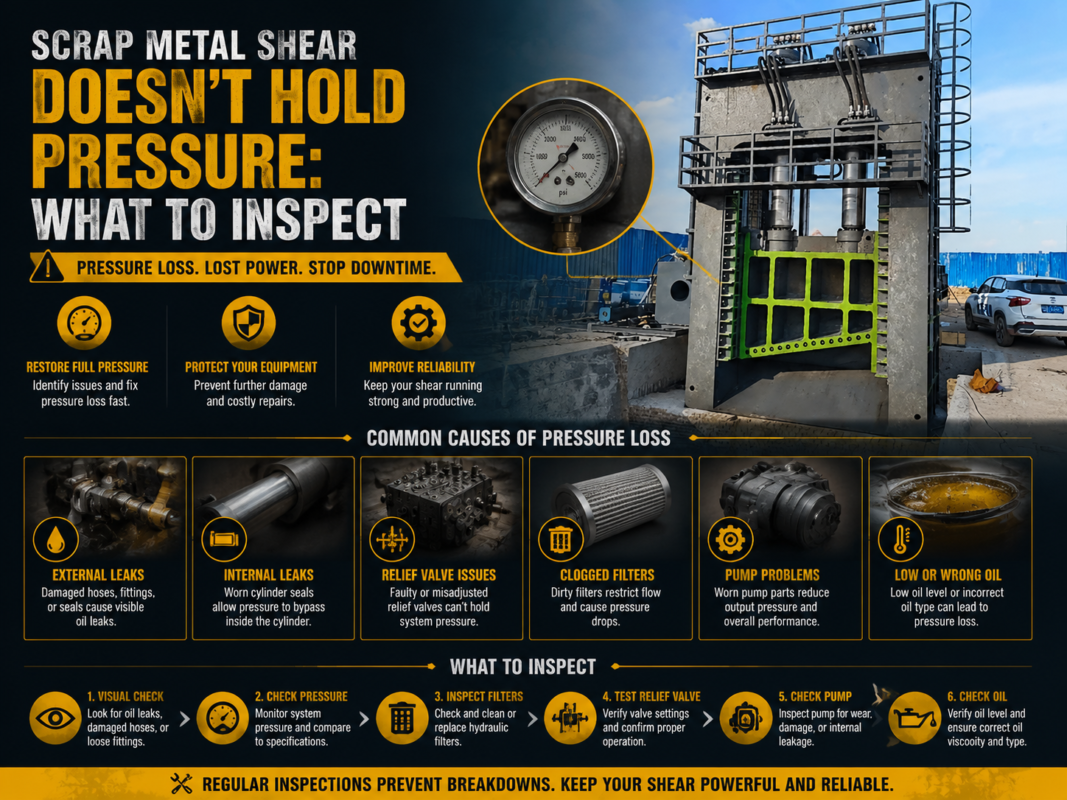
Cylinder seals are another wear item. Over time, the seals that prevent oil from leaking past the piston or out of the rod end will degrade. A “drifting” cylinder—where the shear arm slowly moves down when it should be held in place—is a classic sign of internal seal leakage. Replacing these seals during a scheduled maintenance interval is far cheaper than dealing with a blown seal during a heavy lift. Always use OEM-spec seals to ensure compatibility with the hydraulic fluid and the operating pressures of the system.
.jpg)
Electrical and Control System Checks
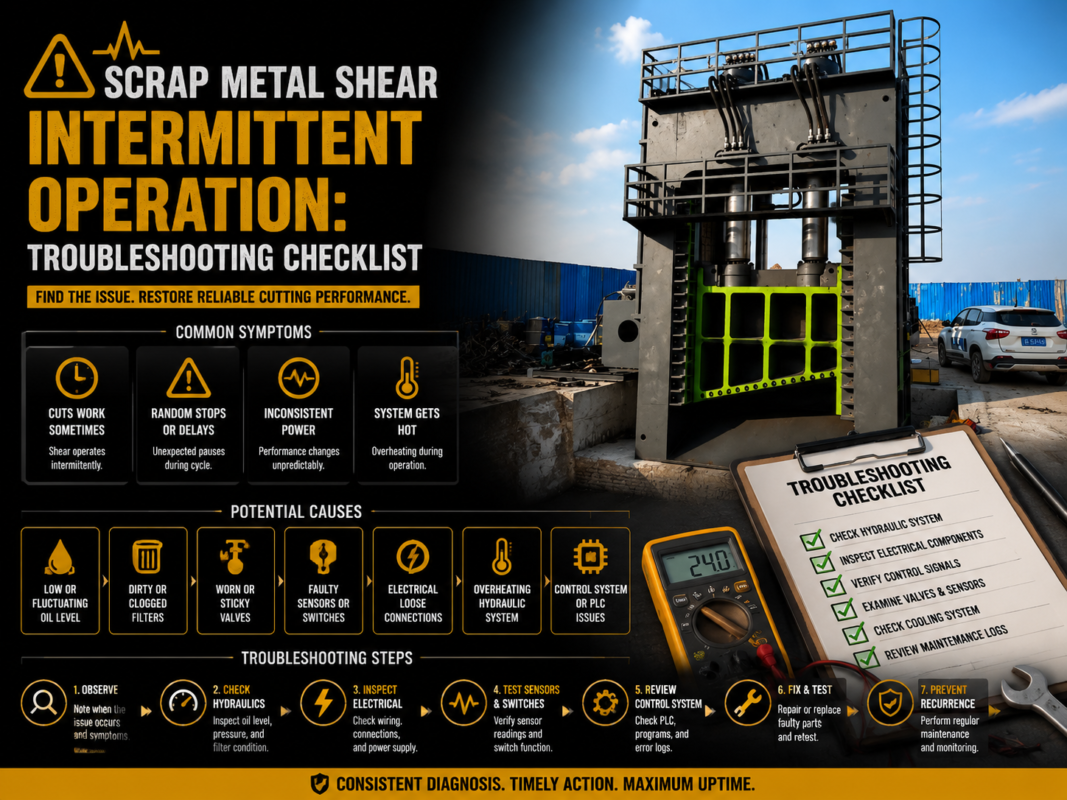
While the mechanical and hydraulic systems do the heavy lifting, the electrical system provides the brainpower. Modern shears rely on Programmable Logic Controllers (PLCs) to manage the timing of the cutting cycle, the clamping force, and the safety interlocks. One of the most common electrical problems in scrap yards is loose connections caused by the constant vibration of the machine. During monthly maintenance, all terminal blocks in the control cabinet should be checked and tightened.
Sensors and limit switches are also prone to failure due to the harsh environment. Proximity sensors that detect the position of the shear arm can become coated in grease and metal dust, leading to false readings or system lockouts. Cleaning these sensors and ensuring they are securely mounted is a simple maintenance task that prevents hours of troubleshooting. Additionally, the electrical cabinet should be kept sealed to prevent the ingress of conductive metal dust, which can cause short circuits on the circuit boards.
The electric motor that drives the hydraulic pump requires its own set of checks. Ensure the motor cooling fan is clear and that the motor is not drawing excessive current, which could indicate a mechanical bind in the pump or a failing bearing. Checking the insulation resistance of the motor windings annually can help predict a motor failure before it happens, allowing for a proactive rewind or replacement.
Mechanical Integrity and Blade Management
The mechanical frame of the shear is designed to withstand immense stress, but it is not invincible. Over time, the pivot pins and bushings that allow the shear arm to move will wear. If these components develop too much “play,” the alignment of the blades will suffer, leading to poor cuts and potential damage to the shear seat. Regular lubrication of these pivot points is the primary defense against wear. If play is detected, the bushings must be replaced immediately to prevent damage to the more expensive pivot pins and the frame itself.
Blade management is perhaps the most frequent maintenance task. Most scrap shear blades are four-sided, meaning they can be rotated to provide a fresh cutting edge four times before they need to be professionally reground. Maintenance fixes the problem of dull blades by establishing a rotation schedule based on the tonnage processed. When installing blades, it is crucial to clean the blade seat thoroughly. Even a small piece of grit behind the blade can cause it to sit unevenly, leading to a cracked blade when the cutting pressure is applied.
The bolts that hold the blades in place are subjected to extreme tension and vibration. These should be checked daily and tightened with a torque wrench to the manufacturer’s specifications. Using an impact wrench is often insufficient for achieving the precise torque required. Furthermore, the “shim” process—adding thin metal spacers behind the blades to maintain the correct clearance—is a skilled maintenance task that ensures the shear continues to cut efficiently as the blades wear down or are reground.
Lubrication Plan: Reducing Friction and Wear
A comprehensive lubrication plan is the simplest and most effective way to extend the life of a scrap metal shear. Friction is the enemy of any moving machinery, and in a scrap yard, the presence of abrasive dust makes lubrication even more critical. The lubrication plan should specify the type of lubricant to be used (usually a high-pressure lithium-based grease), the locations of all grease nipples, and the frequency of application.
Automatic lubrication systems are a popular feature on many HARSLE shears. These systems deliver small, frequent doses of grease to critical points while the machine is operating. However, these systems still require maintenance. The grease reservoir must be kept full, and the delivery lines must be inspected for breaks or blockages. If a line is blocked, the component it serves will receive no lubrication, leading to rapid failure.
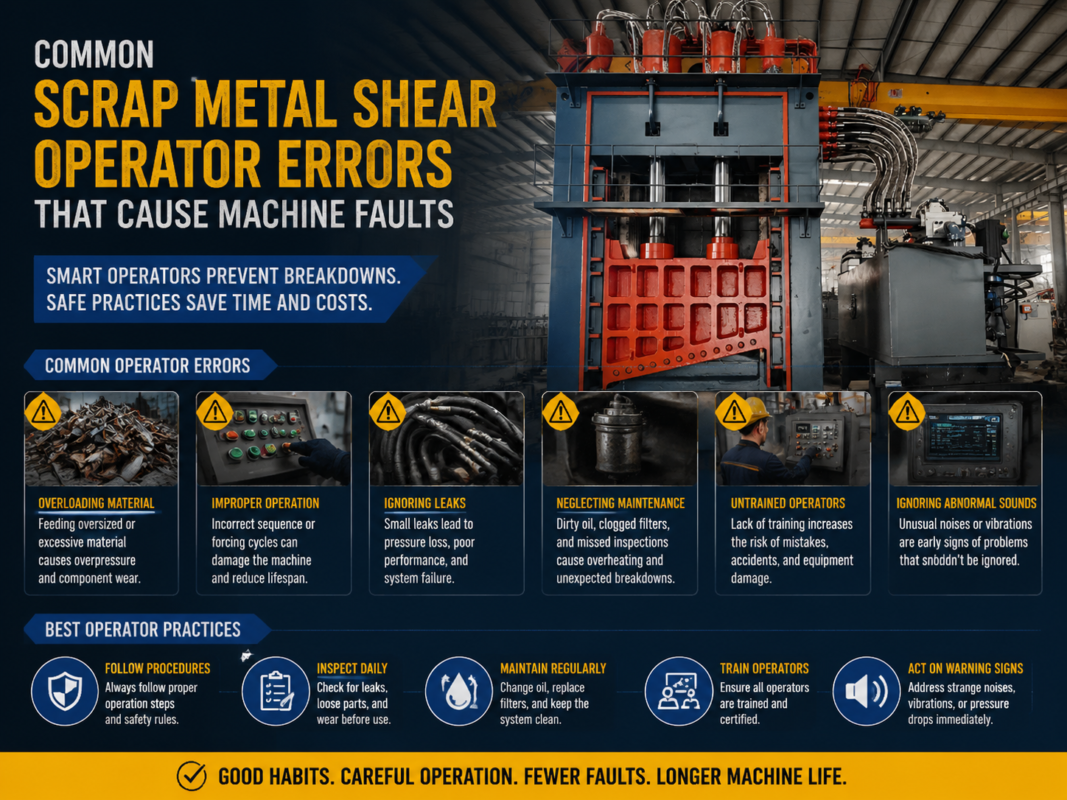
For machines without automatic systems, manual greasing should be performed at least once per shift for high-wear areas like the main pivot pin and the cylinder clevis pins. It is important to wipe the grease nipple clean before attaching the grease gun to avoid pumping dirt into the bearing. “Grease until fresh grease exits the joint” is a good rule of thumb, as this helps flush out any contaminants that have worked their way into the bushing.
Troubleshooting Signals: What Your Shear is Telling You
Experienced operators can often “feel” when a shear is not performing correctly. However, identifying specific troubleshooting signals is a key part of maintenance. For example, a high-pitched squealing noise usually indicates a hydraulic aeration problem or a pump struggling to pull oil. A deep “clunking” sound during the cut might suggest a loose blade or a worn pivot bushing. Recognizing these sounds early allows maintenance to fix the problem before it results in a broken component.
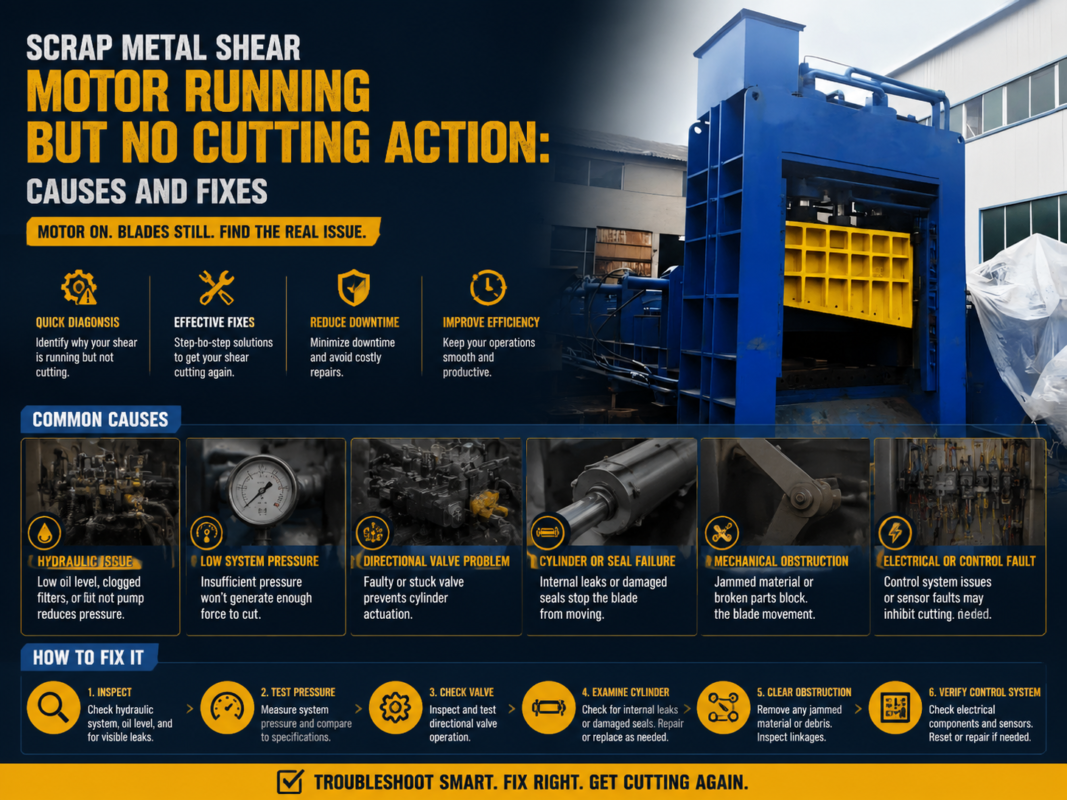
Slow cycle times are another common symptom. If the shear arm is moving slower than usual, it typically points to a loss of hydraulic flow. This could be due to a worn pump, a leaking internal seal, or a restricted suction line. By measuring the cycle time regularly, maintenance teams can track the gradual decline in performance and plan for a pump overhaul. Similarly, if the machine struggles to cut material that it previously handled with ease, the system pressure should be checked with a calibrated gauge to ensure the relief valves are set correctly.
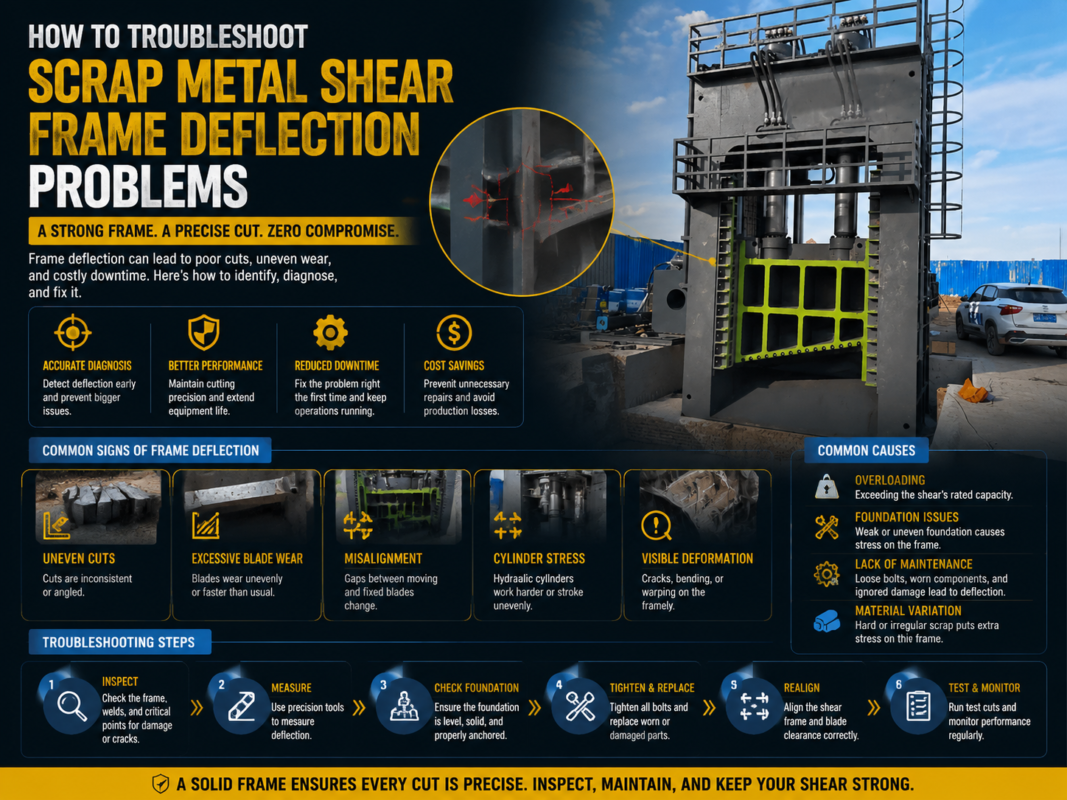
Excessive vibration is a signal that should never be ignored. It can lead to cracked welds in the frame and loosened electrical connections. Vibration is often caused by an imbalanced motor, a misaligned pump coupling, or operating the shear on an unstable foundation. Maintenance fixes this by re-aligning components and ensuring the machine’s anchor bolts are secure. Monitoring these signals transforms maintenance from a guessing game into a precise science.
Comprehensive Maintenance Schedule Table
To ensure no task is overlooked, a structured maintenance schedule is essential. Below is a recommended timeline for a standard industrial scrap metal shear.
| Frequency | Component | Action Required |
|---|---|---|
| Daily | Hydraulic Oil | Check level and visual clarity; top up if necessary. |
| Daily | Blades | Inspect for chips, cracks, and tightness of bolts. |
| Daily | Hoses & Fittings | Check for leaks, weeping, or signs of abrasion. |
| Daily | Lubrication | Manually grease pivot pins (if no auto-lube system). |
| Weekly | Blade Gap | Measure clearance and adjust with shims if needed. |
| Weekly | Air Filters | Clean or replace air breathers on the hydraulic tank. |
| Weekly | Safety Systems | Test emergency stops and limit switches. |
| Monthly | Hydraulic Filters | Replace return line and pressure filters. |
| Monthly | Electrical Cabinet | Tighten terminal connections and clean dust. |
| Monthly | Structure | Inspect frame welds for stress cracks. |
| Quarterly | Hydraulic Oil Analysis | Send sample to lab for contamination and additive check. |
| Quarterly | Pump Coupling | Inspect for wear and ensure proper alignment. |
| Annually | Full System Flush | Drain oil, clean tank, and refill with fresh fluid. |
| Annually | Motor Inspection | Check insulation resistance and bearing condition. |
Frequently Asked Questions (FAQ)
1. How often should I sharpen or rotate my shear blades?
The frequency of blade rotation depends entirely on the volume and type of material you are processing. On average, for a machine running 8 hours a day in a general scrap environment, blades should be inspected daily and rotated every 2 to 4 weeks. If you are cutting particularly hard or dirty material, this interval may be shorter. Always rotate the blades as soon as you notice a significant decrease in cutting quality.
2. Why is my hydraulic oil turning milky?
Milky oil is a classic sign of water contamination. This usually happens if the machine is stored outdoors and water enters through a loose filler cap or a damaged breather. It can also occur due to condensation inside the tank in humid environments. Water in the oil reduces lubricity and can cause rust inside the hydraulic components. If the oil is milky, it must be drained, the tank cleaned, and the oil replaced immediately.
3. Can I use any type of grease for the pivot pins?
No. Scrap metal shears require high-pressure (EP) grease, typically a Lithium Complex or Moly-based grease. These greases are designed to stay in place under the extreme loads found in shearing operations. Using a standard multi-purpose grease will result in the lubricant being squeezed out of the joint, leading to metal-on-metal contact and rapid wear of the bushings.
4. What is the correct gap between the shear blades?
The ideal blade gap (clearance) is usually between 0.2mm and 0.5mm, but this varies depending on the thickness of the material you are cutting and the manufacturer’s specifications. If the gap is too small, the blades may collide and chip. If it is too large, the metal will “chew” or fold, putting immense side-load on the shear arm. Always refer to your HARSLE manual for the specific setting for your model.
5. My shear is losing cutting power; what should I check first?
First, check the hydraulic oil level and the condition of the filters. If those are fine, check the system pressure using a gauge while the machine is under load. If the pressure is lower than the factory setting, the relief valve may be stuck open or worn. If the pressure is correct but the power is still low, the problem may be internal leakage in the main cylinder or a severely dull set of blades.
Conclusion: Maximizing ROI Through Diligent Care
Understanding common scrap metal shear problems and how maintenance fixes them is the hallmark of a professional recycling operation. By treating the shear as a precision instrument rather than just a piece of heavy iron, you ensure its longevity and reliability. The combination of daily vigilance, scheduled hydraulic service, and proper blade management creates a synergy that drives productivity and safety. At HARSLE, we design our machinery to be robust and user-friendly, but the ultimate performance of the machine lies in the hands of the maintenance team. Invest in your maintenance routine today, and your scrap metal shear will provide a high return on investment for decades to come.