How to Select a Heavy-Duty Horizontal Baler for High-Volume Compaction Needs

Introduction to High-Volume Compaction Solutions
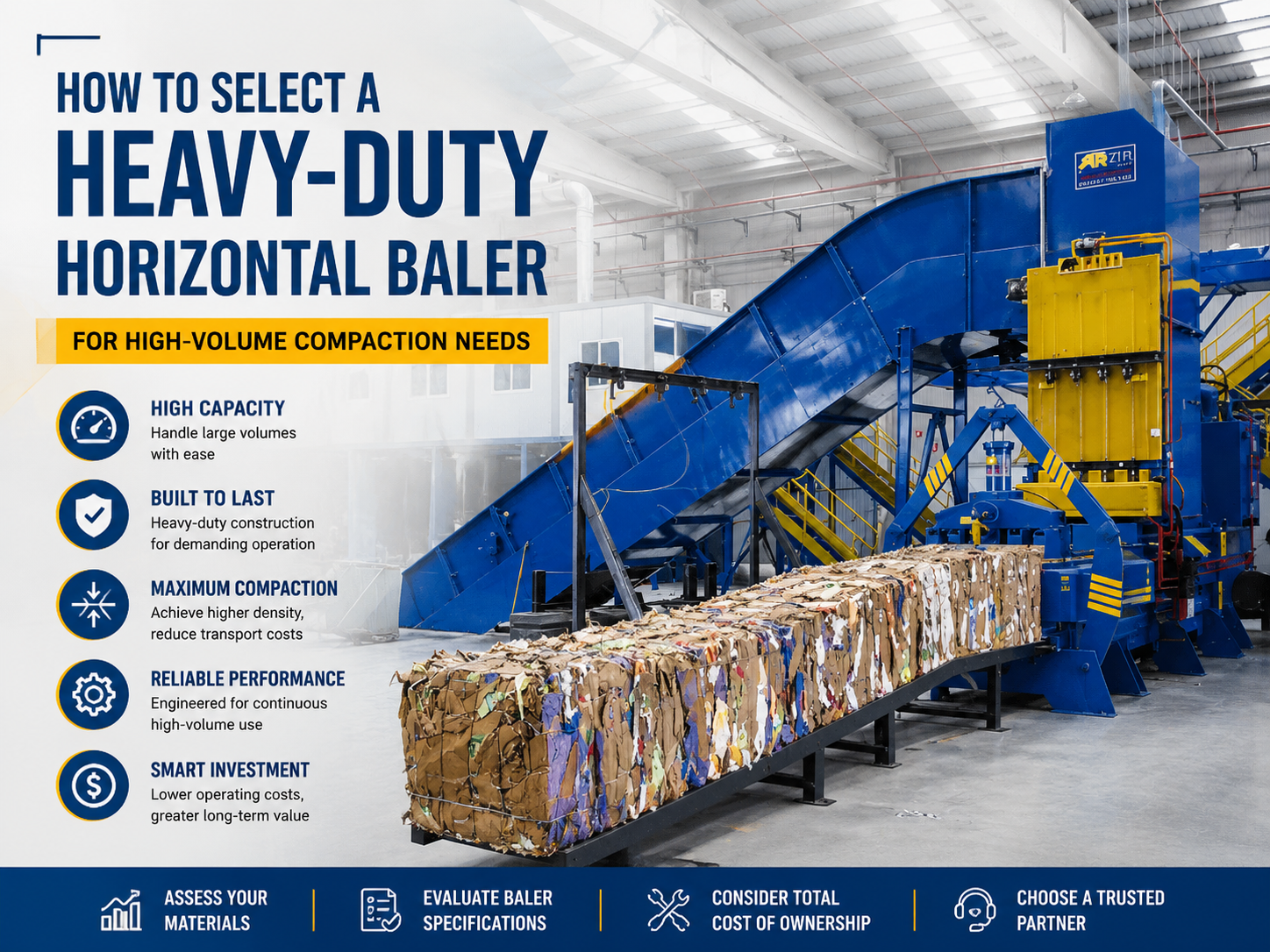
In the world of industrial waste management and recycling, efficiency is the cornerstone of profitability. For facilities processing massive quantities of cardboard, plastics, non-ferrous metals, or municipal solid waste, the decision to select a heavy-duty horizontal baler for high-volume compaction needs is one of the most significant capital investments they will make. Unlike vertical balers, which are suited for smaller retail environments, horizontal balers are designed for continuous operation, high throughput, and maximum bale density.
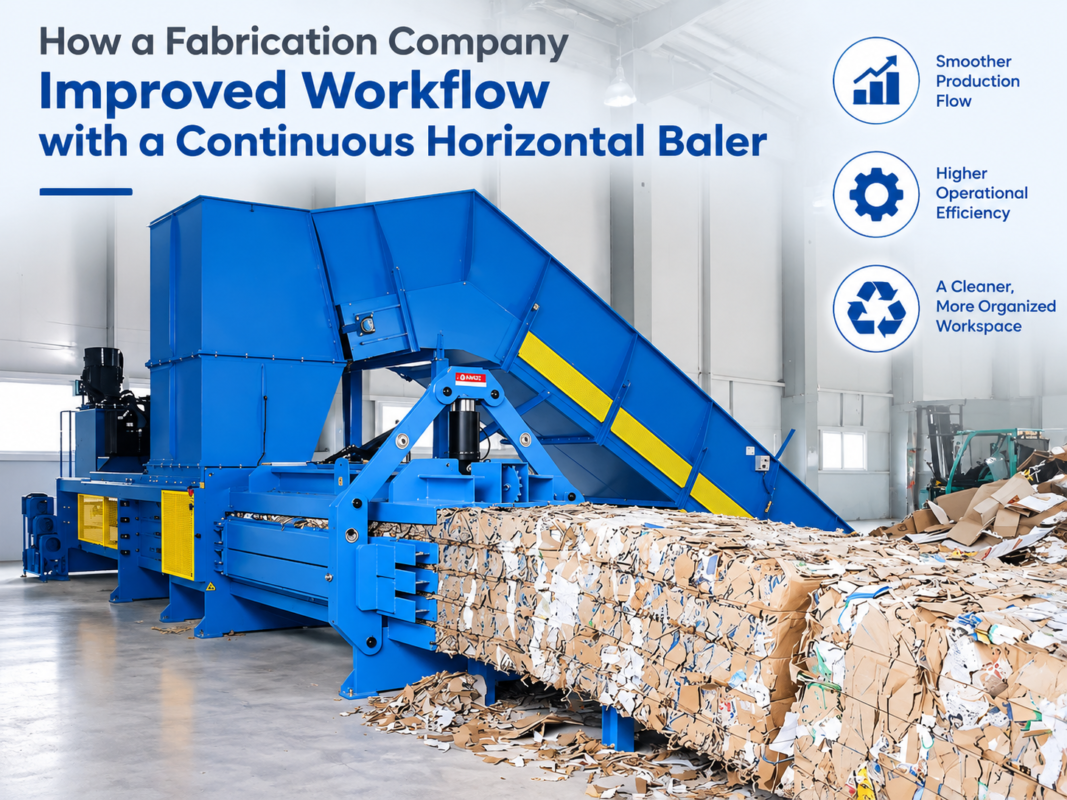
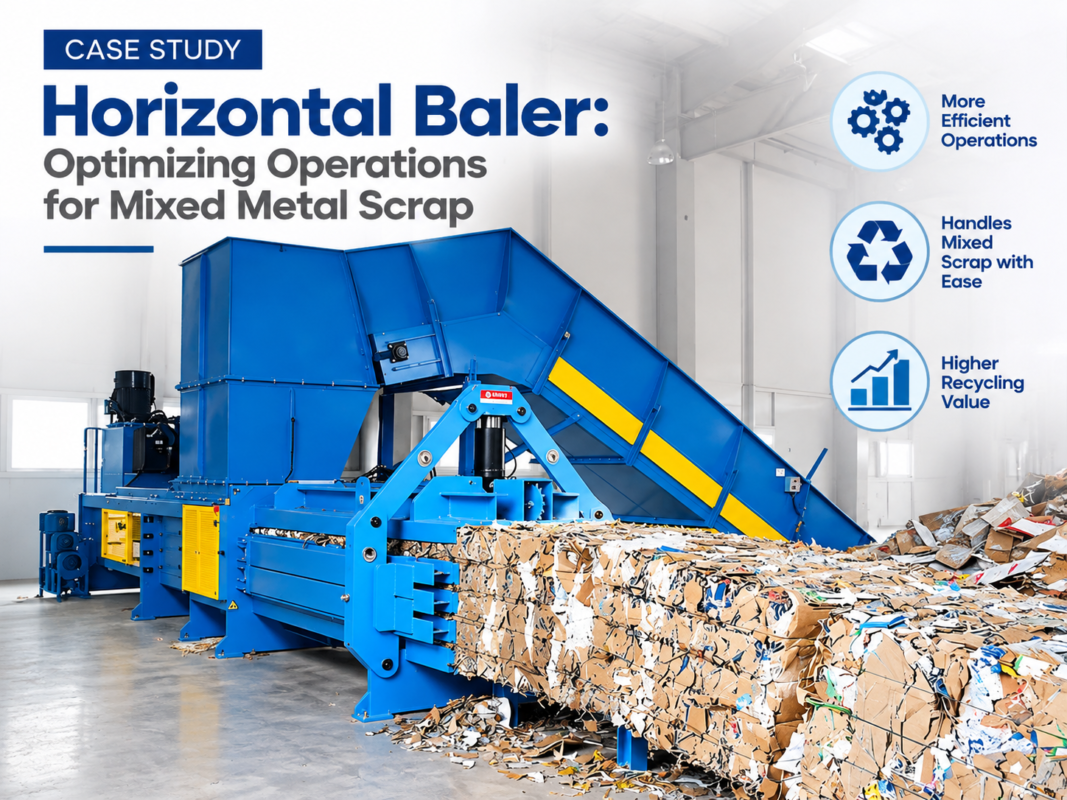
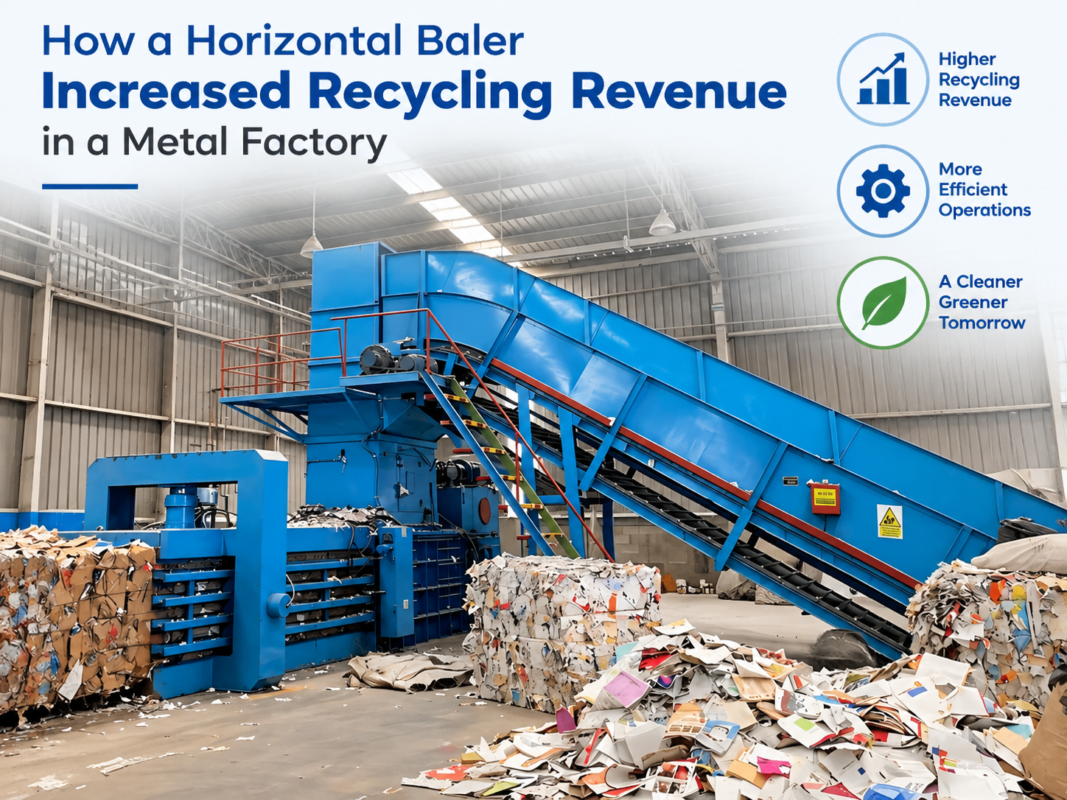
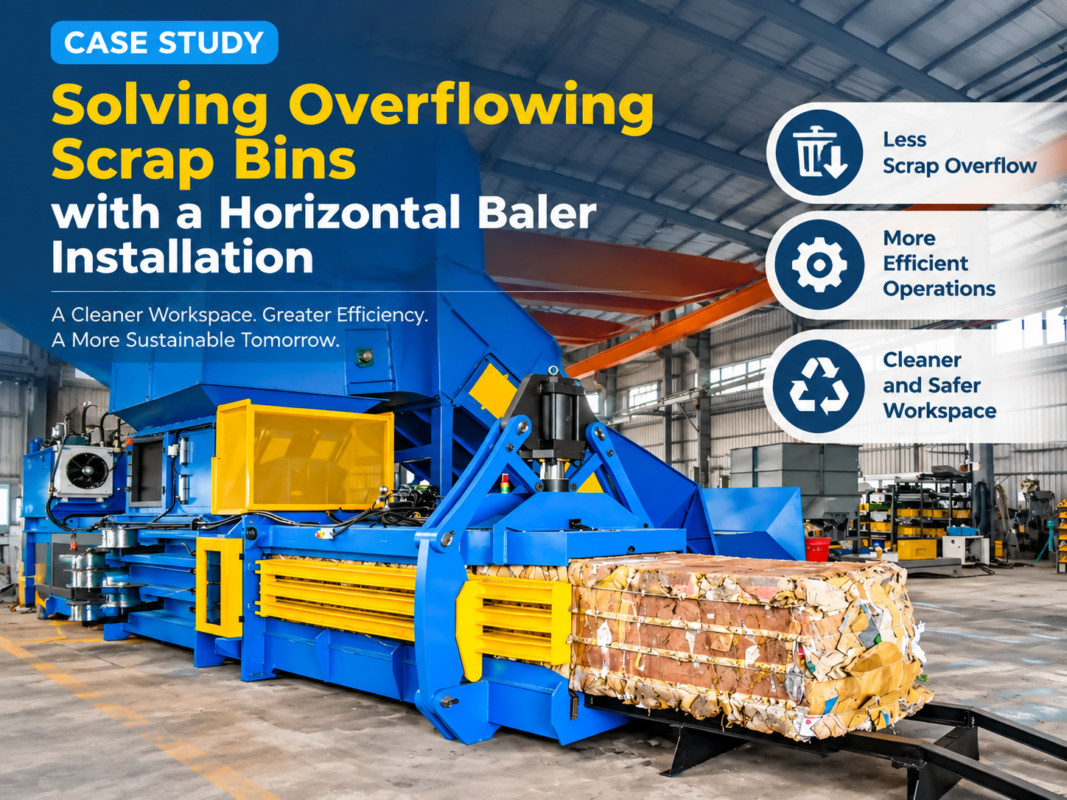
A heavy-duty horizontal baler operates by pushing material horizontally into a compaction chamber, where a hydraulic ram exerts tremendous force to create dense, stackable blocks. These machines are essential for operations that exceed 50 tons of material per month. By significantly reducing the volume of waste, companies can slash transportation costs, minimize storage footprints, and even turn waste streams into a revenue source by selling high-density bales to mills and exporters.
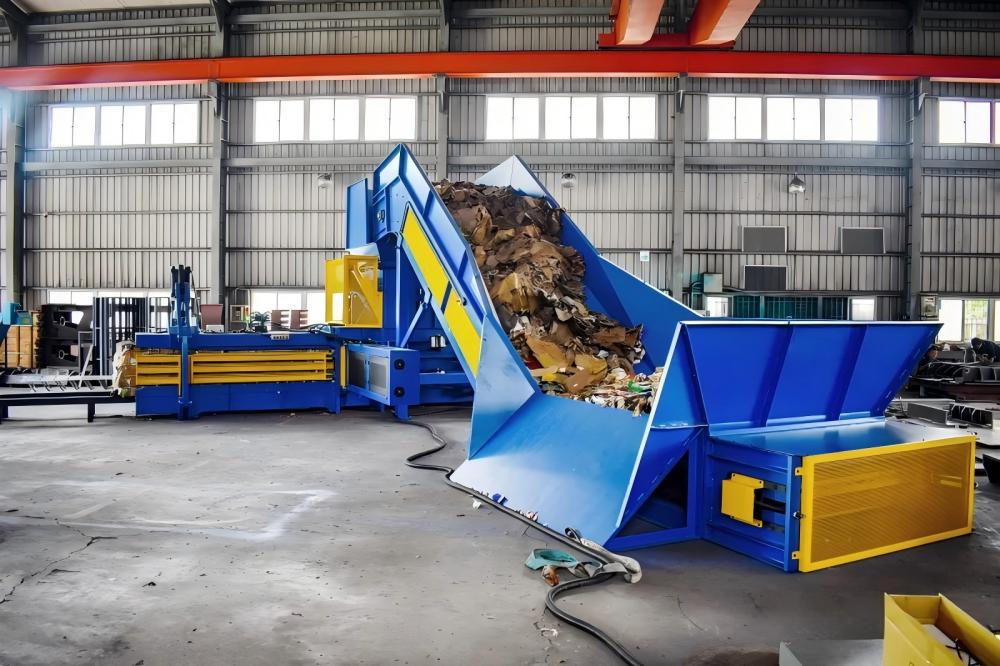
Choosing the right machine requires a deep understanding of your material flow, desired bale weights, and the technical specifications of the machinery. HARSLE, a leader in metal fabrication and industrial machinery, emphasizes that a mismatched baler can lead to operational bottlenecks, excessive maintenance costs, and safety hazards. This guide provides a comprehensive roadmap to help you navigate the complexities of the industrial baler market.
Price Range Overview: Understanding the Investment
When you look to select a heavy-duty horizontal baler for high-volume compaction needs, the price range is broad, reflecting the diversity in capacity and automation. Generally, industrial horizontal balers fall into three primary price tiers based on their construction and throughput capabilities.
Entry-Level Industrial Horizontal Balers ($30,000 – $75,000)
These machines are typically closed-end balers or manual-tie units. They are suitable for facilities processing 50 to 100 tons per month. While they offer the structural integrity of a horizontal design, they require more manual labor for tying and ejecting bales. They are often used for specific materials like aluminum cans or high-grade paper where the volume is consistent but not overwhelming.
Mid-Range Automatic Balers ($80,000 – $180,000)
This is the most common category for professional recycling centers. These units feature automatic wire-tying systems and can handle 100 to 500 tons per month. They often include integrated conveyors and basic PLC (Programmable Logic Controller) systems to manage the compaction cycles. The increase in price reflects higher hydraulic pressure, faster cycle times, and reduced labor requirements.
High-Capacity Heavy-Duty Systems ($200,000 – $500,000+)
Designed for 24/7 operation in MRFs (Material Recovery Facilities) or large manufacturing plants, these systems are the pinnacle of compaction technology. They feature massive feed openings, multi-stage hydraulic pumps, and advanced shearing blades to handle bulky materials. These machines are built with wear-resistant liners (like Hardox steel) and sophisticated sensors to optimize bale density automatically.
| Baler Category | Monthly Volume | Typical Price Range | Key Feature |
|---|---|---|---|
| Manual-Tie Horizontal | 50-100 Tons | $30k – $75k | Low labor cost, high density |
| Auto-Tie Mid-Range | 100-500 Tons | $80k – $180k | Continuous feed, automated tying |
| High-Volume Two-Ram | 500+ Tons | $200k+ | Multi-material versatility, max density |
Main Cost Drivers in Heavy-Duty Balers
The sticker price of a horizontal baler is driven by several critical engineering factors. Understanding these will help you determine where to allocate your budget when you select a heavy-duty horizontal baler for high-volume compaction needs.
1. Hydraulic Force and Motor Power
The heart of the baler is its hydraulic system. A machine with a 100-ton compaction force requires significantly more robust cylinders, hoses, and pumps than a 60-ton unit. Furthermore, the horsepower of the main motor (ranging from 20HP to over 150HP) dictates the cycle time. Faster cycle times mean more bales per hour, which is critical for high-volume environments.
2. Structural Integrity and Steel Quality
Heavy-duty balers are subject to immense internal stress. The thickness of the steel frame and the quality of the welding are paramount. Premium balers use high-tensile steel and replaceable wear liners in the floor and sides of the compaction chamber. These liners protect the main structure from abrasive materials like sand, glass, or metal scrap, extending the machine’s lifespan by decades.
3. Automation and Control Systems
Modern industrial balers utilize PLCs to manage everything from the ram position to the tension of the wire tie. Systems equipped with remote diagnostics, touch-screen interfaces, and integrated weighing scales cost more but provide invaluable data for operational efficiency. Automation reduces the need for a dedicated operator, which is a significant long-term cost-saving factor.
4. Material Handling Integration
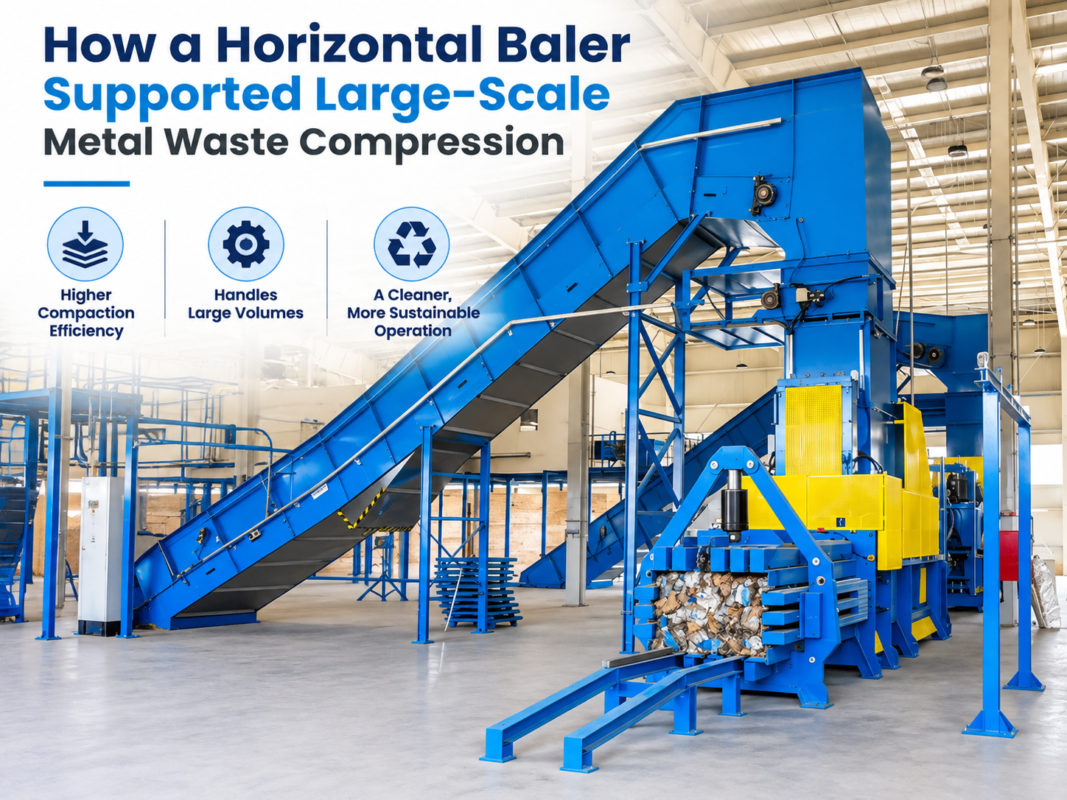
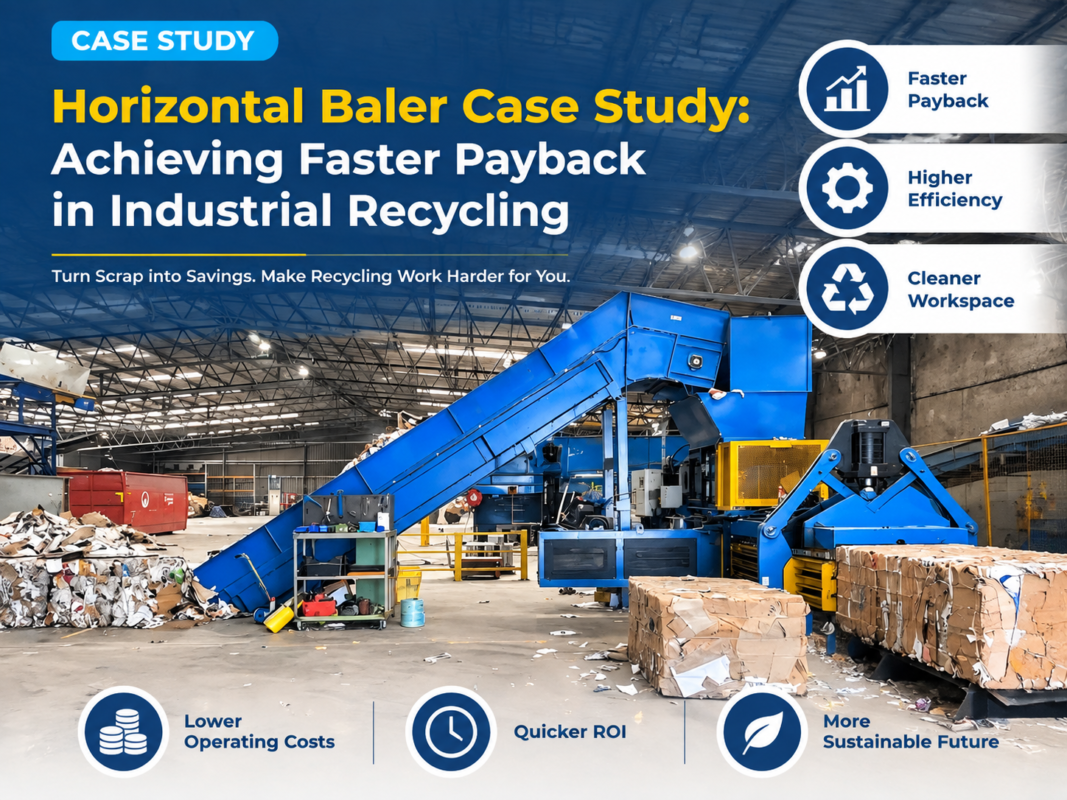
A baler is only as fast as its feeding system. The cost often includes or is influenced by the type of conveyor (rubber belt vs. steel chain), fluffers (for breaking up dense paper), or cart tippers required to move material into the hopper. High-volume needs almost always necessitate a sophisticated in-feed system.
Configuration Impact: Tailoring the Machine to Your Waste Stream
Configuration is where the specific needs of your facility meet the capabilities of the machine. To select a heavy-duty horizontal baler for high-volume compaction needs effectively, you must match the configuration to your primary material types.
Auto-Tie vs. Two-Ram Balers
Auto-tie balers are excellent for homogenous materials like cardboard (OCC) or paper. They use a shear blade to cut excess material and automatically wrap wire around the bale. However, for difficult materials like high-density plastics (HDPE) or non-ferrous metals, a Two-Ram baler is often preferred. Two-ram balers use a separate gathering ram and a baling ram, allowing them to process a wider variety of materials without the risk of jamming the tying mechanism.
Feed Opening and Hopper Size
If you are processing large, bulky items like appliance boxes or large plastic crates, a small feed opening will cause “bridging,” where material gets stuck and stops the flow. Selecting a wide-mouth hopper ensures that material drops cleanly into the chamber, maximizing the efficiency of every stroke of the ram.
Shear Blades and Replaceable Knives
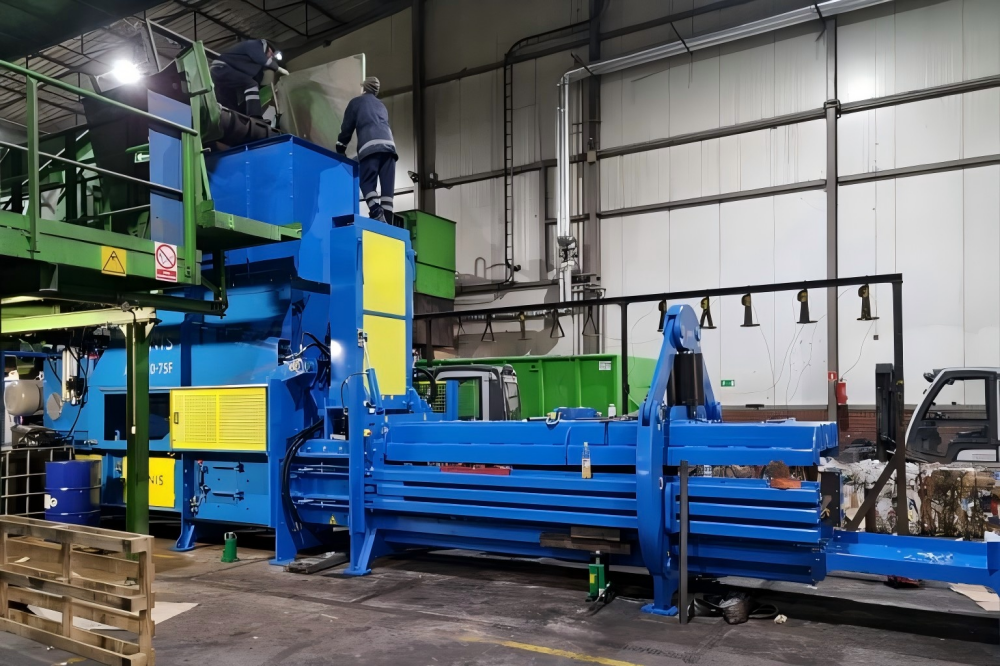
In a horizontal baler, the shear blade cuts off the material that hangs over the compaction chamber. For high-volume needs, these blades must be made of hardened tool steel and be easily adjustable. Dull blades increase the load on the motor and result in messy, poorly formed bales. Some configurations offer “bolt-on” knives that can be rotated or replaced quickly, minimizing downtime.
Hidden Costs of Industrial Baler Ownership
The initial purchase price is just the beginning. When you select a heavy-duty horizontal baler for high-volume compaction needs, you must account for the total cost of ownership (TCO).
- Electrical Infrastructure: High-volume balers often require 480V three-phase power. If your facility isn’t equipped for this, the cost of upgrading transformers and panels can be substantial.
- Freight and Rigging: These machines can weigh between 10 and 50 tons. Shipping them requires specialized heavy-haul trucking, and offloading them requires high-capacity cranes or heavy-duty forklifts.
- Consumables: For an auto-tie baler, the cost of baling wire is a recurring expense. Depending on your volume, you might spend thousands of dollars annually on wire. High-quality wire reduces the risk of breakages and machine downtime.
- Foundation Requirements: A heavy-duty baler exerts massive vibration and pressure. Most manufacturers require a reinforced concrete pad (typically 6-12 inches thick with rebar) to prevent the floor from cracking or the machine from shifting.
ROI Calculation: Why the Investment Pays Off
Calculating the Return on Investment (ROI) is crucial for justifying the purchase of a heavy-duty horizontal baler. The primary drivers of ROI are labor savings, transportation savings, and material revenue.
Labor Savings: A manual vertical baler might require an employee to spend 20 minutes per bale loading, tying, and ejecting. An automatic horizontal baler can produce a bale every few minutes with almost no manual intervention. If you produce 10 bales a day, the labor savings alone can exceed $30,000 per year.
Transportation Density: Logistics companies charge by the load or by the mile. If you can increase your bale density from 20,000 lbs per truckload to 40,000 lbs per truckload, you effectively cut your shipping costs in half. For high-volume shippers, this is often the fastest path to ROI.
Material Value: Mills pay a premium for “mill-size” bales that meet specific density and dimension requirements. By using a heavy-duty baler, you ensure your product is marketable at the highest possible price point, turning a waste expense into a profit center.
Buying Advice: A Step-by-Step Selection Process
To successfully select a heavy-duty horizontal baler for high-volume compaction needs, follow this structured approach:
- Audit Your Waste Stream: Document exactly what materials you are baling and in what quantities. Take photos of the largest items to ensure the hopper size is sufficient.
- Define Your Throughput Goals: Don’t just buy for today; buy for your projected growth over the next five years. If you process 200 tons now, look for a machine capable of 300 tons.
- Evaluate Space Constraints: Horizontal balers have a large footprint, especially when you include the in-feed conveyor and the bale discharge area. Ensure you have enough room for forklifts to maneuver and remove finished bales.
- Check Reference Sites: Ask the manufacturer for references in your industry. Seeing a machine operate in a similar environment is the best way to judge its performance.
- Prioritize After-Sales Support: A baler is a mechanical machine that will eventually need parts and service. Ensure the manufacturer or dealer has a local service presence and a robust inventory of wear parts.
Maintenance and Longevity
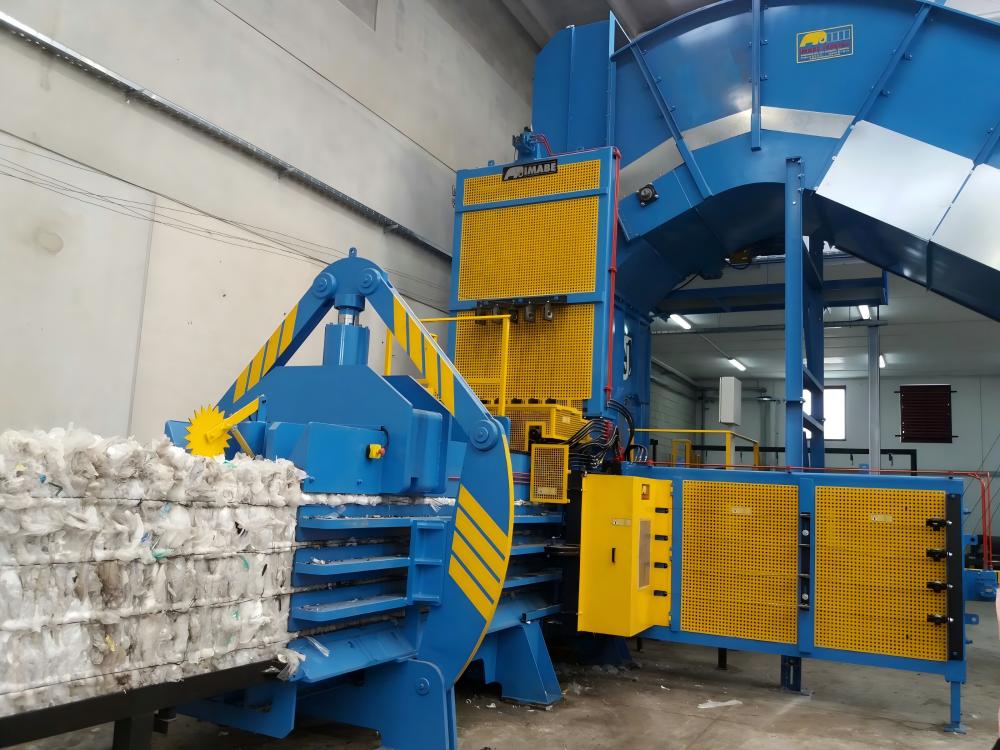
A well-maintained heavy-duty horizontal baler can last 20 to 30 years. Maintenance for high-volume machines focuses on the hydraulic system and the wear surfaces. Regularly changing the hydraulic oil and filters is non-negotiable, as contaminated oil can destroy expensive pumps and valves. Additionally, the alignment of the ram should be checked monthly to ensure it isn’t wearing unevenly against the liners.
Lubrication of the tying mechanism is another critical task. In auto-tie models, the “twister” or “knotter” is a precision component that operates in a dusty environment. Automated lubrication systems are a highly recommended add-on for high-volume operations, as they ensure these parts are greased consistently without relying on manual labor.
Frequently Asked Questions (FAQ)
What is the difference between a closed-end and an open-end horizontal baler?
A closed-end baler has a door that stays shut during compaction, allowing for very high pressure against a solid surface; the door opens only to eject the finished bale. An open-end baler uses hydraulic tensioners to squeeze the sides of the bale as it is pushed through a long channel, allowing for continuous extrusion and higher throughput.
How much space do I need for a horizontal baler?
While the machine itself might be 20-30 feet long, you need to account for the conveyor (another 20-40 feet), the bale discharge area (15 feet), and maintenance clearance on all sides. A typical high-volume setup requires at least 2,000 to 3,000 square feet of dedicated floor space.
Can one baler handle both plastic and cardboard?
Yes, but it requires different settings. Cardboard is “springy” and requires specific tension, while plastic often requires more force to achieve density. A Two-Ram baler is the best choice if you frequently switch between these materials, as it handles the expansion of plastic better than a standard auto-tie unit.
What are the safety requirements for industrial balers?
In the US, balers must comply with ANSI Z245.5 standards. This includes emergency stop buttons, interlocked gates that prevent the machine from running when open, and proper guarding around all moving parts. Safety training for operators is mandatory to prevent catastrophic injuries.
How do I know if I need a fluffer?
If you are baling high volumes of newsprint, office paper, or magazines, these materials tend to pack too tightly in the hopper, preventing the ram from creating a cohesive bale. A fluffer sits above the hopper and breaks up these dense layers, ensuring a consistent feed and better bale integrity.
Conclusion
To select a heavy-duty horizontal baler for high-volume compaction needs is to invest in the future efficiency of your business. By focusing on structural quality, hydraulic power, and the right level of automation, you can transform your waste management from a logistical headache into a streamlined, profitable operation. HARSLE continues to provide the industry with the robust machinery and technical expertise required to meet these demanding industrial challenges. Whether you are upgrading an existing facility or building a new recycling center, choosing the right horizontal baler is the first step toward operational excellence.