Horizontal Baler Cost Guide: What Affects Price, ROI, and Operating Expenses

Introduction to Horizontal Baler Investment
In the world of industrial waste management and recycling, the horizontal baler stands as a cornerstone of efficiency. For facilities handling large volumes of cardboard, plastic, paper, or non-ferrous metals, transitioning from a vertical baler or loose collection to a horizontal system is a significant financial step. Understanding the Horizontal Baler Cost : Affects Price, ROI Operating Expenses is essential for any facility manager or business owner looking to optimize their logistics and sustainability profile. This guide provides a deep dive into the financial landscape of horizontal balers, helping you navigate the complexities of initial purchase prices, long-term operational costs, and the eventual return on investment.
HARSLE, a leader in metal fabrication and industrial machinery, recognizes that a baler is more than just a machine; it is a critical component of a company’s supply chain. A well-chosen horizontal baler can turn a waste expense into a revenue stream by producing high-density bales that recyclers pay a premium for. However, the upfront cost can range from tens of thousands to hundreds of thousands of dollars. This guide aims to demystify those numbers and provide a clear roadmap for your procurement process.
Horizontal Baler Price Range Overview
The market for horizontal balers is diverse, catering to everything from small distribution centers to massive municipal recycling facilities (MRFs). Because of this range, prices vary significantly based on capacity and automation levels. Generally, horizontal balers are categorized into three main price tiers.
Entry-Level Manual-Tie Balers
Entry-level horizontal balers typically range from $35,000 to $65,000. These machines are often ‘closed-end’ balers, meaning the bale is compressed against a solid door. They require a manual tying process where an operator must thread the bale wire through the machine and tie it off by hand. While they have a lower initial cost, they are labor-intensive and best suited for operations processing 1 to 3 tons of material per hour.
Mid-Range Semi-Automatic and Open-End Balers
Mid-range machines usually fall between $70,000 and $130,000. These often feature ‘open-end’ designs with hydraulic tensioning systems that allow for continuous baling. While some may still require manual tying, many in this range offer semi-automated features, higher hydraulic pressure (60-80 tons), and larger feed openings. They are ideal for medium-sized recycling centers processing 4 to 8 tons per hour.
High-End Fully Automatic Balers
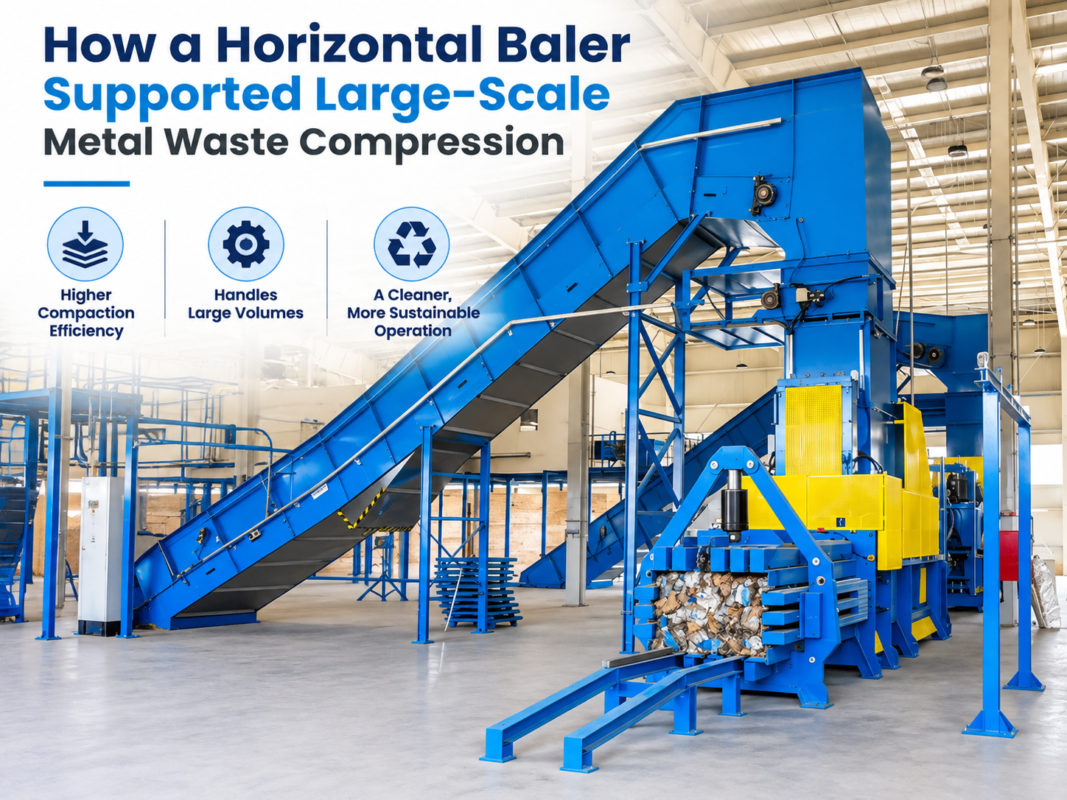
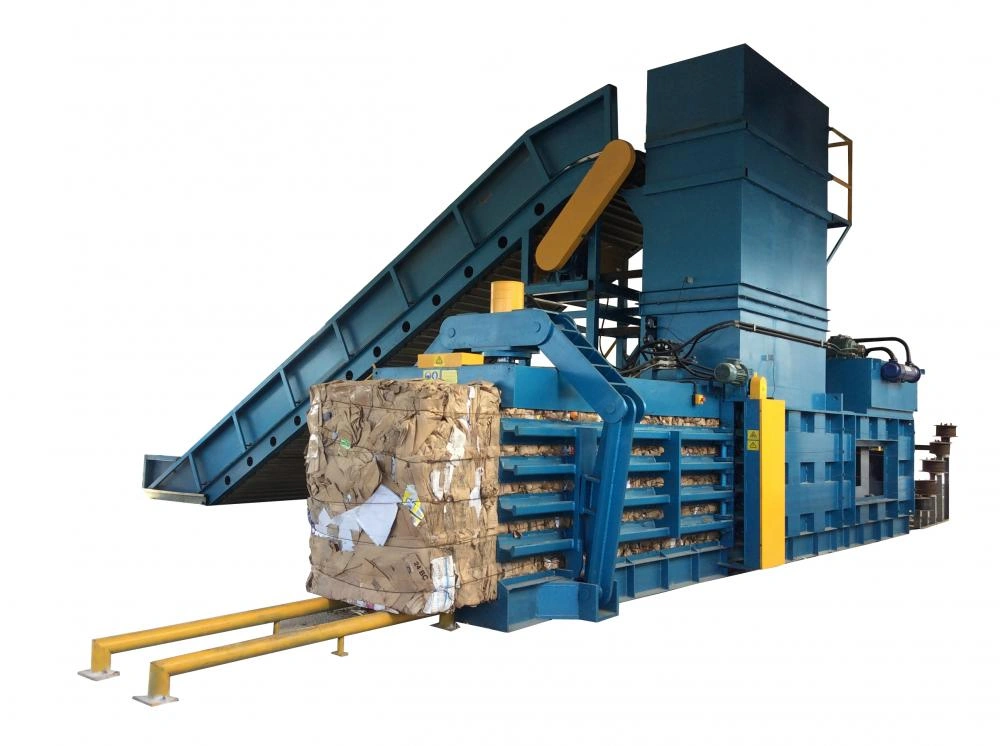
For high-volume industrial applications, fully automatic horizontal balers are the standard. These machines range from $150,000 to over $500,000. They feature automatic wire-tying systems, advanced PLC controls, integrated conveyors, and massive shearing force. These units are designed to run 24/7, processing upwards of 15-30 tons per hour with minimal human intervention. The high price tag reflects the engineering required to handle extreme stress and high-speed throughput.
Main Cost Drivers: What Dictates the Price?
When reviewing a quote for a horizontal baler, several technical specifications directly influence the final number. Understanding these drivers helps you determine if you are paying for features you actually need.
1. Pressing Force (Tonnage)
The ‘tonnage’ of a baler refers to the amount of pressure the hydraulic ram exerts on the material. A 50-ton baler is significantly cheaper than a 120-ton baler. Higher tonnage is required for dense materials like plastic jugs (HDPE) or light metals. If you only bale soft cardboard, a lower tonnage might suffice, saving you thousands in initial costs. However, higher tonnage results in denser bales, which reduces shipping costs—a classic trade-off between CAPEX and OPEX.
2. Motor Power and Hydraulic System
The horsepower (HP) of the main motor dictates the cycle time. A 20HP motor will result in a slower ram movement compared to a dual 50HP setup. High-performance hydraulic systems with regenerative circuits (which speed up the ram’s return) add to the cost but significantly increase the machine’s hourly output. Furthermore, the quality of the hydraulic components (valves, pumps, and seals) from reputable brands like Rexroth or Vickers will command a higher price but offer better reliability.
3. Frame Construction and Steel Quality
A horizontal baler is subject to immense internal forces. The thickness of the steel plate used in the frame and the quality of the welding are critical. Machines built with high-tensile, wear-resistant liners (like Hardox) in the baling chamber will cost more upfront but will last years longer before requiring structural repairs. HARSLE emphasizes heavy-duty frame construction to ensure the machine doesn’t ‘flex’ under pressure, which can lead to premature seal failure and structural cracks.
Configuration Impact: Customizing for Efficiency
The base price of a machine is often just the starting point. Configuration options can add 20-40% to the total cost but are often necessary for specific operational goals.
Automatic Tying Systems
The single biggest configuration cost is the automatic wire tier. This system uses a needle and twister mechanism to secure the bale without operator intervention. While adding $30,000 to $50,000 to the price, it eliminates the need for a dedicated operator to stand by the machine, potentially saving $40,000+ per year in labor costs. For high-volume facilities, this is almost always a mandatory feature.
Feeding Systems and Hoppers
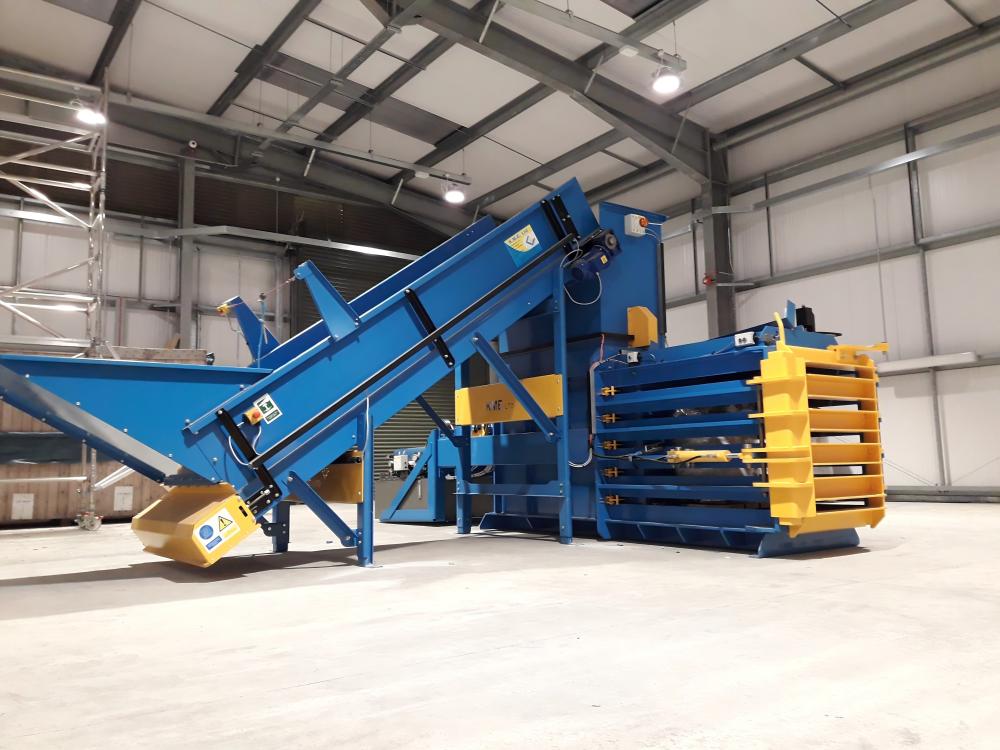
How the material gets into the baler affects the price. A standard gravity hopper is the cheapest option. However, most industrial setups require a conveyor system, a cyclone separator (for paper/shredded material), or a cart tipper. A heavy-duty steel belt conveyor can add $20,000 to $60,000 depending on length and width. Additionally, features like ‘shear blades’ at the top of the ram help cut through overhanging material, preventing jams but adding to the complexity and cost of the ram assembly.
Control Systems and Integration
Modern balers utilize Programmable Logic Controllers (PLCs). A basic PLC might handle simple start/stop functions, but advanced systems with touch-screen HMIs (Human Machine Interfaces), remote diagnostics, and data tracking (to monitor bale weights and counts) add to the cost. Integration with a facility’s existing ERP system for real-time waste tracking is a premium feature that high-end manufacturers like HARSLE can provide.
Hidden Costs of Ownership
The purchase price is not the ‘landed’ cost. Buyers must budget for several additional expenses that often go overlooked during the initial research phase.
- Freight and Logistics: Horizontal balers are oversized loads. Shipping a 20-ton machine across the country or importing it can cost between $3,000 and $15,000. You may also need a heavy-duty crane for offloading at your site.
- Installation and Commissioning: Most manufacturers require their technicians to oversee the installation to validate the warranty. This includes anchoring the machine to a reinforced concrete pad, hydraulic oil filling (which can be hundreds of gallons), and electrical hookups. Budget $5,000 to $10,000 for this phase.
- Electrical Infrastructure: These machines require significant power. You may need to upgrade your facility’s electrical panel or run new 480V 3-phase lines to the machine location.
- Consumables: Baling wire is a recurring expense. Depending on your volume, you could spend $500 to $2,000 a month on wire. Choosing a machine that uses thinner wire without sacrificing bale integrity can save money over time.
ROI Calculation: When Does the Baler Pay for Itself?
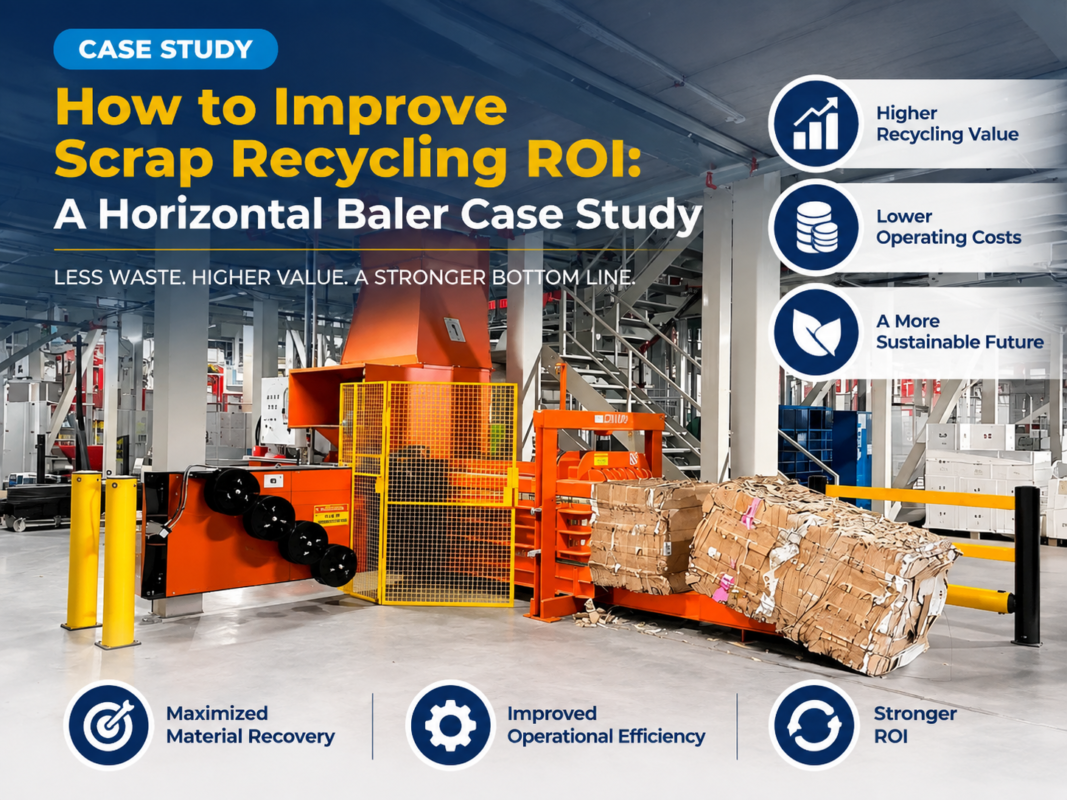
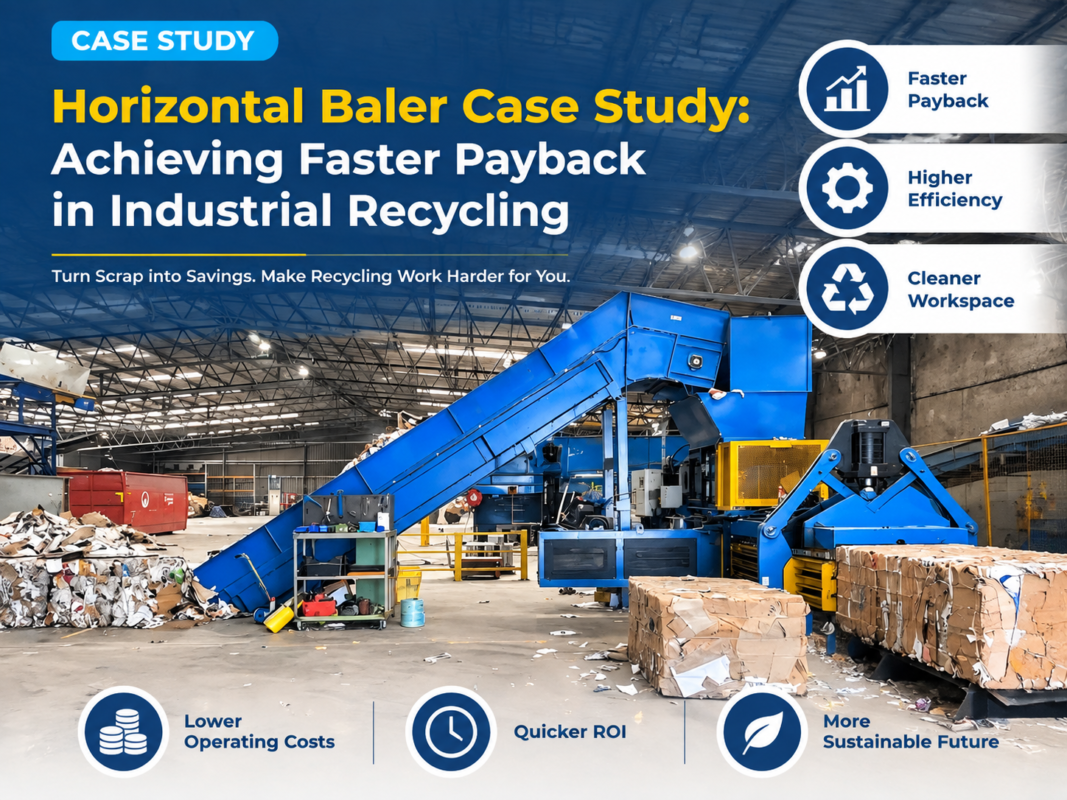
Calculating the Return on Investment (ROI) is the most important part of the Horizontal Baler Cost : Affects Price, ROI Operating Expenses analysis. Most businesses see a payback period of 18 to 36 months.
Labor Savings
A manual vertical baler might require 20 minutes of an employee’s time per bale (loading, tying, ejecting). A fully automatic horizontal baler reduces this to near zero. If you produce 10 bales a day, you are saving over 3 hours of labor daily. At $20/hour, that’s $15,000 a year in direct labor savings alone.
Logistics and Transport Efficiency
Loose waste or poorly compacted bales are expensive to ship. A horizontal baler can produce bales weighing 1,000 to 1,500 lbs. This allows you to maximize the weight capacity of a 53-foot trailer. By fitting more weight into fewer trucks, companies often reduce their hauling costs by 50% or more. If a haul costs $500 and you reduce hauls from 4 per week to 1 per week, you save $78,000 annually.
Revenue from Recyclables
Recyclers pay significantly more for ‘mill-size’ bales produced by horizontal balers. Loose cardboard might be a cost to remove, whereas high-density bales can be sold for $50-$150 per ton depending on market rates. This shift from an expense to a revenue stream is the primary driver of ROI for large-scale operations.
Buying Advice: Choosing the Right Partner
When investing in a horizontal baler, the cheapest option is rarely the most cost-effective in the long run. Here is how to approach the purchase:
- Define Your Material Mix: A machine designed for cardboard may struggle with plastic film or aluminum cans. Be specific with your vendor about what you are baling.
- Check the Cycle Time: Don’t just look at the price; look at the ‘tons per hour’ rating. A cheaper, slower machine might create a bottleneck in your production line.
- Evaluate After-Sales Support: Industrial machinery requires maintenance. Ensure your supplier, like HARSLE, offers readily available spare parts (seals, sensors, shear blades) and technical support.
- Consider Total Cost of Ownership (TCO): Look at energy consumption. A machine with an efficient hydraulic system and VFD (Variable Frequency Drive) motors might cost $5,000 more but save $2,000 a year in electricity.
Frequently Asked Questions (FAQ)
How long does a horizontal baler typically last?
With proper maintenance, a high-quality horizontal baler from a reputable manufacturer like HARSLE can last 15 to 20 years. Key wear components like liners and shear blades will need replacement every few years, but the structural frame and main cylinders are designed for long-term industrial use.
What is the difference between a closed-end and open-end baler?
A closed-end baler compresses material against a door, which is then opened to eject the bale; these are usually manual-tie. An open-end baler uses hydraulic ‘tension’ to create resistance, allowing for a continuous flow of material and automatic tying. Open-end balers are generally more expensive but offer much higher throughput.
Does a horizontal baler require a special foundation?
Yes, most horizontal balers require a reinforced concrete pad, typically 6 to 8 inches thick, to handle the weight and the vibration of the machine. It is crucial to check the manufacturer’s floor load specifications before installation to prevent cracking or shifting.
Can I bale different materials with the same machine?
Yes, most horizontal balers are versatile. However, the PLC settings (pressure, bale length) need to be adjusted for different materials. Some materials, like shredded paper, may require a ‘fluffer’ or ‘distributor’ attachment to prevent the bale from falling apart, which adds to the initial cost.
Is it better to lease or buy a horizontal baler?
Buying offers the lowest total cost over the life of the machine and allows for depreciation tax benefits. However, leasing is a popular option for businesses that want to preserve capital or need to upgrade equipment every few years as their volume grows. Many manufacturers offer financing plans to help manage the initial Horizontal Baler Cost.
Conclusion
Investing in a horizontal baler is a strategic move that requires a balance between initial capital expenditure and long-term operational efficiency. By focusing on the Horizontal Baler Cost : Affects Price, ROI Operating Expenses, businesses can make an informed decision that enhances their bottom line. Whether you are looking for a robust manual-tie unit or a state-of-the-art fully automatic system, understanding the drivers of price—from hydraulic tonnage to automation levels—ensures that your investment will deliver value for decades to come. HARSLE remains committed to providing high-performance baling solutions that meet the rigorous demands of modern industry, ensuring that your waste management is as efficient as your production.