Four-Shaft Shredder Troubleshooting Guide: Common Problems and Practical Solutions


Technical Overview of Four-Shaft Shredders
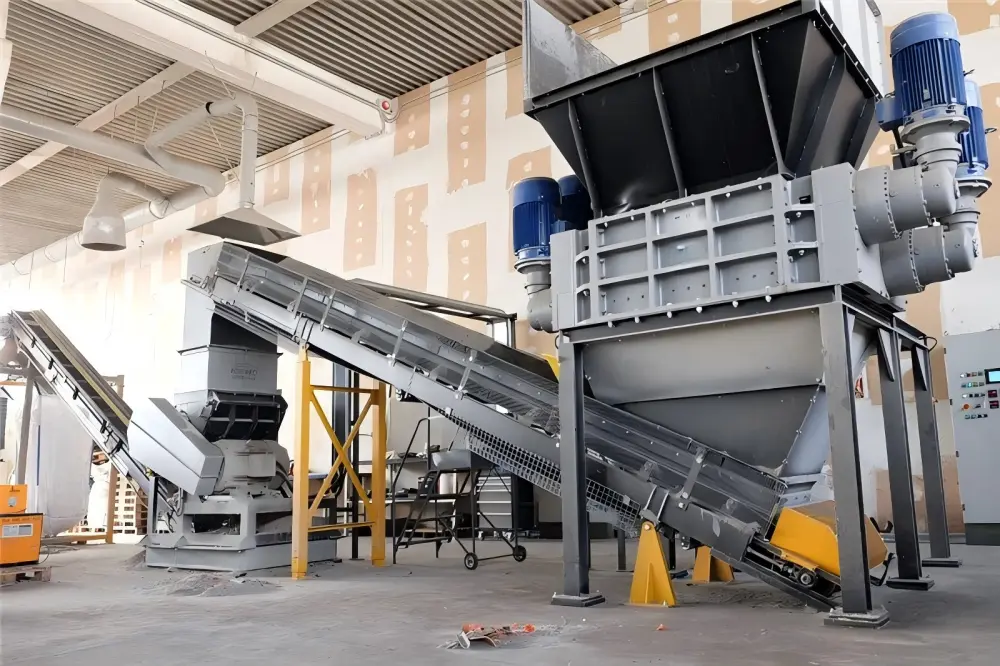
The four-shaft shredder represents the pinnacle of size reduction technology in the industrial recycling and metal fabrication sectors. Unlike its two-shaft counterparts, the four-shaft design incorporates two primary cutting shafts and two secondary cleaning/feeding shafts. This configuration allows for integrated screening, ensuring that material only exits the cutting chamber once it has reached a specific size. This makes the four-shaft shredder ideal for processing bulky waste, electronic scrap, plastics, and even light metals where a uniform output size is critical for downstream processing.
At the heart of the machine is a high-torque, low-speed drive system. The shafts rotate at different speeds, creating a complex shearing and tearing action. The primary shafts pull the material into the center, while the secondary shafts ensure the material is continuously fed into the cutters and prevent bridging. The inclusion of a screen beneath the shafts is what sets this machine apart; material that is too large is caught by the teeth of the secondary shafts and recirculated back into the cutting zone. This closed-loop system within the chamber provides exceptional control over the final product.
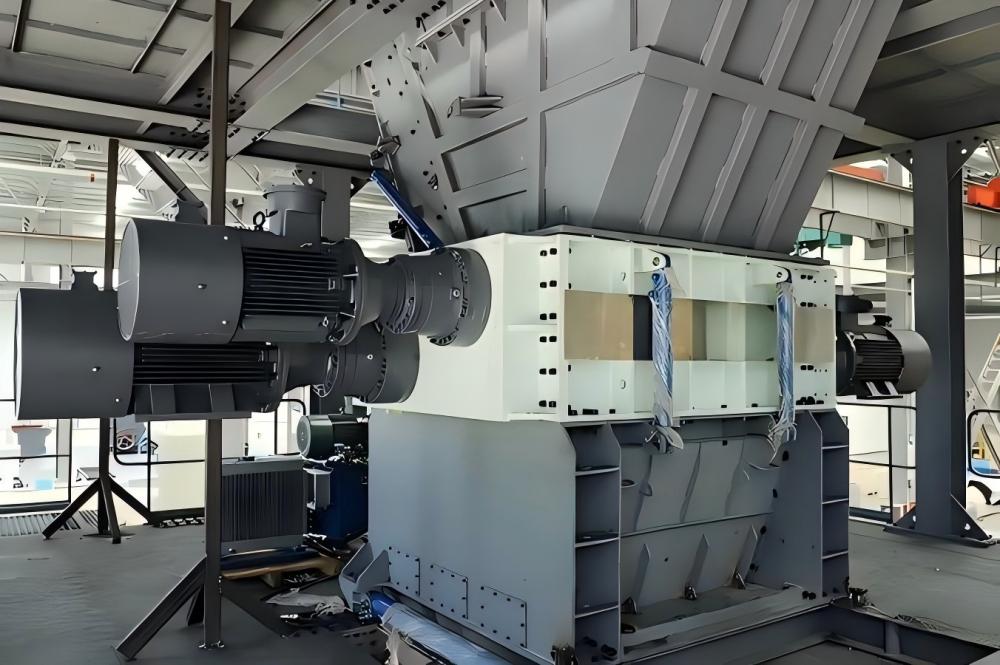
From a mechanical engineering perspective, the four-shaft shredder must balance torque, rotational speed, and blade geometry. The shafts are typically driven by electric motors coupled with heavy-duty planetary gearboxes or hydraulic drive systems. Hydraulic drives offer the advantage of infinitely variable speed and high shock resistance, which is particularly useful when dealing with unpredictable feedstocks like mixed metal scrap. Electric drives, on the other hand, are often more energy-efficient for consistent, pre-sorted materials.
Understanding the technical nuances of these machines is the first step in effective troubleshooting. Because the four-shaft system is more complex than single or dual-shaft designs, the potential for mechanical interference or synchronization issues is higher. However, the benefits of precise output sizing and reduced vibration often outweigh the maintenance complexities, provided the operator follows a rigorous troubleshooting and maintenance protocol.
Core Parameters of Four-Shaft Shredder Performance
To diagnose problems effectively, one must understand the core parameters that define the operation of a four-shaft shredder. These parameters are interconnected; a change in one often necessitates an adjustment in another to maintain optimal throughput and machine longevity.
- Shaft Torque: This is the rotational force applied to the material. High torque is essential for shearing tough materials like rubber or thick plastics. If torque is insufficient, the machine will frequently stall or trigger its auto-reverse mechanism.
- Rotational Speed (RPM): Four-shaft shredders typically operate at low speeds (15-35 RPM). Lower speeds increase torque and reduce the risk of projectile ejection and dust generation.
- Blade Geometry and Material: The number of hooks on a blade, the thickness of the blade, and the alloy used (e.g., D2, DC53, or Hardox) determine how the machine interacts with specific waste streams.
- Screen Mesh Size: The diameter of the holes in the discharge screen determines the final particle size. A smaller mesh increases the recirculation rate, which puts more load on the blades and shafts.
- Motor Power (kW/HP): The total energy available to the system. Power must be matched to the expected throughput and material density.
- Cutting Chamber Dimensions: The width and length of the chamber dictate the maximum size of the input material. Overloading a small chamber with oversized items is a primary cause of mechanical failure.
Calculation Method for Shredder Efficiency
Calculating the theoretical throughput and torque requirements is essential for both selection and troubleshooting. If a machine is underperforming, comparing actual results to these calculations can highlight where the inefficiency lies.
The theoretical throughput ($Q$) can be estimated using the following formula:
Q = V × ρ × η
Where:
– V is the volume of the cutting chamber processed per hour (calculated by shaft speed and blade displacement).
– ρ is the bulk density of the input material.
– η is the efficiency factor (typically 0.6 to 0.8 for four-shaft shredders, accounting for recirculation).
Torque ($T$) calculation is also vital, especially when upgrading motors or changing material types:
T = (P × 9550) / n
Where:
– P is the motor power in kilowatts (kW).
– n is the shaft speed in revolutions per minute (RPM).
– 9550 is the constant for metric torque calculation (resulting in Newton-meters, Nm).
When troubleshooting a machine that lacks “bite,” engineers should calculate the required shear force for the specific material. If the calculated torque required to shear a piece of 5mm steel exceeds the machine’s rated torque, the problem isn’t a malfunction but an application mismatch.
Four-Shaft Shredder Parameter Table
The following table provides a reference for typical specifications across various industrial applications. Use this to benchmark your current machine’s performance.
| Material Type | Typical Motor Power (kW) | Shaft Speed (RPM) | Blade Thickness (mm) | Target Output Size (mm) | Avg. Throughput (t/h) |
|---|---|---|---|---|---|
| Electronic Waste (WEEE) | 30 – 75 | 20 – 25 | 20 – 40 | < 30 | 1.5 – 3.0 |
| Plastic Drums / Pallets | 45 – 110 | 15 – 20 | 30 – 50 | < 40 | 2.0 – 5.0 |
| Light Metal Scrap | 75 – 160 | 12 – 18 | 40 – 60 | < 50 | 1.0 – 2.5 |
| Tires (Pre-shredded) | 90 – 200 | 15 – 22 | 20 – 30 | < 20 | 3.0 – 6.0 |
| Confidential Documents | 15 – 37 | 25 – 35 | 15 – 25 | < 15 | 0.5 – 1.5 |
Four-Shaft Shredder Troubleshooting: Common Problems & Practical Solutions
Troubleshooting a four-shaft shredder requires a systematic approach. Because the components are tightly integrated, a symptom in one area may be caused by a failure in another. Below are the most common issues encountered in industrial environments.
1. Frequent Jamming and Auto-Reverse Activation
Problem: The shredder stops and reverses frequently, even when the material seems appropriate for the machine’s rating. This significantly reduces throughput and increases wear on the motor starters and gearboxes.
Causes: The most common cause is dull or chipped blades that can no longer “grab” and shear the material, leading to increased friction and torque spikes. Another cause is overfeeding, where the volume of material in the hopper exceeds the chamber’s processing capacity. Finally, the auto-reverse torque threshold might be set too low in the PLC settings.
Solutions: First, inspect the blade edges. If the radius of the cutting edge exceeds 2-3mm, they require sharpening or replacement. Second, implement a regulated feeding system (such as a vibrating feeder or conveyor with a load-sensing speed control) to prevent “slugging” the chamber. Lastly, consult the manufacturer to verify if the PLC torque limits can be safely adjusted for the specific material density being processed.
2. Excessive Heat in the Gearbox or Bearings
Problem: The gearbox housing or bearing blocks become too hot to touch, or the oil temperature sensor triggers an alarm.
Causes: Overheating is usually a sign of lubrication failure or internal mechanical misalignment. In four-shaft shredders, the high loads placed on the bearings can cause rapid heat buildup if the grease is contaminated or if the wrong viscosity oil is used in the gearbox. Additionally, if the shafts are slightly misaligned due to worn spacers, the resulting axial load can overheat the bearings.
Solutions: Check the lubrication schedule immediately. Ensure that high-temperature, extreme-pressure (EP) grease is being used for the bearings. For gearboxes, perform an oil analysis to check for metal shavings, which indicate internal gear wear. If the heat persists, use a laser alignment tool to ensure the motor, gearbox, and shafts are perfectly collinear.
3. Inconsistent Output Size or Screen Clogging
Problem: The shredded material is coming out in long strips rather than uniform pieces, or the throughput has dropped because the screen is blinded (clogged).
Causes: Inconsistent size usually points to a gap between the cutting blades and the cleaning blades (secondary shafts). If this gap is too wide, material “slips” through without being sheared. Screen clogging is often caused by processing wet or sticky materials (like certain plastics or oily metal turnings) that adhere to the mesh holes.
Solutions: Adjust the blade clearances. Most modern four-shaft shredders allow for shim adjustments to maintain a tight tolerance between the shafts. For screen clogging, consider installing a screen cleaning system (such as air pulses or mechanical brushes) or changing the screen geometry to a staggered hole pattern which is less prone to blinding.
4. Unusual Vibration and Noise
Problem: The machine produces a rhythmic thumping or high-pitched grinding noise during operation.
Causes: Rhythmic thumping often indicates a broken blade tooth or a foreign object (like a large piece of hardened steel) stuck in the chamber. High-pitched grinding usually points to bearing failure or gear teeth interference. Vibration can also be caused by loose foundation bolts or a cracked machine frame.
Solutions: Stop the machine immediately and perform a Lock-Out Tag-Out (LOTO) procedure. Inspect the chamber for “unshreddables.” Check all blade bolts and shaft nuts for tightness. If the vibration is coming from the frame, inspect the welds for stress cracks and ensure the machine is properly anchored to a reinforced concrete pad.
5. Hydraulic System Pressure Fluctuations
Problem: For machines with hydraulic drives, the shafts rotate erratically, or the system fails to reach full torque.
Causes: This is typically due to air in the hydraulic lines, a failing hydraulic pump, or a clogged suction filter. Contaminated oil can also cause the proportional valves to stick, leading to erratic shaft behavior.
Solutions: Bleed the hydraulic system to remove air. Replace all filters and check the oil for clarity. If the oil appears milky, water has entered the system; if it smells burnt, it has overheated and lost its lubricating properties. Test the pump output pressure against the manufacturer’s specifications.
Common Engineering Mistakes in Shredder Operation
Even the best equipment can fail if subjected to poor engineering practices. Avoiding these common mistakes will significantly extend the life of your four-shaft shredder.
One of the most frequent errors is ignoring the “Unshreddables” protocol. Operators often assume that because a four-shaft shredder is powerful, it can handle anything. However, solid steel shafts or heavy engine blocks can cause catastrophic shaft breakage or gearbox housing fractures. Always implement a pre-sorting stage or use magnetic separators and eddy current separators to remove non-target materials.
Another mistake is improper blade sharpening. Some maintenance teams grind only the top of the blade, which increases the gap between the shafts. Blades should be sharpened according to the manufacturer’s profile specifications to maintain the original cutting geometry. Using the wrong welding rod for hard-facing blades can also lead to the hard-facing material chipping off and damaging the screen.
Finally, neglecting the cooling system is a major oversight. Industrial shredders generate significant heat through the shearing process. If the oil cooler or the ambient ventilation in the facility is inadequate, the hydraulic oil or gearbox lubricant will degrade prematurely, leading to a cascade of mechanical failures. Ensure that cooling fins are cleaned weekly and that airflow around the motors is unobstructed.
Selection Checklist for Four-Shaft Shredders
When purchasing a new machine or evaluating a used one, use this checklist to ensure the equipment is fit for your specific needs.
- Drive Type: Does the application require the shock absorption of a hydraulic drive or the efficiency of an electric drive?
- Blade Material: Is the blade alloy suitable for the abrasiveness of your material? (e.g., Tungsten carbide inserts for highly abrasive glass-filled plastics).
- Ease of Maintenance: Can the screen be changed quickly? Are the shafts removable without dismantling the entire frame?
- PLC Integration: Does the control system offer data logging for torque, temperature, and amp draw? This is vital for predictive maintenance.
- Seal Integrity: Are the bearing housings protected by high-quality seals to prevent dust and liquid ingress?
- Safety Features: Does the machine include emergency stops, hopper interlocks, and a robust fire suppression system (especially for WEEE or tire shredding)?
- Spare Parts Availability: Are blades, spacers, and seals kept in stock by the manufacturer for rapid delivery?
Frequently Asked Questions (FAQ)
How often should I sharpen the blades on my four-shaft shredder?
The frequency depends entirely on the material. For soft plastics, blades may last 1,000+ hours. For abrasive materials like glass-reinforced polymers or contaminated scrap, you may need to inspect and touch up the edges every 200-400 hours. Monitor the amp draw; if it increases by 15-20% for the same material load, the blades are likely dull.
Can I change the output size by just changing the screen?
Yes, to an extent. However, if you move to a significantly smaller screen, the recirculation rate will increase. This might require you to slow down the feed rate to prevent the chamber from overheating or the motor from overloading. Always check if the new screen size is compatible with your current blade thickness.
What is the advantage of a four-shaft shredder over a two-shaft shredder?
The primary advantage is the integrated screening and the ability to produce a smaller, more uniform particle size in a single pass. Two-shaft shredders are generally better for high-volume primary shredding where size uniformity is less important, whereas four-shaft shredders are better for secondary shredding and precise sizing.
Why is my shredder vibrating more than usual?
Check for a broken blade, a loose shaft nut, or an object wedged between the shafts and the screen. Also, inspect the motor mounts and the gearbox coupling. If the vibration is high-frequency, it is likely a bearing issue; if it is low-frequency and rhythmic, it is likely a shaft or blade issue.
How do I prevent the screen from clogging when shredding wet materials?
Wet materials are a challenge for four-shaft shredders. You can try using a screen with a “hexagonal” or “diamond” hole pattern, which is less prone to clogging than round holes. Additionally, ensuring the cleaning blades on the secondary shafts are in good condition will help push material through the screen more effectively.