
How to Improve Four-Shaft Shredder Efficiency in Heavy-Duty Production Lines

Technical Overview of Four-Shaft Shredders
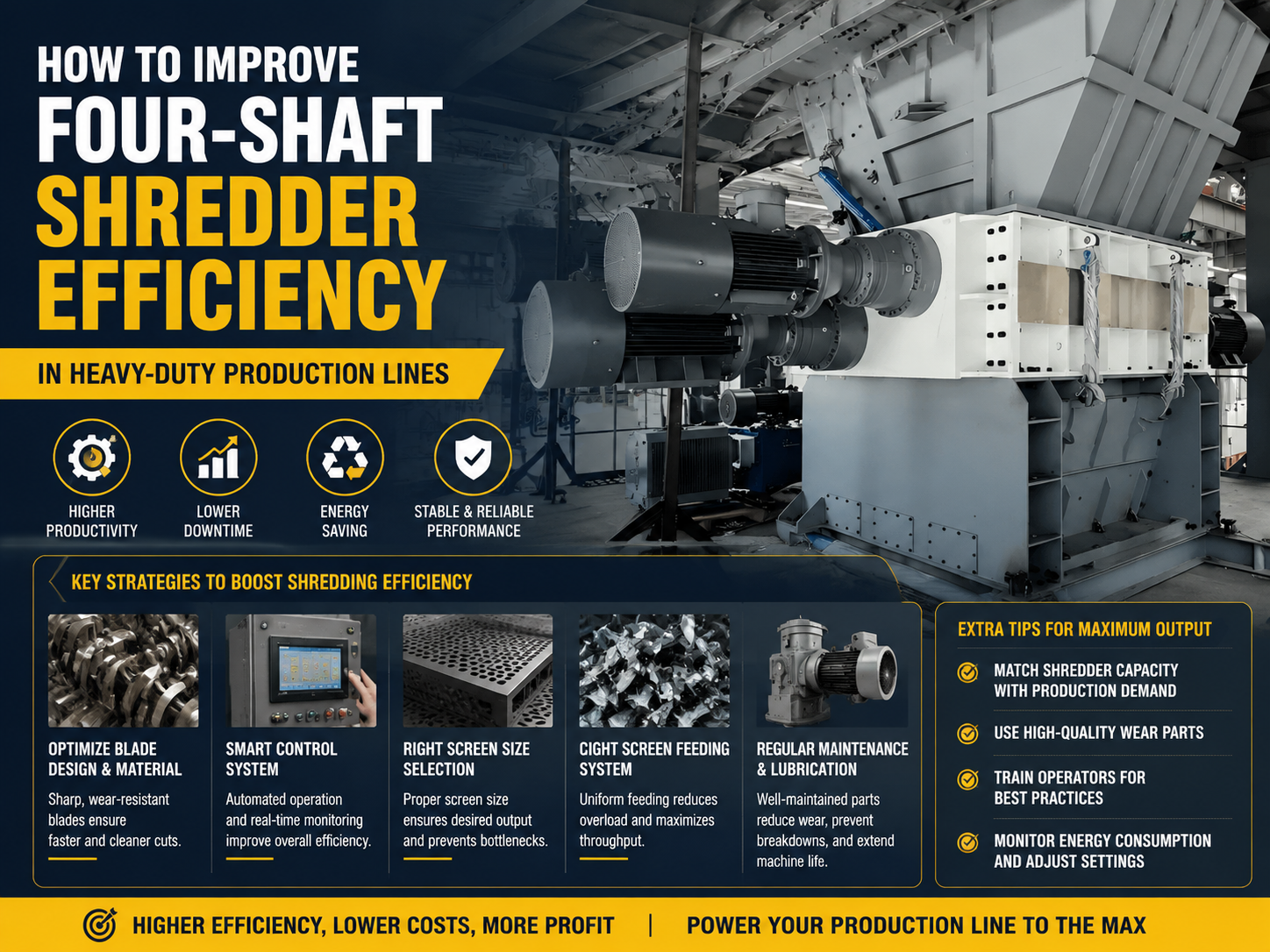
In the realm of industrial waste management and material recycling, the four-shaft shredder stands as a pinnacle of engineering designed for high-torque, low-speed reduction of complex materials. Unlike traditional single or double-shaft shredders, the four-shaft configuration utilizes two main cutting shafts and two auxiliary shafts. This unique arrangement allows for a ‘grab and cut’ mechanism that is significantly more effective at processing bulky, resilient, or heterogeneous materials such as e-waste, automotive scrap, and heavy plastics. To Improve Four-Shaft Shredder Efficiency In Heavy-Duty Production Lines, one must first understand the synergy between these shafts and the integrated screen system that dictates final particle size.
The primary advantage of the four-shaft design is its ability to provide internal recirculation. Material that is not sufficiently reduced by the first pass of the cutting discs is automatically caught by the auxiliary shafts and fed back into the primary cutting zone. This eliminates the need for external conveyors or secondary processing units in many applications, thereby streamlining the production line. However, this internal complexity also means that efficiency is highly sensitive to parameter tuning and component wear. In heavy-duty environments, where the machine may operate 24/7, even a 5% drop in efficiency can lead to massive operational losses over a fiscal year.
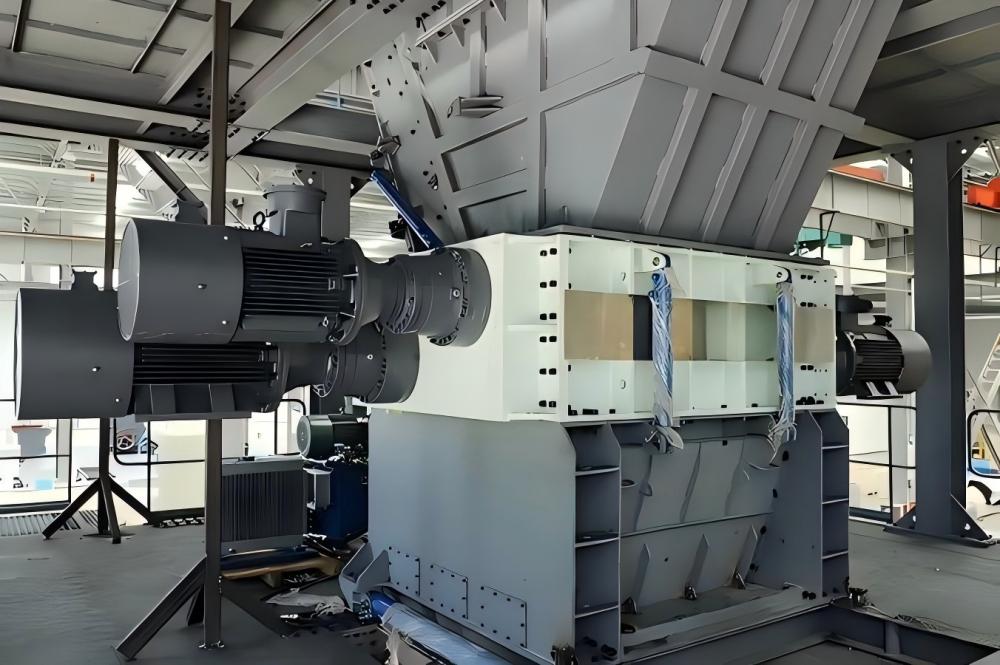
Efficiency in this context is defined by three main pillars: throughput (tons per hour), energy consumption (kWh per ton), and output consistency (percentage of material meeting size specifications). Improving these metrics requires a holistic approach that combines mechanical maintenance, intelligent PLC (Programmable Logic Controller) programming, and optimized material feeding strategies. As production lines become more automated, the integration of the shredder into the wider SCADA (Supervisory Control and Data Acquisition) system becomes a critical factor in maintaining peak performance.
Core Parameters Influencing Shredder Performance
To effectively Improve Four-Shaft Shredder Efficiency In Heavy-Duty Production Lines, operators and engineers must focus on several core technical parameters. The first is Torque Density. In heavy-duty applications, torque is more critical than raw horsepower. High torque allows the blades to shear through dense materials without stalling the motor. Modern HARSLE shredders utilize planetary gearboxes to maximize torque output while maintaining a compact footprint. If the torque is insufficient for the material density, the machine will frequently enter ‘reverse mode’ to clear jams, which drastically reduces net throughput.
The second parameter is Blade Geometry and Metallurgy. The hook profile, thickness, and number of teeth on each cutting disc must be matched to the specific material being processed. For instance, shredding rubber tires requires a different hook angle than shredding aluminum extrusions. Furthermore, the use of high-alloy steels like D2 or DC53, heat-treated to specific Rockwell hardness (HRC) levels, ensures that the cutting edges remain sharp for longer periods. Dull blades increase the gap between cutting surfaces, leading to ‘tearing’ rather than ‘shearing,’ which consumes significantly more energy.
Thirdly, Shaft Speed (RPM) plays a vital role. While four-shaft shredders are generally low-speed machines (typically 10-35 RPM), the differential speed between the main shafts and the auxiliary shafts can be adjusted to optimize the ‘feeding’ effect. A higher differential can help in breaking down bulky items faster, but it may also increase the wear rate on the bearings and seals. Finding the ‘sweet spot’ for RPM based on the material’s fracture point is essential for maximizing efficiency.
The Role of the Screen and Recirculation
The screen located beneath the shafts is the final gatekeeper of efficiency. The hole diameter of the screen determines the output size. However, a screen that is too small for the material type will cause excessive recirculation, leading to ‘over-shredding.’ This not only wastes energy but also generates heat, which can melt certain plastics or cause thermal stress on the machine components. To improve efficiency, the screen area should be maximized, and the hole pattern should be optimized to allow for rapid discharge of sized material.
Calculation Method for Shredder Throughput and Efficiency
Quantifying efficiency is the first step toward improving it. Engineers use several formulas to determine the theoretical vs. actual performance of a four-shaft shredder. The most basic calculation for theoretical throughput (Q) is:
Q = n × V × ρ × η
- n: Rotational speed of the shafts (RPM).
- V: Volume of material displaced by the cutting discs per revolution.
- ρ: Bulk density of the input material (kg/m³).
- η: Efficiency coefficient (typically 0.6 to 0.8, accounting for gaps and feeding inconsistencies).
To calculate the Specific Energy Consumption (SEC), which is a key indicator of cost-efficiency, use the following formula:
SEC = P / Q_actual
Where P is the average power consumption in kilowatts (kW) and Q_actual is the measured throughput in tons per hour. A rising SEC over time is a clear indicator of blade wear or mechanical friction issues. By monitoring these values in real-time through the PLC, maintenance teams can move from reactive to predictive maintenance, replacing blades exactly when the energy cost of keeping them exceeds the cost of replacement.
Parameter Table for Heavy-Duty Four-Shaft Shredders
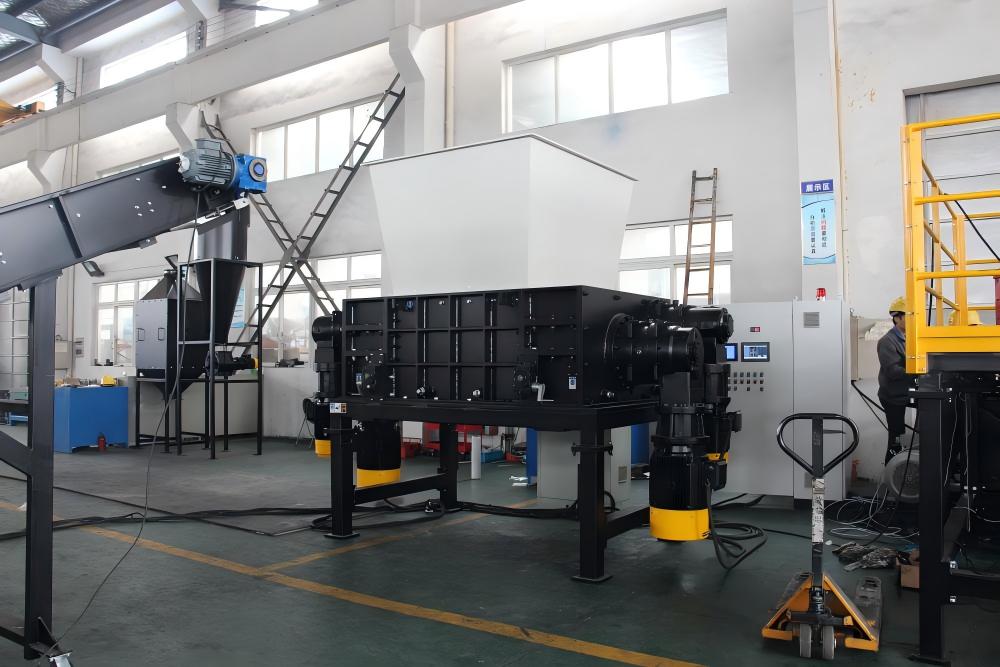
The following table outlines standard specifications for heavy-duty models used in industrial production lines. These values serve as a baseline for optimizing performance.
| Parameter | Medium-Duty Range | Heavy-Duty Range | Ultra-Heavy Duty |
|---|---|---|---|
| Motor Power (kW) | 30 – 75 | 90 – 160 | 200+ |
| Shaft Speed (RPM) | 15 – 25 | 10 – 20 | 5 – 15 |
| Cutting Chamber (mm) | 800 x 700 | 1200 x 1000 | 1600 x 1300 |
| Blade Thickness (mm) | 20 – 40 | 40 – 80 | 80 – 120 |
| Torque (Nm) | 15,000 – 40,000 | 50,000 – 120,000 | 150,000+ |
| Throughput (t/h) | 1.5 – 3.0 | 4.0 – 8.0 | 10.0 – 20.0 |
Common Engineering Mistakes in Shredder Operation
One of the most frequent mistakes that hinders the goal to Improve Four-Shaft Shredder Efficiency In Heavy-Duty Production Lines is Inconsistent Feeding. Shredders perform best when the cutting chamber is consistently filled to about 70-80% capacity. ‘Slug feeding’—dumping a massive load all at once—causes the motor to spike and the machine to reverse, while ‘starve feeding’ results in the shafts spinning without doing work. Implementing an automated vibratory feeder or a metering conveyor can solve this issue and increase throughput by up to 20%.
Another common error is Neglecting Blade Clearance. As blades wear, the axial gap between them increases. This allows thin or flexible materials (like plastic films or thin wires) to pass through without being cut, or worse, to wrap around the shafts. This ‘wrapping’ increases friction, generates heat, and can eventually destroy the shaft seals. Regular shimming of the blades or using adjustable spacers is necessary to maintain the tight tolerances required for efficient shearing.
Finally, many facilities fail to optimize their PLC Logic for Material Types. A ‘one-size-fits-all’ approach to the auto-reverse trigger settings is inefficient. For example, brittle materials like hard plastics should have a shorter reverse duration than ductile materials like copper cables. Customizing the PLC parameters for different batches of material ensures that the machine spends the maximum amount of time in the ‘forward’ cutting state.
Selection Checklist for High-Efficiency Shredders
When selecting or upgrading a four-shaft shredder for a heavy-duty production line, use the following checklist to ensure maximum efficiency:
- Drive System: Choose between Electric (VFD-driven) for energy efficiency or Hydraulic for maximum shock load resistance.
- Blade Material: Ensure the metallurgy (e.g., Hardox, D2, SKD-11) matches the abrasiveness of your material.
- Screen Design: Opt for quick-change screen cradles to reduce downtime during size changes or maintenance.
- Bearing Protection: Look for multi-seal arrangements and independent bearing housings to prevent dust and liquid ingress.
- Cooling System: For 24/7 operations, integrated oil cooling for the gearbox and water cooling for the chamber may be necessary.
- Smart Integration: Ensure the control system supports Industry 4.0 protocols (Modbus, Profinet) for remote monitoring.
Frequently Asked Questions (FAQ)
1. How often should I sharpen the blades to maintain efficiency?
The frequency depends entirely on the material. For abrasive materials like glass-filled plastics or contaminated scrap, blades may need inspection every 500 hours. For cleaner materials, they can last 2,000+ hours. Monitoring the Specific Energy Consumption (SEC) is the best way to determine the optimal sharpening interval.
2. Can I process different materials on the same four-shaft shredder?
Yes, but you may need to change the screen or adjust the PLC settings to maintain efficiency. Using a screen with a different hole diameter or adjusting the shaft RPM via a Variable Frequency Drive (VFD) allows for versatility across different production runs.
3. Why is my shredder frequently reversing even with light loads?
This is often caused by ‘tramp metal’ or non-shreddable items stuck in the chamber, or by incorrectly set current limits in the PLC. Check the blade condition and ensure the amperage threshold for the auto-reverse function is calibrated to the motor’s rated capacity.
4. What is the advantage of a four-shaft shredder over a two-shaft model?
The primary advantage is the integrated sizing. A four-shaft shredder acts as both a primary shredder and a granulator because of its screen and auxiliary shafts. It produces a more uniform output size in a single pass compared to a two-shaft shredder, which often requires a secondary granulator.
5. How does a VFD improve efficiency in heavy-duty lines?
A Variable Frequency Drive (VFD) allows the motor to start softly, reducing mechanical stress and peak power demand. It also allows the operator to fine-tune the shaft speed to match the material’s characteristics, ensuring the motor operates at its most efficient point on the power curve.
Conclusion
To Improve Four-Shaft Shredder Efficiency In Heavy-Duty Production Lines, a combination of technical precision and disciplined maintenance is required. By focusing on torque optimization, blade metallurgy, and intelligent feeding strategies, industrial facilities can significantly reduce their operational costs while increasing output quality. As the heart of the recycling line, the four-shaft shredder’s performance dictates the success of the entire downstream process. Investing in high-quality equipment from manufacturers like HARSLE and following a rigorous technical optimization plan ensures long-term profitability and mechanical reliability in the most demanding environments.


