How to Improve Single-Shaft Shredder Throughput Without Sacrificing Quality: A Technical Guide

Technical Overview of Single-Shaft Shredder Efficiency
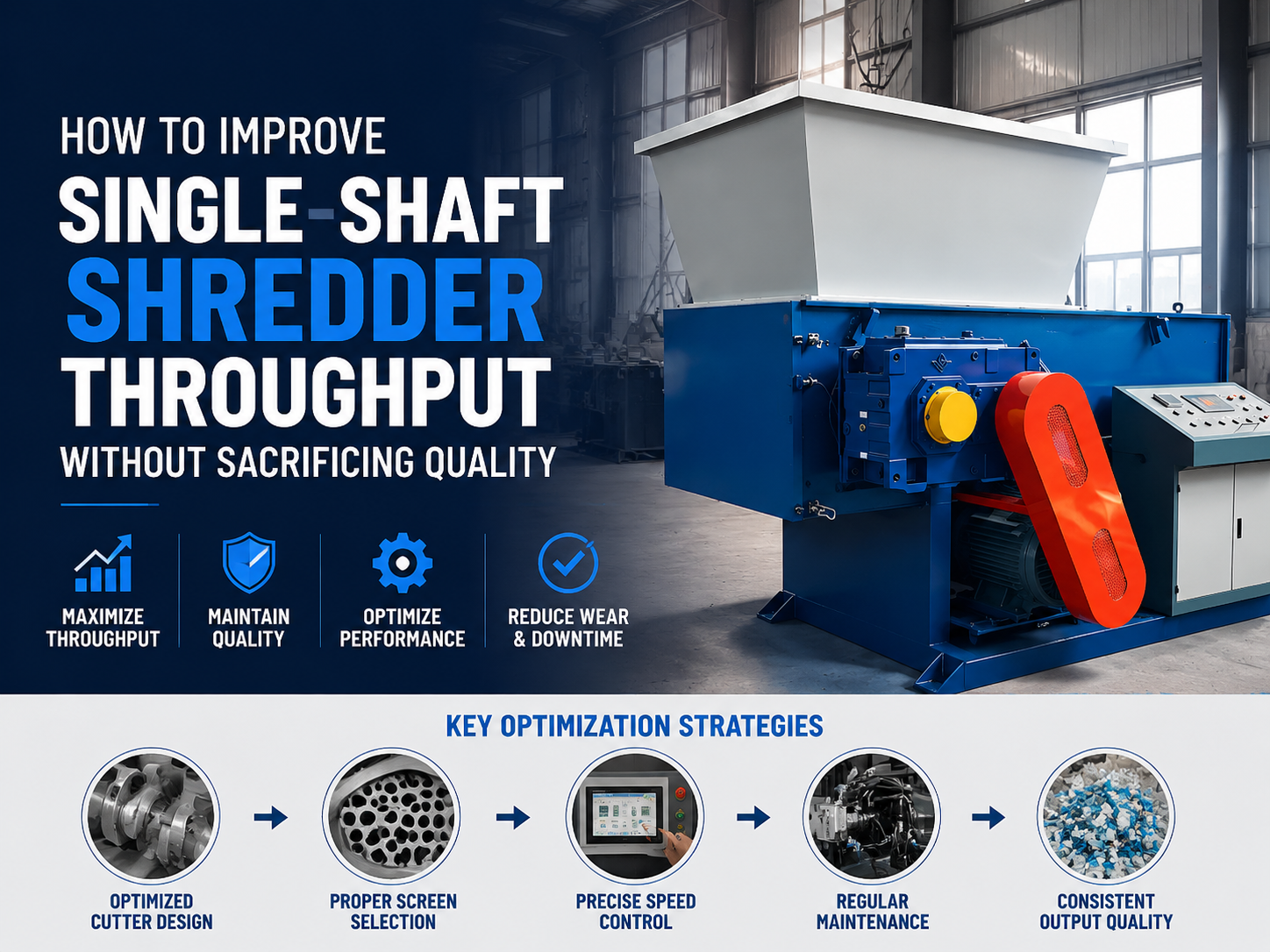
In the modern industrial recycling and waste management landscape, the single-shaft shredder stands as a cornerstone of material reduction. Whether processing plastics, wood, textiles, or light metals, the primary challenge for operators is how to improve single-shaft shredder throughput without sacrificing quality. Throughput refers to the volume or weight of material processed per hour, while quality is defined by the consistency of the particle size, the absence of thermal degradation, and the minimization of fines or dust.
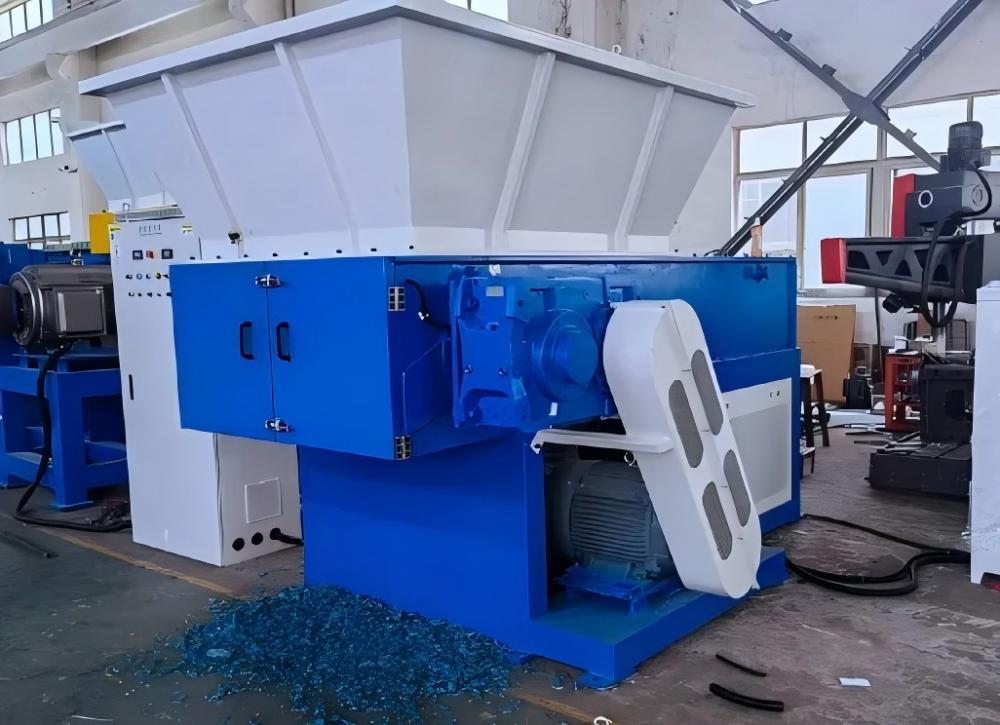
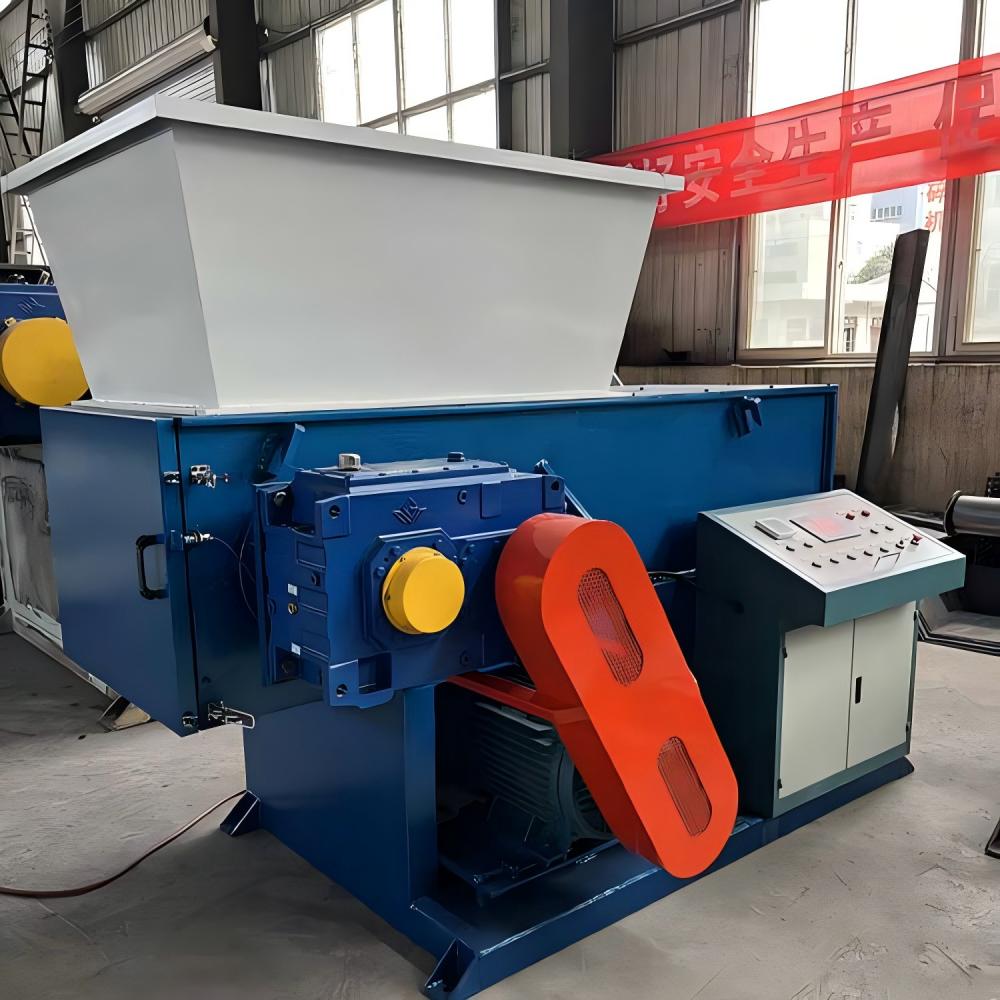
A single-shaft shredder operates using a large-diameter rotor equipped with multiple cutting inserts. As the rotor turns, these inserts pass against a fixed counter-knife, shearing the material. A hydraulic ram or pusher system forces the material against the rotor to ensure continuous contact. The final size of the output is determined by a screen located beneath the rotor. To increase throughput, one might be tempted to simply increase the rotor speed or the pusher pressure, but doing so often leads to overheating, uneven particle sizes, or excessive mechanical wear.
HARSLE engineering focuses on the synergy between mechanical force and precision cutting. Achieving high throughput requires a balanced approach where the machine’s feeding logic, blade geometry, and cooling systems work in harmony. When these elements are optimized, the machine can handle higher loads while maintaining the structural integrity of the processed material, which is critical for downstream processes like extrusion or pelletizing.
The Role of Material Density and Feed Consistency
Throughput is heavily influenced by the bulk density of the input material. For instance, shredding hollow plastic containers requires a different approach than shredding solid timber blocks. To improve single-shaft shredder throughput without sacrificing quality, operators must ensure that the feed is consistent. Intermittent feeding causes the motor to cycle between idle and peak load, which reduces overall efficiency and can lead to uneven wear on the blades.
Advanced control systems, such as those found in HARSLE shredders, utilize PLC-driven logic to adjust the hydraulic pusher’s movement based on the motor’s current draw. If the motor approaches its limit, the pusher retracts slightly to prevent a jam, then resumes once the load stabilizes. This “intelligent feeding” is the most effective way to maximize the volume of material processed without risking the quality of the output or the health of the machine.
Core Parameters Influencing Throughput and Quality
Rotor Speed and Torque
The relationship between speed (RPM) and torque is the most critical factor in shredder performance. While higher RPMs generally lead to higher throughput, they also generate more heat. For heat-sensitive materials like certain plastics, excessive speed can cause the material to melt and clog the screen, which immediately destroys both throughput and quality. Conversely, high-torque, low-speed settings are ideal for tough, dense materials that require significant shearing force rather than rapid impact.
Blade Geometry and Material
The shape and arrangement of the cutting blades (knives) dictate how the material is fractured. V-shaped rotor configurations are often preferred for their ability to pull material toward the center of the rotor, preventing buildup at the side walls. Furthermore, the use of high-quality tool steel (such as D2 or DC53) ensures that the blades remain sharp for longer periods. Dull blades do not cut; they tear and rub, which increases energy consumption and produces a high percentage of “fines” or dust, lowering the quality of the final product.
Screen Mesh Size and Open Area
The screen is the gatekeeper of quality. A smaller mesh size ensures a finer, more uniform output but naturally restricts throughput because the material must stay in the cutting chamber longer. To improve single-shaft shredder throughput without sacrificing quality, engineers often look at the “open area” percentage of the screen. By using thinner but stronger screen bridges, the total area available for material to pass through increases, allowing for faster discharge without changing the particle size specification.
Hydraulic Pusher Pressure and Speed
The hydraulic ram is responsible for the “force-feeding” of the rotor. If the pressure is too low, the rotor spins freely without engaging enough material. If the pressure is too high, the rotor may stall or the material may be compressed into a solid mass that is difficult to cut. Fine-tuning the pusher speed to match the material’s resistance is a key optimization step. Modern HARSLE machines allow for multi-stage pusher programming to handle varying material densities in a single batch.
Calculation Method for Shredder Throughput
To accurately measure and improve single-shaft shredder throughput without sacrificing quality, one must understand the theoretical vs. actual capacity. The theoretical throughput (T) can be estimated using the following logic:
T = (V × ρ × η) / t
- V: The volume of the cutting chamber or the volume displaced by the rotor per revolution.
- ρ (Rho): The bulk density of the material (kg/m³).
- η (Eta): The efficiency factor (usually 0.6 to 0.8), accounting for air gaps and material slippage.
- t: Time.
In practical terms, throughput is often calculated by the number of cuts per minute. If a rotor has 60 blades and rotates at 80 RPM, it performs 4,800 cuts per minute. By increasing the number of blades or the RPM, you increase the cutting frequency. However, to maintain quality, each cut must remove a specific volume of material (the “chip load”). If the chip load is too high, the material fractures unevenly. If it is too low, the machine is underutilized.
Another vital calculation is the Specific Energy Consumption (SEC), measured in kWh/ton. A rising SEC usually indicates that blades are dulling or that the screen is partially clogged. By monitoring SEC, operators can identify the exact moment when maintenance is required to prevent a drop in quality and throughput.
Parameter Table for Different Materials
| Material Type | Recommended RPM | Blade Type | Screen Size (mm) | Throughput Goal |
|---|---|---|---|---|
| Hard Plastics (HDPE/PP) | 70 – 90 | Concave Square | 20 – 40 | High Consistency |
| Soft Plastics (Film/Bags) | 60 – 80 | Flat / Anti-wrap | 40 – 60 | Prevent Melting |
| Timber / Wood Waste | 80 – 100 | Heavy Duty Square | 30 – 50 | Volume Reduction |
| Copper/Alu Cables | 50 – 70 | High-Torque V-Cut | 10 – 20 | Purity/Separation |
| Paper / Cardboard | 90 – 110 | Standard Square | 50 – 80 | Maximum Speed |
Common Engineering Mistakes to Avoid
1. Overloading the Hopper
It is a common misconception that filling the hopper to the brim will increase throughput. In reality, overfilling can lead to “bridging,” where the material wedges itself above the rotor, preventing the pusher from doing its job. This leads to “dry running” where the rotor spins without cutting, wasting energy and reducing the hourly output. It is better to feed the machine at a steady rate that matches its discharge capacity.
2. Neglecting Blade Rotation and Sharpening
Single-shaft shredder blades are usually four-sided. Many operators wait until the blades are completely rounded before rotating them. This is a mistake. As blades dull, the gap between the rotor knife and the counter-knife increases. This causes the material to be squeezed rather than cut, leading to high heat and inconsistent particle sizes. A strict schedule for rotating and sharpening blades is the simplest way to improve single-shaft shredder throughput without sacrificing quality.
3. Incorrect Counter-Knife Clearance
The clearance between the flying knives and the static counter-knife is crucial. For thin materials like film, the clearance must be very tight (0.1mm – 0.3mm). For thick wood, a wider gap is acceptable. If the gap is too wide for the material being processed, the shredder will “chew” the material, significantly slowing down the process and creating ragged, low-quality edges.
4. Ignoring Cooling Systems
High-throughput operations generate significant friction heat. If the shredder is not equipped with a water-cooled rotor or a proper ventilation system, the temperature in the cutting chamber can exceed the softening point of the material. This leads to the material sticking to the screen, which reduces the effective open area and throttles throughput. Always ensure cooling systems are operational during high-volume shifts.
Selection Checklist for High-Throughput Shredders
- Motor Power: Does the machine have sufficient kilowatts to maintain rotor speed under peak load?
- Drive System: Is it a direct drive, belt drive, or gearbox drive? Gearbox drives offer higher torque for difficult materials.
- Rotor Diameter: A larger rotor diameter provides a larger cutting surface area and higher peripheral speed.
- Ease of Maintenance: Can the screen be changed quickly? Are the blades easily accessible? Downtime is the enemy of throughput.
- PLC Integration: Does the control system allow for custom programs based on material type?
- Hydraulic Efficiency: Look for load-sensing hydraulics that adjust pressure dynamically to save energy and prevent stalls.
- Wear Protection: For abrasive materials, ensure the rotor is hard-faced and the chamber is lined with replaceable wear plates.
Frequently Asked Questions (FAQ)
How often should I rotate the blades to maintain quality?
This depends entirely on the material. For clean plastics, you might rotate blades every 200-400 hours. For abrasive materials like glass-filled nylon or contaminated wood, you may need to rotate them every 80-100 hours. The best indicator is a 15-20% increase in motor amperage for the same throughput level.
Can I increase throughput by removing the screen?
While removing the screen will drastically increase throughput, you will completely lose control over quality and particle size. The material will simply pass through as soon as it is small enough to fall, resulting in massive, irregular chunks. Never operate without a screen unless the machine is specifically designed for primary pre-shredding where size doesn’t matter.
Why is my shredder producing too much dust?
Excessive dust (fines) is usually a sign of dull blades or an incorrect blade-to-counter-knife gap. When the machine can’t cleanly shear the material, it pulverizes it. To improve single-shaft shredder throughput without sacrificing quality, sharpen your blades and tighten the clearance to ensure a clean cut.
Does the moisture content of the material affect throughput?
Yes, significantly. Wet material is heavier and tends to be more “sluggish” in the cutting chamber. It can also cause fine particles to stick together and clog the screen mesh. If processing wet material, you may need to reduce the pusher speed and use a screen with a larger open area to maintain throughput.
What is the benefit of a V-rotor design?
A V-rotor (or chevron) design directs material toward the center of the rotor. This prevents material from getting trapped between the rotor ends and the machine housing, which reduces friction, heat, and wear on the side seals. It is a key feature for those looking to improve single-shaft shredder throughput without sacrificing quality in high-volume applications.
How does the hydraulic pusher affect energy consumption?
The pusher is the “accelerator” of the shredder. If it pushes too hard, the motor works harder, consuming more energy. By using a PLC to optimize pusher cycles, you can ensure the motor stays in its most efficient power band, maximizing throughput per kilowatt-hour consumed.
Conclusion
To improve single-shaft shredder throughput without sacrificing quality, one must view the machine as a balanced system rather than a collection of parts. By optimizing rotor speed, maintaining sharp blade edges, and utilizing intelligent hydraulic feeding, operators can achieve significant gains in productivity. HARSLE remains committed to providing the technical expertise and robust machinery needed to excel in these demanding industrial environments. Regular maintenance and a deep understanding of material behavior are the final pieces of the puzzle in achieving world-class shredding efficiency.