Why Scrap Metal Balers Are Essential for Ferrous and Non-Ferrous Metal Recycling: A Comprehensive Industrial Guide


Introduction to Modern Metal Recycling Challenges
In the rapidly evolving landscape of global manufacturing and environmental stewardship, the management of waste metal has transitioned from a logistical burden to a high-value industrial opportunity. As the demand for raw materials fluctuates and environmental regulations tighten, the efficiency of recycling processes has become a critical factor for profitability. Central to this efficiency is the scrap metal baler. Understanding why scrap metal balers are essential for ferrous and non-ferrous metal recycling requires a deep dive into the mechanics of volume reduction, logistics optimization, and material purity.
For industrial facilities, scrap yards, and metal fabrication shops, the accumulation of loose metal offcuts, turnings, and end-of-life products presents a significant spatial challenge. Without proper compaction, these materials occupy vast areas, pose safety risks, and are prohibitively expensive to transport. HARSLE, a leader in metal fabrication machinery, provides advanced baling solutions designed to transform loose scrap into dense, manageable blocks, thereby streamlining the entire recycling supply chain. This article explores the technical and economic reasons why these machines are the backbone of the modern circular economy.
Application Scenarios: Where Balers Make the Difference
The application of scrap metal balers spans across various sectors, each with unique requirements for material handling. In the automotive industry, for instance, the dismantling of end-of-life vehicles generates a massive volume of mixed metals. Balers are used here to compress car bodies, frames, and engine components into uniform cubes that can be easily stacked and shipped to smelting facilities. Without baling, the logistics of moving hollow car shells would be economically unfeasible due to the low weight-to-volume ratio.
In the construction and demolition sector, scrap metal balers are essential for processing structural steel, rebar, and aluminum siding recovered from site clearances. These materials are often bulky and irregular in shape. On-site or centralized baling allows contractors to clear sites faster and secure better pricing from scrap dealers who prefer processed, high-density loads. Similarly, in large-scale manufacturing plants—such as those producing appliances or aerospace components—balers are integrated into the production line to handle stamping skeletons and CNC machining chips immediately, maintaining a clean and safe workspace.
Municipal recycling centers also rely heavily on baling technology. As they collect diverse non-ferrous items like aluminum cans, copper wiring, and brass fittings from the public, they must sort and compact these materials to maximize storage capacity. The ability to segregate and bale specific alloys ensures that the purity of the recycled stream is maintained, which is vital for the secondary metal market. In every scenario, the baler acts as the primary tool for converting waste into a tradable commodity.
Material and Process Requirements for Ferrous and Non-Ferrous Metals
The distinction between ferrous and non-ferrous metals is fundamental to the recycling process, and scrap metal balers must be configured to handle the specific physical properties of each. Ferrous metals, which contain iron (such as steel and cast iron), are known for their strength and magnetic properties. They typically require much higher compaction forces to overcome their structural integrity. A baler designed for ferrous scrap must feature heavy-duty hydraulic cylinders and reinforced chamber walls to withstand the immense pressure needed to create a stable bale.
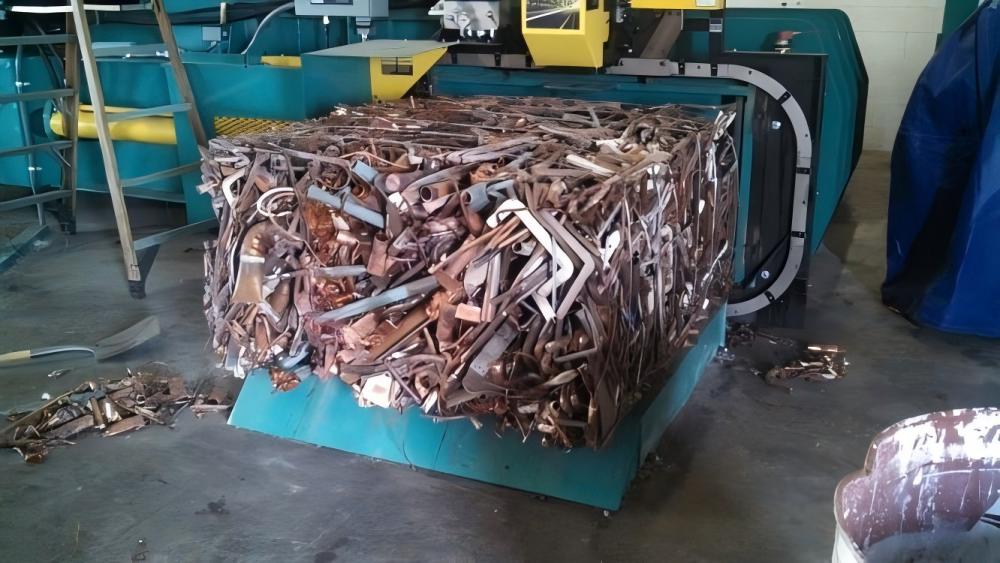
Non-ferrous metals, including aluminum, copper, lead, and zinc, are generally softer and more malleable but often more valuable per ton. The process requirements for non-ferrous recycling focus heavily on preventing cross-contamination and maintaining material density for efficient smelting. For example, copper wiring requires a different baling approach than aluminum extrusion scrap to ensure the resulting bale is tight enough not to fall apart during handling but not so compressed that it traps significant amounts of air or moisture, which can be hazardous in a furnace.
Technical Comparison: Ferrous vs. Non-Ferrous Baling
| Feature | Ferrous Metal Baling | Non-Ferrous Metal Baling |
|---|---|---|
| Compaction Force | High (200 – 600+ Tons) | Medium (100 – 250 Tons) |
| Chamber Lining | Hardened Steel (Hardox) | Standard or Stainless Steel |
| Shear Blades | Heavy-duty for cutting thick steel | Precision blades for thin alloys |
| Bale Density | Very High (to prevent spring-back) | High (optimized for furnace charging) |
| Contamination Risk | Low (magnetic separation used) | High (requires clean chamber) |
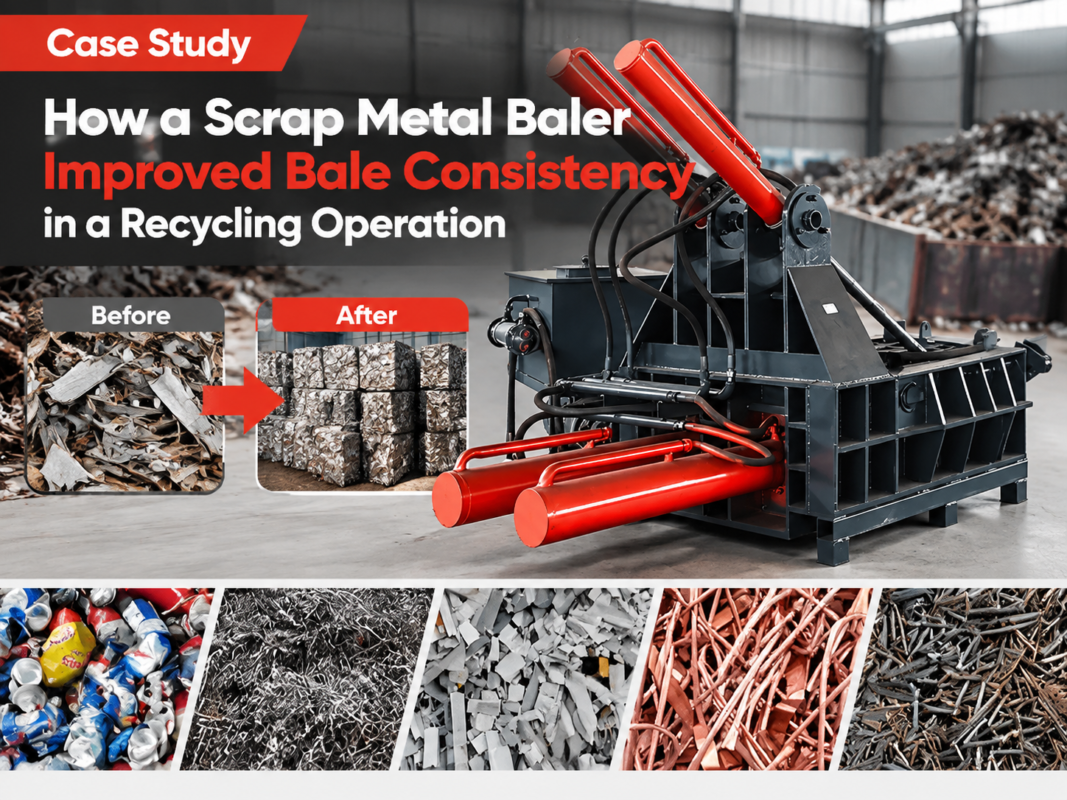
Furthermore, the “spring-back” effect is a major consideration. Ferrous materials tend to resist deformation more than non-ferrous ones. Therefore, the baler must hold the pressure for a specific duration or use a multi-stage compression cycle to ensure the bale retains its shape once ejected. Understanding these material-specific nuances is why scrap metal balers are essential for ferrous and non-ferrous metal recycling, as they provide the necessary mechanical force to overcome the physical resistance of various alloys.
Recommended Machine Configuration for Maximum Efficiency
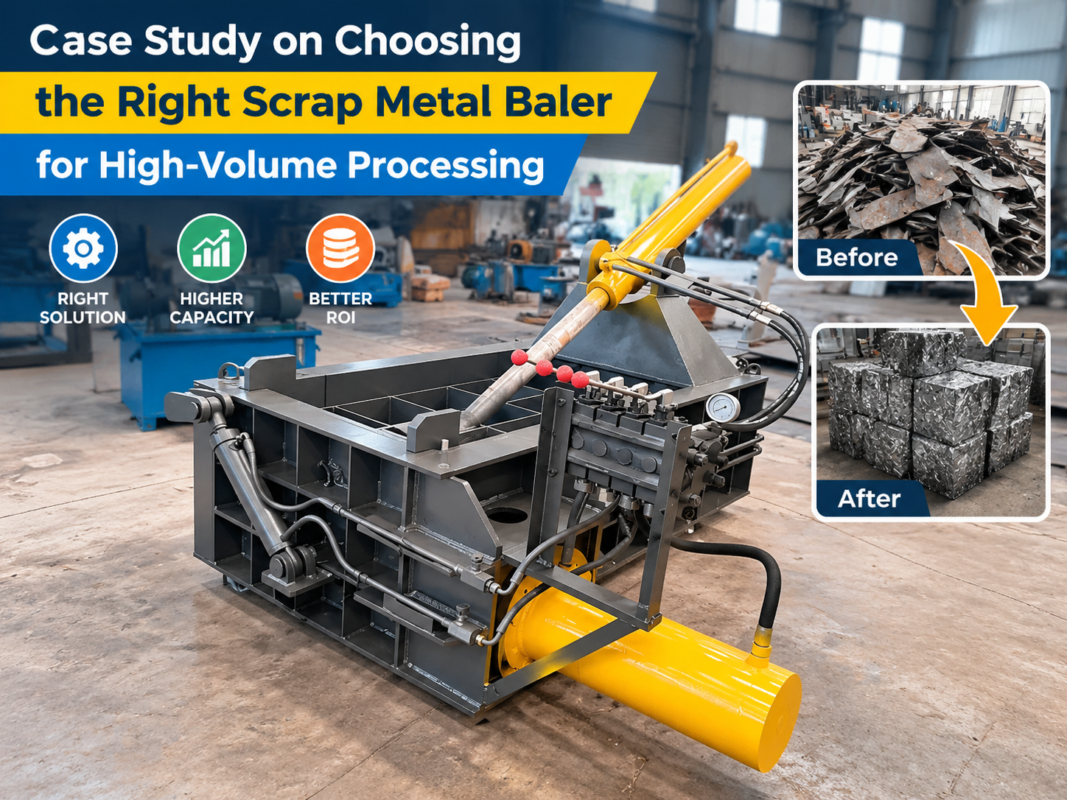
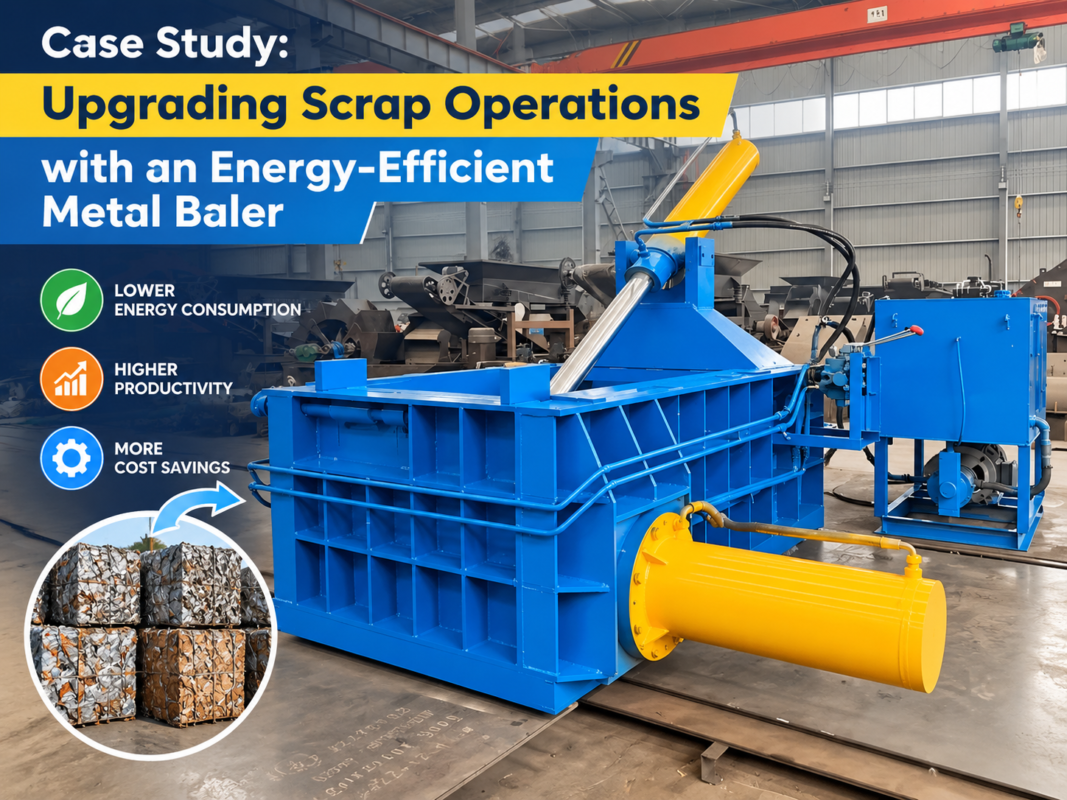
Choosing the right configuration for a scrap metal baler is critical for operational success. HARSLE recommends several key features that enhance the durability and performance of the machine. First and foremost is the hydraulic system. A high-quality baler should utilize a variable displacement pump system, which allows for fast cycle times when the ram is moving freely and high pressure when the material is being compacted. This optimizes energy consumption and reduces wear on the motor.
The chamber design is another vital component. For heavy-duty recycling, the chamber should be lined with replaceable wear plates, such as Hardox 500, to protect the main structure from the abrasive nature of scrap metal. Additionally, integrated shear blades on the lid and the edge of the chamber are essential. These blades cut off any overhanging scrap as the lid closes, preventing jams and ensuring a clean, rectangular bale every time. Without these blades, operators often have to manually trim scrap, which is dangerous and time-consuming.
Automation and control systems have also become standard in modern configurations. A PLC (Programmable Logic Controller) with a touch-screen interface allows operators to select different programs for different materials. For instance, a “Copper” setting might use a different pressure profile than a “Steel” setting. Remote control operation is also a highly recommended feature, allowing the operator to stay in the safety of a crane or loader cab while managing the baling cycle. Finally, cooling systems for the hydraulic oil are necessary for facilities operating in multiple shifts to prevent overheating and maintain consistent performance.
The Industrial Workflow: From Loose Scrap to Finished Bale
The workflow of a scrap metal baling operation is a choreographed sequence of steps designed to maximize throughput. It begins with Collection and Sorting. Loose scrap is gathered from various sources and sorted by material type. This is the most critical stage for non-ferrous metals, as even a small amount of iron in an aluminum bale can significantly reduce its market value. Magnetic separators and manual sorting stations are often used here.
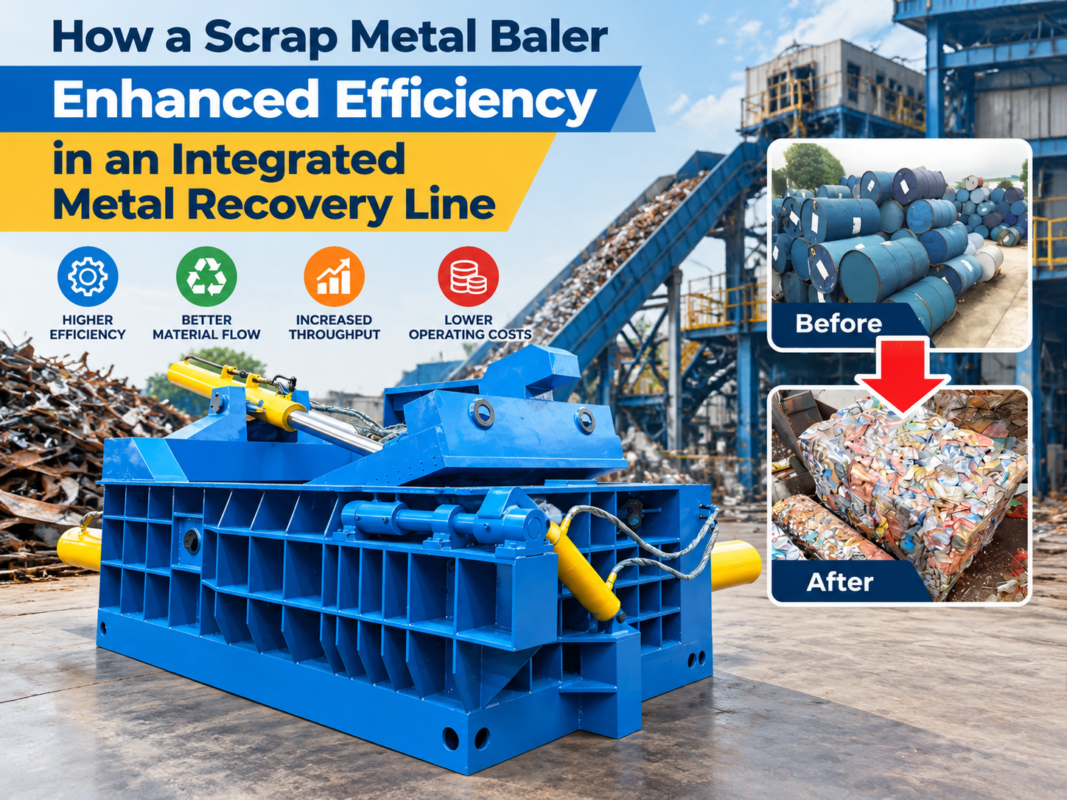
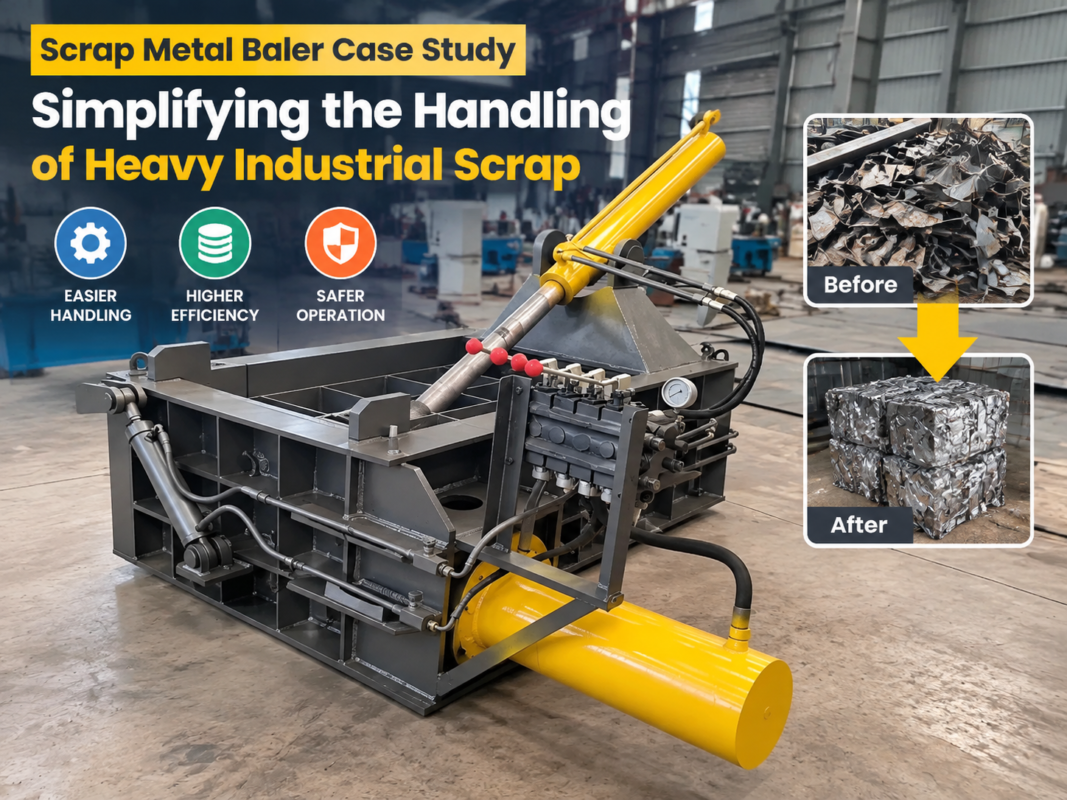
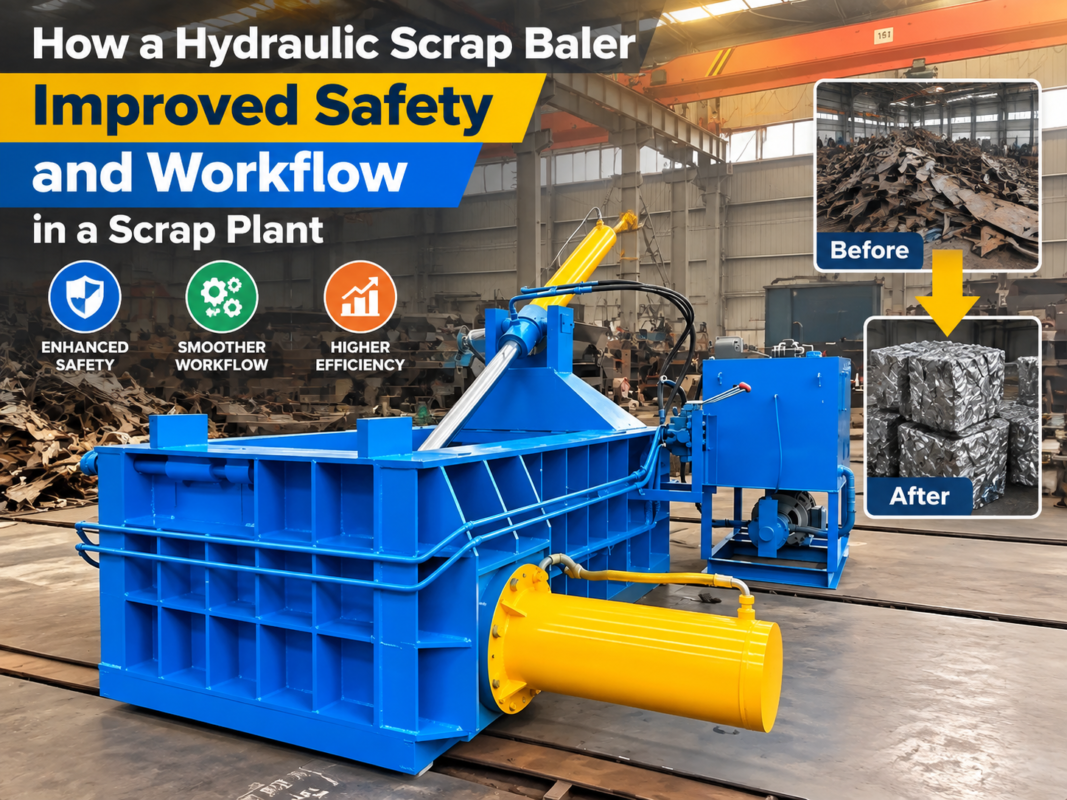
Once sorted, the material undergoes Loading. Using a grapple crane or a conveyor belt, the scrap is fed into the baler’s hopper. Modern HARSLE balers feature large charging boxes to accommodate bulky items like refrigerators or long pipes. After loading, the Compaction Cycle begins. The lid closes, shearing any excess material, and the primary and secondary rams move forward to compress the scrap. In a three-ram baler, a third side-ram provides final compaction to reach maximum density.
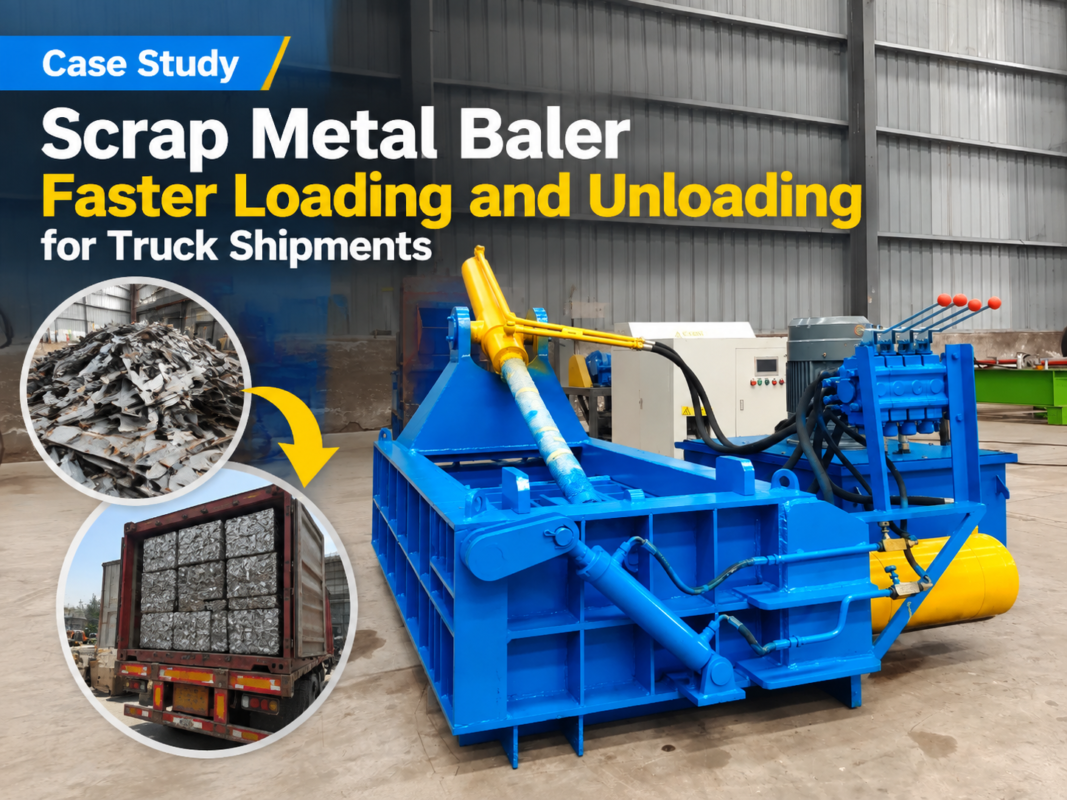
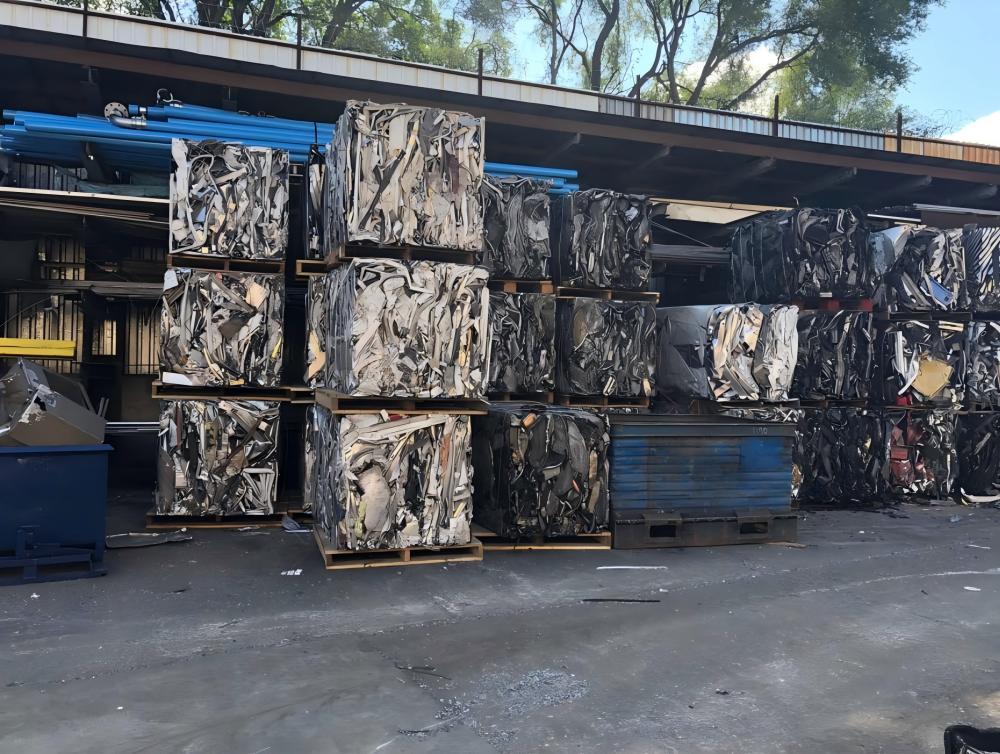
The final stages are Ejection and Transport. Depending on the machine design, the bale is either pushed out the side (Side-Push), tipped out (Turn-Out), or pushed out the front (Forward-Out). The finished bale is then weighed, tagged, and moved to a storage area using a forklift. This streamlined workflow reduces the labor required to manage scrap and ensures that the facility can process high volumes of material daily, which is why scrap metal balers are essential for ferrous and non-ferrous metal recycling operations aiming for scale.
Productivity and Economic Benefits
The investment in a high-quality scrap metal baler yields substantial productivity benefits that directly impact the bottom line. The most immediate benefit is Logistics Cost Reduction. Loose scrap is mostly air; a truck filled with loose aluminum cans might only weigh a few tons, whereas the same truck filled with baled aluminum can reach its maximum weight capacity. By increasing the density of the load, companies can reduce the number of trips required to transport material by up to 80%, leading to massive savings in fuel, labor, and vehicle maintenance.
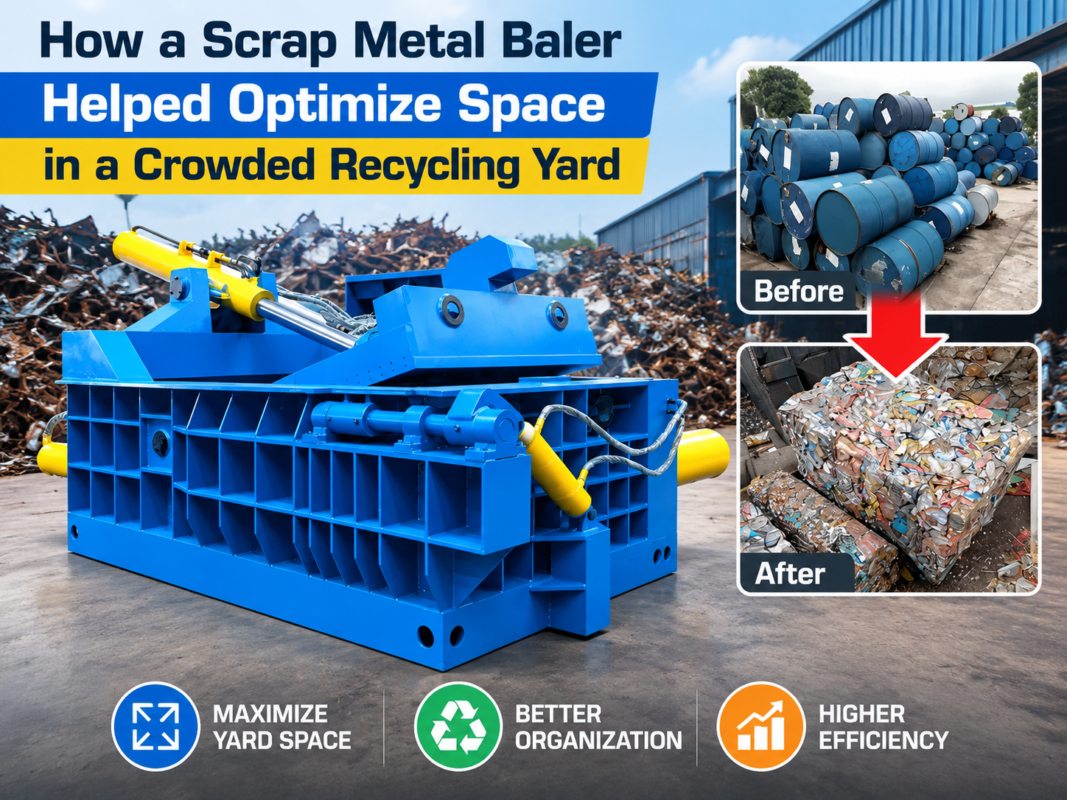
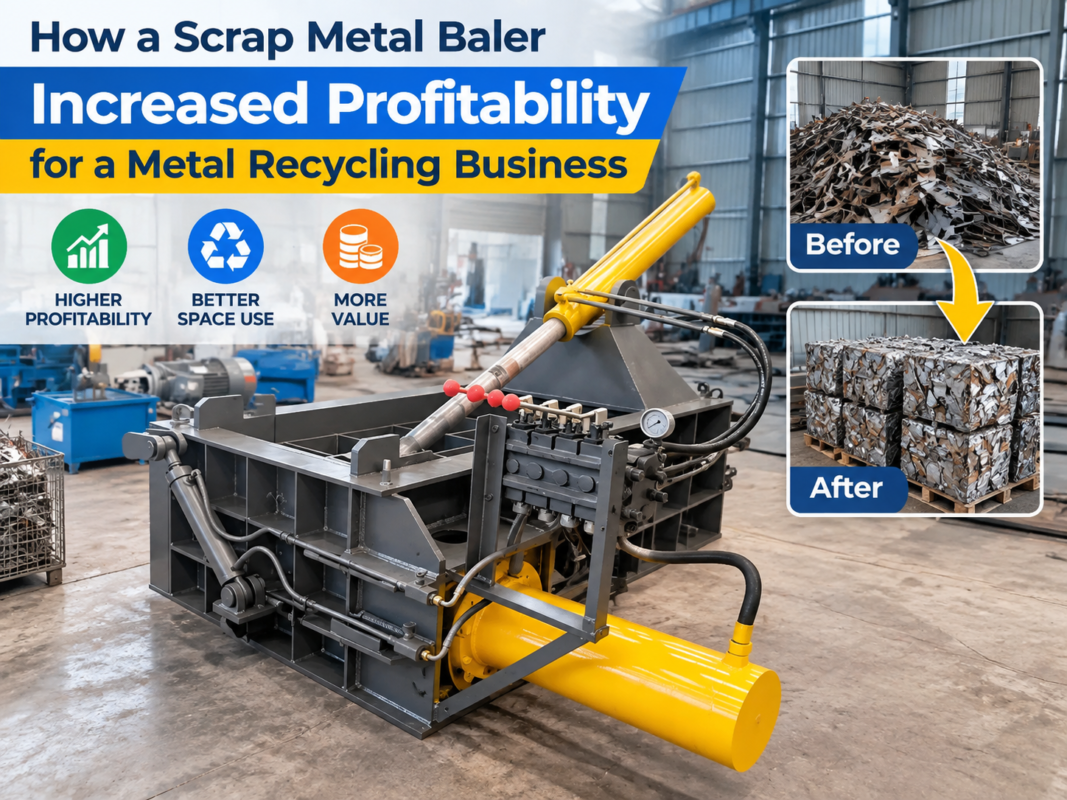
Storage Efficiency is another major advantage. In many urban recycling centers, space is at a premium. Baled metal can be stacked vertically, allowing for much higher inventory levels in a smaller footprint. This also improves site safety by eliminating sprawling piles of sharp, loose metal that can cause injuries or fires. Furthermore, baled metal is less susceptible to environmental degradation and is easier to manage during inventory audits.
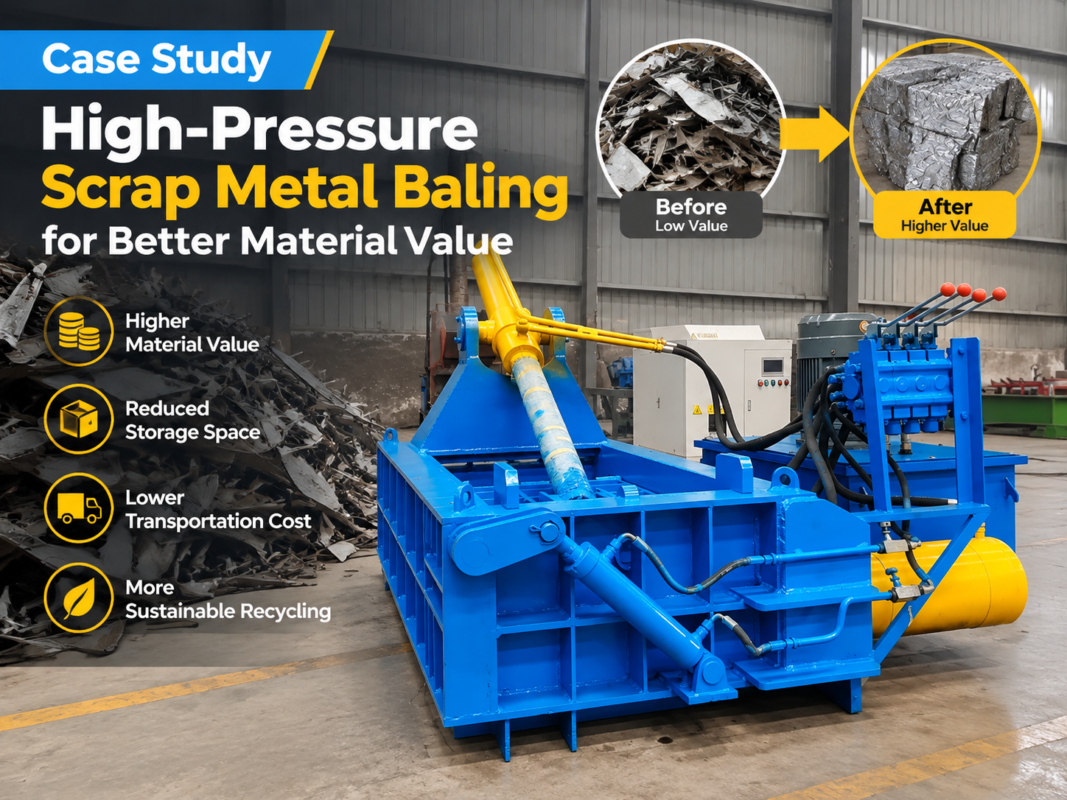
From a market perspective, Increased Resale Value is the primary driver. Smelters and foundries prefer baled scrap because it is easier to handle and more efficient to melt. Loose scrap often has a higher “burn loss” (material lost to oxidation during melting) compared to dense bales. Consequently, secondary metal buyers offer a premium for baled material. Additionally, the ability to process scrap in-house allows manufacturers to bypass middleman scrap dealers and sell directly to mills, capturing a larger share of the material’s value. This economic reality is a core reason why scrap metal balers are essential for ferrous and non-ferrous metal recycling.
Case Example: Upgrading a Regional Recycling Facility
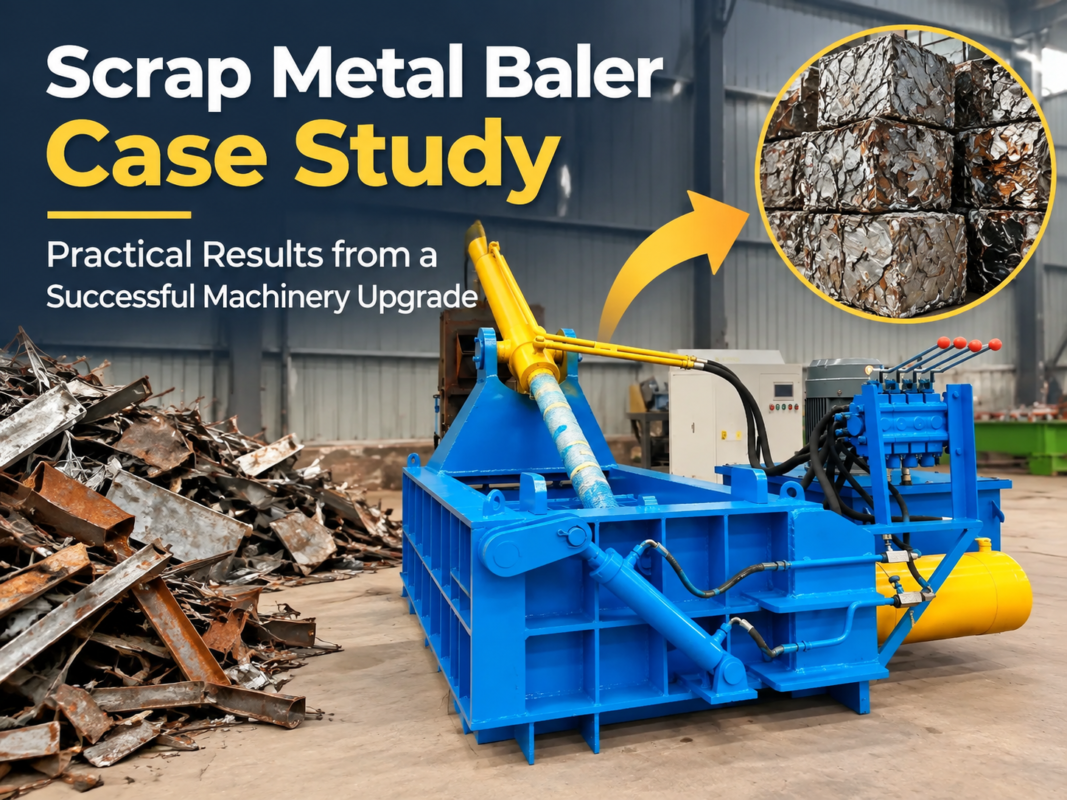
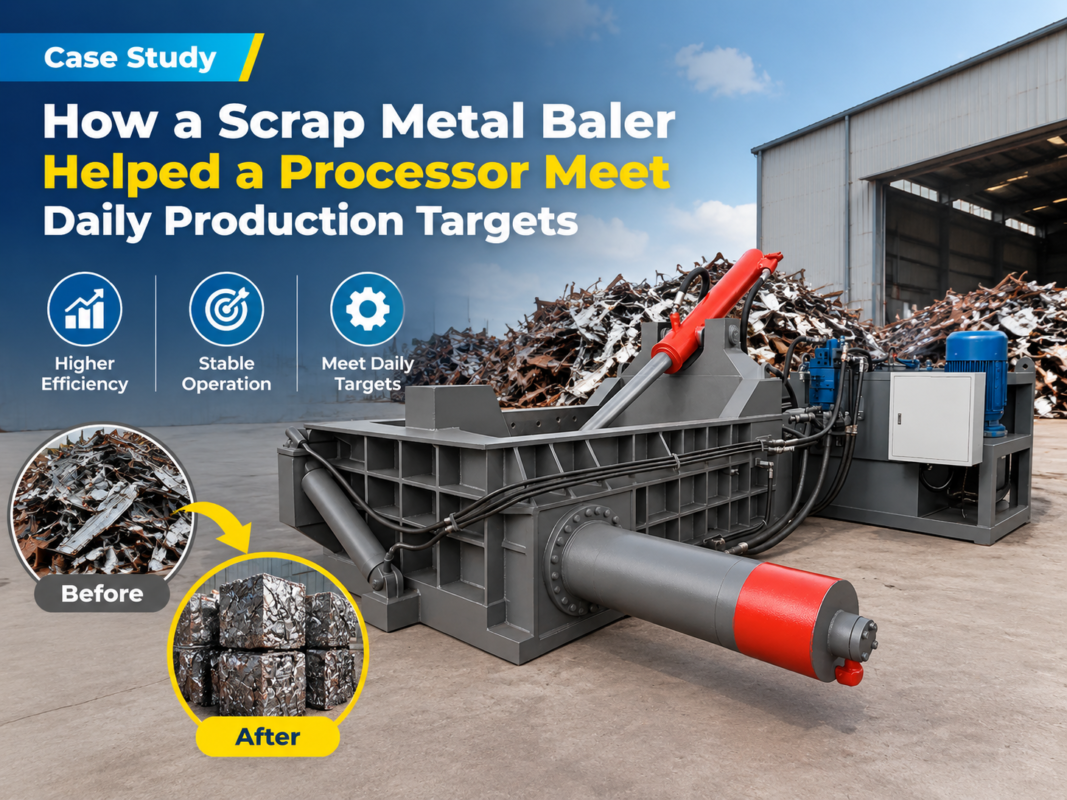
Consider the case of a regional recycling facility in Eastern Europe that specialized in non-ferrous metals. Before installing a HARSLE automatic hydraulic baler, the facility relied on manual sorting and small, low-pressure machines. They were processing approximately 15 tons of aluminum and copper per day. However, their transport costs were eating into 30% of their gross margin because they could not achieve the density required for efficient shipping to the nearest smelter 400km away.
After implementing a HARSLE Y81 series metal baler with a 250-ton press force and automatic PLC control, the facility’s operations transformed. The new machine allowed them to process the same 15 tons in just four hours, freeing up labor for more meticulous sorting. The bale density increased from 400 kg/m³ to over 1,800 kg/m³. This allowed them to fit 24 tons of material on a single trailer, compared to the previous 8 tons. Within six months, the savings in transport costs alone covered the initial investment of the machine. Furthermore, the higher quality of their bales allowed them to negotiate a 12% price increase with their primary buyer, demonstrating the clear productivity benefits of professional baling equipment.
Frequently Asked Questions (FAQ)
1. What is the difference between a ‘Turn-Out’ and ‘Side-Push’ baler?
A ‘Turn-Out’ baler tips the finished bale out of the chamber using a hydraulic arm, which is generally faster for lighter materials. A ‘Side-Push’ baler uses the main ram to push the bale out through a side gate, which is often preferred for very dense, heavy ferrous bales as it provides more controlled ejection.
2. Can one baler handle both aluminum and steel?
Yes, most industrial balers can handle both, provided the press force is sufficient for the steel. However, it is crucial to clean the chamber between batches to prevent cross-contamination, especially if the aluminum is being sold for high-purity applications.
3. How often do the shear blades need sharpening?
This depends on the volume and type of material. For facilities processing heavy ferrous scrap, blades may need inspection every month and sharpening or replacement every 6-12 months. HARSLE machines feature reversible blades to extend their service life.
4. What maintenance is required for the hydraulic system?
Regular maintenance includes monitoring oil levels, checking for leaks in hoses and seals, and replacing hydraulic filters every 500-1,000 operating hours. It is also vital to keep the oil cool and clean to prevent damage to the precision valves.
5. Does baling affect the melting process in a furnace?
Actually, it improves it. Dense bales sink into the molten bath more effectively than loose scrap, which reduces oxidation and improves the metal recovery rate (yield). This is why smelters often mandate specific bale densities.
6. What safety features should I look for in a scrap metal baler?
Essential safety features include emergency stop buttons, safety interlocks on the chamber doors, pressure relief valves, and protective guarding around moving parts. Remote control operation is also a significant safety advantage.
Conclusion: Why HARSLE is Your Partner in Recycling
In conclusion, the question of why scrap metal balers are essential for ferrous and non-ferrous metal recycling is answered by the undeniable improvements in logistics, safety, and profitability they provide. As the global industry moves toward more sustainable practices, the ability to efficiently process and reuse metal scrap is no longer optional—it is a competitive necessity. By transforming bulky waste into high-density industrial assets, balers enable a more efficient and profitable recycling ecosystem.
HARSLE remains committed to providing the metal fabrication industry with robust, high-performance machinery that meets the demands of modern recycling. Whether you are a small scrap yard looking to optimize your space or a large manufacturing plant seeking to integrate scrap management into your production line, HARSLE has the expertise and the technology to help you succeed. Our range of hydraulic scrap metal balers is engineered for durability, efficiency, and ease of use, ensuring that your investment delivers long-term value.
Ready to optimize your recycling operations? Contact HARSLE today to discuss our custom baling solutions and discover how we can help you turn your scrap into a significant revenue stream. Visit our website or speak with one of our technical experts to find the perfect machine configuration for your specific material needs.