Technical Guide to Scrap Metal Baler Bale Size, Shape, and Storage Optimization

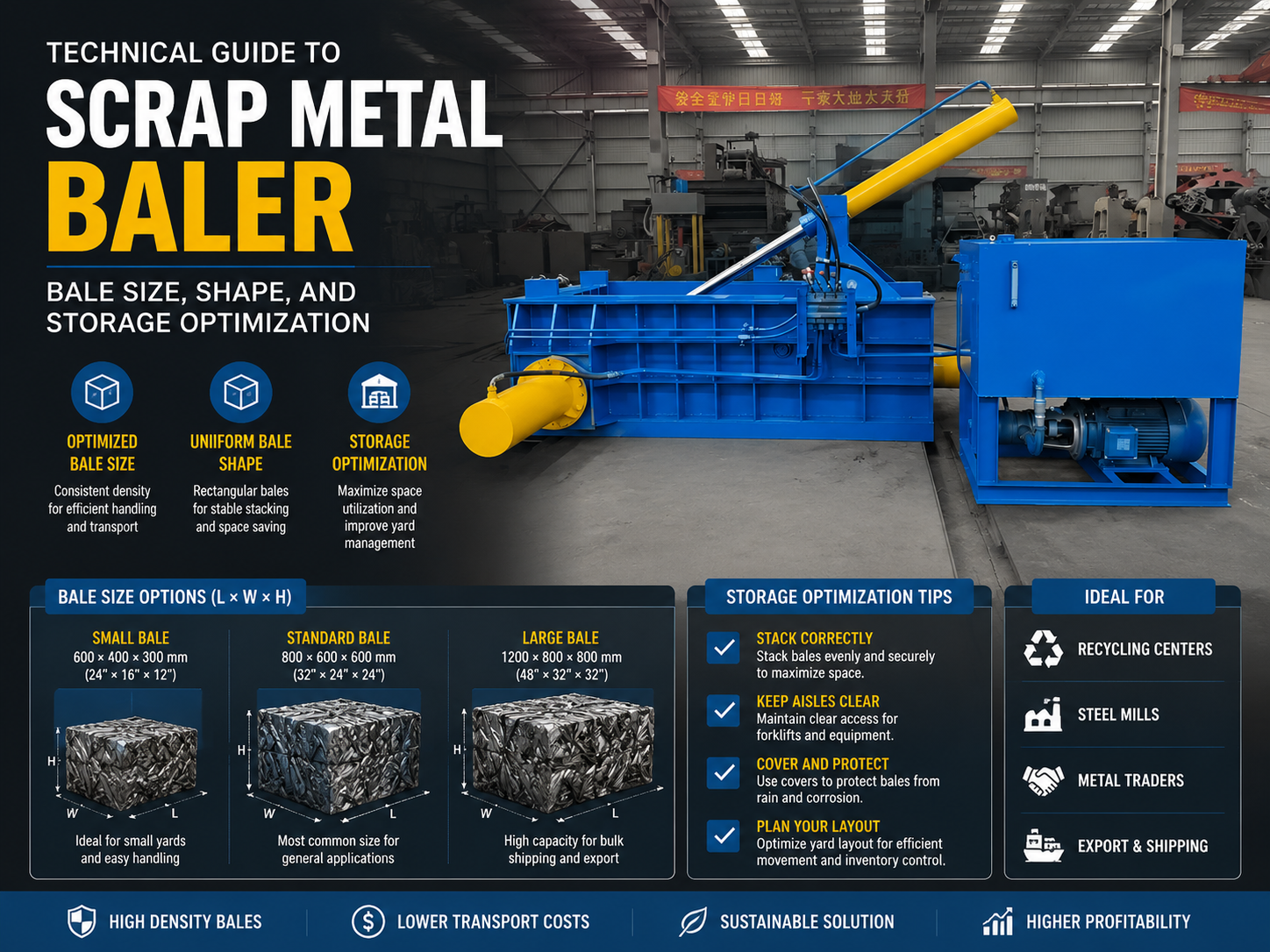
Technical Overview of Scrap Metal Baling Dynamics
In the modern recycling and metal fabrication industry, the efficiency of material handling is directly proportional to the quality of the baling process. A scrap metal baler is not merely a machine that crushes metal; it is a precision engineering tool designed to transform loose, high-volume scrap into dense, manageable units. The primary objective of Technical Scrap Metal Baler Bale Size, Shape, and Storage Optimization is to maximize the weight-to-volume ratio, thereby reducing logistics costs and improving furnace charging efficiency in smelting operations.
The physics of baling involves overcoming the yield strength of various metals—ranging from soft aluminum alloys to high-strength carbon steels. When the hydraulic ram exerts pressure, the metal undergoes plastic deformation. However, one must account for ‘spring-back,’ a phenomenon where the material expands slightly once the pressure is released. HARSLE engineering focuses on minimizing this variance to ensure that the final bale dimensions remain within strict tolerances for automated storage and transport systems.
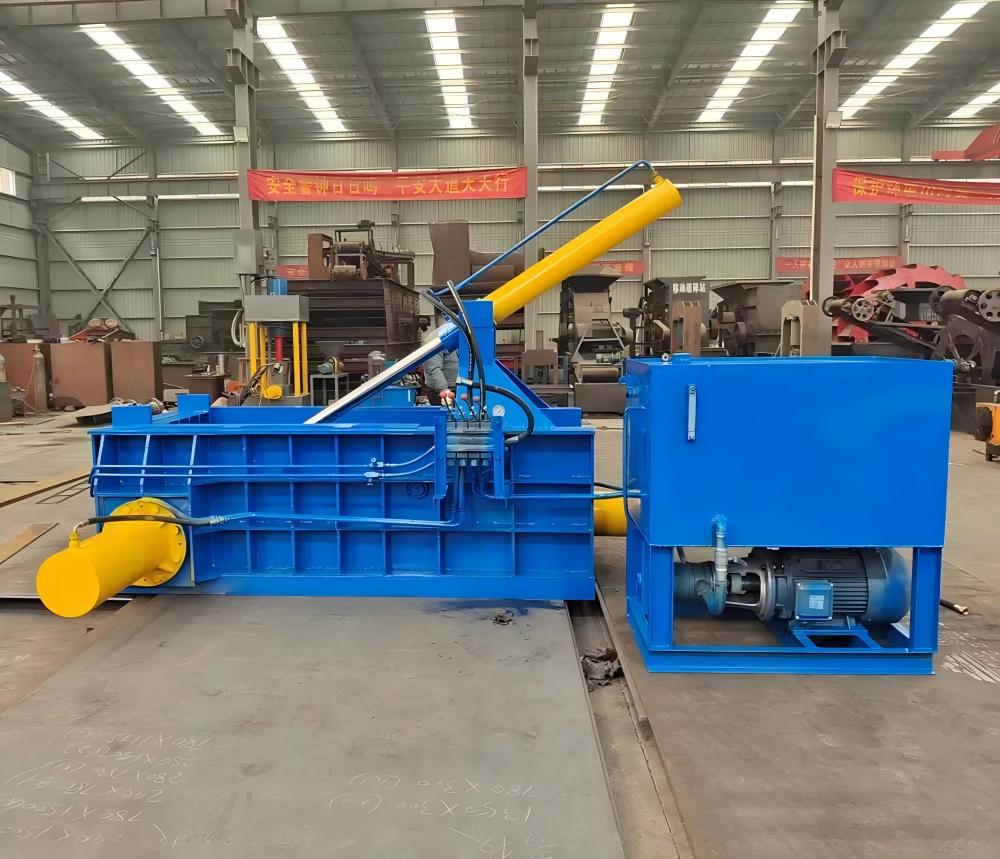
Optimizing bale size is a multi-faceted challenge. It requires a deep understanding of the material’s bulk density before and after compression. For instance, loose light-gauge steel might have a bulk density of only 150 kg/m³, but after processing through a high-pressure HARSLE baler, it can reach densities exceeding 1500 kg/m³. This technical guide explores the variables that dictate these outcomes and how operators can fine-tune their equipment for peak performance.
Core Parameters Influencing Bale Quality
The output of a scrap metal baler is defined by several critical parameters that must be synchronized to achieve the desired bale shape and density. The first and most obvious parameter is the Nominal Force (Tonnage). This is the total pressure the main cylinder can apply. For heavy-duty applications, such as baling car bodies or thick structural steel, a higher tonnage (e.g., 250T to 400T) is required to ensure the material is compacted beyond its elastic limit.
The Chamber Dimensions represent the physical constraints of the baling process. The length, width, and height of the compression chamber determine the maximum possible size of the bale. However, the ‘stroke’ of the ram often dictates the final thickness. In a triple-action baler, pressure is applied from three directions, resulting in a highly compact, rectangular bale that is ideal for stacking. The shape is crucial; perfectly cuboid bales prevent ‘leaning’ in storage stacks and ensure that shipping containers are filled to their maximum weight capacity without leaving ‘dead air’ space.
Another vital parameter is Cycle Time. While density is important, throughput (tons per hour) is the metric that drives profitability. A faster cycle time allows for more bales per shift, but it must not come at the expense of compression quality. Advanced hydraulic systems in HARSLE balers utilize variable displacement pumps to provide high speed during the approach and high torque during the final compression phase, balancing efficiency with power.
Calculation Method for Bale Density and Weight
To optimize storage and logistics, engineers must be able to predict the weight of a bale before it is produced. The fundamental formula for bale weight is: Weight (W) = Volume (V) × Density (ρ). However, in the context of scrap metal, we must use the Compacted Density, which is a function of the material type and the baler’s pressure capability.
To calculate the required pressure for a specific material, engineers use the formula: P = F / A, where P is the pressure, F is the force applied by the ram, and A is the surface area of the bale face. If the pressure applied is lower than the material’s compressive yield strength, the bale will not hold its shape. For aluminum, a pressure of 30-50 MPa is often sufficient, whereas steel may require 100 MPa or more to achieve high-density ‘logs’ or ‘bricks’.
When planning for storage, the Stacking Factor must be considered. This is calculated by dividing the total volume of the storage area by the volume of the bales. If the bales are irregular in shape due to poor machine calibration, the stacking factor increases, meaning less material can be stored in the same footprint. By utilizing the Technical Scrap Metal Baler Bale Size, Shape, and Storage Optimization principles, facilities can often increase their storage capacity by 20-30% without expanding their physical square footage.
Technical Parameter Table for HARSLE Baler Models
The following table provides a comparison of typical technical specifications for various baler classes. These figures are essential for selecting the right machine based on your specific bale size and shape requirements.
| Model Series | Nominal Force (kN) | Bale Size (mm) | Bale Density (kg/m³) | Production (t/h) |
|---|---|---|---|---|
| HBA-125 | 1250 | 300 x 300 | ≥1800 (Al) | 1.5 – 2.5 |
| HBA-250 | 2500 | 400 x 400 | ≥2000 (Steel) | 3.0 – 5.0 |
| HBA-400 | 4000 | 500 x 500 | ≥2200 (Steel) | 6.0 – 10.0 |
| HBA-630 | 6300 | 600 x 600 | ≥2500 (Heavy) | 12.0 – 18.0 |
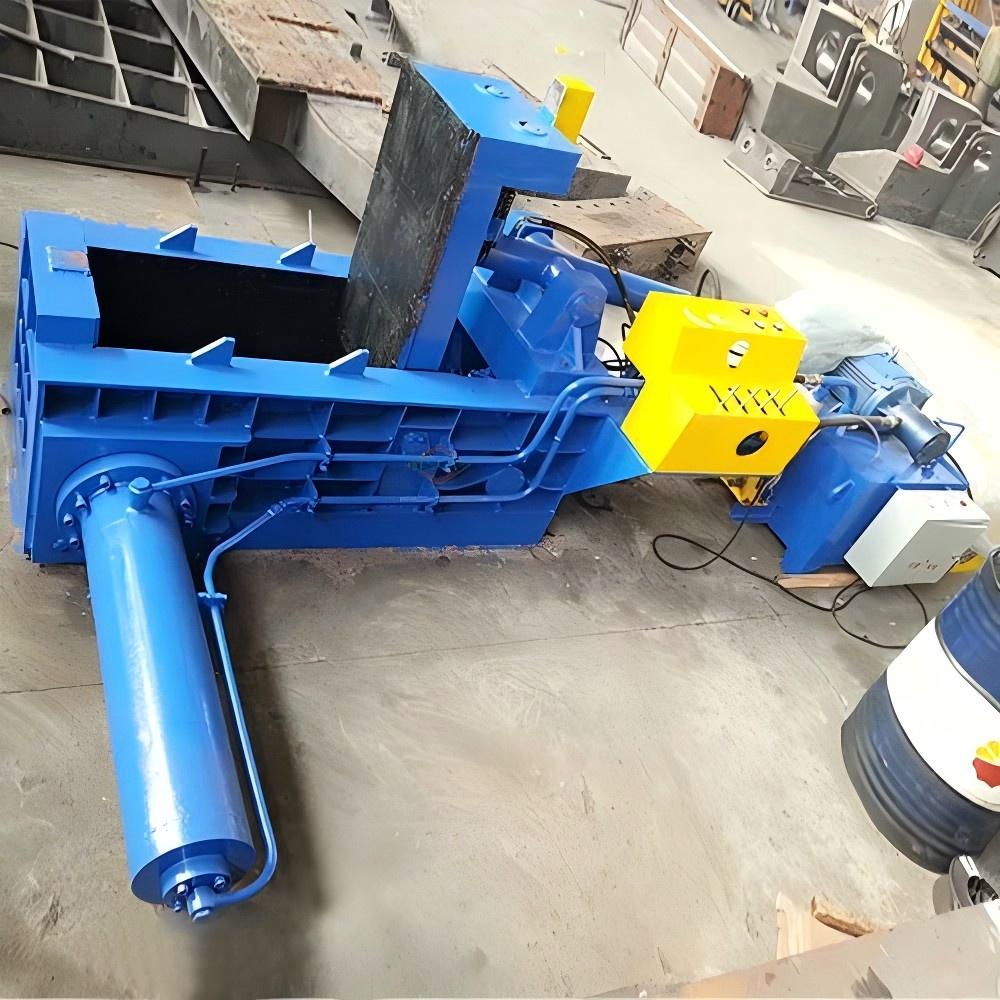
Storage Optimization and Logistics Efficiency
Storage optimization begins the moment the bale exits the machine. For maximum efficiency, bales should be sized to fit standard shipping dimensions. For example, a 20-foot ISO container has internal dimensions of approximately 5.9m x 2.35m x 2.39m. If your bale size is 400mm x 400mm, you can stack them precisely to fill the width and height, but if the bale is 450mm, you may end up with significant gaps that cannot be filled, leading to ‘light loads’ and increased shipping costs per ton.
Furthermore, the Shape Integrity of the bale affects safety. Bales that are ‘mushroomed’ (wider at the ends than in the middle) are unstable when stacked. This is often caused by worn liners in the compression chamber or uneven distribution of scrap within the hopper. Maintaining a perfectly rectangular shape allows for vertical stacking up to 4 or 5 levels high, depending on the floor’s load-bearing capacity. This verticality is the key to optimizing warehouse or yard space.
Environmental factors also play a role in storage. While metal bales are generally robust, non-ferrous materials like aluminum can oxidize if stored in high-moisture environments for extended periods. Proper storage optimization includes a first-in, first-out (FIFO) inventory system and ensuring that the storage surface is level and well-drained to prevent the bottom layer of bales from sinking or corroding.
Common Engineering Mistakes in Bale Production
One of the most frequent mistakes in scrap metal baling is Over-Compression. While it might seem that more pressure is always better, exceeding the structural limits of the material can lead to internal shearing. This makes the bale brittle and prone to falling apart during transport. It also puts unnecessary strain on the hydraulic seals and pumps of the HARSLE baler, shortening the machine’s lifespan.
Another common error is Inconsistent Feed Material. Mixing heavy structural steel with light aluminum cans in the same bale results in uneven density. This causes the ram to tilt slightly during compression, leading to ‘wedged’ bales that are difficult to eject and stack. Operators should ensure that the scrap is sorted and that the chamber is filled evenly to maintain the center of gravity of the force applied by the ram.
Neglecting Wear Plate Maintenance is a technical oversight that directly impacts bale shape. As the liners inside the chamber wear down, the clearance between the ram and the walls increases. This allows thin pieces of scrap to get wedged in the gaps, creating ‘fins’ on the bale. These fins prevent the bales from sitting flush against each other, ruining the storage optimization strategy and potentially damaging forklift tires or conveyor belts.
Selection Checklist for Scrap Metal Balers
When choosing a baler to meet your Technical Scrap Metal Baler Bale Size, Shape, and Storage Optimization goals, consider the following checklist:
- Material Compatibility: Does the machine’s tonnage match the yield strength of your primary scrap type?
- Bale Dimensions: Are the output dimensions compatible with your downstream logistics (truck beds, shipping containers, furnace openings)?
- Hydraulic Efficiency: Does the machine feature energy-saving valves and high-speed cylinders to optimize cycle times?
- Chamber Liners: Are the wear plates made of high-abrasion-resistant steel (like Hardox) and are they easily replaceable?
- Automation Level: Does the machine offer PLC control for consistent bale sizing regardless of operator skill level?
- Ejection Method: Is the bale ejected via a side-push, turn-out, or forward-out mechanism? (Side-push is generally best for maintaining shape integrity).
- Footprint: Does the physical size of the machine fit within your facility’s workflow without obstructing storage paths?
Frequently Asked Questions (FAQ)
How does bale density affect the resale value of scrap metal?
Higher density bales are generally more valuable to smelters because they improve furnace efficiency. Dense bales sink into the molten bath more quickly, reducing oxidation losses (melt loss) compared to loose scrap which floats on the surface and burns away. Additionally, higher density reduces the number of charging cycles required, saving energy and time.
What is the ideal bale size for international shipping?
For standard 20ft containers, bale sizes like 400mm x 400mm or 600mm x 600mm are popular because they allow for efficient tessellation. The goal is to reach the container’s weight limit (approx. 28 tons) before reaching its volume limit. If your bales are too light, you pay to ship air; if they are too bulky, you can’t fit enough weight inside.
How often should I replace the hydraulic oil in my HARSLE baler?
For optimal performance and to maintain the precision of the bale shape, hydraulic oil should typically be replaced every 2,000 to 4,000 operating hours, depending on the environment. Regular oil analysis is recommended to check for contamination or viscosity breakdown, which can lead to sluggish ram movement and inconsistent compression.
Can one baler handle both aluminum and steel?
Yes, most HARSLE balers are versatile enough to handle various metals. However, the pressure settings should be adjusted. Baling aluminum at steel-level pressures is inefficient and can lead to overly dense ‘bricks’ that some aluminum smelters may actually find difficult to process. PLC-controlled machines often have ‘recipes’ or presets for different materials.
Why is my bale ‘springing back’ more than usual?
Spring-back is usually a result of the material’s elasticity. If it increases, it may be because the scrap is a higher-grade alloy than usual, or the baler is not holding the pressure at the end of the stroke (dwell time). Increasing the dwell time by a few seconds can help the metal ‘set’ in its new shape, reducing expansion after ejection.