Industrial Shredder Applications for Mixed Scrap and Bulk Waste: A Comprehensive Guide

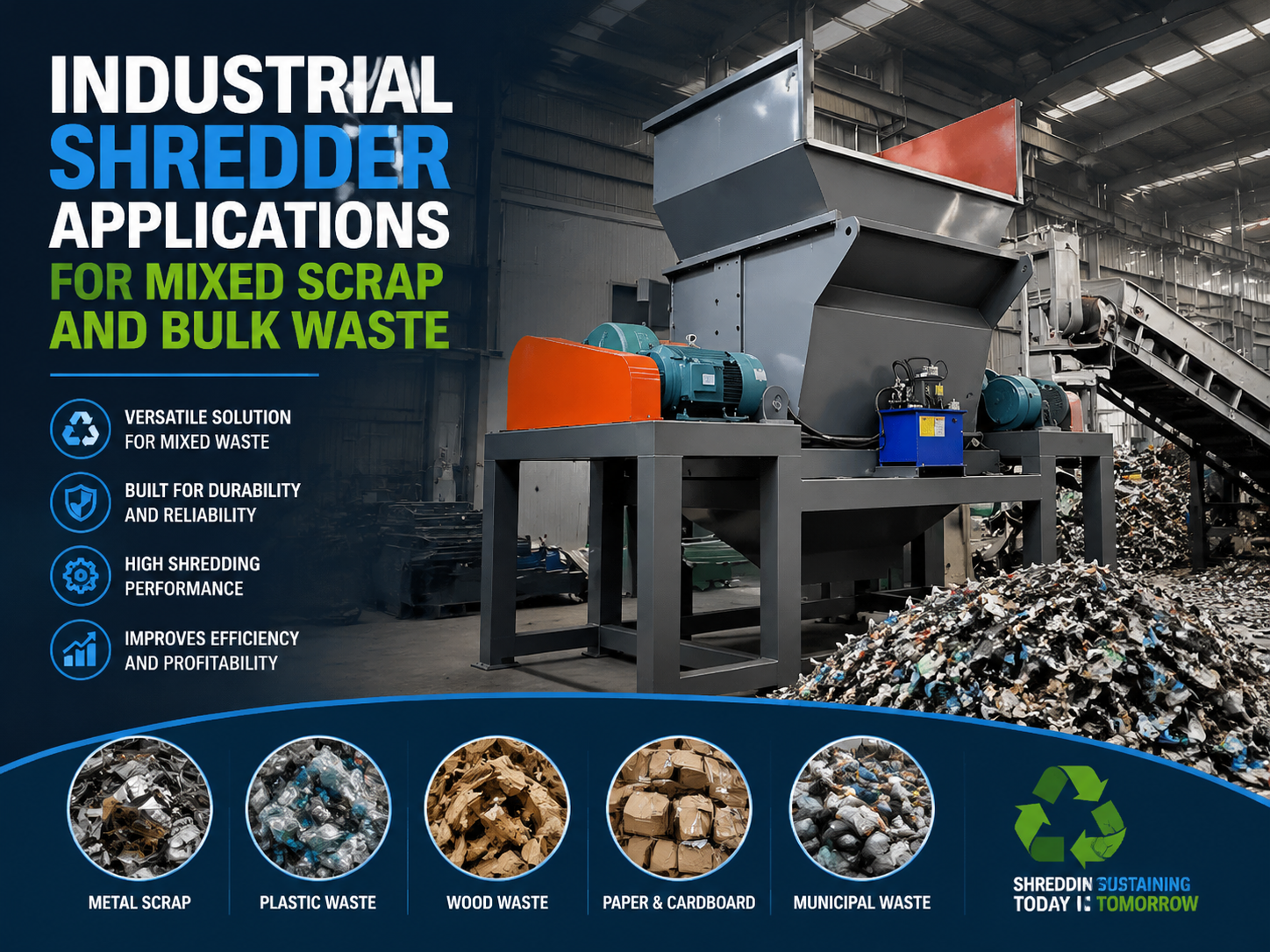
Introduction to Industrial Shredder Applications for Mixed Scrap and Bulk Waste
In the modern industrial landscape, the management of waste has transitioned from a logistical burden to a significant economic opportunity. The rise of circular economy principles has placed industrial shredders at the forefront of this transformation. Specifically, Industrial Shredder Applications Mixed Scrap Bulk Waste have become essential for facilities dealing with diverse, high-volume materials that require size reduction for recycling, energy recovery, or efficient disposal. HARSLE, a leader in metal fabrication and processing machinery, provides advanced shredding solutions designed to handle the most demanding waste streams.
Industrial shredders are heavy-duty machines engineered to break down large, bulky, and often heterogeneous materials into smaller, manageable pieces. Unlike specialized granulators that handle uniform plastics, industrial shredders for mixed scrap must be versatile enough to process metals, wood, plastics, textiles, and rubber simultaneously. This versatility is critical for municipal solid waste (MSW) facilities, scrap metal yards, and large-scale manufacturing plants where waste is rarely sorted at the source.
The primary goal of using an industrial shredder for mixed scrap and bulk waste is volume reduction. By reducing the physical footprint of waste, companies can significantly lower transportation costs and optimize storage space. Furthermore, shredding is often the first step in a multi-stage material recovery process, allowing for the subsequent separation of ferrous and non-ferrous metals, which can then be resold or reused in production cycles. This guide explores the intricate applications, technical requirements, and operational benefits of these powerful machines.
Common Application Scenarios for Industrial Shredders
The versatility of industrial shredders allows them to be deployed across a wide range of sectors. One of the most prominent application scenarios is in Municipal Solid Waste (MSW) Processing. Cities generate vast amounts of mixed waste that include everything from household appliances to organic matter. Shredders are used to homogenize this waste, making it suitable for further sorting or for use as Refuse Derived Fuel (RDF) in cement kilns and power plants.
Another critical scenario is Scrap Metal Recycling. Industrial shredders are used to process light-gauge steel, aluminum extrusions, and copper wiring. In these environments, the shredder must be robust enough to handle occasional thick metal sections without sustaining damage. By shredding mixed metal scrap, recyclers can increase the density of the material, making it more attractive to smelting facilities. This process also helps in liberating different materials that are bonded together, such as plastic coatings on copper wires.
Bulk Waste and E-Waste Management represent a growing market for industrial shredders. Bulk waste includes items like old furniture, mattresses, and large plastic containers that cannot be handled by standard waste collection vehicles. E-waste, or electronic waste, consists of computers, televisions, and circuit boards. Shredding e-waste is essential for recovering precious metals like gold, silver, and palladium. The shredding process breaks down the complex assemblies of electronic devices, allowing magnetic and eddy current separators to efficiently extract valuable components.
Finally, Construction and Demolition (C&D) Waste processing utilizes industrial shredders to handle wood, drywall, and light masonry. In many regions, landfilling C&D waste is becoming increasingly expensive or legally restricted. Shredding allows for the recovery of wood for biomass or the creation of recycled aggregates for new construction projects. The ability to process mixed loads of wood and metal (such as timber with nails) is a key requirement in this sector.
Material and Process Requirements
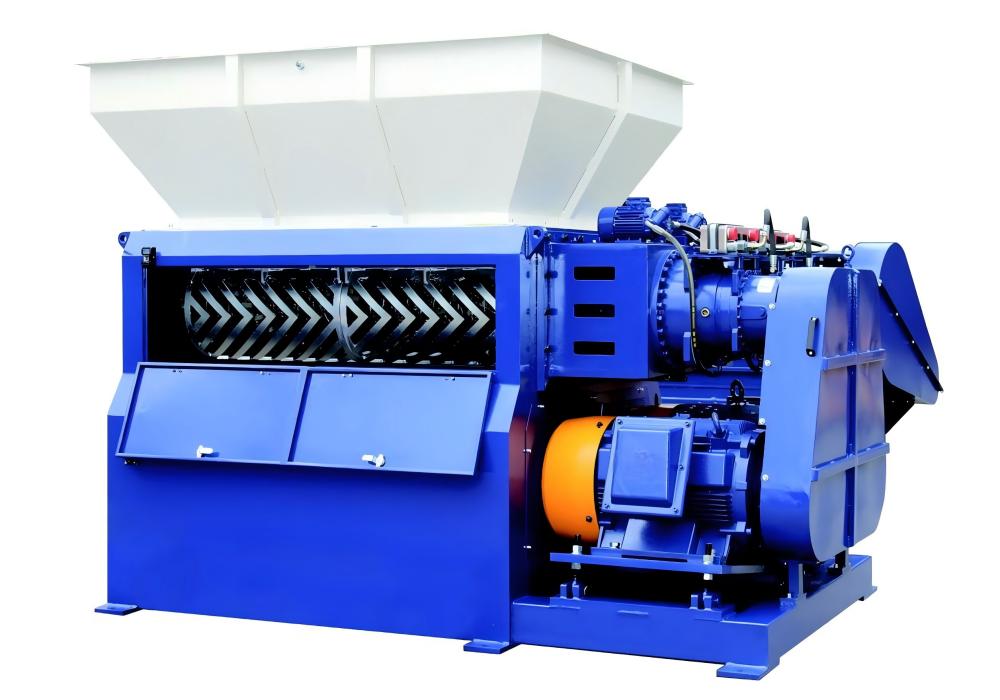
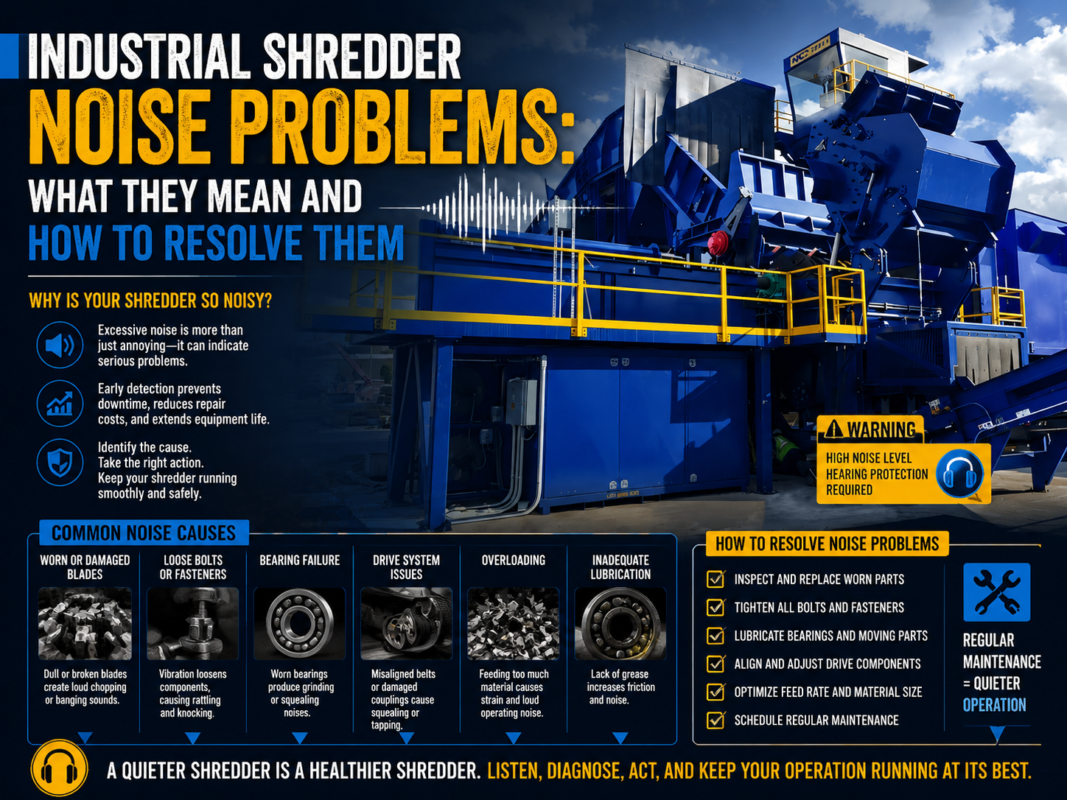
Processing mixed scrap and bulk waste requires a machine that can handle high variability in material hardness, density, and moisture content. The first requirement is High Torque and Low Speed. When dealing with bulk waste like tires or metal drums, the shredder needs immense force to shear through the material rather than high-speed impact. Low-speed operation also minimizes dust generation and noise, which is vital for environmental compliance in urban areas.
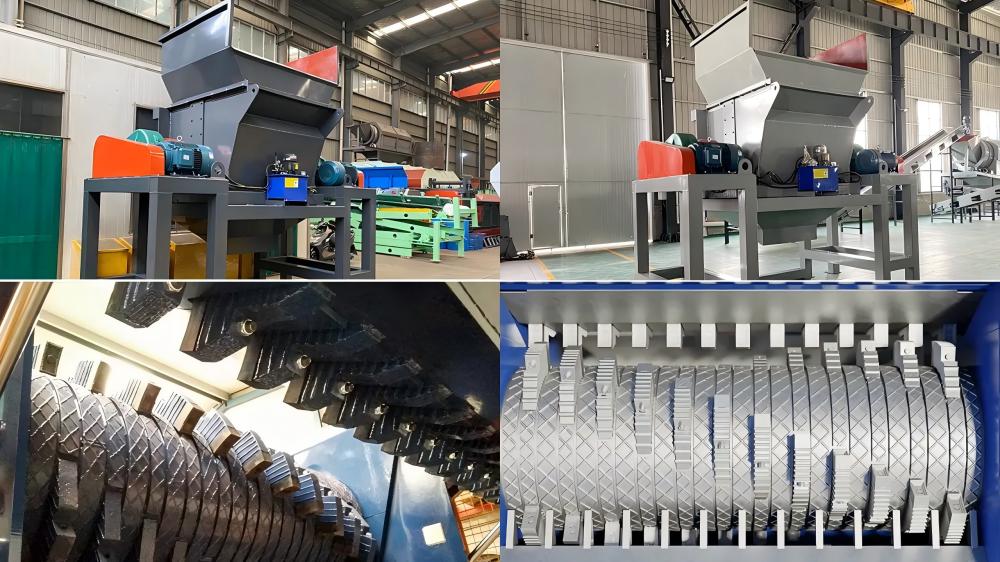
The Blade Metallurgy is another critical factor. For mixed scrap, blades must be made from high-strength alloys such as D2 or SKD-11, which are heat-treated to achieve a balance between hardness and toughness. Hardness ensures the blades stay sharp while processing abrasive materials, while toughness prevents the blades from cracking when they encounter non-shreddable items like heavy steel plates. HARSLE shredders often feature replaceable blade inserts, allowing for easy maintenance without replacing the entire shaft.
Feed Consistency and Hopper Design are also paramount. Bulk waste is often irregularly shaped, requiring a large, flared hopper to prevent bridging (where material gets stuck above the blades). In some cases, a hydraulic pusher or ram is necessary to force the material into the cutting chamber, ensuring a consistent throughput. The process also requires a robust control system, typically PLC-based, that can detect overloads and automatically reverse the shafts to clear jams, protecting the motor and drivetrain.
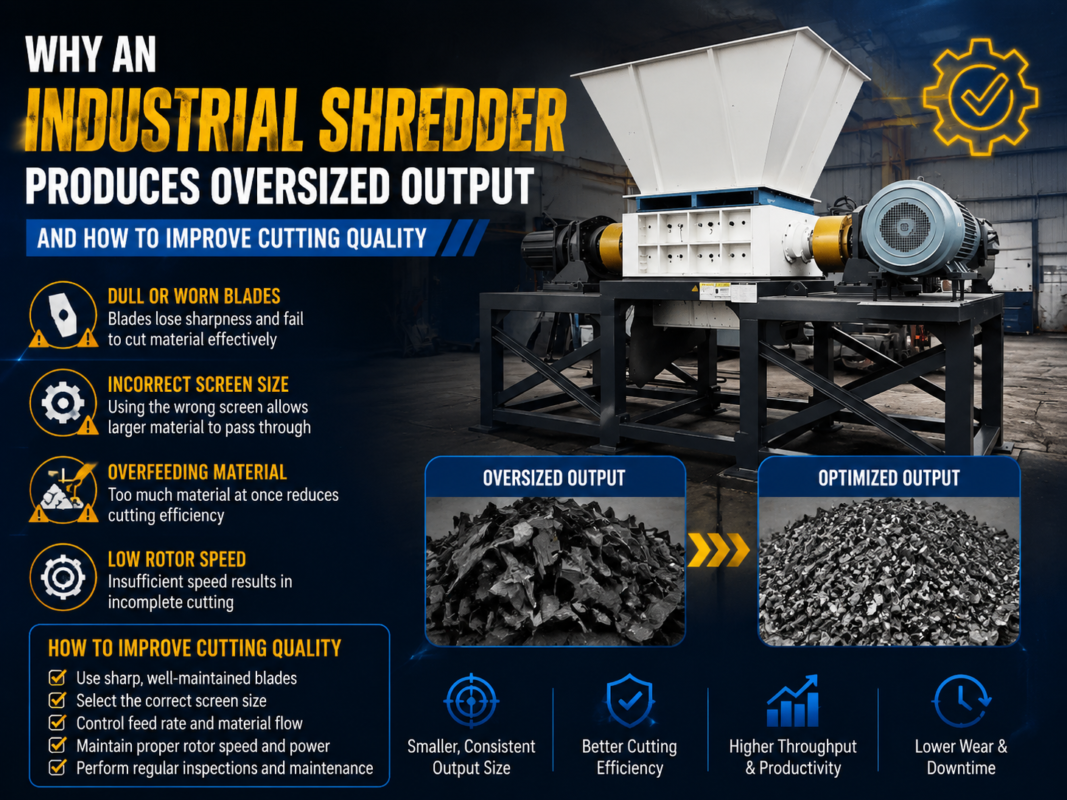
Lastly, the Output Size Control must be considered. Depending on the application, the required output might range from 50mm to 300mm. This is controlled by the width of the blades in twin-shaft shredders or by a screen in single-shaft shredders. For mixed scrap, a screenless design is often preferred to prevent clogging, especially if the waste contains sticky or fibrous materials like wet cardboard or textiles.
Recommended Machine Configuration
When selecting a machine for Industrial Shredder Applications Mixed Scrap Bulk Waste, the choice usually falls between a Twin-Shaft Shredder and a Single-Shaft Shredder. For most mixed and bulk applications, the Twin-Shaft Shredder is the industry standard. It features two counter-rotating shafts equipped with hooked blades that pull material into the center for shearing. This configuration is ideal for high-volume, heavy-duty tasks where the primary goal is volume reduction and liberation of materials.
| Feature | Twin-Shaft Shredder | Single-Shaft Shredder |
|---|---|---|
| Primary Use | Bulk waste, mixed scrap, tires, metal drums | Plastics, wood, paper, uniform waste |
| Cutting Action | Shearing and tearing | Cutting and grinding |
| Torque | Very High | Moderate to High |
| Output Size | Determined by blade width | Determined by screen size |
| Maintenance | Lower frequency, higher complexity | Higher frequency, lower complexity |
For applications requiring a more precise output size, such as RDF production or plastic recycling, a Single-Shaft Shredder might be recommended. These machines use a high-speed rotor with small, square cutters that press against a stationary bed knife. A screen located beneath the rotor ensures that only material of the desired size leaves the machine. However, single-shaft shredders are more sensitive to metal contaminants, which can damage the screen and cutters.
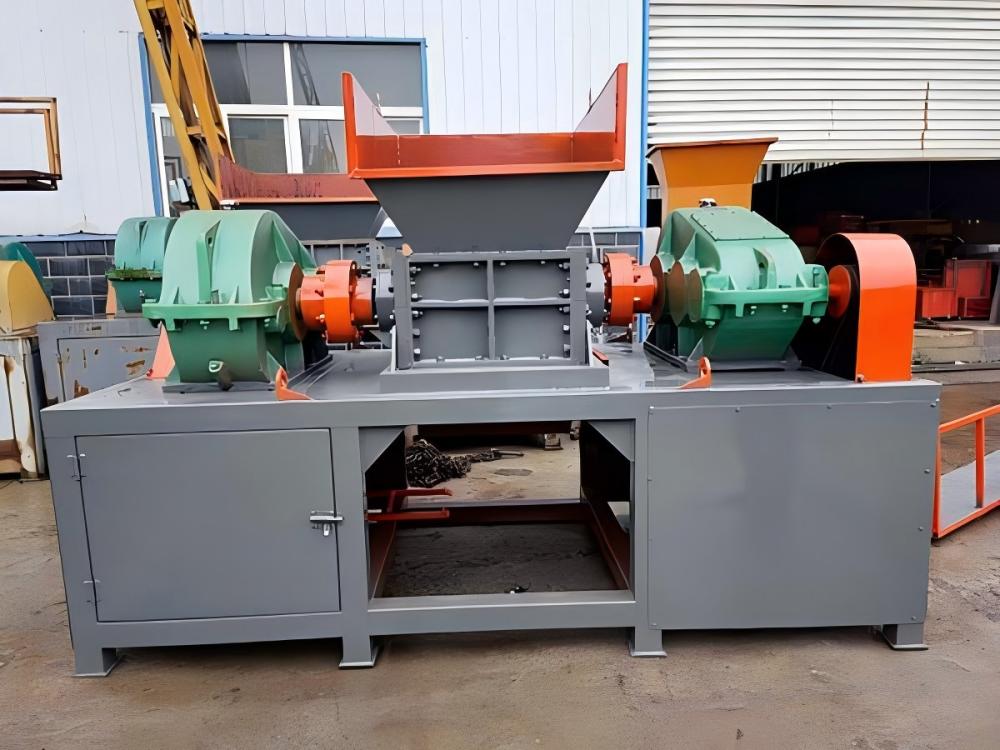
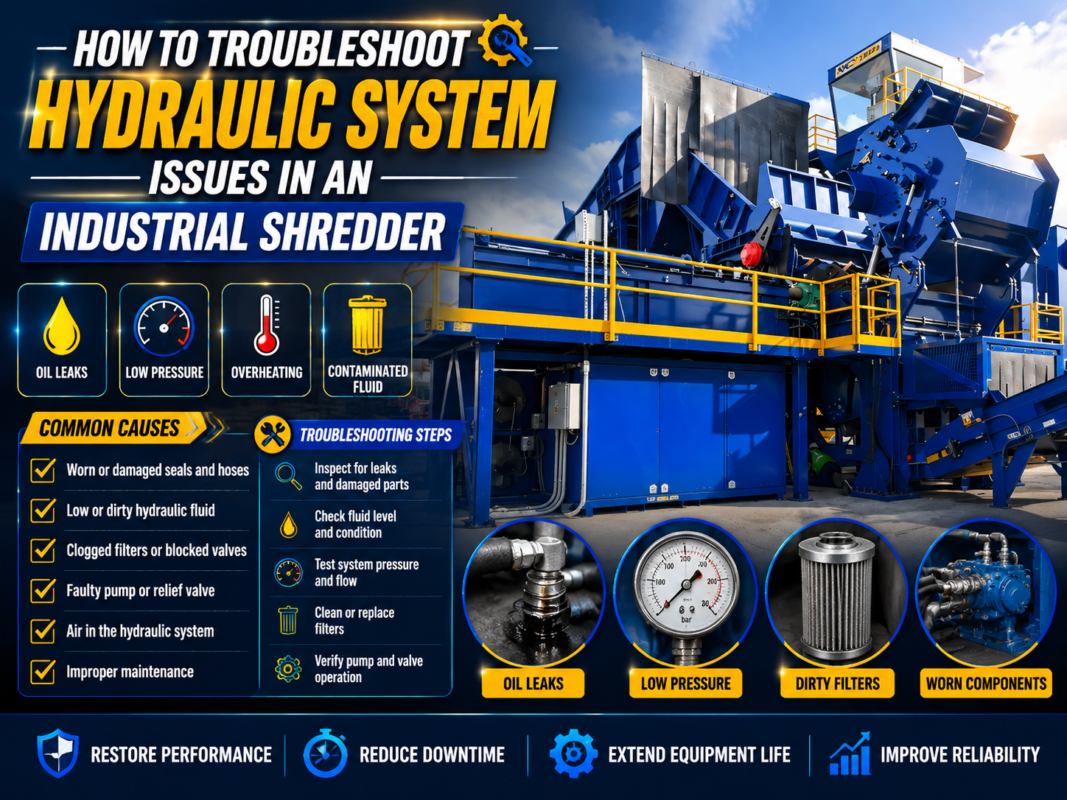
HARSLE recommends a configuration that includes a Hydraulic Drive System for the most demanding bulk waste applications. While electric drives are efficient, hydraulic drives offer superior shock absorption and the ability to deliver maximum torque at zero speed, which is invaluable when trying to break through a dense bale of mixed scrap. Additionally, the inclusion of a Magnetic Separator on the discharge conveyor is a standard recommendation to immediately begin the material recovery process by removing ferrous metals from the shredded stream.
Workflow of an Industrial Shredding Operation
The workflow of an industrial shredding operation begins with Material Loading. This is typically done using a grapple crane or a front-end loader for bulk waste. The material is dropped into the hopper, where the shredder’s shafts begin the Primary Shredding phase. In a twin-shaft system, the hooks grab the material and pull it through the narrow gap between the shafts, shearing it into strips.
As the material passes through the blades, it falls onto a Discharge Conveyor. At this stage, the material is significantly reduced in volume. If the operation is part of a recycling line, the next step is Material Separation. A cross-belt magnet suspended over the conveyor pulls out iron and steel. Further down the line, an eddy current separator might be used to repel non-ferrous metals like aluminum and copper into a separate bin.
The remaining material, often a mix of plastics, wood, and organics, may undergo Secondary Shredding if a smaller particle size is required. This is common in RDF production where the fuel must be a specific size for optimal combustion. The final step is Storage or Transport. The shredded material is either baled for transport to a recycling facility or moved to a bunker for use as fuel. Throughout this workflow, sensors monitor the load on the shredder, the temperature of the bearings, and the speed of the conveyors to ensure a safe and efficient operation.
Productivity and Economic Benefits
The implementation of industrial shredders for mixed scrap and bulk waste offers profound productivity benefits. The most immediate is Logistical Efficiency. Bulk waste is notoriously difficult to transport because of its low density. Shredding can reduce the volume of waste by up to 80%, meaning that a single truck can carry five times as much material as before. This directly translates to lower fuel costs, fewer vehicle maintenance issues, and a smaller carbon footprint.
From an economic perspective, Material Recovery is the most significant benefit. Mixed scrap often contains valuable metals that are hidden within larger assemblies. Shredding liberates these materials, allowing them to be sold at market rates. For many facilities, the revenue generated from recovered metals can pay for the shredder’s investment within 18 to 24 months. Furthermore, by diverting waste from landfills, companies avoid rising tipping fees and potential environmental fines.
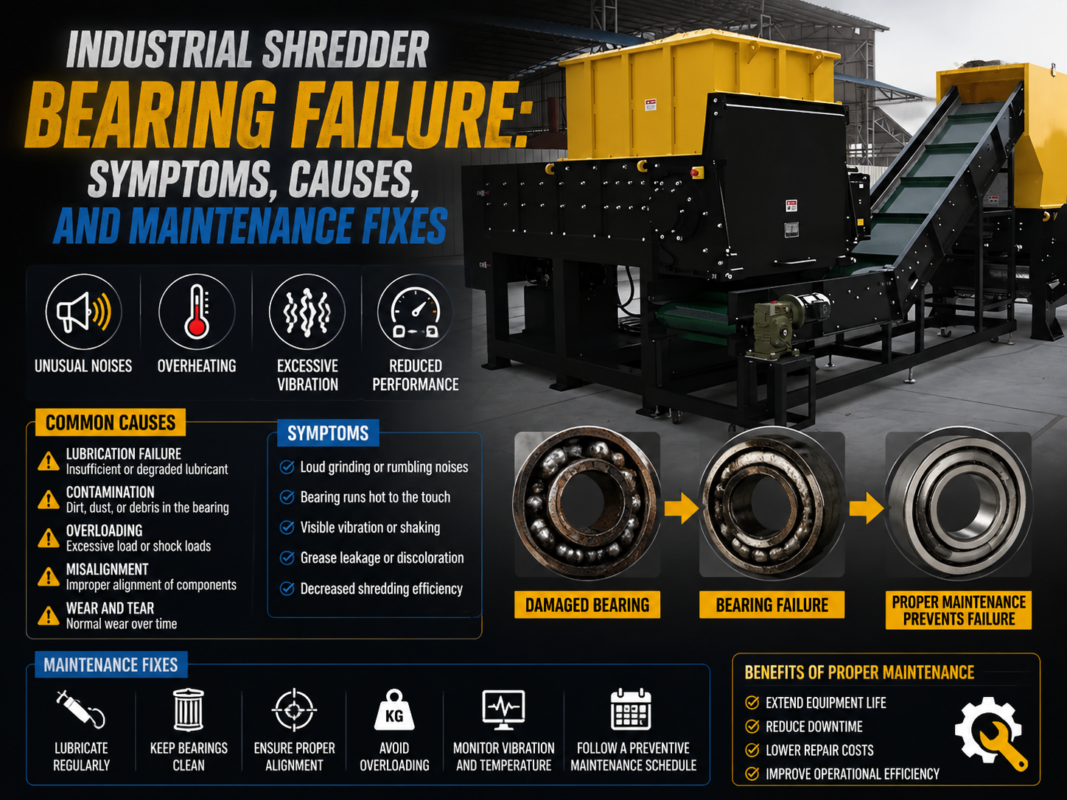
Operational Continuity is also enhanced by using high-quality machinery like HARSLE shredders. These machines are designed for 24/7 operation with minimal downtime. Features like automated lubrication systems and remote monitoring allow maintenance teams to address issues before they lead to failure. In a high-volume waste processing plant, every hour of uptime is critical to maintaining the flow of material and meeting contractual obligations with municipal or industrial clients.
Case Example: Mixed Scrap Processing Facility
Consider a regional recycling center that receives 200 tons of mixed waste daily, including old appliances, furniture, and industrial pallets. Before installing a HARSLE Twin-Shaft Shredder, the facility struggled with manual sorting, which was slow, dangerous, and inefficient. Much of the bulk waste was sent directly to the landfill because it was too large to process.
After integrating a 150kW Twin-Shaft Shredder into their line, the facility’s workflow changed dramatically. The shredder now processes the entire stream of bulk waste in a fraction of the time. The shredded output passes under a high-intensity magnet, recovering approximately 15 tons of ferrous metal per day that was previously lost. The remaining non-metallic waste is shredded further and sold to a local cement plant as RDF. The facility reported a 40% increase in total revenue and a 60% reduction in landfill disposal costs within the first year of operation.
Frequently Asked Questions (FAQ)
1. How long do the blades last when shredding mixed scrap?
Blade life depends heavily on the abrasiveness of the material. For typical mixed scrap, blades can last between 1,000 and 3,000 hours before requiring sharpening or replacement. HARSLE uses high-grade alloys to maximize this lifespan.
2. Can an industrial shredder handle heavy steel beams?
Standard industrial shredders are designed for “light to medium” scrap. Heavy structural steel beams require specialized scrap shears or extremely high-torque shredders. It is important to pre-sort very thick items to prevent damage to the shredder shafts.
3. What is the difference between a shredder and a granulator?
A shredder uses high torque and low speed to tear large items into smaller pieces. A granulator uses high speed and sharp knives to grind small pieces into a fine regrind or powder. Shredders are for bulk reduction; granulators are for final sizing.
4. Is it better to have an electric or hydraulic drive?
Electric drives are more energy-efficient and easier to maintain for consistent loads. Hydraulic drives are better for unpredictable, heavy loads (like mixed scrap) because they can handle frequent stalls and reversals without overheating the motor.
5. How do I prevent fires when shredding mixed waste?
Mixed waste can contain batteries or flammable liquids. Modern shredding lines should include spark detection and automated water mist or CO2 fire suppression systems, especially in the discharge area and the hopper.
Conclusion and Call to Action
Industrial shredder applications for mixed scrap and bulk waste are vital for any modern waste management or recycling operation. By choosing the right machine configuration and understanding the material requirements, businesses can turn a waste problem into a profitable resource stream. HARSLE offers a range of robust, high-performance shredders tailored to meet the specific needs of the metal fabrication and recycling industries.
Are you looking to optimize your waste processing and increase your material recovery rates? Contact HARSLE today to speak with our technical experts. We can help you select the ideal shredding solution for your specific application, ensuring long-term reliability and a high return on investment. Visit our website or call our sales team to schedule a consultation and see our machines in action.