
Industrial Shredder Applications In E-Waste Recycling Operations: A Comprehensive Guide

Introduction to Industrial Shredder Applications In E-Waste Recycling Operations
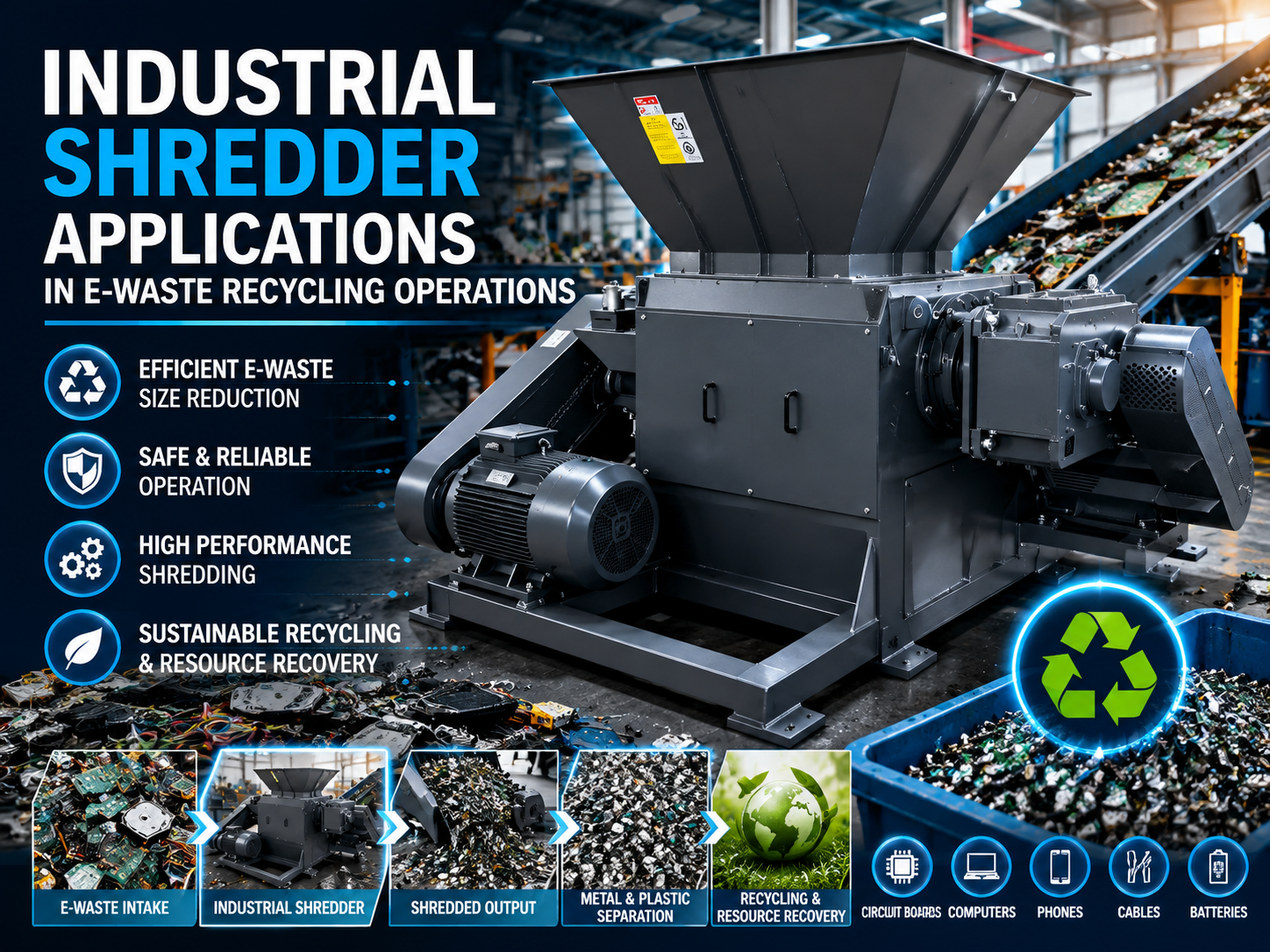
The global surge in electronic consumption has led to an unprecedented volume of electronic waste, or e-waste. From obsolete smartphones and laptops to decommissioned industrial servers and household appliances, the management of these materials presents both a significant environmental challenge and a lucrative economic opportunity. Central to the success of modern recycling facilities is the strategic implementation of Industrial Shredder Applications In E-Waste Recycling Operations. These robust machines serve as the primary gateway for material recovery, breaking down complex assemblies into manageable fragments for further sorting and refining.
Industrial shredders are not merely cutting tools; they are sophisticated engineering solutions designed to handle the diverse and often abrasive nature of electronic components. In an e-waste context, shredding is the critical first step in the ‘liberation’ process—separating plastics from metals and hazardous components from recyclable ones. Without high-performance shredding, the efficiency of downstream processes like magnetic separation, eddy current sorting, and hydrometallurgical refining would be severely compromised. This guide explores the multifaceted roles these machines play in the circular economy.
Application Scenarios in the E-Waste Sector
The versatility of industrial shredders allows them to be deployed across various stages of the recycling value chain. One of the most prominent application scenarios is in IT Asset Disposition (ITAD). Companies specializing in ITAD require shredders to ensure the total destruction of data-bearing devices such as hard drives, solid-state drives, and server blades. In this scenario, the shredder provides both material volume reduction and a critical security function, ensuring that sensitive information can never be recovered.
Another vital scenario is the processing of Printed Circuit Boards (PCBs). PCBs are rich in precious metals like gold, silver, and palladium, but they are also physically resilient and contain flame retardants. Industrial shredders are used to grind these boards into a fine granulate, which is then processed to extract high-value metals. This application requires high-torque machines capable of handling the fiberglass-reinforced epoxy resins found in high-grade electronics.
Large-scale consumer appliance recycling, often referred to as ‘Brown Goods’ and ‘White Goods’ processing, also relies heavily on heavy-duty shredding. Items like microwave ovens, televisions, and washing machines contain a mix of heavy steel frames, copper wiring, and various plastics. Shredders in these facilities are designed to handle high throughput, reducing bulky items into small pieces that can be easily transported on conveyor belts for automated sorting. The ability to process mixed streams of waste makes the industrial shredder the backbone of any large-scale recycling plant.
Material and Process Requirements
E-waste is one of the most difficult material streams to process due to its heterogeneity. A single device can contain over 60 different elements. Therefore, the Industrial Shredder Applications In E-Waste Recycling Operations must meet stringent material and process requirements to remain effective and durable. The primary requirement is high wear resistance. E-waste contains abrasive materials like glass (from screens) and ceramics (from components), which can quickly dull standard cutting blades. Consequently, shredder blades are typically manufactured from high-alloy steels such as D2 or SKD-11, often heat-treated to reach optimal hardness levels.
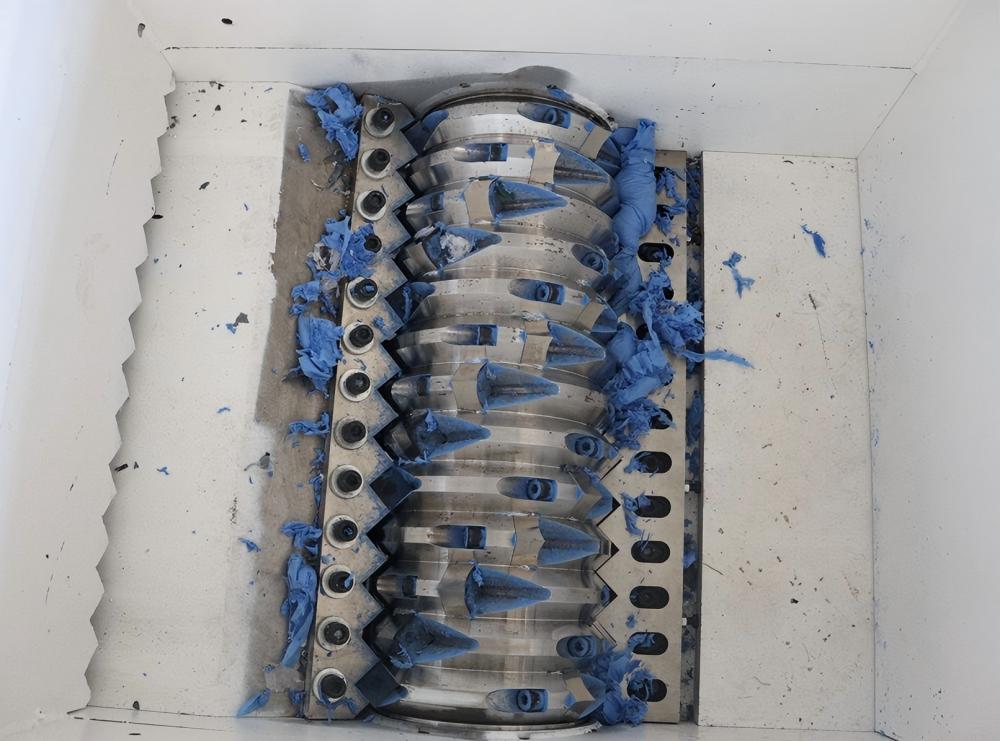
Furthermore, the process requires precise control over the output size. In e-waste recycling, the ‘fraction size’ determines the efficiency of the subsequent sorting machines. If the shredded pieces are too large, different materials may remain bonded together (e.g., a copper wire still attached to a plastic housing). If they are too small, the process may generate excessive dust, leading to material loss and environmental hazards. Modern shredders utilize interchangeable screens to control the final particle size, ensuring the output meets the specific needs of the downstream separation equipment.
Thermal management is another critical process requirement. Shredding high volumes of plastic and metal generates significant friction and heat. If the temperature rises too high, plastics can melt and clog the machine, or worse, lithium-ion batteries inadvertently left in the waste stream could ignite. Advanced industrial shredders often incorporate water-cooling systems or fire suppression sensors to mitigate these risks, ensuring continuous and safe operation in demanding environments.
Recommended Machine Configuration
Choosing the right machine configuration is essential for optimizing Industrial Shredder Applications In E-Waste Recycling Operations. Generally, the choice falls between single-shaft and double-shaft (or multi-shaft) shredders, each offering distinct advantages depending on the specific material being processed.
Single-Shaft Shredders
Single-shaft shredders are ideal for materials that require a uniform, small output size. They feature a single rotating shaft equipped with multiple cutting inserts and a hydraulic pusher that forces the material against the rotor. This configuration is highly effective for processing plastics, cables, and high-grade PCBs. The use of a screen allows for precise size control, making it the preferred choice for secondary shredding stages where material liberation is the primary goal.
Double-Shaft Shredders
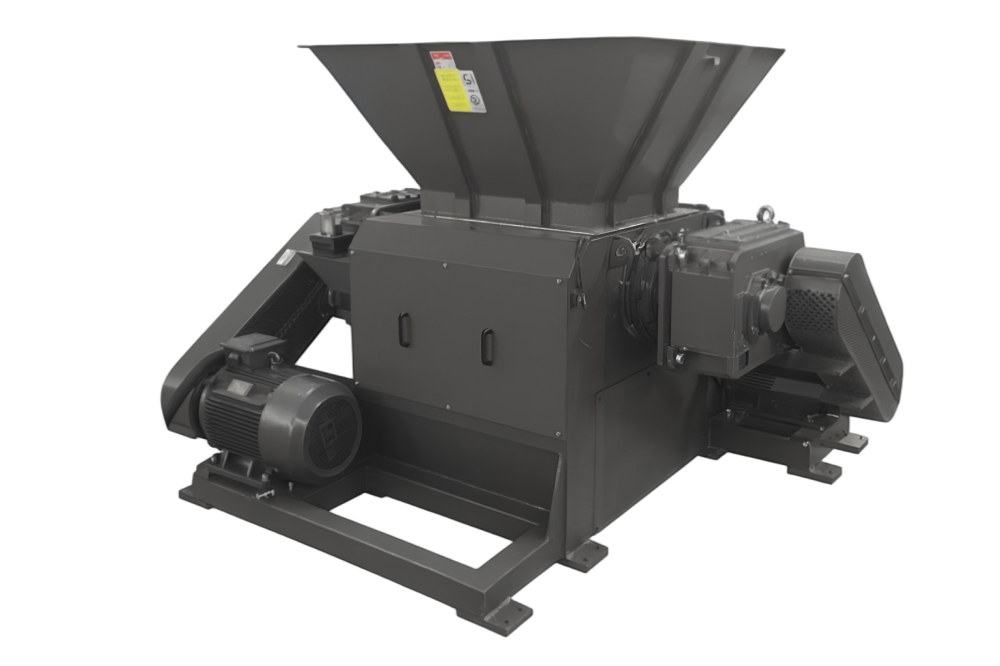
For primary shredding and high-volume reduction, double-shaft shredders are the industry standard. These machines utilize two counter-rotating shafts with interlocking blades to ‘grab’ and shear bulky items. They are characterized by high torque and low speed, which is perfect for breaking down tough materials like steel casings, large appliances, and bundled cables. Double-shaft shredders are less prone to jamming and can handle a wider variety of feed materials without the need for intensive pre-sorting.
Technical Specifications to Consider
When configuring a shredder for e-waste, operators should look for features such as PLC-controlled auto-reverse functions (to prevent overloads), heavy-duty gearboxes, and easy-access maintenance hatches. For e-waste specifically, a ‘V-rotor’ design is often recommended for single-shaft machines as it helps to direct material toward the center of the rotor, reducing wear on the side walls and improving cutting efficiency.
The E-Waste Shredding Workflow
The integration of an industrial shredder into a recycling line follows a systematic workflow designed to maximize recovery rates and minimize waste. The process typically begins with Pre-Sorting and De-pollution. In this stage, hazardous components like lead-acid batteries, mercury switches, and large capacitors are removed manually. This protects the shredder from damage and prevents toxic contamination of the recyclable fractions.
The second stage is Primary Shredding. Using a double-shaft shredder, the bulk e-waste is reduced to fragments roughly 50mm to 100mm in size. This stage breaks the structural integrity of the devices, making it easier for the next machines to work. Following this, the material often passes under a Magnetic Separator to remove ferrous metals (iron and steel), which can account for a large percentage of the weight in many electronic devices.
The third stage is Secondary Shredding or Granulation. The remaining material, now mostly plastics, non-ferrous metals, and PCBs, is fed into a single-shaft shredder or a granulator. Here, the material is reduced to a much smaller size (typically 10mm to 20mm). This fine shredding ensures that the copper, aluminum, and precious metals are completely detached from the plastic and fiberglass substrates. Finally, the material enters the Separation Phase, where eddy current separators, air tables, and optical sorters categorize the fragments into pure streams of copper, aluminum, and various plastics, ready for smelting or pelletizing.
Productivity and Economic Benefits
Investing in high-quality Industrial Shredder Applications In E-Waste Recycling Operations yields significant productivity benefits. Firstly, automation reduces the reliance on manual labor. Manually dismantling a computer or a television is time-consuming and inconsistent. A shredder-based line can process tons of material per hour with minimal human intervention, drastically lowering the cost per ton of processed waste.
Secondly, shredding significantly increases the ‘bulk density’ of the waste. Raw e-waste is bulky and expensive to transport. By shredding the material at the source or at a regional collection hub, recycling companies can fit much more material into a single shipping container, optimizing logistics and reducing the carbon footprint of the recycling process. This volume reduction is also essential for facilities with limited storage space.
Most importantly, the precision of modern shredding technology improves the purity of the recovered materials. High-purity metal fractions command a much higher price on the commodities market. For instance, copper recovered from shredded cables that has been properly liberated from its plastic insulation is far more valuable than mixed scrap. By maximizing the recovery of precious and base metals, industrial shredders directly contribute to the profitability and sustainability of the recycling operation.
Case Example: Upgrading a PCB Recycling Line
A mid-sized recycling facility in Eastern Europe recently faced challenges with their manual PCB processing line. The labor costs were high, and the recovery rate for copper and gold was below 70% due to inefficient separation. They decided to implement a dedicated shredding solution featuring a HARSLE double-shaft shredder for primary breakdown followed by a high-speed single-shaft granulator.
The results were immediate. The facility was able to increase its throughput from 500kg per hour to over 2 tons per hour. Because the single-shaft shredder provided a consistent 12mm output, the downstream eddy current separator was able to recover 95% of the non-ferrous metals. The payback period for the machinery investment was less than 14 months, driven by the combination of reduced labor costs and the higher market value of the cleaner metal fractions. This case illustrates how the right shredding technology can transform a marginal operation into a highly profitable enterprise.
Frequently Asked Questions (FAQ)
1. How often do shredder blades need to be replaced in e-waste operations?
Blade life depends heavily on the material mix. In general, for mixed e-waste, blades may need sharpening or rotation every 500-800 hours of operation. Using high-quality alloy steels and ensuring that glass and heavy contaminants are minimized during pre-sorting can significantly extend blade life.
2. Can industrial shredders handle lithium-ion batteries?
While some heavy-duty shredders can physically crush batteries, it is highly dangerous due to the risk of thermal runaway and fire. It is standard industry practice to remove large lithium-ion batteries (like those from laptops or power tools) before the shredding process. For small, embedded batteries, shredders should be equipped with specialized fire suppression systems.
3. What is the difference between a shredder and a granulator?
A shredder is typically a high-torque, lower-speed machine used for initial volume reduction and breaking down tough materials. A granulator operates at higher speeds and is used to reduce material to a very fine, consistent grain size, usually as a secondary or tertiary step in the recycling process.
4. How do I choose the right motor power for my shredder?
Motor power should be determined by your required throughput (tons per hour) and the toughest material you plan to process. For e-waste, higher torque is often more important than raw horsepower. Consulting with a manufacturer like HARSLE can help you match the motor and gearbox configuration to your specific material stream.
5. Is dust collection necessary for e-waste shredding?
Yes, absolutely. E-waste shredding generates dust that may contain lead, brominated flame retardants, and other hazardous substances. A robust dust extraction and filtration system (like a baghouse or HEPA filter) is essential for worker safety and environmental compliance.
Conclusion: Partnering with HARSLE for E-Waste Success
The role of Industrial Shredder Applications In E-Waste Recycling Operations will only grow in importance as the world moves toward a more circular economy. Choosing the right equipment is a decision that impacts every aspect of a recycling business, from operational safety to bottom-line profitability. HARSLE is committed to providing the metal fabrication and recycling industries with the most durable, efficient, and technologically advanced shredding solutions available.
Whether you are looking to start a new e-waste processing facility or upgrade an existing line to improve recovery rates, HARSLE’s team of experts is ready to assist. Our machines are engineered to withstand the rigors of electronic waste processing, ensuring long-term reliability and a high return on investment. Contact HARSLE today to discuss your specific requirements and discover how our industrial shredders can power your recycling operations into the future.


