
Four-Shaft Shredder Buying Checklist for Scrap Metal and Industrial Waste

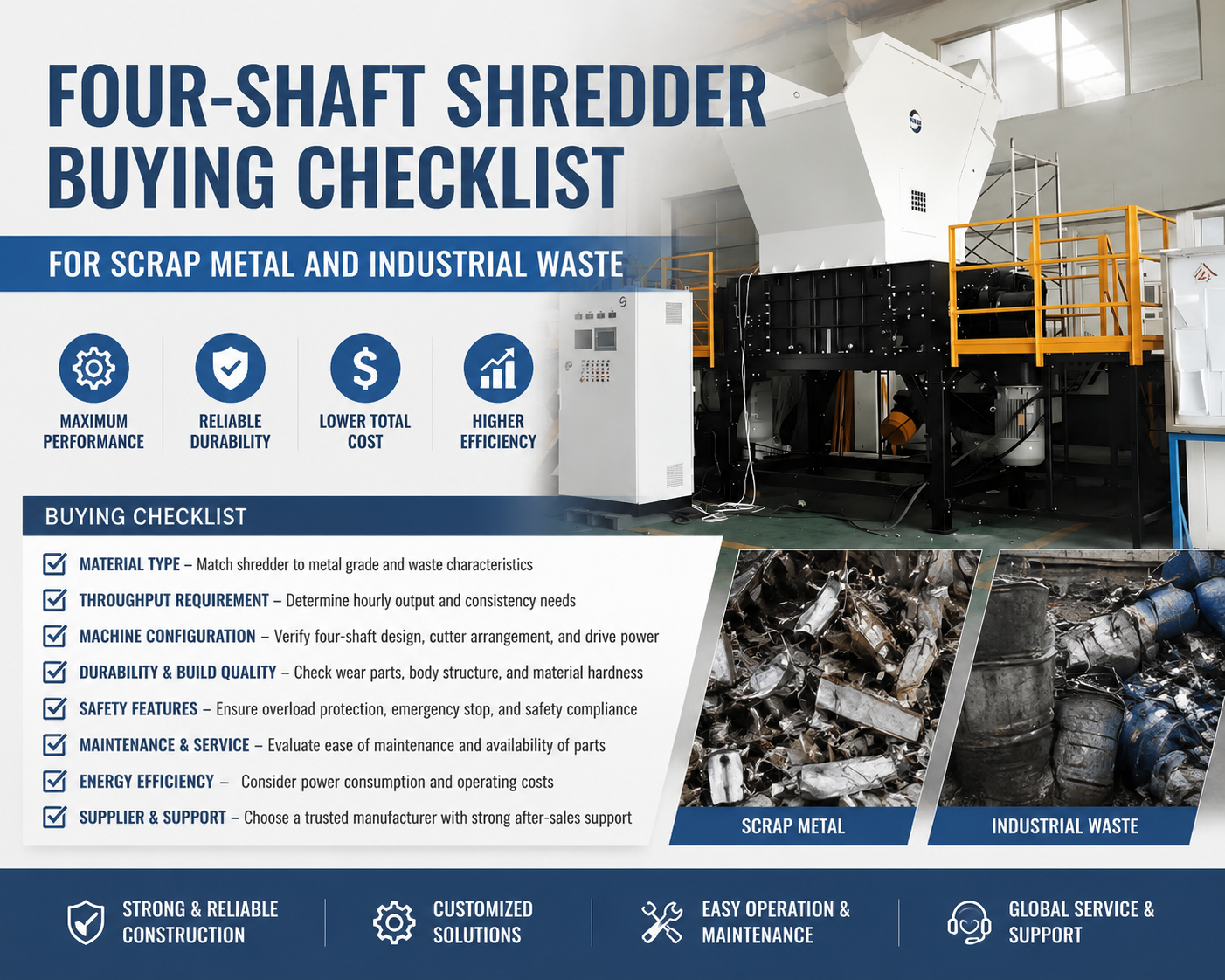
Introduction to Four-Shaft Shredders in Modern Industry
In the rapidly evolving landscape of waste management and metal recycling, the four-shaft shredder has emerged as a cornerstone technology. Unlike its single or double-shaft counterparts, the four-shaft shredder is specifically engineered for high-torque, low-speed processing of bulky and resilient materials. Whether you are dealing with electronic waste (e-waste), aluminum extrusions, plastic drums, or complex industrial scrap, selecting the right machine is a high-stakes decision that impacts your facility’s throughput, operational costs, and long-term profitability.
The primary advantage of a four-shaft design lies in its ability to provide consistent particle sizing without the need for a separate granulator in many applications. The two outer shafts act as feeders, pulling material into the center, while the two inner shafts perform the primary cutting and sizing. This internal recycling of material until it passes through a screen ensures a uniform output that is critical for downstream processes like smelting or chemical recycling. This guide provides a comprehensive Four-Shaft Shredder Buying Checklist for Scrap Metal and Industrial Waste to ensure your investment is sound and future-proof.
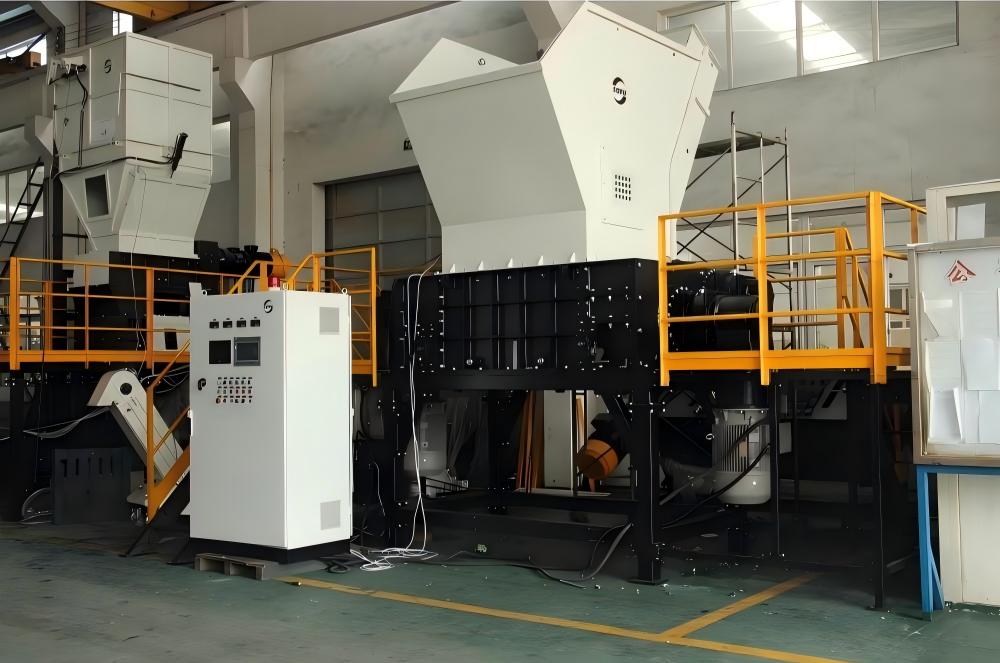
Price Range Overview: What to Expect
When budgeting for a four-shaft shredder, it is essential to understand that prices vary significantly based on capacity, motor power, and the specific materials being processed. Generally, industrial-grade four-shaft shredders fall into three main pricing tiers. Entry-level machines, often used for lighter industrial waste or small-scale e-waste recycling, typically range from $35,000 to $65,000. These machines usually feature motor powers between 15kW and 30kW and are suitable for lower throughput requirements.
Mid-range shredders, which are the workhorses of the scrap metal industry, generally cost between $70,000 and $150,000. These units are equipped with more robust gearboxes, higher torque motors (45kW to 90kW), and advanced PLC control systems. They are capable of handling tougher materials like light steel scrap and large plastic containers. Finally, high-capacity, heavy-duty four-shaft shredders designed for 24/7 operation in large-scale recycling plants can exceed $250,000. These machines feature massive torque, specialized alloy blades, and integrated cooling systems to handle the most demanding industrial waste streams.
Main Cost Drivers in Four-Shaft Shredder Procurement
Understanding what drives the cost of a four-shaft shredder is crucial for making an informed purchase. The most significant cost driver is the quality and composition of the cutting blades. High-alloy steels like D2, SKD-11, or H13 are expensive but necessary for shredding scrap metal. The heat treatment process used on these blades also adds to the cost but ensures the longevity and sharpness required to minimize downtime. Cheap blades will wear out quickly, leading to frequent replacements and lost production time.
Another major cost factor is the drive system. High-torque gearboxes and premium electric motors (such as those from Siemens or ABB) command a higher price but offer superior reliability and energy efficiency. The structural integrity of the machine frame also plays a role; a shredder designed for scrap metal requires a heavy, vibration-resistant chassis made from high-grade carbon steel. Furthermore, the complexity of the control system—specifically the inclusion of a sophisticated PLC (Programmable Logic Controller) with touch-screen interfaces and remote monitoring capabilities—will influence the final price tag.
Configuration Impact: Tailoring the Machine to Your Needs
The configuration of your four-shaft shredder should be dictated by your specific material stream. One of the most critical configuration choices is the screen size. The screen determines the final particle size of the shredded material. Smaller holes produce a finer output but reduce the overall throughput and increase blade wear. Conversely, larger holes allow for faster processing but may result in a less uniform product. It is vital to choose a machine where the screen is easily accessible and replaceable to allow for operational flexibility.
Shaft speed and torque are also key configuration variables. For scrap metal, a lower shaft speed with higher torque is preferred to prevent blade breakage and ensure the machine can “bite” into tough materials. For lighter industrial waste, a slightly higher speed might be beneficial for throughput. Additionally, the hopper design should be customized to your feeding method—whether you are using a conveyor belt, a forklift, or a crane. A well-designed hopper prevents material bridging and ensures a steady flow into the cutting chamber.
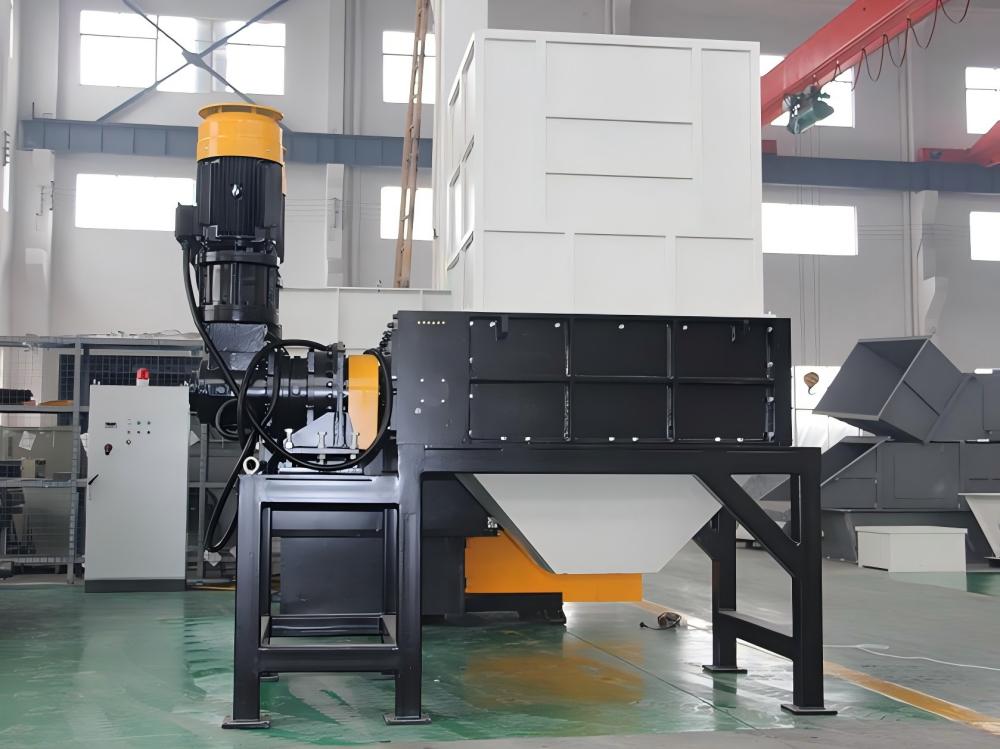
Hidden Costs: Beyond the Initial Purchase Price
Buyers often overlook the total cost of ownership (TCO) when purchasing a four-shaft shredder. One of the most significant hidden costs is maintenance, specifically blade sharpening and replacement. Depending on the abrasiveness of your material, blades may need to be serviced every few hundred hours. You must factor in the cost of spare blade sets and the labor required to change them. A machine designed for easy blade access can significantly reduce these labor costs.
Energy consumption is another ongoing expense. A shredder running 100kW motors for 16 hours a day will have a substantial utility bill. Choosing a machine with high-efficiency motors and a smart PLC that optimizes motor load can save thousands of dollars annually. Additionally, consider the cost of site preparation, including electrical upgrades to handle high-surge currents during startup, and the potential need for dust extraction or sound dampening systems if the shredder is located near residential areas or sensitive environments.
ROI Calculation: Measuring the Value of Your Investment
Calculating the Return on Investment (ROI) for a four-shaft shredder involves more than just looking at the purchase price. You must evaluate the value added to your waste stream. For example, shredded aluminum scrap often commands a higher price per ton than bulk, unprocessed scrap because it is easier for smelters to handle and has a higher bulk density, reducing shipping costs. If the shredder increases the value of your output by $100 per ton and you process 1,000 tons per year, that is $100,000 in additional revenue alone.
Furthermore, consider the reduction in labor and transportation costs. A four-shaft shredder can automate what might have previously been a manual sorting or cutting process. By reducing the volume of industrial waste, you also reduce the number of truckloads required to transport material to a landfill or secondary processor. When you combine increased material value, labor savings, and reduced logistics costs, most high-quality four-shaft shredders pay for themselves within 18 to 24 months of operation.
Buying Advice: How to Choose the Right Supplier
When selecting a supplier for a four-shaft shredder, prioritize those with a proven track record in your specific industry. Ask for case studies or references from clients who are processing similar materials. It is highly recommended to conduct a material test before finalizing the purchase. Send a sample of your toughest scrap to the manufacturer and ask for a video of the shredding process or, better yet, visit the factory to witness the test in person. This ensures the machine can actually handle your specific waste stream without stalling or excessive wear.
After-sales support is equally critical. Ensure the manufacturer maintains a robust inventory of wear parts, especially blades, spacers, and screen segments, in a warehouse that can ship to your location quickly. Check the warranty terms carefully—does it cover the gearbox and motors? Is remote technical support available? A cheaper machine from a supplier with no local support can become a liability the moment a technical issue arises. Companies like HARSLE emphasize the importance of integrated engineering, ensuring that every component from the PLC to the blades works in harmony for maximum uptime.
The Ultimate Four-Shaft Shredder Buying Checklist
To simplify your procurement process, use the following checklist during your evaluation phase:
- Material Compatibility: Has the machine been tested with your specific scrap metal or industrial waste?
- Blade Metallurgy: Are the blades made from high-grade alloy steel (D2/SKD-11) with proper heat treatment?
- Motor & Gearbox: Are the drive components from reputable brands with sufficient torque for your toughest material?
- Screen Design: Is the screen easily replaceable, and are different hole sizes available?
- PLC Controls: Does the system include auto-reverse functionality to prevent jams and protect the motors?
- Safety Features: Are emergency stops, safety interlocks, and hopper guards standard?
- Maintenance Access: Can the shafts and blades be accessed easily for routine servicing?
- Throughput Verification: Does the rated capacity (tons/hour) align with your production goals?
- Total Cost of Ownership: Have you factored in energy, blades, and potential downtime?
- Supplier Reputation: Does the manufacturer offer a comprehensive warranty and fast spare parts delivery?
Frequently Asked Questions (FAQ)
1. What is the main difference between a two-shaft and a four-shaft shredder?
While both use high torque and low speed, a four-shaft shredder includes two additional shafts that help with material feeding and integrated sizing. The four-shaft design allows for the use of a screen under the cutting chamber, ensuring that material only exits once it has reached the desired size. Two-shaft shredders typically produce long, strip-like pieces and do not offer the same level of size control.
2. Can a four-shaft shredder handle heavy steel plates?
Generally, four-shaft shredders are designed for “light to medium” scrap, such as aluminum profiles, electronic casings, thin-walled steel drums, and car trim. For heavy steel plates (over 6-10mm thick), a specialized heavy-duty single-shaft shredder or a large-scale shear might be required. Always consult with the manufacturer regarding the maximum thickness the machine can safely process.
3. How often do the blades need to be sharpened?
Blade life depends entirely on the material being shredded. For clean plastics, blades can last thousands of hours. For contaminated scrap metal or e-waste containing glass and ceramics, blades may need sharpening or rotation every 400-800 hours. Using high-quality alloy blades significantly extends these intervals.
4. Is a hydraulic drive better than an electric drive for a four-shaft shredder?
Electric drives are more common and easier to maintain for most industrial applications. They are also more energy-efficient. Hydraulic drives are typically reserved for extremely heavy-duty applications where the machine needs to handle frequent, massive shock loads, as hydraulics can provide better protection against sudden stalls.
5. What kind of maintenance is required daily?
Daily maintenance usually involves checking for loose bolts, inspecting the blades for major chips or damage, ensuring the lubrication system is functioning, and cleaning any debris from the cooling fans or motor housings. Regular lubrication of the main bearings is the most critical task to ensure machine longevity.
6. How do I determine the right screen size for my application?
The screen size is determined by your downstream requirements. If you are selling shredded metal to a smelter, they will have a maximum particle size specification. If you are shredding for volume reduction for landfill, a larger screen (50-100mm) is usually sufficient. For recycling processes like plastic pelletizing, a smaller screen (20-30mm) may be necessary.


