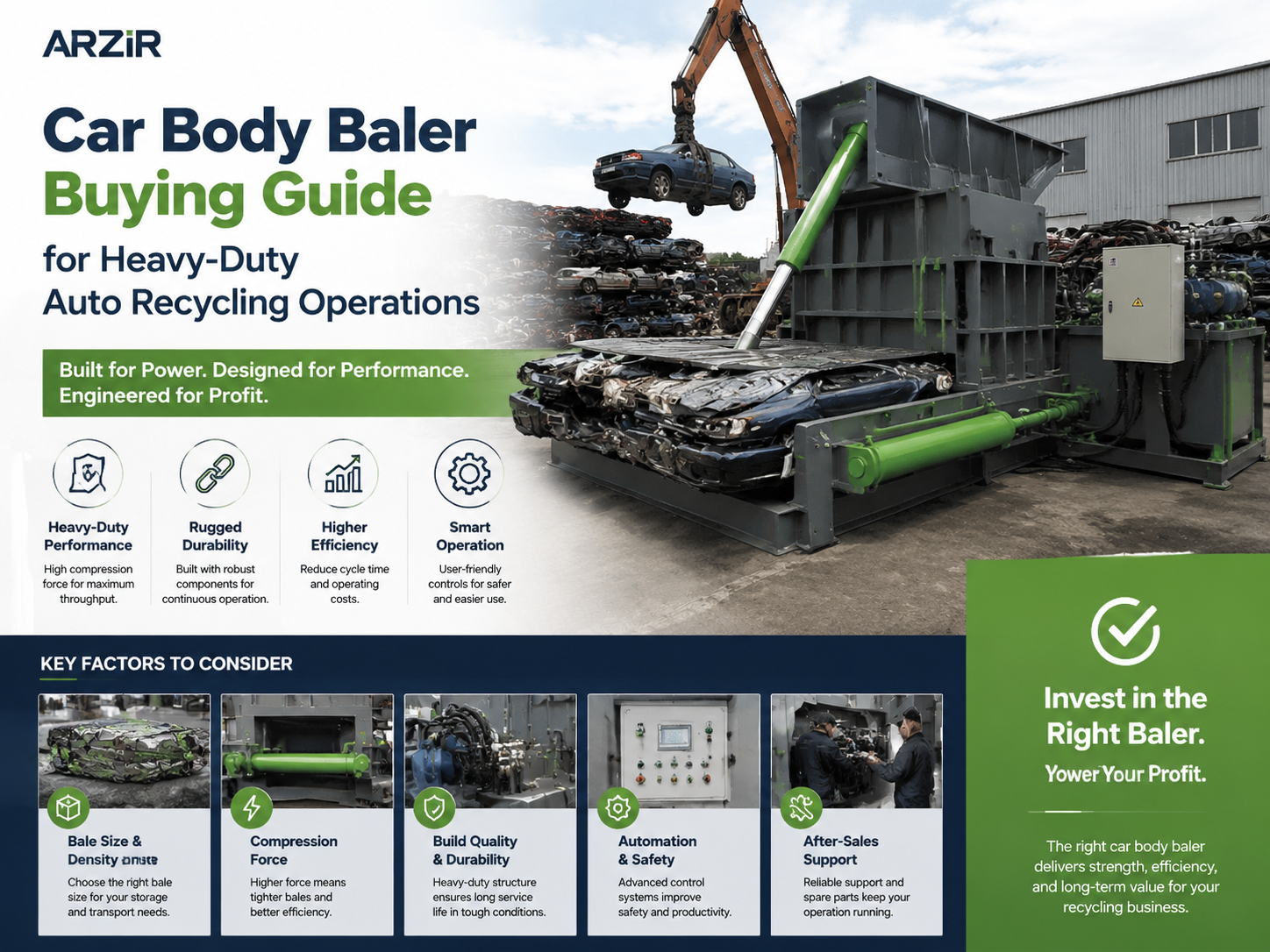
Car Body Baler Buying Guide for Heavy-Duty Auto Recycling Operations

Introduction to Car Body Baler Buying for Heavy-Duty Auto Recycling Operations
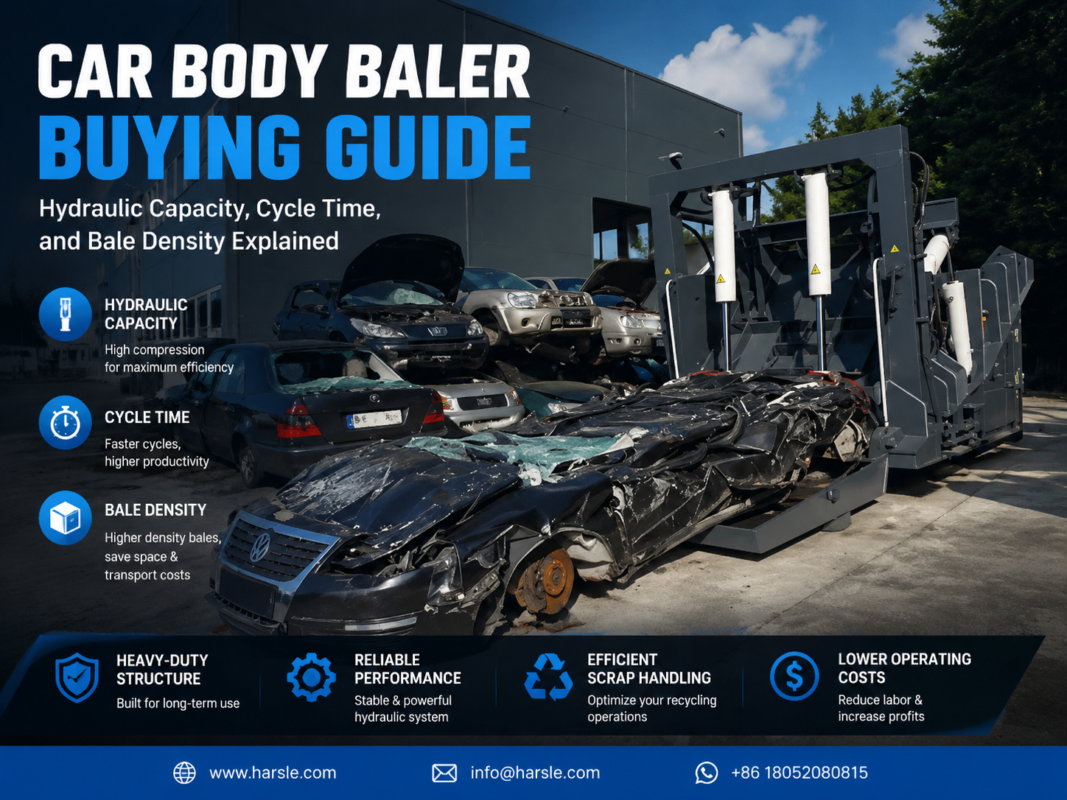
In the high-stakes world of scrap metal management, the efficiency of your processing equipment determines your profit margins. For heavy-duty auto recycling operations, a car body baler is not just a piece of machinery; it is the heartbeat of the yard. Investing in the right equipment requires a deep understanding of hydraulic force, structural integrity, and operational throughput. This guide is designed to navigate the complexities of car body baler buying for heavy-duty auto recycling operations, ensuring that your investment yields maximum returns and long-term reliability.
As global demand for recycled steel continues to fluctuate, the ability to produce high-density, uniform bales is a competitive advantage. A well-chosen baler reduces transportation costs, optimizes storage space, and meets the strict requirements of steel mills and foundries. Whether you are upgrading an existing facility or starting a new high-volume recycling center, understanding the nuances of these machines is critical. HARSLE, a leader in metal fabrication machinery, provides the technical expertise needed to make an informed decision in this capital-intensive sector.
Price Range Overview: What to Expect
When considering car body baler buying for heavy-duty auto recycling operations, the price range is broad, reflecting the diversity in capacity, automation, and mobility. Generally, industrial-grade car balers fall into three primary price tiers. Entry-level stationary units, often used by smaller yards or as secondary machines, typically range from $50,000 to $90,000. These machines offer basic hydraulic controls and are suitable for processing 5 to 10 cars per hour.
Mid-range balers, which are the workhorses of most professional recycling centers, cost between $100,000 and $250,000. These units feature higher compression forces, faster cycle times, and often include semi-automated controls. They are designed to handle 15 to 25 cars per hour and are built with more durable wear plates to withstand continuous operation. In this bracket, you begin to see features like remote control operation and integrated crane systems.
High-end, heavy-duty car body balers for massive recycling operations can exceed $300,000 to $600,000. These are often fully mobile units mounted on trailers or massive stationary systems with triple-compression technology. They are capable of processing upwards of 30 to 50 cars per hour. The investment at this level covers advanced telematics, high-efficiency diesel engines or high-voltage electric motors, and the highest grade of abrasion-resistant steel liners, such as Hardox 500.
Main Cost Drivers in Car Body Baler Procurement
The primary driver of cost in a car body baler is the hydraulic system. The quality and capacity of the hydraulic pumps, valves, and cylinders dictate the machine’s performance. High-pressure systems (often exceeding 300 bar) require precision-engineered components from reputable brands like Rexroth or Vickers. The larger the cylinder diameter and the higher the flow rate of the pumps, the more expensive the machine becomes, but these factors directly translate to faster cycle times and denser bales.
Material quality is the second most significant cost driver. A baler is essentially a box that undergoes immense internal pressure and friction. Heavy-duty operations require the use of high-tensile steel for the main frame and replaceable wear-resistant liners for the baling chamber. Using premium materials like Hardox ensures the machine can process thousands of tons of scrap before requiring major structural repairs. Cheaper machines often use standard carbon steel, which warps and thins quickly under heavy use, leading to frequent downtime.
Automation and control systems also play a role in pricing. Modern car body balers utilize Programmable Logic Controllers (PLCs) to manage the sequence of the compression rams. Advanced systems include sensors that detect the position of the scrap and adjust pressure accordingly to prevent jams. While these electronic components add to the initial purchase price, they significantly reduce the risk of operator error and mechanical failure, which are common in manual-only systems.
Configuration Impact: Mobile vs. Stationary and Power Sources
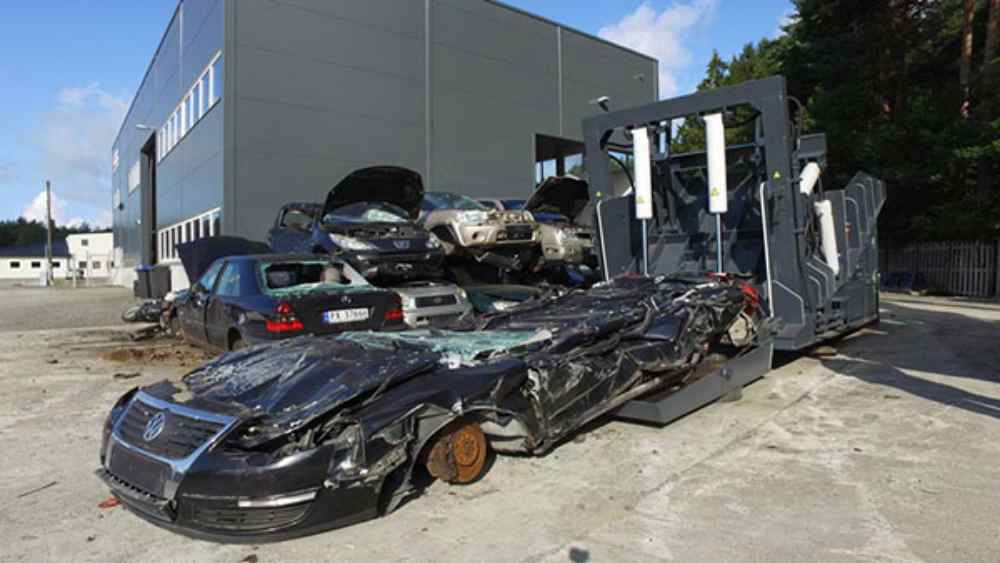
One of the most critical decisions in car body baler buying for heavy-duty auto recycling operations is choosing between a stationary and a mobile configuration. Stationary balers are ideal for yards with a consistent flow of material and a fixed layout. They are typically easier to maintain and can be powered by high-efficiency electric motors, which offer lower operating costs and quieter performance. However, they require a significant investment in foundation work and site preparation.
Mobile car body balers, mounted on multi-axle trailers, offer unparalleled flexibility. They allow recyclers to move the machine to the source of the scrap, such as temporary collection sites or smaller satellite yards. This can drastically reduce the cost of transporting uncrushed cars. Mobile units are almost exclusively powered by diesel engines (like Cummins or Perkins), which adds the cost of fuel and engine maintenance but provides the independence needed for field operations.
The choice of power source—Electric vs. Diesel—is often dictated by the facility’s infrastructure. Electric motors are preferred for indoor or urban environments due to zero emissions and lower noise levels. Diesel engines are the standard for heavy-duty, outdoor, and mobile applications where high-voltage power lines are unavailable. When selecting a diesel unit, ensure it meets the latest emission standards (Tier 4 Final or Stage V) to avoid future regulatory hurdles and to ensure better fuel economy.
Hidden Costs: Beyond the Sticker Price
When budgeting for a car body baler, the purchase price is only the beginning. Freight and logistics for these massive machines can be substantial. Since many heavy-duty balers are oversized loads, they require specialized transport permits, escort vehicles, and heavy-lift cranes for offloading and positioning. Depending on the distance from the manufacturer to your yard, shipping costs can range from $5,000 to over $20,000.
Installation and site preparation are often overlooked. For stationary units, a reinforced concrete pad is mandatory to handle the vibration and weight of the machine. This may involve soil testing, excavation, and the pouring of high-strength concrete with rebar reinforcement. Additionally, bringing adequate electrical power to the site or installing large fuel storage tanks for diesel units adds to the initial setup cost. Professional commissioning by the manufacturer’s technicians is also a necessary expense to ensure the warranty remains valid.
Operational “hidden” costs include the initial fill of hydraulic oil, which can be thousands of liters. For a heavy-duty machine, this alone can cost several thousand dollars. Furthermore, a stock of critical wear parts—such as cutting blades, hydraulic filters, and seal kits—should be purchased upfront to minimize downtime during the first year of operation. Training for operators and maintenance staff is another essential investment; an untrained operator can cause more damage to a $300,000 machine in one afternoon than years of normal wear and tear.
ROI Calculation: Measuring the Value of Your Investment
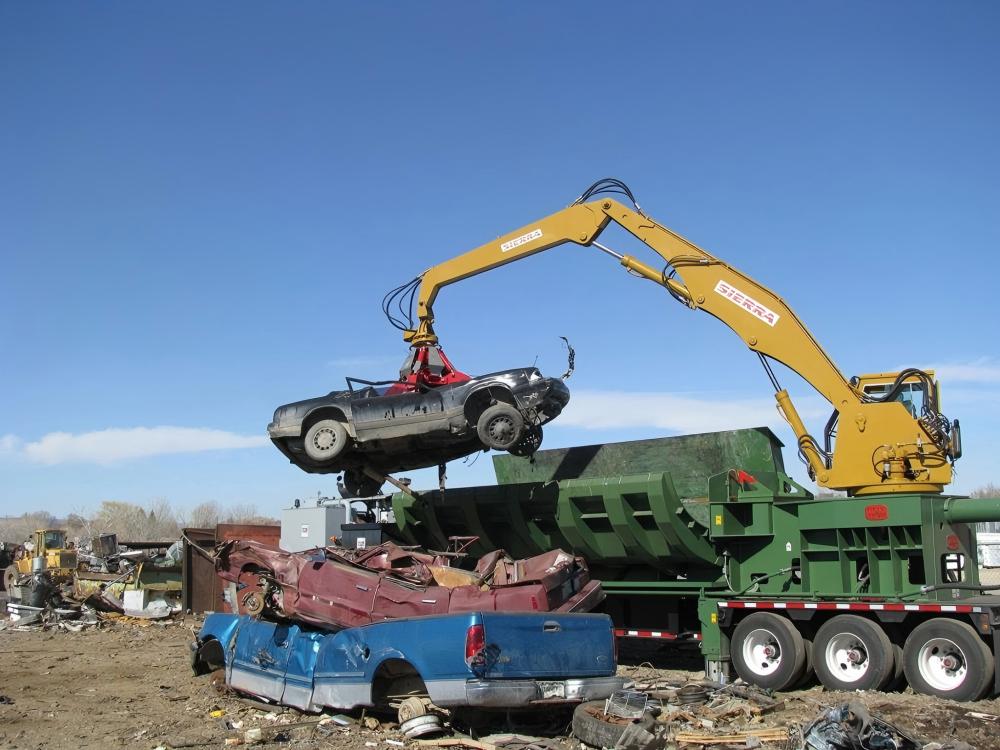
Calculating the Return on Investment (ROI) for a car body baler involves analyzing three main areas: transportation savings, labor efficiency, and scrap value premiums. The most immediate impact is seen in logistics. An uncrushed car takes up a massive amount of space on a trailer. By baling cars, you can increase the weight of a single truckload from 10 tons to 22-25 tons (depending on local weight limits). This effectively cuts your freight costs per ton in half.
Labor efficiency is another major factor. A high-speed, heavy-duty baler allows a single operator to process more tonnage in an eight-hour shift than a team of three using smaller, slower equipment. When calculating ROI, compare the hourly throughput of the new machine against your current labor costs. If the new baler allows you to process 20% more material with 30% less labor, the machine can often pay for itself within 18 to 24 months based on labor savings alone.
Finally, consider the scrap value. Steel mills prefer baled scrap because it is easier to handle, has a known density, and fits better in their furnaces. This often results in a price premium per ton compared to loose or flattened scrap. When you multiply this premium by the thousands of tons processed annually, the financial benefit becomes clear. A HARSLE car body baler is designed to produce the high-density bales that fetch top-tier prices in the global scrap market.
Buying Advice for Heavy-Duty Auto Recycling Operations
When you are ready to proceed with car body baler buying for heavy-duty auto recycling operations, start with a thorough audit of your current and projected volume. Buying a machine that is too small will lead to overworking the hydraulics and premature failure, while buying one that is too large results in wasted capital and higher-than-necessary operating costs. Aim for a machine that can handle 120% of your current peak volume to allow for future growth.
Evaluate the manufacturer’s after-sales support and parts availability. In the recycling industry, downtime is the enemy of profit. Ask the vendor for a list of wear parts that are kept in local stock and their guaranteed response time for technical service. It is often better to pay a slightly higher price for a machine from a company like HARSLE that offers robust support than to save money on a machine that will sit idle for weeks waiting for a specific hydraulic valve from overseas.
Technical specifications to prioritize include the cycle time (look for under 60 seconds for a full bale), the cooling system capacity (essential for heavy-duty operations in hot climates), and the ease of access for maintenance. A machine that requires four hours of disassembly just to change a filter is a liability. Look for designs with centralized lubrication points and easy-to-reach hydraulic manifolds. Finally, always request a live demonstration or a video of the machine processing the specific types of vehicles you handle most often.
Frequently Asked Questions (FAQ)
What is the average lifespan of a heavy-duty car body baler?
With proper maintenance, a high-quality car body baler from a reputable manufacturer like HARSLE can last 15 to 20 years. The frame and main structure are built for longevity, while wear parts like liners and blades are designed to be replaced every 2-5 years depending on volume. Regular hydraulic oil analysis and filter changes are the keys to reaching this lifespan.
Can a car body baler handle SUVs and light trucks?
Yes, heavy-duty car body balers are specifically designed with large charging boxes (often 5 to 6 meters in length) to accommodate SUVs, vans, and light trucks. However, it is important to ensure the engine and heavy transmissions are removed or the machine has sufficient shearing force to compress these denser components. Always check the maximum opening dimensions before purchasing.
Is a mobile baler less durable than a stationary one?
Not necessarily. While mobile balers must be built to withstand the stresses of road travel, the baling mechanism itself is often identical to stationary models. The main difference is the power source and the structural design of the trailer frame. As long as the mobile unit is leveled properly using its hydraulic outriggers during operation, it will offer similar durability to a stationary unit.
What kind of maintenance is required daily?
Daily maintenance for a car body baler includes checking hydraulic oil levels, inspecting hoses for leaks, greasing pivot points, and clearing debris from the baling chamber and under the rams. Operators should also check the condition of the cutting blades to ensure they are sharp, as dull blades increase the strain on the hydraulic system and reduce bale quality.
How does bale density affect my profit?
Bale density is crucial for two reasons: transport and melting efficiency. Higher density means you can reach the maximum weight limit of a shipping container or truck with fewer units, reducing freight costs. For the end-user (the mill), dense bales melt more consistently and with less oxidation loss, which is why they pay a premium for high-density material.
Do I need a special permit to operate a car body baler?
Operating the machine itself usually requires standard industrial safety certifications for the operator. However, the site may require environmental permits related to noise, fluid management (to prevent oil spills), and scrap storage. If you are using a diesel-powered unit, you must also comply with local air quality and emission regulations.