Aluminium Extrusion Press Capacity Guide: Choosing the Right Tonnage and Speed

Introduction to Aluminium Extrusion Press Capacity
In the world of metal fabrication, the aluminium extrusion press stands as a cornerstone of modern manufacturing. Whether you are producing intricate window frames, high-strength automotive components, or massive structural beams for the aerospace industry, understanding the Aluminium Extrusion Press Capacity : Choosing Tonnage Speed is critical to your operational success. The capacity of a press is not just a single number; it is a complex interplay between hydraulic force, billet dimensions, alloy characteristics, and the desired output speed. Choosing the wrong tonnage can lead to under-filled profiles or catastrophic machine failure, while incorrect speed settings can ruin the metallurgical properties of the aluminium.
HARSLE, a leader in industrial machinery, recognizes that investing in an extrusion line is a multi-decade commitment. This guide is designed to navigate the technical nuances of tonnage selection and speed optimization. We will explore how these factors influence the quality of the final product and the overall efficiency of your production line. By the end of this article, you will have a comprehensive framework for evaluating your specific needs against the technical capabilities of modern extrusion presses.
Price Range Overview: Investing in Tonnage
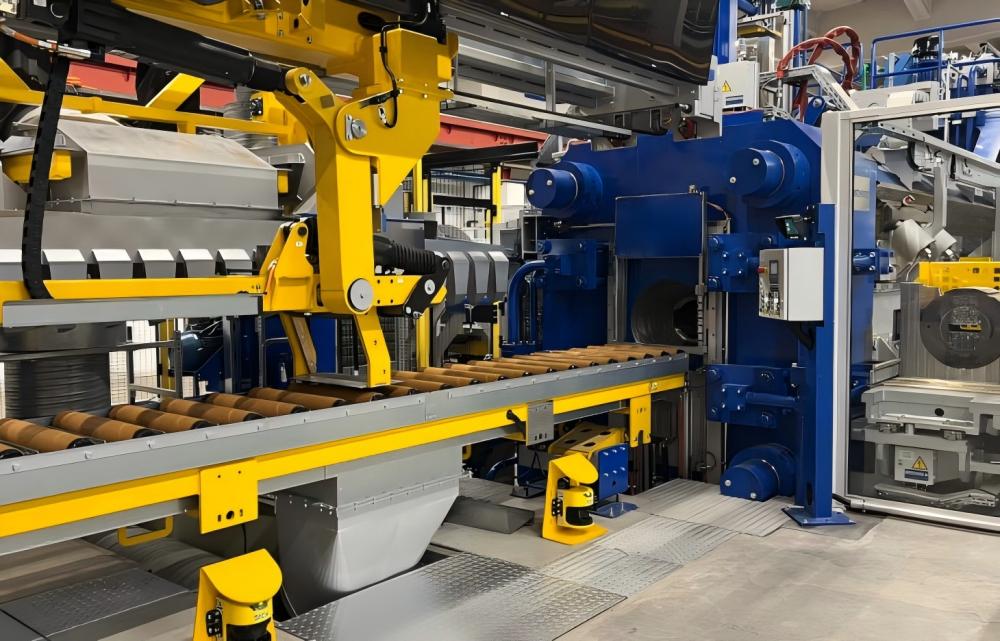
The price of an aluminium extrusion press is primarily dictated by its tonnage capacity. Tonnage refers to the maximum force the main hydraulic cylinder can exert on the billet to push it through the die. Generally, the market is divided into three main categories: small-scale, medium-scale, and heavy-duty industrial presses. For small-scale operations focusing on light profiles (like LED strips or small furniture trim), a press in the 600T to 800T range is common. These units typically range from $150,000 to $350,000, depending on the level of automation and the quality of the hydraulic components.
Medium-scale presses, ranging from 1,000T to 2,500T, are the workhorses of the industry. They are used for architectural profiles, automotive parts, and standard industrial shapes. A 1,450T press, for example, is a popular choice for its versatility. Prices for these machines usually fall between $400,000 and $1,200,000. At this level, the cost includes more sophisticated control systems and faster dead-cycle times, which are essential for high-volume production. The investment here is significant, but the range of products you can manufacture increases exponentially.
Heavy-duty presses exceeding 3,000T and reaching up to 10,000T or more are specialized machines for the transport, rail, and aerospace sectors. These presses can handle large billets and produce wide, thick-walled profiles. The price for such equipment starts at $2 million and can exceed $10 million for fully integrated lines. When considering the Aluminium Extrusion Press Capacity : Choosing Tonnage Speed, it is vital to remember that the initial purchase price is only one part of the equation; the operational costs and the value of the output must justify the capital expenditure.
Main Cost Drivers in Extrusion Machinery
Several technical factors drive the cost of an extrusion press beyond just the raw steel used in its construction. The hydraulic system is perhaps the most significant driver. High-end presses utilize variable displacement pumps from reputable brands like Rexroth or Vickers. These pumps allow for precise control over the extrusion speed and pressure, which is vital for maintaining profile consistency. A cheaper hydraulic system might save money upfront but will lead to higher energy consumption and more frequent maintenance issues over time.
The control system and PLC (Programmable Logic Controller) also play a major role. Modern HARSLE presses feature advanced HMI (Human Machine Interface) systems that allow operators to monitor every aspect of the extrusion cycle in real-time. Features like isothermal extrusion control—where the press automatically adjusts speed to maintain a constant temperature at the die—require sophisticated sensors and software, adding to the cost. However, these features significantly reduce scrap rates and improve the surface finish of the aluminium.
Furthermore, the heating system for the billets and the container is a major cost factor. Induction heating is faster and more precise than gas heating but comes with a higher price tag and higher electrical requirements. The container itself, which must withstand immense pressure and heat, is a precision-engineered component. High-quality containers with multi-zone heating elements ensure that the billet remains at the optimal temperature throughout the stroke, preventing defects like “orange peel” or internal cracking.
Configuration Impact: Speed and Efficiency
When discussing Aluminium Extrusion Press Capacity : Choosing Tonnage Speed, the “speed” aspect is often misunderstood. There are two types of speed to consider: the ram speed (how fast the press moves) and the extrusion speed (how fast the profile exits the die). The extrusion speed is limited by the alloy’s properties and the complexity of the die. For instance, soft alloys like 6063 can be extruded at much higher speeds (up to 80 meters per minute) compared to hard alloys like 7075, which might be limited to 1 or 2 meters per minute.
The configuration of the press—whether it is a direct or indirect extrusion design—impacts these speeds. Direct extrusion is the most common, where the ram pushes the billet through a stationary die. Indirect extrusion involves the die moving toward the billet, which reduces friction and allows for higher speeds and more uniform deformation. While indirect presses are more expensive and complex to maintain, they are often the choice for high-strength alloys where temperature control is critical.
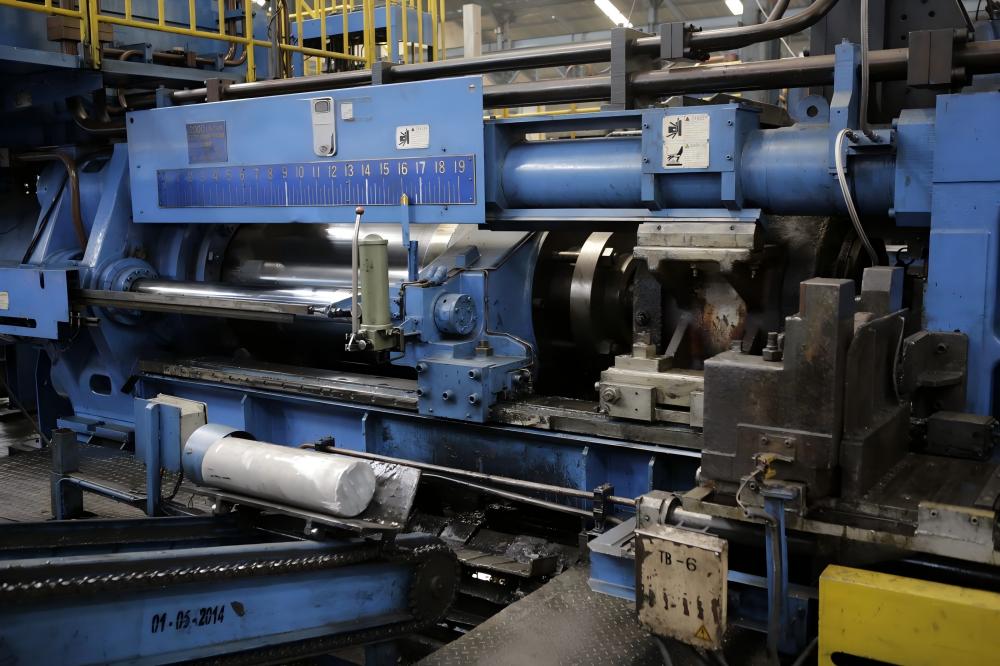
Automation levels also impact the effective speed of the production line. A press with a fast “dead cycle time” (the time between the end of one extrusion stroke and the start of the next) can significantly increase daily output. Automated billet loading, butt-end shearing, and die-changing systems minimize downtime. If your business model relies on high-volume, low-margin products, investing in a configuration that prioritizes cycle speed is essential for profitability.
Hidden Costs of Operating an Extrusion Press
Beyond the sticker price, several hidden costs can impact the total cost of ownership. The first is the foundation and installation. An extrusion press is a massive piece of equipment that requires a specially engineered reinforced concrete foundation, often with deep pits for hydraulic tanks and scrap conveyors. The cost of site preparation can easily reach 10-15% of the machine’s price. Additionally, the electrical infrastructure must be capable of handling the high peak loads required during the start of the extrusion stroke.
Maintenance and consumables are another ongoing expense. The extrusion stem, container liners, and dies are subject to extreme wear and must be replaced or refurbished regularly. Hydraulic oil is another significant cost; a medium-sized press can hold thousands of liters of specialized fire-resistant hydraulic fluid, which must be filtered and tested periodically. Neglecting these maintenance tasks will lead to a drop in pressure efficiency and a decrease in the quality of the extruded profiles.
Energy consumption is perhaps the most significant hidden cost. Extrusion is an energy-intensive process. Modern presses utilize servo-motor driven pumps that only consume power when the machine is moving, potentially saving up to 30% in energy costs compared to traditional constant-speed motors. When evaluating Aluminium Extrusion Press Capacity : Choosing Tonnage Speed, always calculate the kilowatt-hour per ton of extruded aluminium to understand the long-term impact on your utility bills.
ROI Calculation: When Does the Investment Pay Off?
Calculating the Return on Investment (ROI) for an aluminium extrusion press requires a detailed analysis of production capacity and market demand. The primary formula involves the total cost of the machine (including installation and training) divided by the annual net profit generated by the profiles produced. To maximize ROI, the press must be matched correctly to the product mix. If you buy a 2,500T press but only produce small 6063 profiles, your energy costs and cycle times will be inefficient, dragging down your ROI.
Consider the scrap rate as a key variable in your ROI. High-quality HARSLE presses with precise speed control reduce the amount of “butt end” scrap and improve the yield per billet. Even a 2% improvement in yield can result in tens of thousands of dollars in savings over a year. Furthermore, the ability to produce complex, high-value profiles (like multi-hollow heat sinks) allows for higher profit margins compared to standard commodity shapes. A versatile press that can handle a range of tonnages and speeds allows you to pivot your production based on market trends, securing a faster ROI.
Buying Advice: Matching Tonnage to Your Needs
Choosing the right tonnage is a matter of physics. The required pressure is determined by the cross-sectional area of the billet and the extrusion ratio (the ratio of the billet’s cross-section to the profile’s cross-section). As a general rule of thumb, for standard 6000-series alloys, you need a specific pressure of about 25 to 35 kg/mm² on the billet. If you plan to extrude harder 2000 or 7000-series alloys, this requirement can double. Always choose a press with about 15-20% more tonnage than your theoretical maximum to avoid running the hydraulic system at its limit, which extends the life of the pumps and seals.
Speed should be chosen based on the cooling requirements of your profiles. If you are producing architectural sections that require T5 or T6 tempering, the exit speed must be synchronized with your quench system (air or water). A press that offers “constant speed” and “constant pressure” modes provides the flexibility needed for different metallurgical requirements. HARSLE recommends consulting with a die designer during the purchase process, as the die’s complexity will ultimately dictate the maximum speed the press can achieve without causing surface defects.
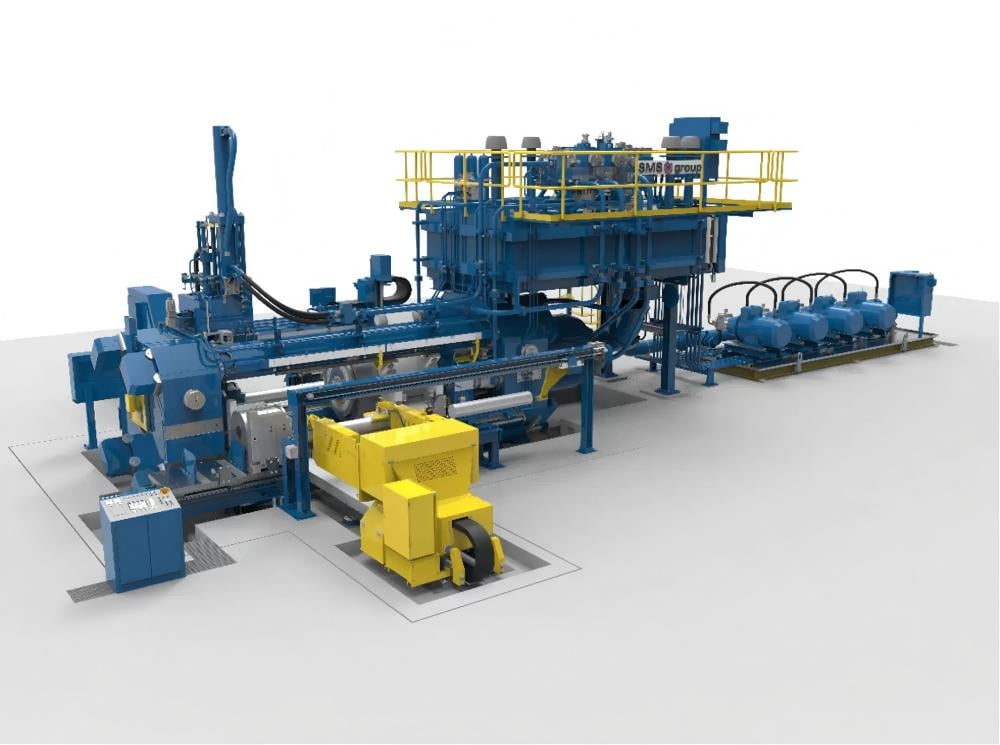
Technical Checklist for Buyers
- Billet Diameter: Ensure the container size matches your standard billet supply.
- Stroke Length: Longer strokes allow for longer billets, increasing efficiency but requiring more floor space.
- Hydraulic Response: Look for systems with fast-acting valves to minimize dead cycle time.
- Cooling System: High-speed extrusion generates significant heat; ensure the press has an adequate oil cooling system.
- After-Sales Support: Choose a manufacturer like HARSLE that provides comprehensive training and readily available spare parts.
Frequently Asked Questions (FAQ)
1. How do I know if I need a 1000T or a 1450T press?
The decision depends on the maximum circumscribing circle of your profiles and the alloys you use. A 1000T press is usually limited to a 5-inch billet, while a 1450T can handle a 6-inch or 7-inch billet. If your profiles are wider than 150mm or require high-strength alloys, the 1450T is the safer and more versatile choice.
2. Can I increase the speed of my existing extrusion press?
Speed can sometimes be increased by upgrading the hydraulic pumps to high-flow models or by optimizing the PLC software to reduce dead cycle times. However, the ultimate limit is often the cooling capacity of the die and the quench system. Without proper cooling, increasing speed will lead to poor mechanical properties in the aluminium.
3. What is the difference between ram speed and extrusion speed?
Ram speed is the velocity at which the hydraulic cylinder moves forward. Extrusion speed is the velocity at which the aluminium profile emerges from the die. Because the profile is much thinner than the billet, the extrusion speed is much higher than the ram speed, often by a factor of 40 to 100 times.
4. Why is temperature control so important in choosing speed?
Aluminium extrusion is a thermal process. If the speed is too high, friction will raise the temperature of the metal beyond its melting point, causing “speed cracks.” If it is too slow, the metal may cool too much to be properly quenched. Modern presses use isothermal extrusion to balance speed and temperature automatically.
5. How often should the hydraulic oil be changed?
Rather than a fixed schedule, oil should be changed based on laboratory analysis. However, in a typical high-production environment, filters should be checked monthly, and a full oil analysis should be conducted every six months. Keeping the oil clean is the single best way to protect your investment in a high-capacity press.
6. Does HARSLE provide custom tonnage configurations?
Yes, HARSLE specializes in tailoring press specifications to meet specific client needs. Whether you need a specific container size, a specialized loading system, or integrated downstream equipment like pullers and cooling tables, we can configure a solution that optimizes your Aluminium Extrusion Press Capacity : Choosing Tonnage Speed requirements.