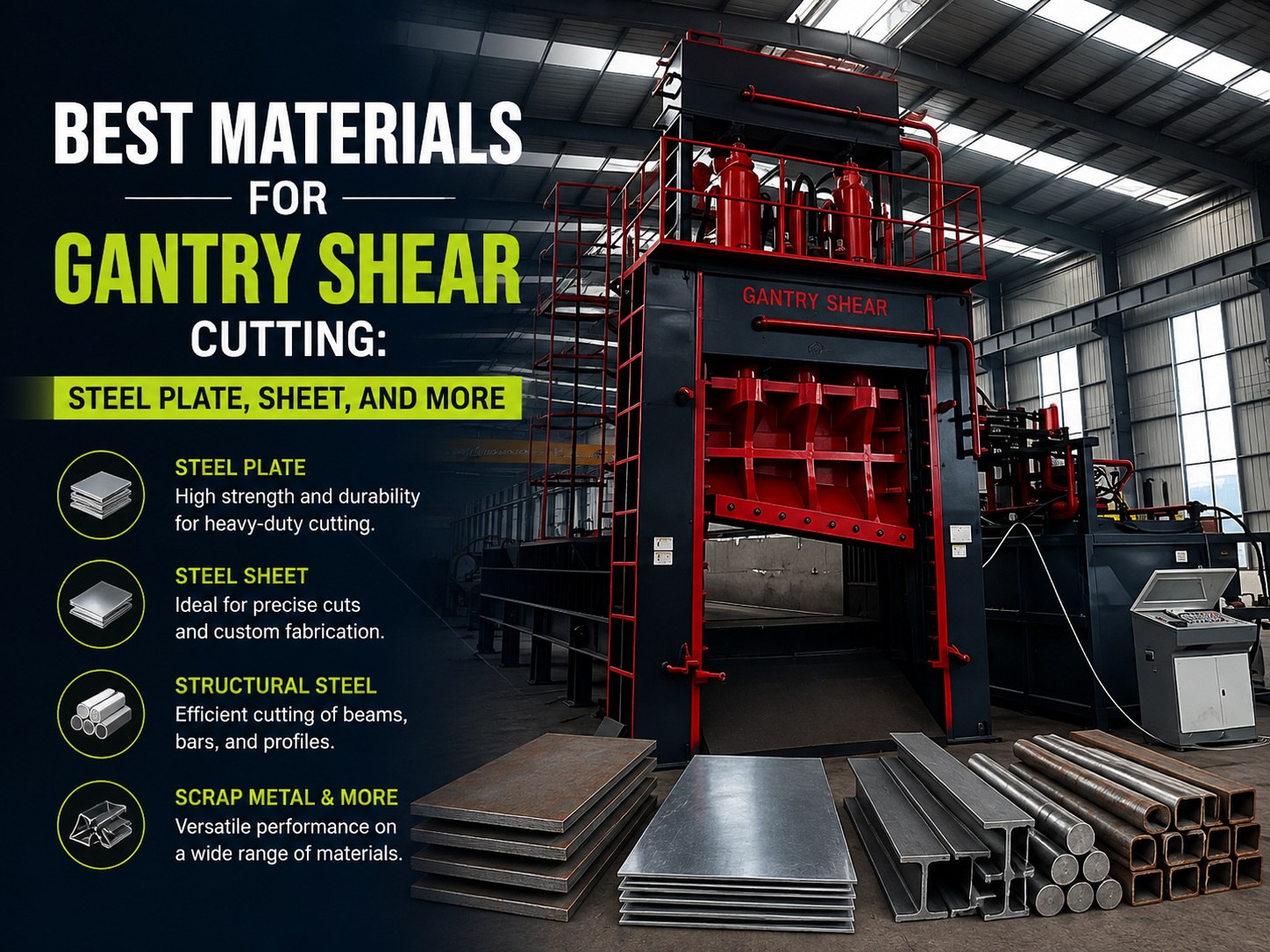
Best Materials for Gantry Shear Cutting: Steel Plate, Sheet, and More

Technical Overview of Gantry Shear Cutting
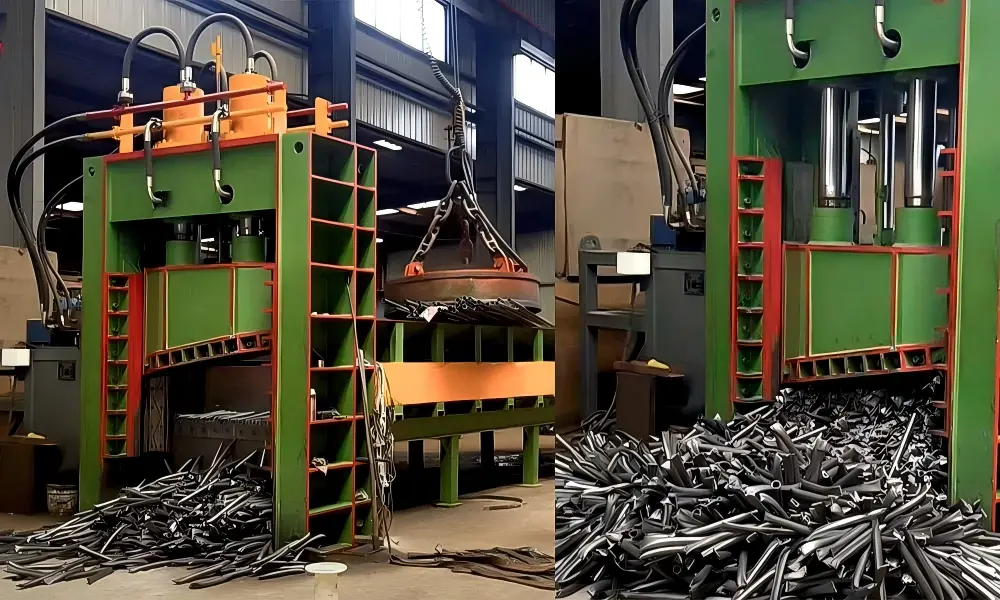
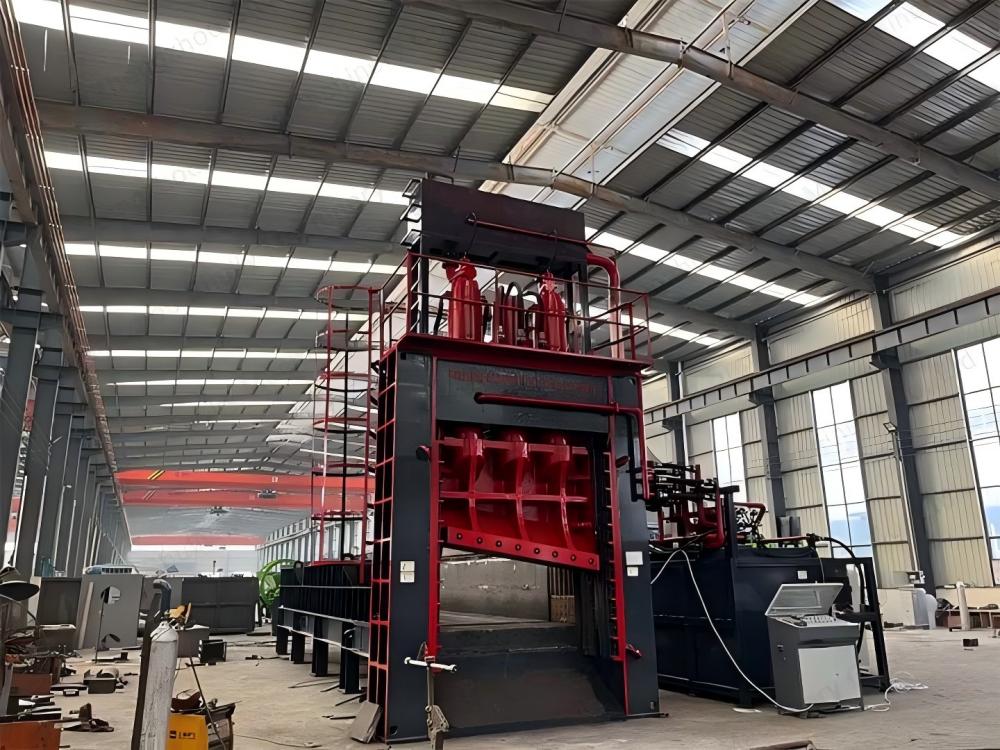
Gantry shears represent the pinnacle of heavy-duty metal processing technology. Unlike standard guillotine shears used for thin sheet metal, gantry shears are engineered to handle massive volumes of scrap, thick steel plates, and structural profiles. At HARSLE, we design these machines to provide immense hydraulic force, often ranging from 400 to over 2000 tons, allowing them to slice through dense metallic structures with precision and efficiency. The technical foundation of a gantry shear lies in its robust frame, high-pressure hydraulic system, and the specialized alloy blades that must withstand extreme compressive and shear stresses.
The process of gantry shear cutting involves a vertical downward movement of the upper blade against a fixed lower blade. The material is typically fed into the machine via a conveyor or a charging box, where it is compressed by a hold-down cylinder before the cutting stroke begins. This compression is vital because it prevents the material from shifting or ‘kicking back’ during the shear, which could damage the blades or the hydraulic seals. Understanding the Best Materials Gantry Shear Cutting: Steel Plate, Sheet, More requires a deep dive into the metallurgical properties of the workpieces and how they interact with the machine’s mechanical limits.
Material hardness, tensile strength, and ductility are the primary factors determining the success of a shear operation. For instance, low-carbon steel is the most common material processed because its ductility allows for a clean break after the initial penetration of the blade. Conversely, high-alloy steels or hardened materials require significantly more force and can cause accelerated wear on the blade edges. In this guide, we will explore the specific materials that are best suited for gantry shears and how to optimize your machine settings for each.
The Role of Hydraulic Force in Material Selection
The hydraulic system of a gantry shear is its heart. When selecting materials for cutting, one must consider the ‘shearability’ of the metal. This is not just about thickness; it is about the energy required to initiate a fracture. Gantry shears utilize large-bore cylinders to generate the necessary tonnage. If the material is too hard, the system may reach its relief valve pressure before the cut is completed, leading to incomplete shears and potential hydraulic overheating. Therefore, matching the material grade to the machine’s rated capacity is the first step in industrial efficiency.
Core Parameters for Gantry Shear Operations
To achieve the best results when cutting steel plates, sheets, and other materials, operators must understand the core parameters that govern the machine’s performance. These parameters include the shear force, blade length, cutting angle, and the stroke frequency. Each of these must be adjusted or considered based on the material being processed. For example, cutting a 50mm thick mild steel plate requires a different approach than cutting a bundle of mixed light scrap.
Shear Force: This is the total pressure exerted by the hydraulic cylinders. It is usually measured in kilonewtons (kN) or tons. The required force is directly proportional to the cross-sectional area of the material and its shear strength. Blade Gap: The distance between the upper and lower blades is critical. For thinner sheets, a tight gap is necessary to prevent ‘burring’ or folding. For thick plates, a wider gap is required to allow the material to fracture naturally without wedging the blades.
Cutting Angle: Most gantry shears feature a slight rake angle on the upper blade. This reduces the instantaneous force required because the blade slices through the material gradually rather than hitting the entire width at once. However, a higher rake angle can cause more distortion in the cut piece. Stroke Speed: While faster strokes increase productivity, they can also lead to higher impact loads. For very hard materials, a slower, more controlled stroke is often preferred to preserve blade integrity.
Material-Specific Considerations
- Mild Steel (A36/Q235): The ideal material for gantry shears. It has predictable shear strength and does not excessively wear the blades.
- Stainless Steel (304/316): Requires roughly 50% more force than mild steel. It also work-hardens, meaning the machine must complete the cut in one smooth motion to avoid stalling.
- Aluminum Alloys: While soft, aluminum can ‘gall’ or stick to the blades. Proper lubrication and specific blade clearances are necessary.
- Rebar and Structural Steel: These often come in bundles. The gantry shear must have a powerful hold-down mechanism to prevent the bundle from splaying during the cut.
Calculation Method for Shear Force
Calculating the required shear force is essential for preventing machine overload and ensuring the safety of the operation. The standard formula used in the industry for flat plate shearing is based on the material’s ultimate tensile strength and the geometry of the cut. While gantry shears often handle irregular shapes, the plate formula provides a reliable baseline for capacity planning.
The fundamental formula is: F = 0.6 × σb × L × S
Where:
- F is the required shear force (in Newtons).
- σb is the ultimate tensile strength of the material (in MPa or N/mm²).
- L is the length of the cut (in mm).
- S is the thickness of the material (in mm).
- The constant 0.6 represents the ratio of shear strength to tensile strength for most common steels.
For example, if you are cutting a mild steel plate (tensile strength of 400 MPa) that is 1000mm wide and 20mm thick, the calculation would be: 0.6 × 400 × 1000 × 20 = 4,800,000 Newtons, or approximately 480 tons. If your gantry shear is rated for 500 tons, this material is within a safe operating margin. However, if you switch to stainless steel with a tensile strength of 600 MPa, the required force jumps to 720 tons, which would exceed the machine’s capacity.
Adjusting for Rake Angle
If the gantry shear has a significant rake angle (θ), the formula is modified to account for the fact that only a portion of the material is being cut at any given moment. The formula becomes: F = 0.5 × σb × S² / tan(θ). This demonstrates that increasing the rake angle significantly reduces the required force, which is why gantry shears can cut much thicker materials than their tonnage might suggest if they were using a flat blade approach.
Parameter Table for Common Materials
The following table provides a reference for the estimated force required to cut various materials at different thicknesses using a standard gantry shear with a 1000mm blade width. These values are approximations and should be used as a general guide.
| Material Type | Thickness (mm) | Tensile Strength (MPa) | Estimated Force (Tons) | Recommended Blade Gap |
|---|---|---|---|---|
| Mild Steel (Q235) | 10 | 370-500 | 250 | 0.05 – 0.08mm |
| Mild Steel (Q235) | 25 | 370-500 | 600 | 0.10 – 0.15mm |
| Hardened Steel (Q345) | 20 | 470-630 | 650 | 0.12 – 0.18mm |
| Stainless Steel (304) | 15 | 515-700 | 550 | 0.04 – 0.06mm |
| Aluminum (6061) | 30 | 200-310 | 300 | 0.15 – 0.20mm |
| Scrap Rebar (Bundle) | 50 (Effective) | 550 | 800+ | 0.20mm+ |
Common Engineering Mistakes in Gantry Shear Cutting
Even with the best materials, engineering mistakes can lead to downtime, blade damage, or poor cut quality. One of the most frequent errors is incorrect blade gap adjustment. Operators often forget to change the gap when switching from thick scrap to thin sheet metal. If the gap is too wide for thin material, the metal will simply bend and wedge between the blades, causing a massive spike in hydraulic pressure and potentially cracking the blade seats. Conversely, a gap that is too tight for thick material causes excessive friction and heat, leading to premature blade dulling.
Another common mistake is ignoring material cleanliness. Gantry shears used in scrap yards often process materials covered in dirt, sand, or concrete (in the case of rebar). These contaminants are highly abrasive. Failing to clean the material or failing to increase the frequency of blade sharpening when processing ‘dirty’ scrap will result in the machine working harder than necessary, consuming more electricity and wearing out hydraulic seals due to the increased vibration.
Overloading the machine is a critical failure point. It is tempting to try and shear a piece that is slightly over the rated capacity by ‘cycling’ the hydraulics. This creates fatigue in the gantry frame. Over time, these micro-stresses can lead to structural cracks in the weldments. Always respect the tonnage limits of your HARSLE equipment. If a piece is too thick, it should be pre-cut with a torch or processed on a larger machine.
Inadequate Lubrication and Cooling
The friction generated during the shearing of thick steel plates is immense. Many operators neglect the lubrication of the slide guides (the ways) and the blades themselves. Without proper lubrication, the heat can cause the metal to expand, changing the tolerances and leading to a ‘stuck’ blade. Furthermore, in high-volume operations, the hydraulic oil can overheat. Ensuring that the cooling system is functional and the oil viscosity is appropriate for the operating temperature is vital for maintaining consistent shear force.
Selection Checklist for Gantry Shear Materials
When preparing to process materials with a gantry shear, use this checklist to ensure optimal performance and machine longevity:
- Material Identification: Do you know the grade of the steel? Is it high-carbon, stainless, or mild steel?
- Thickness Verification: Use calipers to measure the thickest part of the material. Does it fall within the machine’s rated capacity for that specific material grade?
- Blade Condition: Inspect the blades for chips or rounding. Dull blades require up to 30% more force to cut the same material.
- Gap Setting: Is the blade gap adjusted correctly for the current material thickness? (Rule of thumb: 5-10% of material thickness).
- Hold-Down Pressure: Is the clamp or hold-down cylinder set to a pressure that will prevent material movement?
- Contaminant Check: Is the material free of large amounts of non-metallic debris that could damage the blade edge?
- Hydraulic Status: Is the hydraulic oil at the correct level and temperature? Are there any visible leaks in the main cylinders?
Frequently Asked Questions (FAQ)
1. What is the maximum thickness a gantry shear can cut?
The maximum thickness depends entirely on the machine’s tonnage and the material’s shear strength. A 1000-ton HARSLE gantry shear can typically cut mild steel plates up to 60-80mm thick, or bundles of scrap with a similar effective cross-section. Always refer to your specific model’s capacity chart.
2. Can I cut stainless steel on a standard gantry shear?
Yes, but you must account for its higher tensile strength. Stainless steel is much tougher than mild steel. You should reduce the maximum thickness capacity by approximately 30-40% compared to mild steel to avoid overloading the hydraulic system.
3. How often should gantry shear blades be sharpened?
This depends on the material being cut. If you are cutting clean mild steel, blades can last for hundreds of hours. If you are processing abrasive scrap or high-alloy steels, you may need to rotate or sharpen the blades every 40-80 hours of operation. Signs of dullness include increased noise, ragged cut edges, and higher hydraulic pressure readings.
4. Why is my gantry shear making a loud ‘banging’ noise during the cut?
A loud bang is often the sound of the material fracturing. While some noise is normal, an excessively loud bang can indicate that the blade gap is too wide, causing the material to snap violently rather than being sheared cleanly. It could also indicate that the hold-down pressure is insufficient, allowing the material to jump during the stroke.
5. Can gantry shears cut non-metallic materials?
Gantry shears are specifically designed for metal. Cutting materials like wood, plastic, or rubber is not recommended as they do not ‘fracture’ like metal, which can lead to the material getting jammed in the blade gap and causing significant damage to the machine’s alignment.
6. How does temperature affect gantry shear cutting?
In extremely cold environments, steel becomes more brittle, which can actually make it easier to shear but increases the risk of ‘flying’ chips. In very hot environments, the primary concern is the thinning of hydraulic oil, which can reduce the effective shear force and lead to pump wear. Always allow the machine to reach a stable operating temperature before beginning heavy cuts.