
How to Optimize Aluminium Extrusion Press Performance with Regular Servicing

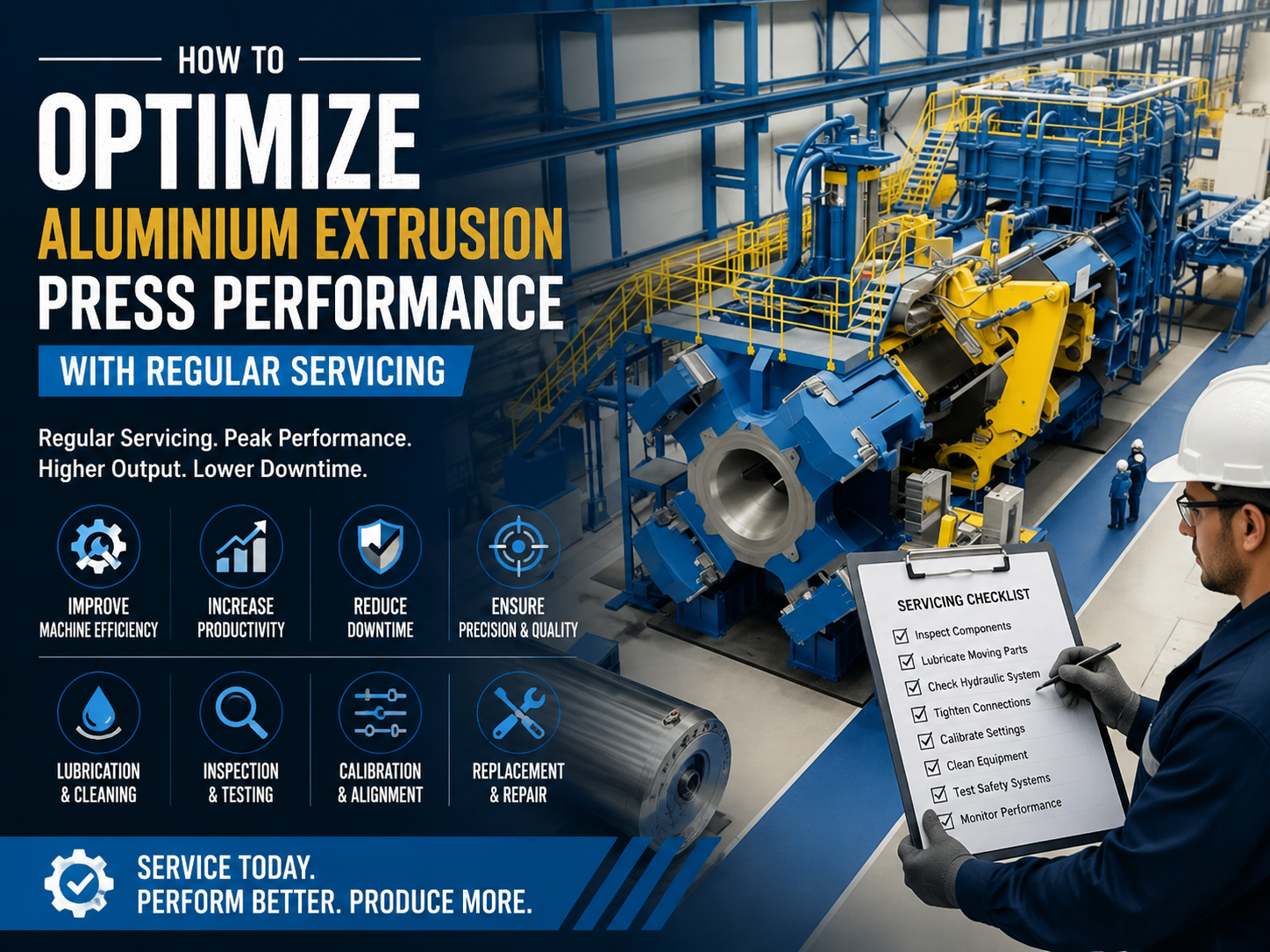
The Critical Role of Maintenance in Aluminium Extrusion
In the high-stakes world of metal fabrication, the aluminium extrusion press stands as a cornerstone of production. To optimize aluminium extrusion press performance with regular servicing is not merely a recommendation; it is a fundamental requirement for any facility aiming for high-quality output and operational longevity. An extrusion press is a complex symphony of hydraulic power, precision mechanical alignment, and sophisticated electronic control. When one component falters, the entire production line suffers, leading to costly downtime and inferior product quality.
The primary goal of a robust maintenance program is to transition from reactive repairs to proactive optimization. Reactive maintenance—fixing things only when they break—is the most expensive way to run a factory. It results in unplanned outages, rushed shipping for spare parts, and potential safety hazards. Conversely, a structured servicing plan ensures that the press operates within its designed parameters, maintaining the tight tolerances required for complex aluminium profiles used in aerospace, automotive, and construction industries.
Furthermore, regular servicing directly impacts the bottom line by extending the lifespan of the equipment. An aluminium extrusion press is a significant capital investment. By meticulously managing wear and tear on components like the main cylinder, container, and tie rods, manufacturers can delay the need for multi-million dollar replacements. This guide explores the multi-faceted approach required to keep these industrial giants running at peak efficiency.
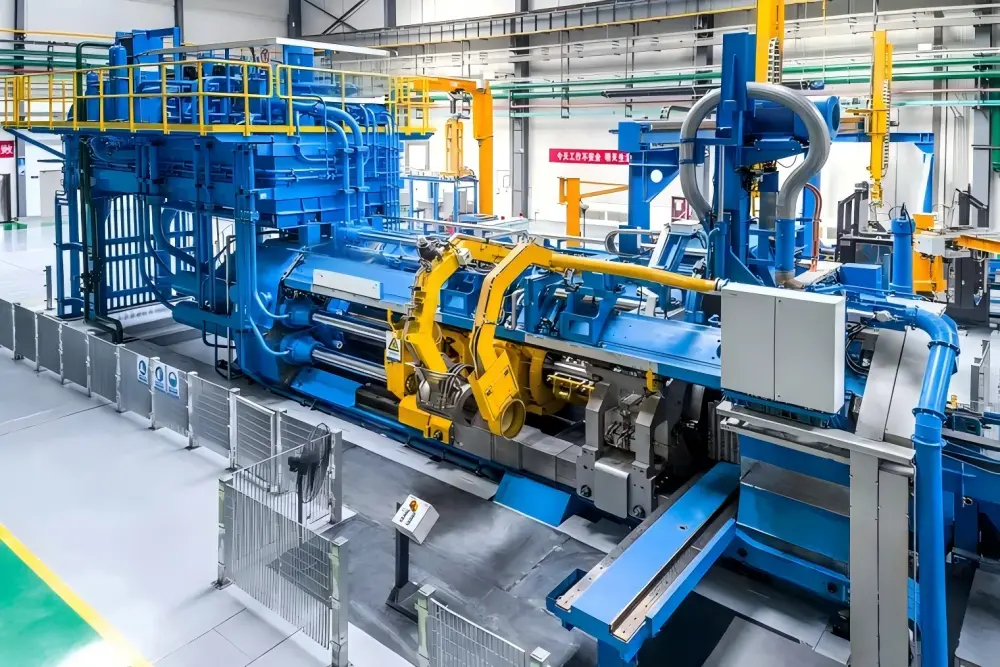
The Importance of Regular Servicing for Performance Optimization
To truly optimize aluminium extrusion press performance with regular servicing, one must understand the relationship between machine health and product integrity. Aluminium extrusion involves forcing a heated billet through a die at immense pressure. Any deviation in pressure, temperature, or alignment results in defects such as surface tearing, dimensional inaccuracies, or structural weaknesses in the profile. Regular servicing ensures that the hydraulic system delivers consistent force and the heating elements maintain the precise billet-to-container temperature gradient.
Efficiency is another key driver. A well-maintained press consumes less energy. When hydraulic pumps are calibrated and filters are clean, the system doesn’t have to work as hard to achieve the required extrusion speed. This reduces electricity costs and minimizes the thermal stress on the hydraulic oil, which in turn prevents the premature degradation of seals and valves. In an era where energy efficiency is a competitive advantage, maintenance is a strategic tool.
Safety cannot be overlooked. Extrusion presses operate under thousands of tons of pressure. A failure in a tie rod or a high-pressure hydraulic line can be catastrophic. Regular non-destructive testing (NDT) and visual inspections are essential to identify fatigue cracks or structural weaknesses before they lead to a dangerous failure. A safe work environment is a productive one, and a well-serviced machine is the foundation of that safety.
Daily Inspection: The First Line of Defense
The daily inspection routine is the most effective way to catch minor issues before they escalate into major breakdowns. Operators should be trained to use their senses—sight, sound, and smell—to evaluate the machine’s condition at the start of every shift. A simple walk-around can reveal oil leaks, loose bolts, or unusual debris near the die slide or shear area.
Key daily checks include monitoring the hydraulic oil level and temperature. If the oil is too hot, it may indicate a failure in the cooling system or internal leakage in a pump. Operators should also check the pressure gauges during a cycle to ensure they match the programmed setpoints. Any fluctuation or “hunting” in pressure signals a potential issue with the proportional valves or the pump control system.
Listening to the machine is equally important. Experienced operators can often hear the high-pitched whine of pump cavitation or the rhythmic thumping of a loose mechanical component. Early detection of these sounds allows maintenance teams to schedule a brief intervention during a shift change, rather than facing an 8-hour emergency repair later in the week. Finally, ensuring the workspace is clean prevents contaminants from entering the hydraulic system or interfering with sensitive sensors.
Hydraulic System Maintenance: The Heart of the Press
The hydraulic system is the lifeblood of the extrusion press. To optimize aluminium extrusion press performance with regular servicing, the hydraulic fluid must be kept in pristine condition. Contamination is the leading cause of hydraulic failure. Microscopic particles of metal, dust, or water can erode valve seats, score cylinder walls, and destroy expensive pumps. Regular oil analysis is mandatory to monitor the particle count and chemical composition of the fluid.
Filter replacement should follow a strict schedule, or better yet, be based on differential pressure indicators. High-quality synthetic fluids are often preferred for their stability at high temperatures, but they require careful monitoring. If the oil begins to oxidize, it forms varnish—a sticky residue that can cause valves to stick or respond sluggishly, leading to inconsistent extrusion speeds.
Beyond the fluid, the pumps and valves require specific attention. Variable displacement pumps should be checked for volumetric efficiency. Proportional and servo valves, which control the precise movement of the ram, must be calibrated periodically. Even a slight delay in valve response can lead to “pressure spikes” that stress the entire mechanical structure of the press. Accumulators, which store energy for rapid movements, must have their nitrogen pre-charge levels checked monthly to ensure they provide the necessary damping and power boost.
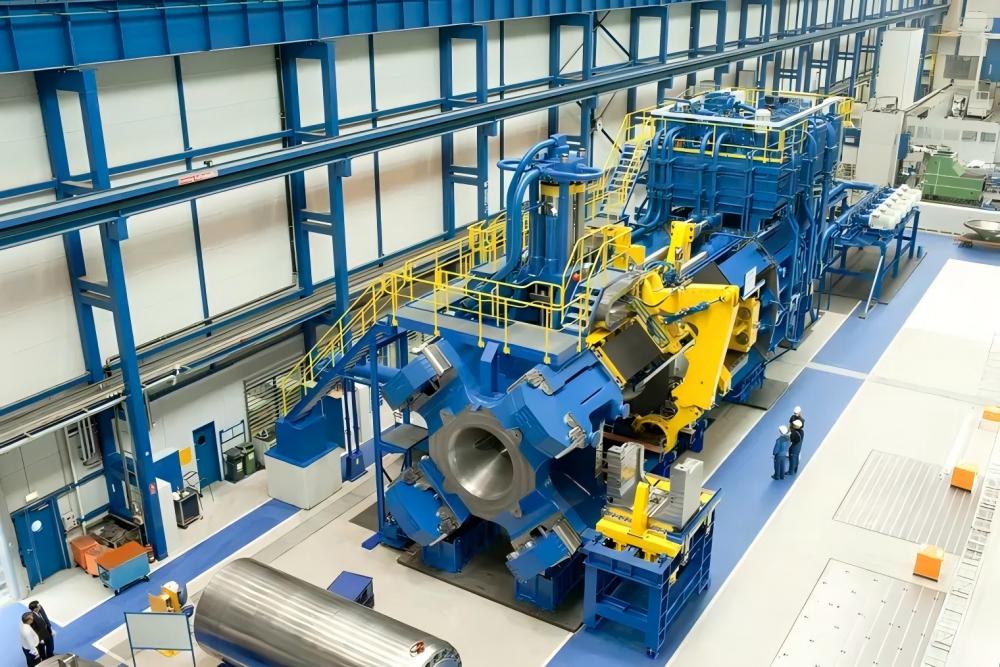
Electrical and Control System Calibration
Modern aluminium extrusion presses are driven by sophisticated PLC (Programmable Logic Controller) systems and HMI (Human Machine Interface) software. These systems manage everything from billet loading to the cooling table speed. Electrical maintenance involves more than just checking for loose wires; it requires ensuring that the “brain” of the machine is receiving accurate data from the field.
Sensors and transducers are the eyes and ears of the press. Linear transducers that measure ram position must be calibrated to ensure the press stops and starts at the exact millimeter required. Thermocouples in the container and die heater must be accurate to within a few degrees; otherwise, the aluminium will not flow correctly, leading to surface defects. Regular testing of these sensors prevents “ghost errors” that can halt production for no apparent reason.
The control cabinet itself requires a clean, cool environment. Dust buildup on circuit boards can cause overheating or short circuits. Maintenance teams should ensure that cabinet fans and air conditioners are functioning and that filters are replaced. Furthermore, keeping software backups and documenting any changes to the PLC logic is vital for rapid recovery in the event of a controller failure. In the age of Industry 4.0, ensuring the data integrity of the press is just as important as the mechanical integrity.
Mechanical Integrity and Alignment
The mechanical structure of an extrusion press must withstand immense cyclic loading. The alignment between the main ram, the container, and the die is critical. If the ram is slightly off-center, it will apply uneven pressure to the dummy block, leading to premature wear of the container liner and potential damage to the stem. Regular alignment checks using laser tools are recommended to ensure the centerlines of all major components are perfectly coincident.
Tie rods are the massive bolts that hold the press together. Over time, the constant stretching and relaxing can lead to fatigue. Ultrasonic testing of the tie rod nuts and the threaded areas is a standard part of a deep-service routine. If a tie rod fails, the results are catastrophic. Similarly, the platen and the die slide must be checked for flatness and wear. Any “play” in the die slide can cause the die to shift under pressure, resulting in profiles that are out of tolerance.
The container heating system also falls under mechanical/electrical crossover. The container must be heated evenly to prevent thermal distortion. If the heating elements are failing on one side, the container will expand unevenly, causing alignment issues and affecting the flow of the aluminium billet. Checking the integrity of the heating zones and the insulation blankets is essential for thermal stability.
Comprehensive Lubrication Plan
Lubrication is the simplest yet most frequently neglected aspect of press maintenance. To optimize aluminium extrusion press performance with regular servicing, a comprehensive lubrication plan must be implemented. This isn’t just about the hydraulic oil; it involves the grease and specialized lubricants used on guide rails, die slides, and pivot points.
High-temperature environments require specialized lubricants. For example, the area around the die and container operates at temperatures exceeding 400°C. Standard grease will simply melt and run off, leaving the metal surfaces to grind against each other. Molybdenum-based or graphite-based lubricants are typically used in these zones to provide a dry-film lubrication that can withstand the heat.
Automatic lubrication systems are common in modern HARSLE presses, but they are not “set and forget.” The lines can become clogged, or the reservoir can run dry. Maintenance staff must verify that grease is actually reaching the lubrication points. Over-lubrication can be just as problematic as under-lubrication, as excess grease can attract aluminium dust and create an abrasive paste that accelerates wear on the guide ways.
Troubleshooting Signals: What Your Press is Telling You
A press that is losing its optimization will often give off warning signals before a total failure occurs. Recognizing these signals is key to proactive servicing. One of the most common signs is a change in the “cycle time.” If the press is taking longer to complete a standard extrusion cycle, it suggests a loss of hydraulic efficiency or a slowing of the mechanical movements due to friction.
Vibration is another critical signal. While some vibration is normal, a sudden increase in amplitude or a change in frequency usually indicates a mechanical problem, such as a failing bearing in a pump or a loose mounting bolt. Using vibration analysis tools can help pinpoint the exact source of the trouble without disassembling the machine. Similarly, inconsistent “breakout pressure” (the pressure required to start the extrusion) can indicate issues with billet temperature or container seal integrity.
Surface finish on the extruded profile is a direct reflection of press health. “Pick-up,” streaks, or die lines can often be traced back to inconsistent ram speed or temperature fluctuations in the container. By monitoring the quality of the output, operators can provide valuable feedback to the maintenance team about the internal state of the press.
Maintenance Schedule Table
| Frequency | Component | Action Required | Objective |
|---|---|---|---|
| Daily | Hydraulic System | Check oil levels, temperature, and leaks. | Prevent pump damage and fluid loss. |
| Daily | Visual Inspection | Check for loose bolts, debris, and safety guards. | Ensure operator safety and machine integrity. |
| Weekly | Lubrication Points | Manually grease guide rails and die slide. | Reduce friction and mechanical wear. |
| Weekly | Filters | Check differential pressure on all filters. | Maintain hydraulic fluid cleanliness. |
| Monthly | Accumulators | Check nitrogen pre-charge pressure. | Ensure smooth hydraulic operation. |
| Monthly | Electrical Cabinet | Clean filters and check cooling fans. | Prevent PLC and drive overheating. |
| Quarterly | Oil Analysis | Send oil sample for laboratory testing. | Monitor contamination and oil life. |
| Quarterly | Alignment | Verify ram and container alignment. | Prevent uneven wear and profile defects. |
| Yearly | Tie Rods | Perform Ultrasonic Testing (UT) for cracks. | Prevent catastrophic structural failure. |
| Yearly | Main Cylinder | Inspect seals and check for scoring. | Maintain maximum extrusion force. |
Frequently Asked Questions (FAQ)
1. How often should I change the hydraulic oil in my extrusion press?
There is no fixed timeframe; it depends on the results of your quarterly oil analysis. However, with high-quality filtration and temperature control, oil can last several years. You should change it when the additive package is depleted or if the oxidation levels (TAN) exceed the manufacturer’s limits. Regular “polishing” or kidney-loop filtration can significantly extend oil life.
2. Why is my extrusion press losing pressure during the stroke?
This is often caused by internal leakage. It could be a worn piston seal in the main cylinder, a bypass in a proportional valve, or a failing hydraulic pump. Check the temperature of individual components; a component that is significantly hotter than others is likely where the internal leakage (and thus heat generation) is occurring.
3. What is the most common cause of tie rod failure?
Fatigue is the primary cause, often exacerbated by misalignment or uneven heating of the press frame. If the press is not level or if the nuts are not tightened to the correct tension, the tie rods will experience bending moments they weren’t designed for, leading to crack initiation at the thread roots.
4. Can I use any high-temperature grease for the die slide?
No. You must use a lubricant specifically designed for the extrusion environment, typically containing solids like graphite or copper. Standard high-temp greases may have a high drop point but will still carbonize and create a hard residue that can jam the slide mechanism.
5. How does container temperature affect press performance?
The container must be slightly cooler than the billet to create a “skin” of aluminium that stays in the container, preventing impurities from the billet surface from entering the profile. If the container is too cold, it will chill the billet too much, requiring higher pressure and potentially causing the press to stall. Regular calibration of the container’s heating zones is vital for this balance.
6. What are the benefits of upgrading to a modern PLC control system?
Modern controls offer better data logging, more precise valve control (leading to smoother movements), and advanced diagnostics. They can also enable remote monitoring, allowing HARSLE technicians to troubleshoot issues from a distance, which significantly reduces downtime.
Conclusion
To optimize aluminium extrusion press performance with regular servicing is a continuous commitment to excellence. By following a structured maintenance regime—encompassing daily checks, hydraulic management, electrical calibration, and mechanical inspections—manufacturers can ensure their HARSLE equipment delivers peak performance for decades. In the competitive landscape of metal fabrication, the reliability of your extrusion press is your greatest asset. Treat it with the precision it deserves, and it will reward you with high-quality profiles and consistent profitability.


