Horizontal Baler Buying Guide for Small and Medium Enterprises: Features Worth Paying For

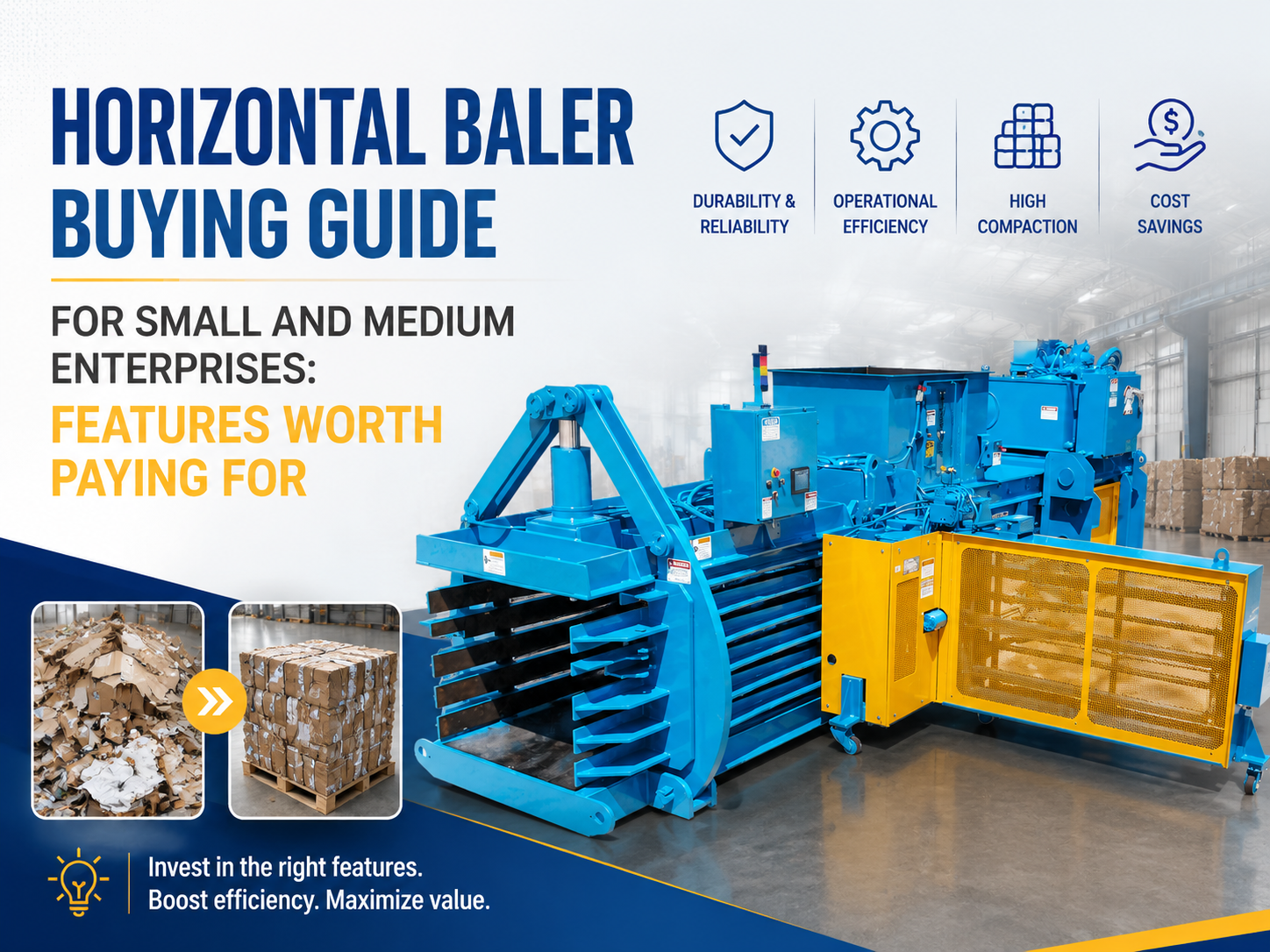
Introduction to Horizontal Balers for SMEs
For small and medium enterprises (SMEs), managing waste materials—whether it is cardboard, plastic, or non-ferrous metal scrap—is often a logistical and financial burden. As production scales, the manual handling of loose waste becomes inefficient, leading to cluttered floor space and high disposal fees. This is where the horizontal baler becomes a critical asset. Unlike vertical balers, which are suited for lower volumes, horizontal balers offer continuous feeding, higher density, and significantly greater throughput, making them the backbone of modern industrial recycling.
However, for an SME, the capital investment in a horizontal baler is substantial. The market is flooded with options ranging from basic manual-tie machines to fully automated systems with advanced PLC controls. Navigating this landscape requires a deep understanding of which features provide a genuine return on investment (ROI) and which are unnecessary overhead. This guide aims to demystify the purchasing process, focusing on the specific needs of SMEs looking to optimize their waste management through the lens of HARSLE’s industrial expertise.
Choosing the right horizontal baler is not just about the initial price tag; it is about the total cost of ownership and the machine’s ability to integrate into your existing workflow. A well-chosen baler can turn a waste stream into a revenue stream by producing mill-sized bales that recyclers pay a premium for. Conversely, an under-specified machine will lead to bottlenecks, while an over-specified one will drain capital that could be used elsewhere in the business.
Price Range Overview: What to Expect
The price of a horizontal baler is primarily dictated by its automation level, pressure capacity (tonnage), and the quality of its hydraulic and electrical components. For SMEs, the market generally breaks down into three tiers. Understanding these tiers helps in setting a realistic budget and aligning expectations with operational realities.
Entry-Level Horizontal Balers ($15,000 – $35,000)
Entry-level machines are typically closed-end, manual-tie balers. These are ideal for SMEs that process between 1 to 3 tons of material per day. While they require a dedicated operator to tie off the bales, they offer a significant step up from vertical balers in terms of ease of loading. These machines usually feature smaller motors (15-20 HP) and lower press forces (30-50 tons). They are robust and simple to maintain but lack the speed required for high-volume operations.
Mid-Range Horizontal Balers ($40,000 – $85,000)
This is the “sweet spot” for most growing SMEs. In this price range, you begin to see semi-automatic features and open-end designs. These machines often include auto-tie systems, which drastically reduce labor costs. With motor power ranging from 30 to 60 HP and press forces up to 80 tons, these balers can handle a wider variety of materials, including tougher plastics and light metals. They are designed for 5 to 15 tons of throughput per day and often feature basic PLC interfaces for easier troubleshooting.
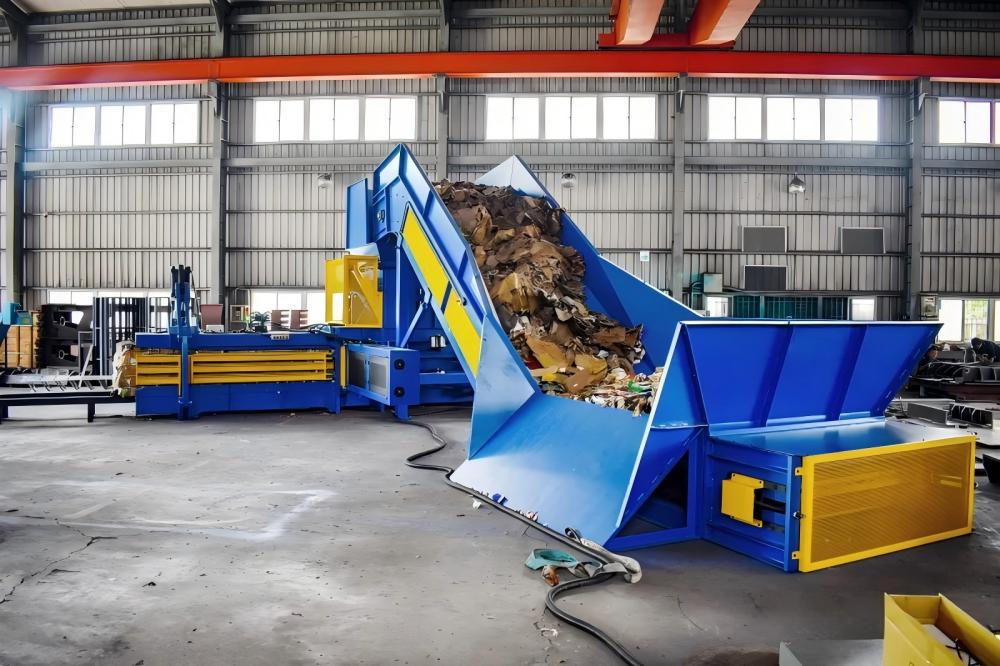
High-End Industrial Balers ($90,000 – $200,000+)
High-end balers are fully automated powerhouses. They feature large feed openings, high-speed hydraulic cycles, and advanced shear blades to handle oversized materials. These machines are built for 24/7 operation and can process upwards of 20 tons per hour. For most SMEs, this level of investment is only justifiable if waste management is a core part of the business model or if the volume of scrap is exceptionally high. They utilize high-efficiency motors (75+ HP) and sophisticated sensors to optimize bale density automatically.
Main Cost Drivers in Horizontal Baler Manufacturing
When comparing quotes, you might notice significant price discrepancies between machines with similar tonnage. These differences are usually found in the “bones” of the machine. Understanding these cost drivers allows you to identify where a manufacturer like HARSLE adds value through engineering excellence.
Steel Quality and Frame Construction
The frame of a horizontal baler must withstand immense repetitive stress. Lower-cost machines often use thinner steel plates or lower-grade alloys, which can lead to frame warping or weld failure over time. High-quality balers use heavy-duty, reinforced steel frames with precision-machined guides. The thickness of the floor plate and the side walls is a direct indicator of the machine’s longevity. A heavier machine is generally a more durable machine, as it absorbs vibrations and resists the internal pressures of high-density baling.
Hydraulic System Components
The hydraulics are the heart of the baler. The cost is driven by the quality of the pumps, valves, and cylinders. Premium brands like Rexroth or Vickers are more expensive but offer superior reliability and easier parts availability. Furthermore, the complexity of the hydraulic circuit—such as the inclusion of regenerative circuits for faster cycle times—adds to the cost. A well-designed hydraulic system will run cooler and more efficiently, reducing energy consumption and extending the life of the hydraulic oil.
Electrical and Control Systems
Modern horizontal balers rely on Programmable Logic Controllers (PLCs) to manage the baling cycle. The brand of the PLC (e.g., Siemens, Schneider, or Mitsubishi) and the complexity of the software drive the price. Features like touch-screen interfaces, remote diagnostics, and data logging for bale weights are “worth paying for” because they simplify operation and provide management with actionable data on waste throughput.
Configuration Impact: Features That Define Performance
The configuration of your baler should be dictated by the material you process. Not all features are necessary for every application, but some are transformative for SME efficiency.
Auto-Tie vs. Manual-Tie
For an SME, the decision between auto-tie and manual-tie is the most significant configuration choice. An auto-tie system can save hundreds of man-hours per year. In an auto-tie configuration, the machine automatically wraps and twists the wire around the bale once it reaches the desired length. This allows for continuous feeding via a conveyor. If your labor costs are high or your volume is consistent, the auto-tie feature usually pays for itself within 18 to 24 months.
Shear Blades and Material Pre-Conditioning
If you are baling bulky materials like large cardboard boxes or plastic containers, shear blades are essential. These blades are mounted at the top of the press chamber and the front of the ram. As the ram moves forward, the blades cut off any material overhanging the chamber, preventing jams and ensuring a clean, square bale. High-quality, replaceable hardened steel blades are a feature worth the investment, as they maintain a sharp edge and reduce the strain on the hydraulic system.
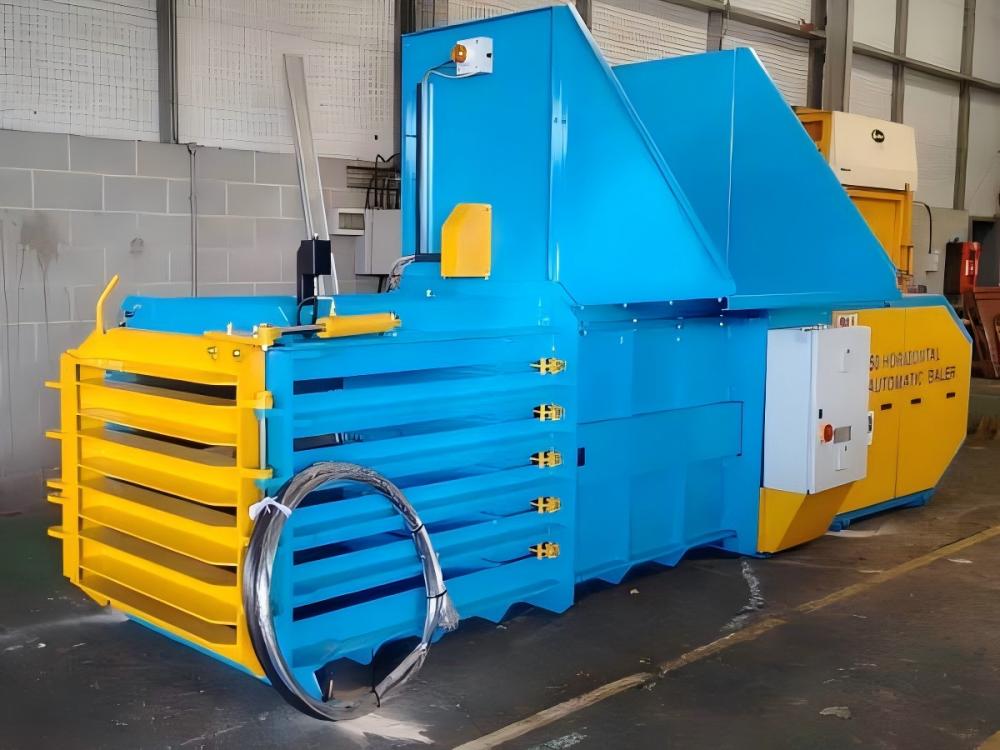
Cooling Systems
In warmer climates or high-duty cycle environments, hydraulic oil can overheat, leading to seal failure and reduced performance. Air-cooled or water-cooled oil heat exchangers are critical features. For most SMEs, an integrated air-cooling system is the most cost-effective way to ensure the machine can run for multiple shifts without downtime. This is a classic example of a feature that prevents expensive long-term repairs.
Hidden Costs of Ownership
The purchase price is only the beginning. SMEs must account for several hidden costs that can impact the overall budget and the success of the installation.
- Electrical Infrastructure: Horizontal balers require significant power. You may need to upgrade your facility’s electrical panel or run new 3-phase power lines to the machine’s location. This can cost several thousand dollars depending on the distance from the main breaker.
- Consumables: Baling wire is a recurring expense. Auto-tie machines use specific gauges of wire on large coils. The price of steel fluctuates, so it is wise to budget for these consumables based on your projected bale count.
- Installation and Training: A horizontal baler is not a “plug-and-play” device. It requires professional installation, leveling, and hydraulic fluid filling (which can be hundreds of gallons). Furthermore, operator training is essential for safety and to prevent machine damage caused by improper loading.
- Floor Space and Logistics: These machines have a large footprint. You must also account for the space needed for the infeed conveyor, the bale discharge area, and the maneuvering room for forklifts to remove finished bales.
ROI Calculation: Turning Waste into Profit
To justify the purchase of a horizontal baler, an SME should perform a detailed ROI calculation. The primary drivers of ROI are labor savings, reduced hauling costs, and increased material value.
Labor Savings: If a manual vertical baler requires 20 minutes of an employee’s time per bale and a horizontal auto-tie baler requires zero, and you produce 10 bales a day, you save over 3 hours of labor daily. Over a year, this can amount to $15,000 – $20,000 in saved wages.
Transport Efficiency: Loose waste or poorly compacted bales take up massive amounts of space in a truck. High-density horizontal bales maximize the weight capacity of a trailer. If you can increase your bale density from 500 lbs to 1,200 lbs, you effectively cut your shipping frequency in half, leading to massive savings in freight costs.
Material Rebates: Recyclers pay significantly more for “mill-sized” bales (typically 60 or 72 inches long). By producing high-quality, dense bales that meet industry standards, an SME can move from paying for waste removal to receiving checks for their scrap material. In many cases, the difference in rebate value can cover the monthly financing payment of the machine.
Buying Advice for Small and Medium Enterprises
When you are ready to pull the trigger, follow these strategic steps to ensure you get the best machine for your specific needs.
- Audit Your Waste Stream: Don’t guess your volume. Weigh your waste for a month to determine your average and peak throughput requirements. Identify the toughest material you need to bale, as this will dictate the required press force.
- Future-Proof Your Purchase: If you expect 20% growth over the next three years, buy a machine that can handle that projected volume today. It is much cheaper to buy a slightly larger machine now than to replace an undersized one in two years.
- Request a Reference Visit: Ask the manufacturer for a reference at a similar-sized company. Seeing the machine in a real-world environment and talking to an actual operator is more valuable than any brochure.
- Prioritize Support Over Price: A cheaper machine from a vendor with no local service support is a liability. Ensure the manufacturer offers a solid warranty and has a clear path for technical support and spare parts delivery.
Frequently Asked Questions (FAQ)
What is the difference between an open-end and a closed-end horizontal baler?
A closed-end baler has a door at the end of the chamber that stays shut during the compression cycle, allowing for very high density. It must be opened to eject the bale. An open-end baler uses hydraulic tensioners to create resistance, allowing for continuous extrusion and tying of bales without stopping the ram, which is much faster for high volumes.
Can one horizontal baler handle both cardboard and plastic?
Yes, most horizontal balers are versatile. However, the settings (like pressure and bale length) may need to be adjusted. Plastic often has more “memory” and tends to expand, so a machine with a longer stroke or higher holding pressure is beneficial for plastic applications.
How often does a horizontal baler require maintenance?
Daily checks should include inspecting hydraulic fluid levels and looking for leaks. Monthly maintenance involves greasing pivot points and checking the tension of the auto-tie system. A comprehensive professional service should be performed annually to check pump efficiency and electrical connections. HARSLE machines are designed with accessible components to make these tasks as simple as possible.
Is a conveyor system necessary for a horizontal baler?
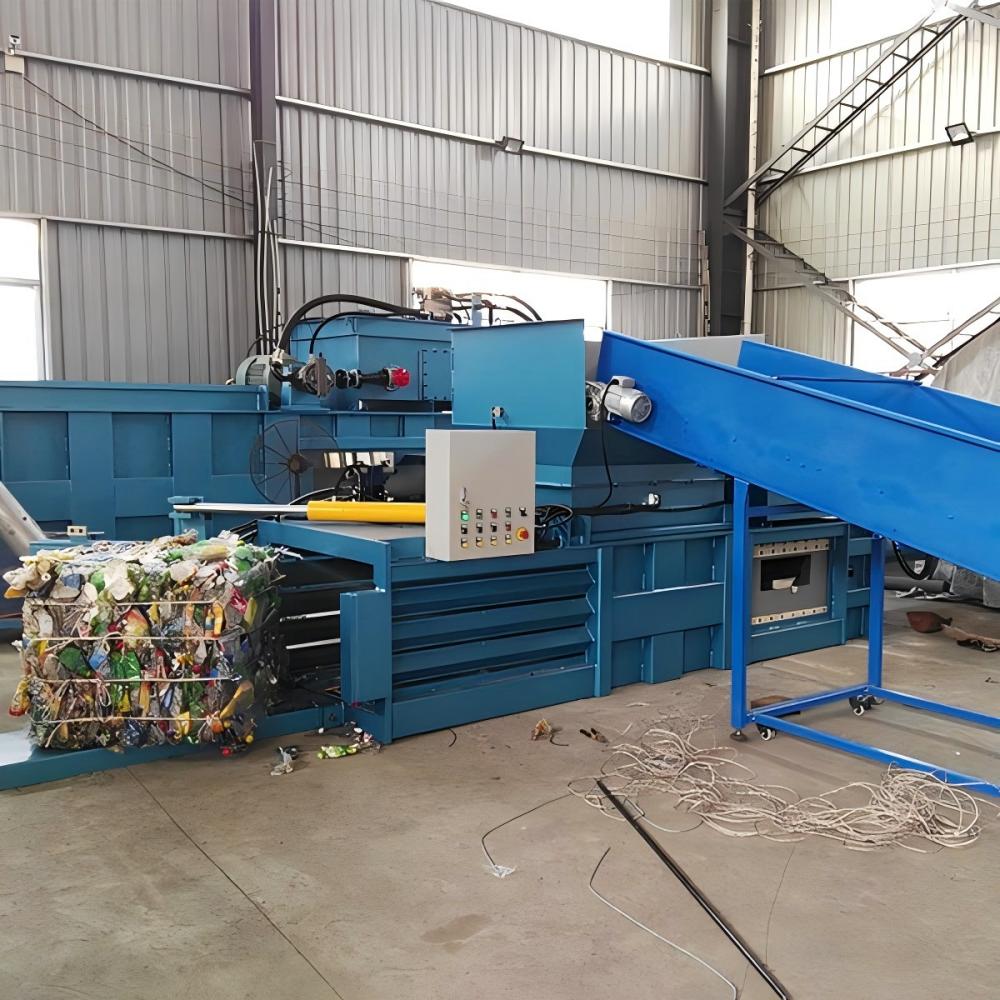
While not strictly necessary for manual-tie machines, a conveyor is highly recommended for auto-tie horizontal balers. It allows for a continuous flow of material, which is the primary advantage of the horizontal design. Without a conveyor, you create a bottleneck at the infeed, negating much of the machine’s efficiency.
What safety features should I look for?
At a minimum, the machine should have E-stop buttons at multiple locations, safety interlocks on all access doors (preventing operation while open), and clear warning labels. Advanced features like infrared light curtains at the feed hopper can provide an extra layer of protection for operators.
How do I determine the right bale size?
The industry standard for maximum transport efficiency is a 60″ or 72″ bale. Most recyclers prefer these sizes because they fit perfectly into standard shipping containers and trailers. Always check with your local recycling partner to see if they have specific size or weight requirements before finalizing your machine configuration.