Scrap Metal Baler Buying Guide: Understanding Pressure, Chamber Size, and Cycle Time

Introduction to Scrap Metal Baler Procurement
In the rapidly evolving landscape of global recycling, the efficiency of scrap processing can make or break the profitability of a metal yard or fabrication facility. A scrap metal baler is not just a piece of machinery; it is the heartbeat of a recycling operation. By compressing loose metal scrap—ranging from aluminum cans and copper wiring to steel sheets and automotive bodies—into dense, manageable blocks, these machines significantly reduce storage space and transportation costs while increasing the market value of the material. However, the market is flooded with various models, making the Scrap Metal Baler Buying : Understanding Pressure, Chamber Size, Cycle Time process a complex endeavor for many business owners.
Choosing the right baler requires a deep dive into technical specifications that directly correlate with your operational throughput and material types. Whether you are a small-scale recycler looking for your first hydraulic press or a large industrial facility upgrading to a high-speed automated system, understanding the nuances of pressure, chamber dimensions, and cycle efficiency is paramount. This guide, provided by HARSLE, aims to demystify these technical aspects, providing a clear roadmap for your next capital investment in metal fabrication equipment.
Price Range Overview: What to Expect
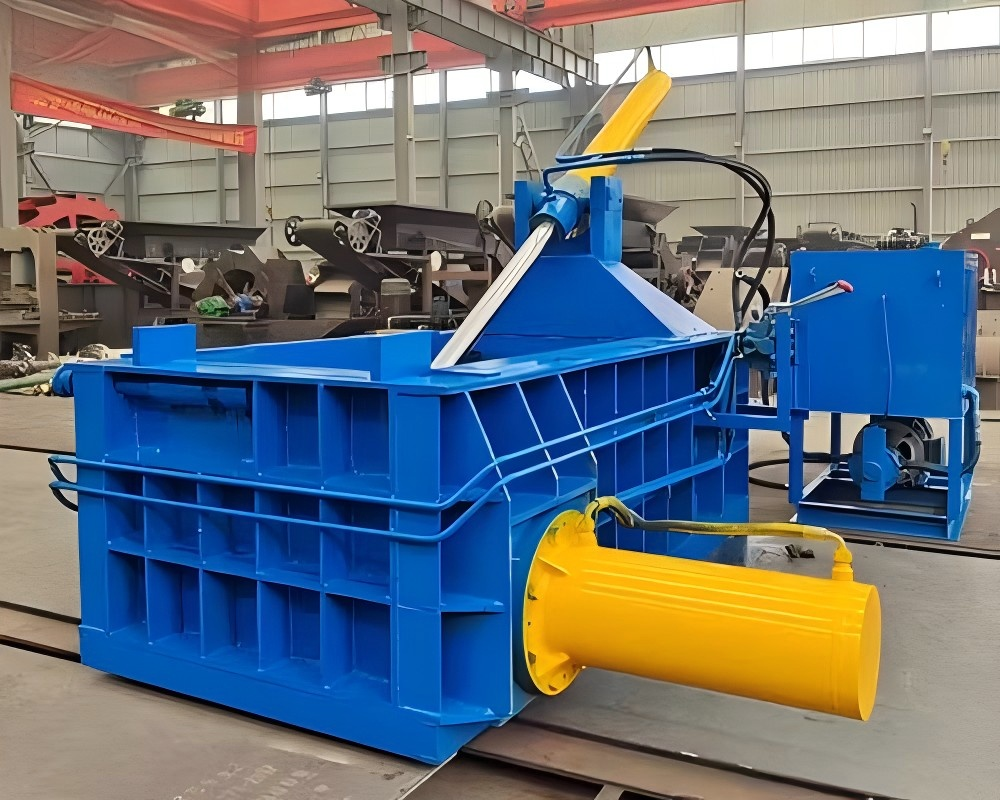
The cost of a scrap metal baler varies significantly based on its capacity, automation level, and build quality. Generally, the market is divided into three primary tiers. Entry-level or portable balers, often used for light non-ferrous metals like aluminum and copper, typically range from $15,000 to $45,000. These machines are excellent for smaller yards that prioritize mobility and have lower daily volume requirements. They usually offer lower compaction force but are highly efficient for their size.
Mid-range industrial balers, which are the workhorses of most medium-sized recycling centers, fall into the $50,000 to $130,000 bracket. These machines feature more robust hydraulic systems, larger chambers, and higher pressure ratings, allowing them to handle heavier materials like stainless steel and thicker aluminum extrusions. They often include semi-automated controls and improved safety features, making them a balanced choice for growing businesses.
At the top end of the spectrum are heavy-duty, high-volume balers and car balers, which can cost anywhere from $150,000 to over $500,000. These units are designed for 24/7 operation, processing massive quantities of ferrous scrap, including end-of-life vehicles and heavy structural steel. These machines are characterized by massive hydraulic cylinders, advanced PLC (Programmable Logic Controller) systems, and integrated cooling systems to maintain performance during continuous use. Understanding where your volume fits within these tiers is the first step in the Scrap Metal Baler Buying Guide Understanding Pressure Chamber Size And Cycle Time journey.
Main Cost Drivers in Scrap Metal Balers
When evaluating the price of a baler, it is essential to look beyond the sticker price and understand what drives the cost. The primary driver is the quality and origin of the hydraulic components. High-end valves, pumps, and seals from reputable brands like Rexroth or Vickers ensure longevity and minimize leaks, but they command a premium price. The hydraulic system is the soul of the machine; skimping here often leads to higher maintenance costs down the line.
Another significant factor is the metallurgy of the chamber and the wear plates. High-quality balers use abrasion-resistant steel (such as Hardox) for the inner linings of the compression chamber. Since scrap metal is inherently abrasive, these liners protect the structural integrity of the machine. The thickness of the steel frame and the precision of the welding also contribute to the cost, as a heavier, more rigid frame can withstand the immense internal pressures without warping over years of service.
Automation and control systems also play a role. A manual lever-operated baler is significantly cheaper than one equipped with a Siemens PLC, touch-screen interface, and remote diagnostic capabilities. However, automation reduces labor costs and ensures consistent bale density, which can justify the higher initial investment. Finally, the inclusion of specialized features like integrated shear blades (to cut oversized scrap during the lid-closing process) or multi-directional compression (triple-compression) will increase the price but vastly improve the machine’s versatility.
Configuration Impact: Pressure, Chamber Size, and Cycle Time
The Role of Compaction Pressure (Tonnage)
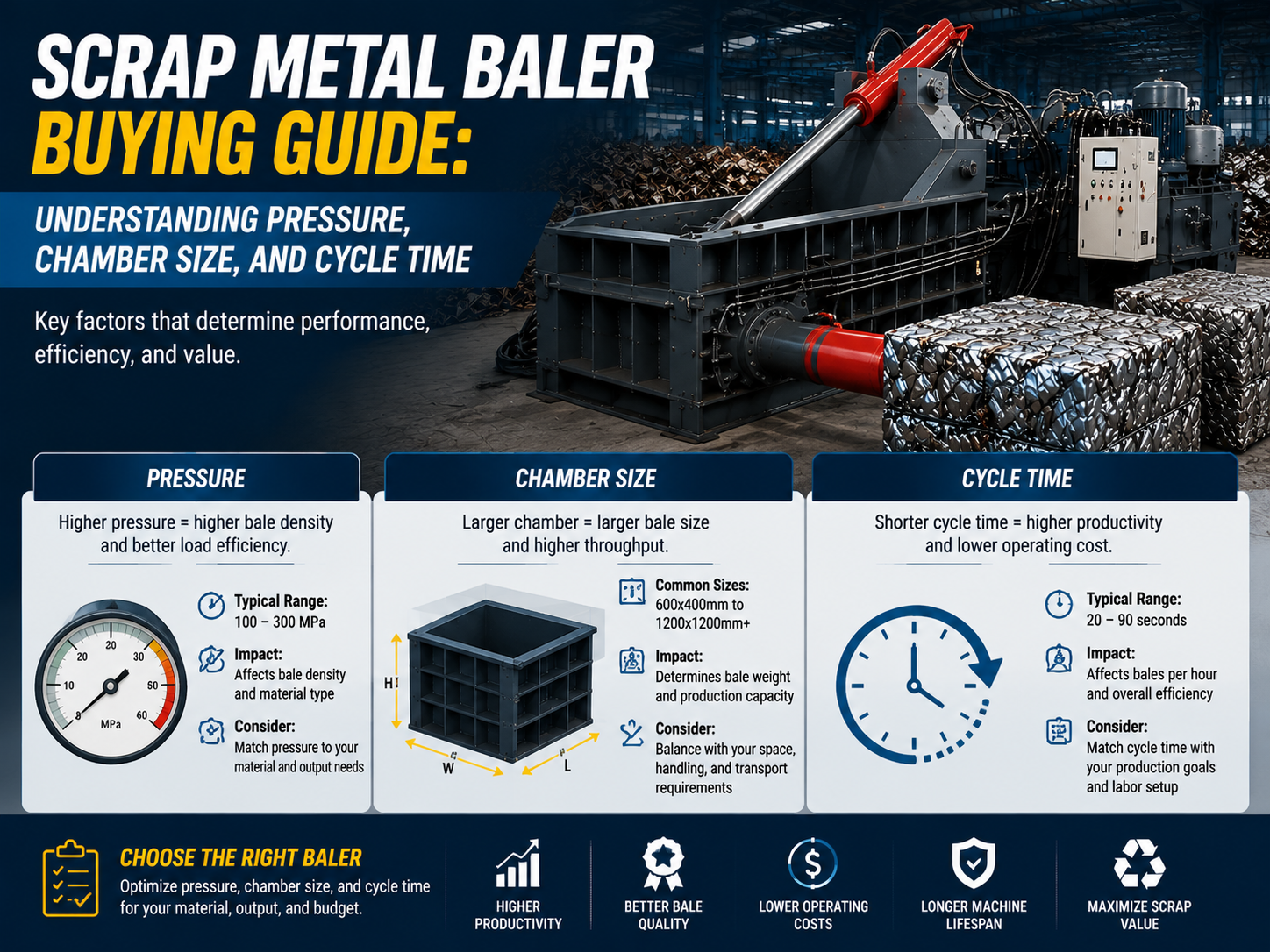
Pressure, usually measured in tons or kilonews (kN), determines the density of the final bale. In the context of Scrap Metal Baler Buying Understanding Pressure Chamber Size Cycle Time, pressure is the most critical factor for material compatibility. For light materials like aluminum cans (UBC), a pressure of 100 to 125 tons is often sufficient. However, for ferrous scrap or heavy copper, you may require 250 to 400 tons of force to achieve the density required by smelters and foundries.
Higher pressure allows for smaller, denser bales, which optimizes shipping container space. If your bales are too loose, you are essentially paying to ship air, which erodes your profit margins. It is important to distinguish between “nominal pressure” (the maximum the pump can produce) and “working pressure” (the sustained force during the compaction stroke). A high-quality HARSLE baler is engineered to maintain consistent working pressure to ensure every bale meets industry standards.
Optimizing Chamber Size for Input and Output
The chamber size dictates the maximum dimensions of the scrap you can feed into the machine without pre-processing. If you frequently handle large sheets of metal or bulky appliances, a small chamber will force you to spend extra labor hours cutting the scrap into smaller pieces. Conversely, an oversized chamber for small scrap can be inefficient, as the ram has to travel further to begin the compaction process.
Standard chamber sizes range from 1200mm to over 2500mm in length. When selecting a size, consider your loading method. If you use a crane with a grapple, you need a large enough target area to prevent spillage and damage to the machine’s exterior. The output bale size is also a logistical consideration; it must be compatible with the dimensions of the trucks or shipping containers you use for transport. Most international shipping requires bales that can be stacked efficiently in 20ft or 40ft containers.

Understanding Cycle Time and Productivity
Cycle time refers to the duration it takes for the machine to complete one full compaction stroke and return to the starting position. In high-volume operations, every second counts. A machine with a 60-second cycle time will process significantly less material per shift than one with a 30-second cycle time. Cycle time is primarily influenced by the hydraulic pump’s flow rate (liters per minute) and the motor’s horsepower.
However, a faster cycle time isn’t always better if it comes at the expense of pressure or machine longevity. High-speed machines generate more heat, requiring robust cooling systems (air or water coolers) to prevent hydraulic fluid degradation. When calculating your required cycle time, look at your daily tonnage goals. If you need to process 20 tons of aluminum per day, you can calculate the number of bales required based on bale weight and then determine if the machine’s cycle time can support that volume within an 8-hour shift.
Hidden Costs of Owning a Scrap Metal Baler
The purchase price is only the beginning of the total cost of ownership. One often overlooked expense is site preparation. Heavy industrial balers require a reinforced concrete foundation to handle the vibration and weight of the machine. Without a proper base, the machine can become misaligned, leading to premature wear on the rams and seals. Additionally, you must ensure your facility has the electrical infrastructure to support high-horsepower motors, which may involve upgrading your transformers or control panels.
Maintenance and wear parts represent another ongoing cost. The blades used for shearing scrap and the liners inside the chamber are consumable items. Depending on the abrasiveness of your scrap, these may need to be sharpened or replaced every few months. Hydraulic oil is also a significant expense; a large baler can hold hundreds of gallons of specialized fluid that needs periodic filtering and replacement. Finally, consider the cost of operator training. An untrained operator can easily damage a machine by overloading the chamber or ignoring warning signs of hydraulic failure, leading to expensive downtime.
ROI Calculation: Is the Investment Worth It?
To determine the Return on Investment (ROI) for a scrap metal baler, you must compare the “before” and “after” costs of your operation. The most immediate saving is in transportation. Loose scrap might require five truckloads to move the same amount of material that one truckload of densified bales can carry. If each truckload costs $500, and you reduce your trips from 20 per month to 4, you save $8,000 monthly on logistics alone.
Furthermore, processed scrap (bales) commands a higher price per ton from mills. Mills prefer bales because they are easier to handle, melt more efficiently with less oxidation loss, and have a known density. This “upcharge” can range from $20 to $50 per ton. If you process 200 tons per month, that is an additional $4,000 to $10,000 in revenue. When you combine transportation savings, increased material value, and reduced labor for handling, most high-quality balers from HARSLE pay for themselves within 12 to 24 months of operation.
Buying Advice: Choosing the Right Partner
When you are ready to make a purchase, the manufacturer you choose is as important as the machine’s specs. Look for a company like HARSLE that offers comprehensive after-sales support, including spare parts availability and technical guidance. Ask for a demonstration or video of the machine processing the specific type of scrap you intend to handle. It is also wise to check the lead times for wear parts; you don’t want your machine sitting idle for weeks waiting for a custom seal or blade.
Always verify the safety certifications of the equipment. Scrap balers are powerful machines that can be dangerous if not equipped with proper emergency stops, safety interlocks on the doors, and protective guarding. A reputable manufacturer will prioritize these features. Lastly, consider the future of your business. It is often better to buy a machine with slightly more capacity than you currently need to allow for growth, rather than having to replace an undersized unit just two years later.
Frequently Asked Questions (FAQ)
1. What is the difference between a vertical and horizontal scrap baler?
Vertical balers are generally smaller, take up less floor space, and are manually loaded. They are best for light materials like cardboard or very thin aluminum. Horizontal balers are designed for industrial scrap metal; they allow for continuous loading, higher pressures, and much larger throughput. For most metal recycling applications, a horizontal baler is the standard choice.
2. How often should I change the hydraulic oil?
Typically, hydraulic oil should be checked monthly and replaced every 2,000 to 4,000 hours of operation, depending on the environment and the quality of the oil. Using an oil filtration system can extend this life. Always follow the manufacturer’s specific guidelines to maintain your warranty.
3. Can one baler handle all types of metal?
While most balers are versatile, a machine optimized for aluminum might struggle with heavy steel plate. If you process a wide variety of metals, you need a high-tonnage baler with replaceable liners. If you only process one type of material, a specialized machine might be more cost-effective.
4. What is ‘Triple Compression’ in a baler?
Triple compression means the machine applies pressure from three directions (usually top, side, and end). This results in the highest possible bale density, which is often required for heavy ferrous scrap or for meeting strict export requirements.
5. Do I need a full-time operator for the baler?
With modern automated balers, a dedicated operator isn’t always necessary. A forklift or crane operator can often manage the loading and start the cycle. However, someone should always be responsible for daily inspections and ensuring the area remains clear of debris.
6. How does bale density affect my profit?
Bale density directly impacts your shipping costs. Most shipping containers have a weight limit. If your bales are not dense enough, you will hit the volume limit of the container before you hit the weight limit, meaning you are paying for unused weight capacity. Higher density ensures you maximize every shipment.
7. What are the signs that a baler needs maintenance?
Common signs include slower cycle times, unusual noises from the hydraulic pump, visible oil leaks, or bales that are not as dense as they used to be. Regular preventive maintenance is key to avoiding catastrophic failure.
8. Is it better to buy new or used?
While used balers are cheaper, they often come with hidden wear and no warranty. For a critical piece of equipment like a baler, buying new from a manufacturer like HARSLE ensures you get the latest safety features, a full warranty, and a machine with its entire service life ahead of it.