
How to Size a Four-Shaft Shredder for Your Production Requirements

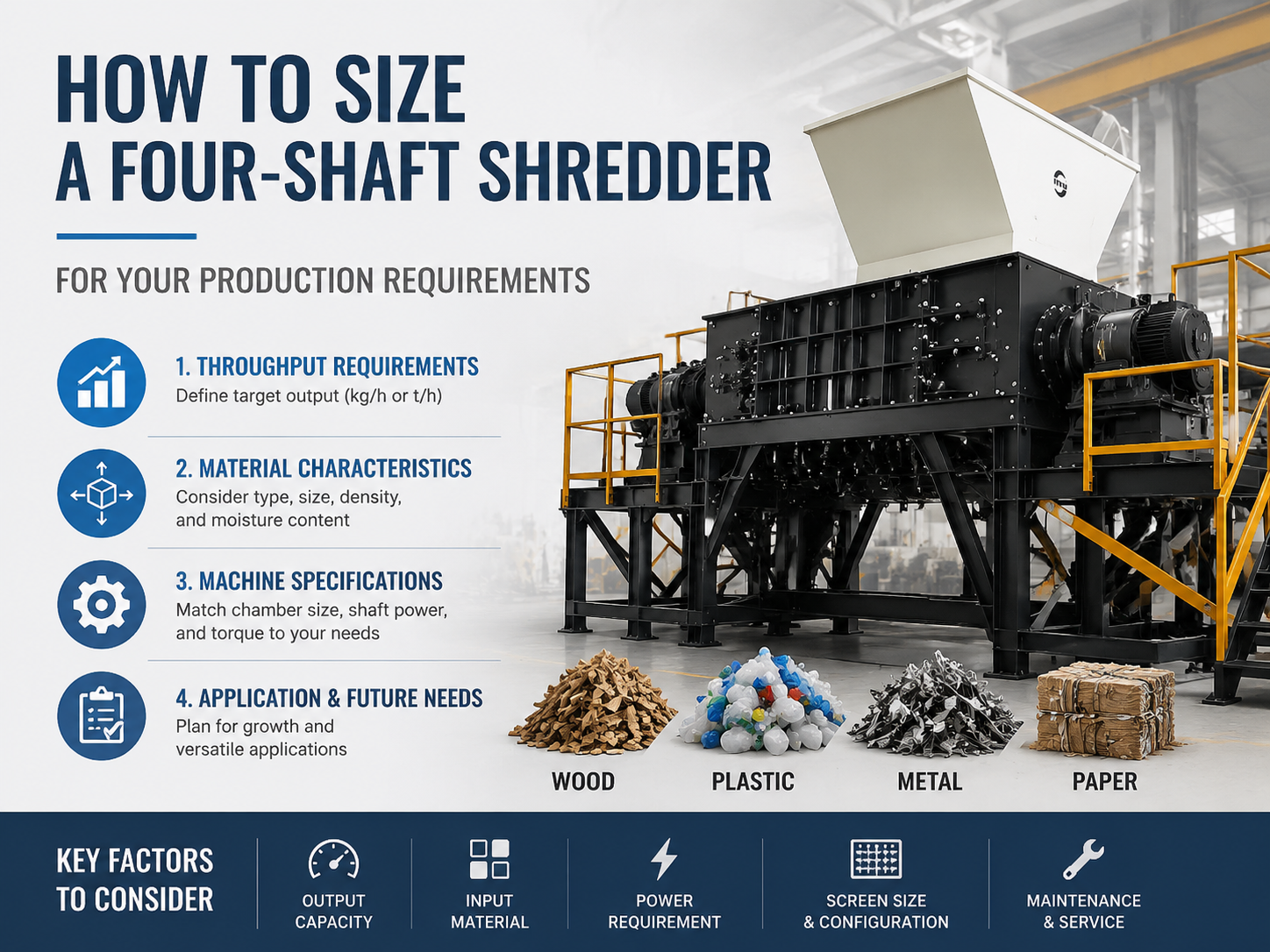
Introduction to Sizing a Four-Shaft Shredder
In the world of industrial recycling and waste management, the four-shaft shredder stands as a pinnacle of engineering efficiency. Unlike its single or double-shaft counterparts, the four-shaft design offers a unique combination of high torque, controlled output size, and the ability to handle diverse, bulky materials. However, the most common mistake made by facility managers and business owners is improper sizing. To Size A Four-Shaft Shredder Production Requirements effectively, one must look beyond the sticker price and delve into the technical nuances of material density, throughput goals, and final particle size.
Choosing the wrong size can lead to two disastrous outcomes: either the machine is underpowered, leading to constant jams and premature motor failure, or it is oversized, resulting in unnecessary capital expenditure and high operational costs for a machine that runs at 30% capacity. This guide is designed to help you navigate the complexities of sizing, ensuring that your HARSLE four-shaft shredder becomes a cornerstone of your production efficiency rather than a bottleneck.
Price Range Overview
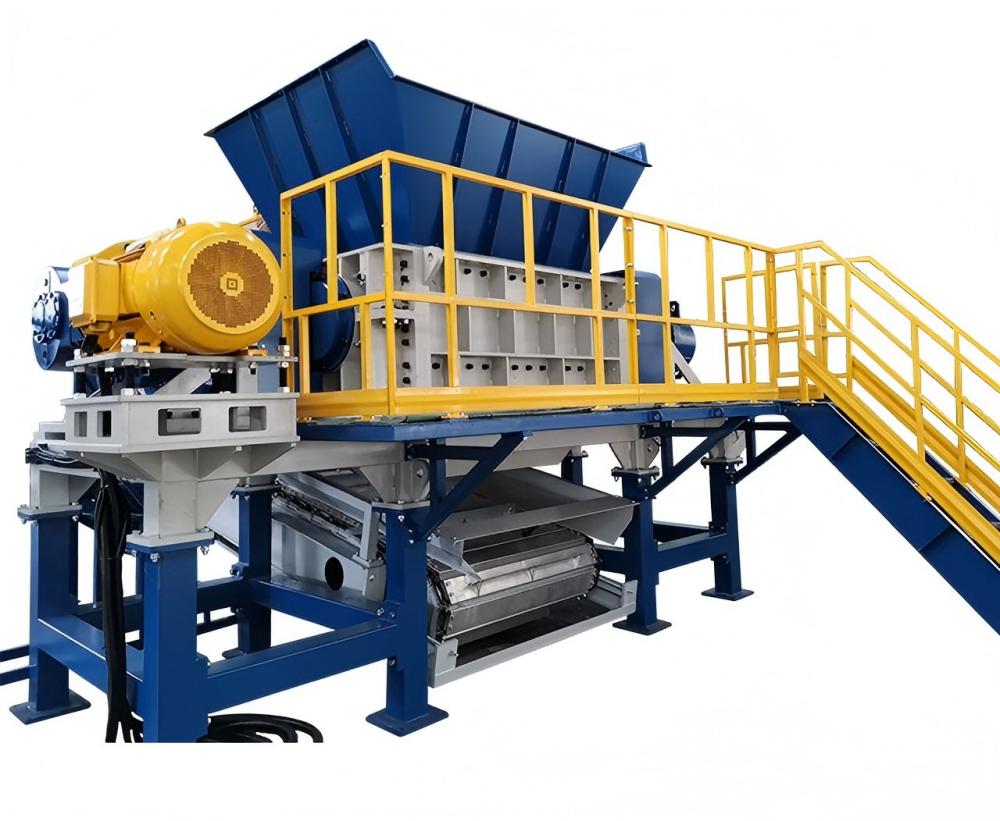
When you begin to Size A Four-Shaft Shredder Production Requirements, the first question is often about the budget. Four-shaft shredders are generally more expensive than two-shaft shredders because they include an integrated screen and two additional shafts that act as a feeding and cleaning mechanism. The price range is broad, reflecting the massive difference in scale between a small e-waste processor and a heavy-duty scrap metal facility.
Entry-level industrial four-shaft shredders typically start in the $35,000 to $60,000 range. These units are suitable for light plastics, electronic components, and medical waste. They usually feature motors between 15kW and 30kW. While they are robust, they are not designed for continuous 24/7 operation on high-density materials like thick-walled steel drums or heavy rubber tires.
Mid-range units, which are the most common in the manufacturing sector, fall between $70,000 and $150,000. These machines offer significantly higher torque and throughput, often handling 1 to 3 tons of material per hour depending on the screen size. For large-scale industrial applications, such as municipal waste processing or large-scale automotive recycling, prices can exceed $300,000. These high-end models feature advanced PLC controls, specialized alloy blades, and massive hydraulic or electric drive systems.
Main Cost Drivers
Understanding what drives the cost of a four-shaft shredder is essential for accurate sizing. The primary driver is the Motor Power and Drive System. A shredder requiring 150HP will naturally cost more than one requiring 50HP. However, power isn’t just about speed; it’s about torque. High-torque motors allow the machine to bite through tough materials without stalling, which is critical for maintaining production requirements.
The second major cost driver is the Blade Metallurgy. Not all blades are created equal. For abrasive materials like glass-filled plastics or contaminated metals, you need high-wear resistant alloys like D2 or SKD-11. These materials increase the initial cost but drastically reduce the frequency of blade replacements. When you Size A Four-Shaft Shredder Production Requirements, you must account for the hardness of your input material to determine the necessary blade quality.
Finally, the Cutting Chamber Dimensions play a significant role. A larger chamber allows for larger bulky items to be fed without pre-shredding, but it requires a larger frame, longer shafts, and more robust bearings. If your production requirement involves large plastic crates, you cannot opt for a small chamber even if your hourly tonnage is low, as the material simply won’t fit into the intake.
Configuration Impact on Production
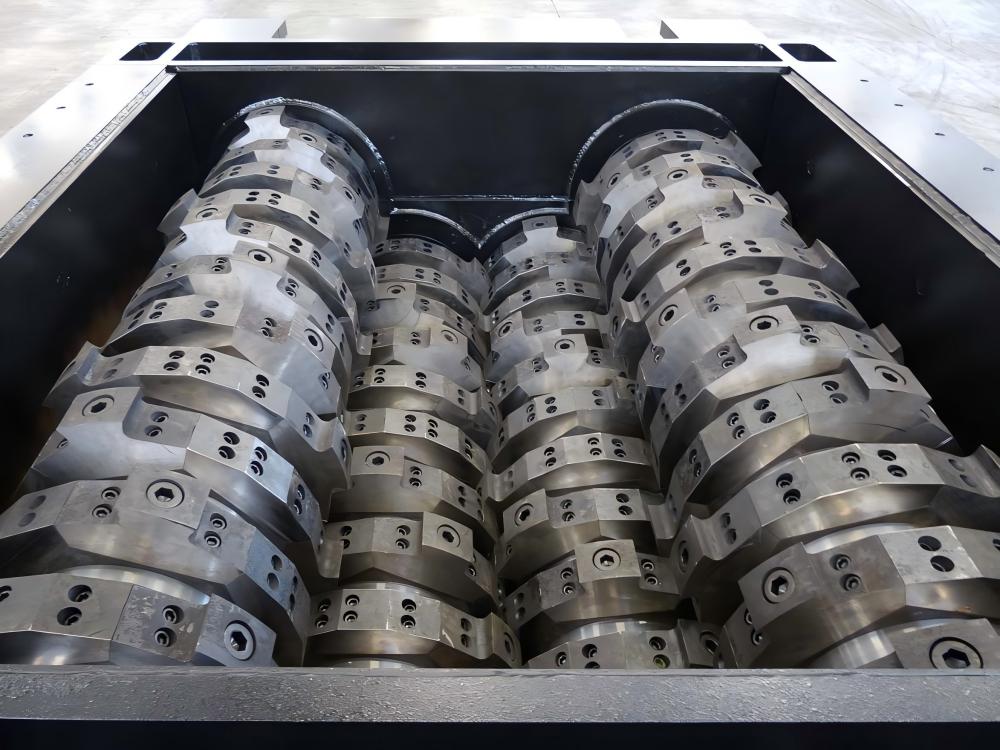
The configuration of a four-shaft shredder is what truly defines its performance. The most significant feature is the Integrated Screen. Unlike two-shaft shredders, which produce long strips, the four-shaft design recirculates material until it is small enough to pass through the screen. Choosing the right screen size is a balancing act: a smaller screen ensures a finer product but significantly reduces throughput. If your production requirement is 2 tons per hour at a 20mm particle size, you will need a much larger machine than if you required the same tonnage at a 50mm size.
Another configuration factor is the Shaft Speed and Gear Ratio. Four-shaft shredders typically operate at low speeds (15-35 RPM) to maximize torque. However, the two upper shafts often rotate at different speeds than the lower shafts to help pull material into the cutting zone. Customizing these speeds based on your specific material—whether it’s elastic like rubber or brittle like electronic boards—can increase efficiency by up to 25%.
Hopper design and feeding mechanisms also impact sizing. For lightweight, high-volume materials like foam or plastic bottles, a standard gravity feed might lead to “bridging,” where material gets stuck above the blades. In these cases, a hydraulic ram or a specialized hopper design is necessary to force material into the shafts. This configuration change adds to the machine’s footprint and cost but is vital for meeting production targets.
Hidden Costs of Ownership
When you Size A Four-Shaft Shredder Production Requirements, the purchase price is only the beginning. Maintenance and Wear Parts represent the most significant hidden cost. Blades, spacers, and cleaning fingers are consumable items. Depending on the material being processed, blades may need sharpening every 500 to 2,000 hours. The labor cost and downtime associated with blade changes must be factored into your operational budget.
Energy Consumption is another factor often overlooked. A shredder running a 100kW motor for 16 hours a day can result in substantial utility bills. High-efficiency motors and smart PLC systems that shut down the machine during idle periods can mitigate these costs, but they often come with a higher upfront price tag. Additionally, you must ensure your facility’s electrical infrastructure can handle the high startup current (inrush current) required by large industrial motors.
Lastly, consider the Cost of Residuals and Dust Collection. Shredding certain materials, particularly plastics and electronics, generates significant dust and fines. You may need to invest in a dust extraction system to meet health and safety regulations. Furthermore, the cost of disposing of non-recyclable contaminants separated during the shredding process can eat into your profit margins if not properly calculated during the sizing phase.
ROI Calculation for Your Shredder
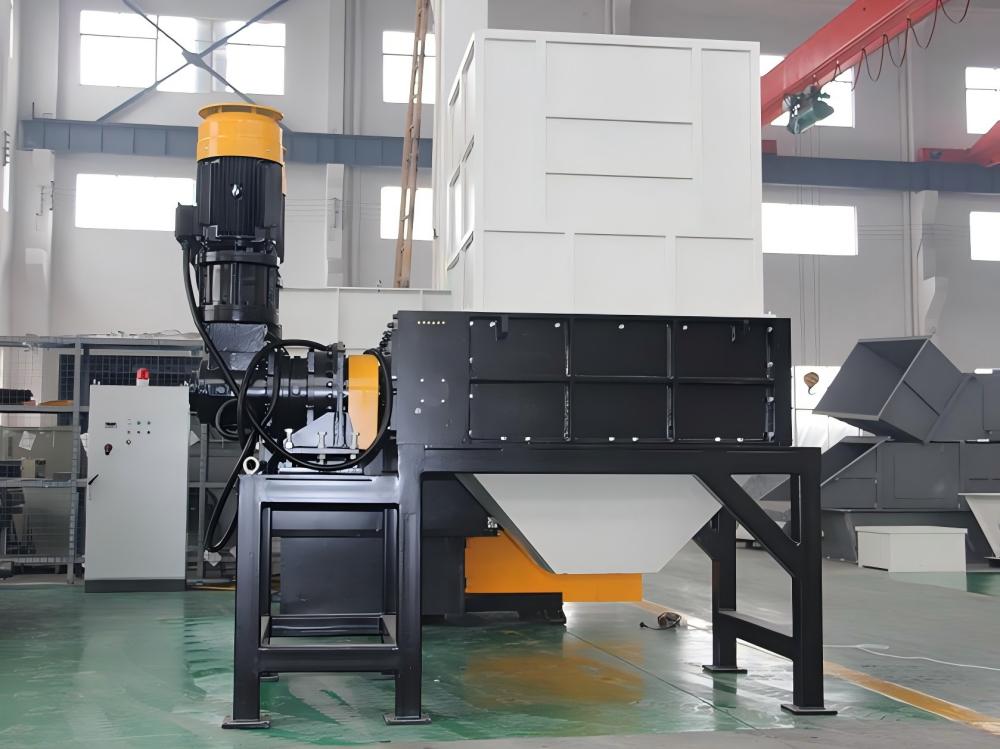
To justify the investment when you Size A Four-Shaft Shredder Production Requirements, a clear ROI (Return on Investment) calculation is necessary. The primary source of ROI is Volume Reduction. For companies paying for waste removal by the cubic yard, shredding can reduce volume by a ratio of 4:1 or even 6:1, leading to immediate savings in logistics and disposal fees.
Another ROI factor is Material Recovery. If you are shredding e-waste or scrap metal, the four-shaft shredder allows for the liberation of different materials (e.g., copper from plastic insulation). The high purity of the shredded output increases the resale value of the scrap. For example, shredded and screened aluminum scrap often fetches a 15-20% premium over baled or loose scrap because it is ready for the furnace.
Labor savings also contribute to ROI. A properly sized four-shaft shredder with an automated conveyor system can replace several manual sorting and cutting stations. When calculating ROI, compare the annual cost of labor (including benefits and insurance) against the amortized cost of the machine plus its operating expenses. Most industrial users find that a well-sized HARSLE shredder pays for itself within 18 to 24 months of operation.
Buying Advice: How to Choose the Right Model
When you are ready to Size A Four-Shaft Shredder Production Requirements, follow this checklist to ensure you get the right machine for your needs:
- Define Your Material: Be specific. “Plastic” isn’t enough. Is it HDPE, PET, or PVC? Is it film, rigid pipe, or purgings? Provide samples to the manufacturer for testing.
- Determine Your Throughput: Calculate your peak production hours. If you need to process 10 tons a day but only have a 4-hour window, you need a machine rated for 2.5 tons per hour, not 1 ton per hour.
- Specify Final Particle Size: What happens to the material after shredding? If it’s going to an extruder, you need a small, consistent size. If it’s for volume reduction, a larger screen will save energy and time.
- Check the Blade Access: Maintenance is inevitable. Choose a design like HARSLE’s that allows for relatively easy access to the shafts for blade replacement or cleaning.
- Evaluate the PLC Features: Look for auto-reverse functionality. This protects the motor and shafts by reversing the rotation when a jam is detected, then attempting to shred again.
Working with a reputable manufacturer like HARSLE ensures that you receive expert guidance during the sizing process. We recommend performing a material test run whenever possible to verify that the chosen motor power and blade configuration meet your specific expectations.
Frequently Asked Questions (FAQ)
1. What is the main advantage of a four-shaft shredder over a two-shaft shredder?
The primary advantage is the integrated screen and the ability to produce a consistent, small particle size in a single pass. Two-shaft shredders produce strips and cannot control the length of the output as effectively as a four-shaft model.
2. How often do the blades need to be sharpened?
This depends entirely on the material. For clean plastics, blades can last 1,500+ hours. For abrasive materials or metals, they may need attention every 500-800 hours. Using high-quality alloy steel blades from HARSLE can extend these intervals.
3. Can a four-shaft shredder handle metal?
Yes, but it must be sized correctly. Four-shaft shredders are excellent for light metals like aluminum extrusions, copper wire, and thin-walled steel containers. For heavy structural steel, a different class of primary shredder is usually required.
4. What happens if an unshreddable object enters the machine?
Modern four-shaft shredders are equipped with PLC-controlled auto-reverse systems. If the machine hits an object it cannot cut (like a solid steel shaft), it will stop and reverse to clear the jam. If it fails to clear after several attempts, it will shut down and alert the operator to prevent damage.
5. How do I determine the right screen size?
The screen size should be determined by the downstream process. If you are selling the regrind, check with your buyer for their specifications. Generally, screen sizes range from 15mm to 100mm. Remember that smaller screens reduce throughput significantly.
6. Is a hydraulic drive better than an electric drive?
Hydraulic drives offer excellent torque control and are very resistant to shock loads, making them ideal for very heavy-duty, unpredictable waste. Electric drives are more energy-efficient, easier to maintain, and sufficient for most standardized industrial production requirements.


