
Common Buying Mistakes to Avoid When Purchasing an Aluminium Extrusion Press

Introduction to Aluminium Extrusion Press Procurement
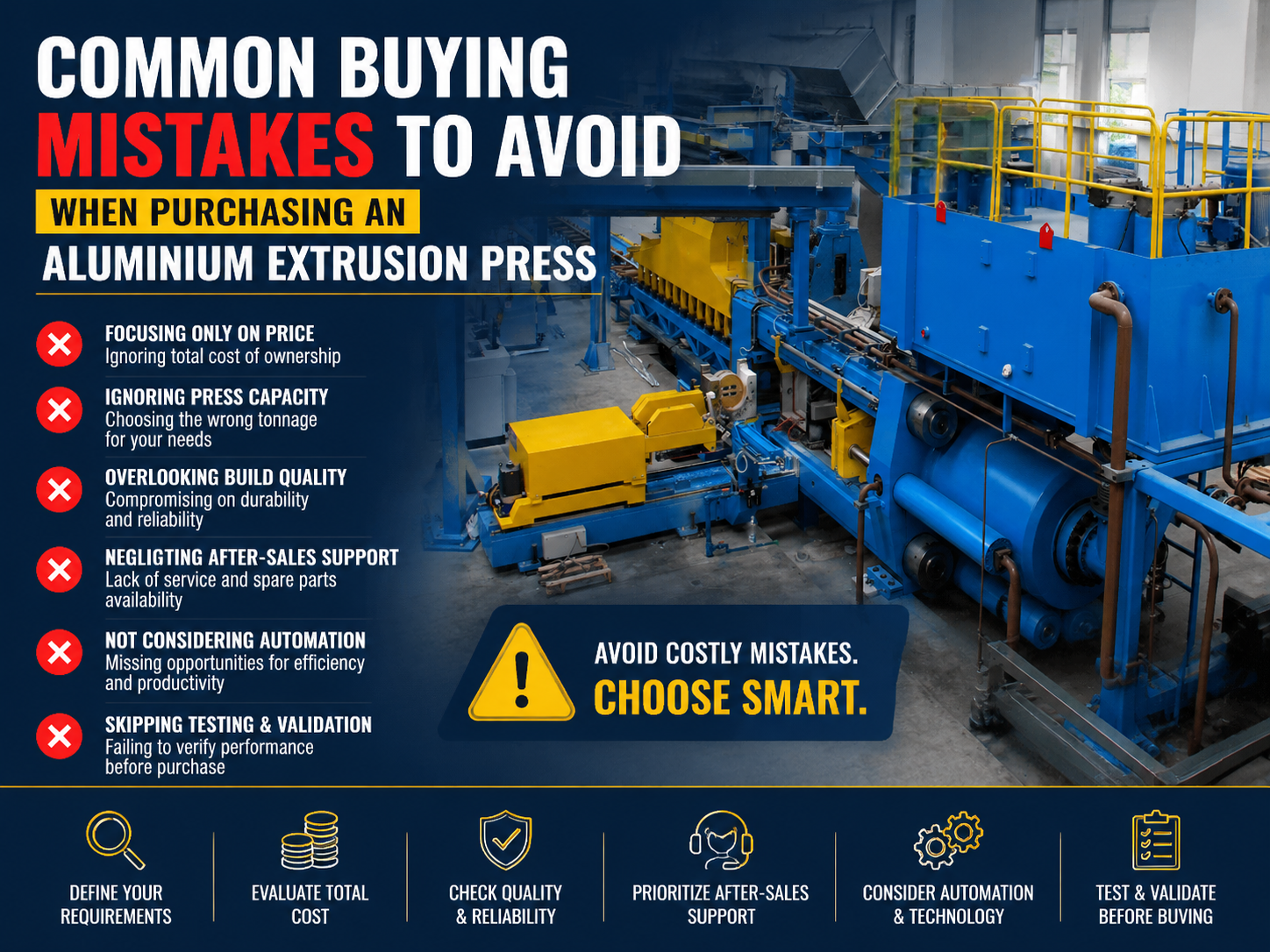
The acquisition of an aluminium extrusion press is a monumental investment for any metal fabrication facility. These machines are the heart of production lines that create everything from architectural window frames to high-tech aerospace components. However, the complexity of these systems often leads to significant oversights during the procurement process. Understanding the Common Buying Mistakes Avoid When Purchasing An Aluminium Extrusion Press is essential for ensuring long-term profitability and operational efficiency.
In the modern industrial landscape, the pressure to modernize and increase throughput can lead decision-makers to rush into purchases without a full technical audit. An aluminium extrusion press is not a standalone tool; it is a sophisticated integration of hydraulics, thermal management, and precision mechanical engineering. Failing to account for any single variable—be it the alloy type, the profile complexity, or the auxiliary handling equipment—can result in a system that underperforms or incurs exorbitant maintenance costs.
HARSLE, as a leader in industrial machinery, emphasizes that the goal of purchasing should not just be ‘buying a machine,’ but rather ‘investing in a production solution.’ This guide provides a deep dive into the financial, technical, and strategic aspects of purchasing an aluminium extrusion press, helping you navigate the pitfalls that often trap even experienced procurement officers.
Price Range Overview: What to Expect
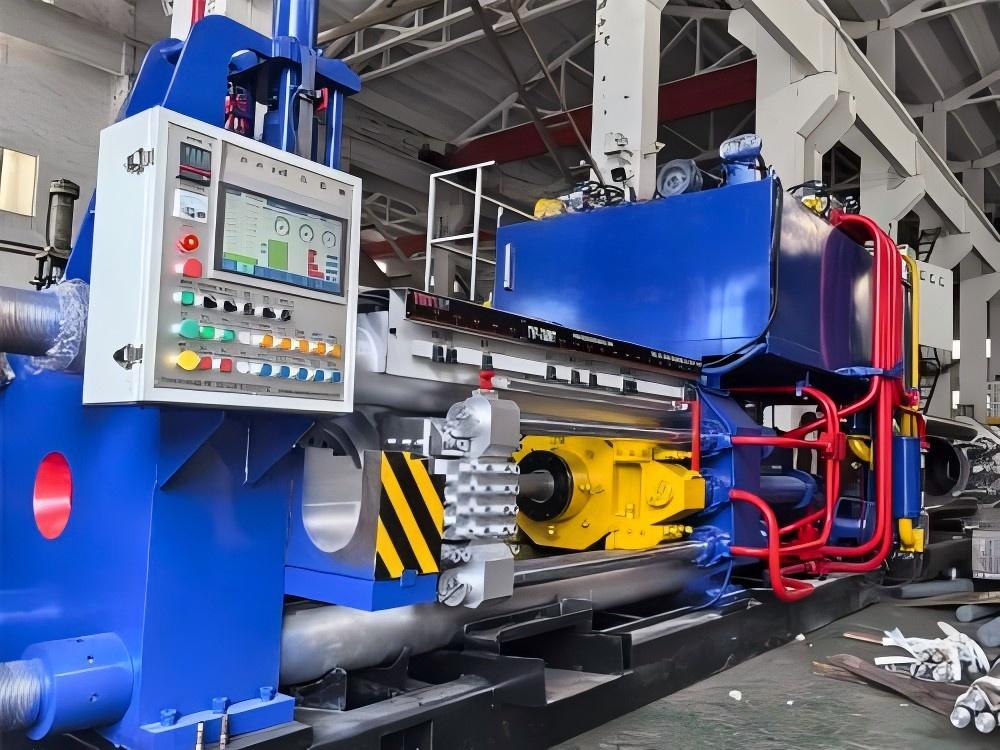
The price of an aluminium extrusion press varies wildly based on its tonnage, automation level, and country of origin. Generally, the market is divided into three tiers: entry-level/small-scale, mid-range industrial, and high-end heavy-duty presses. For a standard 600-ton to 1000-ton press, prices typically start around $150,000 and can go up to $500,000. These are suitable for small profiles and architectural trims.
Mid-range presses, ranging from 1450 tons to 2500 tons, are the workhorses of the industry. These machines usually cost between $600,000 and $1.5 million. They offer the versatility needed for automotive parts and structural components. Finally, heavy-duty presses exceeding 3500 tons can cost upwards of $3 million to $10 million, depending on the level of custom engineering and downstream automation included in the package.
| Press Capacity (Tons) | Typical Price Range (USD) | Primary Applications |
|---|---|---|
| 600T – 1000T | $150,000 – $450,000 | Small profiles, lighting fixtures, heat sinks |
| 1100T – 1800T | $500,000 – $950,000 | Architectural frames, furniture, solar panels |
| 2000T – 3000T | $1,000,000 – $2,500,000 | Automotive structural parts, industrial piping |
| 4000T+ | $3,500,000+ | Aerospace, heavy transport, large infrastructure |
One of the Common Buying Mistakes Avoid When Purchasing An Aluminium Extrusion Press is focusing solely on the sticker price. A lower initial cost often masks higher energy consumption or lower cycle speeds, which can cost the company hundreds of thousands of dollars over the machine’s lifespan. It is vital to request a Total Cost of Ownership (TCO) breakdown from the manufacturer before finalizing any contract.
Main Cost Drivers in Extrusion Machinery
Understanding what drives the cost of an extrusion press allows buyers to prioritize features that offer the best value. The primary driver is the press tonnage. Higher tonnage requires larger hydraulic cylinders, more robust steel frames, and more powerful motor systems. However, tonnage is just the beginning. The quality of the hydraulic system—specifically the pumps and valves—significantly impacts the price. Brands like Rexroth or Vickers command a premium but offer superior reliability and precision.
Another major cost driver is the billet heating system. Induction heaters are more expensive upfront but offer rapid, precise heating that improves grain structure and reduces scrap. Gas-fired furnaces are cheaper but have a larger footprint and slower response times. The choice between these two can shift the project budget by 15-20%. Furthermore, the level of automation in the ‘back-end’ (the handling system, cooling table, and puller) can sometimes exceed the cost of the press itself.
The control system also plays a role. Modern presses utilize advanced PLC systems (like Siemens S7-1500 series) with integrated data logging and remote diagnostics. While these add to the initial cost, they are critical for Industry 4.0 integration and predictive maintenance. Cutting corners on the control system is a frequent mistake that leads to long-term operational headaches.
Configuration Impact: Direct vs. Indirect and Beyond
The configuration of the press determines its suitability for specific products. Direct extrusion is the most common, where the ram pushes the billet through a stationary die. It is simpler and cheaper but suffers from higher friction. Indirect extrusion, where the die moves against the billet, reduces friction and allows for more consistent grain structure in high-strength alloys. Choosing the wrong method for your specific alloy range is a critical error.
Furthermore, the choice between a single-action and double-action press is vital. Double-action presses include an internal mandrel, which is essential for producing seamless tubes. If your business plan involves high-pressure fluid handling components, a single-action press will be insufficient, regardless of its tonnage. Buyers must also consider the ‘Dead Cycle Time’—the time the press is not extruding (loading, shearing, etc.). High-end configurations focus on minimizing this time to maximize hourly output.
Container design is another configuration detail often overlooked. A container with multi-zone heating allows for better temperature control across the billet, which is essential for complex profiles. If you are extruding 7000-series alloys, you cannot afford to skimp on container heating precision. Ensuring the configuration matches the metallurgical requirements of your product line is the hallmark of a savvy buyer.
Hidden Costs: Beyond the Machine Price
When budgeting for an aluminium extrusion press, the ‘hidden’ costs can often reach 30-40% of the machine’s purchase price. The most immediate hidden cost is the foundation. These machines exert massive forces and require deep, reinforced concrete pits with specific vibration-dampening characteristics. Engineering and pouring this foundation can cost tens of thousands of dollars and take weeks to complete.
Shipping and logistics for a 1500-ton press are also substantial. These are oversized loads requiring special permits, escorts, and heavy-duty cranes for offloading. Once on-site, the installation and commissioning process requires specialized technicians from the manufacturer. If the contract doesn’t explicitly include travel, lodging, and daily rates for these engineers, the buyer may face an unexpected five-figure bill.
- Energy Infrastructure: Upgrading your facility’s electrical grid to handle the peak loads of large hydraulic motors.
- Spare Parts Inventory: Maintaining a stock of critical seals, sensors, and heater elements to avoid weeks of downtime.
- Operator Training: The cost of lost production while staff learns to optimize the new system.
- Fluid Management: The initial fill of high-quality hydraulic oil can cost several thousand dollars.
Energy consumption is perhaps the most significant long-term hidden cost. Older or cheaper designs use fixed-displacement pumps that run at full power even when the press is idle. Modern servo-driven hydraulic systems can reduce energy bills by up to 50%. Failing to calculate the 10-year energy cost is one of the most Common Buying Mistakes Avoid When Purchasing An Aluminium Extrusion Press.
ROI Calculation: Measuring Success
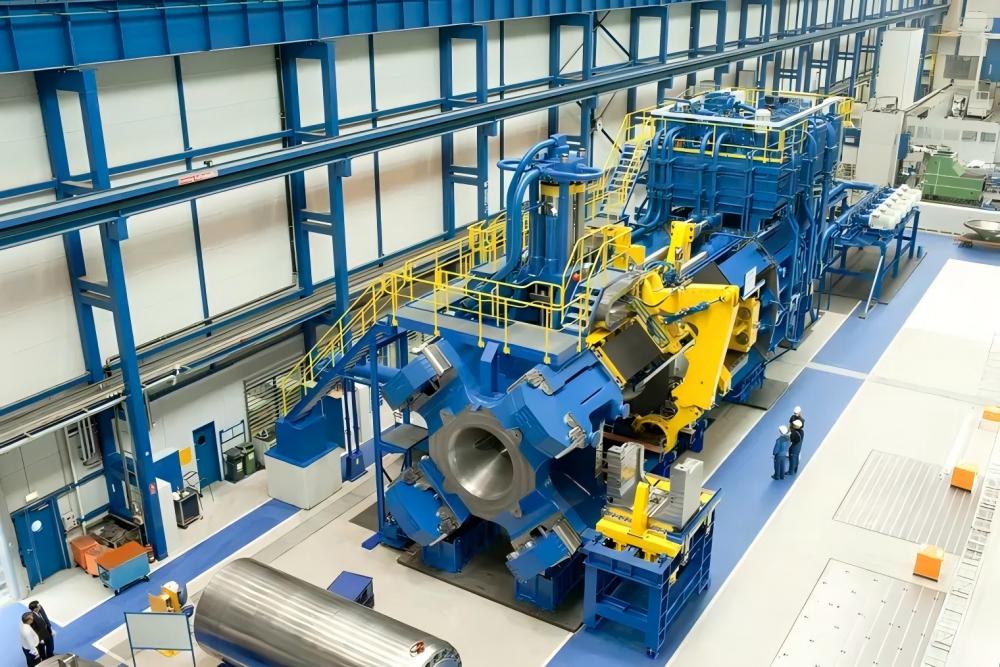
Calculating the Return on Investment (ROI) for an extrusion press requires more than just looking at the monthly output. You must factor in the ‘Yield Rate’—the percentage of the billet that becomes a finished, saleable product. A high-quality press with a precision puller system and accurate shearing will have a much higher yield than a budget machine. Even a 2% difference in yield can translate to $50,000+ in annual savings on raw material costs.
The formula for ROI should be: (Annual Profit Increase + Annual Cost Savings) / Total Investment Cost. Profit increase comes from higher throughput and the ability to take on more complex, higher-margin jobs. Cost savings come from reduced energy use, lower scrap rates, and fewer maintenance interventions. Most industrial buyers aim for a payback period of 3 to 5 years.
Downtime is the ‘ROI killer.’ When calculating your return, be realistic about the availability of the machine. A press that is down for maintenance 10% of the time will never meet its financial targets. This is why the reputation of the manufacturer and the availability of local support are financial metrics, not just operational ones. Investing in a HARSLE machine, for instance, provides the reliability needed to keep ROI projections on track.
Buying Advice: A Strategic Checklist
To ensure a successful purchase, follow a structured vetting process. First, define your product range clearly. What are the maximum and minimum circle sizes? What alloys will you use? This dictates the tonnage and the heating requirements. Second, visit the manufacturer’s facility. Seeing the build quality of the frames and the cleanliness of the hydraulic assembly area tells you more than a brochure ever could.
Third, talk to existing customers. Ask about the ‘real-world’ dead cycle time and the responsiveness of the after-sales team. Fourth, insist on a detailed performance guarantee in the contract. This should specify the cycle time, the extrusion speed for specific profiles, and the thickness tolerances the machine must maintain. If a manufacturer is unwilling to stand behind these numbers, it is a major red flag.
Finally, consider the future. Is the press ‘automation-ready’? Even if you don’t buy a fully robotic handling system today, ensure the PLC and mechanical interface can accommodate one in the future. The Common Buying Mistakes Avoid When Purchasing An Aluminium Extrusion Press often involve short-term thinking that limits the company’s ability to scale as market demands change.
Common Buying Mistakes to Avoid
One of the most frequent errors is underestimating the required tonnage. Buyers often try to save money by purchasing a press that is ‘just enough’ for their current needs. However, running a press at its maximum capacity constantly leads to accelerated wear and higher failure rates. It is always better to have a 20% buffer in tonnage to ensure the machine operates within its ‘sweet spot’ of efficiency and longevity.
Another mistake is neglecting the auxiliary equipment. An extrusion press is only as fast as its cooling table and puller. If the press can extrude at 30 meters per minute but the cooling table can only handle 20, the press is effectively throttled. Buyers must view the entire line as a single, balanced system. Furthermore, ignoring the quality of the die-heating oven can lead to ‘cold starts’ that damage the press container and the die itself.
Lastly, many buyers fail to verify the ‘True Origin’ of the components. Some manufacturers claim to use European hydraulics but actually use licensed versions made with lower-grade materials. Always ask for the original component certificates. Avoiding these Common Buying Mistakes Avoid When Purchasing An Aluminium Extrusion Press requires a blend of technical skepticism and thorough due diligence.
Frequently Asked Questions (FAQ)
1. What is the average lifespan of a HARSLE aluminium extrusion press?
With proper maintenance and regular hydraulic oil filtration, a high-quality extrusion press can last 20 to 30 years. Many machines are ‘retrofitted’ after 15 years with new control systems and pumps to extend their life even further.
2. How do I choose between a direct and indirect extrusion press?
Direct extrusion is best for general-purpose architectural and industrial profiles using 6000-series alloys. Indirect extrusion is preferred for high-strength 2000 or 7000-series alloys where uniform grain structure and minimal friction are critical for part integrity.
3. What is the most critical maintenance task for an extrusion press?
Hydraulic oil management is paramount. Contaminated oil will destroy expensive pumps and valves. Regular oil analysis, high-efficiency filtration, and maintaining the correct operating temperature are the most important factors in preventing catastrophic failure.
4. Can I extrude different alloys on the same press?
Yes, but it requires different temperature settings and extrusion speeds. Some alloys require water quenching at the exit, while others need air cooling. Ensure your handling system is equipped for the specific cooling requirements of all the alloys you plan to run.
5. How much space is required for a complete extrusion line?
A standard 1450-ton press line typically requires a building length of at least 50 to 70 meters to accommodate the billet heater, the press, the run-out table, the cooling bed, the stretcher, and the saw table. Width requirements are usually around 15 to 20 meters.
6. Why is the ‘Dead Cycle Time’ so important?
The dead cycle is the time when the machine is not producing a profile. In a high-volume environment, reducing the dead cycle from 25 seconds to 15 seconds can increase total daily production by 10-15%, which directly impacts the profitability of the operation.


