How to Diagnose and Solve Back Pressure Issues in an Aluminium Extrusion Press

Introduction to Back Pressure in Aluminium Extrusion
In the world of metal fabrication, the aluminium extrusion press stands as a cornerstone of modern manufacturing. This complex piece of machinery transforms raw aluminium billets into intricate profiles used in everything from aerospace components to window frames. However, the efficiency of this process is often dictated by a critical physical variable: back pressure. Understanding how to Diagnose Solve Back Pressure Issues In An Aluminium Extrusion Press is essential for any facility aiming to maintain high throughput and superior product quality.
Back pressure, in the context of extrusion, refers to the resistance encountered by the hydraulic ram as it forces the softened aluminium through the die. While a certain amount of pressure is necessary to overcome the yield strength of the metal, excessive or fluctuating back pressure can lead to catastrophic failures, including die breakage, pump cavitation, and inconsistent profile dimensions. For operators and maintenance engineers, identifying the root cause of these pressure spikes is the first step toward a stable production environment.
HARSLE, a leader in industrial machinery, recognizes that the longevity of an aluminium extrusion press depends heavily on the health of its hydraulic and mechanical systems. When back pressure exceeds design limits, the entire system undergoes stress. This guide provides a deep dive into the technical nuances of diagnosing these issues, offering actionable solutions to ensure your extrusion line operates at peak performance. By mastering these diagnostic techniques, you can reduce downtime and significantly lower the cost per ton of extruded material.
Key Considerations for Pressure Management
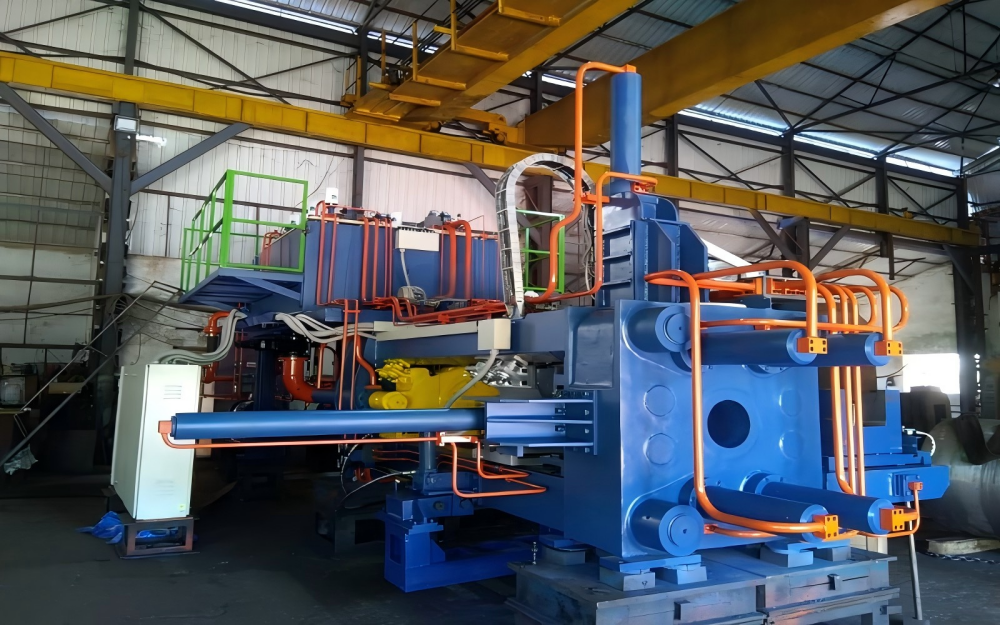
Before diving into the diagnostic steps, it is vital to understand the factors that influence pressure within the extrusion cycle. The relationship between the billet, the container, and the die is a delicate balance of thermodynamics and fluid dynamics. One of the primary considerations is the billet temperature. Aluminium’s flow stress decreases as temperature increases; therefore, a billet that is too cold will naturally demand higher pressure from the hydraulic system to move through the die orifice.
Another critical factor is the extrusion ratio—the ratio of the cross-sectional area of the container to the cross-sectional area of the die openings. A high extrusion ratio means the metal must undergo significant deformation, which inherently increases the back pressure. Operators must ensure that the press capacity matches the complexity of the die. Attempting to extrude high-ratio profiles on an underpowered press will lead to chronic back pressure issues and premature wear of the hydraulic seals.
Lubrication and friction also play a pivotal role. The friction between the billet and the container wall creates a significant portion of the total resistance. If the container is not properly heated or if the lubrication on the dummy block is insufficient, the press must work harder to overcome this static and dynamic friction. Furthermore, the design of the die itself—specifically the bearing lengths—must be optimized. Longer bearings provide more control over the metal flow but increase the pressure required to push the metal through.
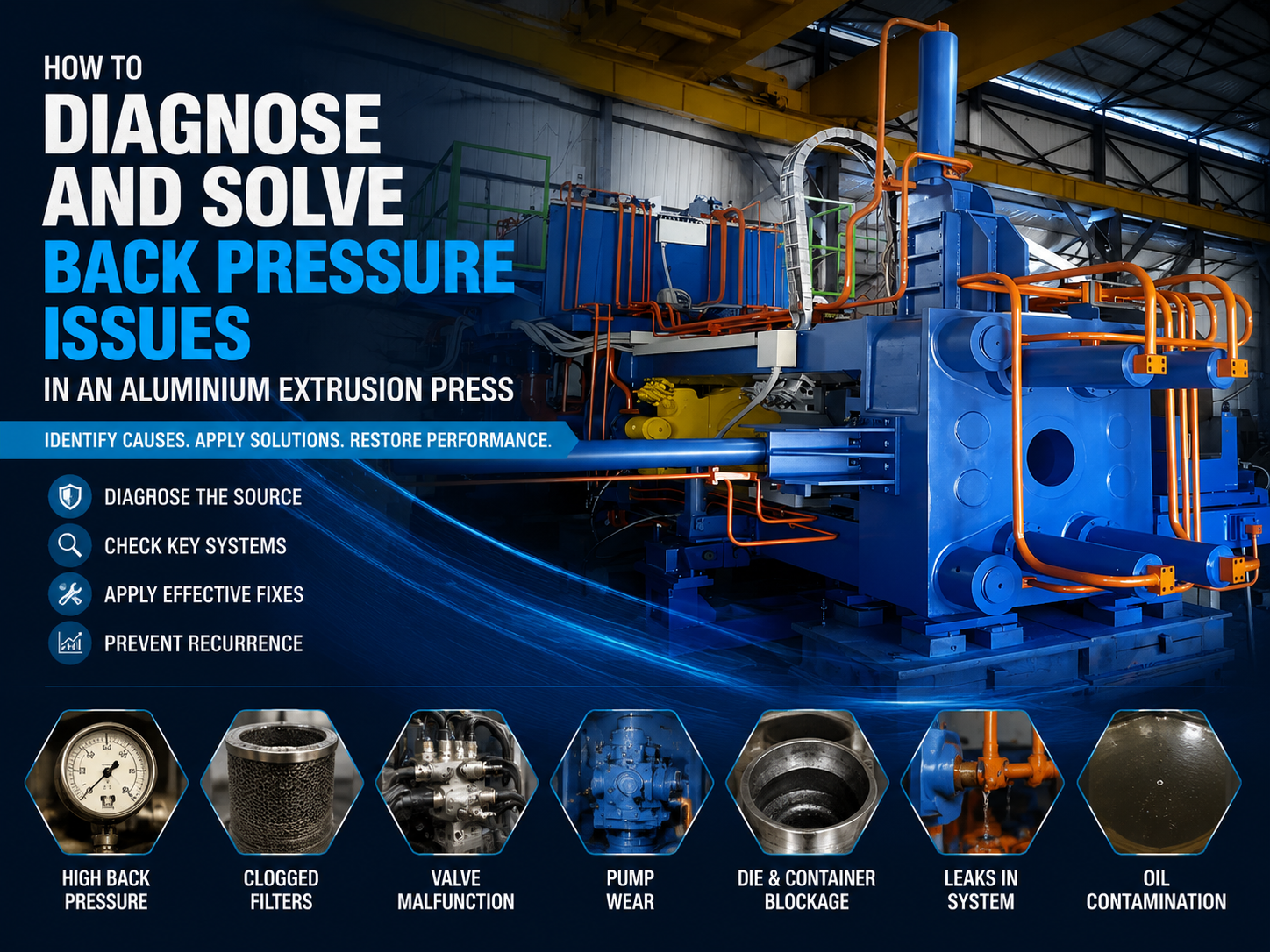
Finally, the condition of the hydraulic fluid cannot be overlooked. Contaminated or overheated oil loses its viscosity and compressibility characteristics, leading to erratic pressure readings. In many cases, what appears to be a mechanical back pressure issue is actually a failure in the hydraulic control system, such as a sticking relief valve or a failing variable displacement pump. Regular fluid analysis is a prerequisite for accurate diagnosis.
Technical Details: Diagnosing Back Pressure Issues
Identifying Symptoms of Excessive Back Pressure
The first step to Diagnose Solve Back Pressure Issues In An Aluminium Extrusion Press is recognizing the symptoms before they lead to a total system shutdown. One of the most common signs is “breakthrough pressure” spikes. This occurs at the very beginning of the extrusion stroke when the ram first encounters the billet. If the pressure gauge hits the maximum relief setting and stays there for several seconds before the metal starts to flow, it indicates an issue with billet temperature or die preheating.
Another symptom is inconsistent ram speed. If the ram slows down significantly during the middle of the stroke despite the pump being at full displacement, it suggests that the internal resistance (back pressure) is approaching the press’s maximum force capacity. You might also notice audible cues, such as high-pitched whining from the hydraulic pumps or “chattering” in the piping, which often points to cavitation caused by the system struggling to maintain flow against high resistance.
Analyzing the Hydraulic Circuit
To diagnose the issue technically, one must look at the hydraulic schematics. Modern HARSLE presses utilize sophisticated PLC systems to monitor pressure at various points. By comparing the pressure at the main cylinder with the pressure at the pump outlet, technicians can determine if the loss is occurring within the control valves or at the work interface. A significant delta between these two points often indicates a clogged filter or a malfunctioning proportional valve that is restricting flow.
Thermal imaging can also be a powerful diagnostic tool. By scanning the hydraulic manifold and the container, you can identify “hot spots.” A valve that is significantly hotter than the surrounding components is likely bypassing fluid internally, which creates a false sense of back pressure or prevents the system from reaching the necessary force. Similarly, uneven heating in the container can cause the billet to deform asymmetrically, leading to localized pressure increases that can tilt the ram or damage the container liner.
The Role of Die Geometry and Maintenance
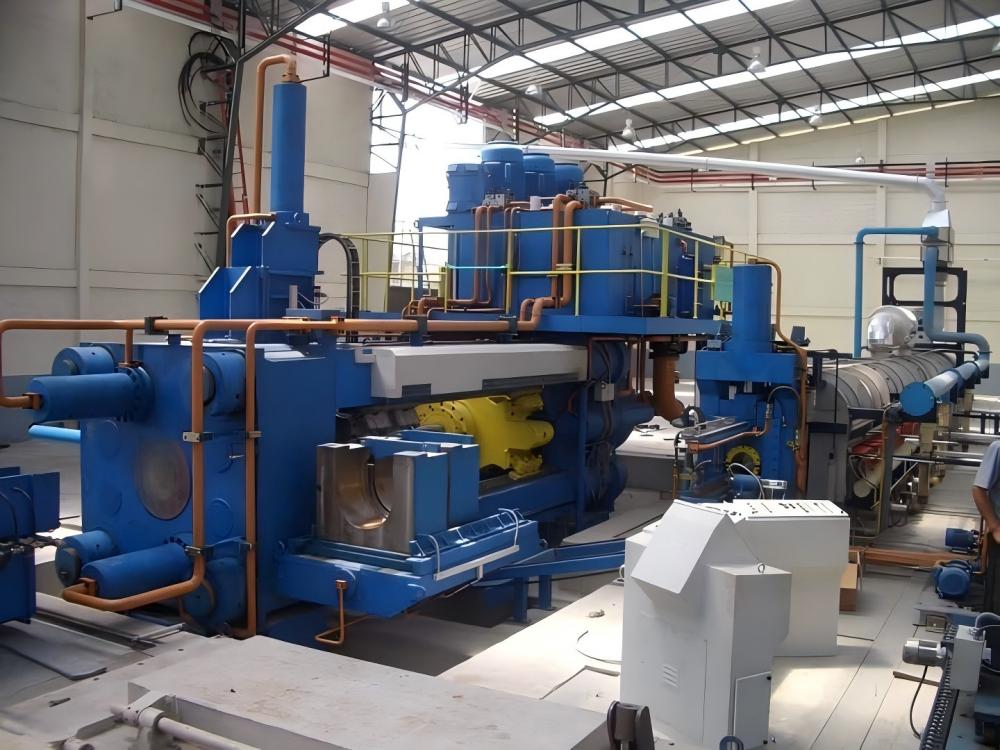
Often, the “back pressure” is a direct result of die fouling or improper die nitriding. Over time, aluminium can build up on the die bearings (a phenomenon known as pick-up), which increases friction and narrows the effective opening. This requires the press to exert more force to maintain the same extrusion speed. If you find that back pressure issues are specific to certain dies, the problem is likely metallurgical or geometric rather than mechanical.
Technicians should use a micrometer to check for die deflection. If the die plate is bowing under pressure, it can pinch the metal flow, creating a feedback loop of increasing pressure. Ensuring that the die support tools (bolsters and sub-bolsters) are in perfect condition is critical. Any misalignment in the tool stack will create parasitic friction, which manifests as back pressure on the main hydraulic gauge.
Solving Back Pressure Issues: Practical Solutions
Optimizing the Billet Heating Process
The most effective way to solve high back pressure is to ensure the billet is at its optimal “plastic” state. Implementing a tapered heating profile—where the front of the billet is hotter than the rear—can help balance the pressure throughout the stroke. As the extrusion progresses, the friction between the billet and the container generates heat; by having a cooler rear section, you compensate for this generated heat, keeping the total pressure stable. HARSLE recommends using induction heaters with precise zone control to achieve this.
Hydraulic System Refinement
If the diagnosis points to the hydraulic system, the first step is often a complete fluid flush and filter replacement. However, for persistent issues, you may need to recalibrate the proportional relief valves. These valves control the maximum pressure the system can exert. If they are set too low, the press will stall; if set too high, you risk mechanical damage. Upgrading to high-response servo-valves can provide smoother pressure transitions, reducing the “shock” to the system during the breakthrough phase.
Furthermore, check the nitrogen pre-charge in the accumulators. Accumulators act as buffers that absorb pressure spikes. If the bladder has lost its charge, the system will experience violent pressure fluctuations, which can be misdiagnosed as back pressure issues. Maintaining the correct pre-charge ensures that the hydraulic system can deliver a steady flow of energy to the ram.
Mechanical Alignment and Lubrication
Misalignment is a silent killer of extrusion presses. If the ram is not perfectly centered with the container, the dummy block will rub against the container liner, creating immense friction. This friction is recorded as back pressure. Regular laser alignment checks are necessary to ensure the press axis remains true. Additionally, switching to high-performance boron nitride lubricants for the die face and dummy block can significantly reduce the force required to initiate the extrusion.
Selection Advice for New Extrusion Equipment
When purchasing a new aluminium extrusion press, selecting a machine that can handle your specific production requirements is the best way to prevent future pressure issues. Here are several factors to consider during the selection process:
- Press Tonnage: Always choose a press with a 15-20% buffer over your maximum calculated pressure requirements. Running a press at 100% capacity constantly will lead to frequent back pressure alarms and component fatigue.
- Advanced Control Systems: Look for machines equipped with real-time pressure monitoring and data logging. HARSLE presses feature intuitive interfaces that allow operators to see pressure curves, making it easier to spot trends before they become problems.
- Container Design: Opt for containers with multi-zone heating elements. This allows for better control over the billet temperature during the extrusion process, directly impacting the flow stress and back pressure.
- Hydraulic Efficiency: Modern presses should use variable frequency drives (VFD) on the pump motors. This not only saves energy but allows for much finer control over the ram speed and pressure application.
- Rigid Frame Construction: A robust, pre-stressed frame minimizes deflection. As discussed, frame or die deflection is a major contributor to localized pressure increases.
By investing in a high-quality HARSLE extrusion press, you are not just buying a machine; you are acquiring a system designed to mitigate the common pitfalls of metal deformation. Our engineering team focuses on reducing internal friction and maximizing hydraulic efficiency, ensuring that the force generated is used for extruding metal, not overcoming machine resistance.
Frequently Asked Questions (FAQ)
1. What is the most common cause of sudden back pressure spikes?
The most common cause is usually a cold billet or a die that has not been properly preheated in the die oven. If the aluminium is not at its optimal plastic temperature, its resistance to flow is significantly higher, causing the hydraulic system to hit its pressure ceiling almost immediately.
2. How does die wear affect back pressure?
As a die wears, the bearing surfaces can become rough or “galled.” This increases the coefficient of friction between the aluminium and the steel die. Higher friction requires higher pressure to maintain the extrusion speed, leading to increased back pressure readings.
3. Can hydraulic oil temperature cause pressure issues?
Yes. If the hydraulic oil becomes too hot, its viscosity drops. This can lead to internal leakage within the pumps and valves. While this might actually show as a *loss* of pressure, the system’s inability to maintain steady force often causes the operator to see erratic readings that mimic back pressure problems.
4. What is “Breakthrough Pressure”?
Breakthrough pressure is the peak pressure required to start the flow of metal through the die. Once the metal begins to move, the pressure usually drops to a lower “running pressure.” If the breakthrough pressure is too high, it can damage the die or the press’s main cylinder.
5. How often should I calibrate the pressure sensors on my HARSLE press?
HARSLE recommends calibrating pressure transducers every six months or whenever you notice a discrepancy between the digital readout and a manual master gauge. Accurate data is the foundation of effective diagnosis.
Conclusion: Mastering the Extrusion Process
To Diagnose Solve Back Pressure Issues In An Aluminium Extrusion Press requires a blend of mechanical intuition, hydraulic knowledge, and metallurgical understanding. By systematically checking billet temperatures, hydraulic health, and die conditions, operators can transform a struggling production line into a model of efficiency. High back pressure is not just an operational hurdle; it is a signal from the machine that something in the process is out of balance.
At HARSLE, we are committed to providing the tools and the expertise necessary for metal fabricators to succeed. Our aluminium extrusion presses are engineered to provide the stability and control needed to manage complex profiles with ease. Remember that proactive maintenance and a deep understanding of the extrusion cycle are your best defenses against downtime. By following the diagnostic steps and solutions outlined in this guide, you can ensure your facility remains competitive in an ever-evolving industrial landscape. For more information on our range of extrusion solutions and technical support, contact HARSLE today.