
Aluminium Extrusion Press Control Panel Faults: Diagnosis and Solutions

Introduction to Aluminium Extrusion Press Control Systems
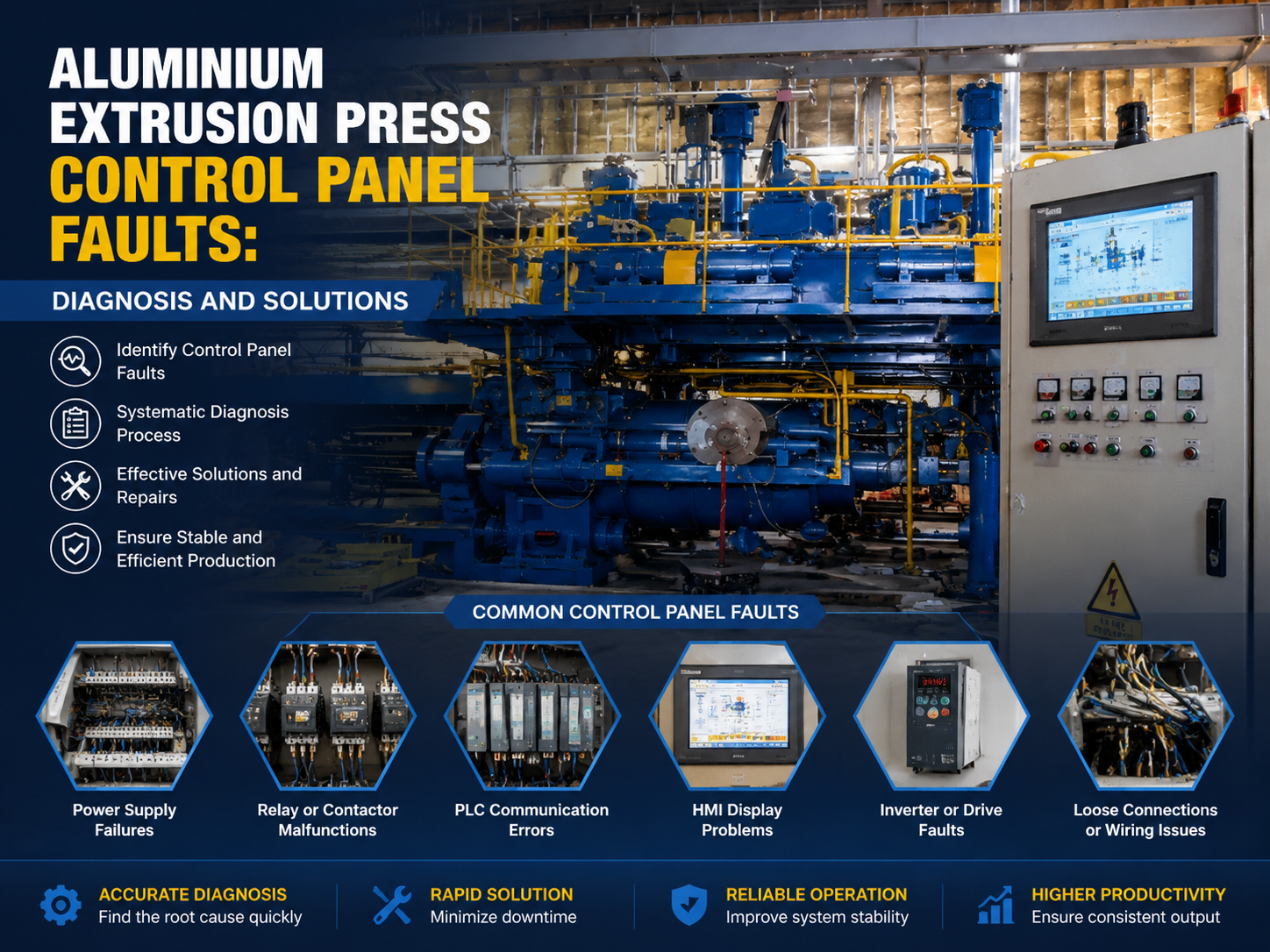
In the modern landscape of metal fabrication, the aluminium extrusion press stands as a cornerstone of industrial production. These massive machines, capable of exerting thousands of tons of force, rely heavily on their control panels to orchestrate complex hydraulic and mechanical movements with precision. However, like any sophisticated electronic system, these panels are susceptible to various issues. Understanding Aluminium Extrusion Press Control Panel Faults: Diagnosis Solutions is essential for maintaining uptime and ensuring the longevity of the equipment. HARSLE, a leader in metal fabrication machinery, emphasizes that a well-maintained control system is the brain of the operation, and any malfunction can lead to significant production delays.
The control panel of an aluminium extrusion press is more than just a box of buttons; it is an integrated environment featuring Programmable Logic Controllers (PLCs), Human-Machine Interfaces (HMIs), variable frequency drives, and a myriad of sensors. When a fault occurs, it often manifests as a system halt or erratic behavior. Effective diagnosis requires a systematic approach, blending electrical knowledge with an understanding of the extrusion process itself. This guide aims to provide a deep dive into the most common faults and the technical solutions required to rectify them, ensuring your HARSLE machinery operates at peak performance.
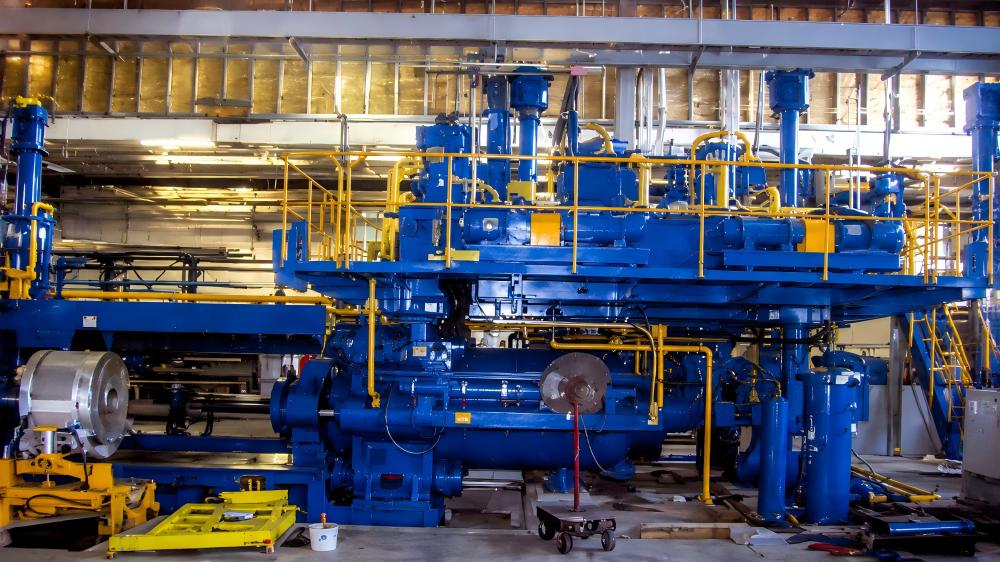
As industries move toward Industry 4.0, the complexity of these control systems increases. While this brings better precision and data logging, it also introduces new failure modes related to software and network connectivity. Whether you are dealing with a legacy relay-based system or a modern digital interface, the principles of diagnosis remain rooted in logical elimination and technical proficiency. By mastering the Aluminium Extrusion Press Control Panel Faults: Diagnosis Solutions, operators and maintenance teams can transform from reactive fixers to proactive system managers.
Key Considerations for Control Panel Reliability
Before diving into specific faults, it is crucial to understand the environmental and operational factors that influence control panel health. Aluminium extrusion plants are notoriously harsh environments. High ambient temperatures, fine metallic dust, and significant electrical noise from high-power motors all conspire against sensitive electronic components. Therefore, the first step in diagnosis is often assessing the environment in which the panel operates.
Heat is the primary enemy of electronics. Inside a control panel, components like PLCs and power supplies generate their own heat, which must be dissipated. If the cooling fans or heat exchangers fail, the internal temperature can rise rapidly, leading to intermittent logic errors or permanent component failure. Regular inspection of the panel’s thermal management system is a non-negotiable part of preventive maintenance. Furthermore, the presence of conductive aluminium dust can cause short circuits if the panel is not properly sealed or if the positive pressure system fails.
Another key consideration is the quality of the incoming power. Extrusion presses consume massive amounts of electricity, and the switching of large hydraulic pumps can cause voltage spikes and sags. Without proper surge protection and voltage regulation, these fluctuations can corrupt PLC memory or damage sensitive I/O cards. HARSLE recommends the use of high-quality Uninterruptible Power Supplies (UPS) and isolation transformers to shield the control logic from the raw industrial power grid. Understanding these external pressures is the first step in effective Aluminium Extrusion Press Control Panel Faults: Diagnosis Solutions.
Technical Details: Components of the Control System
To diagnose a fault, one must understand the architecture of the system. The control panel typically consists of several layers: the logic layer (PLC), the interface layer (HMI), the execution layer (Contactors and Drives), and the feedback layer (Sensors). Each layer has its own set of common failure points. For instance, the PLC is the central processing unit that executes the program logic. If the PLC enters a ‘Stop’ or ‘Fault’ mode, the entire press will cease to function.
The HMI serves as the window into the machine’s operation. Modern HMIs are touch-sensitive screens that communicate with the PLC via protocols like Profinet or Ethernet/IP. Faults here often involve communication timeouts or touchscreen calibration issues. Below the logic layer, the I/O (Input/Output) modules act as the bridge to the physical world. Digital inputs receive signals from limit switches and push buttons, while analog outputs control the proportional valves that regulate hydraulic pressure and flow.
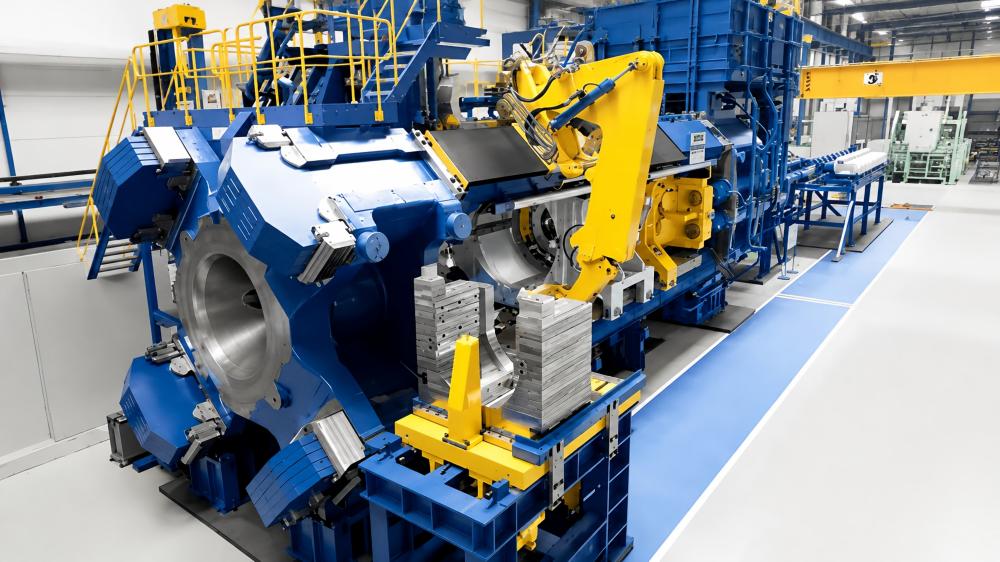
Wiring and connectivity are often overlooked but are frequent sources of trouble. Vibration from the press can loosen terminal screws over time, leading to intermittent signals that are notoriously difficult to diagnose. Using high-quality, vibration-resistant ferrules and ensuring proper cable shielding is vital. In the context of Aluminium Extrusion Press Control Panel Faults: Diagnosis Solutions, a technician must be adept at reading electrical schematics and using a multimeter to trace signals through these various layers.
Common Aluminium Extrusion Press Control Panel Faults: Diagnosis Solutions
1. PLC Communication Errors
One of the most frequent issues in modern extrusion presses is the loss of communication between the PLC and its peripheral devices. This is often indicated by a “Comm Error” or “Node Offline” message on the HMI. The diagnosis starts with checking the physical layer: are the Ethernet or fieldbus cables securely plugged in? Is there a broken wire in a cable carrier that moves with the press? If the physical connections are sound, the technician should look at the network switch or the communication module’s status LEDs.
Solutions often involve replacing damaged cables with high-flex industrial-grade versions or resetting the network parameters in the PLC software. In some cases, electrical noise from a nearby VFD (Variable Frequency Drive) might be interfering with the signal. Ensuring that communication cables are physically separated from high-voltage power lines and that shields are properly grounded can resolve these persistent issues.
2. HMI Unresponsiveness and Display Issues
The HMI is the primary point of interaction, and when it fails, the operator is blind. Common symptoms include a frozen screen, a black display, or the touch interface not responding to input. If the screen is black, check the 24V DC power supply. If the screen is frozen, it may be a software hang-up caused by a memory leak or a communication loop. A simple power cycle often provides a temporary fix, but the root cause may require a firmware update or a replacement of the HMI unit itself.
For touch sensitivity issues, calibration is the first step. However, in the dusty environment of an aluminium plant, the resistive or capacitive layers of the screen can wear out or become contaminated. HARSLE suggests using protective overlays and ensuring operators do not use sharp objects to press buttons on the screen. If the HMI hardware is failing, migrating the project to a new unit is the definitive solution.
3. Input/Output (I/O) Module Failures
I/O modules are the most “active” part of the PLC system, constantly switching and receiving signals. A common fault is a “blown” output, where a transistor or relay inside the module fails due to an external short circuit or an inductive kickback from a solenoid valve. Diagnosis involves checking the status LED on the module; if the PLC logic says the output should be ‘ON’ but the LED is ‘OFF’ (or vice versa), the module or the specific channel is likely faulty.
The solution is to first identify and fix the external short circuit to prevent damaging the replacement module. Once the external wiring is verified, the faulty I/O card can be swapped. In some advanced systems, individual channels are fused, and simply replacing a glass fuse can restore operation. Always keep spare I/O modules in stock to minimize downtime during these common Aluminium Extrusion Press Control Panel Faults: Diagnosis Solutions scenarios.
4. Power Supply and Electrical Noise
Erratic behavior, such as the press stopping for no apparent reason or sensors giving fluctuating readings, often points to power supply issues. The 24V DC power that runs the control logic must be “clean.” If the power supply is aging, it may produce excessive ripple voltage. Diagnosis requires an oscilloscope or a high-quality multimeter to check the stability of the DC rail. Additionally, check for “ground loops,” where multiple ground points at different potentials cause current to flow through signal wires.
Solutions include replacing old power supplies with modern switching power supplies that have better filtering. Adding line reactors to the input of VFDs can also reduce the amount of electrical noise injected back into the system. Proper grounding of the control panel to a dedicated industrial earth ground is essential for stabilizing the entire electronic ecosystem.
Advanced Troubleshooting Techniques
When basic checks fail, advanced techniques are required. Modern PLCs have internal diagnostic buffers that record every error with a timestamp. Accessing these logs via a laptop and the manufacturer’s software (such as TIA Portal or Studio 5000) can reveal the exact millisecond a fault occurred and what the logic state was at that time. This is invaluable for intermittent faults that don’t stay active long enough to be caught by a multimeter.
Another technique is “forcing” I/O. If a technician suspects a sensor is failing, they can temporarily force the PLC input to ‘True’ in the software to see if the machine continues its cycle. Warning: This must only be done by experienced personnel, as bypassing safety interlocks can lead to machine damage or injury. Forcing is a diagnostic tool, not a permanent fix. By combining software diagnostics with physical testing, the most elusive Aluminium Extrusion Press Control Panel Faults: Diagnosis Solutions can be identified.
Selection Advice for Upgrading Control Panels
If an old control panel is constantly failing, it may be time for a retrofit. When selecting a new control system for an aluminium extrusion press, consider the following:
- Scalability: Ensure the PLC and HMI can handle future additions, such as automated handling systems or extra sensors.
- Remote Access: Modern panels should support remote diagnostics, allowing HARSLE engineers or your own off-site team to troubleshoot the machine via a secure VPN.
- Component Availability: Choose a system based on widely available components (like Siemens, Schneider, or Allen-Bradley) to ensure you can find spare parts locally.
- User-Friendliness: The HMI should have clear, intuitive graphics and multi-language support to reduce operator error.
- Environmental Protection: Look for panels with IP65 ratings and integrated cooling systems designed for high-heat environments.
Investing in a high-quality control system from the start, or choosing a reputable partner like HARSLE for a retrofit, significantly reduces the frequency of Aluminium Extrusion Press Control Panel Faults: Diagnosis Solutions. A modern control system not only fixes current problems but also provides data analytics that can help optimize the extrusion process, reducing scrap and energy consumption.
Preventive Maintenance for Long-Term Stability
The best way to handle faults is to prevent them. A robust preventive maintenance (PM) schedule for the control panel should include:
- Monthly Cleaning: Use a vacuum (not compressed air) to remove dust from the panel. Compressed air can push conductive dust deeper into electronic components.
- Filter Replacement: Change the air filters on the panel’s cooling fans regularly.
- Terminal Tightening: Every six months, check the tightness of all screw terminals, especially those on high-vibration parts of the machine.
- Battery Replacement: Many PLCs use a battery to maintain memory during power-offs. Replace these according to the manufacturer’s schedule to avoid losing the machine’s program.
- Backup Logic: Regularly back up the PLC and HMI programs to a secure cloud or external drive. If a processor fails, having the software ready to load into a new unit can save days of downtime.
FAQ
What is the most common cause of control panel failure in extrusion presses?
Heat and dust are the most common environmental causes, while loose wiring due to machine vibration is the most common mechanical cause. Together, these factors account for the majority of intermittent faults.
How do I know if my PLC is faulty or if it’s just a sensor?
Check the I/O status lights on the PLC. If the sensor’s physical LED is on but the PLC input LED is off, the wiring or the PLC input card is likely the issue. If both are off, the sensor itself or its power supply is the culprit.
Can I troubleshoot the control panel while the machine is running?
Some diagnostics, like checking HMI messages or observing PLC LEDs, can be done safely while running. However, opening the panel and testing live circuits should only be done with extreme caution and proper PPE, following all LOTO (Lockout/Tagout) procedures when necessary.
Why does my HMI screen keep flickering?
Flickering is often a sign of a failing backlight inverter or a loose video cable. It can also be caused by significant electromagnetic interference (EMI) from the press’s main motors if the cables aren’t properly shielded.
Is it worth repairing an old control panel or should I replace it?
If the components are obsolete and hard to find, or if the panel is causing more than a few hours of downtime per month, a full retrofit is usually more cost-effective in the long run than constant repairs.
Conclusion
Mastering Aluminium Extrusion Press Control Panel Faults: Diagnosis Solutions is a vital skill for any facility operating high-pressure metal fabrication equipment. By understanding the interplay between the PLC, HMI, and the physical components of the press, maintenance teams can significantly reduce downtime and improve production quality. HARSLE remains committed to providing not only world-class machinery but also the technical knowledge required to keep that machinery running at its best. Regular maintenance, environmental control, and a systematic approach to troubleshooting are the keys to success in the demanding world of aluminium extrusion. Whether you are diagnosing a simple loose wire or a complex communication error, the goal remains the same: precision, safety, and efficiency.


