How to Fix Frequent Die Breakage in Aluminium Extrusion Press Production

Introduction to Die Longevity in Aluminium Extrusion
In the high-pressure world of metal fabrication, the aluminium extrusion press is the heart of the production line. However, one of the most persistent and costly challenges faced by manufacturers is the frequent breakage of extrusion dies. When a die fails prematurely, it doesn’t just represent the loss of a precision-engineered tool; it results in significant downtime, wasted raw materials, and a disruption of the entire supply chain. Understanding how to fix frequent die breakage in aluminium extrusion press production is essential for any facility aiming for high efficiency and profitability.
Die breakage is rarely the result of a single factor. Instead, it is typically the culmination of issues ranging from metallurgical deficiencies and improper heat treatment to mechanical misalignment of the press and suboptimal extrusion parameters. At HARSLE, we recognize that the synergy between the machine and the tooling is critical. A high-quality aluminium extrusion press provides the stability and control necessary to protect the die, but the operator must also implement rigorous maintenance and design protocols to ensure longevity.
This comprehensive guide will delve into the technical nuances of die failure, providing actionable strategies to mitigate stress, optimize thermal management, and refine the extrusion process. By addressing these core areas, manufacturers can transition from a reactive maintenance cycle to a proactive production environment where die life is maximized and operational costs are minimized.
Key Considerations for Preventing Die Failure
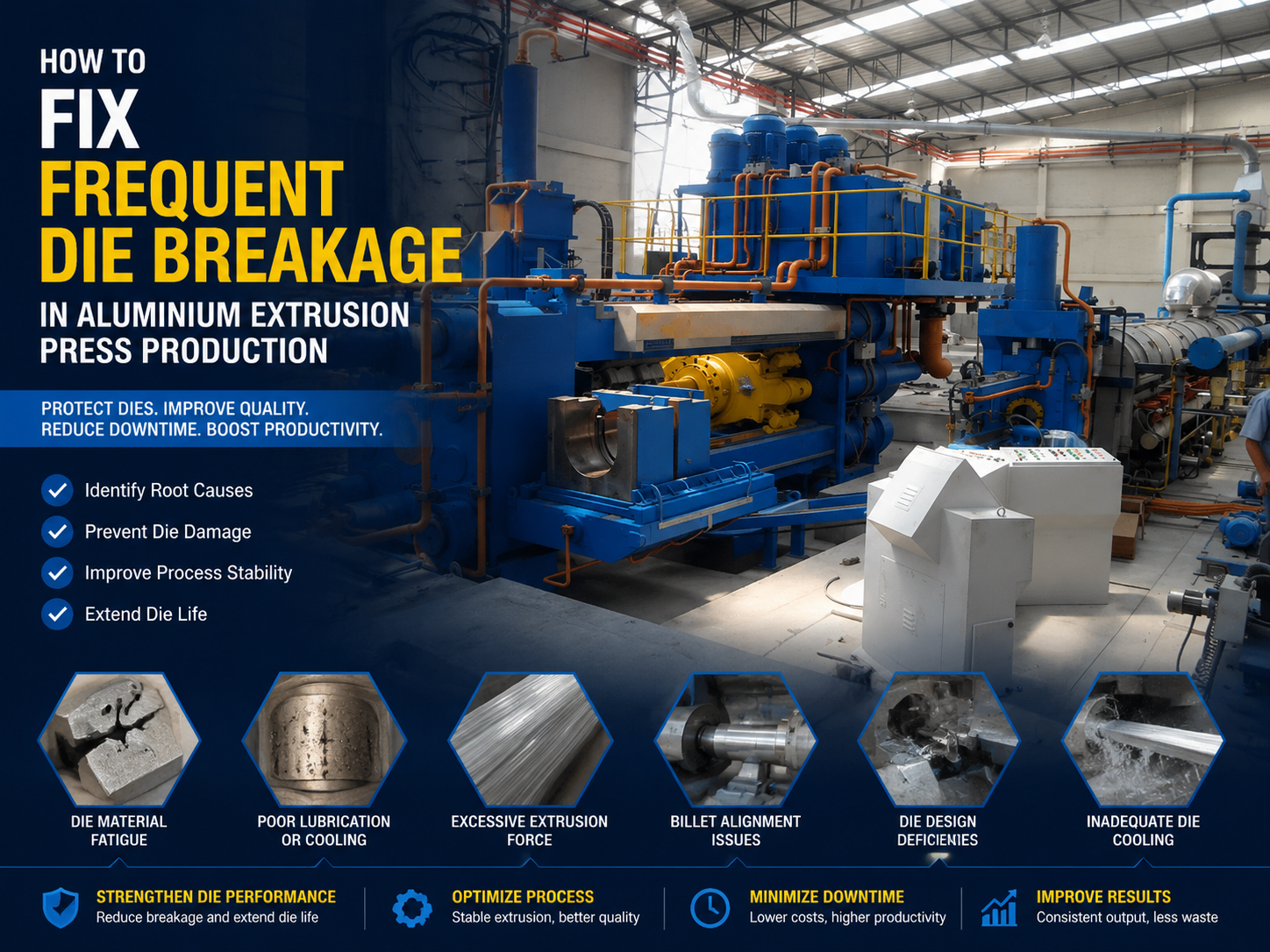
To effectively fix frequent die breakage in aluminium extrusion press production, one must first categorize the potential points of failure. The most common causes can be grouped into three primary pillars: Die Design and Material, Heat Treatment Processes, and Operational Parameters. Each of these pillars must be scrutinized to identify where the system is failing.
1. Die Design and Geometry
The geometry of the die is the first line of defense against breakage. If a die is designed with sharp internal corners or insufficient wall thickness in high-pressure zones, it becomes a magnet for stress concentration. Engineers must ensure that the transition zones within the die are smooth and that the “bridge” structures in hollow profile dies are robust enough to withstand the massive forces exerted by the hydraulic ram. Furthermore, the bearing length must be calculated precisely; if it is too long, the friction increases exponentially, leading to excessive heat and potential cracking.
2. Material Selection (The H13 Standard)
Most extrusion dies are crafted from H13 hot-work tool steel (or equivalent grades like SKD61). However, not all H13 steel is created equal. The presence of impurities or a non-uniform microstructure can lead to internal voids that expand under pressure. Selecting high-quality, ESR (Electro-Slag Remelted) steel is often a necessary investment to ensure the material can handle the cyclic thermal and mechanical loading inherent in aluminium extrusion.
3. Heat Treatment and Nitriding
Heat treatment is perhaps the most critical stage in die preparation. A die that is too hard will be brittle and prone to catastrophic cracking, while a die that is too soft will deform under pressure. The goal is to achieve a balance of toughness and hardness. Additionally, the nitriding process—which creates a hard, wear-resistant surface layer—must be managed carefully. If the nitrided layer is too thick or brittle, it can flake off or initiate surface cracks that propagate through the die body.
Technical Details: Analyzing the Mechanics of Breakage
Understanding the physics behind die failure is crucial for troubleshooting. When the aluminium billet is pushed through the die, it exerts both radial and longitudinal forces. If the press is not perfectly aligned, these forces become asymmetrical, creating “bending moments” that the die was never designed to handle.
Thermal Fatigue and Heat Checking
Extrusion dies operate in a state of constant thermal cycling. They are preheated to approximately 450°C, then subjected to the even higher temperatures of the flowing aluminium, followed by cooling periods. This constant expansion and contraction lead to “heat checking”—a network of fine surface cracks. If these cracks are not addressed through regular polishing and stress-relief tempering, they will eventually grow into deep fractures that cause the die to split.
The Role of Press Alignment
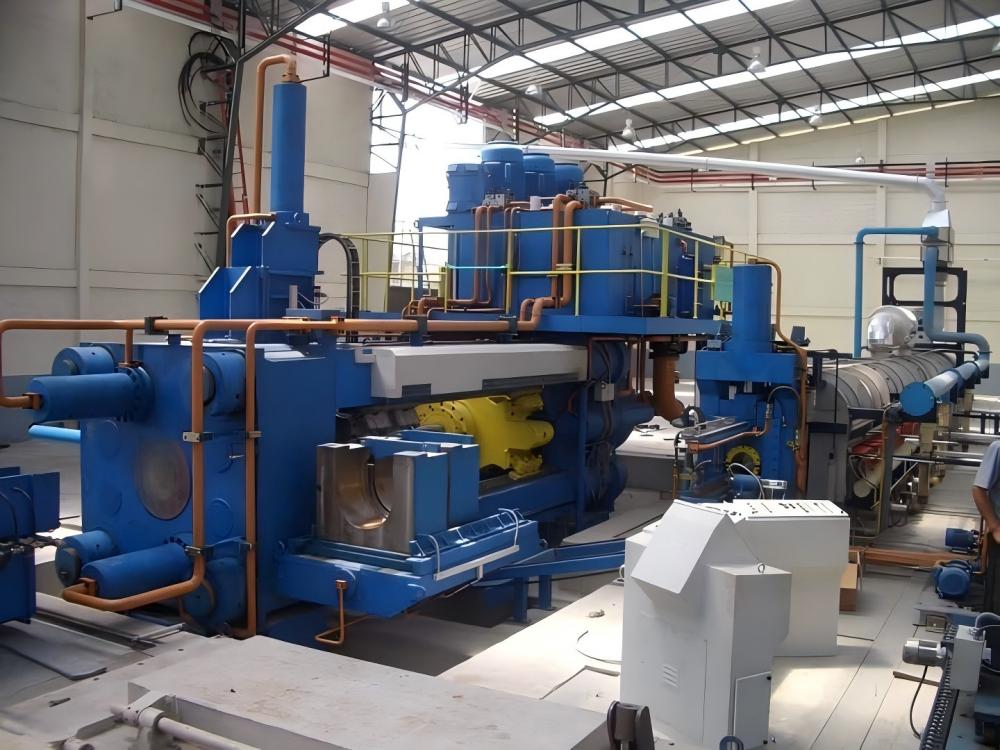
A major contributor to frequent die breakage is the misalignment of the aluminium extrusion press. If the container, the die slide, and the ram are not perfectly coaxial, the pressure distribution on the die face becomes uneven. This uneven loading causes the die to tilt or flex, leading to breakage at the weakest points, such as the ports or the mandrel. Regular laser alignment of the HARSLE press components is a mandatory maintenance step to prevent this issue.
Billet Quality and Lubrication
The quality of the aluminium billet itself plays a significant role. Hard inclusions or oxides within the billet act as abrasive particles that can score the die surface or cause sudden pressure spikes. Similarly, improper lubrication of the billet or the die face can lead to “stick-slip” phenomena, where the metal intermittently grips the die, causing erratic pressure fluctuations that fatigue the tool steel.
| Failure Mode | Primary Cause | Recommended Solution |
|---|---|---|
| Catastrophic Cracking | Excessive Hardness / Poor Design | Lower HRC (46-50), increase fillet radii |
| Heat Checking | Thermal Cycling / Lack of Tempering | Implement regular stress-relief cycles |
| Mandrel Deflection | Uneven Flow / High Pressure | Optimize port design and billet temperature |
| Surface Erosion | Poor Nitriding / Abrasive Billets | Improve nitriding quality and billet filtration |
Selection Advice: Choosing the Right Equipment and Tooling
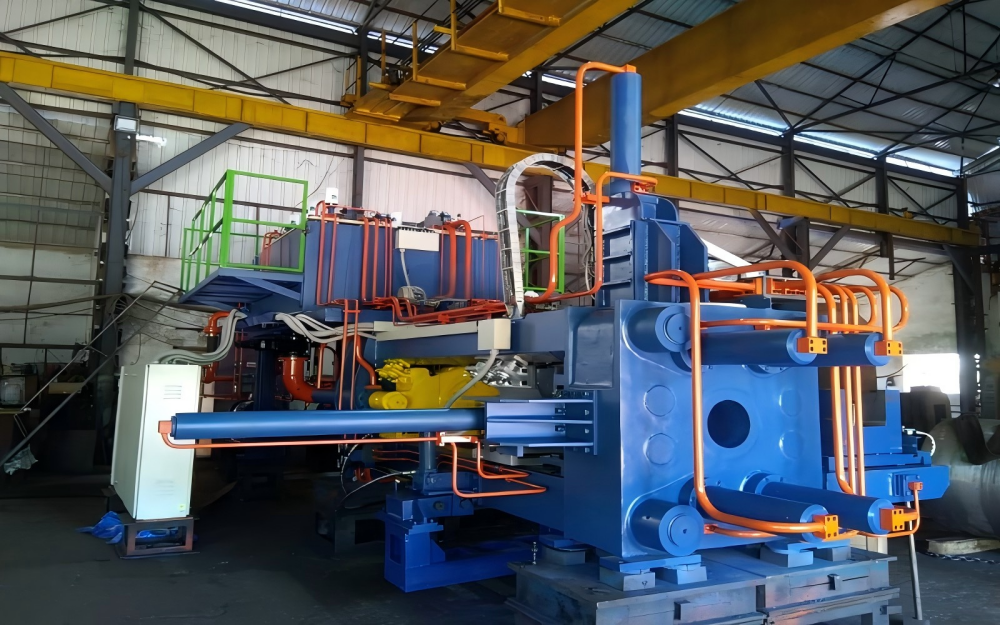
When looking to fix frequent die breakage in aluminium extrusion press production, the solution often starts with the selection of the machinery itself. A press that offers superior hydraulic control and structural rigidity will inherently protect the dies better than a lower-quality machine.
1. Look for Advanced Hydraulic Control
Modern HARSLE presses are equipped with sophisticated PLC systems that allow for “constant speed” or “constant pressure” extrusion. Sudden surges in pressure are a leading cause of die failure. By utilizing a press that can smoothly ramp up pressure and maintain a steady flow, you reduce the mechanical shock delivered to the die at the start of each cycle.
2. Prioritize Container Heating Systems
The temperature differential between the billet and the container can cause the die to experience thermal shock. Selecting a press with a high-precision container heating system ensures that the die is maintained at a stable operating temperature, reducing the risk of brittle fracture during the initial push.
3. Die Steel and Supplier Vetting
Don’t settle for the cheapest die supplier. Evaluate their heat treatment facilities. Do they use vacuum furnaces? Do they provide a hardness profile report? For complex profiles, consider using premium steels like Dievar or QRO 90, which offer superior resistance to thermal fatigue compared to standard H13.
4. Maintenance Infrastructure
Ensure your facility has the necessary equipment for die maintenance, including controlled preheating ovens, caustic soda cleaning tanks (to remove residual aluminium without damaging the steel), and precision polishing tools. A die should never be put into the press cold; it must be preheated to the operating temperature to ensure it has reached its optimal toughness.
FAQ: Troubleshooting Die Breakage
Q1: What is the ideal hardness for an aluminium extrusion die?
Typically, for standard aluminium profiles, a hardness of 46-50 HRC (Rockwell C) is recommended. If the die is larger or the profile is very complex, you might lean toward the lower end (46-47 HRC) to increase toughness and prevent cracking. Smaller, simpler dies can handle higher hardness for better wear resistance.
Q2: How often should a die be nitrided?
Nitriding should be performed after the die has produced a certain volume of metal, usually after the initial “trial run” and then periodically every 1,000 to 3,000 kg of extruded aluminium, depending on the alloy and complexity. Over-nitriding can lead to a brittle “white layer” that causes surface cracking.
Q3: Why does my die always break at the start of the shift?
This is almost always due to improper preheating. If the die is not heated uniformly to the correct temperature (usually 450°C – 480°C) for a sufficient amount of time (4-6 hours), the core remains cool and brittle. When the hot billet hits the die, the thermal shock and mechanical pressure cause it to snap.
Q4: Can a damaged die be repaired?
Minor surface wear or small cracks can sometimes be repaired through specialized welding (using H13 filler rods) and subsequent re-heat treatment. However, if the die has a structural crack through a bridge or the main body, it is generally safer and more cost-effective to replace it, as a failed repair can damage the press container or stem.
Q5: Does the aluminium alloy type affect die life?
Absolutely. Harder alloys (like the 7000 series) require much higher extrusion pressures and temperatures, which significantly reduces die life compared to softer alloys like the 6000 series. When switching to harder alloys, die design must be beefed up, and extrusion speeds must be reduced.
Conclusion: A Holistic Approach to Die Management
To fix frequent die breakage in aluminium extrusion press production, manufacturers must move away from viewing the die as a disposable commodity and start treating it as a critical precision component. The journey to zero premature failures involves a rigorous commitment to quality at every stage: from the initial CAD design and the selection of ESR-grade tool steel to the precision of the heat treatment and the daily maintenance of the aluminium extrusion press.
By investing in high-quality machinery from HARSLE, operators gain the advantage of stable, repeatable, and controllable extrusion cycles that provide the best possible environment for tooling. When combined with proper die preheating, regular stress-relief tempering, and meticulous press alignment, the lifespan of extrusion dies can be extended by 200% or more. This not only slashes tooling costs but also boosts the overall equipment effectiveness (OEE) of the entire plant, ensuring that your production remains competitive in a demanding global market.
Ultimately, the key is consistency. Consistent temperatures, consistent speeds, and consistent maintenance will always result in a more durable die and a higher-quality finished product. If you are experiencing frequent failures, use the technical details provided in this guide to audit your process, identify the weak links, and implement the necessary changes to secure your production future.