Aluminium Extrusion Press Container Wear: Symptoms, Causes, and Repair Tips

Introduction to Aluminium Extrusion Press Container Wear
In the high-pressure world of metal fabrication, the aluminium extrusion press stands as a cornerstone of industrial production. At the heart of this complex machinery lies the container—a critical component that houses the heated aluminium billet during the extrusion process. The container is subjected to extreme thermal stress, immense hydraulic pressure, and constant frictional forces. Over time, these factors inevitably lead to wear and tear, which can compromise the quality of the extruded profiles and the overall efficiency of the production line. Understanding the nuances of Aluminium Extrusion Press Container Wear: Symptoms, Causes, Repair Tips is essential for any facility aiming to maintain peak performance and minimize downtime.
The container is not merely a hollow cylinder; it is a precision-engineered assembly typically consisting of a mantle and a liner. The liner, which comes into direct contact with the hot aluminium, is the most vulnerable part of the assembly. When wear occurs, it affects the flow of the metal, leading to surface defects in the final product and potential damage to other press components like the stem and the die. For manufacturers using HARSLE equipment, maintaining the integrity of the container is a top priority to ensure the longevity of their investment and the consistency of their output.
This comprehensive guide delves into the technical aspects of container wear, providing plant managers, maintenance engineers, and operators with the knowledge needed to identify early warning signs, diagnose root causes, and implement effective repair strategies. By adopting a proactive approach to container maintenance, businesses can significantly reduce operational costs and enhance the safety of their extrusion operations.
Key Considerations for Container Longevity
When discussing Aluminium Extrusion Press Container Wear: Symptoms, Causes, Repair Tips, one must first consider the environmental and operational factors that influence the lifespan of the container. The container operates in a harsh environment where temperatures often exceed 400°C (750°F) and pressures can reach up to 1000 MPa. These conditions demand high-quality materials and precise thermal management. The choice of steel for the liner and mantle—typically H13 or similar hot-work tool steels—is the first line of defense against premature wear.
Thermal cycling is perhaps the most significant factor in container degradation. Every time a billet is loaded and extruded, the container undergoes a cycle of heating and cooling. This leads to thermal fatigue, which can manifest as micro-cracks on the inner surface of the liner. Furthermore, the alignment of the press is paramount. If the stem is not perfectly centered within the container, it creates uneven pressure distribution, accelerating wear on one side of the liner and potentially leading to catastrophic failure of the container assembly.
Another key consideration is the lubrication strategy. Proper lubrication between the billet and the liner reduces friction and prevents “galling”—a form of wear caused by adhesion between sliding surfaces. However, excessive or improper lubricant can lead to contamination of the aluminium and buildup within the container, which can cause its own set of problems. Balancing these factors requires a deep understanding of the extrusion process and a commitment to rigorous maintenance protocols.
Technical Details: Symptoms of Container Wear
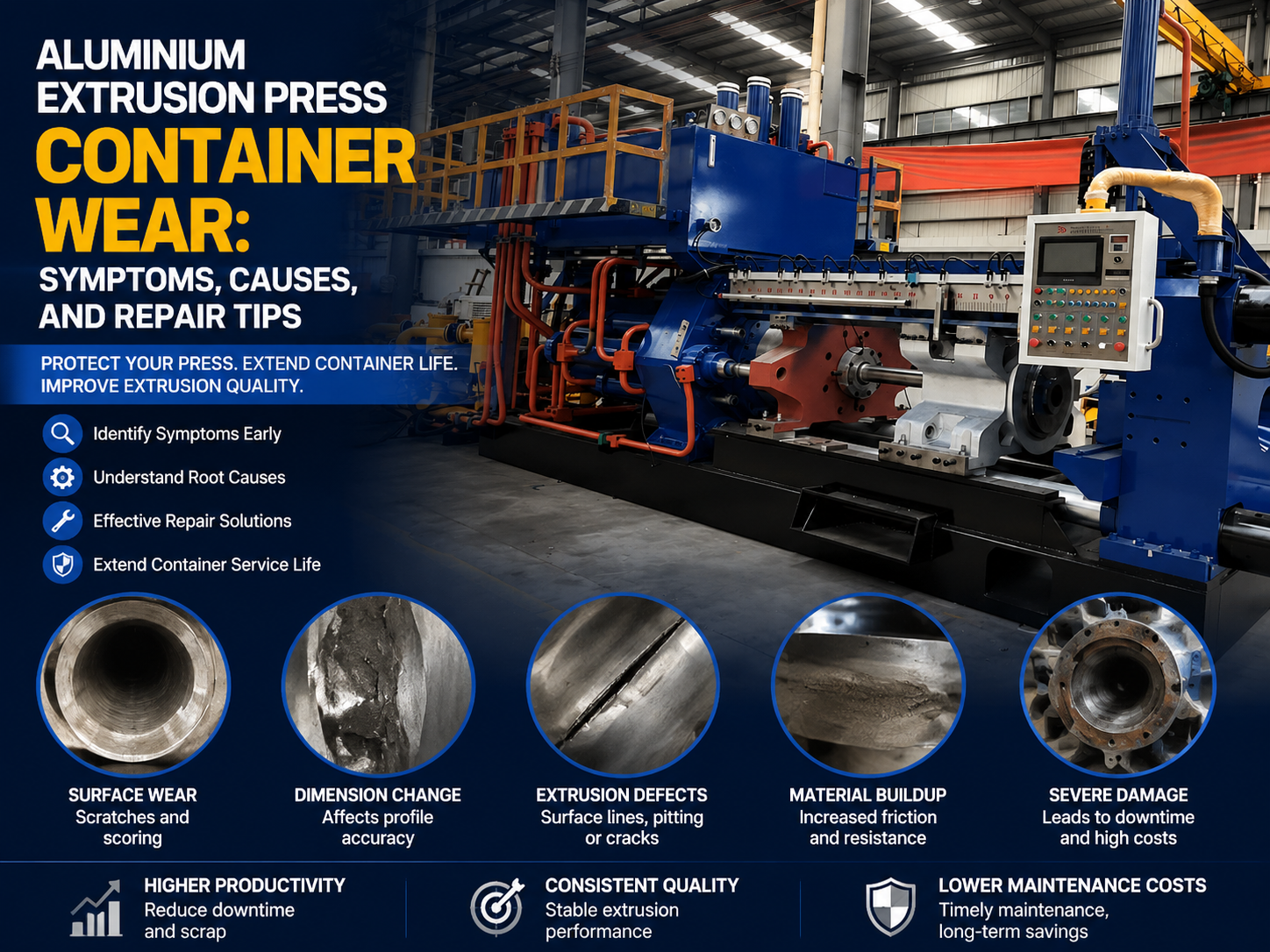
Identifying wear early is crucial for preventing expensive repairs and production halts. The symptoms of Aluminium Extrusion Press Container Wear: Symptoms, Causes, Repair Tips are often visible in the quality of the extruded product or through direct inspection of the container bore. One of the most common symptoms is “bell-mouthing,” where the ends of the liner expand more than the center, creating a tapered shape. This leads to air entrapment and inconsistent wall thickness in the extruded profiles.
Surface Defects and Galling
Galling is characterized by the transfer of aluminium onto the steel liner surface. This occurs when the protective oxide layer on the liner breaks down, allowing the hot aluminium to bond with the steel. The result is a rough surface that creates drag on subsequent billets, leading to surface scratches and “pick-up” on the extruded profiles. If left unaddressed, galling can lead to deep scoring of the liner, necessitating a full replacement.
Heat Checking and Cracking
Heat checking appears as a network of fine cracks on the surface of the liner, resembling a spider web. This is a direct result of thermal fatigue. While minor heat checking might not immediately affect production, these cracks can act as stress concentrators. Over time, they can grow into larger longitudinal or transverse cracks that threaten the structural integrity of the entire container assembly. Regular non-destructive testing (NDT), such as ultrasonic or dye penetrant inspection, is recommended to detect these cracks before they become critical.
Dimensional Instability
As the container wears, it may lose its roundness or develop localized bulges. This dimensional instability is often caused by the gradual softening of the tool steel due to prolonged exposure to high temperatures. When the liner loses its interference fit with the mantle, it can shift during the extrusion stroke, leading to severe misalignment and potential damage to the press stem. Monitoring the internal diameter of the container at multiple points along its length is a standard practice for assessing wear levels.
Root Causes of Container Failure
Understanding why wear occurs is the first step toward prevention. In the context of Aluminium Extrusion Press Container Wear: Symptoms, Causes, Repair Tips, the causes are often a combination of mechanical, thermal, and operational factors. One primary cause is improper pre-heating. If a container is not heated uniformly before production begins, the resulting thermal gradients can cause massive internal stresses, leading to immediate cracking or warping.
Overloading the press is another common culprit. Pushing the press beyond its rated capacity increases the internal pressure on the container walls. This can exceed the yield strength of the liner material, causing permanent deformation. Additionally, the use of low-quality billets containing abrasive inclusions can act like sandpaper, rapidly wearing down the liner surface. Ensuring the purity and quality of the raw aluminium is therefore a vital part of container maintenance.
Finally, the failure of the container heating system can lead to localized “cold spots.” When a hot billet enters a container with a cold spot, the sudden localized thermal shock can cause the liner to crack. Modern HARSLE presses often feature sophisticated multi-zone heating systems to prevent this, but these systems must be regularly calibrated and maintained to ensure they are functioning correctly.
Selection Advice: Choosing and Maintaining Containers
When selecting a new container or planning a major overhaul, several factors should guide your decision-making process. The material selection for the liner is paramount. While H13 is the industry standard, advanced alloys with higher molybdenum or vanadium content may be necessary for high-speed or high-temperature extrusion applications. These materials offer better resistance to softening at elevated temperatures, extending the time between repairs.
Heating System Selection
The choice between induction heating and resistance heating for the container is a critical technical decision. Induction heating offers faster warm-up times and more precise control over the temperature profile, which can reduce thermal stress. However, resistance heating is often more robust and easier to maintain in certain industrial environments. Regardless of the system, ensuring that the container has adequate insulation is essential for energy efficiency and maintaining a stable thermal environment.
Maintenance Checklists
A robust maintenance schedule should include daily, weekly, and monthly tasks. Daily checks should focus on visual inspections for leaks and monitoring the temperature sensors. Weekly tasks might include measuring the liner bore for signs of bell-mouthing or ovality. Monthly or quarterly maintenance should involve more intensive NDT to check for internal cracks and a review of the alignment between the container, the die, and the stem. Keeping detailed records of these inspections allows for trend analysis, helping to predict when a container will need repair or replacement.
Repair Tips and Strategies
When wear is detected, timely intervention can save the container. The most common repair for Aluminium Extrusion Press Container Wear: Symptoms, Causes, Repair Tips is resleeving. This involves removing the worn liner and shrinking in a new one. The process requires precision machining of the mantle and the new liner to ensure a perfect interference fit. The mantle must be heated to expand it, while the liner is often cooled (sometimes using liquid nitrogen) to contract it, allowing them to be assembled with the necessary tension.
For minor surface damage like galling or light scoring, honing or polishing the internal diameter can restore the surface finish. However, this increases the bore diameter, which must be accounted for in the extrusion process parameters. In some cases, specialized welding techniques can be used to fill deep scores or cracks, followed by precision machining to restore the original dimensions. This should only be performed by experts, as improper welding can introduce new stresses and lead to rapid failure.
Another advanced repair technique is the use of “cladding” or thermal spray coatings. These can provide a hard, wear-resistant layer on the liner surface, significantly extending its life. However, the compatibility of the coating with the aluminium alloy being extruded must be carefully evaluated to prevent chemical reactions or adhesion issues.
FAQ: Frequently Asked Questions
| Question | Answer |
|---|---|
| How long does a typical container liner last? | Depending on the alloy and production volume, a liner can last between 50,000 to 150,000 cycles with proper maintenance. |
| Can a cracked mantle be repaired? | Small cracks can sometimes be repaired via specialized welding, but large structural cracks usually require mantle replacement for safety. |
| What is the best way to prevent galling? | Consistent lubrication, maintaining proper liner temperature, and using high-quality billets are the most effective preventatives. |
| How does misalignment affect container wear? | Misalignment causes the stem to exert uneven pressure, leading to localized wear, ovality, and potential liner cracking. |
| Is induction heating better than resistance heating? | Induction is faster and more precise but more expensive to install. Resistance is simpler and often more durable for standard operations. |
Conclusion
Managing Aluminium Extrusion Press Container Wear: Symptoms, Causes, Repair Tips is an ongoing challenge that requires a blend of technical expertise, diligent maintenance, and the right equipment. By recognizing the early symptoms of wear—such as surface defects, dimensional changes, and thermal cracking—operators can take corrective action before minor issues escalate into major failures. Understanding the root causes, from thermal fatigue to mechanical misalignment, allows for the implementation of preventative measures that extend the life of the container and improve the quality of the extruded aluminium.
Whether you are selecting a new container with advanced heating systems or executing a complex resleeving repair, the goal remains the same: ensuring the reliability and efficiency of your extrusion press. HARSLE continues to lead the industry by providing robust machinery and the technical guidance necessary to keep these vital components in peak condition. Investing in high-quality materials and adhering to a strict maintenance schedule are the best ways to protect your production line and ensure long-term success in the competitive world of aluminium fabrication.