
How to Troubleshoot Metal Flow Imbalance in Aluminium Extrusion Press Processes

Introduction to Metal Flow in Aluminium Extrusion
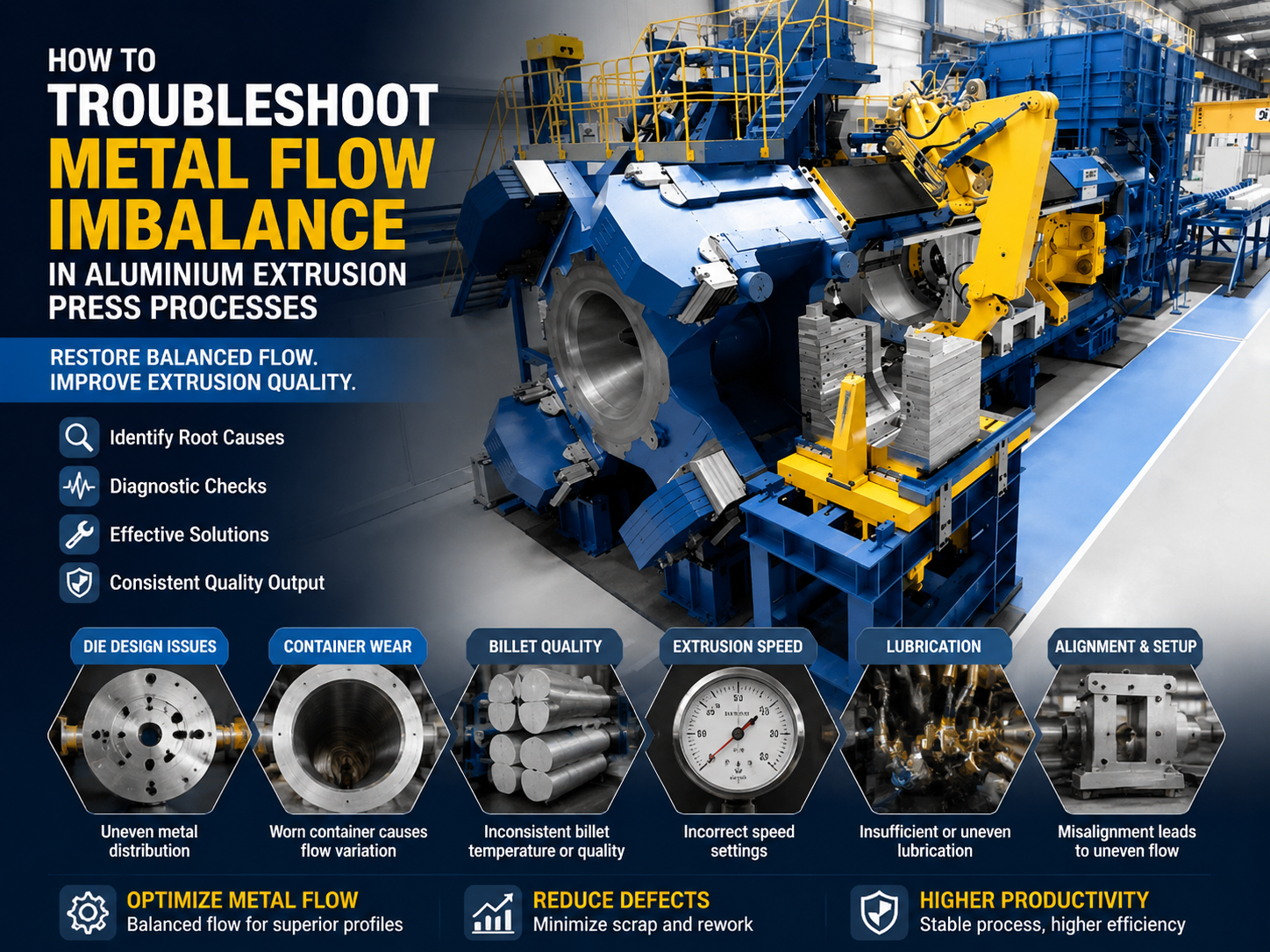
In the world of metal fabrication, the aluminium extrusion process stands as a cornerstone for producing complex profiles used in everything from aerospace components to architectural window frames. However, achieving a perfect profile requires more than just raw power; it requires a delicate balance of physics, metallurgy, and mechanical precision. One of the most persistent challenges faced by operators is the phenomenon of metal flow imbalance. When you need to troubleshoot metal flow imbalance in aluminium extrusion press processes, you are essentially diagnosing why the aluminium is moving faster through some parts of the die than others.
Metal flow imbalance occurs when the velocity of the extruded metal is non-uniform across the cross-section of the die. This leads to a host of quality issues, including twisting, bowing, structural waves, and uneven wall thicknesses. For high-precision industries, these defects are unacceptable. HARSLE, a leader in metal fabrication machinery, recognizes that understanding the root causes of these imbalances is the first step toward optimizing production efficiency and reducing scrap rates. This guide provides a deep dive into the technicalities of flow control and practical troubleshooting steps.
The extrusion process involves forcing a heated aluminium billet through a shaped die under immense hydraulic pressure. Ideally, the metal should emerge at a consistent speed across the entire profile. However, factors such as friction, temperature gradients, and die geometry often conspire to disrupt this harmony. By mastering the art of troubleshooting these imbalances, manufacturers can ensure that their HARSLE extrusion presses operate at peak performance, delivering high-quality profiles with minimal downtime.
Key Considerations for Metal Flow Stability
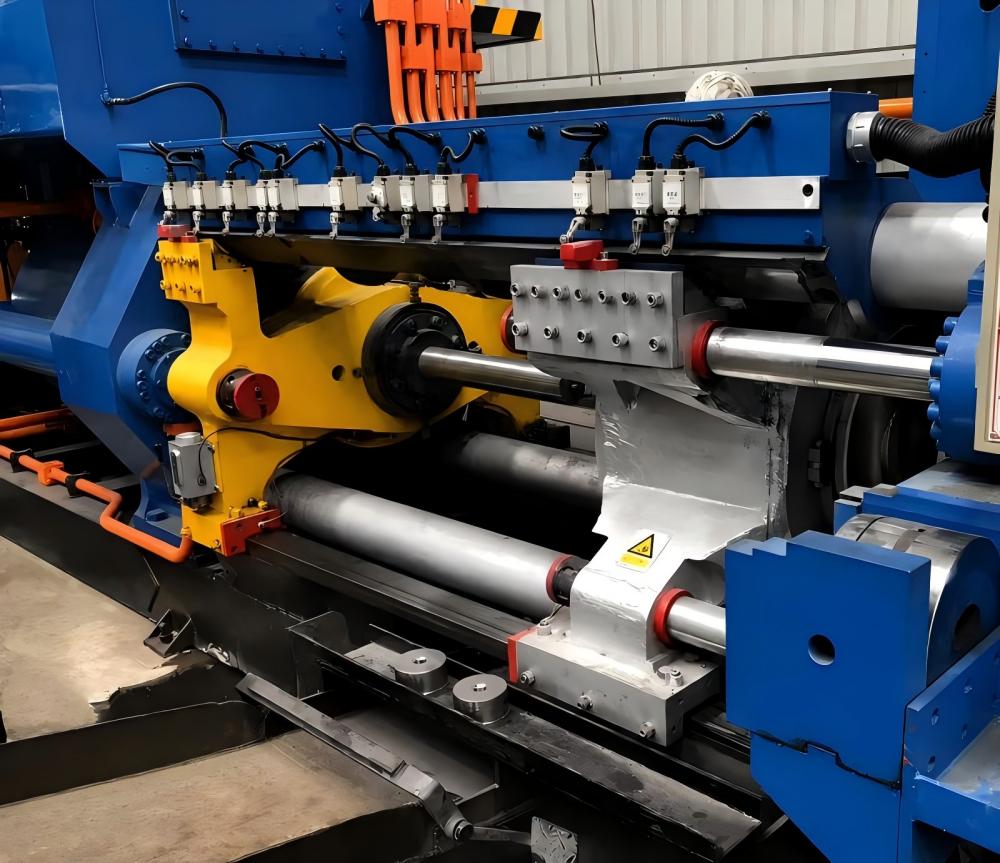
Before diving into specific troubleshooting steps, it is essential to understand the fundamental factors that influence how aluminium behaves under pressure. Metal flow is not a simple liquid-like movement; it is a complex plastic deformation process influenced by internal and external variables. To effectively troubleshoot metal flow imbalance in aluminium extrusion press processes, operators must consider the following key areas.
1. Die Geometry and Bearing Lengths
The die is the most critical component in controlling flow. The “bearing” is the surface of the die that the metal rubs against as it passes through. Longer bearings create more friction, which slows down the metal flow, while shorter bearings allow the metal to move faster. In a complex profile with varying wall thicknesses, the die designer must vary the bearing lengths to ensure that the metal reaching the thinner sections (which naturally resist flow more) moves at the same speed as the metal in the thicker sections. If these lengths are incorrectly calculated or worn down over time, flow imbalance is inevitable.
2. Thermal Gradients and Billet Temperature
Aluminium’s flow stress—its resistance to deformation—is highly dependent on temperature. A hotter billet flows more easily than a cooler one. However, temperature is rarely uniform. If the billet has a “cold spot” or if the container of the extrusion press is not heated evenly, the metal will flow faster in the hotter regions. This is why isothermal extrusion, where the temperature is kept constant throughout the stroke, is the gold standard for flow stability. Troubleshooting often begins with checking the induction heating system and the container’s heating elements.
3. Friction and Lubrication
Friction occurs at two primary interfaces: between the billet and the container wall, and between the metal and the die bearing. In a standard direct extrusion process, the billet must slide against the container wall, creating a “shear zone.” If the container is not properly lubricated or if the surface finish is degraded, the friction increases, causing the outer layers of the billet to lag behind the center. This creates a funnel-like flow pattern that can lead to surface defects and internal structural weaknesses.
4. Billet Quality and Alloy Composition
Not all aluminium is created equal. The homogenization process of the billet—how it was cooled and heat-treated after casting—significantly impacts its flow characteristics. Inconsistencies in the alloy composition or the presence of oxides can create localized areas of high resistance. When troubleshooting, it is vital to verify that the raw material meets the specific requirements for the profile being produced. Poor quality billets are a frequent, yet often overlooked, cause of flow imbalance.
Technical Details: How to Troubleshoot Metal Flow Imbalance
When a profile emerges from the press with visible defects like “sharkskin,” curvature, or dimensional inaccuracies, a systematic troubleshooting approach is required. Here is the technical breakdown of how to troubleshoot metal flow imbalance in aluminium extrusion press processes.
Step 1: Visual and Dimensional Analysis
The first step is to analyze the defect itself. If the profile is curving toward the left, it indicates that the metal on the right side is flowing faster. If the profile shows “waves” on a specific wall, that section is moving too fast for the surrounding structure to support. Use precision calipers and gauges to measure wall thicknesses at various points. A thickness variation often points directly to a bearing length issue or a die deflection problem under pressure.
Step 2: Die Correction (The Art of Choking and Relieving)
Die correction is the most common method for fixing flow imbalance. If a section is flowing too fast, the corrector will “choke” the flow by increasing the friction. This can be done by roughening the bearing surface or slightly changing the angle of the bearing entry. Conversely, if a section is too slow, the corrector will “relieve” the die by shortening the bearing length or adding a “speed pocket” (a recessed area before the bearing that reduces initial resistance). This process often requires multiple iterations and a highly skilled technician.
Step 3: Evaluating the Container and Stem Alignment
Mechanical misalignment can cause asymmetrical flow. If the extrusion stem is not perfectly centered with the container and the die, the pressure distribution across the billet will be uneven. This results in more metal being pushed toward one side of the die. Regularly check the alignment of the HARSLE press components using laser alignment tools. Even a few millimeters of deviation can cause significant flow issues in high-ratio extrusions.
Step 4: Monitoring Extrusion Speed and Pressure
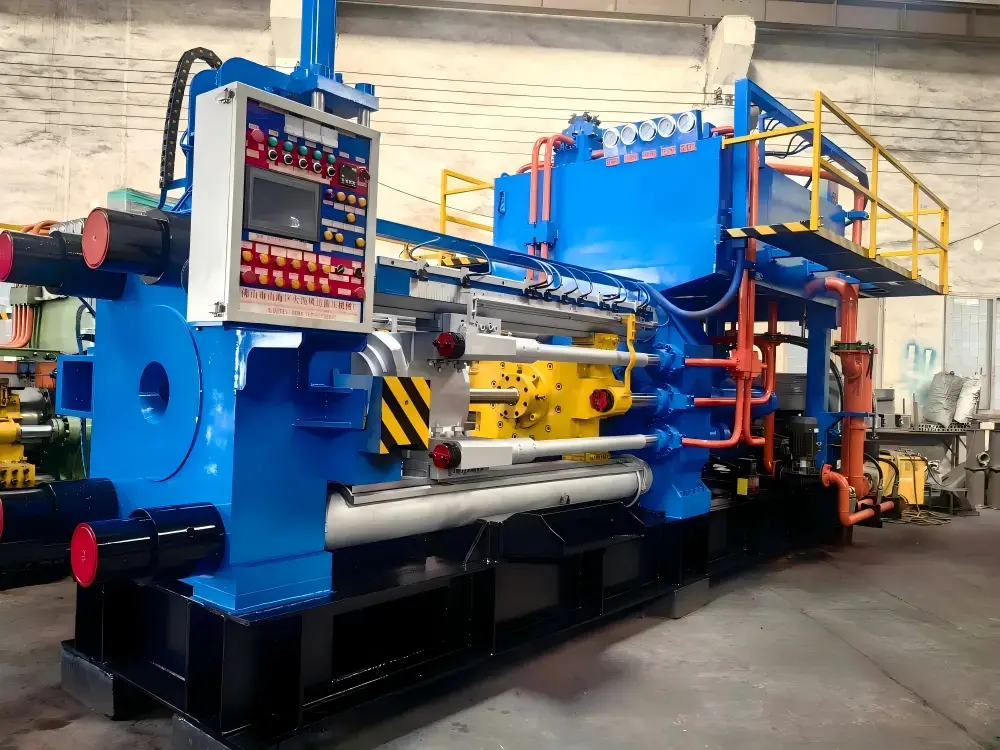
The speed at which the ram moves (the extrusion speed) affects the heat generated by friction. If the speed is too high, the temperature at the die face can rise uncontrollably, leading to “hot shortness” or localized over-flow. Modern HARSLE presses utilize advanced PLC systems to monitor the pressure-to-speed ratio. If the pressure spikes unexpectedly, it may indicate a blockage or a cold spot in the billet that is disrupting the flow balance.
Step 5: Dead Metal Zone (DMZ) Management
In direct extrusion, a “Dead Metal Zone” forms in the corners of the container where the metal does not move. If this zone becomes too large or unstable, it can slough off and enter the main flow stream, causing sudden imbalances and surface contamination. Proper die design, including the use of feeder plates and ports, helps manage the DMZ and ensures a smoother transition of metal from the container into the die apertures.
| Symptom | Probable Cause | Recommended Action |
|---|---|---|
| Profile Twisting | Asymmetrical flow velocity | Adjust die bearing lengths; check alignment |
| Surface Tearing | Excessive speed or temperature | Reduce extrusion speed; check billet temp |
| Uneven Wall Thickness | Die deflection or wear | Inspect die for fatigue; use stronger die steel |
| Structural Waves | Localized over-flow | “Choke” the fast-flowing section of the die |
Selection Advice for Aluminium Extrusion Presses
Choosing the right machinery is the best way to prevent flow issues before they start. When looking to invest in a new press, consider how the machine’s features assist in the effort to troubleshoot metal flow imbalance in aluminium extrusion press processes. HARSLE recommends focusing on the following technical specifications:
- Precision Hydraulic Control: Look for presses with servo-driven hydraulic systems. These provide much smoother ram movement and more precise speed control, which is essential for maintaining a steady flow through complex dies.
- Rigid Frame Construction: A press that flexes under load will inevitably cause die misalignment. HARSLE presses are engineered with high-tensile steel frames to ensure that the die, container, and stem remain perfectly concentric even at maximum tonnage.
- Advanced Heating Systems: Ensure the press has a sophisticated container heating system with multiple zones. This allows for the creation of a thermal profile that can compensate for natural heat loss at the ends of the container.
- Integrated Diagnostics: Modern extrusion presses should include software that tracks pressure, speed, and temperature in real-time. This data is invaluable when you need to troubleshoot a recurring flow problem.
- Ease of Die Access: Since die correction is a frequent necessity, the press should allow for quick die changes and easy access to the die slide. This reduces downtime during the troubleshooting and adjustment phases.
By selecting a machine that prioritizes stability and control, you reduce the variables that lead to flow imbalance. HARSLE’s range of aluminium extrusion presses is designed with these industrial realities in mind, providing a robust platform for both high-volume production and intricate custom profiles.
Frequently Asked Questions (FAQ)
What is the most common cause of metal flow imbalance?
The most common cause is incorrect die bearing length. If the friction provided by the bearing does not perfectly compensate for the natural flow tendencies of the aluminium (which flows faster in the center and in thicker sections), the profile will emerge unevenly. Regular die maintenance and correction are essential to manage this.
How does billet temperature affect flow balance?
Aluminium becomes softer and flows more easily as temperature increases. If a billet has a temperature gradient—for example, if one side is hotter than the other—the metal will flow faster through the die on the hotter side. This is why uniform billet heating and container temperature control are critical for flow stability.
Can I fix flow imbalance without removing the die?
Minor adjustments can sometimes be made by altering the extrusion speed or the cooling intensity at the die exit. However, significant flow imbalances usually require the die to be removed and corrected by a specialist who will adjust the bearing surfaces or the feeder ports.
What role does the extrusion ratio play in flow?
The extrusion ratio (the ratio of the cross-sectional area of the container to the cross-sectional area of the profile) significantly impacts flow. High ratios require more pressure and generate more heat, which can exacerbate flow imbalances. Machines like those from HARSLE are designed to handle high-ratio extrusions by providing consistent pressure and cooling.
How often should I check the alignment of my extrusion press?
Alignment should be checked during every major maintenance cycle or whenever you notice persistent flow issues that cannot be solved by die correction. Even small shifts in the foundation or wear in the guide rails can lead to misalignment between the stem and the die.
Does the alloy type change how I troubleshoot?
Yes. Harder alloys (like the 7000 series) have much higher flow stress and are more sensitive to temperature changes than softer alloys (like the 6000 series). Troubleshooting flow in hard alloys often requires much tighter control over temperature and slower extrusion speeds.
Conclusion
To effectively troubleshoot metal flow imbalance in aluminium extrusion press processes, one must adopt a holistic view of the production line. It is a process that blends the mechanical precision of the HARSLE press with the metallurgical science of the aluminium billet and the geometric artistry of the die designer. By systematically addressing temperature variations, mechanical misalignments, and die bearing inaccuracies, manufacturers can significantly improve their yields and product quality.
In the competitive landscape of metal fabrication, the ability to quickly diagnose and resolve flow issues is a major advantage. Investing in high-quality machinery, maintaining rigorous calibration schedules, and employing skilled die correctors are the pillars of a successful extrusion operation. As technology continues to evolve, the integration of real-time monitoring and automated control systems will make the task of balancing metal flow more precise and less reliant on trial and error, ensuring that every profile that leaves the press meets the highest standards of excellence.


