Comprehensive Guide to Recycling Baler Maintenance Troubleshooting for Frequent Breakdowns

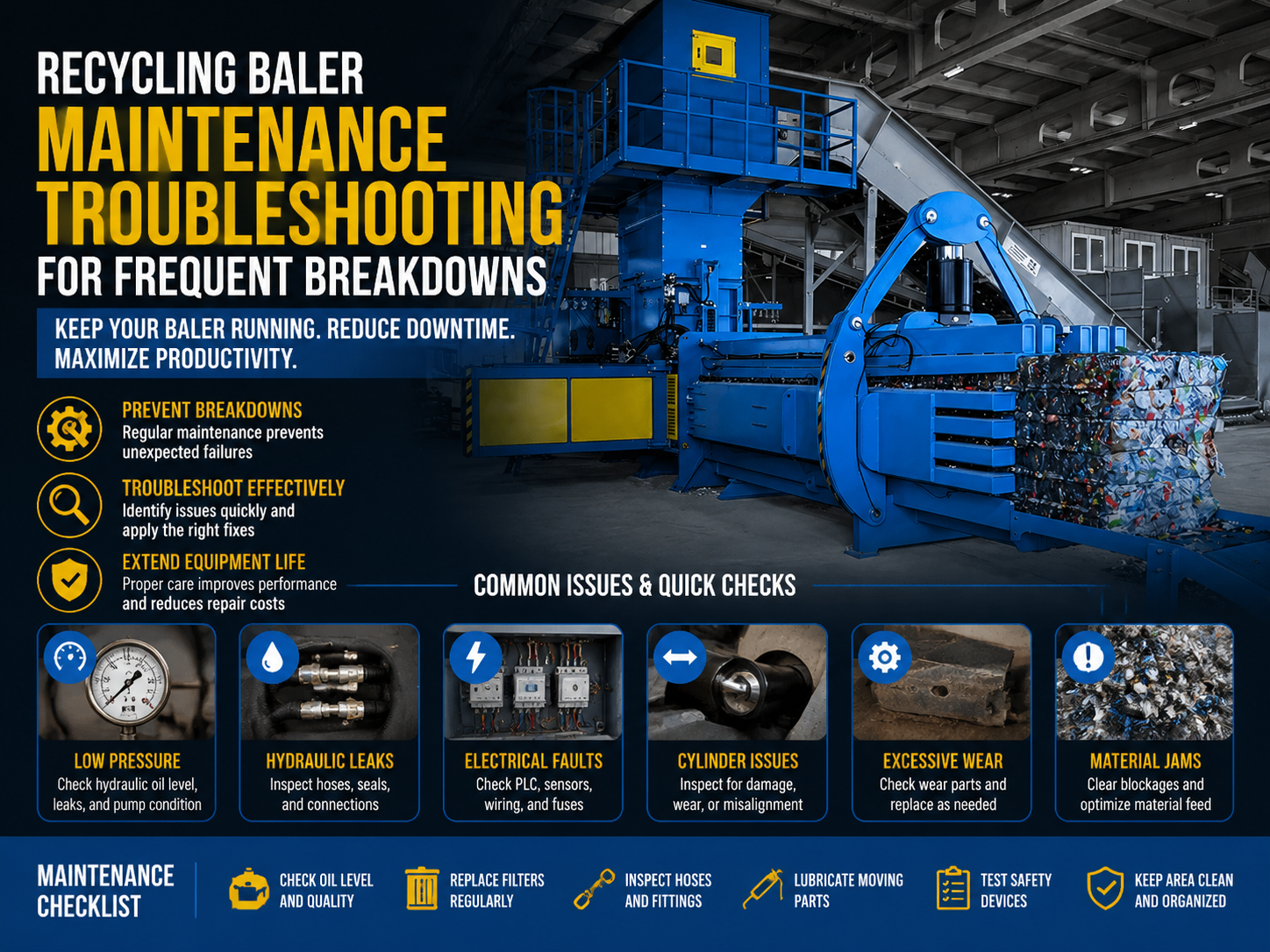
Introduction to Recycling Baler Maintenance Troubleshooting for Frequent Breakdowns
In the modern industrial landscape, recycling balers are the unsung heroes of waste management and material recovery facilities. These robust machines are designed to compress large volumes of recyclable materials—such as cardboard, plastics, and scrap metal—into manageable, transportable bales. However, the high-pressure environment in which they operate makes them susceptible to wear and tear. Understanding Recycling Baler Maintenance Troubleshooting for Frequent Breakdowns is not just a matter of convenience; it is a critical necessity for maintaining operational continuity and ensuring the safety of personnel. When a baler fails, the entire production line can grind to a halt, leading to significant financial losses and safety hazards.
HARSLE, a leader in metal fabrication and recycling machinery, recognizes that the longevity of a machine is directly proportional to the quality of its maintenance. Frequent breakdowns often stem from neglected minor issues that escalate into catastrophic failures. By implementing a rigorous troubleshooting framework, operators can identify early warning signs, such as unusual noises, erratic hydraulic pressure, or inconsistent bale density. This guide aims to provide a deep dive into the technical aspects of baler maintenance, offering actionable insights for facility managers and technicians alike.
The complexity of modern recycling balers, which integrate advanced hydraulics with sophisticated PLC (Programmable Logic Controller) systems, requires a multi-faceted approach to troubleshooting. It is no longer enough to simply ‘grease the joints.’ Today’s technicians must understand the interplay between electrical signals and mechanical responses. This article will explore the most common causes of breakdowns and provide a step-by-step guide to resolving them, ensuring your HARSLE equipment remains at peak performance for years to come.
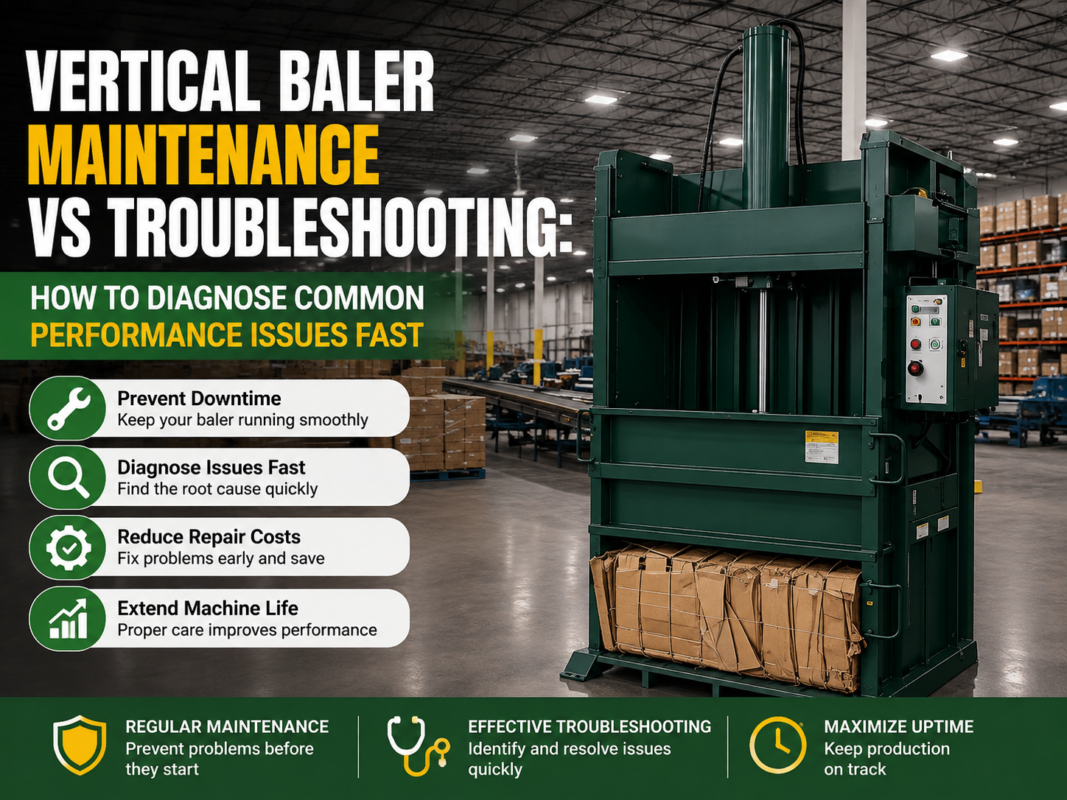
Ultimately, the goal of effective Recycling Baler Maintenance Troubleshooting for Frequent Breakdowns is to transition from a reactive ‘fix-it-when-it-breaks’ mentality to a proactive, predictive maintenance strategy. By doing so, companies can maximize their Return on Investment (ROI) and contribute to a more sustainable circular economy through efficient waste processing.
Key Considerations for Effective Baler Maintenance
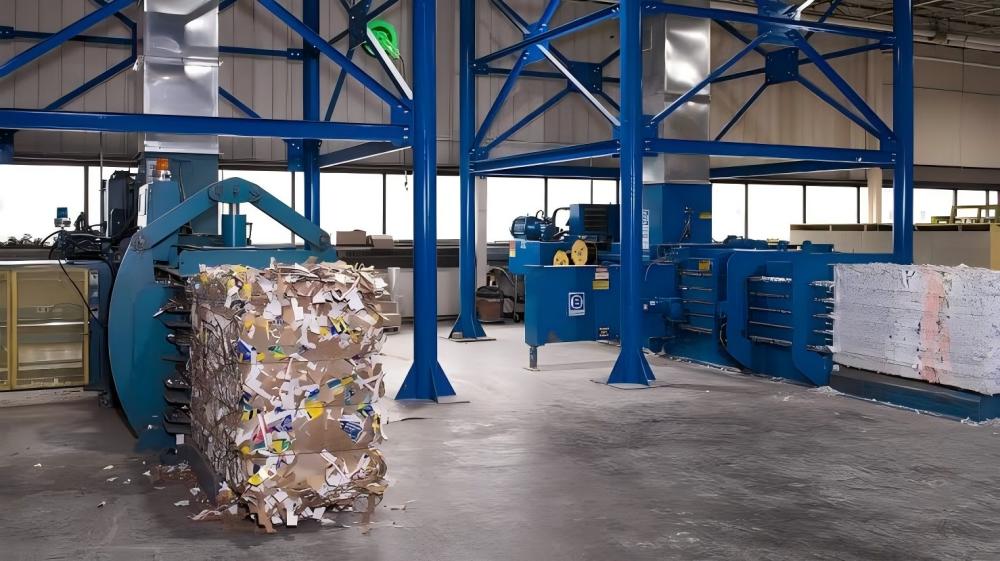
Before diving into the technical specifics, it is essential to establish the foundational principles of baler maintenance. The first and most important consideration is safety. Recycling balers exert immense force, often exceeding hundreds of tons of pressure. Any maintenance activity must be preceded by strict Lockout/Tagout (LOTO) procedures to ensure the machine cannot be energized while a technician is working on it. Failure to follow these protocols can result in life-altering injuries or fatalities.
Another key consideration is the environment in which the baler operates. Recycling facilities are often dusty, damp, or exposed to extreme temperatures. These environmental factors can accelerate the degradation of hydraulic seals, electrical contacts, and structural components. For instance, fine dust from cardboard can infiltrate electrical cabinets, causing short circuits, or mix with hydraulic oil to form an abrasive sludge that destroys pumps. Regular cleaning and environmental shielding are therefore integral parts of any maintenance plan.
Documentation is the third pillar of effective maintenance. Keeping a detailed log of every inspection, oil change, and part replacement allows technicians to spot patterns. If a specific hydraulic hose fails every six months, it may indicate a routing issue or a pressure spike that needs addressing. Without documentation, troubleshooting becomes a game of guesswork, leading to repeated Recycling Baler Maintenance Troubleshooting for Frequent Breakdowns scenarios that could have been permanently resolved.
Finally, the quality of replacement parts cannot be overstated. While third-party components might seem cost-effective in the short term, they often lack the precision and durability of original equipment manufacturer (OEM) parts. HARSLE recommends using genuine components to ensure compatibility and maintain the machine’s warranty. Using sub-standard parts is one of the leading causes of frequent breakdowns in high-pressure recycling environments.
Technical Details: Troubleshooting Common Baler Failures
Hydraulic System Failures and Pressure Issues
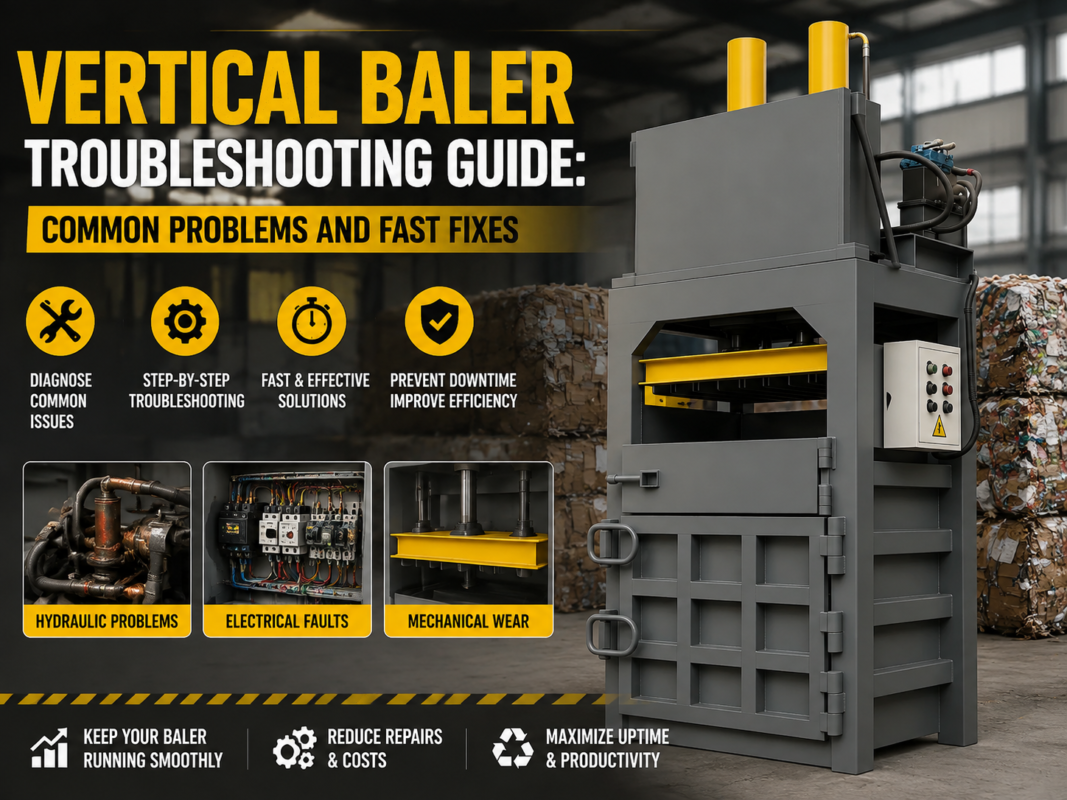
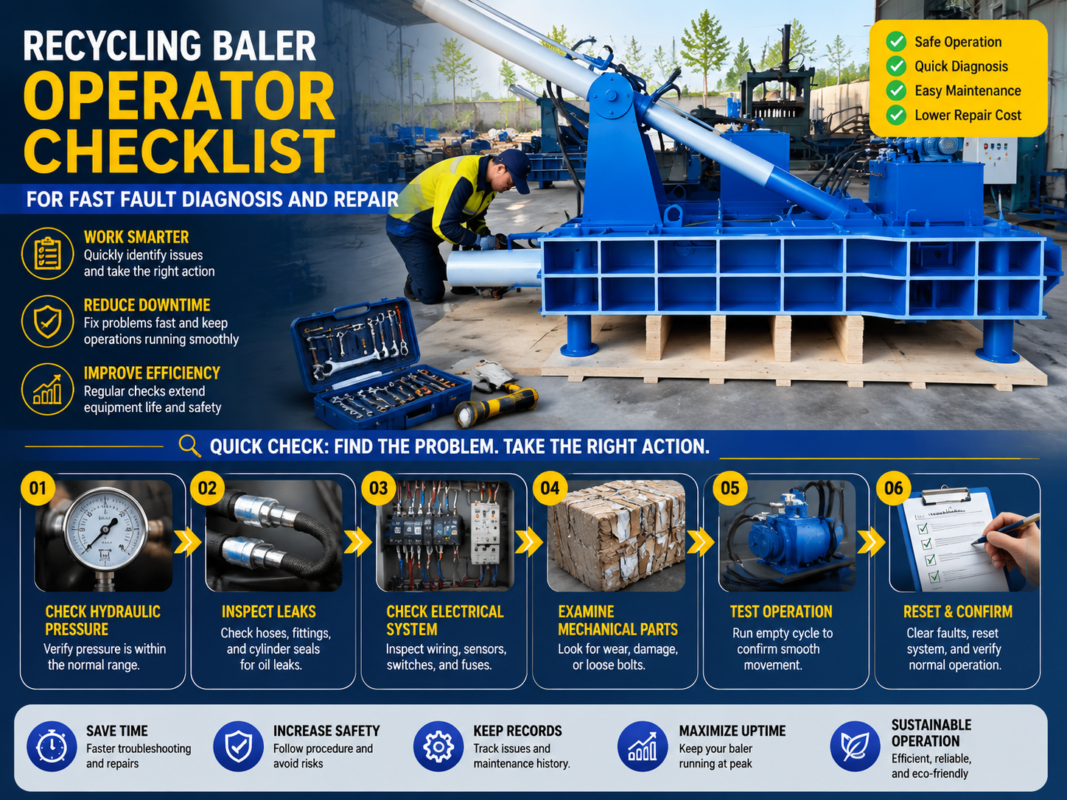
The hydraulic system is the heart of the recycling baler. Most frequent breakdowns are linked to hydraulic malfunctions, such as loss of pressure, slow cycle times, or overheating. A common culprit is hydraulic oil contamination. Over time, oil breaks down and accumulates microscopic metal shavings and moisture. This contamination causes internal leakage in valves and pumps, reducing the overall efficiency of the ram. Technicians should perform regular oil analysis to check for acidity and particulate matter.
Overheating is another critical issue. If the hydraulic oil temperature exceeds 60°C (140°F), it loses its lubricating properties and begins to damage seals. This is often caused by a clogged oil cooler or a pump that is working too hard due to a blocked filter. Troubleshooting this involves checking the heat exchanger for airflow obstructions and ensuring the thermostatic valves are functioning correctly. If the machine continues to run hot, it may indicate that the pump is nearing the end of its service life.
Electrical and PLC Troubleshooting
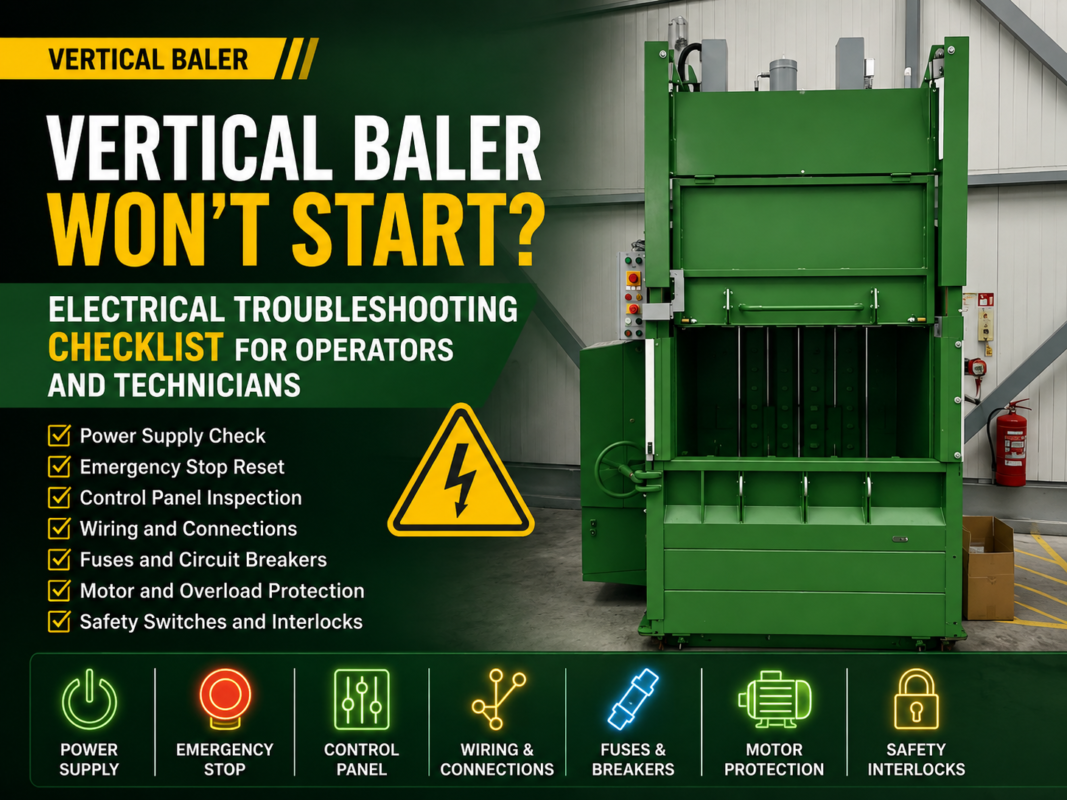
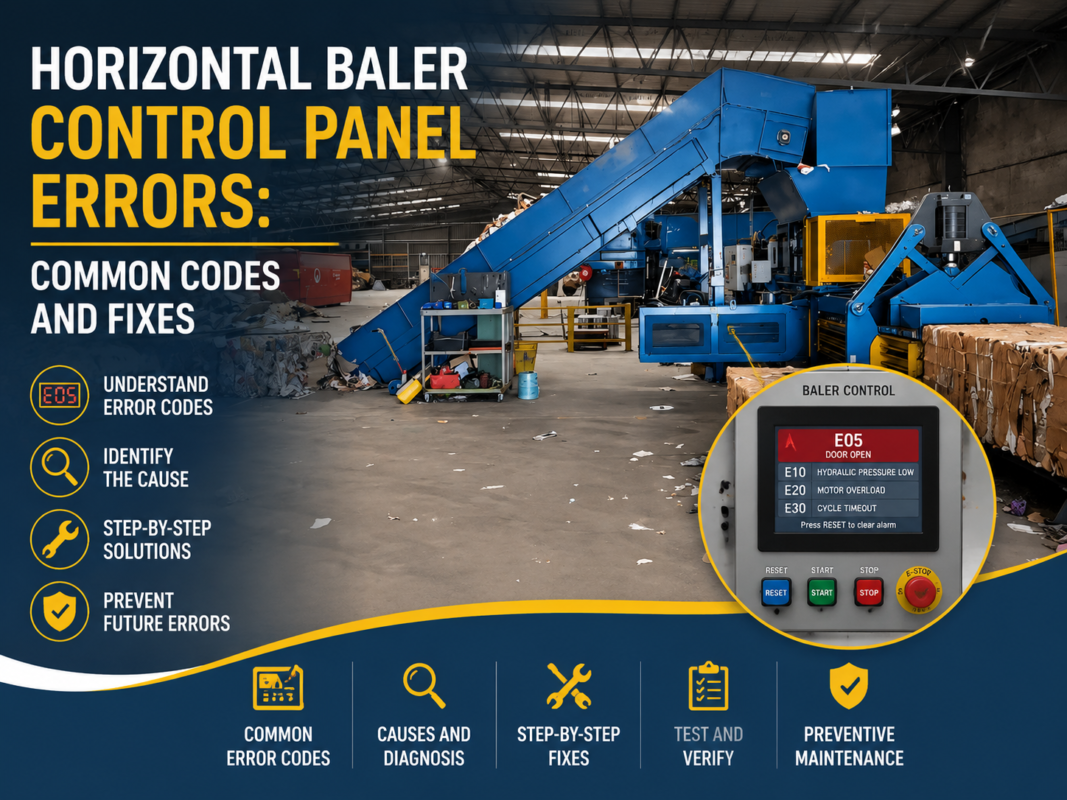
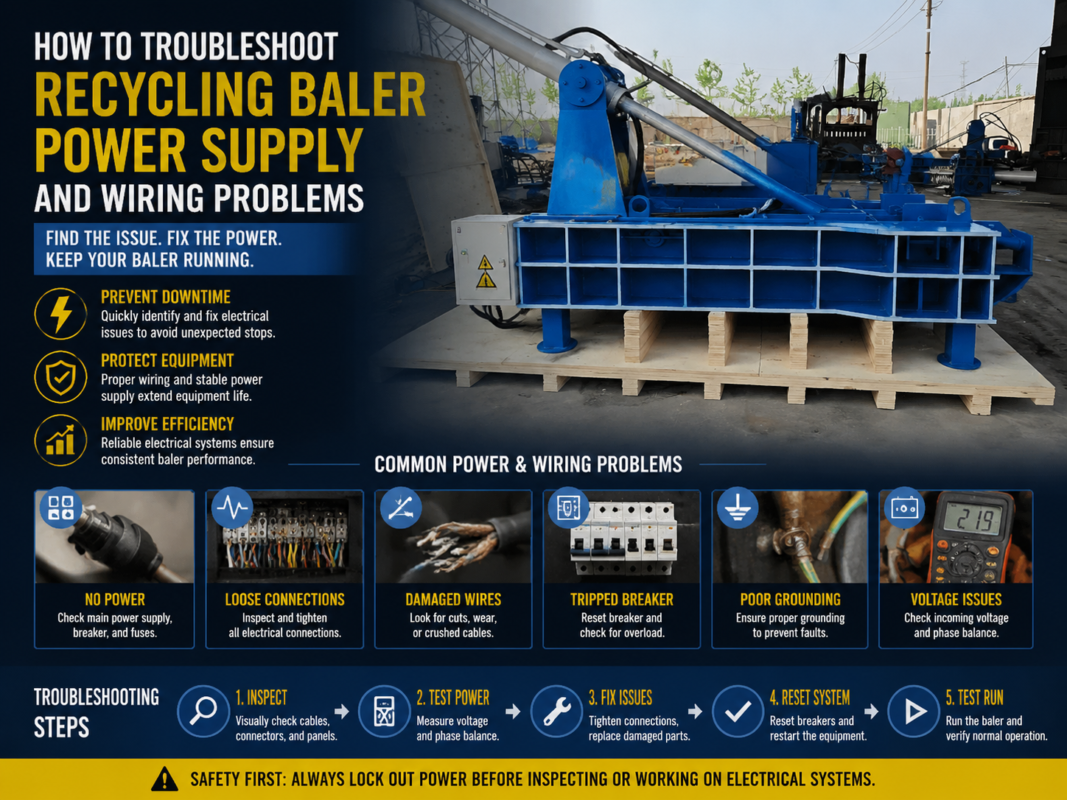
Modern balers rely on PLCs to coordinate the movement of the ram, the hopper gate, and the tying mechanism. When the baler refuses to start or stops mid-cycle, the problem is often electrical. The first step in Recycling Baler Maintenance Troubleshooting for Frequent Breakdowns related to electronics is checking the limit switches and proximity sensors. These components are exposed to vibration and debris, which can knock them out of alignment or cause them to fail. A sensor that doesn’t ‘see’ the ram in its home position will prevent the next cycle from starting.
Wiring integrity is also a major concern. In a recycling environment, rodents or mechanical vibration can damage wire insulation, leading to intermittent faults that are notoriously difficult to diagnose. Technicians should inspect terminal blocks for tightness and look for signs of carbon tracking or burnt components inside the control panel. Utilizing the PLC’s diagnostic screen can often pinpoint the exact sensor or input that is causing the fault, significantly reducing downtime.
Mechanical Wear and Structural Integrity
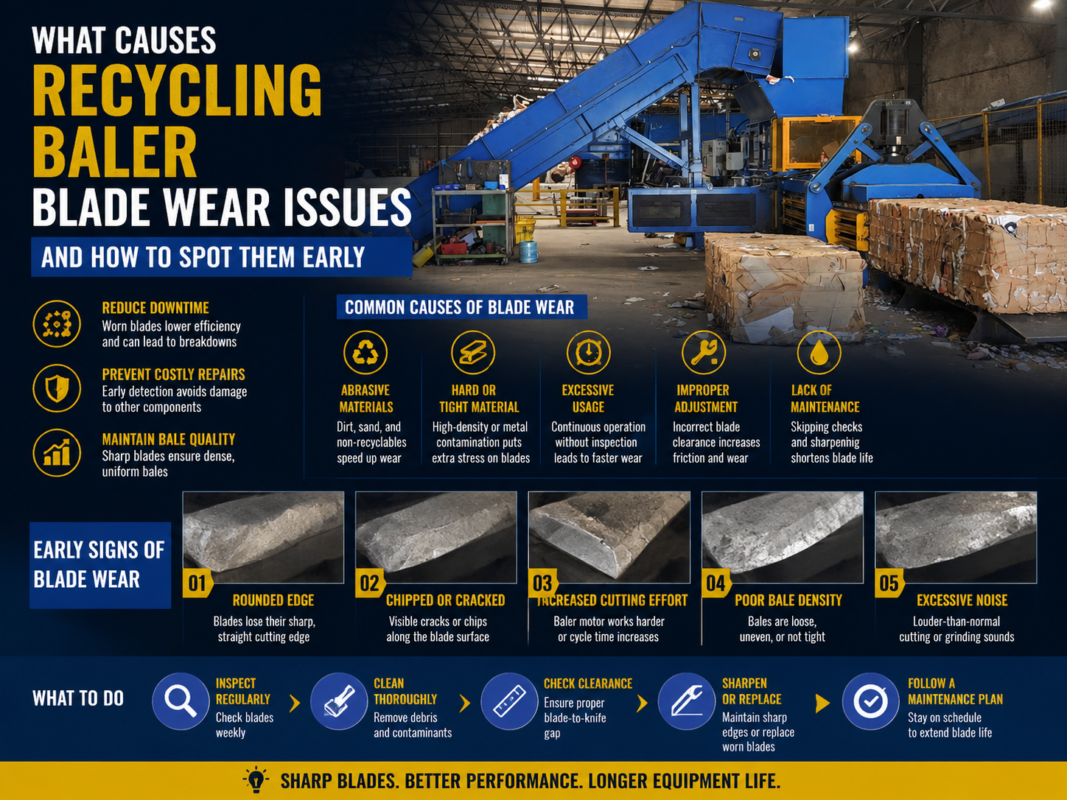
The mechanical structure of the baler, including the chamber, the ram, and the shear blades, undergoes significant stress. One of the most common mechanical issues is the dulling of the shear blades. When blades are dull, the baler struggles to cut through material, leading to ‘jams’ and increased strain on the hydraulic system. Regularly sharpening or rotating the blades is essential. Furthermore, the gap between the blades must be precisely maintained; too wide a gap causes material to fold rather than cut, while too narrow a gap can cause the blades to clash.
Ram guides and wear plates also require attention. As the ram moves back and forth, it slides on replaceable wear liners. If these liners become too thin, the ram can tilt, causing uneven pressure on the main cylinder and potentially scoring the cylinder rod. Frequent inspections of the ram’s alignment can prevent a multi-thousand-dollar cylinder repair. Lubrication of these sliding surfaces, if not automated, must be performed daily to minimize friction and heat buildup.
Selection Advice: Choosing a Baler for Low Maintenance
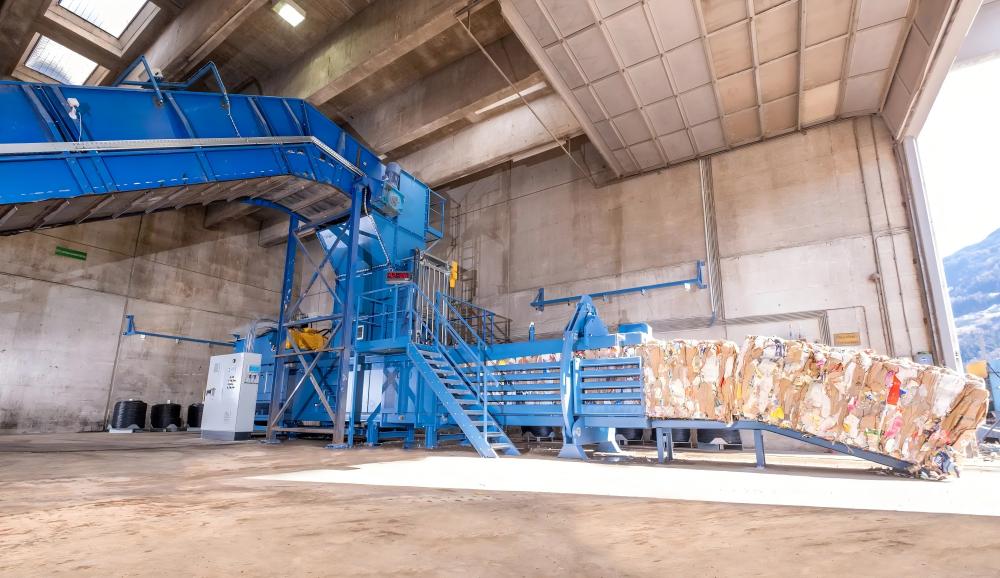
When purchasing a new recycling baler, the design and build quality are the most significant factors in determining future maintenance requirements. A well-engineered machine, like those produced by HARSLE, incorporates features that simplify Recycling Baler Maintenance Troubleshooting for Frequent Breakdowns. Look for machines with accessible hydraulic manifolds and clearly labeled electrical components. If a technician has to disassemble half the machine just to reach a filter, maintenance will likely be neglected.
Consider the frame construction. A heavy-duty, fully welded frame is less likely to warp under pressure than a bolted frame. Warpage leads to misalignment of the ram and shear blades, which is a primary cause of frequent mechanical breakdowns. Additionally, check the specifications of the hydraulic components. Brands that use internationally recognized names like Rexroth or Vickers ensure that replacement parts are easily accessible globally, reducing the downtime associated with waiting for specialized components.
Automation features can also reduce maintenance needs. For example, an automatic greasing system ensures that critical pivot points and slides are always lubricated, removing the risk of human error. Similarly, advanced PLC systems with remote diagnostic capabilities allow manufacturers to troubleshoot issues via the internet, often resolving software glitches or sensor calibration issues without the need for an on-site visit. Investing in these features upfront can save tens of thousands of dollars in labor and lost production over the life of the machine.
Finally, evaluate the manufacturer’s support network. A machine is only as good as the support behind it. HARSLE provides comprehensive manuals, video tutorials, and a responsive technical support team to assist with Recycling Baler Maintenance Troubleshooting for Frequent Breakdowns. Before buying, ask about the availability of wear parts kits and the lead time for critical components like pumps and cylinders. A proactive supplier is your best partner in minimizing downtime.
Detailed Troubleshooting Table
| Symptom | Potential Cause | Recommended Action |
|---|---|---|
| Baler will not start | Emergency stop engaged or faulty sensor | Check all E-stops and verify PLC inputs for safety gates. |
| Slow cycle time | Low hydraulic oil or clogged filter | Check oil level and replace suction/return filters. |
| Excessive noise/vibration | Air in hydraulic lines or loose mounting bolts | Bleed the system and tighten all structural bolts. |
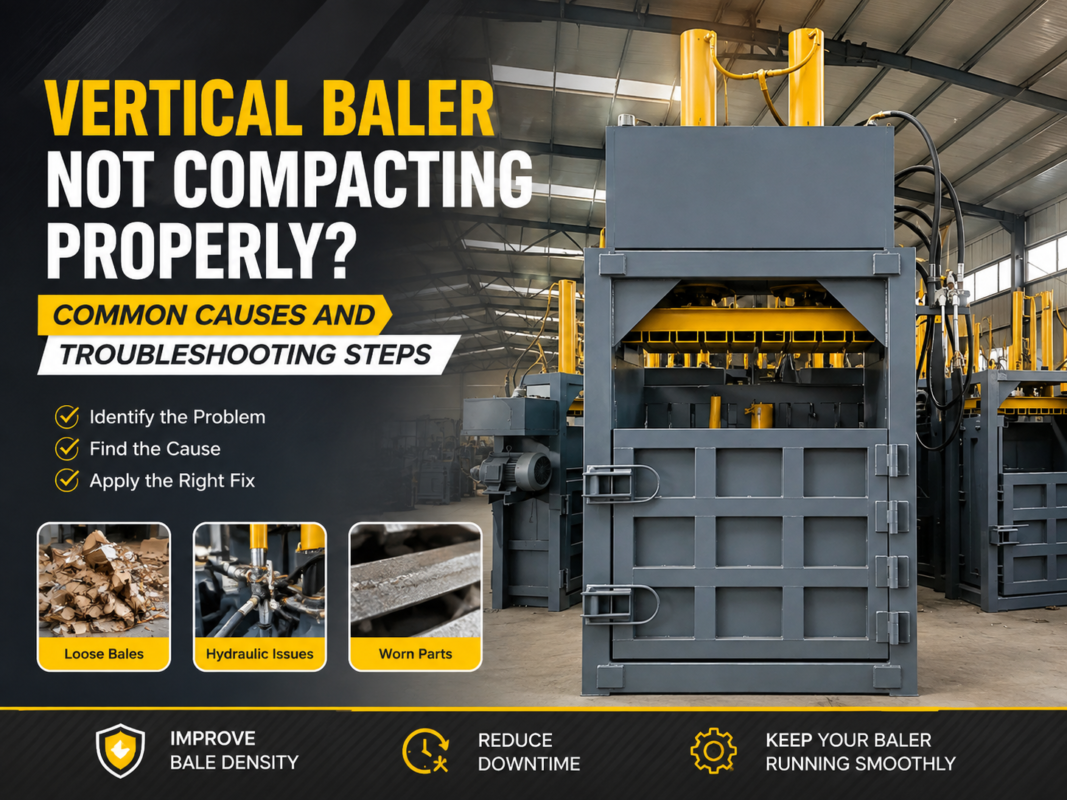
| Bales are loose/low density | Pressure relief valve set too low or internal leak | Adjust relief valve or inspect cylinder seals for bypass. |
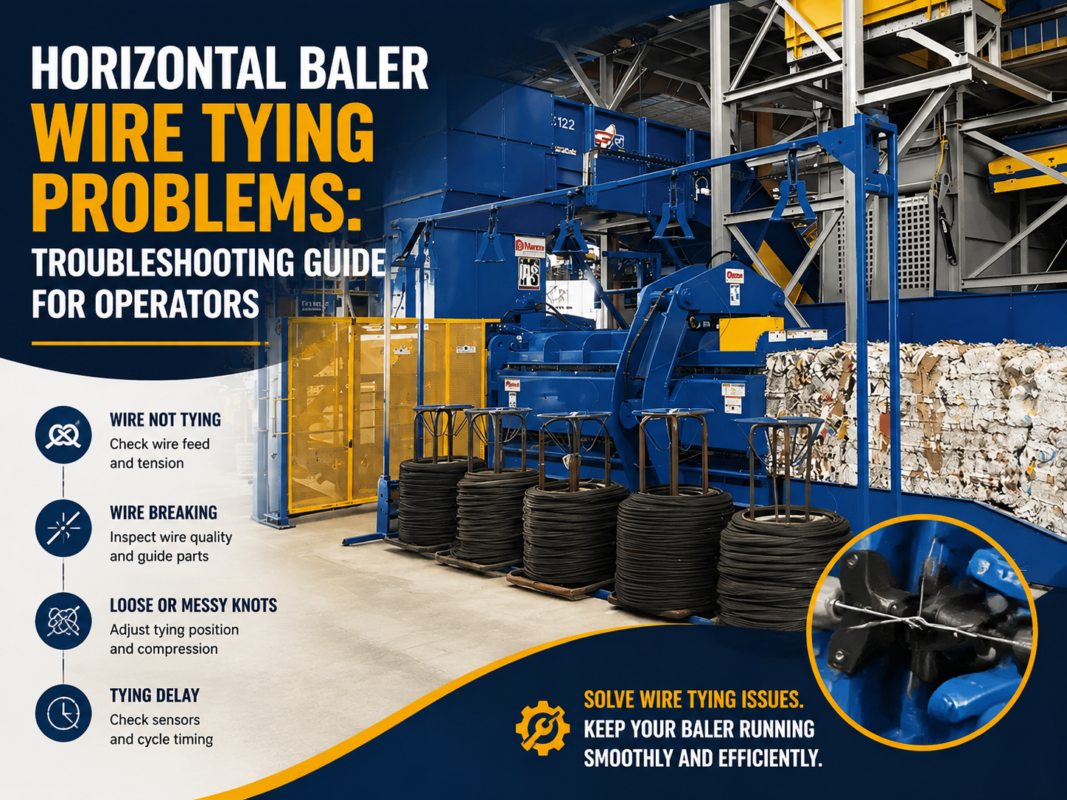
| Wire tier fails to knot | Debris in tier mechanism or dull twister hooks | Clean the tying unit and replace worn twister components. |
| Hydraulic oil overheating | Dirty oil cooler or worn-out pump | Clean cooler fins and check pump flow rate. |
Frequently Asked Questions (FAQ)
How often should I change the hydraulic oil in my recycling baler?
Generally, hydraulic oil should be changed every 2,000 to 4,000 hours of operation, or at least once a year. However, this depends heavily on the operating environment. In dusty or hot conditions, more frequent changes may be necessary. It is highly recommended to perform oil sampling every six months to monitor the oil’s health and detect early signs of component wear.
Why does my baler keep jamming on cardboard?
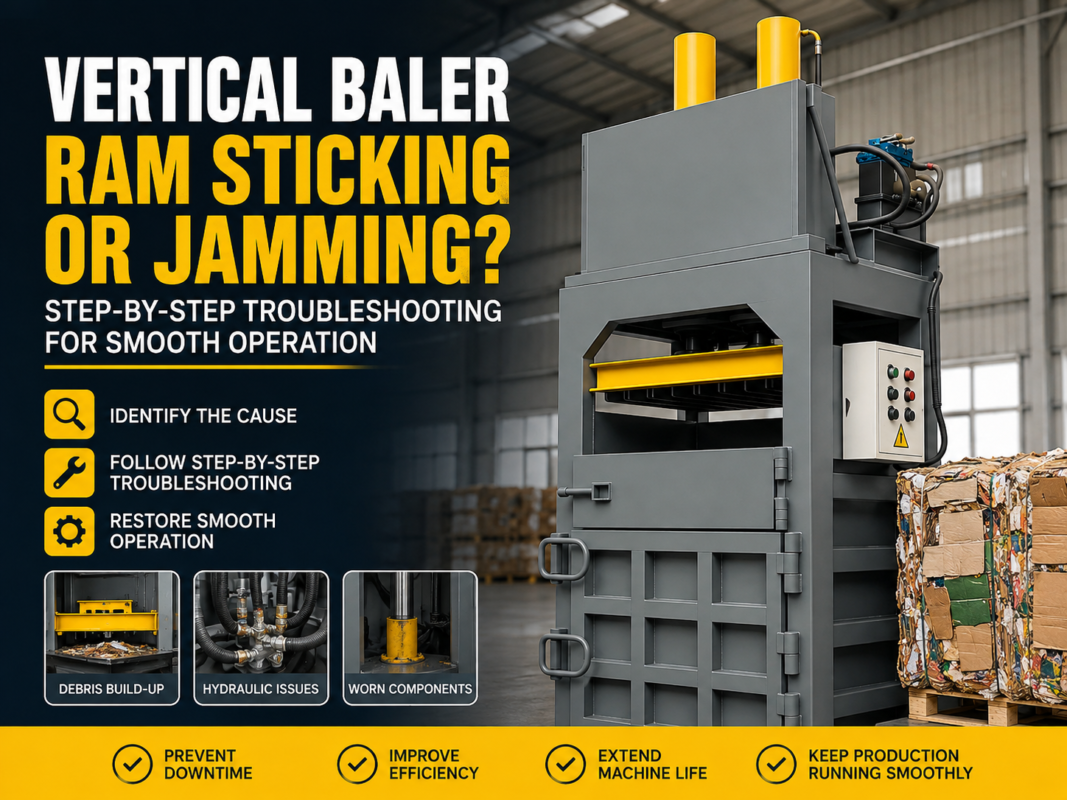
Jams are usually caused by dull shear blades or an incorrect blade gap. When the blades cannot cleanly cut through the cardboard, the material bunches up, creating a wedge that the ram cannot push past. Check the sharpness of your blades and ensure the gap is set to the manufacturer’s specifications (typically between 0.5mm and 1.0mm depending on the model).
What is the most common cause of PLC errors?
The most common cause of PLC errors in recycling balers is a failed or misaligned limit switch. Because these machines vibrate significantly, sensors can shift over time. Additionally, moisture or dust ingress into the sensor housing can cause intermittent signals. Always check the physical condition and alignment of sensors before assuming the PLC itself is faulty.
Can I use any hydraulic oil in my HARSLE baler?
No, you should only use the grade of hydraulic oil specified in your owner’s manual, typically an ISO 46 or ISO 68 anti-wear (AW) hydraulic oil. Using the wrong viscosity can lead to poor performance, increased wear on the pump, and overheating. In extremely cold environments, a multi-grade oil with a high viscosity index may be required.
How do I know if my hydraulic pump is failing?
Signs of a failing pump include a high-pitched whining noise (cavitation), significantly increased cycle times, and the pump housing becoming too hot to touch. If you notice these symptoms, it is important to address them immediately, as a failing pump can send metal debris throughout the entire hydraulic system, causing widespread damage.
Conclusion: The Path to Zero Downtime
Mastering Recycling Baler Maintenance Troubleshooting for Frequent Breakdowns is an ongoing process that requires diligence, technical knowledge, and a commitment to safety. By understanding the intricacies of hydraulic, electrical, and mechanical systems, operators can transform their maintenance department from a cost center into a value driver. A well-maintained baler not only lasts longer but also operates more efficiently, producing denser bales and consuming less energy.
HARSLE remains dedicated to providing the industry with high-quality machinery and the knowledge required to keep it running. We believe that through proper education and proactive maintenance, the ‘frequent breakdown’ can become a thing of the past. Remember that the small amount of time spent on a daily inspection can prevent a week of lost production. Stay vigilant, follow the manufacturer’s guidelines, and always prioritize the safety of your team.
In conclusion, the key to success in the recycling industry is reliability. By implementing the strategies outlined in this guide, you ensure that your facility remains productive, profitable, and safe. Whether you are dealing with a minor sensor glitch or a major hydraulic overhaul, a systematic approach to troubleshooting will always yield the best results. Keep your blades sharp, your oil clean, and your sensors aligned, and your HARSLE baler will serve you faithfully for decades.