What Causes Recycling Baler Blade Wear Issues and How to Spot Them Early

Introduction to Recycling Baler Blade Longevity
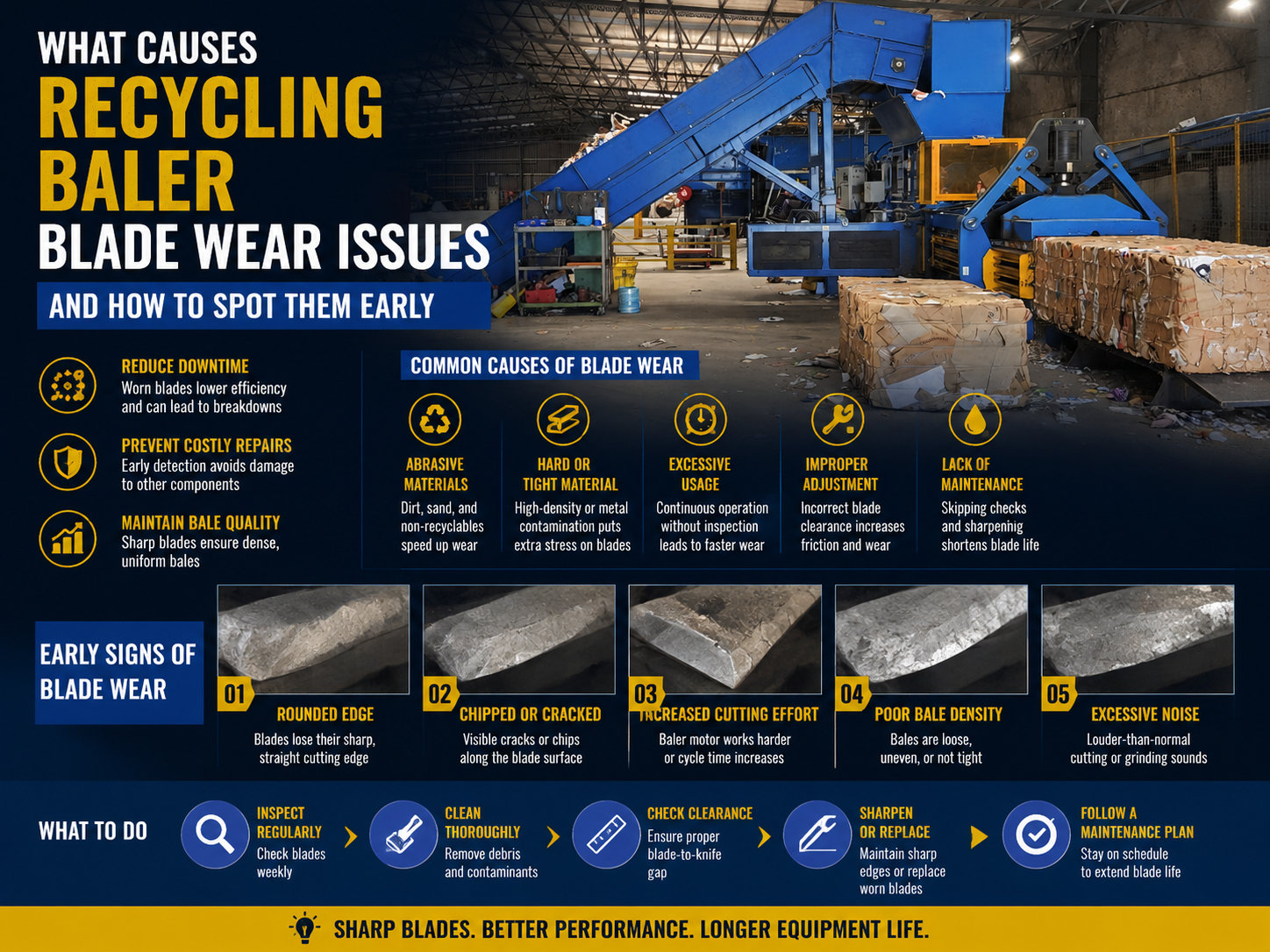
In the high-intensity world of waste management and scrap processing, the recycling baler stands as a cornerstone of efficiency. Whether processing cardboard, plastics, or heavy-duty scrap metal, the performance of the machine is fundamentally tied to the condition of its cutting blades. Understanding what causes recycling baler blade wear issues and how to spot them early is not just a matter of maintenance; it is a critical strategy for ensuring operational uptime and protecting your capital investment. When blades begin to fail, the entire system suffers—from increased energy consumption to potential structural damage to the baler frame.
HARSLE has long recognized that the shearing action within a baler is where the most significant mechanical stress occurs. The blades must withstand immense pressure while maintaining a sharp enough edge to cleanly sever materials. Over time, even the highest quality tool steel will succumb to the rigors of continuous operation. However, premature wear is often a symptom of underlying issues that, if left unaddressed, can lead to catastrophic failure. By identifying these factors early, operators can extend the life of their equipment and maintain consistent bale density and quality.
This comprehensive guide delves into the technical nuances of blade degradation. We will explore the environmental, mechanical, and operational factors that contribute to wear. Furthermore, we will provide actionable insights on diagnostic techniques that allow maintenance teams to intervene before a minor dullness turns into a major repair bill. In the competitive landscape of metal fabrication and recycling, staying ahead of wear is the key to profitability.
Key Considerations: Factors Influencing Blade Degradation
When analyzing blade wear, one must first consider the nature of the material being processed. Not all waste is created equal. For instance, recycling balers used for municipal solid waste (MSW) often encounter highly abrasive contaminants like sand, glass shards, and grit. These particles act like liquid sandpaper, grinding away the blade’s edge with every stroke. In contrast, balers dedicated to non-ferrous metals face high-impact stresses that can lead to micro-chipping rather than gradual abrasion. Understanding your specific waste stream is the first step in predicting wear patterns.
The frequency of operation and the duty cycle of the machine also play a pivotal role. A baler operating on a 24/7 shift schedule will naturally experience faster wear than one used intermittently. However, intermittent use brings its own set of challenges, such as corrosion or the settling of debris in the blade gap. Operators must also account for the “toughness” of the material. High-tensile plastics or thick-walled aluminum extrusions require significantly more shearing force, which translates to higher thermal loads on the blade edges. If the heat generated during the cut cannot dissipate quickly, the blade may lose its temper, becoming soft and prone to rapid deformation.
Another critical consideration is the mechanical alignment of the baler’s ram and the fixed counter-blade. The relationship between the moving blade and the stationary bed knife is measured in thousandths of an inch. If the guide slides or wear plates of the ram become worn, the ram may shift slightly during the compression stroke. This misalignment causes the blades to rub against each other or, conversely, creates too large a gap, leading to “folding” rather than cutting. Both scenarios accelerate wear and put undue strain on the hydraulic system.
Technical Details: The Root Causes of Blade Wear
1. Abrasive and Adhesive Wear Mechanisms
Abrasive wear is perhaps the most common cause of blade dulling. It occurs when hard particles are forced between the cutting surfaces. In the context of causes recycling baler blade wear issues spot them early, abrasion is often identified by a rounded edge on the blade profile. Adhesive wear, on the other hand, occurs when the material being cut actually bonds to the blade surface due to high pressure and heat. This is common when baling certain types of plastics or soft metals like lead. As the ram retracts, these tiny bonds are torn away, taking microscopic bits of the blade steel with them, eventually leading to pitting and surface roughness.
2. Impact Damage and Chipping
Impact damage is a sudden, often violent form of wear. It occurs when the baler encounters an “unbalable” object—a heavy steel shaft hidden in a pile of aluminum cans, or a hardened tool steel component. Because baler blades are heat-treated to a high Rockwell hardness (HRC) to maintain an edge, they can be somewhat brittle. A high-velocity impact can cause large chunks of the blade to chip off. Once a chip occurs, the structural integrity of the remaining edge is compromised, and the stress concentrations at the site of the chip will likely lead to further cracking.
3. Improper Blade Clearance (The Gap Issue)
The clearance between the moving and stationary blades is the most vital technical parameter in a baler. If the gap is too wide, the material will be pulled into the space between the blades, causing a “wedging” effect. This forces the blades apart with massive lateral pressure, often damaging the blade bolts or the mounting seats. If the gap is too tight, the blades may make physical contact. Metal-on-metal contact at high pressure generates extreme heat and can lead to “galling,” where the metal surfaces smear and seize. Maintaining the OEM-specified clearance is essential for preventing these issues.
4. Thermal Fatigue and Softening
During high-speed or high-volume baling, the friction generated at the cutting edge can raise temperatures significantly. If the blade material is not rated for high-temperature stability (like certain D2 or H13 tool steels), the edge can undergo a process called “over-tempering.” This effectively softens the steel. Once the hardness drops, the blade will dull almost immediately, leading to a vicious cycle of more friction, more heat, and more softening. This is particularly common in horizontal balers that process dense materials continuously.
How to Spot Blade Wear Issues Early
Early detection is the difference between a simple blade flip and a costly multi-day shutdown. The first sign of dulling blades is often found in the finished product. Inspect your bales: are the edges clean, or are there long “tails” of uncut material hanging off? If the baler is struggling to shear the material, the bale will look ragged and may even expand more than usual once it exits the chamber because the internal fibers or metal structures weren’t properly severed.
Monitoring the hydraulic system is another excellent diagnostic tool. As blades dull, the force required to cut through the material increases. This results in higher hydraulic pressure readings on the gauge during the shearing portion of the stroke. If you notice that the system is consistently hitting its relief pressure or that the cycle time is slowing down, it is a strong indicator that the blades are no longer efficient. Furthermore, listen to the machine. A sharp blade produces a distinct “snap” or clean shearing sound. A dull blade produces a heavy thud, a grinding noise, or a visible vibration in the hydraulic lines.
Visual inspection remains the most reliable method. During scheduled downtime, clean the blade area and look for “shining” on the edges. A sharp edge should be almost invisible when viewed from the front; if you see a bright, reflected line along the edge, it means the corner has rounded over. Check for cracks radiating from the bolt holes and ensure that the bolts themselves are tight. Loose bolts allow the blade to vibrate, which accelerates wear and can lead to the blade shattering under load.
Selection Advice: Choosing the Right Blades for Your Baler
When it comes to replacement, selecting the right blade material is paramount. Not all “tool steel” is the same. For general recycling (paper, cardboard, light plastics), a high-carbon, high-chrome steel like D2 is often the standard due to its excellent abrasion resistance. However, for heavy scrap metal processing, a shock-resistant steel like S7 may be more appropriate, as it can withstand the high-impact loads without chipping.
| Material Type | Recommended Blade Steel | Key Property |
|---|---|---|
| Cardboard & Paper | D2 Tool Steel | High Abrasion Resistance |
| Mixed Plastics | M2 High Speed Steel | Red Hardness (Heat Resistance) |
| Aluminum & Non-Ferrous | A2 or S7 Steel | Toughness & Impact Resistance |
| Heavy Ferrous Scrap | Modified Proprietary Alloys | Extreme Shock Resistance |
Beyond material, consider the blade geometry. Some blades are designed with a slight “rake” or angle to create a progressive shear, much like a pair of scissors. This reduces the peak hydraulic load on the machine. When purchasing replacement blades, always verify the heat treatment specifications. A blade that is hard on the outside but soft in the middle will fail prematurely. HARSLE recommends using OEM or high-quality aftermarket blades that provide a certified hardness report.
Finally, consider the ease of maintenance. Some modern balers feature “four-way” blades that can be rotated four times before needing a full regrind. This significantly lowers the total cost of ownership. When installing new blades, always replace the mounting bolts as well. These bolts are subjected to extreme fatigue and can stretch over time, leading to blade movement and subsequent wear issues.
Frequently Asked Questions (FAQ)
How often should I sharpen my recycling baler blades?
The frequency depends entirely on the material and volume. For high-volume cardboard baling, blades might need a flip or sharpen every 6 to 12 months. For abrasive scrap metal, this could be as frequent as every 3 months. The best practice is to monitor bale quality and hydraulic pressure daily.
Can I weld or hard-face a chipped baler blade?
While possible in an emergency, it is generally not recommended for high-performance balers. Welding introduces heat-affected zones (HAZ) that can make the blade brittle or cause it to warp. Hard-facing can also break off and damage the pump or cylinders if the fragments enter the hydraulic system.
What is the ideal blade gap for a horizontal baler?
Most manufacturers recommend a gap between 0.015″ and 0.030″ (0.38mm to 0.76mm), but you must consult your specific HARSLE manual. A gap that is too small is just as dangerous as one that is too large.
Why are my blade bolts constantly breaking?
This is usually caused by either improper torque during installation or a blade gap that is too wide, causing the material to wedge between the blades and exert lateral force on the bolts. Ensure you use Grade 8 or higher bolts and a calibrated torque wrench.
Does the temperature of the facility affect blade wear?
Extreme cold can make tool steel more brittle, increasing the risk of chipping upon impact. In very hot environments, the hydraulic oil may thin out, leading to less efficient cooling of the blade area, though the direct impact on the steel is usually secondary to the mechanical stresses.
Conclusion: Proactive Maintenance for Maximum Efficiency
Understanding what causes recycling baler blade wear issues and how to spot them early is the hallmark of a professional recycling operation. By recognizing the signs of abrasion, impact, and heat-related degradation, operators can move from a reactive “fix-it-when-it-breaks” mindset to a proactive maintenance strategy. This transition not only saves money on replacement parts but also prevents the collateral damage that dull blades inflict on hydraulic pumps, cylinders, and the baler’s structural frame.
At HARSLE, we emphasize that the blade is the most critical interface between the machine and the material. Investing in high-quality blade materials, maintaining precise clearances, and conducting regular visual inspections are the most effective ways to ensure your recycling baler remains a productive asset for years to come. Remember, a sharp blade is a safe blade, and a well-maintained baler is a profitable one. Keep your edges keen, your gaps tight, and your inspections frequent to stay ahead of the wear curve.