Vertical Baler Won’t Start? Electrical Troubleshooting Checklist for Operators and Technicians

Introduction: When Your Vertical Baler Won’t Start
In the fast-paced environment of a metal fabrication facility or a recycling center, downtime is the enemy of productivity. When a vertical baler won’t start, it can bring your entire waste management or scrap processing workflow to a grinding halt. For operators and maintenance technicians, understanding the root cause of an electrical failure is the first step toward a quick resolution. This guide provides a comprehensive electrical troubleshooting checklist to help you identify and resolve common power issues efficiently.
HARSLE vertical balers are engineered for durability and high-performance operation. However, like any sophisticated industrial machinery, they rely on a complex network of electrical components, sensors, and safety interlocks. When the machine fails to respond to the start command, it is rarely a catastrophic failure; more often, it is a tripped breaker, a loose connection, or a safety sensor that has been triggered. By following a systematic approach, you can minimize downtime and ensure your equipment remains in peak condition.
This article is designed to serve as a primary resource for both floor operators and maintenance staff. We will walk through the logical steps of electrical diagnostics, starting from the power source and moving inward to the control panel and motor circuits. Before beginning any troubleshooting, always remember that safety is paramount. Ensure that all Lockout/Tagout (LOTO) procedures are followed strictly to prevent accidental startup during inspection.
Key Considerations: Safety and Preparation
Before you touch a single wire or open an electrical cabinet, you must prioritize safety. Industrial balers operate under high voltage and high hydraulic pressure. The first step in any troubleshooting process is to verify that the environment is safe. Ensure that the area around the baler is clear of debris and that the operator is wearing appropriate Personal Protective Equipment (PPE), including insulated gloves and safety glasses.
The second key consideration is the documentation. Every HARSLE vertical baler comes with a comprehensive electrical schematic. Never attempt to bypass safety circuits or guess at wiring configurations. If you are not a qualified electrician, do not attempt to perform internal repairs on the control board or high-voltage components. Always refer to the manufacturer’s manual for specific voltage requirements and wiring diagrams unique to your model.
Thirdly, consider the environmental factors. Is the baler located in a damp area? Has there been a recent power surge or storm? Moisture is a common enemy of electrical components in metal fabrication shops. Corrosion on terminals or moisture ingress in the control box can lead to intermittent power issues. Checking the physical environment can often save hours of unnecessary diagnostic work on the internal circuitry.
Finally, establish a baseline. Ask the operator exactly what happened when the machine stopped. Did it shut down mid-cycle? Did it fail to start after a shift change? Did the lights on the control panel flicker? Gathering this information helps narrow down the search area significantly. A machine that stops mid-cycle often points to a safety interlock or a thermal overload, whereas a machine that won’t turn on at all usually points to a power supply or main disconnect issue.
Technical Details: The Electrical Troubleshooting Checklist
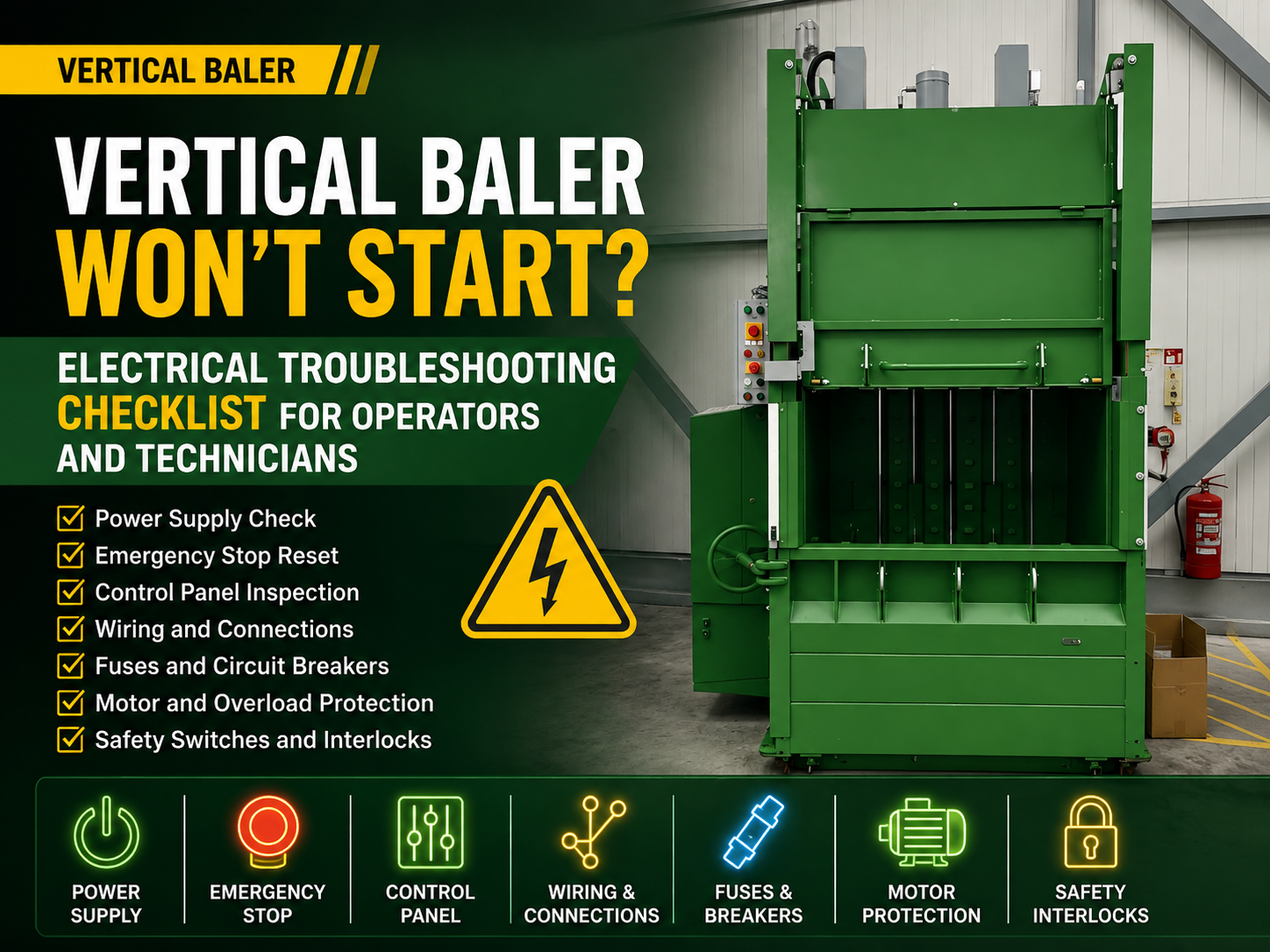
When your vertical baler won’t start, follow this structured checklist to isolate the fault. Start from the external power source and work your way into the machine’s internal logic.
1. Verify the Power Supply
Check the main disconnect switch. It sounds simple, but it is frequently overlooked. Ensure the handle is fully in the ‘ON’ position. Next, check the facility’s circuit breaker or fuse box. If the breaker has tripped, do not simply reset it. Investigate why it tripped—was there a power spike, or is the motor drawing excessive current? Use a multimeter to verify that the correct voltage is reaching the baler’s main terminal block.
2. Inspect Safety Interlocks
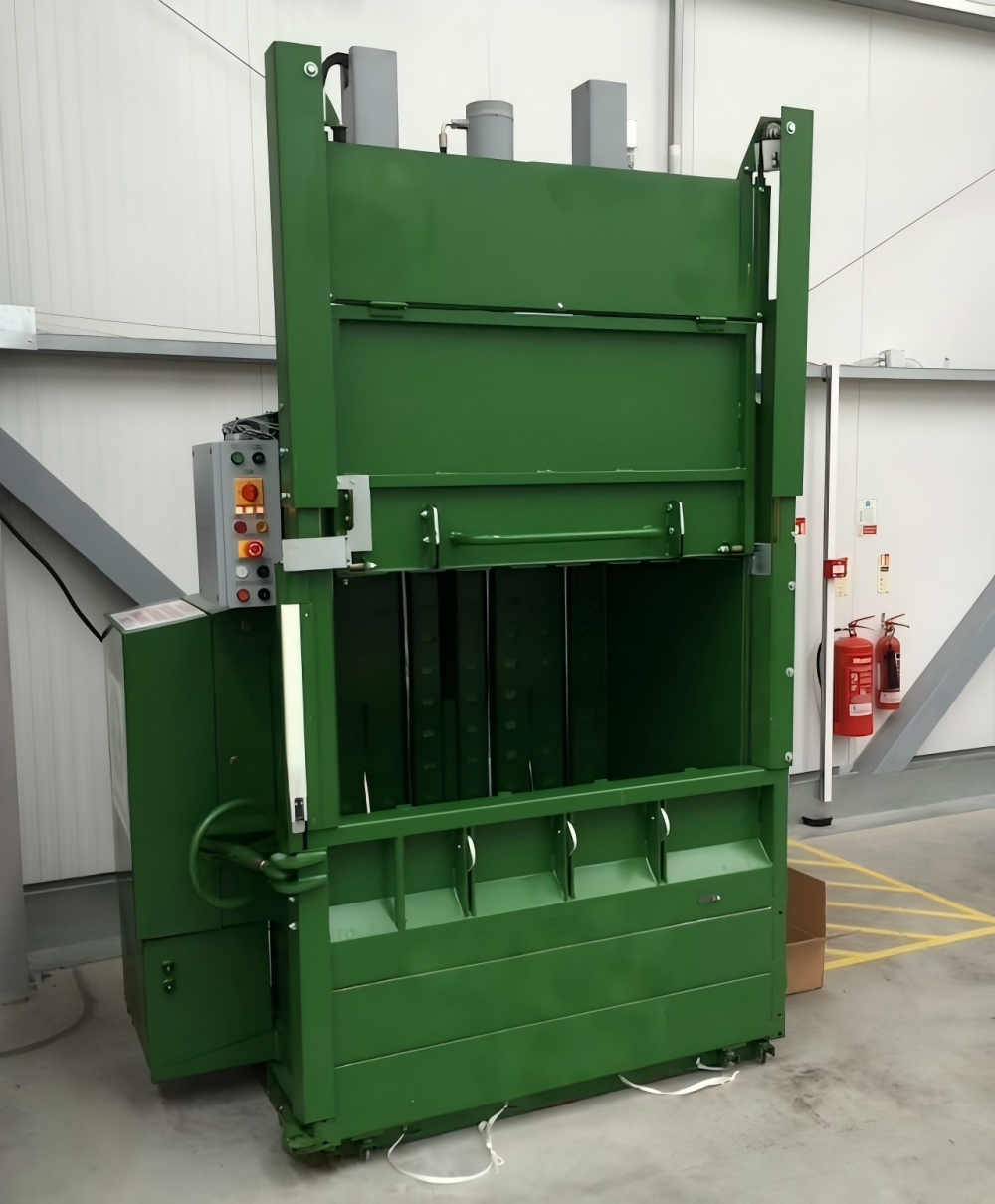
Vertical balers are equipped with multiple safety switches, including door interlocks and emergency stop (E-stop) buttons. If any door is not fully latched or if an E-stop is engaged, the control circuit will remain open, preventing the motor from starting. Check the status lights on your PLC (Programmable Logic Controller). If a safety input is missing, the corresponding LED on the PLC input module will be dark.
3. Examine the Control Circuit
If the main power is present but the machine is dead, check the control transformer. This component steps down the high voltage to the 24V or 110V required for the control logic. If the transformer fuse is blown, the control panel will remain dark. Inspect the fuse for continuity using a multimeter. If the fuse is intact, check for loose connections at the terminal strips, which can vibrate loose over time due to the mechanical nature of the baler.
4. Test the Motor Starter and Overload Relay
The motor starter is responsible for engaging the hydraulic pump motor. If the starter coil is burnt out, the motor will not engage. Additionally, check the thermal overload relay. If the motor has been overworked, the relay may have tripped to protect the windings. Look for a ‘Reset’ button on the overload block. If it trips repeatedly, you may have a mechanical bind in the hydraulic pump or a failing motor bearing.
Selection Advice: Choosing the Right Baler for Your Needs
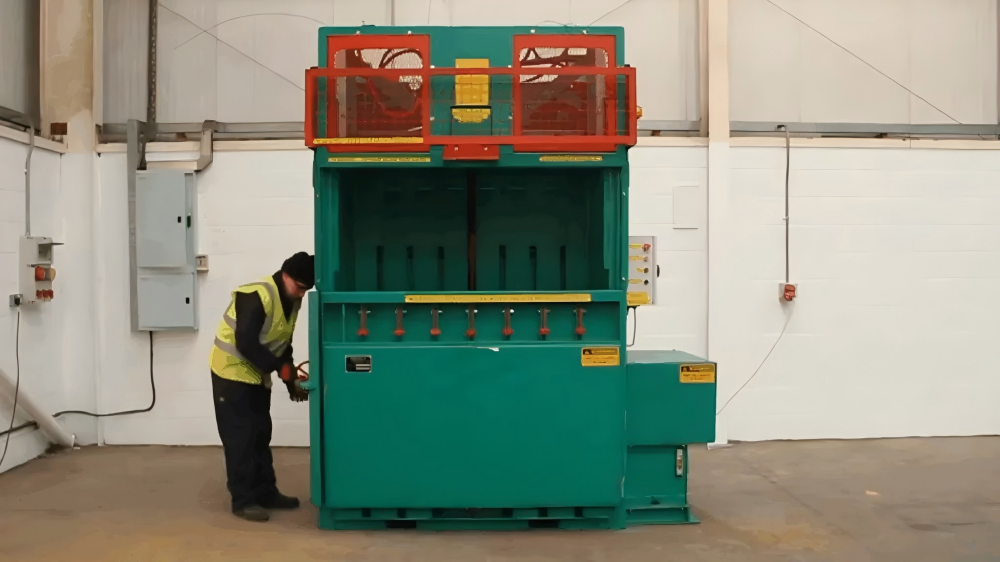
When selecting a vertical baler, the electrical system’s reliability is just as important as the hydraulic force. At HARSLE, we emphasize robust electrical architecture that is easy to service. When evaluating a machine, look for high-quality components from reputable manufacturers. A machine that uses standardized, off-the-shelf relays and contactors is significantly easier to repair than one that uses proprietary, hard-to-source electronics.
Consider the control interface. Modern balers often feature PLC-based controls with diagnostic screens. These screens can display specific error codes, such as “Door Open” or “Motor Overload,” which drastically reduces the time spent troubleshooting. Investing in a machine with a digital diagnostic interface is a smart move for facilities that want to minimize downtime and empower their maintenance staff.
Think about the environment in which the baler will operate. If your facility is dusty or prone to high humidity, ensure the electrical cabinet has an appropriate NEMA rating (e.g., NEMA 4 or 12). A well-sealed cabinet prevents dust and moisture from damaging sensitive electronics, which is a leading cause of electrical failure in metal fabrication environments. Always ask the manufacturer about the IP rating of the control enclosure.
Finally, consider the availability of technical support. HARSLE provides extensive documentation and remote support options. When buying industrial machinery, you are not just purchasing a piece of equipment; you are entering a partnership. Ensure that the manufacturer offers clear electrical schematics, spare parts availability, and technical training for your staff. A machine is only as good as the support behind it.
Frequently Asked Questions (FAQ)
- Q: Why does my baler motor hum but not turn?
A: This often indicates a single-phasing issue or a bad capacitor. Check your power phases to ensure all three legs are providing voltage. If one phase is missing, the motor will hum but fail to rotate. - Q: Can I bypass the door safety switch to get the baler running?
A: Absolutely not. Bypassing safety interlocks is a major safety violation and can lead to severe injury or death. Always replace faulty safety switches immediately. - Q: How often should I inspect the electrical cabinet?
A: We recommend a quarterly inspection. Check for loose wires, signs of overheating (discolored insulation), and ensure the cabinet seals are intact to keep dust out. - Q: What should I do if the PLC shows a ‘Communication Error’?
A: This usually points to a loose data cable or a failing power supply to the PLC. Check all communication cables for damage and ensure the 24V power supply is stable. - Q: Is it normal for the hydraulic oil to get hot?
A: While some heat is normal, excessive heat can cause the motor to draw more current and trip the thermal overload. Ensure your oil levels are correct and the cooling system is functioning.
Conclusion: Maintaining Your HARSLE Vertical Baler
A vertical baler that won’t start is a challenge, but with a systematic approach, it is a manageable one. By following the electrical troubleshooting checklist provided—verifying power, checking safety interlocks, inspecting the control circuit, and testing the motor starter—you can quickly identify the source of the problem. Remember that regular maintenance, such as tightening connections and keeping the electrical cabinet clean, is the best way to prevent these issues from occurring in the first place.
At HARSLE, we are committed to providing high-quality metal fabrication equipment that stands the test of time. Our machines are designed with the operator in mind, featuring intuitive controls and accessible components to make troubleshooting as straightforward as possible. By training your team on these basic diagnostic steps, you ensure that your facility remains productive and your equipment remains safe.
If you find that a problem persists despite your best efforts, do not hesitate to reach out to our technical support team. We are here to help you get your operations back on track. Keep your baler in top condition, prioritize safety, and continue to leverage the power of HARSLE machinery to streamline your waste management and fabrication processes.