Troubleshooting Guide: What to Do When a Recycling Baler Cycle Is Too Slow

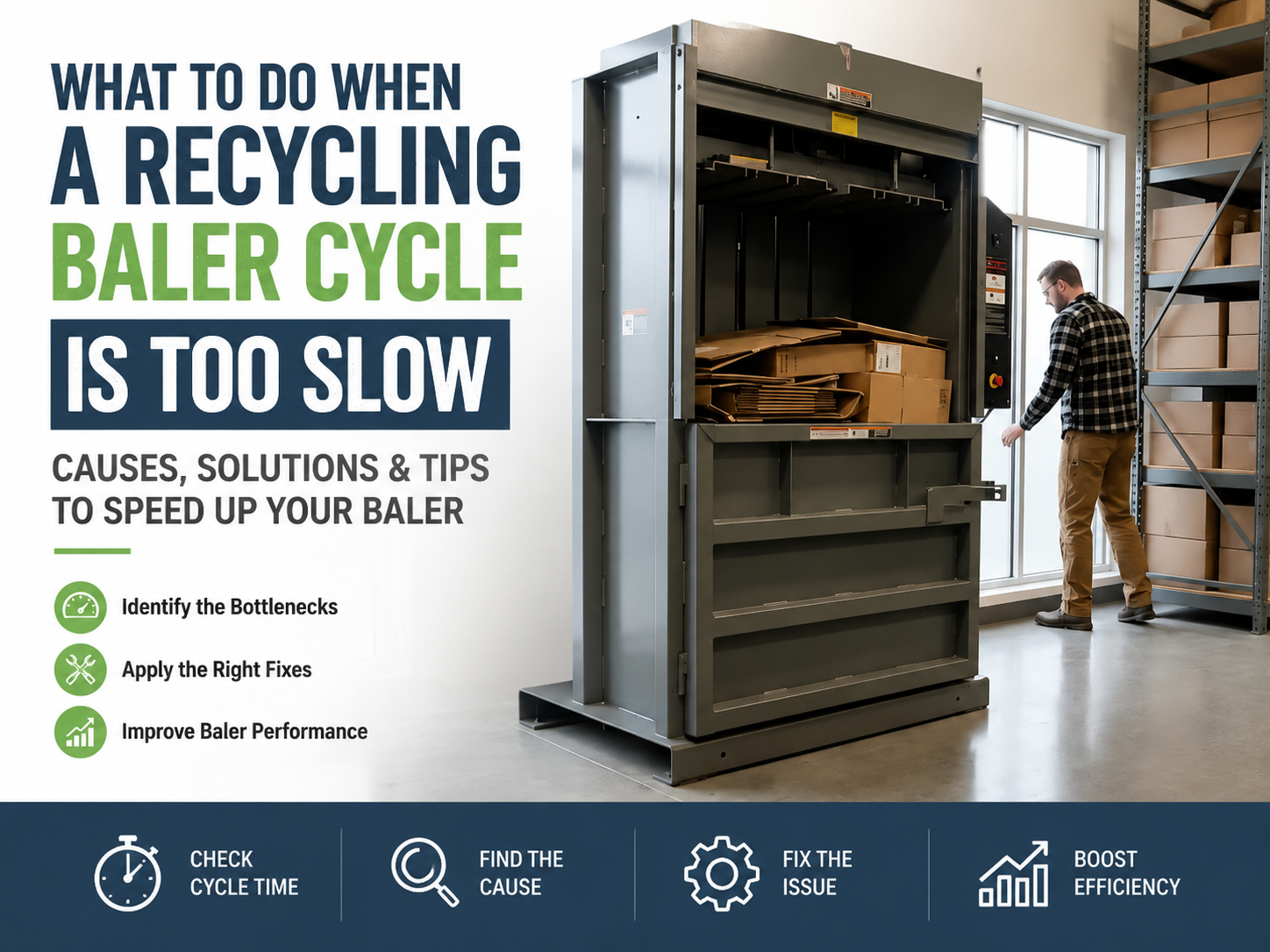
Introduction to Recycling Baler Efficiency
In the fast-paced world of waste management and metal fabrication, efficiency is the cornerstone of profitability. A recycling baler is a critical piece of equipment designed to compress materials like cardboard, plastics, and scrap metal into manageable, transportable units. However, when the machine begins to lag, it creates a bottleneck that ripples through the entire production line. Understanding what to do when a recycling baler cycle is too slow is essential for facility managers and operators who need to maintain high throughput and minimize downtime.
A “cycle” in baling terms refers to the time it takes for the ram to extend, compress the material, and retract to its starting position. When this process slows down, it isn’t just a minor inconvenience; it is often a symptom of underlying mechanical, hydraulic, or electrical issues. HARSLE, a leader in industrial machinery, emphasizes that proactive diagnostics can save thousands of dollars in potential repair costs and lost productivity. This guide will delve deep into the technical reasons behind slow cycle times and provide actionable solutions to restore your equipment to peak performance.
Whether you are operating a vertical baler in a retail environment or a heavy-duty horizontal baler in a scrap yard, the principles of hydraulic efficiency remain the same. By the end of this article, you will have a comprehensive understanding of how to diagnose, fix, and prevent slow cycle times, ensuring your HARSLE equipment or any industrial baler continues to serve your business effectively for years to come.
Key Considerations: Identifying the Root Cause
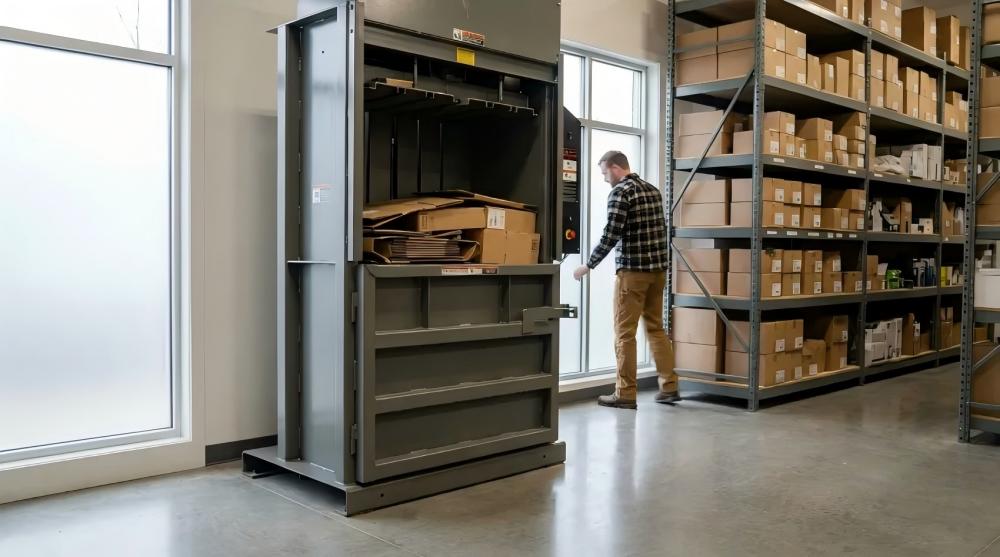
Before diving into the complex internal components of the machine, it is vital to perform a preliminary assessment. Often, the reason for a slow cycle is external or related to basic maintenance that has been overlooked. The first step in determining what to do when a recycling baler cycle is too slow is to observe the machine in operation and note exactly where the delay occurs. Is the ram slow to extend, slow to retract, or is there a delay before the cycle even begins?
One of the most common culprits is hydraulic oil temperature and quality. Hydraulic systems rely on the fluid’s viscosity to transmit power efficiently. If the oil is too cold, it becomes thick and resistant to flow, causing the pump to work harder and the ram to move slower. Conversely, if the oil is overheated, it loses its lubricating properties and can cause internal components to expand, creating friction. Checking the oil level and its clarity should be your first priority. Cloudy or dark oil indicates contamination or oxidation, both of which significantly impede cycle speed.
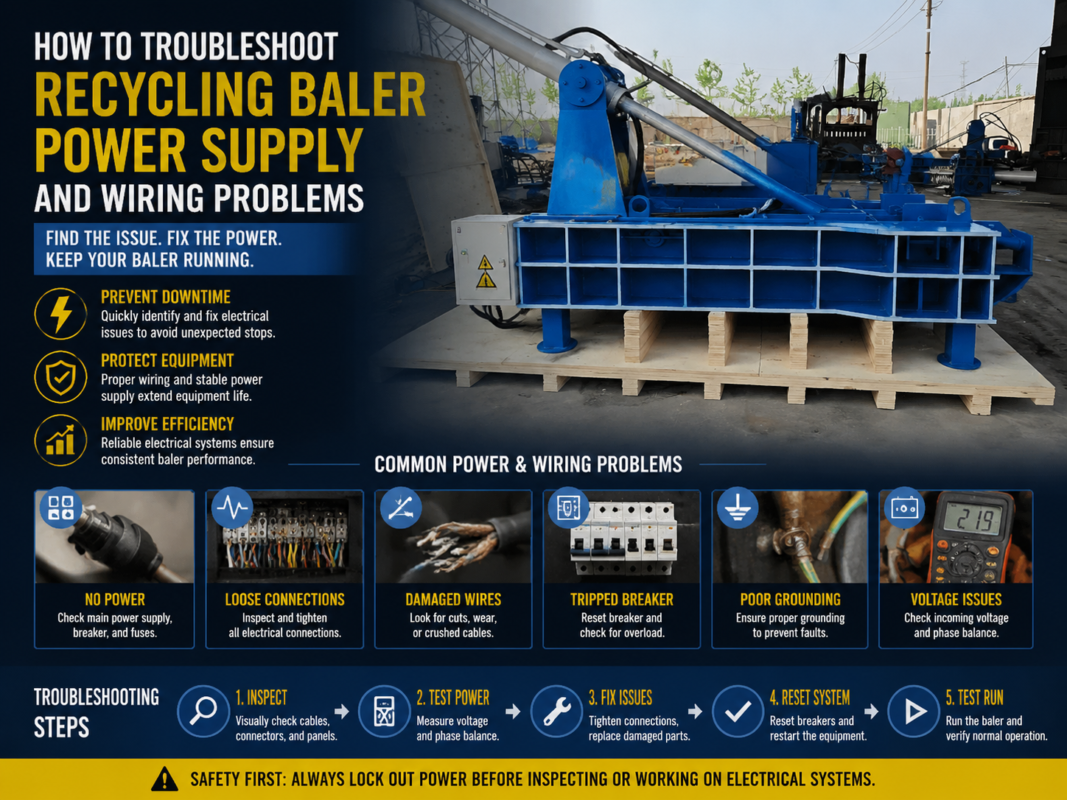
Another key consideration is the power supply. Industrial balers require consistent voltage to operate their electric motors at the rated RPM. If your facility is experiencing voltage drops or if the machine is connected to an inadequate power source, the motor will not be able to drive the hydraulic pump at the necessary speed. This is particularly common in older facilities where the electrical infrastructure may not have been upgraded to handle modern, high-capacity machinery. Always verify that the incoming power matches the specifications provided by the manufacturer.
Finally, consider the material being processed. Attempting to bale materials that exceed the machine’s rated density or volume can cause the system to hit its pressure relief limits prematurely. When the system reaches maximum pressure, the flow rate often drops to protect the components, resulting in a slower ram movement. Ensuring that operators are trained on the specific capacities of their baler is a simple yet effective way to prevent perceived “slowness” that is actually just the machine operating under excessive load.
Technical Details: The Mechanics of Cycle Speed
To truly understand what to do when a recycling baler cycle is too slow, one must look at the hydraulic circuit. The cycle speed is directly proportional to the flow rate (gallons per minute or GPM) provided by the hydraulic pump. If the flow is restricted or the pump is failing, the cycle time will inevitably increase. Below, we break down the technical components that influence this process.
1. The Hydraulic Pump and Flow Rate
The pump is the heart of the baler. Most modern balers use either gear pumps or vane pumps, while high-end models might use variable displacement piston pumps. Over time, internal wear creates “slippage,” where oil leaks past the internal gears or pistons instead of being pushed into the system. This reduces the effective GPM. If you notice the cycle is slow even when the machine is under no load, the pump is likely the primary suspect. Testing the pump’s output with a flow meter can confirm if it is meeting its factory specifications.
2. Directional Control Valves and Solenoids
The directional control valve (DCV) dictates where the oil goes—either to the cap end of the cylinder to extend the ram or the rod end to retract it. If the valve spool is not shifting completely due to debris, a weak solenoid coil, or a bent valve stem, the passage for the oil is narrowed. This restriction acts like a kink in a garden hose, slowing down the movement of the ram. Furthermore, if the pilot pressure is insufficient, the valve may shift slowly, causing a noticeable lag at the start of each stroke.
3. Cylinder Integrity and Seal Leakage
Internal leakage within the hydraulic cylinder is a silent speed killer. If the piston seals are worn, high-pressure oil can bypass the piston and flow directly to the return side. This means the pump has to work twice as hard to move the ram the same distance. A tell-tale sign of internal cylinder leakage is the ram “drifting” or failing to hold pressure when the controls are in neutral. Replacing these seals is a standard maintenance task that can restore original cycle speeds instantly.
4. Filtration and Suction Lines
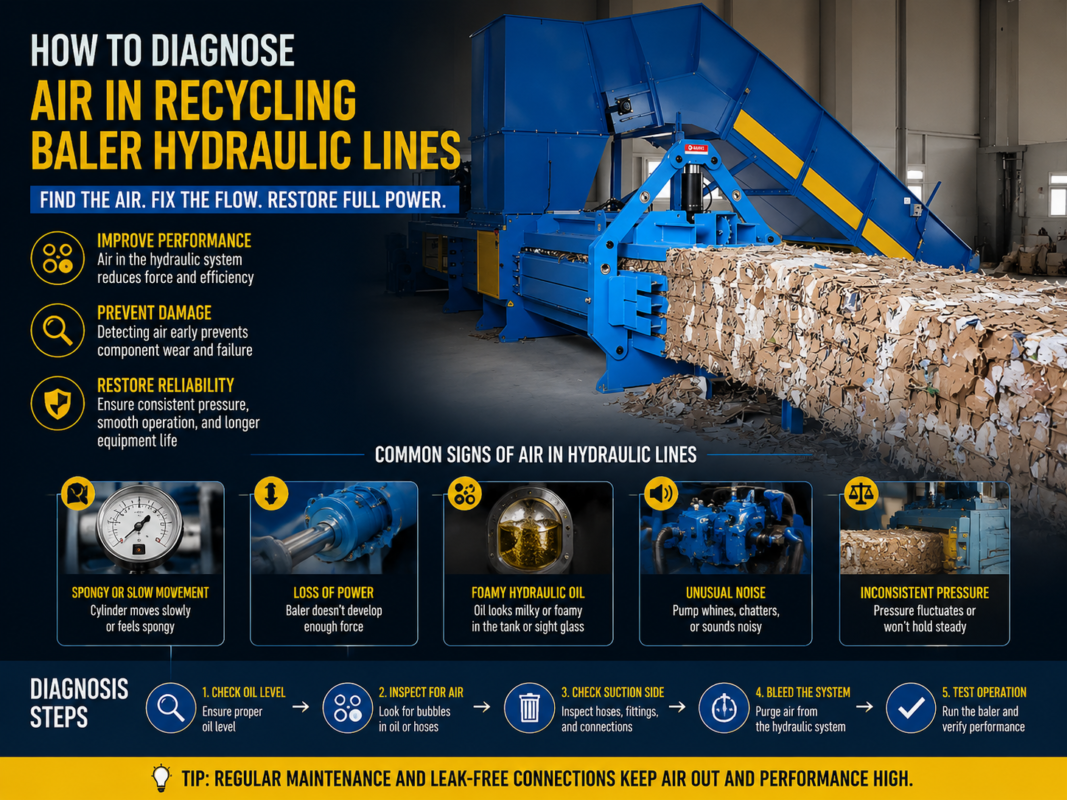
A clogged suction filter is perhaps the most overlooked reason for a slow cycle. If the pump cannot draw oil freely from the reservoir, it will cavitate. Cavitation not only slows down the cycle but also creates tiny air bubbles that implode, causing catastrophic damage to the pump’s internal surfaces. Regularly replacing return-line filters and cleaning suction strainers is non-negotiable for maintaining speed.
| Component | Common Issue | Impact on Cycle | Solution |
|---|---|---|---|
| Hydraulic Oil | High Viscosity / Contamination | Increased resistance, slow flow | Change oil and clean reservoir |
| Hydraulic Pump | Internal Wear / Slippage | Reduced GPM (Gallons Per Minute) | Repair or replace pump |
| Control Valve | Partial Spool Shift | Restricted oil passage | Clean valve or replace solenoid |
| Cylinder Seals | Bypassing / Internal Leak | Loss of effective pressure/flow | Rebuild cylinder with new seals |
| Suction Filter | Clogging / Debris | Pump cavitation and starvation | Replace filter element |
Selection Advice: Choosing the Right Baler for Speed
When purchasing new equipment, understanding the relationship between machine specs and cycle time is crucial. If you find yourself constantly asking what to do when a recycling baler cycle is too slow, it might be that the machine was under-specced for your volume from the beginning. HARSLE recommends looking at several key factors during the selection process to ensure long-term satisfaction.
First, evaluate the motor horsepower (HP) and pump combination. A higher HP motor can drive a larger pump, which provides more GPM and thus a faster cycle. However, this must be balanced with the pressure requirements. Some balers use a “hi-lo” pump system, which provides high flow at low pressure (for fast ram approach) and low flow at high pressure (for the actual compression). This is an excellent feature for maximizing speed without requiring an enormous electrical footprint.
Second, consider the cylinder diameter. While a larger cylinder provides more crushing force, it also requires more oil to fill the volume, which can slow down the cycle if the pump isn’t sized accordingly. When selecting a baler, look for a machine that offers a balance between the “Baling Force” and the “Cycle Time.” For high-volume operations, a horizontal baler with a continuous feed system is often superior to a vertical baler, as it eliminates the downtime associated with manual loading and door operation.
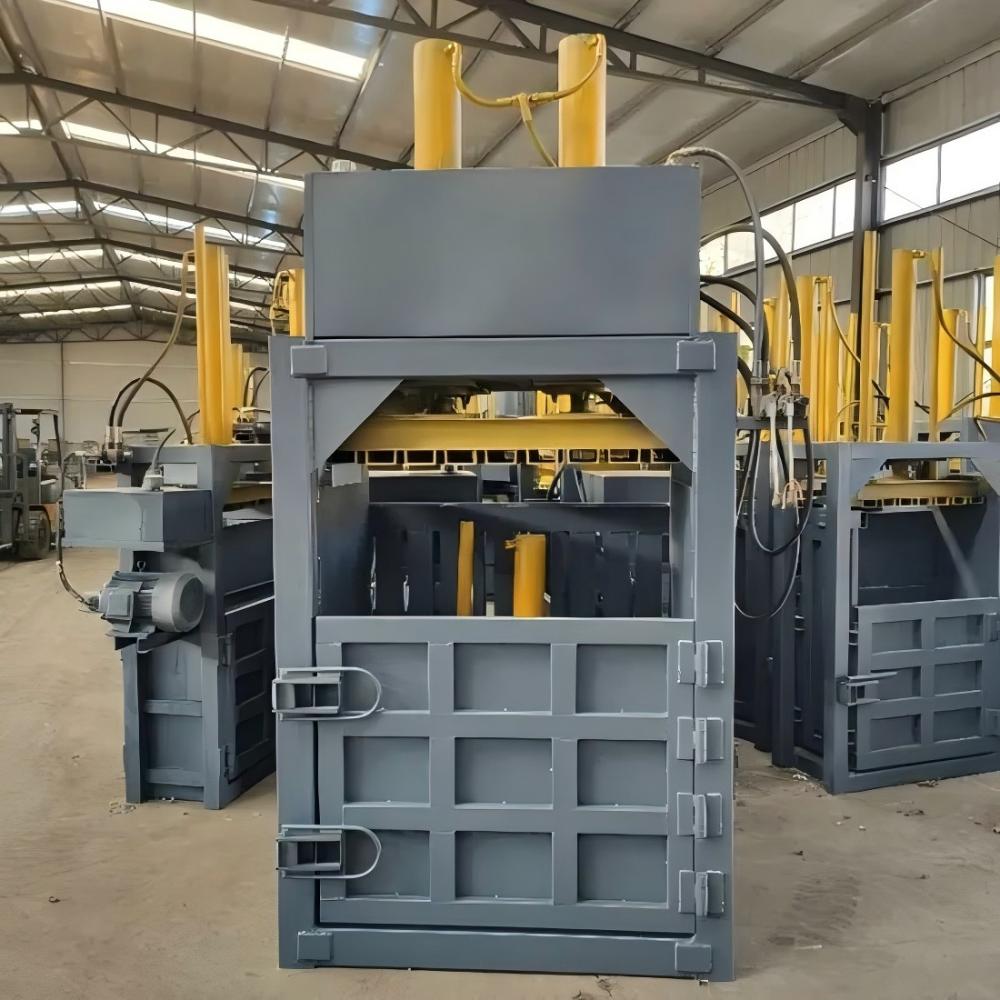
Third, look for advanced control systems. Modern HARSLE balers often feature PLC (Programmable Logic Controller) systems that allow for fine-tuning of the cycle. Features like automatic ram retraction and adjustable dwell times can shave seconds off every cycle, which adds up to significant time savings over a full shift. Additionally, integrated oil coolers are a must-have for machines operating in warm climates or running multiple shifts, as they keep the oil at the optimal viscosity for speed.
Maintenance Checklist to Prevent Slow Cycles
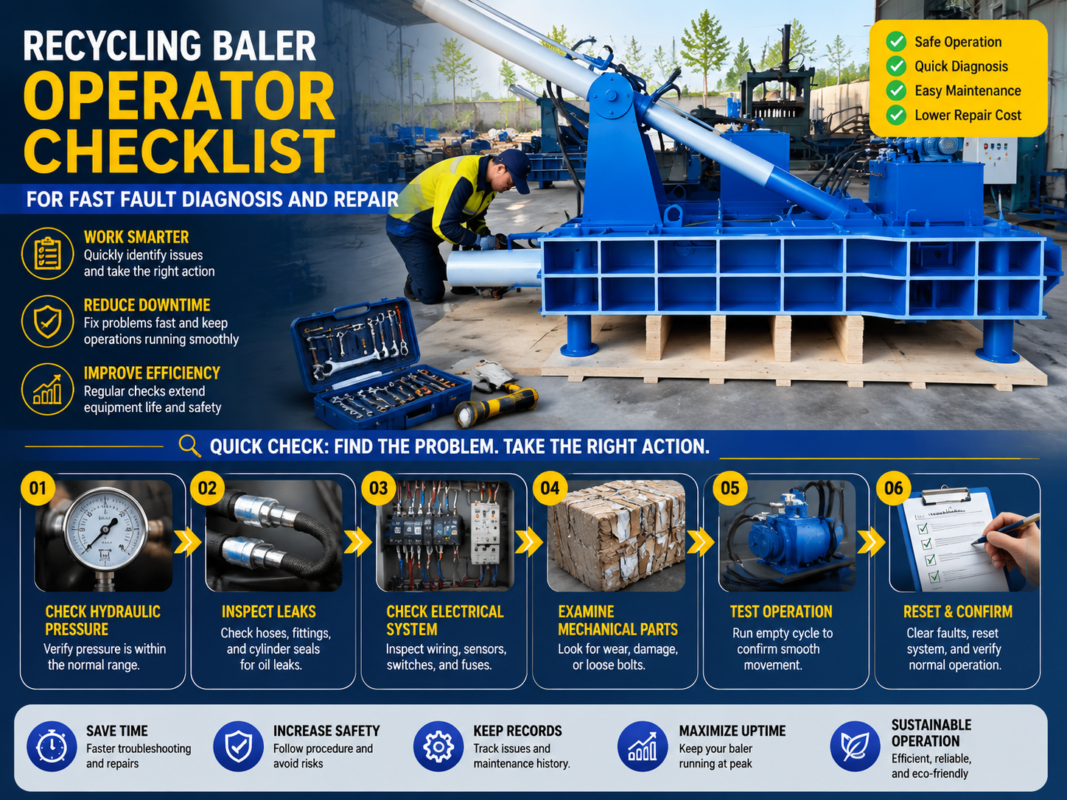
Prevention is always better than a cure. To avoid the frustration of a slow machine, implement a rigorous maintenance schedule. A well-maintained baler rarely suffers from sudden speed drops. Use the following checklist as a guide for your maintenance team:
- Daily: Check hydraulic oil levels and look for external leaks around hoses and fittings.
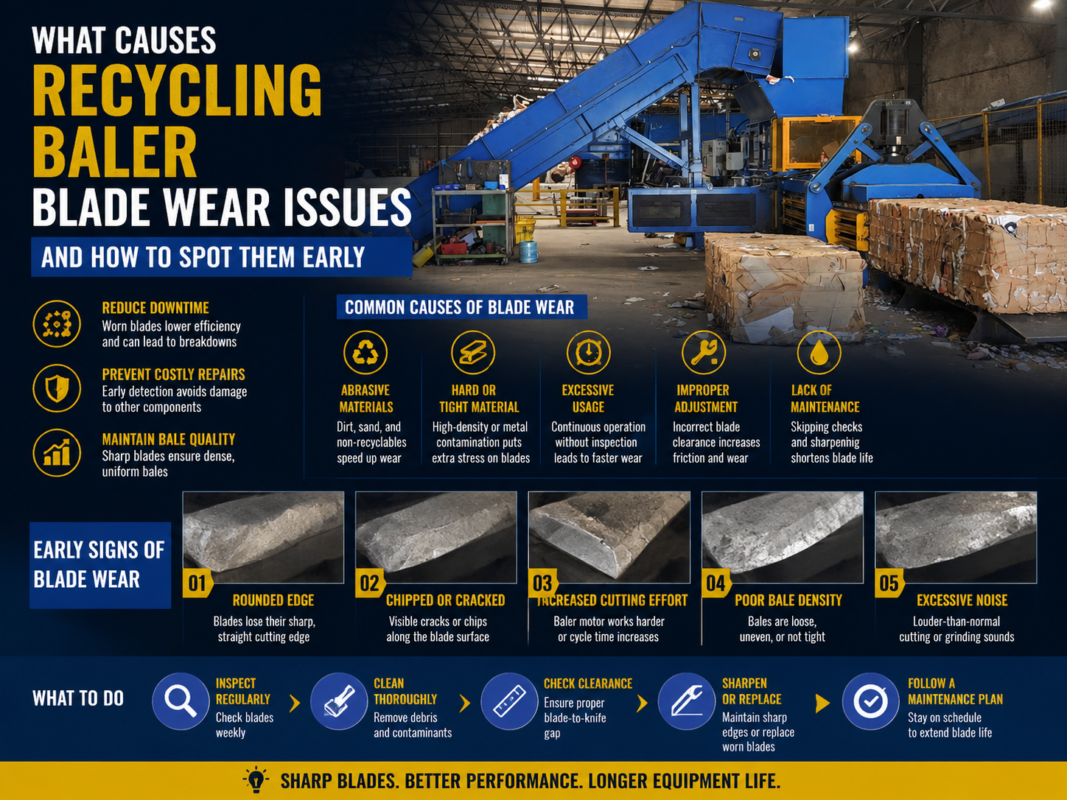
- Weekly: Inspect the ram guides and wear pads. Excessive friction between the ram and the baler frame can slow down the movement and cause jerky operation. Lubricate as per the manual.
- Monthly: Check the tension of the drive belts between the motor and the pump. Slipping belts result in lost power and slower pump speeds.
- Quarterly: Test the hydraulic oil for contamination and check the operating temperature after two hours of continuous use. If it exceeds 140°F (60°C), investigate the cooling system.
- Annually: Perform a full system pressure and flow test. This benchmark helps you identify gradual wear in the pump or valves before they cause a total breakdown.
FAQ: Common Questions About Slow Baler Cycles
Why does my baler slow down only in the winter?
This is almost certainly due to oil viscosity. In cold temperatures, hydraulic oil thickens. The pump struggles to move this thick fluid, and the friction within the hoses increases. Using a heater for the hydraulic reservoir or switching to a multi-grade oil (like ISO 32 instead of ISO 46) can help maintain speed in cold environments.
Can a faulty sensor cause a slow cycle?
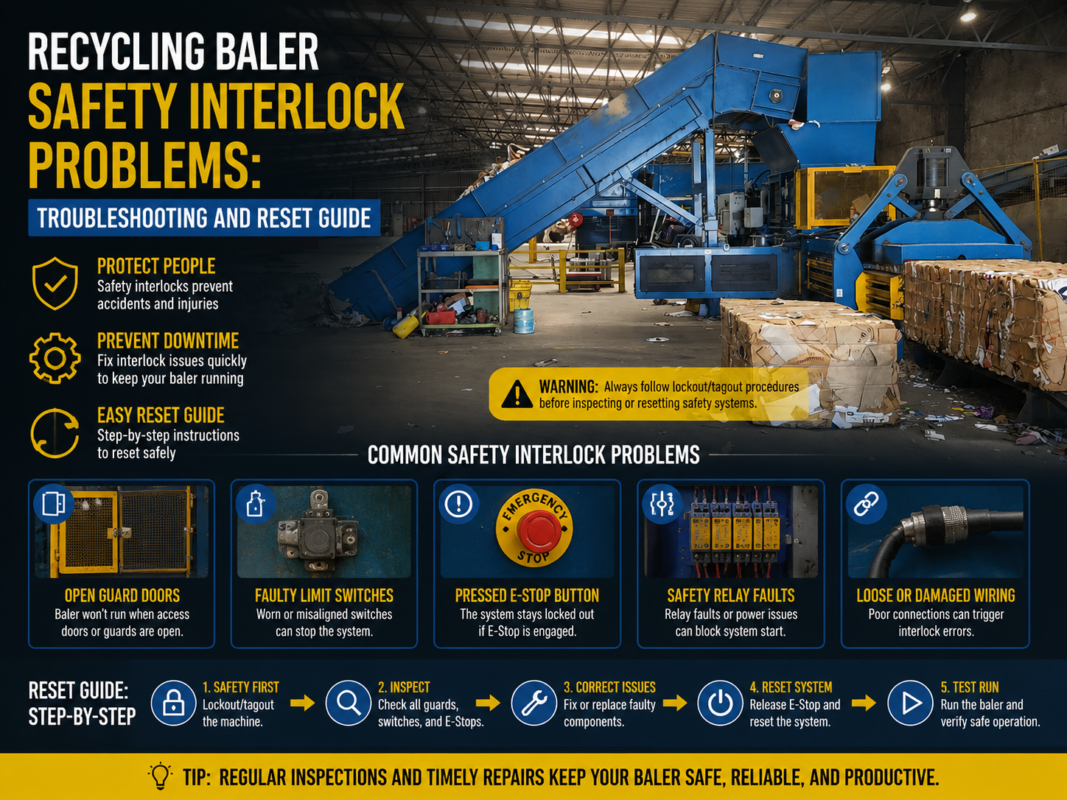
Yes. Many modern balers use proximity sensors or limit switches to tell the PLC when the ram has reached the end of its stroke. If a sensor is misaligned or failing, it might send a delayed signal, causing the ram to “dwell” at the bottom or top of the stroke longer than necessary, effectively increasing the total cycle time.
Does the type of material really affect the speed?
Absolutely. Materials like springy plastics or heavy metals require the baler to stay in “high pressure / low flow” mode for a longer portion of the cycle. If you switch from baling light cardboard to heavy aluminum cans, you will notice a natural increase in cycle time as the machine works harder to achieve the required density.
How do I know if my pump is failing?
A failing pump usually gives three signs: increased noise (whining or growling), increased heat in the hydraulic fluid, and a gradual increase in cycle time that persists regardless of the material or oil temperature. If you see metallic flakes in your oil filter, the pump is likely disintegrating internally.
Is it worth upgrading an old baler to improve speed?
In many cases, yes. Upgrading to a more efficient motor, installing a new high-flow pump, or adding a modern PLC can revitalize an old machine. However, if the structural frame is fatigued or the cylinder is badly scored, it may be more cost-effective to invest in a new HARSLE baler with modern efficiency standards.
Conclusion: Restoring Your Productivity
Knowing what to do when a recycling baler cycle is too slow is a vital skill for anyone in the waste processing industry. By systematically checking the hydraulic oil, inspecting the pump and valves, and ensuring the electrical system is robust, you can quickly identify the bottleneck. Remember that a slow cycle is rarely a standalone issue; it is a warning sign that your equipment needs attention. Ignoring it can lead to more expensive failures down the road.
At HARSLE, we pride ourselves on manufacturing recycling balers that are not only powerful but also engineered for consistent, high-speed performance. By following the maintenance and selection advice outlined in this guide, you can ensure that your recycling operations remain profitable and efficient. Don’t let a slow cycle time hold your business back—take the necessary steps today to diagnose, repair, and optimize your industrial machinery. With the right approach, your baler will continue to be the workhorse of your facility, turning waste into value at the speed your business demands.