Signs Your Aluminium Extrusion Press Needs Immediate Repair: A Comprehensive Guide

The Critical Importance of Maintaining Your Aluminium Extrusion Press
In the high-stakes world of metal fabrication, the aluminium extrusion press stands as a cornerstone of production. These massive machines exert thousands of tons of pressure to transform raw aluminium billets into intricate profiles used in everything from aerospace components to window frames. However, the sheer force and heat involved in this process mean that wear and tear are inevitable. Recognizing the signs your aluminium extrusion press needs immediate repair is not just a matter of operational efficiency; it is a matter of safety and long-term financial viability.
When an extrusion press operates at peak performance, it produces consistent, high-quality profiles with minimal waste. However, as components begin to fail, the quality of the output diminishes, and the risk of a catastrophic breakdown increases. For facility managers and operators, understanding the subtle and not-so-subtle indicators of mechanical distress is essential. Ignoring these signs can lead to prolonged downtime, expensive emergency repairs, and potential injury to personnel. At HARSLE, we emphasize that proactive maintenance is always more cost-effective than reactive fixing.
The complexity of a modern aluminium extrusion press—incorporating advanced hydraulics, precision electronics, and heavy-duty mechanical structures—means that problems can arise from multiple sources. A small leak in a hydraulic line might seem insignificant, but it can lead to pressure drops that ruin an entire batch of profiles. Similarly, a slight misalignment in the press stem can cause uneven wear on the container, leading to a repair bill that reaches into the tens of thousands of dollars. This guide aims to provide a detailed roadmap for identifying these issues before they escalate.
By implementing a rigorous inspection routine and training staff to spot the early warning signs of failure, companies can significantly extend the lifespan of their equipment. In the following sections, we will delve into the specific daily, hydraulic, electrical, and mechanical checks required to keep your HARSLE extrusion press running smoothly. We will also explore the nuances of lubrication and provide a comprehensive troubleshooting guide for common signals of distress.
Daily Inspection: The First Line of Defense
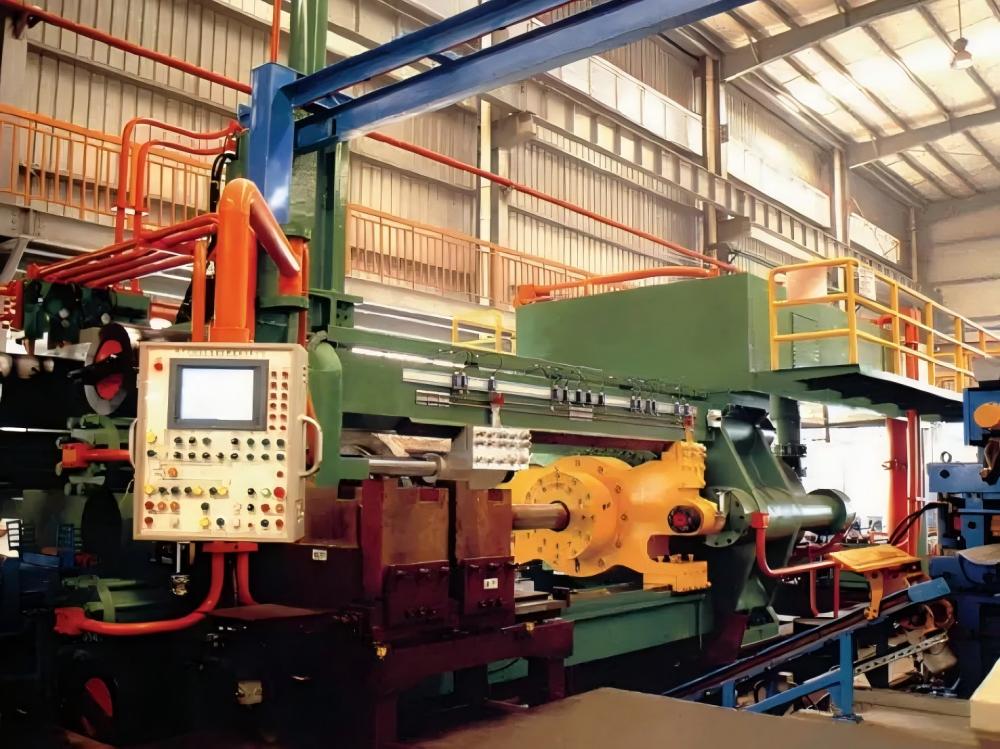
The most effective way to catch problems early is through a disciplined daily inspection routine. Before the first billet is loaded, operators should conduct a visual and auditory sweep of the machine. This “pre-flight” check is designed to identify obvious issues that could worsen during a full shift. Start by looking for any signs of fluid on the floor. Hydraulic oil leaks are among the most common signs your aluminium extrusion press needs immediate repair. Even a small puddle can indicate a failing seal or a cracked hose that could burst under high pressure.
Listen to the machine as it starts up. Experienced operators develop an ear for the “normal” hum of the pumps and the rhythmic clunk of the loaders. Any new whistling, grinding, or banging sounds should be investigated immediately. Whistling often points to air entering the hydraulic system or a failing valve, while grinding suggests metal-on-metal contact due to lack of lubrication or misalignment. These sounds are the machine’s way of communicating distress, and ignoring them is a recipe for disaster.
Temperature monitoring is another critical aspect of daily checks. While the extrusion process naturally generates heat, localized overheating in motors, bearings, or hydraulic manifolds is a red flag. Use handheld infrared thermometers to check key points. If a bearing housing is significantly hotter than usual, it likely lacks lubrication or is nearing the end of its service life. Consistent logging of these temperatures can help identify trends, allowing for scheduled maintenance rather than emergency shutdowns.
Finally, inspect the quality of the extruded profiles coming off the press at the start of the day. Are there unusual surface marks? Is the dimensional accuracy within tolerance? Often, the first sign of a mechanical issue in the press is a defect in the product. If the “die lines” are deeper than usual or if the profile shows signs of “twisting,” the press alignment or the container heating system may be failing. Daily vigilance ensures that these minor deviations don’t become major production losses.
Hydraulic, Electrical, and Mechanical Checks
Hydraulic System Integrity
The hydraulic system is the heart of the aluminium extrusion press. It provides the massive force required to push metal through the die. Consequently, hydraulic failure is one of the most frequent reasons for immediate repair. Beyond visible leaks, operators should monitor the hydraulic oil’s condition. If the oil appears milky, it is contaminated with water; if it smells burnt or looks dark, it has oxidized due to excessive heat. Contaminated oil acts as an abrasive, rapidly wearing down pumps and valves.
Pressure fluctuations are another critical sign. If the press struggles to maintain consistent pressure during the extrusion stroke, the main pump may be failing, or there may be internal leakage within the cylinders. Check the pressure gauges frequently. A “jittery” needle often indicates cavitation—a condition where air bubbles form and collapse within the oil, causing micro-explosions that can pit metal surfaces and destroy hydraulic components in short order.
Electrical and Control Systems
Modern HARSLE presses rely on sophisticated PLC (Programmable Logic Controller) systems and sensors to manage the extrusion cycle. Electrical issues often manifest as intermittent glitches or “ghost” errors on the HMI (Human Machine Interface). If the press stops unexpectedly or if sensors fail to trigger the next stage of the cycle, the electrical cabinet should be inspected. Look for loose wiring, signs of overheating on circuit breakers, or accumulated dust which can cause short circuits.
Sensors, particularly those measuring position and temperature, are prone to failure in the harsh environment of an extrusion plant. If the press stem doesn’t stop exactly where it should, or if the container temperature readings are erratic, the sensors may need cleaning, recalibration, or replacement. Inconsistent electrical signals can lead to “slamming” of mechanical parts, which then causes secondary mechanical damage.
Mechanical Structure and Alignment
The mechanical frame of the press must withstand incredible stresses. Over time, the constant cycling can lead to structural fatigue. Inspect the tie rods—the massive bolts that hold the press together—for any signs of cracking or uneven tension. A broken tie rod is a catastrophic failure that can render the press useless and pose a severe safety risk. Use ultrasonic testing if you suspect internal cracks that aren’t visible to the naked eye.
Alignment is perhaps the most critical mechanical factor. The stem, the container, and the die must be perfectly coaxial. Even a fraction of a millimeter of misalignment can cause the stem to rub against the container wall, leading to excessive wear and potential “galling.” Signs of misalignment include uneven wall thickness in the extruded profiles and visible wear patterns on one side of the stem or the container liner. If you notice these, the press requires immediate realignment by a qualified technician.
Developing a Robust Lubrication Plan
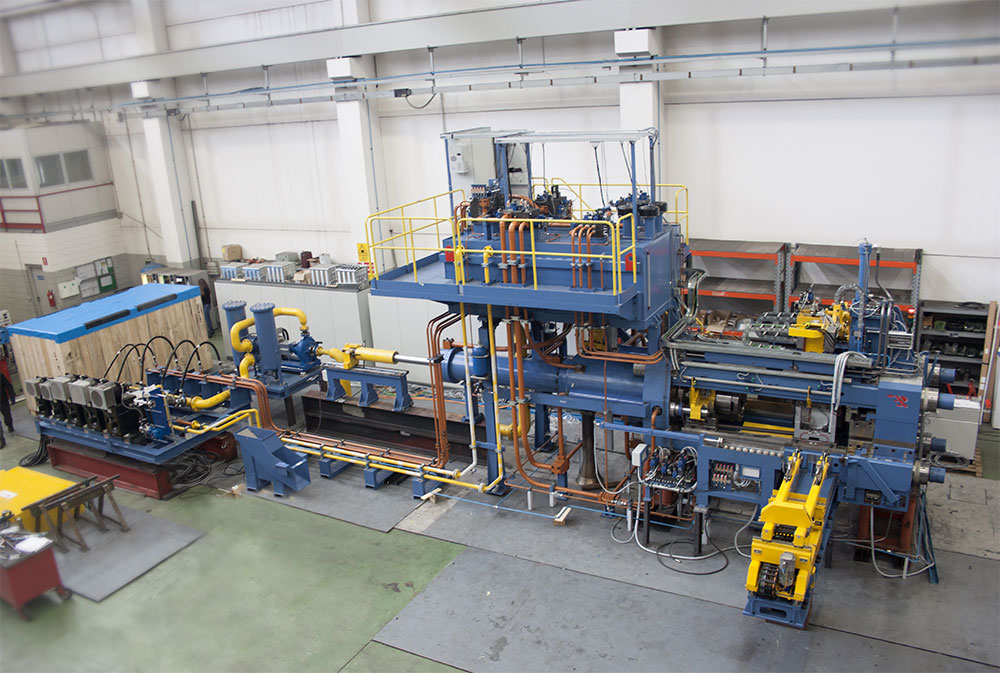
Lubrication is the lifeblood of any heavy industrial machine. For an aluminium extrusion press, the lubrication requirements are twofold: the internal mechanical components (bearings, slides, gears) and the process lubrication (die and container). A failure in either area is a primary sign your aluminium extrusion press needs immediate repair. Without proper lubrication, friction increases, temperatures soar, and metal surfaces begin to weld themselves together.
A professional lubrication plan should specify the exact type of lubricant for each component. High-temperature greases are typically required for parts near the heated container, while specialized hydraulic oils are needed for the main power unit. Automated lubrication systems are common in modern HARSLE machines, but they are not “set and forget.” Operators must regularly check that the reservoirs are full and that the distribution lines are not clogged. A blocked line to a single bearing can lead to a total machine seizure.
Process lubrication is equally vital. The interface between the billet and the container, and the billet and the die, must be managed to prevent the aluminium from sticking. If you notice “pick-up” on the surface of your profiles—small bits of aluminium torn from the surface—it often indicates a failure in the lubrication or a problem with the container’s internal surface. Consistent application of boron nitride or graphite-based lubricants is essential for smooth flow and high-quality finishes.
Troubleshooting Signals: What Your Press is Telling You
Beyond the formal checks, there are several troubleshooting signals that indicate an immediate need for intervention. One of the most telling is a change in cycle time. If the press is taking longer to complete a single extrusion than it did a month ago, efficiency is dropping. This could be due to a slowing hydraulic pump, a clogged filter, or a PLC that is compensating for a sluggish valve. A slow press is an expensive press, as it reduces the total tonnage produced per shift.
Vibration is another key indicator. While no press is perfectly still, excessive vibration in the hydraulic piping or the main frame suggests that something is loose or out of balance. High-frequency vibration in hydraulic lines often points to pump vane wear or air ingestion. If the entire floor shakes more than usual during the “breakthrough” phase (when the aluminium first starts moving through the die), it may indicate that the pressure relief valves are not functioning correctly, causing a pressure spike that stresses the entire structure.
Product defects are the ultimate signal. “Orange peel” texture on the profile surface can indicate that the billet was not heated uniformly or that the container temperature is fluctuating. “Scratches” or “tears” usually mean the die is damaged or the container liner is scored. If these defects appear suddenly and persist across different dies, the problem lies within the press itself. At this point, stopping production for a thorough inspection is the only way to prevent further damage and waste.
Comprehensive Maintenance Schedule Table
To keep your aluminium extrusion press in top condition, follow this structured maintenance schedule. This table serves as a baseline for HARSLE equipment and should be adjusted based on your specific production volume and environment.
| Frequency | Component | Action Required |
|---|---|---|
| Daily | Hydraulic System | Check oil levels, look for leaks, monitor operating temperature. |
| Daily | Visual/Auditory | Listen for unusual noises; check for loose bolts or debris. |
| Weekly | Filters | Inspect and clean/replace hydraulic and air filters. |
| Weekly | Lubrication System | Verify all grease points are receiving lubricant; refill reservoirs. |
| Monthly | Alignment | Check stem-to-container alignment; inspect die slide movement. |
| Monthly | Electrical | Clean control cabinets; check for loose terminal connections. |
| Quarterly | Hydraulic Oil | Perform oil analysis for contamination and additive depletion. |
| Quarterly | Tie Rods | Inspect for cracks and check nut tightness/tension. |
| Yearly | Major Overhaul | Full system calibration, seal replacement, and pump inspection. |
Frequently Asked Questions (FAQ)
1. How often should I change the hydraulic oil in my extrusion press?
While many manufacturers suggest a yearly change, the best practice is to base the change on oil analysis. If the oil is clean and the additive package is intact, it can last longer. However, if analysis shows high metal content or oxidation, change it immediately to protect your pumps.
2. What causes the press stem to bend or break?
Stem failure is usually caused by severe misalignment or by attempting to extrude a billet that is too cold. If the stem is not perfectly centered, the lateral forces will eventually cause it to fatigue and snap. Always ensure your billet heating furnace is calibrated and your alignment is checked monthly.
3. Why is my press losing pressure during the extrusion stroke?
Pressure loss is typically due to internal leakage. This could be a worn piston seal in the main cylinder or a bypass in one of the high-pressure valves. It can also be caused by a failing main pump that cannot maintain flow under load.
4. Can I perform repairs while the press is hot?
Most mechanical and hydraulic repairs should only be performed when the press has cooled to a safe temperature. Working on a hot press is dangerous due to the risk of burns and the fact that thermal expansion can change the fit of components, leading to improper repairs.
5. What are the signs of a failing container heater?
If the container takes an unusually long time to reach operating temperature, or if there are significant temperature variations across the container surface, one or more heating elements have likely failed. This leads to inconsistent extrusion quality and increased stress on the press.
Conclusion: The Path to Longevity
Maintaining an aluminium extrusion press is a continuous commitment to excellence. By paying attention to the signs your aluminium extrusion press needs immediate repair, you protect your investment and ensure the safety of your workforce. From the daily walk-through to the annual major overhaul, every step in the maintenance process contributes to a more reliable and profitable operation. HARSLE remains dedicated to providing the tools and knowledge necessary for metal fabricators to succeed in a competitive global market. Remember, a well-maintained machine is not just a tool; it is the foundation of your business’s reputation for quality.