Seasonal Scrap Metal Shear Maintenance to Improve Reliability and Output

The Critical Role of Seasonal Scrap Metal Shear Maintenance
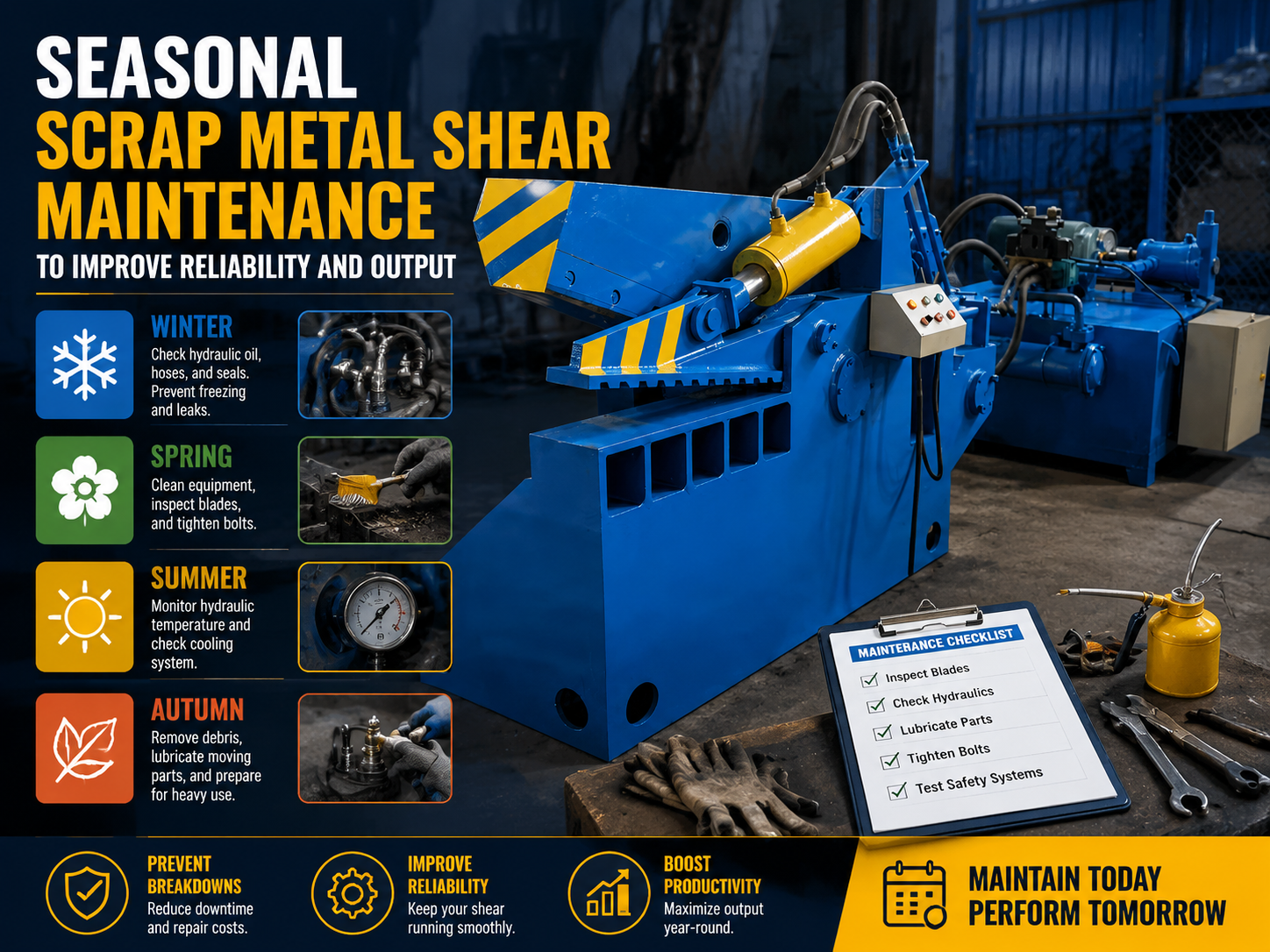
In the high-intensity world of metal recycling, the scrap metal shear is the workhorse of the yard. Whether you are operating an alligator shear, a gantry shear, or a mobile attachment, the consistency of your output is directly tied to the health of your machinery. Implementing a strategy for seasonal scrap metal shear maintenance to improve reliability and output is not just a recommendation; it is a financial necessity. As temperatures fluctuate and humidity levels shift, the physical properties of hydraulic fluids, seals, and even the structural steel of the machine undergo changes that can lead to catastrophic failure if left unaddressed.
Reliability in scrap processing means meeting deadlines and maintaining a steady flow of processed material for foundries and mills. When a shear goes down, the entire production line halts, leading to missed shipments and increased labor costs. Seasonal maintenance allows operators to anticipate the specific challenges posed by winter’s chill or summer’s heat. For instance, cold weather can cause hydraulic oil to thicken, leading to cavitation and pump damage, while extreme heat can degrade oil additives and cause seals to become brittle. By proactively managing these variables, facilities can ensure their equipment operates at peak efficiency year-round.
Furthermore, the output of a scrap metal shear is measured by its cutting speed and the quality of the processed scrap. Dull blades or misaligned shear heads require more energy to cut through the same thickness of material, putting unnecessary strain on the motor and hydraulic system. A well-maintained machine requires less power and processes more tons per hour. This guide explores the comprehensive steps required to maintain HARSLE scrap metal shears and similar industrial equipment, focusing on the seasonal adjustments that maximize uptime and profitability.
Daily Inspection Protocols: The First Line of Defense
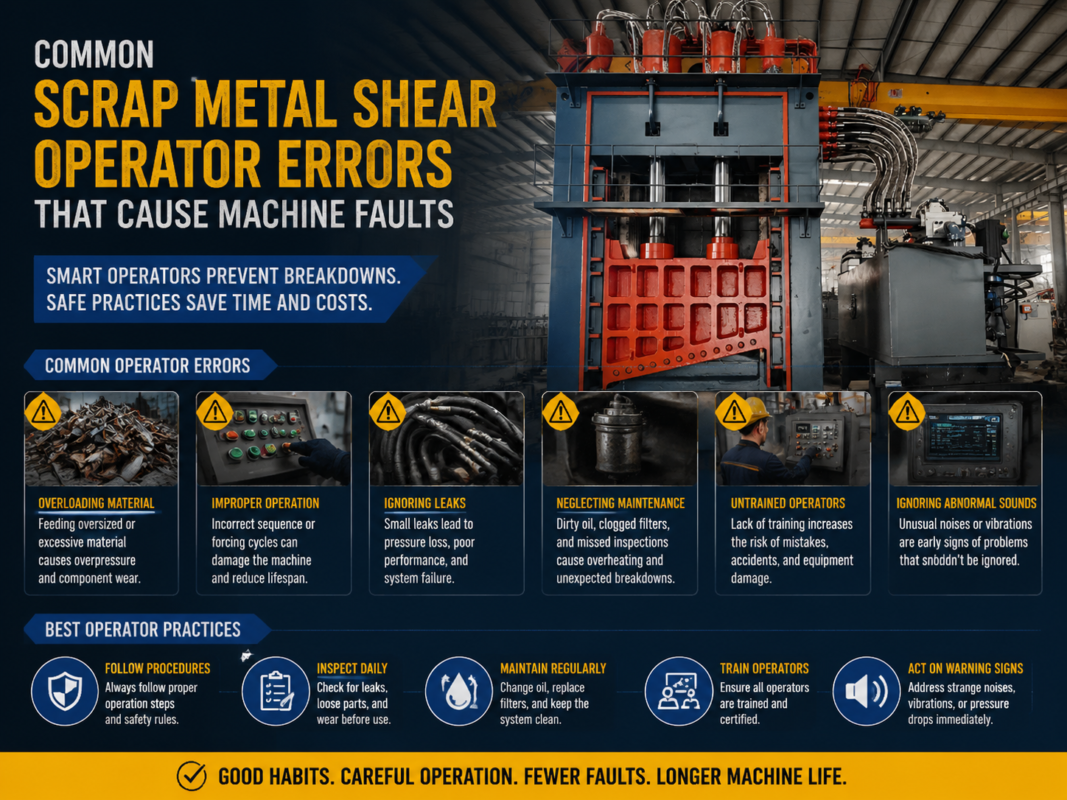
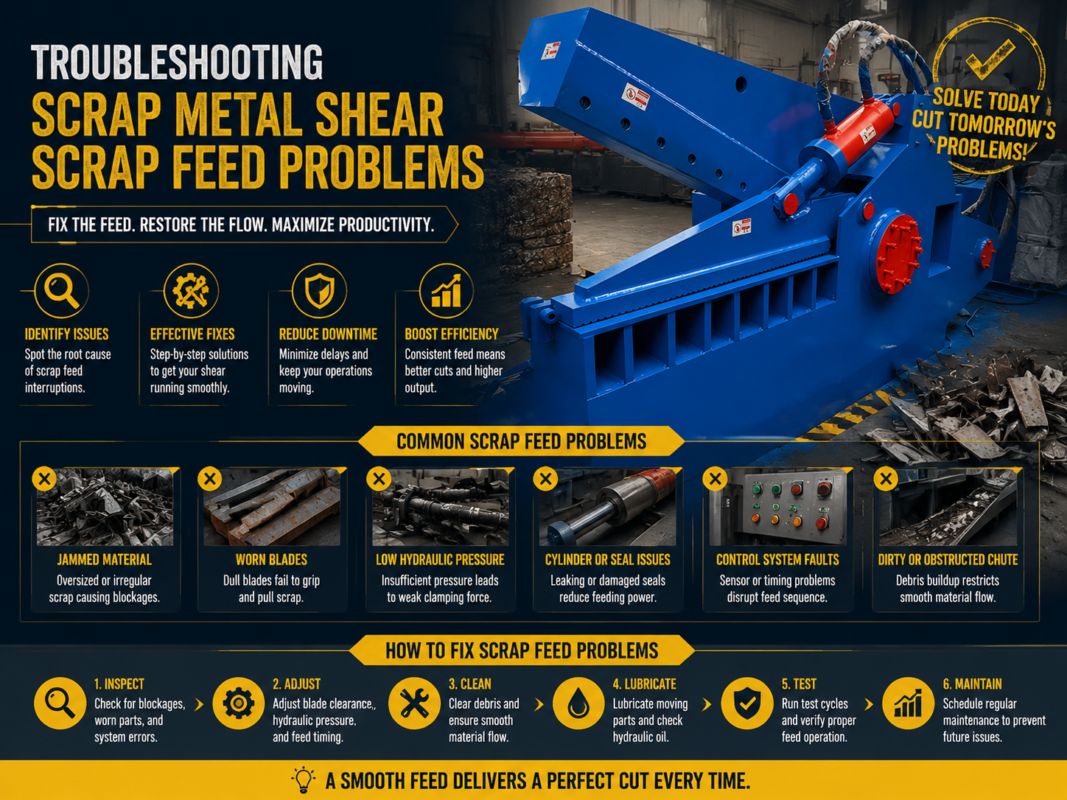
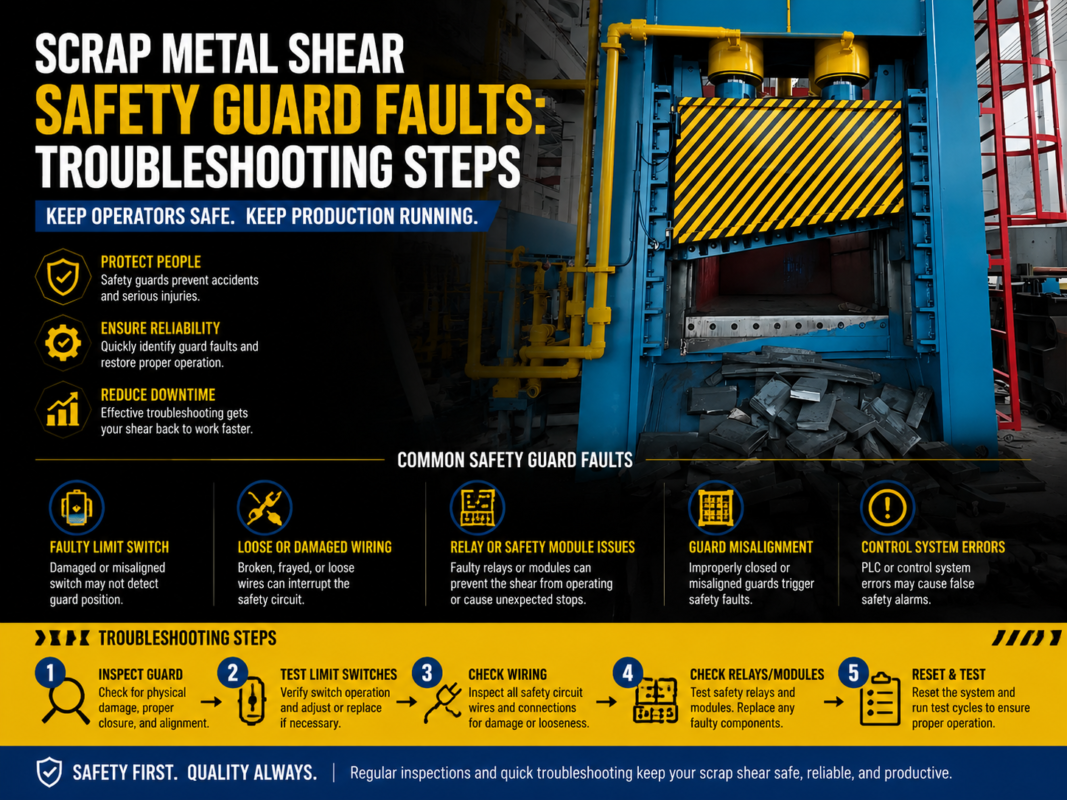
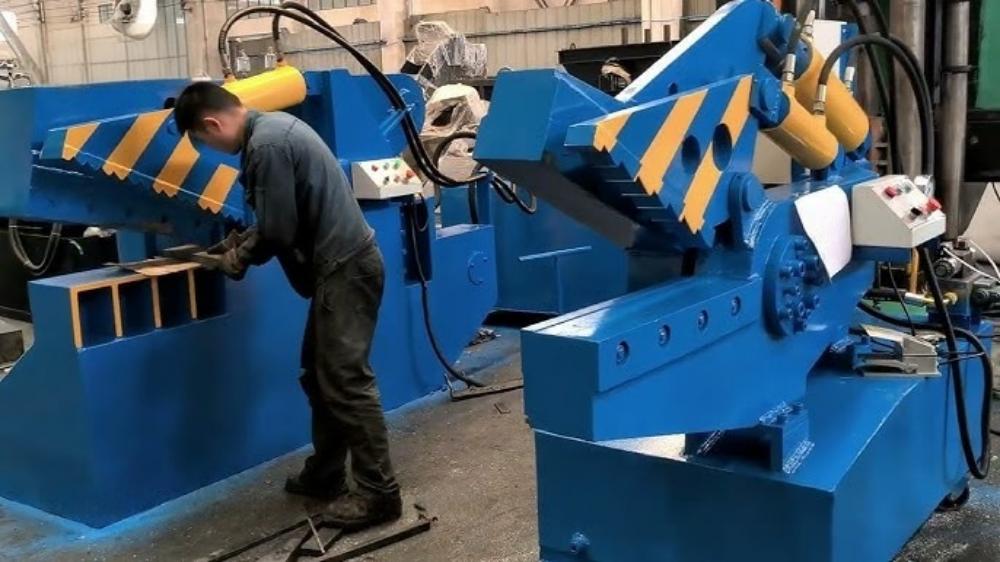
Before the first cut of the day, a thorough visual and physical inspection is mandatory. Daily checks are the foundation of any seasonal scrap metal shear maintenance to improve reliability and output. Operators should begin by clearing any debris from the cutting area. Scrap metal processing is inherently messy, and small shards of metal can easily lodge themselves in the guide rails or near the hydraulic cylinder rods, causing scoring or seal failure over time.
The daily checklist must include an inspection of all hydraulic hoses for signs of weeping or abrasion. In a scrap yard environment, hoses are often exposed to sharp edges and heavy impacts. A minor leak today can become a high-pressure burst tomorrow, leading to environmental hazards and significant downtime. Additionally, operators should check the tightness of the blade bolts. The vibration generated during heavy shearing can loosen even the most secure fasteners, leading to blade shifting and potential damage to the shear head.
Safety systems must also be tested daily. This includes emergency stop buttons, light curtains (if equipped), and foot pedals. A machine that cannot be stopped instantly is a liability. By integrating these checks into the morning routine, the facility fosters a culture of safety and precision. These small actions prevent the accumulation of minor issues that typically culminate in major seasonal breakdowns.
Hydraulic System Checks: Managing Fluid Dynamics
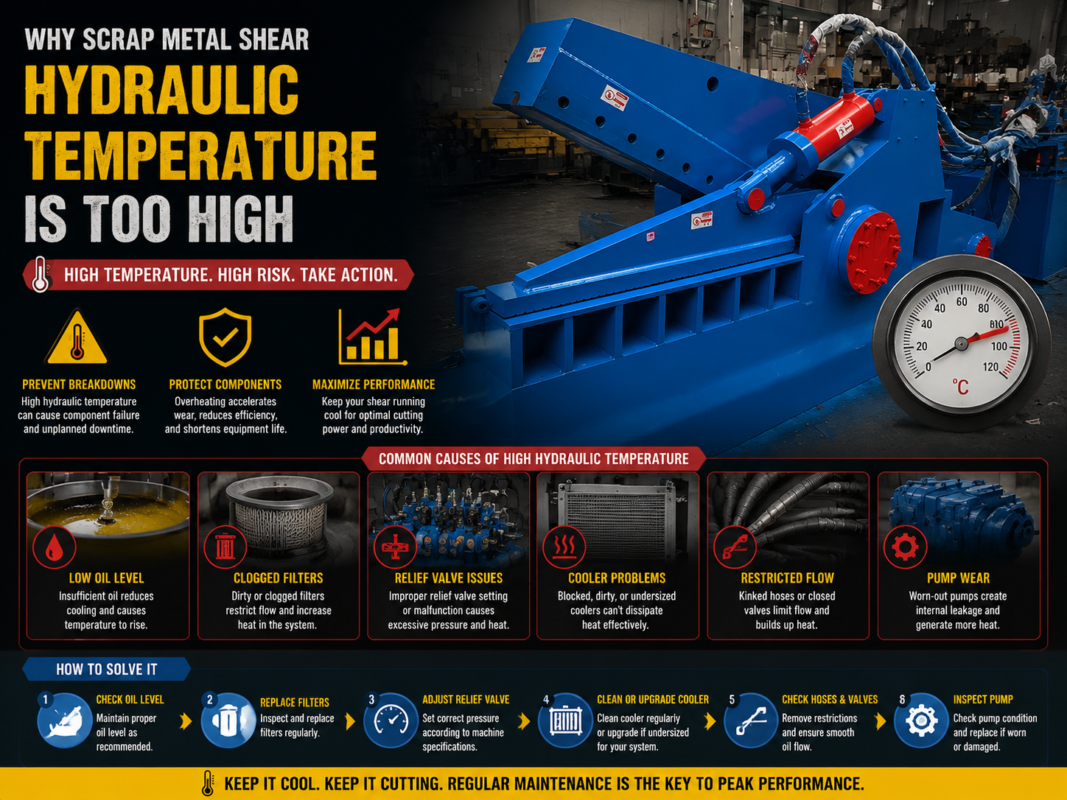
The hydraulic system is the heart of the scrap metal shear. Seasonal scrap metal shear maintenance to improve reliability and output relies heavily on the condition of the hydraulic oil. As seasons change, the viscosity requirements of your oil may change as well. In colder months, switching to a lower viscosity oil or utilizing tank heaters is essential to prevent the pump from struggling to move thick fluid. Conversely, in the summer, high-viscosity oil helps maintain the necessary pressure as temperatures rise.
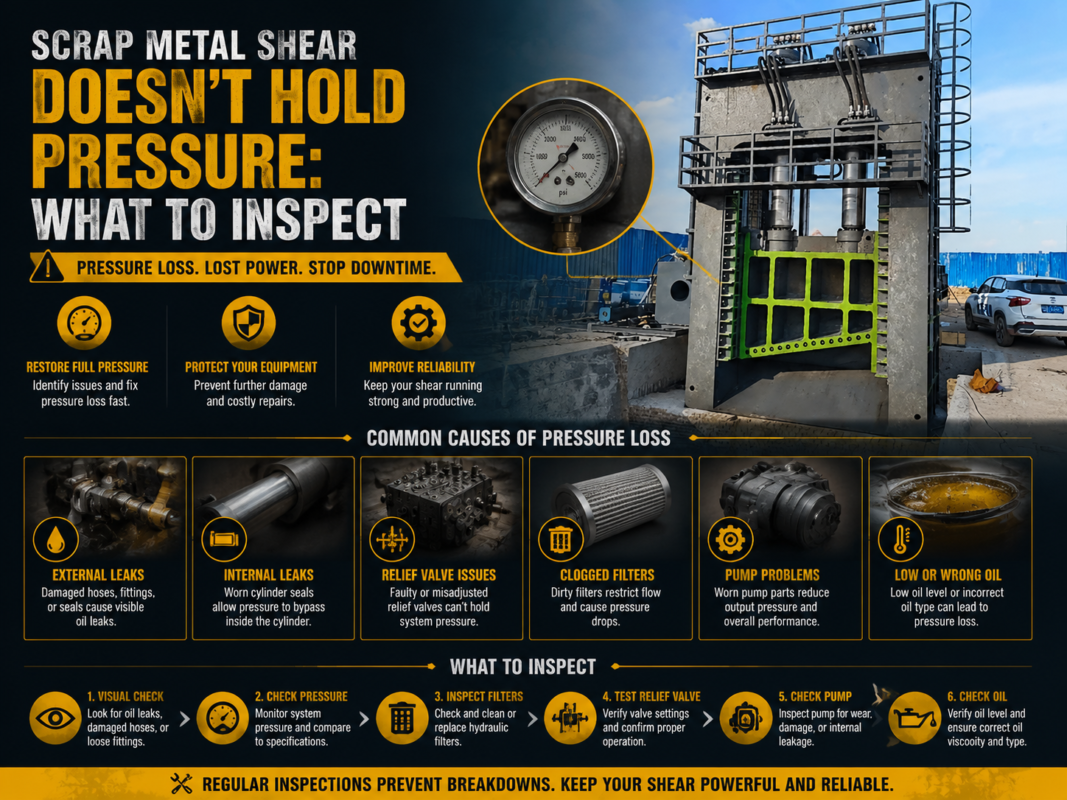
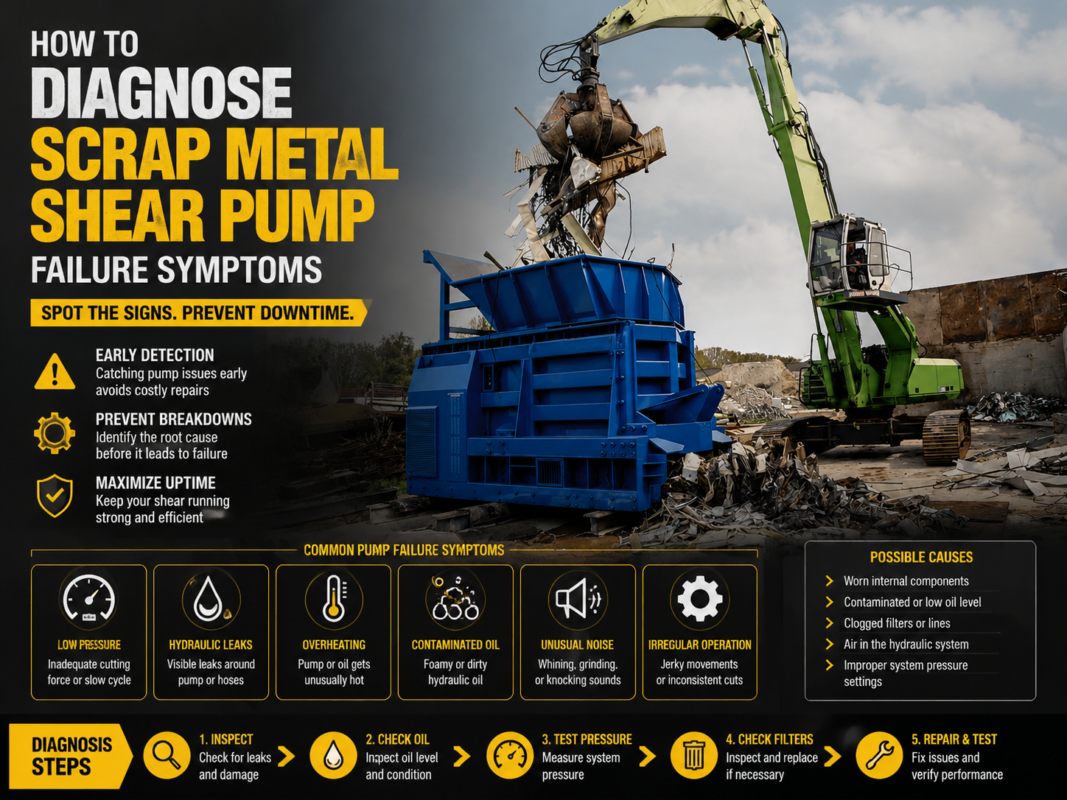
Contamination is the leading cause of hydraulic failure. Seasonal maintenance should include a professional oil analysis to check for water content, metal shavings, and chemical degradation. Water is particularly dangerous in the winter, as it can freeze within the valves or pump, causing immediate mechanical failure. If the oil appears milky, it is a clear sign of water contamination, necessitating a full flush and filter replacement. Filters should be changed according to the manufacturer’s hour-meter recommendations, but more frequently in dusty or high-volume environments.
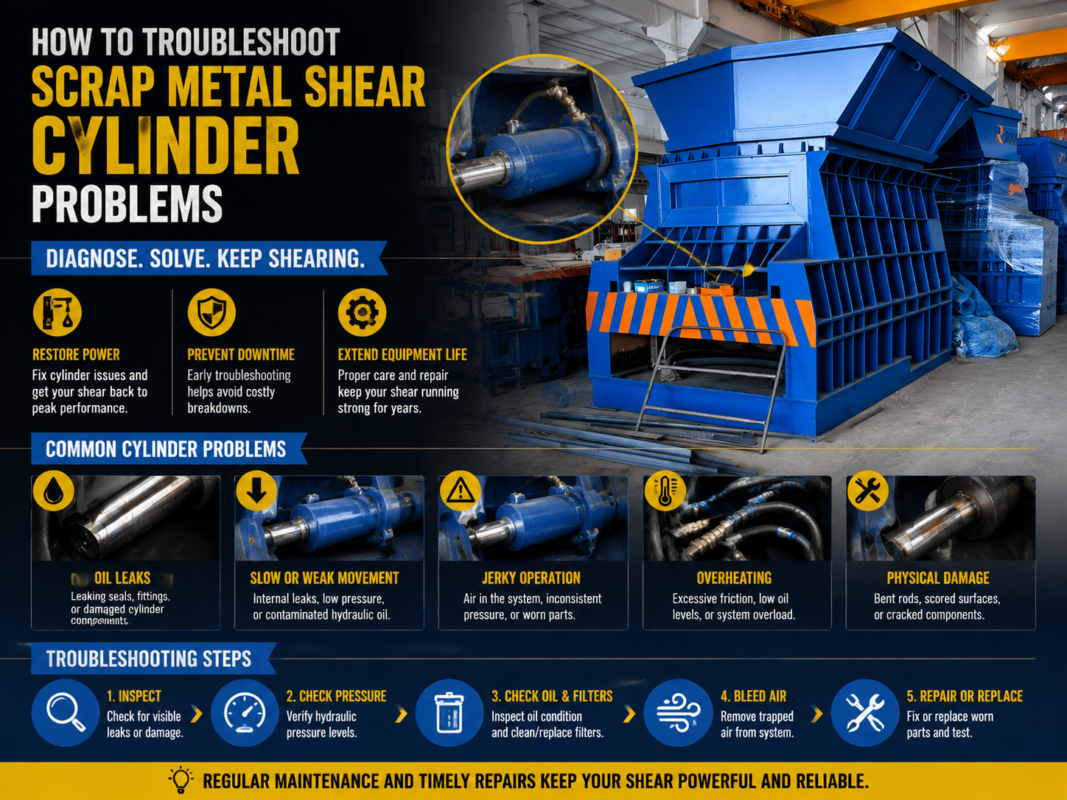
Cylinder health is another critical focus. Inspect the chrome plating on the piston rods for any signs of pitting or scratches. Even a small nick can tear a seal, leading to internal bypassing where the shear loses its cutting force. During seasonal transitions, check the cylinder mounts and pins for excessive play. A misaligned cylinder applies lateral force to the seals, significantly shortening their lifespan and reducing the overall output of the machine.
Electrical System and Control Logic Maintenance
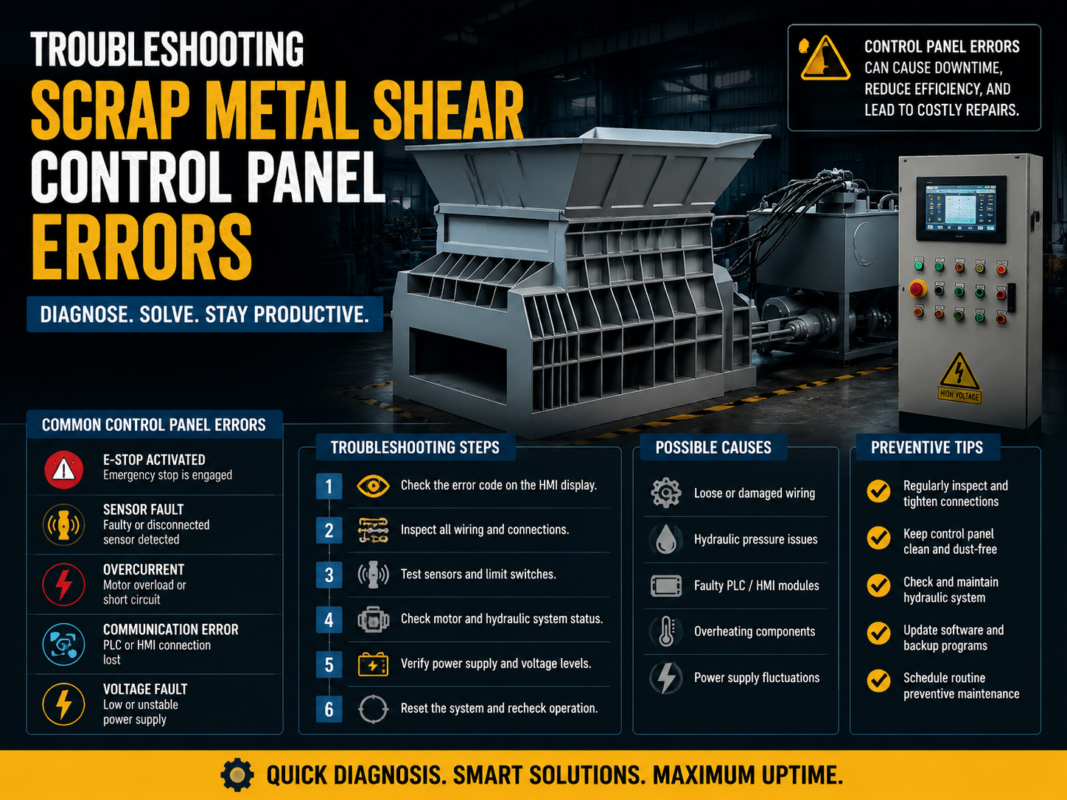
Modern scrap metal shears, like those manufactured by HARSLE, utilize sophisticated electrical components and PLC (Programmable Logic Controller) systems to manage cutting cycles and safety interlocks. Seasonal changes in humidity can lead to condensation inside electrical cabinets, which is a primary cause of short circuits and erratic behavior. During your seasonal maintenance window, ensure that all cabinet seals are intact and that any internal heaters or cooling fans are functioning correctly.
Vibration is the enemy of electrical connections. Over months of operation, the constant jarring of shearing heavy beams can loosen terminal screws and wire connectors. Technicians should perform a “tug test” on critical wiring and use thermal imaging cameras to identify “hot spots” in the control panel. A hot spot usually indicates a loose connection or a failing component that is drawing excessive current. Addressing these issues before they fail prevents unexpected shutdowns during peak production periods.
Sensors and limit switches also require attention. In a scrap yard, these components are often coated in dust and grease. Seasonal cleaning and recalibration of proximity sensors ensure that the shear head travels the correct distance and stops at the precise moment. This prevents the mechanical components from bottoming out, which can cause structural cracking over time. Keeping the electrical “brain” of the machine healthy is vital for maintaining the high output expected from industrial metal fabrication equipment.
Mechanical Integrity: Blades, Pins, and Bushings
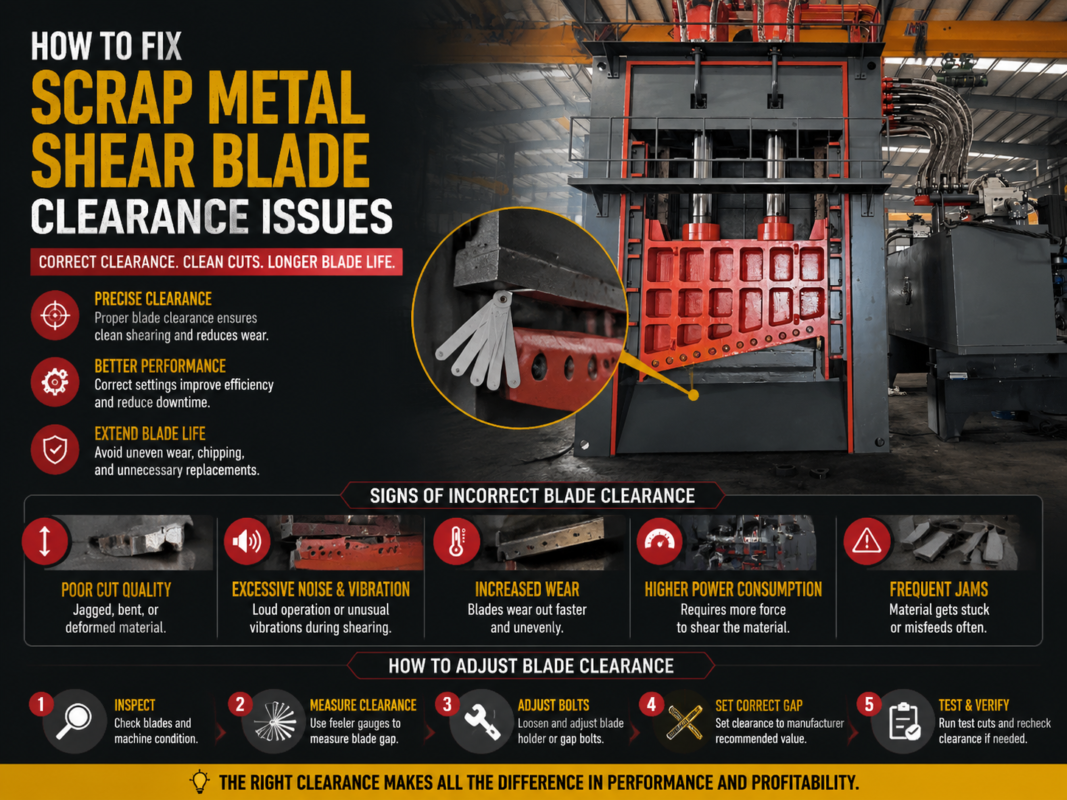
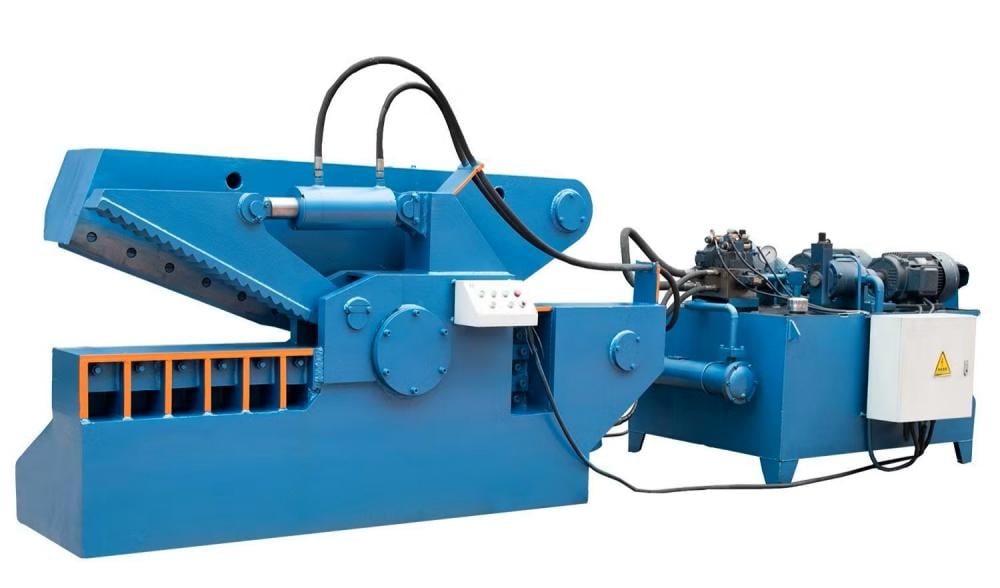
The mechanical components of a shear bear the brunt of the physical force. The most critical aspect of seasonal scrap metal shear maintenance to improve reliability and output is the management of the cutting blades. Blades must be rotated or sharpened regularly. A dull blade does not cut; it tears and crushes, which requires significantly more hydraulic pressure and stresses the entire frame of the machine. During seasonal checks, measure the blade gap (clearance) using feeler gauges. If the gap is too wide, the material will fold between the blades rather than being sheared, leading to jams and potential damage to the shear arm.
Pivot pins and bushings are the joints of the machine. They must be inspected for wear and proper fit. If there is noticeable movement or “slop” in the main pivot, the blades will not align correctly during the cut. This misalignment leads to uneven wear on the blades and can eventually cause the shear arm to crack under the torsional stress. Replacing bushings is a standard part of a long-term maintenance plan and is much more cost-effective than replacing a major structural casting.
Finally, inspect the structural frame for any signs of stress fractures. Pay close attention to weld joints and areas around the hydraulic cylinder mounts. In extreme cold, steel becomes more brittle, and existing micro-fractures can expand rapidly under load. Early detection of these cracks allows for professional repair through gouging and re-welding, preserving the machine’s integrity for years to come.
Comprehensive Lubrication Plan
Lubrication is the simplest yet most frequently overlooked aspect of industrial machinery guide protocols. For scrap metal shears, a seasonal lubrication plan must account for the operating environment. In the summer, grease can become thin and run out of the joints, while in the winter, it can harden and fail to reach the inner surfaces of the bushings. Using a high-quality, extreme-pressure (EP) grease with the appropriate NLGI grade for the season is essential.
Automatic lubrication systems should be checked for blockages. It is common for a single line in an auto-lube system to become clogged, leaving one critical pin bone-dry while the rest of the machine appears well-greased. Manually cycle the lubrication system and verify that grease is exiting every port. For machines without automatic systems, a strict schedule must be enforced, typically greasing every 4 to 8 hours of operation depending on the intensity of the work.
Beyond the main pivot, don’t forget the smaller moving parts, such as the hold-down mechanism and the guide slides. These components ensure the material stays in place during the cut. If the hold-down is not properly lubricated, it may stick or apply uneven pressure, leading to dangerous material kickback. A well-lubricated machine runs quieter, cooler, and with much less internal friction, directly contributing to improved reliability and output.
Troubleshooting Signals: What Your Shear is Telling You
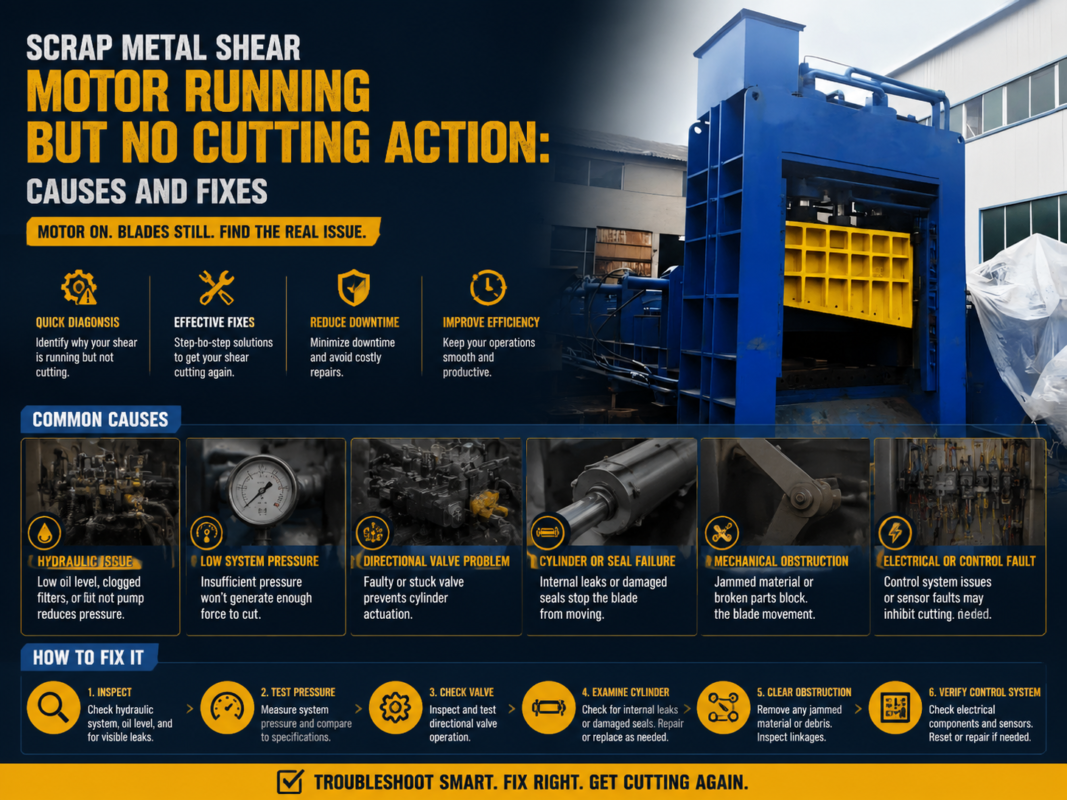
An experienced operator can often hear a problem before they see it. Seasonal scrap metal shear maintenance to improve reliability and output involves training staff to recognize troubleshooting signals. For example, a high-pitched whining sound often indicates hydraulic cavitation, meaning the pump is not getting enough oil or the oil is too thick for the current temperature. Ignoring this sound will lead to pump failure within hours.
If the shear is moving slower than usual, it may indicate internal leakage in the cylinders or a failing relief valve. This loss of speed directly impacts your daily output. Another signal is excessive heat. If the hydraulic tank is too hot to touch, the cooling system is likely failing or the oil is bypassing a seal. Overheated oil loses its lubricating properties and will quickly destroy the pump and valves.
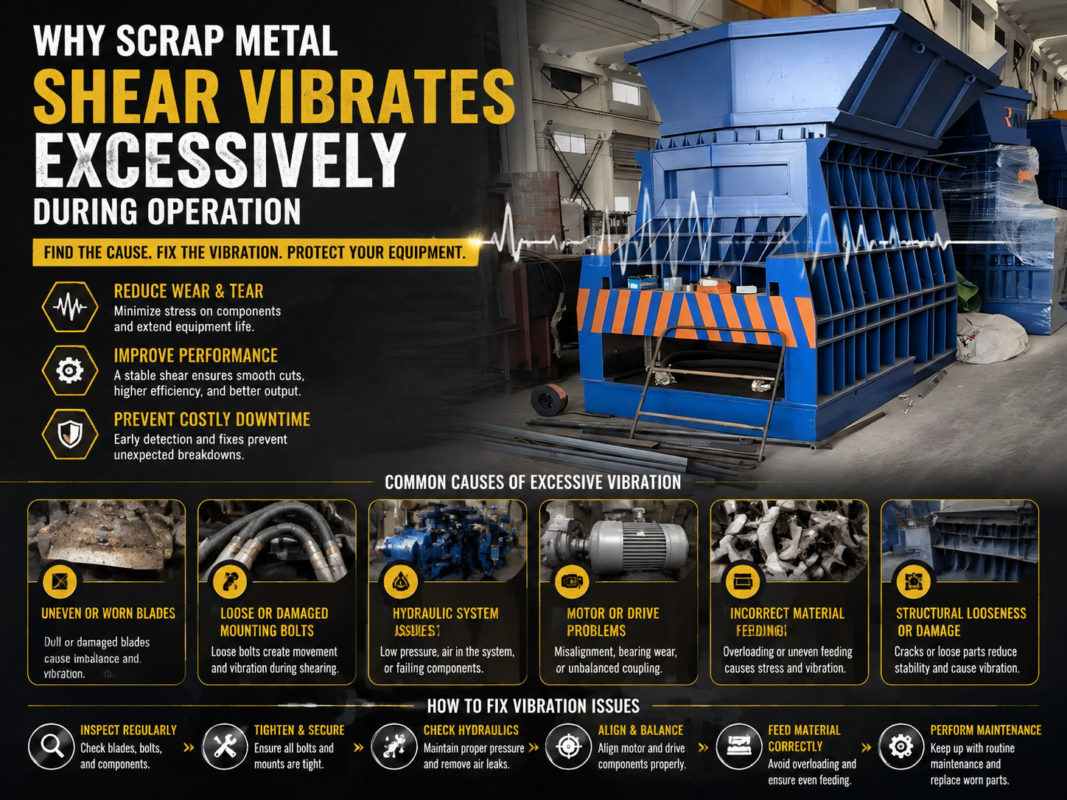
Unusual vibrations or “clunking” sounds during the cutting stroke usually point to mechanical issues, such as loose blade bolts or worn pivot bushings. By identifying these signals early, maintenance can be scheduled during planned downtime rather than reacting to a mid-shift breakdown. Keeping a logbook of these observations helps track the machine’s performance over different seasons and informs future maintenance decisions.
Maintenance Schedule Table
| Frequency | Component | Action Required | Seasonal Note |
|---|---|---|---|
| Daily | Hydraulic Hoses | Visual check for leaks and abrasions | Check for stiffness in extreme cold |
| Daily | Cutting Blades | Clear debris and check for chips | Ensure no ice buildup in winter |
| Weekly | Blade Bolts | Torque to manufacturer specifications | Vibration increases in hard-material seasons |
| Monthly | Hydraulic Filters | Inspect and replace if necessary | Change more often in dusty summer months |
| Quarterly | Pivot Pins | Check for play and grease flow | Adjust grease grade for temperature |
| Seasonal | Hydraulic Oil | Full analysis and viscosity check | Switch to winter/summer grade as needed |
| Seasonal | Electrical Cabinet | Clean, tighten connections, check seals | Check for condensation in humid spring |
| Annually | Structural Frame | Ultrasonic testing for cracks | Perform after the harshest season |
Frequently Asked Questions (FAQ)
How often should I rotate the blades on my scrap metal shear?
Blade rotation depends on the volume and type of material being processed. Generally, for high-volume yards, blades should be inspected weekly and rotated every 200-400 operating hours. If you are shearing particularly hard alloys, this frequency may increase. Always ensure the blade gap is reset after rotation to maintain output quality.
What is the best hydraulic oil for a shear operating in extreme cold?
For cold weather operations, an ISO VG 32 or even a specialized low-temperature hydraulic fluid is recommended. These oils have a lower pour point, ensuring they flow into the pump immediately upon startup. Always consult your HARSLE manual before switching oil grades to ensure compatibility with pump seals.
Why is my shear losing cutting power in the afternoon?
This is often a sign of hydraulic oil overheating. As the oil heats up, its viscosity drops, and it may begin to bypass worn seals or valves. Check your oil cooler for blockages and ensure the cooling fan is operational. If the problem persists, the oil may need to be replaced with a higher viscosity grade suitable for summer temperatures.
Can I sharpen scrap metal shear blades myself?
While minor touch-ups can be done, professional grinding is recommended to ensure the blades remain perfectly flat and square. Improperly sharpened blades can lead to uneven gaps, which cause the machine to work harder and can lead to structural damage. Always maintain the original manufacturer’s bevel angles.
How do I prevent rust on my shear during the rainy season?
For machines located outdoors, ensure all unpainted surfaces, especially the cylinder rods and blade seats, are coated with a thin layer of protective grease or specialized anti-corrosion spray. Keeping the machine covered when not in use and ensuring proper drainage around the base of the shear will also significantly reduce rust-related issues.
What are the signs of a failing hydraulic pump?
Common signs include increased noise (whining or growling), erratic movement of the shear arm, decreased cutting force, and metal shavings found in the hydraulic filters. If you notice any of these, stop the machine immediately to prevent debris from contaminating the entire hydraulic circuit.