Troubleshooting Common Scrap Metal Shear Wear Issues During Maintenance

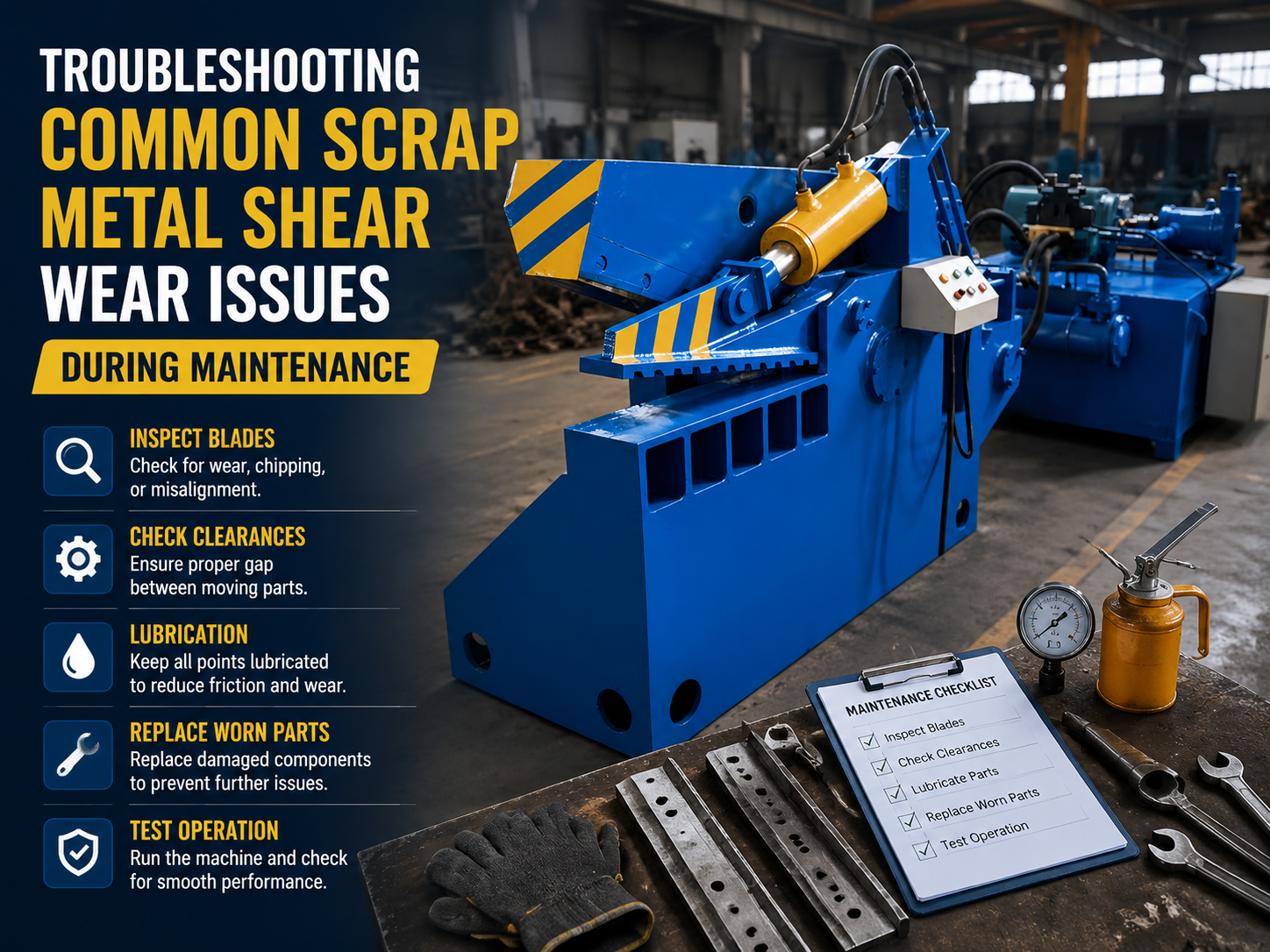
The Critical Role of Maintenance in Scrap Metal Shearing Operations
In the high-intensity world of metal recycling, the scrap metal shear stands as a cornerstone of productivity. Whether you are operating an alligator shear, a container shear, or a heavy-duty guillotine shear, these machines are subjected to immense physical stress, abrasive materials, and demanding cycle times. Troubleshooting Common Scrap Metal Shear Wear Issues During Maintenance is not merely a reactive task; it is a proactive strategy to ensure the longevity, safety, and profitability of your industrial assets. Neglecting maintenance leads to more than just downtime; it can result in catastrophic component failure, increased energy consumption, and significant safety risks for operators.
Effective maintenance begins with understanding that a scrap metal shear is a complex synergy of hydraulic power, electrical precision, and mechanical strength. Each of these systems interacts with the others. For instance, a mechanical misalignment in the cutting blades can cause hydraulic pressure spikes, which in turn stresses the electrical motor. By focusing on comprehensive troubleshooting during scheduled maintenance intervals, facility managers can identify minor wear patterns before they evolve into expensive repairs. This guide provides a deep dive into the technical aspects of maintaining HARSLE scrap metal shears and similar industrial equipment.
Furthermore, the economic impact of well-maintained machinery cannot be overstated. In an industry where margins are often dictated by the volume of processed material, a machine that runs at 90% efficiency versus 70% efficiency can be the difference between profit and loss. Regular maintenance ensures that the shear force is applied correctly, reducing the wear on the blades and the hydraulic pump. This article serves as a definitive resource for technicians and operators looking to master the art of Troubleshooting Common Scrap Metal Shear Wear Issues During Maintenance.
Daily Inspection: The First Line of Defense
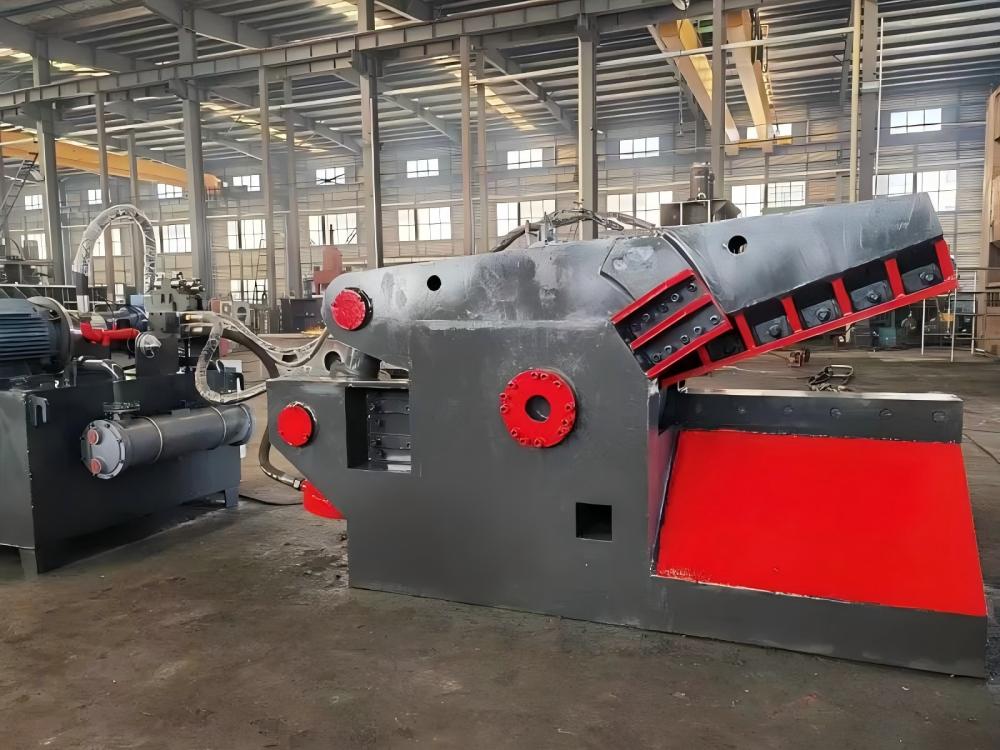
The most effective way to manage wear is to catch it early through daily inspections. Before the start of every shift, operators should perform a visual and auditory sweep of the machine. This process should be standardized with a checklist to ensure no component is overlooked. The primary focus of a daily inspection is to identify obvious signs of distress, such as fluid leaks, loose fasteners, or unusual debris accumulation in the cutting zone. Because scrap metal is inherently dirty and abrasive, dust and metal shards can quickly infiltrate sensitive areas of the machine.
During the daily walk-around, pay close attention to the condition of the cutting blades. Look for visible chips, cracks, or excessive rounding of the edges. Even a small chip can lead to uneven stress distribution during a cut, which can eventually crack the blade seat or damage the main pivot pin. Additionally, check the hydraulic hoses for any signs of weeping or abrasion. A hose that rubs against a sharp metal edge during the shearing cycle will eventually fail, leading to high-pressure fluid release and immediate machine shutdown.
Another critical aspect of the daily routine is checking the oil levels and the status of the filtration system. Most modern HARSLE shears are equipped with visual gauges or digital sensors. If the oil appears milky, it indicates water contamination; if it appears dark and smells burnt, it suggests overheating and oxidation. Addressing these issues daily prevents the degradation of the entire hydraulic circuit. Finally, ensure that all safety guards and emergency stop buttons are fully functional. Safety is an integral part of maintenance troubleshooting.
Deep Dive: Hydraulic System Troubleshooting
The hydraulic system is the heart of the scrap metal shear, providing the massive force required to cut through structural steel and heavy plate. Troubleshooting Common Scrap Metal Shear Wear Issues During Maintenance often centers on the hydraulic circuit. One of the most common issues is internal leakage within the cylinders. This is often manifested by “drifting,” where the shear arm or ram fails to hold its position when the controls are neutralized. This usually indicates worn piston seals or a scarred cylinder bore, often caused by contaminated oil.
Pressure fluctuations are another common symptom of hydraulic wear. If the machine struggles to complete a cut that it previously handled with ease, the issue may lie with the main relief valve or the hydraulic pump itself. Over time, the internal components of the pump—such as the vanes, gears, or pistons—wear down, reducing the volumetric efficiency. During maintenance, technicians should use pressure gauges to verify that the system is reaching its rated PSI. If the pressure is correct but the speed is slow, the pump’s flow rate is likely the culprit.
Temperature management is equally vital. Hydraulic systems generate heat naturally, but excessive heat (above 60°C or 140°F) accelerates the breakdown of oil additives and hardens seals, leading to leaks. Troubleshooting heat issues involves checking the oil cooler (heat exchanger) for blockages and ensuring the cooling fans are operational. Aeration and cavitation are also silent killers of hydraulic systems. If you hear a high-pitched whining or growling noise, air may be entering the suction line, or the suction filter may be clogged, causing the pump to starve for oil.
Electrical and Control System Integrity
While the mechanical and hydraulic systems do the heavy lifting, the electrical system provides the intelligence. Modern scrap metal shears utilize Programmable Logic Controllers (PLCs), sensors, and solenoid valves to coordinate complex movements. Troubleshooting electrical wear involves inspecting the wiring harnesses for signs of heat damage or fraying. In the vibrating environment of a scrap yard, electrical connections can loosen over time, leading to intermittent faults that are notoriously difficult to diagnose.
Solenoid valves are a frequent point of wear. These components translate electrical signals into hydraulic movement. If a shear fails to initiate a stroke or becomes stuck in one position, the solenoid coil may have burnt out, or the internal spool may be jammed by a tiny piece of debris. During maintenance, it is wise to test the resistance of the coils and ensure that the manual override buttons on the valves are functioning. This allows the technician to isolate whether the problem is electrical (the signal isn’t arriving) or hydraulic (the valve isn’t shifting).
Sensors, such as limit switches or proximity sensors, are exposed to the harshest conditions. They can be knocked out of alignment by falling scrap or coated in conductive metal dust, leading to false readings. Troubleshooting involves cleaning these sensors and verifying their mounting brackets are secure. For machines with digital displays, checking the error log can provide invaluable clues about voltage drops or phase imbalances in the power supply, which could protect the main motor from burning out.
Mechanical Components: Blades, Pins, and Bushings
The mechanical structure of the shear is where the “rubber meets the road.” The most significant wear item is, undoubtedly, the cutting blades. Troubleshooting Common Scrap Metal Shear Wear Issues During Maintenance must include a detailed analysis of blade clearance. The gap between the upper and lower blades must be precisely set according to the thickness and type of material being cut. If the gap is too wide, the metal will fold rather than cut, putting immense lateral stress on the machine frame. If it is too tight, the blades will clash, leading to immediate breakage.
The pivot pins and bushings are the joints of the machine. These components bear the brunt of the shearing force. Wear in the bushings is often identified by excessive “play” or movement in the shear arm. If left unaddressed, this play will cause the blades to misalign, leading to poor cut quality and accelerated wear on the hydraulic cylinder rods. During maintenance, use a dial indicator to measure the movement in the pivot points. If the wear exceeds the manufacturer’s specifications, the bushings must be replaced to prevent damage to the main housing.
Structural integrity is the final mechanical check. Scrap shears operate under cyclic loading, which can lead to fatigue cracking in the welds or the main frame. Technicians should clean the machine thoroughly and inspect high-stress areas for hairline cracks. Pay particular attention to the areas around the cylinder mounts and the blade seats. Early detection of a crack allows for a professional weld repair, whereas a full structural failure often means the machine is a total loss.
The Lubrication Plan: Preventing Friction-Related Wear
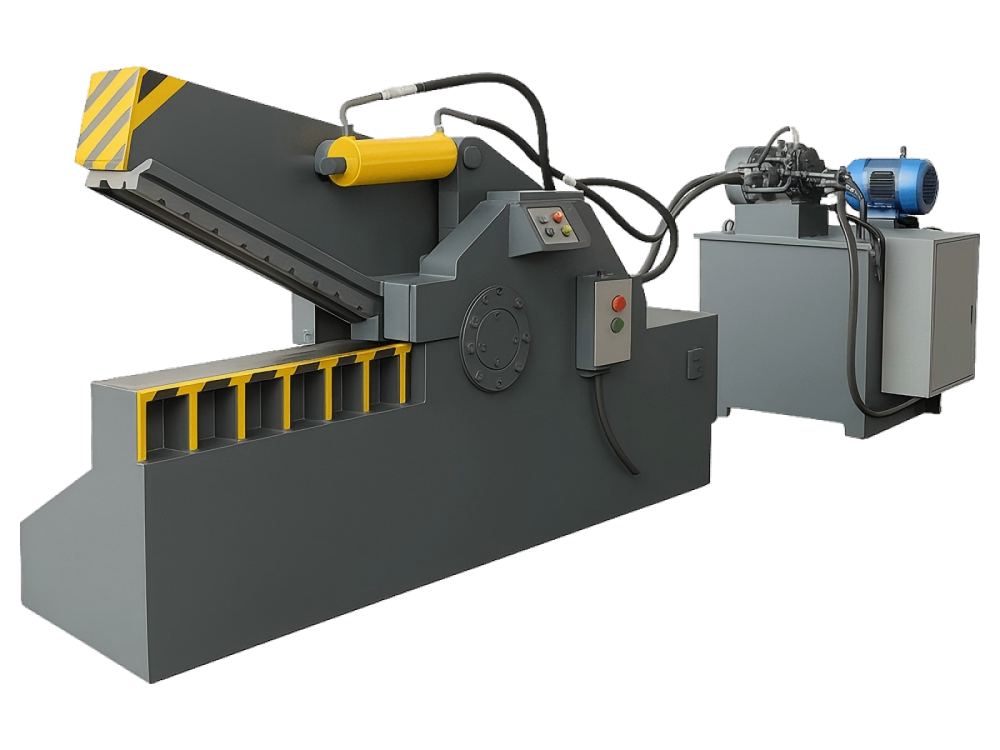
Lubrication is the single most important factor in preventing premature wear. A scrap metal shear has numerous moving parts that operate under high pressure. Without a consistent film of grease or oil, metal-on-metal contact will rapidly destroy bushings, pins, and slides. A robust lubrication plan should specify the type of lubricant, the frequency of application, and the specific points that require attention. Many HARSLE shears feature centralized lubrication systems, which must be checked to ensure that grease is actually reaching every port.
When Troubleshooting Common Scrap Metal Shear Wear Issues During Maintenance, always check for “dry” spots. If a grease nipple is blocked, the component it serves will fail quickly. Technicians should look for fresh grease exiting the joints; if the grease looks old, hard, or contains metal flakes, it indicates that the lubrication interval is too long or the load is too high for the current lubricant. High-pressure, extreme-pressure (EP) greases with molybdenum disulfide are often recommended for the heavy-load pivot pins of scrap shears.
Don’t forget the lubrication of the slides or guides in guillotine-style shears. These surfaces must be kept clean and lightly lubricated to prevent “stiction” and galling. In environments with high dust levels, using a dry-film lubricant or a grease that doesn’t attract as much grit can be beneficial. The lubrication plan is not a “set it and forget it” system; it must be adjusted based on the machine’s workload and the environmental conditions of the scrap yard.
Troubleshooting Signals: What Your Machine is Telling You
Machines often provide signals before a major failure occurs. Learning to interpret these signals is the essence of Troubleshooting Common Scrap Metal Shear Wear Issues During Maintenance. Sound is one of the most reliable indicators. A rhythmic knocking usually points to a mechanical looseness or a bearing failure. A high-pitched squeal often indicates a hydraulic restriction or a failing pump. If the machine makes a loud “bang” during the cut, it could be the material fracturing, but it could also be the blades clashing or a structural bolt snapping.
Vibration is another key signal. While some vibration is normal during shearing, an increase in vibration levels can indicate that the machine is no longer level, or that the internal components are out of balance. Excessive vibration can loosen electrical connections and hydraulic fittings, creating a cycle of wear. Using a simple handheld vibration meter can help track these changes over time, providing a data-driven approach to maintenance.
Performance metrics are the final signal. If the cycle time (the time it takes for the shear to open, close, and return) increases, it is a clear sign of system inefficiency. This could be due to a worn pump, a clogged filter, or an internal leak in the control valve. By logging cycle times weekly, operators can spot a downward trend and schedule maintenance before the machine becomes a bottleneck in the production line. Heat, as mentioned earlier, is a signal of energy being wasted—usually through friction or hydraulic bypass.
Comprehensive Maintenance Schedule Table
To simplify the process of Troubleshooting Common Scrap Metal Shear Wear Issues During Maintenance, follow this structured schedule. This table provides a baseline for HARSLE equipment, though specific models may have unique requirements.
| Frequency | Component | Action Required | Troubleshooting Goal |
|---|---|---|---|
| Daily | Hydraulic Oil | Check level and color | Prevent pump cavitation and oxidation |
| Daily | Cutting Blades | Visual inspection for chips/cracks | Ensure cut quality and prevent frame stress |
| Daily | Safety Systems | Test E-stops and guards | Ensure operator safety |
| Weekly | Lubrication Points | Apply grease to all nipples | Minimize friction and bushing wear |
| Weekly | Blade Clearance | Measure and adjust gap | Prevent blade clashing or material folding |
| Monthly | Hydraulic Filters | Inspect and replace if necessary | Maintain oil cleanliness and system pressure |
| Monthly | Electrical Cabinet | Clean dust and tighten connections | Prevent intermittent faults and fire risks |
| Quarterly | Pivot Pins/Bushings | Check for play/movement | Maintain mechanical alignment |
| Quarterly | Hydraulic Hoses | Inspect for abrasions/leaks | Prevent high-pressure fluid failure |
| Annually | Hydraulic Oil Change | Complete flush and refill | Remove accumulated contaminants |
| Annually | Structural Welds | Nondestructive testing (NDT) | Identify fatigue cracks early |
Frequently Asked Questions (FAQ)
1. How often should I rotate or flip the blades on my scrap shear?
Blade rotation depends entirely on the material you are processing. For clean, soft metals, you may get hundreds of hours. For reinforced concrete or hardened steel, you may need to flip them every 40-80 hours. The rule of thumb is to rotate the blades as soon as you notice a 10-15% increase in the required shearing pressure or a visible rounding of the cutting edge.
2. Why is my hydraulic oil turning milky white?
Milky oil is a classic sign of water contamination. This usually happens due to condensation in the tank or a leak in the oil cooler if it uses water. Water reduces the lubricating properties of the oil and can cause rust inside the valves. You must find the source of the water, drain the oil, flush the system, and refill with fresh hydraulic fluid.
3. What is the correct blade gap for a scrap metal shear?
The correct gap typically ranges from 0.1mm to 0.5mm, depending on the machine size and material thickness. Generally, the gap should be about 10% of the thickness of the thinnest material you intend to cut. Always refer to your HARSLE manual for the specific tolerances of your model.
4. My shear is losing power during the middle of a cut. What should I check?
Start by checking the main relief valve setting. If the valve is opening too early, the pressure will bypass the cylinder. Next, check for internal leakage in the cylinder. Finally, inspect the hydraulic pump’s performance. If the pump cannot maintain flow under pressure, the shear will stall.
5. Can I weld a cracked shear blade?
It is generally not recommended to weld shear blades. Most blades are made from high-carbon or alloy tool steels (like D2 or S7) that require very specific heat treatment. Welding them creates brittle zones that are highly likely to shatter under the immense pressure of shearing, which can be extremely dangerous.
6. How do I know if my pivot bushings are worn out?
If you can see the shear arm move sideways (laterally) before it begins the downward cut, the bushings are likely worn. You can also use a pry bar to check for movement when the machine is off and locked out. Any movement beyond 0.5mm-1mm usually indicates it’s time for a replacement.
Conclusion: The Path to Machine Longevity
Troubleshooting Common Scrap Metal Shear Wear Issues During Maintenance is an ongoing commitment to excellence. By understanding the intricate relationship between the hydraulic, electrical, and mechanical systems, you can transform your maintenance department from a cost center into a value driver. A well-maintained HARSLE shear not only lasts longer but also operates more safely and efficiently, providing a superior return on investment.
Remember that documentation is your best friend. Keeping detailed logs of every inspection, repair, and part replacement allows you to identify patterns. If a specific hose fails every six months, you can investigate if there is a vibration issue or a routing problem. This data-driven approach is what separates world-class recycling operations from the rest. Stay vigilant, stay lubricated, and always prioritize safety in every maintenance task you perform.