How to Maintain a Recycling Baler for Stable Daily Output: A Comprehensive Guide

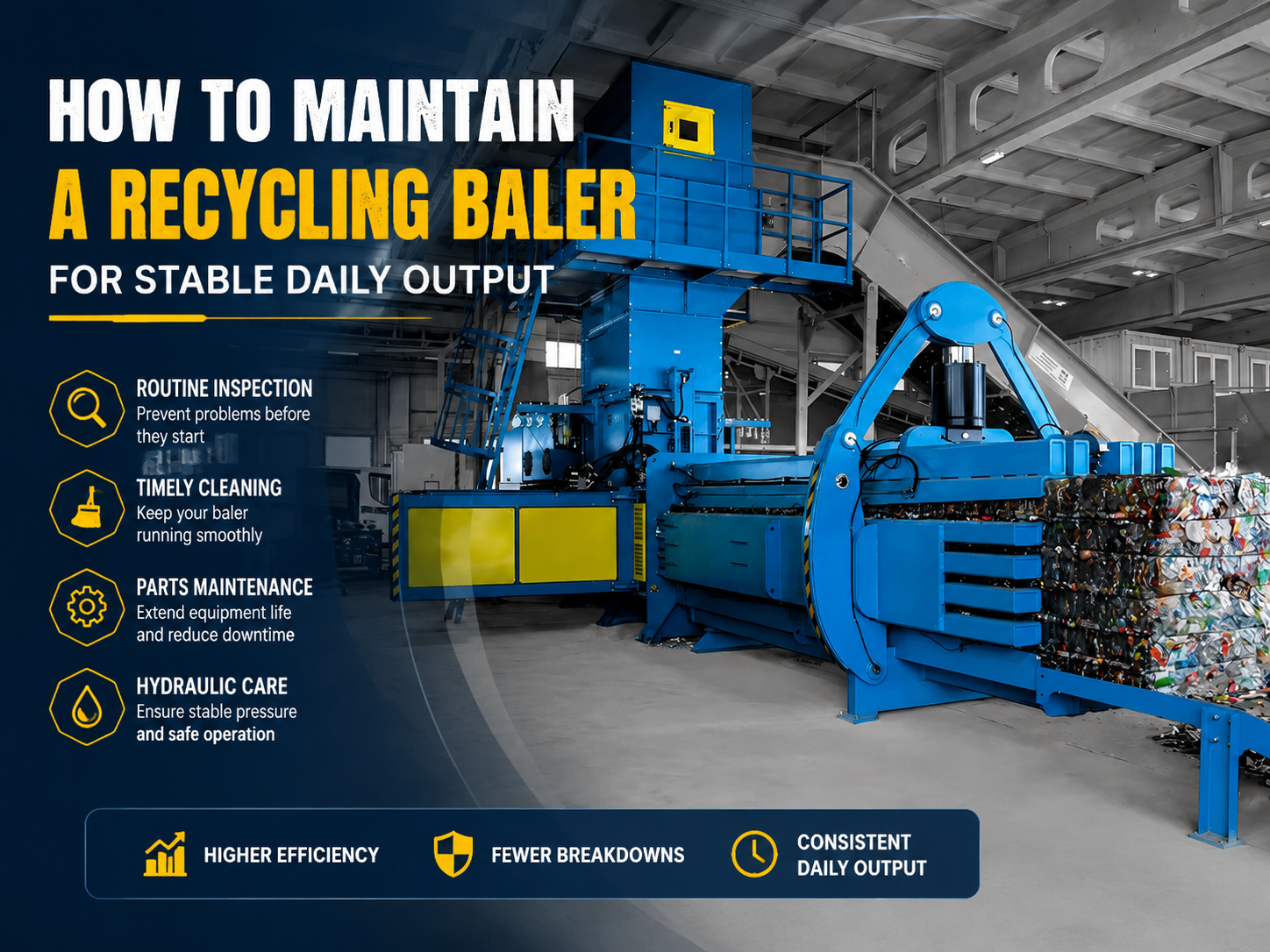
The Critical Importance of Maintaining a Recycling Baler
In the high-demand world of waste management and scrap processing, the recycling baler stands as the heart of the operation. To maintain a recycling baler stable daily output, one must understand that these machines are subject to immense structural stress, high hydraulic pressures, and often abrasive materials. A well-maintained baler doesn’t just last longer; it operates with a level of predictability that allows a facility to meet its production quotas and shipping deadlines without the constant threat of unplanned downtime.
The economic impact of a baler failure is multifaceted. Beyond the immediate cost of repairs and replacement parts, there is the significant loss of labor productivity and the potential for safety hazards. When a baler stops, the entire material flow of a facility often grinds to a halt. Accumulating loose waste takes up valuable floor space, creates fire risks, and complicates logistics. Therefore, a proactive maintenance strategy is not an optional expense but a fundamental requirement for operational profitability.
Furthermore, consistent maintenance ensures that the quality of the bales remains high. Loose or irregularly shaped bales are difficult to stack, transport, and sell to end-users. By focusing on the mechanical and hydraulic integrity of the machine, operators can ensure that every bale meets the density and weight specifications required by the market. This consistency is the hallmark of a professional recycling operation and is only achievable through rigorous upkeep.
Finally, safety cannot be overstated. Recycling balers utilize massive forces to compress materials. Any failure in the structural frame, hydraulic hoses, or electrical safety interlocks can lead to catastrophic accidents. Regular maintenance identifies these risks before they manifest as injuries. In this guide, we will explore the specific steps required to keep your HARSLE recycling baler running at peak performance, ensuring safety and stability in your daily output.
Daily Inspection Protocols for Maximum Uptime
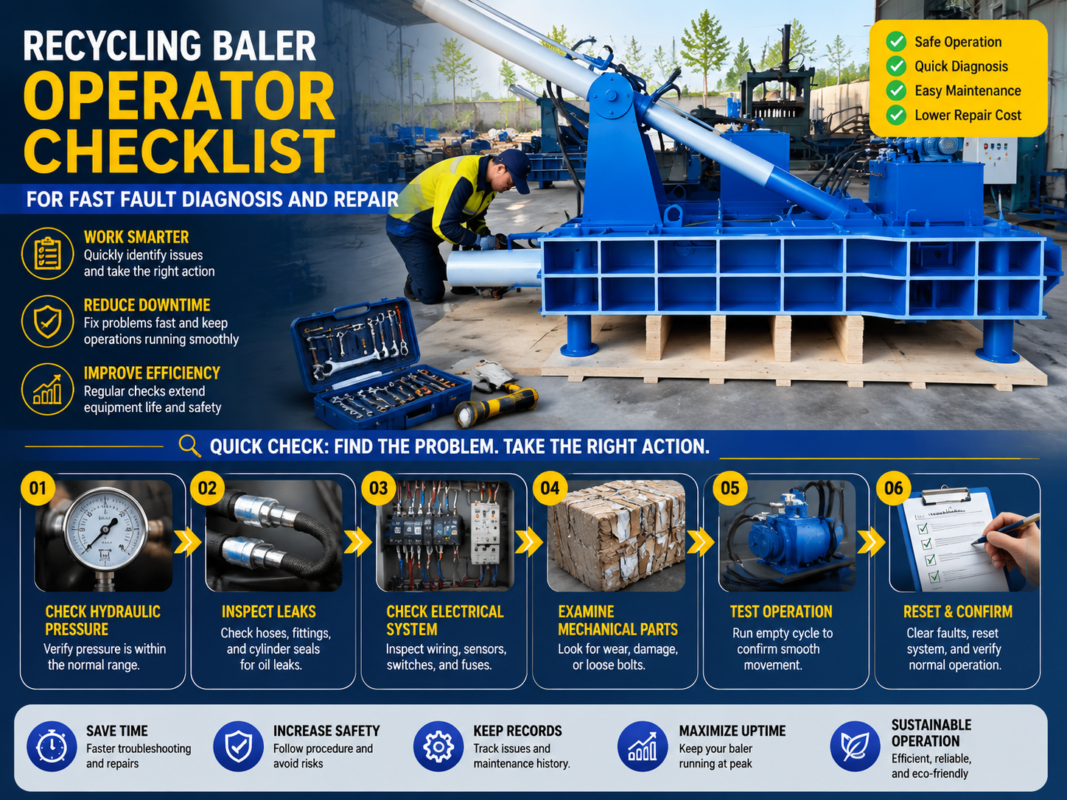
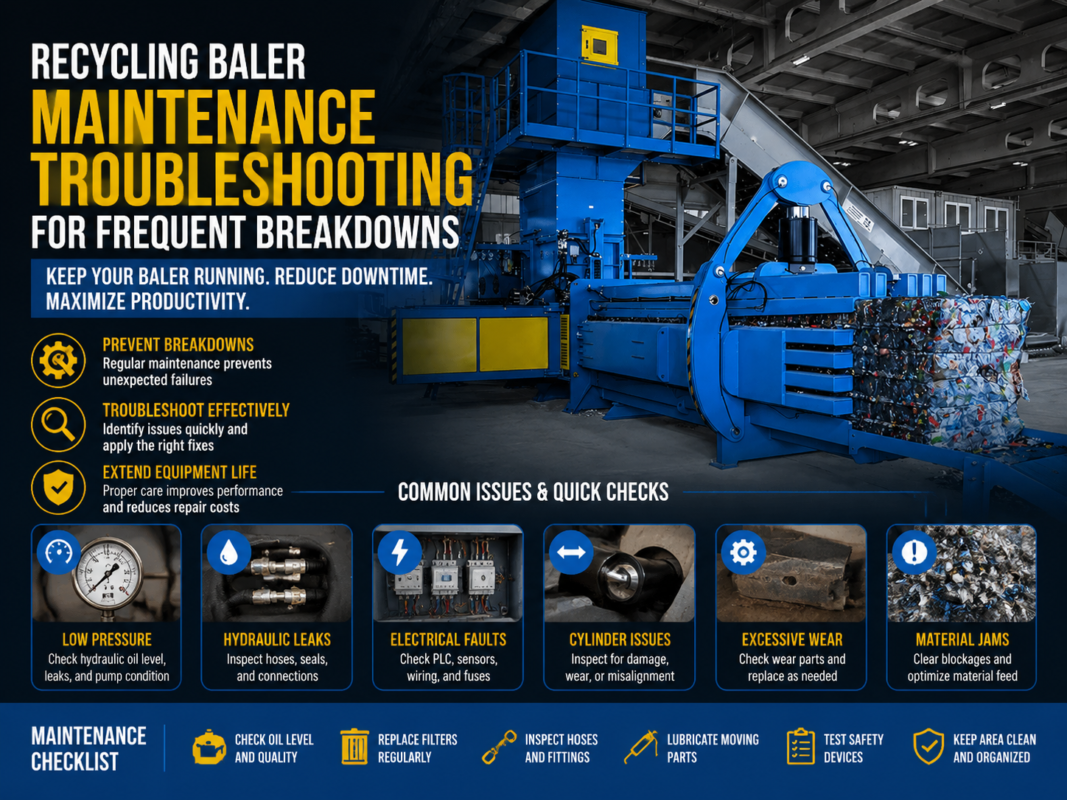
The foundation of any successful maintenance program is the daily inspection. This routine should be performed at the start of every shift before the machine is fully powered up for production. The goal is to identify minor issues—such as a loose bolt, a small oil weep, or accumulated debris—before they escalate into major mechanical failures. A consistent daily check-through is the most effective way to maintain a recycling baler stable daily output.
Begin with a visual sweep of the entire machine. Look for any signs of structural fatigue, such as cracks in the welds or deformation of the baling chamber walls. Check the area around the ram and the shear blades. Debris buildup in these areas is a common cause of friction and premature wear. Use a long-handled tool or compressed air to clear out any trapped plastic, metal shards, or dust that could interfere with the ram’s movement or the sensors’ accuracy.
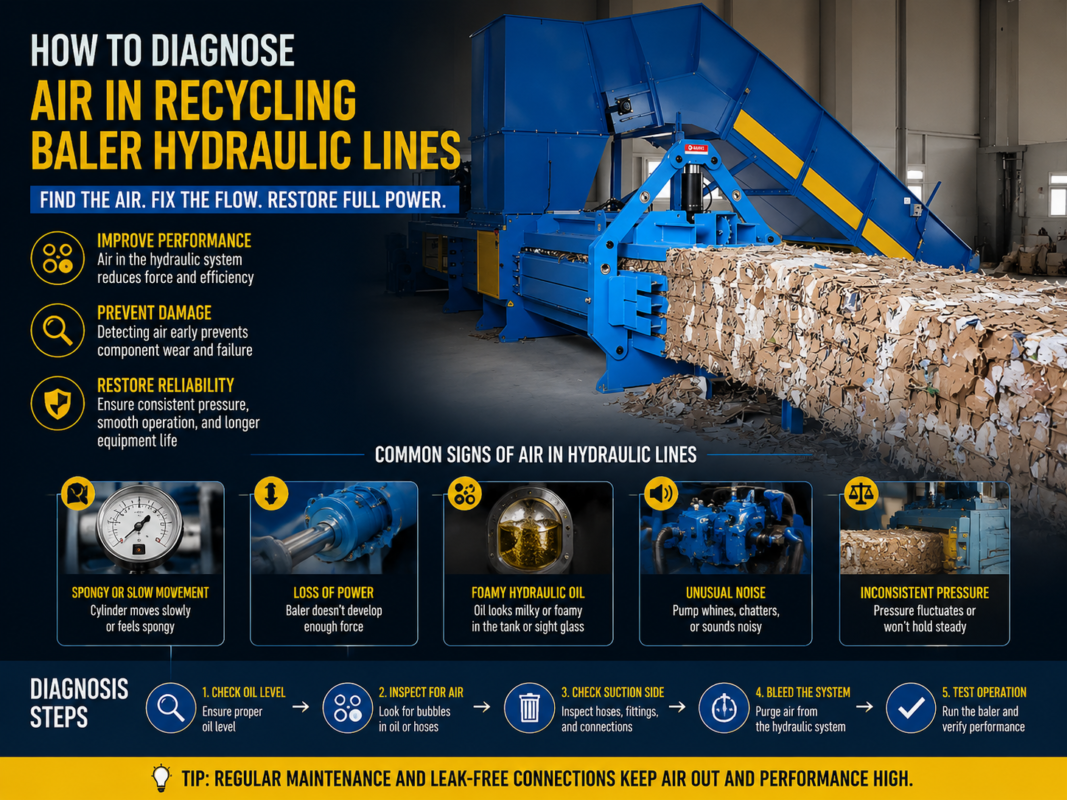
Next, inspect the hydraulic system for external leaks. Even a small drop of oil on the floor can indicate a loose fitting or a failing seal. Check the oil level in the reservoir using the sight glass; if the level is low, it suggests a leak that needs immediate attention. Operating with low oil can lead to pump cavitation and overheating, both of which are costly to repair. Additionally, check the temperature gauge. If the oil is already warm before the shift starts, there may be an issue with the cooling system or a valve that stayed open.
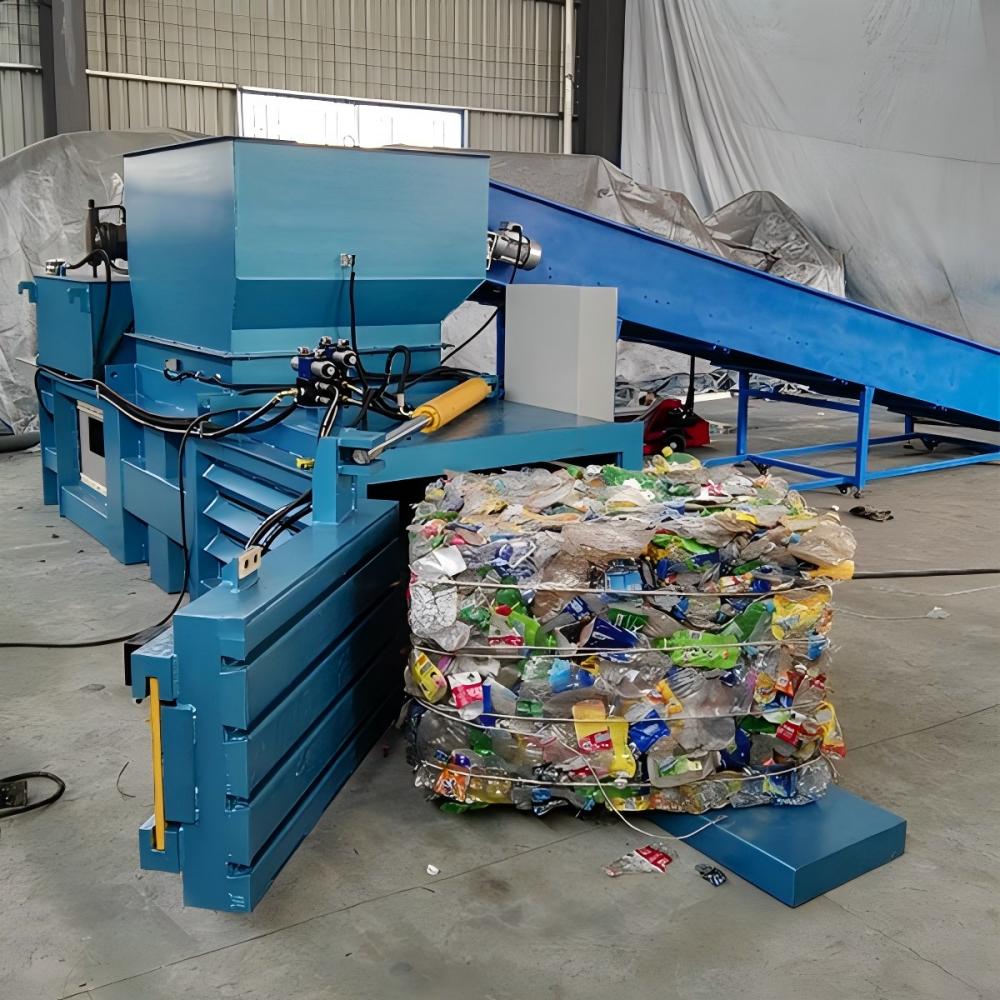
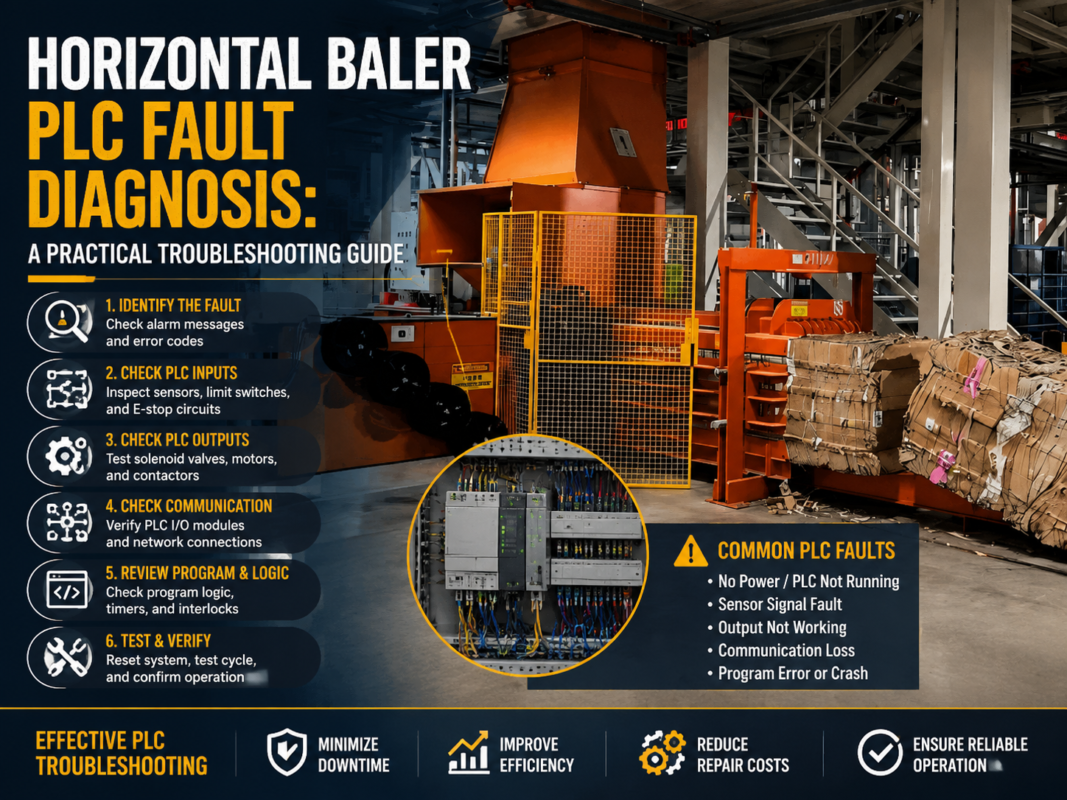
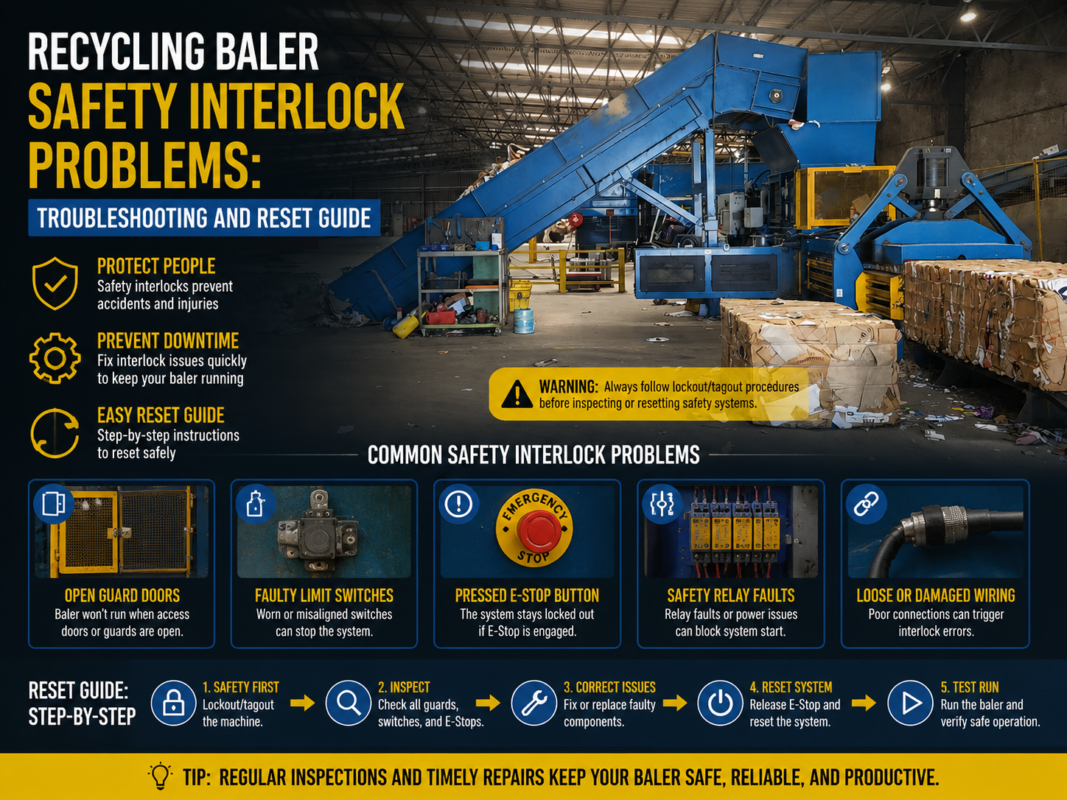
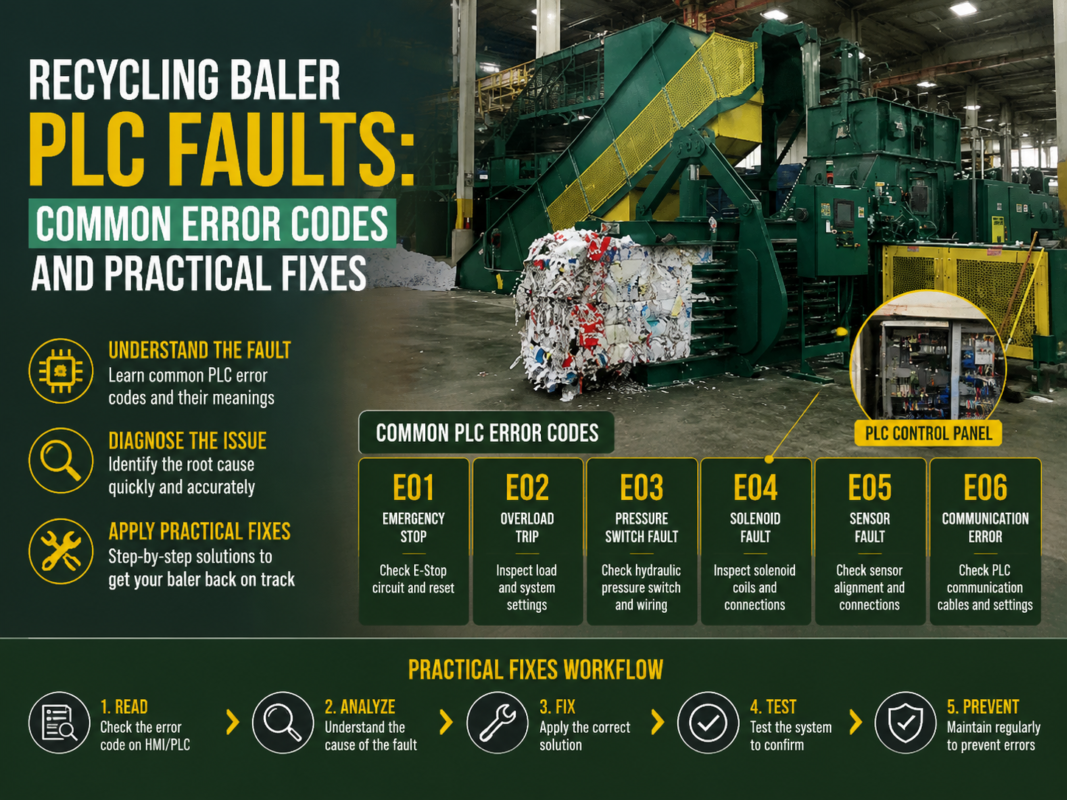
The electrical control panel and safety devices must also be tested daily. Ensure that all emergency stop buttons are functional and that the safety gates or light curtains stop the machine instantly when triggered. Check the PLC display for any error codes or warnings that might have been ignored during the previous shift. A quick functional test of the manual and automatic cycles will confirm that the logic system is communicating correctly with the hydraulic valves.
Hydraulic System Maintenance: The Lifeblood of the Baler
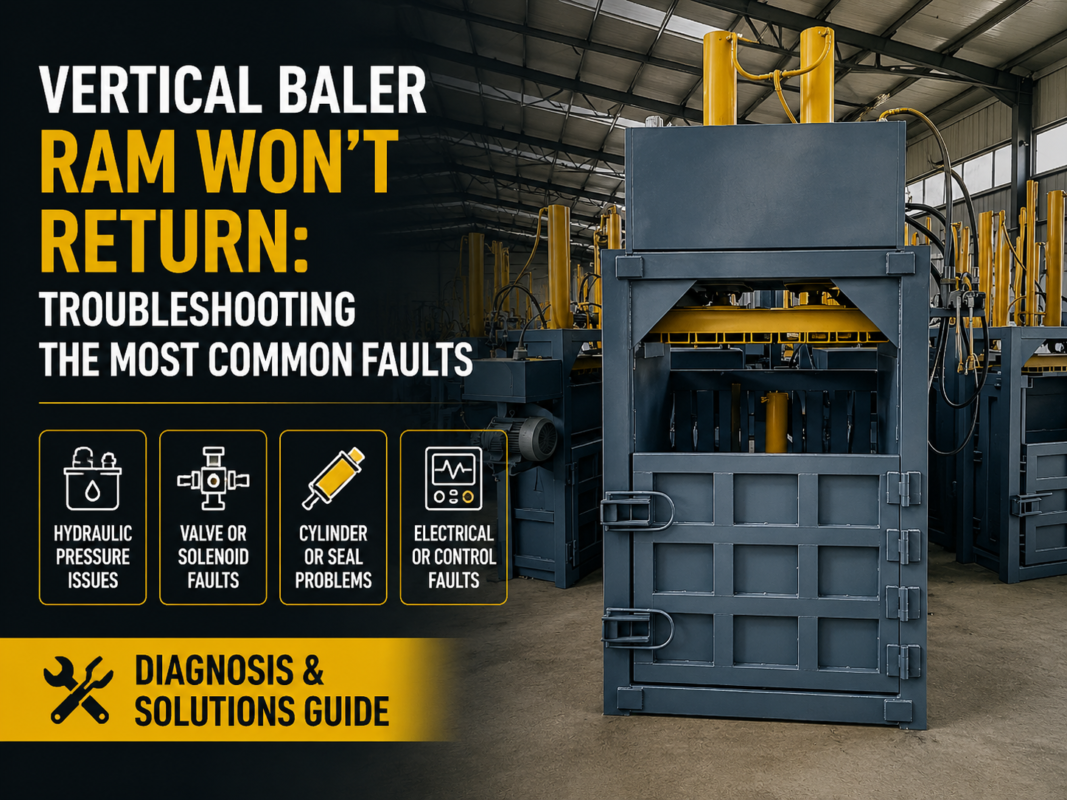
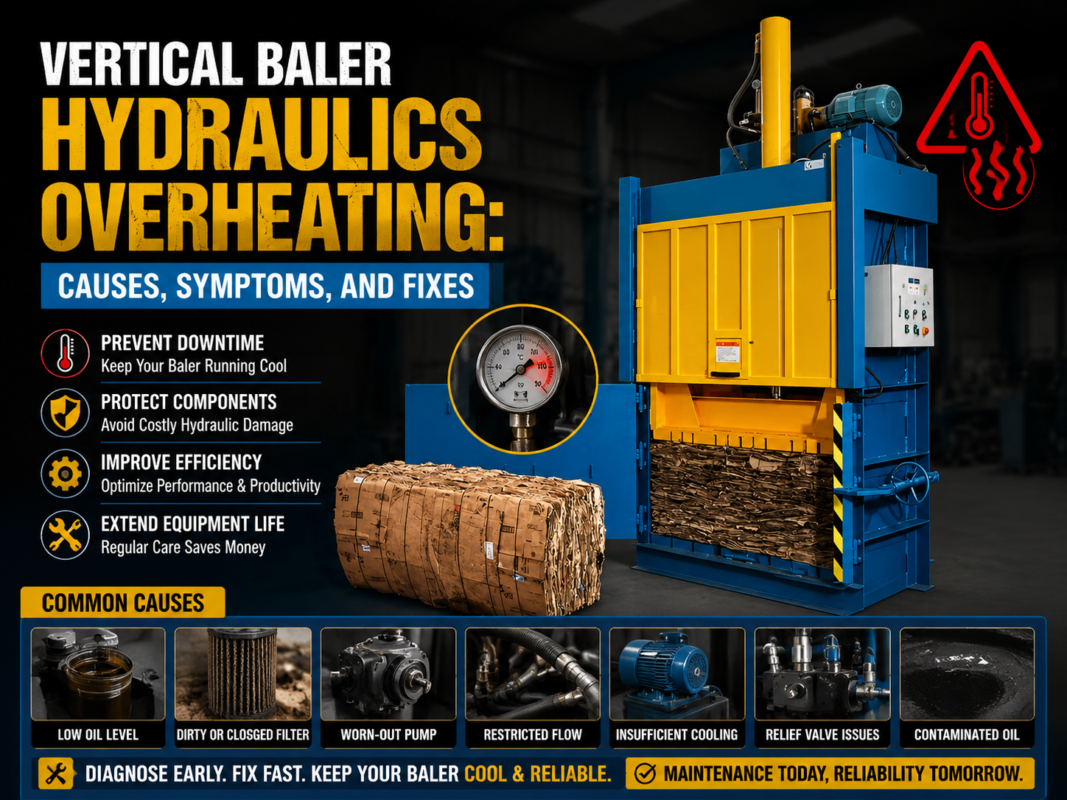
The hydraulic system is the most complex and vital component of a recycling baler. To maintain a recycling baler stable daily output, the hydraulic fluid must be kept clean, cool, and at the correct viscosity. Contamination is the leading cause of hydraulic failure. Microscopic particles of metal, dust, or moisture can erode valve seats, score cylinder walls, and destroy expensive pumps. Implementing a strict filtration and oil analysis schedule is essential.
Oil temperature management is another critical factor. Most industrial balers are designed to operate within a specific temperature range, typically between 40°C and 60°C. If the oil becomes too hot, its viscosity drops, leading to internal leakage and reduced pressing force. Overheated oil also accelerates the degradation of seals and O-rings. Ensure that the heat exchanger (air or water-cooled) is clean and that the cooling fans or water pumps are functioning correctly. If the baler is operating in a particularly hot environment, consider upgrading the cooling capacity.
Regularly scheduled oil changes are necessary, but they should be supplemented by oil analysis. By sending a sample of the hydraulic fluid to a lab, you can detect the presence of specific wear metals, which can tell you which internal components are starting to fail. This allows for “predictive maintenance,” where you replace a bearing or a pump before it actually breaks. When changing oil, always replace the suction and return filters. Never mix different brands or grades of hydraulic oil, as the additives may react poorly and cause foaming or sludge.
Finally, pay close attention to the hydraulic cylinders and hoses. Inspect the cylinder rods for scratches or pitting; a damaged rod will quickly destroy the rod seal. Hoses should be checked for bulging, cracking, or abrasion. Because hydraulic hoses operate under high pressure, a burst hose is not just a maintenance issue—it is a severe safety hazard. Replace any hose that shows signs of external wear, regardless of how long it has been in service.
Electrical and Control System Integrity
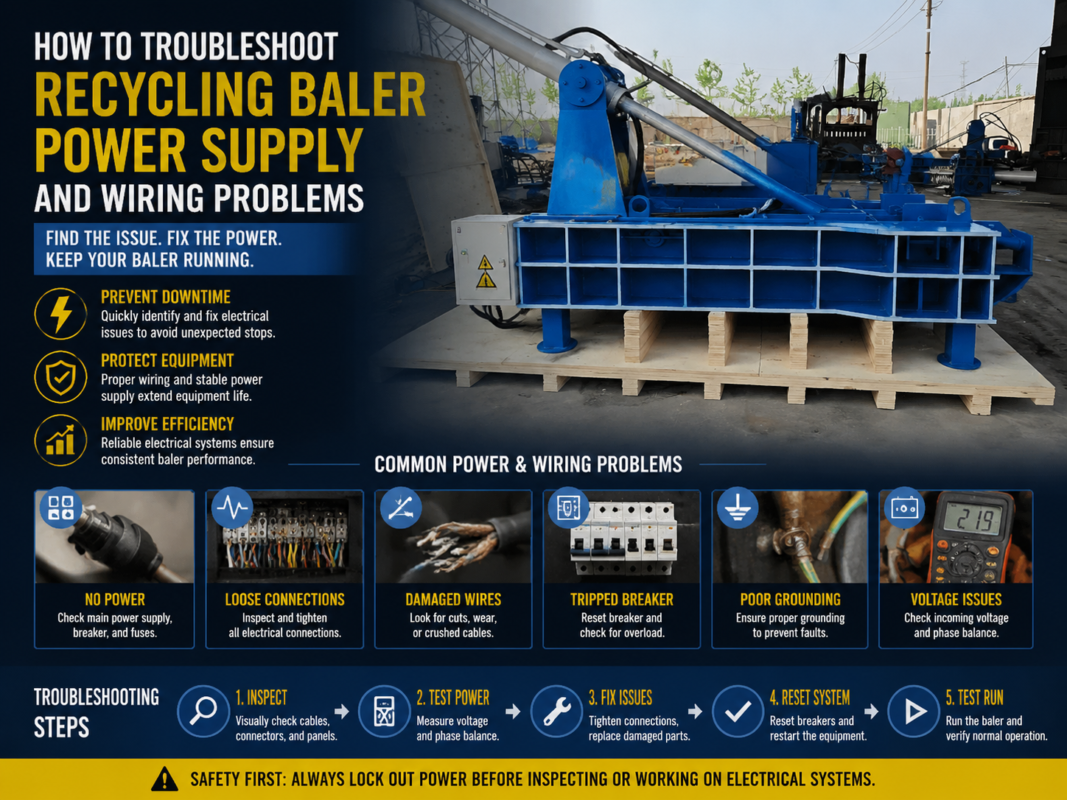
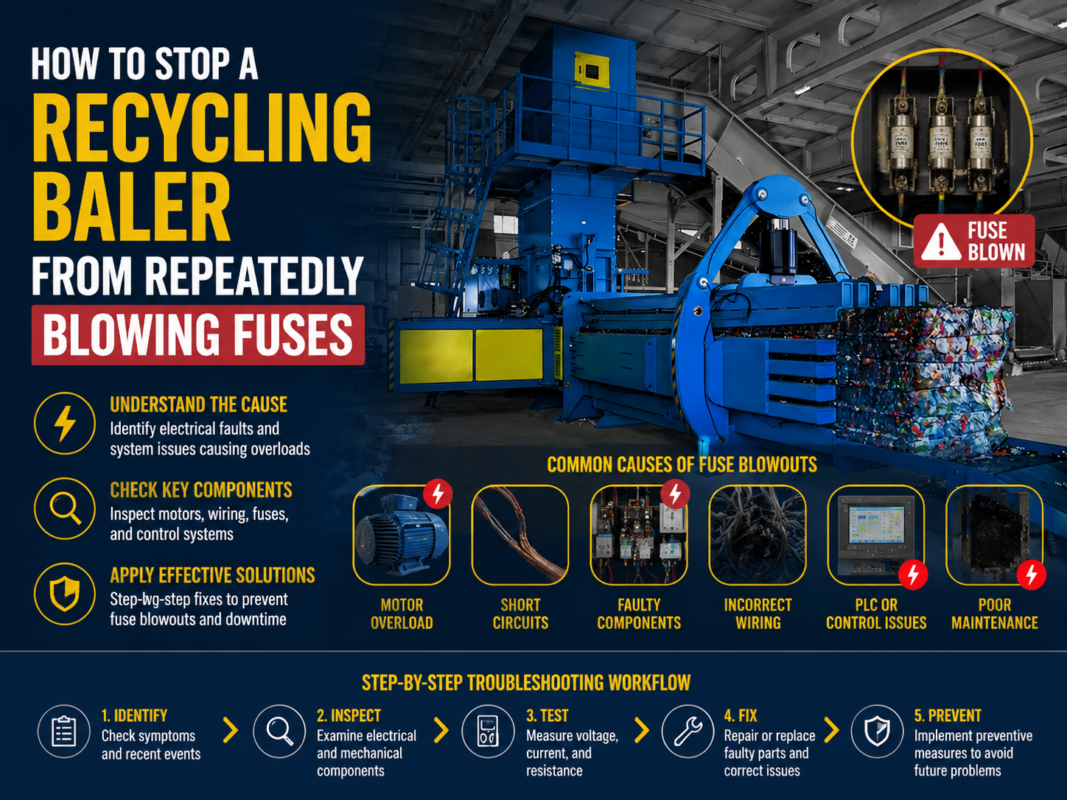
Modern recycling balers rely heavily on sophisticated electrical systems and PLC (Programmable Logic Controller) units to manage the complex timing of the compression cycles. To maintain a recycling baler stable daily output, the electrical system must be protected from its two greatest enemies: heat and vibration. Over time, the constant vibration of the machine can loosen terminal screws and wire connections, leading to intermittent faults that are notoriously difficult to diagnose.
Monthly inspections should include a thorough check of the control cabinet. Ensure that the cabinet door seals are intact to prevent dust and moisture from entering. Use a non-conductive cleaner or compressed air to remove any dust buildup on the components, as dust can act as an insulator and cause overheating. Tighten any loose connections and look for signs of “arcing” or scorched insulation on wires, which indicates a high-resistance connection or an overloaded circuit.
Sensors and limit switches are the “eyes” of the baler. They tell the PLC where the ram is and when the chamber is full. If these sensors are misaligned or coated in grime, the machine may stop mid-cycle or fail to start. Regularly clean the faces of proximity sensors and ensure that limit switch arms move freely. In environments with high levels of metallic dust, consider using shielded cables and sensors specifically designed for such conditions to prevent interference.
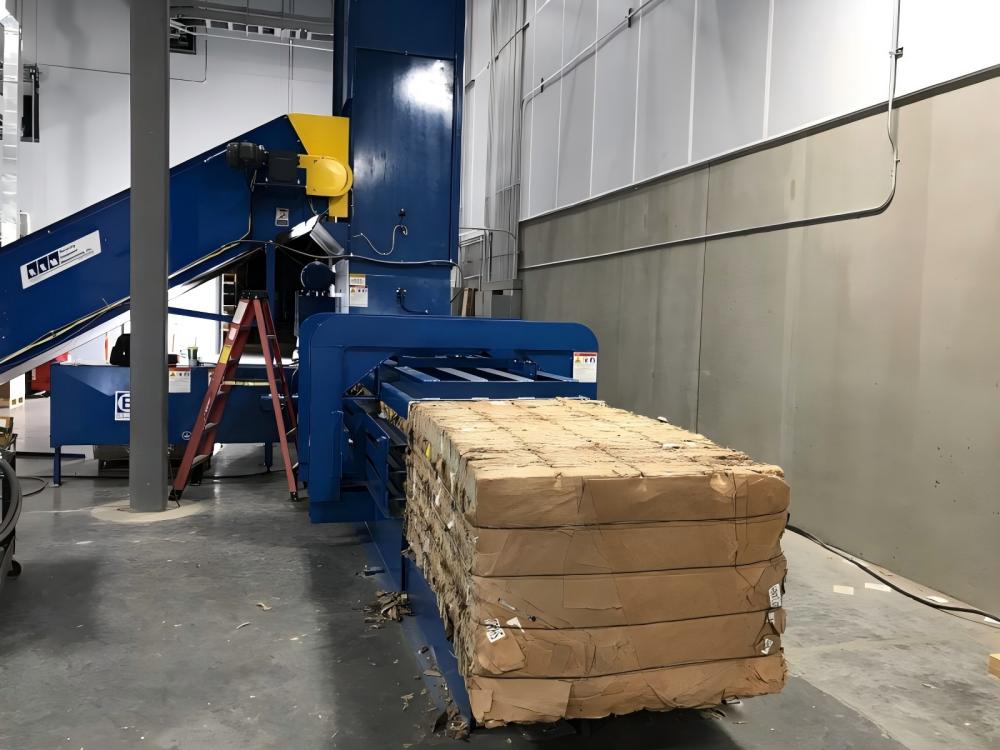
Software and logic updates are also part of electrical maintenance. While the core programming of a HARSLE baler is robust, ensuring that the PLC is free of error logs and that all timers are set correctly for the material being processed is vital. For example, processing heavy scrap metal requires different pressure dwell times than processing light cardboard. Adjusting these parameters can reduce unnecessary strain on the motor and pump, contributing to a more stable daily output.
Mechanical Components and Structural Integrity
The mechanical frame and moving parts of a baler endure thousands of tons of force every day. To maintain a recycling baler stable daily output, the structural integrity of the machine must be monitored. The most common area of wear is the liner plates inside the baling chamber. These plates are designed to be sacrificial; they protect the main frame from the abrasive action of the material being compressed. Once these plates wear down past a certain point, the ram can become misaligned, leading to uneven pressure and potential damage to the main structure.
The ram itself requires careful monitoring. Check the wear pads or rollers that guide the ram. If these are worn, the ram may “cock” or tilt during the stroke, which puts immense side-load on the hydraulic cylinder. This can lead to bent rods or blown seals. Replacing wear pads is a relatively simple task compared to rebuilding a large hydraulic cylinder, so it should never be delayed. Ensure the ram is traveling smoothly and that there is no metal-on-metal grinding sound during operation.
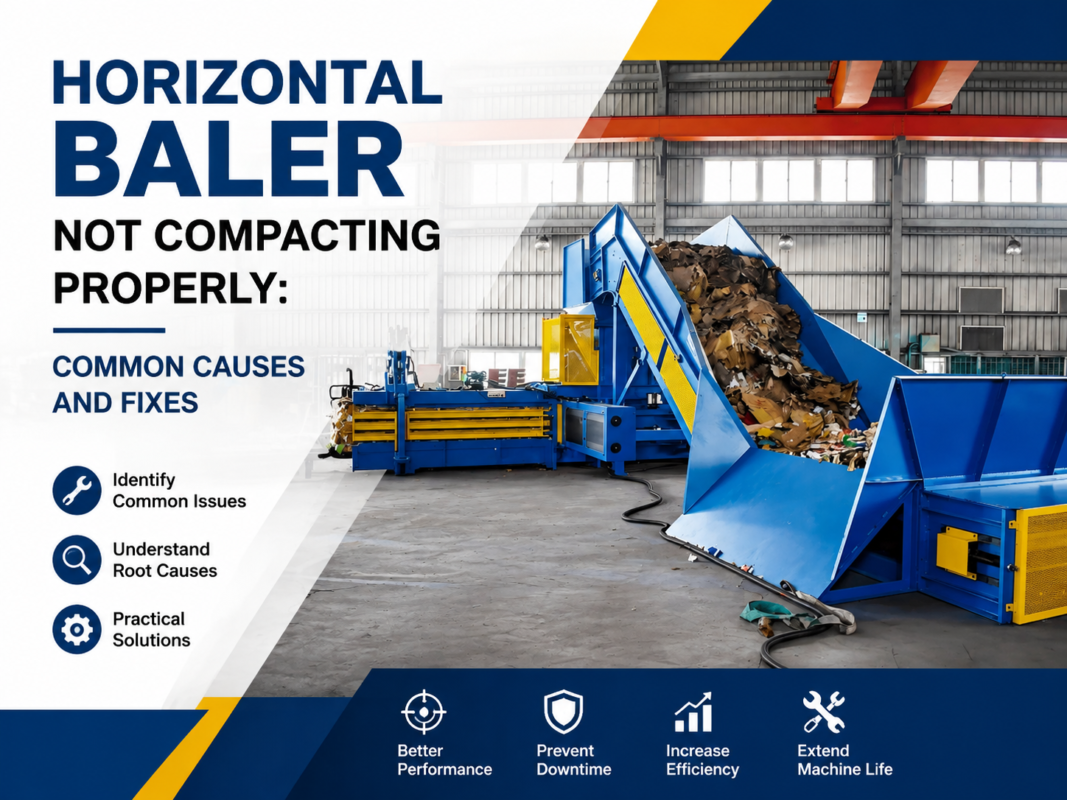
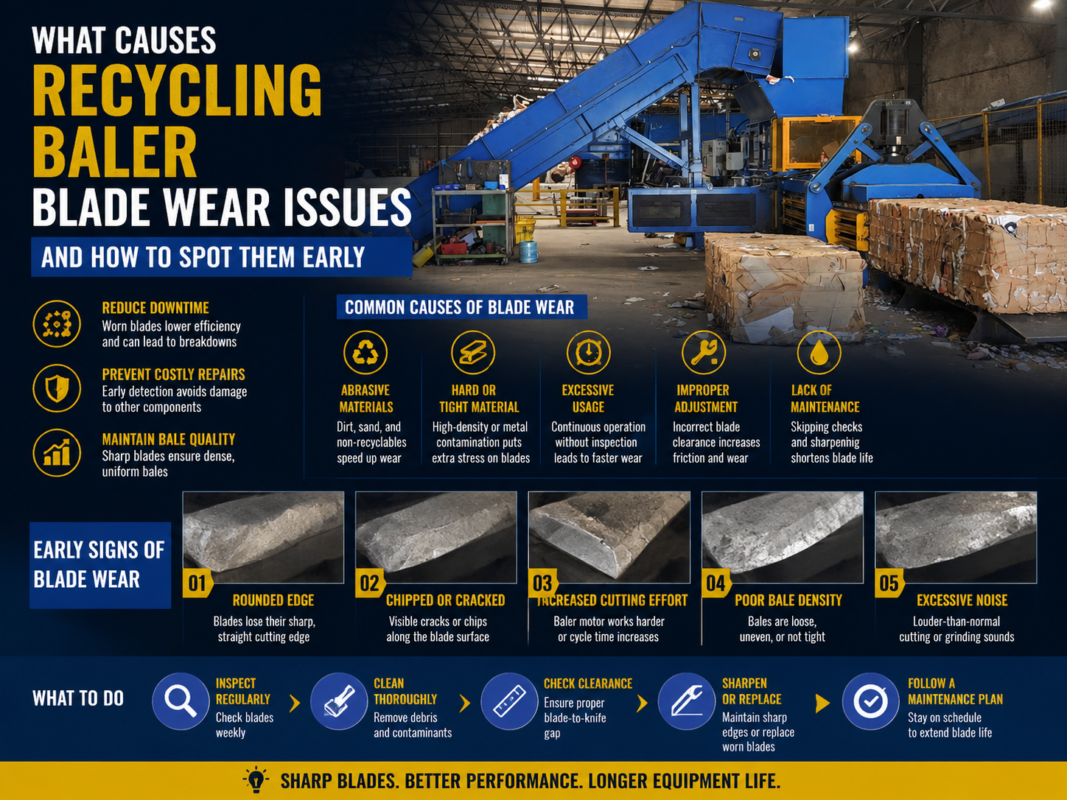
Shear blades are another critical mechanical component, especially in horizontal balers. These blades cut off excess material as the ram moves forward. If the blades are dull or the gap between them is too wide, the material will “fold” instead of being cut, which can jam the machine and cause a massive spike in hydraulic pressure. Regularly check the sharpness of the blades and adjust the clearance according to the manufacturer’s specifications. Sharpening or flipping the blades (if they are four-sided) is a key part of maintaining efficiency.
Lastly, inspect the bale tying or wrapping mechanism. Whether your baler uses wire, plastic strapping, or twine, the knotter or sealer is a precision instrument. Even a small amount of debris or a lack of lubrication in the tying head can cause missed ties. A bale that falls apart as it exits the machine is a significant disruption to the daily output. Clean the tying mechanism daily and ensure that the tensioners are correctly adjusted for the type of strapping being used.
A Comprehensive Lubrication Plan
Lubrication is the simplest yet most frequently overlooked aspect of industrial machinery maintenance. To maintain a recycling baler stable daily output, a strict lubrication schedule must be followed. Friction is the enemy of efficiency; it generates heat, consumes extra electricity, and causes parts to seize. A well-lubricated baler runs quieter, cooler, and faster.
Identify all grease points on the machine. These typically include the ram guide bearings, the pivot pins for the door hinges, the motor bearings, and the components of the tying mechanism. Use the specific type of grease recommended by HARSLE; using a general-purpose grease in a high-pressure application can lead to the lubricant being squeezed out of the joint, leaving it unprotected. For machines operating in extreme temperatures, specialized synthetic greases may be required.
The frequency of lubrication depends on the intensity of use. For a baler running two or three shifts a day, some points may require greasing every 8 to 24 hours. Many modern balers are equipped with automatic lubrication systems. While these systems are excellent for ensuring consistent grease delivery, they are not “set and forget.” Operators must regularly check the grease reservoir level and inspect the delivery lines to ensure they haven’t been pinched or broken by falling debris.
In addition to grease, some components may require oiling. Chains, sprockets, and certain sliding surfaces should be kept coated with a thin layer of oil to prevent rust and reduce wear. However, be careful not to over-lubricate in dusty environments, as excess oil and grease can trap grit, creating an abrasive paste that actually accelerates wear. A “clean and lube” approach is always best: wipe away old, dirty grease before applying fresh lubricant.
Troubleshooting Signals: Listening to Your Machine
Experienced operators can often tell if a baler is healthy just by the sound it makes. To maintain a recycling baler stable daily output, everyone on the floor should be trained to recognize the early warning signs of trouble. Unusual noises, changes in cycle time, or variations in bale quality are all signals that the machine requires attention.
A high-pitched whining or screaming sound often indicates pump cavitation, which occurs when air enters the hydraulic line or the suction filter is clogged. This is an emergency situation; if the pump is allowed to continue cavitating, it will be destroyed within minutes. A “banging” or “clunking” sound during the ram stroke may indicate a loose liner plate or a broken wear pad. These mechanical sounds should be investigated immediately to prevent structural damage.
Watch the cycle times. If the ram is moving slower than usual, it could be a sign of a failing pump, an internal leak in a valve, or an electrical issue causing the motor to underperform. Similarly, if the pressure gauge doesn’t reach the required setting, the baler will produce soft, overweight bales. This often points to a faulty relief valve or worn piston seals in the cylinder. By catching these issues early, you can schedule a repair during a planned break rather than suffering an unexpected shutdown.
Maintenance Schedule Table
| Frequency | Task Category | Specific Action Required |
|---|---|---|
| Daily | Inspection | Check oil levels, look for leaks, clear debris from ram and chamber. |
| Daily | Safety | Test emergency stops and safety interlocks. |
| Weekly | Lubrication | Grease all manual points; check auto-lube reservoir. |
| Weekly | Mechanical | Inspect shear blade sharpness and clearance. |
| Monthly | Electrical | Clean control cabinet, tighten terminals, check sensor alignment. |
| Monthly | Hydraulic | Inspect all hoses for wear; clean heat exchanger fins. |
| Quarterly | Structural | Check liner plate thickness and tighten all mounting bolts. |
| Bi-Annually | Hydraulic | Perform oil analysis; replace all hydraulic filters. |
| Annually | Comprehensive | Full system calibration; deep clean reservoir; inspect pump couplings. |
Frequently Asked Questions (FAQ)
1. How often should I change the hydraulic oil in my recycling baler?
While many manufacturers suggest changing oil every 2,000 to 4,000 operating hours, the best practice is to base the change on oil analysis results. If the oil is clean and the additive package is still active, you may extend its life. However, filters should always be changed at least every 1,000 hours or whenever the filter bypass indicator triggers.
2. Why is my baler producing inconsistent bale weights?
Inconsistent weights are usually caused by either a malfunctioning pressure switch/transducer or variations in the material feed. If the hydraulic system isn’t reaching the full set pressure before the ram retracts, the bale won’t be fully compressed. Check the relief valve settings and ensure the sensors are correctly detecting the “chamber full” state.
3. What is the most common cause of baler downtime?
The most common cause is a lack of basic housekeeping. Debris buildup around the ram and sensors leads to jams and electrical faults. Following a simple daily cleaning routine can eliminate up to 50% of common operational issues.
4. Can I use any hydraulic oil in my HARSLE baler?
No. You must use the grade specified in your manual, typically an ISO 46 or 68 anti-wear (AW) hydraulic oil. Using the wrong viscosity can cause the pump to overheat in summer or fail to prime in winter, leading to significant damage.
5. How do I know when to replace the shear blades?
You should replace or sharpen the blades when you notice the material is being pulled down into the gap between the ram and the frame rather than being cut cleanly. This “folding” increases the load on the motor and can lead to the ram getting stuck.
6. Is it necessary to grease the machine if it has an auto-lube system?
Yes, you still need to perform manual checks. Auto-lube systems can fail, lines can clog, or certain points may not be covered by the system. Always verify that grease is actually reaching the intended surfaces during your weekly inspection.