Improving Recycling Through Industrial Shredder Applications

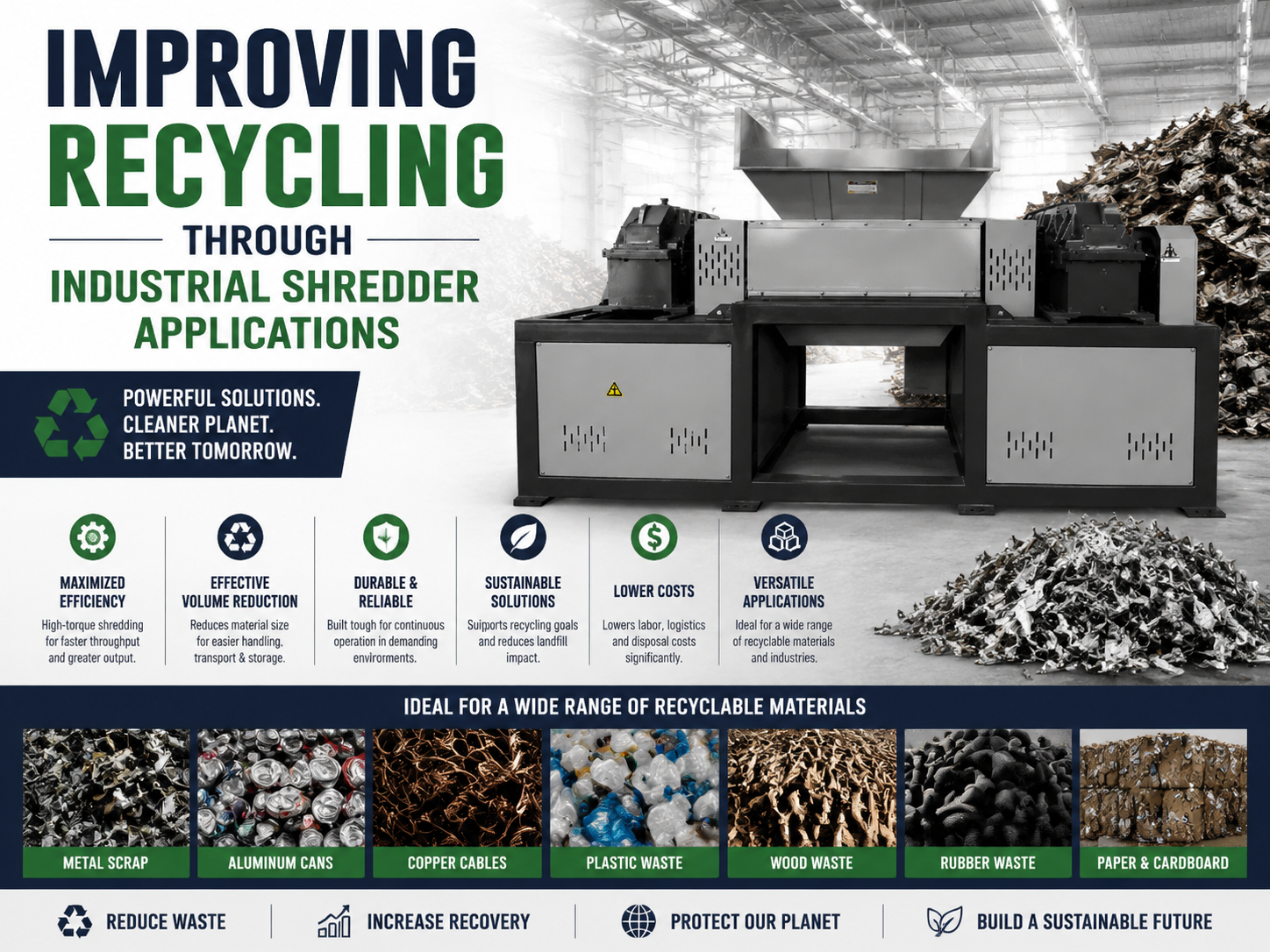
Introduction to Improving Recycling Through Industrial Shredder Applications
In the modern industrial landscape, the drive toward a circular economy has never been more critical. As global waste production continues to rise, the role of advanced machinery in processing and repurposing materials is paramount. Improving Recycling Through Industrial Shredder Applications is not just a trend; it is a fundamental shift in how we handle scrap metal, plastics, electronic waste, and municipal refuse. Industrial shredders serve as the first line of defense in waste management, breaking down bulky materials into manageable sizes for further sorting, cleaning, and smelting.
HARSLE, a leader in metal fabrication and recycling machinery, understands that efficiency in recycling begins with the right shredding technology. By reducing the volume of waste and increasing the surface area of materials, industrial shredders facilitate more effective downstream processes. Whether it is a double-shaft shredder for heavy-duty metal scrap or a four-shaft system for precise output sizing, the application of these machines is the cornerstone of sustainable industrial growth. This guide explores the intricate details of how industrial shredders are transforming the recycling industry, focusing on application scenarios, technical requirements, and productivity benefits.
Application Scenarios for Industrial Shredders
The versatility of industrial shredders allows them to be deployed across a wide range of sectors. One of the primary application scenarios is Scrap Metal Recycling. Large metal components, such as automotive frames, appliances (white goods), and industrial drums, require significant force to break down. Shredders reduce these items into small, dense pieces that are easier to transport and more efficient to melt in furnaces. This process significantly lowers the energy consumption required for metal production compared to mining virgin ores.
Another critical area is Electronic Waste (E-Waste) Processing. E-waste is one of the fastest-growing waste streams globally. It contains a complex mix of plastics, glass, and precious metals like gold, silver, and copper. Industrial shredders are used to liberate these materials from complex assemblies like circuit boards and computer chassis. By shredding e-waste, recyclers can use magnetic separators and eddy current separators to recover valuable metals with high purity levels.
Plastic and Polymer Recycling also relies heavily on shredding technology. From large HDPE pipes to bulky plastic pallets and PET bottles, shredders prepare plastic waste for granulators and extruders. In the context of Improving Recycling Through Industrial Shredder Applications, the ability to handle contaminated or mixed plastics is a major advantage. Shredders can process baled plastics, breaking them apart so that washing systems can remove labels, adhesives, and organic residues.
Finally, Municipal Solid Waste (MSW) and Tire Recycling benefit from heavy-duty shredding. Tires, in particular, are notoriously difficult to recycle due to their steel wire reinforcement and durable rubber compounds. Specialized tire shredders can produce TDF (Tire Derived Fuel) or rubber crumb used in asphalt and playground surfaces. In MSW plants, shredders help in creating Refuse Derived Fuel (RDF), turning non-recyclable waste into a viable energy source for cement kilns and power plants.
Material and Process Requirements
To achieve optimal results in Improving Recycling Through Industrial Shredder Applications, one must understand the specific requirements of the materials being processed. Not all shredders are created equal, and the physical properties of the input material dictate the machine’s design. Material Hardness and Tensile Strength are the most critical factors. For instance, shredding high-carbon steel requires blades with exceptional toughness and wear resistance, typically made from alloys like D2 or SKD-11, heat-treated to specific Rockwell hardness levels.
Moisture Content and Contamination also play a role. In plastic recycling, wet materials can cause slippage or corrosion if the machine is not properly protected. For organic waste or MSW, the shredder must be designed to handle abrasive grit and corrosive liquids. Furthermore, the Desired Output Size determines the configuration of the cutting chamber and the use of screens. If a facility requires a uniform 50mm output for a conveyor system, a four-shaft shredder with an integrated screen is often the best choice.
Process requirements also include Throughput Capacity. Industrial operations often measure success in tons per hour (TPH). To meet high-volume demands, the shredder must have a robust motor and a high-torque gearbox. The feeding method—whether by crane, conveyor, or forklift—must be synchronized with the shredder’s processing speed to prevent overfeeding and mechanical strain. Modern systems utilize PLC (Programmable Logic Controller) units to monitor motor load and automatically reverse the shafts if a jam occurs, ensuring continuous operation.
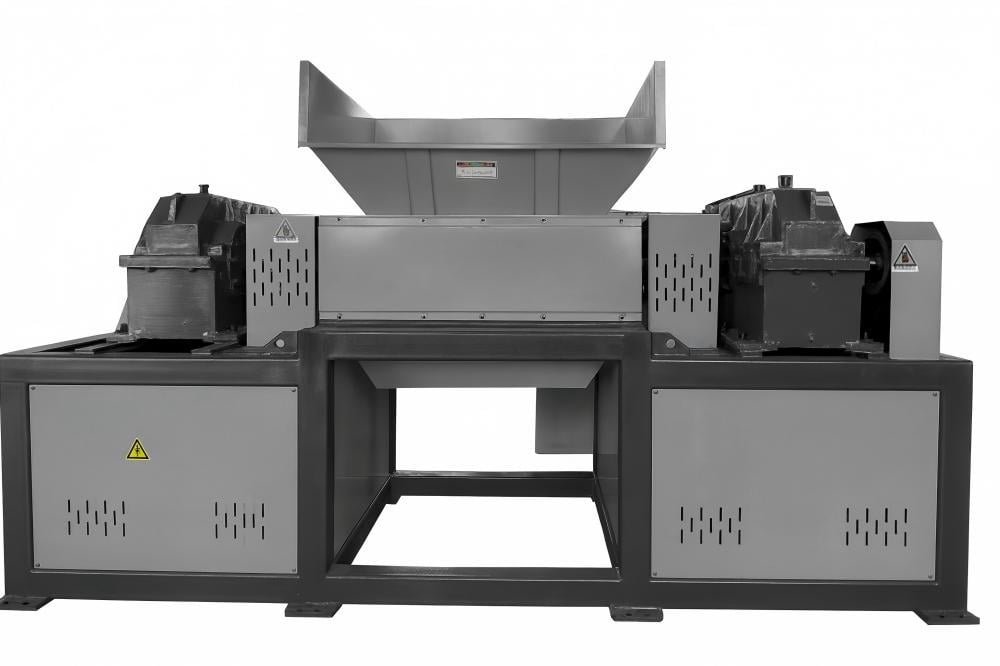
Recommended Machine Configuration
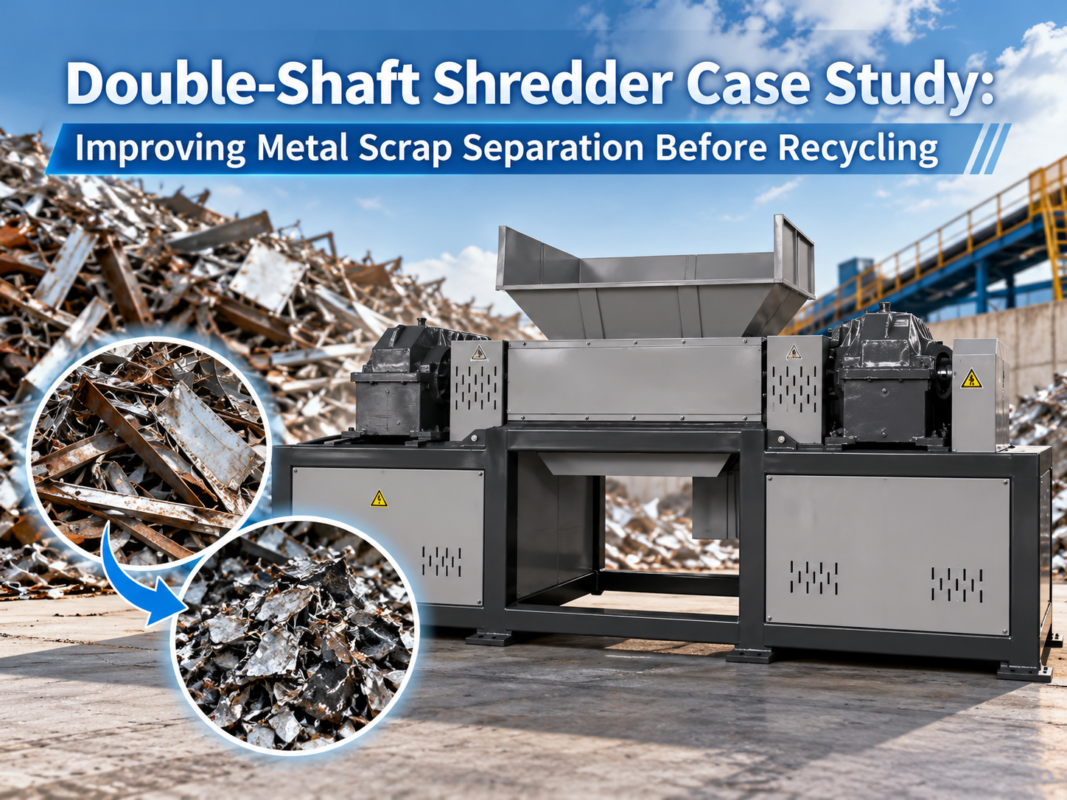
Selecting the right configuration is essential for Improving Recycling Through Industrial Shredder Applications. HARSLE offers several configurations tailored to specific industrial needs. The Double-Shaft Shredder is the workhorse of the recycling industry. It features two counter-rotating shafts equipped with hooked blades. This design is ideal for bulky materials like metal drums, tires, and large plastic containers. The high torque and low speed of these machines allow them to tear through tough materials without generating excessive heat or dust.
For applications requiring a more refined and consistent output, the Four-Shaft Shredder is recommended. This configuration includes two primary cutting shafts and two secondary cleaning/feeding shafts. The four-shaft design provides superior grabbing action on hollow objects and ensures that material is repeatedly cut until it is small enough to pass through a sizing screen located beneath the shafts. This is particularly useful for e-waste and confidential document destruction where a specific particle size is mandatory.
Key technical components to look for in a HARSLE shredder include:
- High-Efficiency Motors: Dual-motor drives provide balanced power distribution and redundancy.
- Planetary Gearboxes: These offer the high torque multiplication necessary for crushing dense metal scrap.
- Customizable Blade Profiles: Depending on the material (e.g., film vs. solid block), the number of hooks and blade thickness can be adjusted.
- Automatic Lubrication Systems: To ensure the longevity of bearings and seals in dusty recycling environments.
- Advanced PLC Control: Featuring Siemens or Schneider components for reliable automation and remote monitoring.
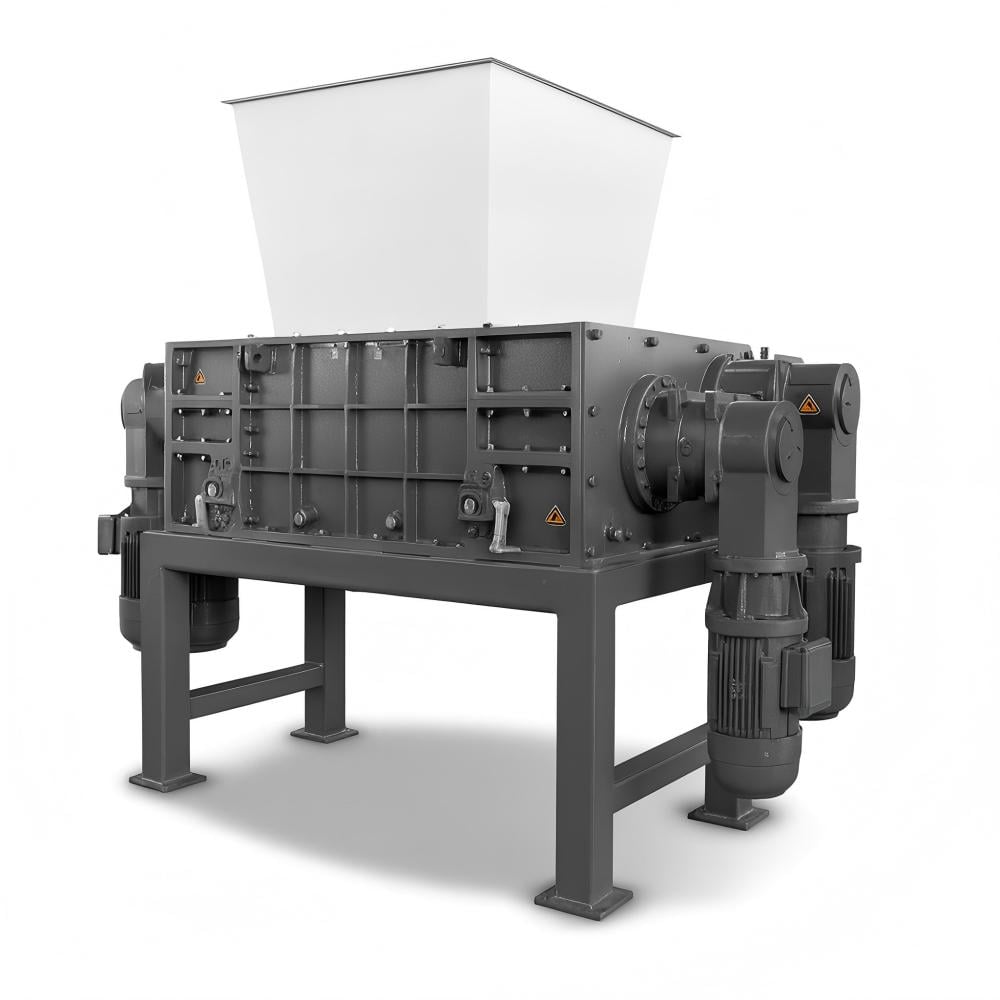
Workflow of an Industrial Shredding System
The workflow in a modern recycling facility is a highly orchestrated sequence of events. It begins with Material Sorting and Pre-treatment. While industrial shredders are powerful, removing non-shreddable items (like heavy engine blocks from a light-duty shredder) prevents unnecessary wear. The material is then moved to the Feeding Stage, typically via a heavy-duty slat conveyor or a vibrating feeder that ensures a steady flow into the hopper.
Once inside the Shredding Chamber, the material is gripped by the rotating blades. In a double-shaft system, the hooks pull the material between the shafts, where it is sheared and torn. The low-speed operation (typically 10-20 RPM) ensures that the machine can handle high-resistance shocks without stalling. If the sensors detect a spike in amperage—indicating a potential jam—the PLC triggers an Auto-Reverse Cycle to reposition the material before attempting to shred again.
After the material passes through the blades, it enters the Discharge and Separation Phase. A discharge conveyor carries the shredded fragments away. At this point, secondary equipment is often integrated. Magnetic cross-belt separators pull out ferrous metals, while eddy current separators eject non-ferrous metals like aluminum. The remaining “fluff” or plastic fraction can then be sent for further granulating or optical sorting. This integrated workflow is what truly drives the goal of Improving Recycling Through Industrial Shredder Applications.
Productivity Benefits of Advanced Shredding
Implementing high-quality shredding technology yields significant productivity benefits. The most immediate is Volume Reduction. Shredding can reduce the volume of bulky waste by up to 80%, which drastically lowers transportation costs. Fewer truckloads are needed to move the same weight of material, reducing the carbon footprint of the recycling operation. For scrap yards, this means more efficient use of storage space and easier handling of inventory.
Another benefit is Increased Material Purity. By breaking down complex assemblies, shredders allow for more precise separation of materials. In the case of aluminum scrap contaminated with steel screws, shredding liberates the two metals, allowing them to be separated and sold as high-grade fractions rather than low-value mixed scrap. This directly impacts the profitability of the recycling facility. Higher purity materials command better prices in the global commodities market.
Energy Efficiency is also a key factor. While shredders require significant power to operate, the energy saved in the downstream smelting process is immense. Shredded metal melts faster and more uniformly than large chunks, reducing furnace cycle times and fuel consumption. Furthermore, HARSLE shredders are designed with energy-efficient motors and variable frequency drives (VFDs) that optimize power usage based on the load, ensuring that no energy is wasted during idle periods.
Case Example: Metal Recycling Facility Upgrade
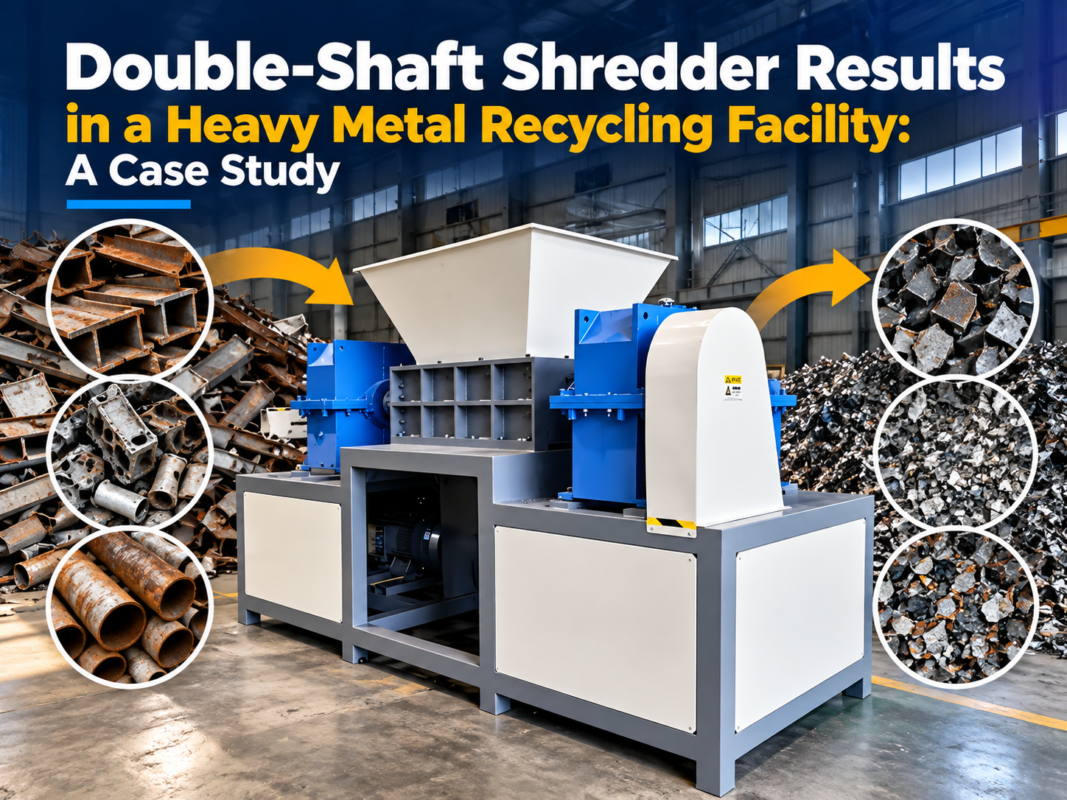
A prominent metal recycling center in Eastern Europe recently faced challenges with their aging shredding line. They were processing end-of-life vehicles (ELVs) and industrial scrap but struggled with frequent downtime and inconsistent output size. By partnering with HARSLE and focusing on Improving Recycling Through Industrial Shredder Applications, they replaced their old hammer mill with a custom-engineered HARSLE Double-Shaft Shredder followed by a high-speed granulator.
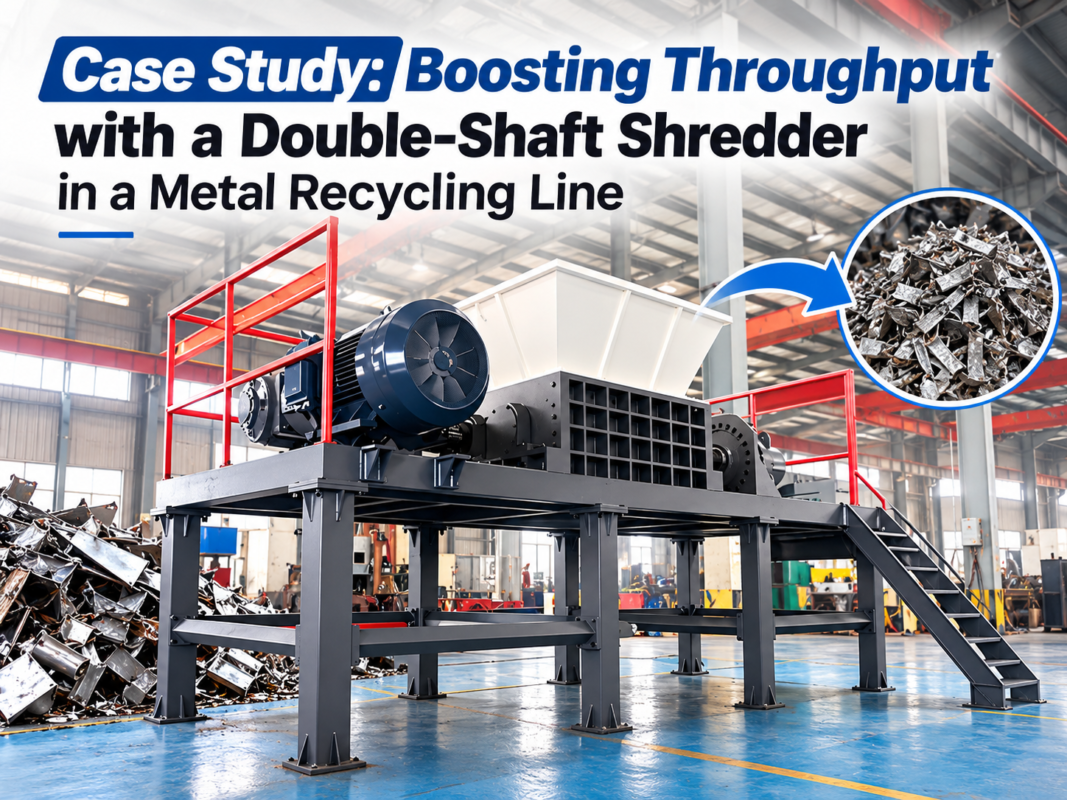
The results were transformative. The HARSLE shredder’s high-torque design allowed the facility to process thicker steel sections that previously had to be manually cut with torches. The automated PLC system reduced labor requirements by 30%, as the machine could handle varied feed rates without manual intervention. Within the first six months, the facility reported a 25% increase in total throughput and a significant reduction in maintenance costs, as the D2 steel blades required sharpening much less frequently than the old hammer mill components. This case demonstrates how the right machinery can turn a struggling operation into a high-efficiency recycling powerhouse.
Frequently Asked Questions (FAQ)
1. How often do the blades need to be sharpened or replaced?
The lifespan of shredder blades depends entirely on the material being processed. For soft plastics, blades can last for thousands of hours. For abrasive materials like glass-reinforced plastics or contaminated scrap metal, they may need inspection every 500-1,000 hours. HARSLE blades are designed for multiple regrinds, extending their service life and reducing the total cost of ownership.
2. Can one shredder handle both metal and plastic?
While many shredders are versatile, it is best to optimize the blade profile and motor speed for the primary material. A shredder configured for thin plastic film will have different blade hooks than one designed for steel drums. However, HARSLE offers multi-purpose configurations that can handle a mix of materials, provided the operator adjusts the throughput expectations accordingly.
3. What safety features are included in HARSLE shredders?
Safety is a priority in Improving Recycling Through Industrial Shredder Applications. Our machines include emergency stop buttons, safety interlocks on access doors, and hopper extensions to prevent accidental contact with the shafts. Additionally, the PLC-controlled auto-reverse function prevents mechanical failures that could lead to dangerous situations.
4. How do I choose between a single-shaft and a double-shaft shredder?
Single-shaft shredders are typically used for materials that require a very small, uniform output (like plastic purging or wood) and use a hydraulic pusher to press material against a high-speed rotor. Double-shaft shredders are better for bulky, heavy-duty materials where volume reduction and high torque are the primary goals. For most metal recycling applications, the double-shaft design is superior.
Conclusion: Partnering with HARSLE for Recycling Excellence
Improving Recycling Through Industrial Shredder Applications is a complex but rewarding endeavor. By selecting the right equipment, understanding material requirements, and optimizing the workflow, industrial operations can achieve unprecedented levels of efficiency and sustainability. HARSLE remains committed to providing the recycling industry with robust, high-performance shredding solutions that meet the challenges of the 21st century.
Whether you are looking to upgrade an existing recycling line or build a new facility from the ground up, HARSLE’s engineering team is ready to assist. Our machines are built to last, designed for ease of maintenance, and engineered to maximize your return on investment. Contact us today to learn more about our industrial shredder range and how we can help you turn waste into wealth.