Industrial Shredder Uses In Heavy-Duty Metal Recycling Lines: A Comprehensive Guide

Introduction to Industrial Shredder Uses In Heavy-Duty Metal Recycling Lines
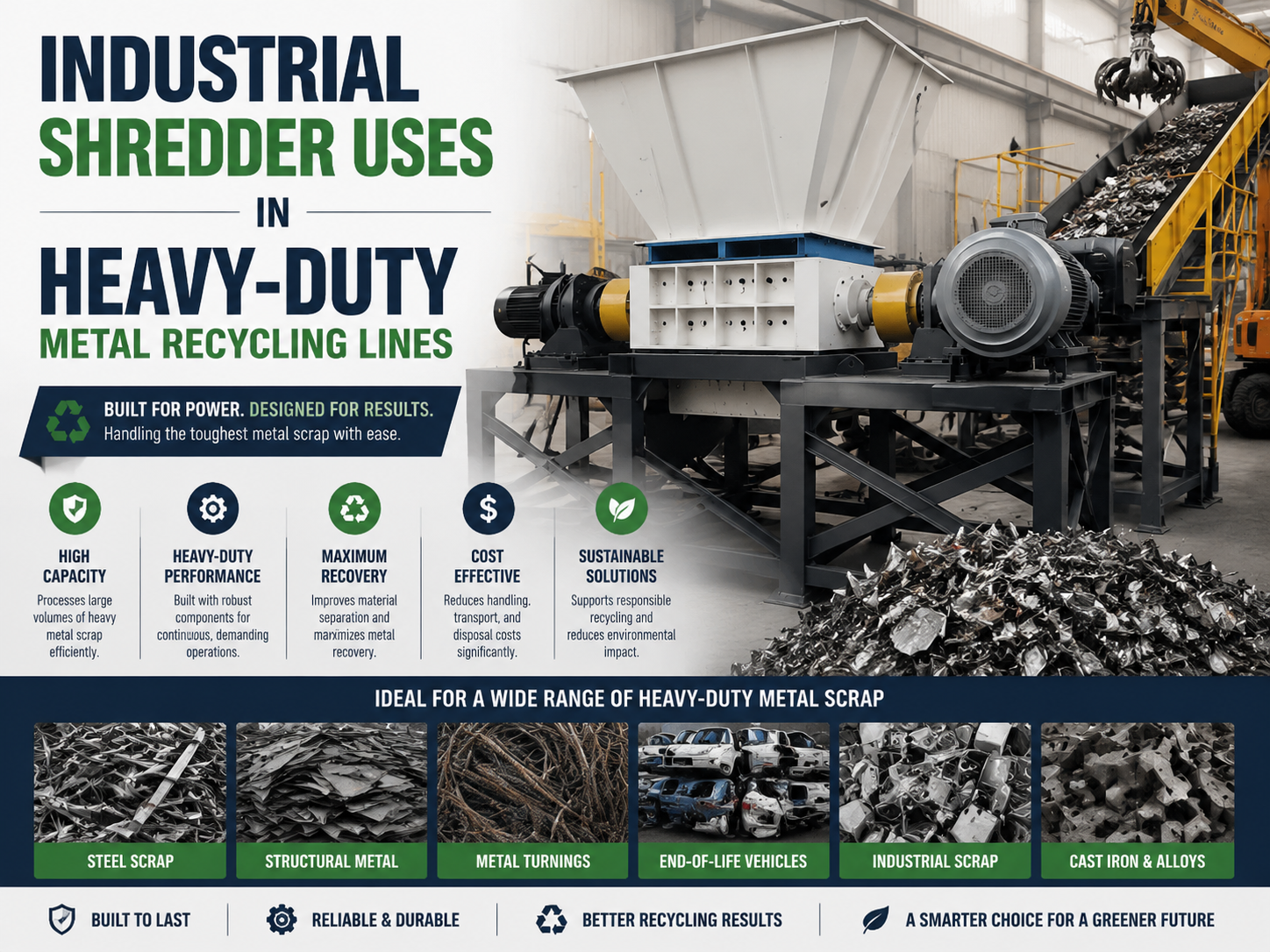
In the modern industrial landscape, the management of scrap metal has evolved from a simple waste disposal problem into a sophisticated resource recovery industry. Central to this transformation is the heavy-duty industrial shredder. Understanding the various industrial shredder uses in heavy-duty metal recycling lines is crucial for facility managers, recycling entrepreneurs, and environmental engineers who aim to optimize their operations. These machines are not merely cutters; they are the primary engines of volume reduction and material liberation, turning bulky, heterogeneous scrap into uniform, high-value raw materials.
Heavy-duty metal recycling lines require equipment that can withstand extreme mechanical stress while maintaining consistent output. The industrial shredder serves as the first line of defense against oversized waste, breaking down everything from end-of-life vehicles to industrial casting overflows. By reducing the physical size of the scrap, these shredders facilitate downstream processes such as magnetic separation, eddy current sorting, and smelting. Without a robust shredding stage, the efficiency of a recycling line drops significantly, leading to higher operational costs and lower purity in the final recycled product.
HARSLE has been at the forefront of developing shredding technology that meets the rigorous demands of the 21st-century recycling plant. Our machines are designed to handle the toughest alloys and the most complex composite materials. In this guide, we will explore the specific applications, technical requirements, and workflow configurations that define the most effective industrial shredder uses in heavy-duty metal recycling lines today.
Application Scenarios for Heavy-Duty Shredding
The versatility of industrial shredders allows them to be deployed across a wide range of recycling scenarios. One of the most prominent industrial shredder uses in heavy-duty metal recycling lines is the processing of End-of-Life Vehicles (ELV). Modern cars are a mix of steel, aluminum, plastics, and glass. A heavy-duty shredder can take a crushed car body and reduce it to fist-sized fragments in seconds. This process is essential for liberating the different materials so they can be sorted and reused in the automotive supply chain.
Another critical application is the recycling of industrial drums and large containers. These items often contain residues of chemicals or oils and are physically bulky, making them expensive to transport. Shredding these drums not only reduces their volume by up to 80% but also prepares the metal for thorough cleaning and decontamination. In the context of heavy-duty lines, these shredders are often equipped with explosion-proof features or specialized seals to handle potentially hazardous residues safely.
Electronic waste (E-waste) recycling is a rapidly growing sector where industrial shredders play a pivotal role. Large appliances like refrigerators, washing machines, and air conditioning units contain valuable copper and aluminum components buried within steel frames and plastic casings. Heavy-duty shredders break these units down, allowing for the recovery of precious metals while ensuring that hazardous components like CFCs or heavy metals are handled according to environmental regulations. The precision of the shredding process determines the recovery rate of these high-value materials.
Finally, the aerospace and construction industries generate massive amounts of scrap in the form of aluminum profiles, structural steel beams, and titanium components. These materials are often too large for standard melting furnaces. Industrial shredders in heavy-duty lines are used to size-reduce these components into manageable pieces. This not only aids in logistics but also improves the melting efficiency in the furnace, as smaller pieces have a higher surface-area-to-volume ratio, leading to faster heat transfer and lower energy consumption.
Material and Process Requirements
When considering industrial shredder uses in heavy-duty metal recycling lines, the physical properties of the input material dictate the machine’s design. Hardness is the primary factor; materials like high-carbon steel or manganese alloys require shredders with high-torque, low-speed drive systems. Unlike high-speed grinders that rely on kinetic energy, heavy-duty shredders use sheer force to tear through metal. This requires blades made from specialized tool steels, such as D2 or SKD-11, which have been heat-treated to achieve the perfect balance of hardness and toughness.
The density of the scrap also plays a role in process requirements. Loose scrap, such as aluminum cans or light sheet metal, requires a different feeding mechanism compared to dense scrap like engine blocks or heavy structural plates. For dense materials, the shredder must be equipped with reinforced housing and heavy-duty bearings to absorb the massive vibrations and shocks generated during the shredding cycle. Furthermore, the moisture content and presence of contaminants (like grease or dirt) must be managed to prevent premature wear on the cutting surfaces.
Output size requirements are equally important. Some recycling lines require a “rough shred” where the goal is simply volume reduction for transport. Others require a “fine shred” or granulation where the material must be reduced to a specific millimeter size for chemical processing or high-precision sorting. This necessitates the use of screens or multi-stage shredding systems. In a heavy-duty line, the ability to swap screens or adjust blade clearances is a vital feature that allows the operator to pivot between different material streams and customer specifications.
Recommended Machine Configuration
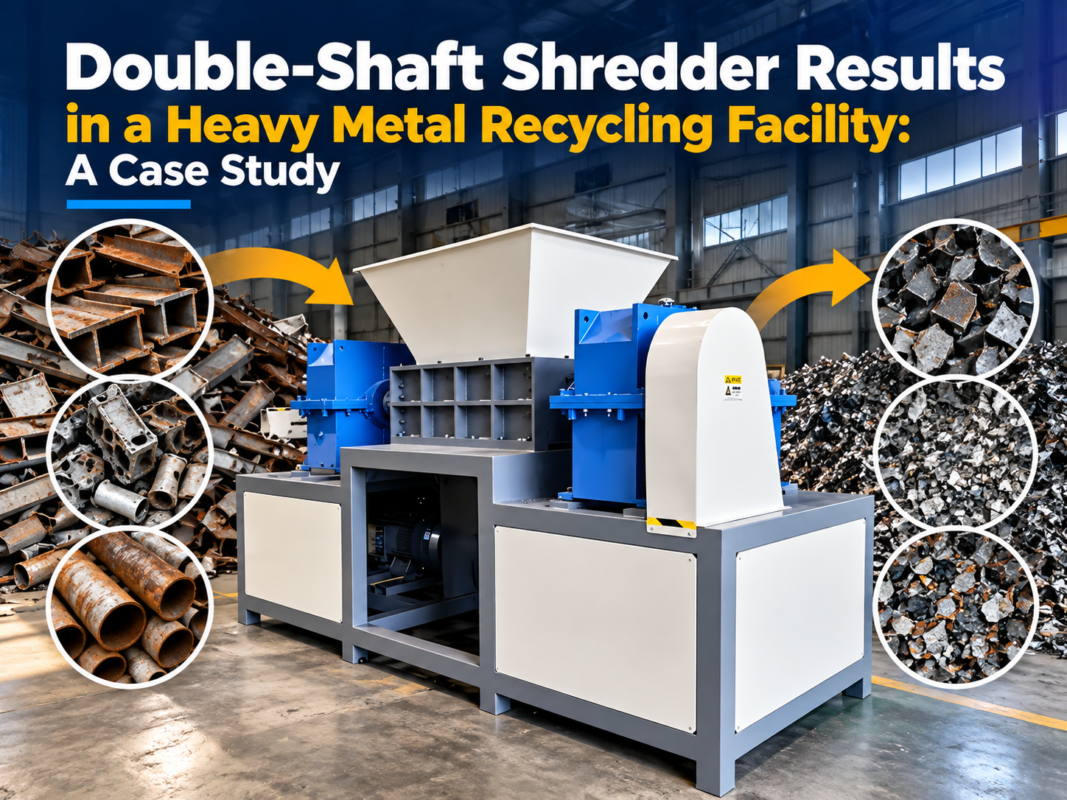
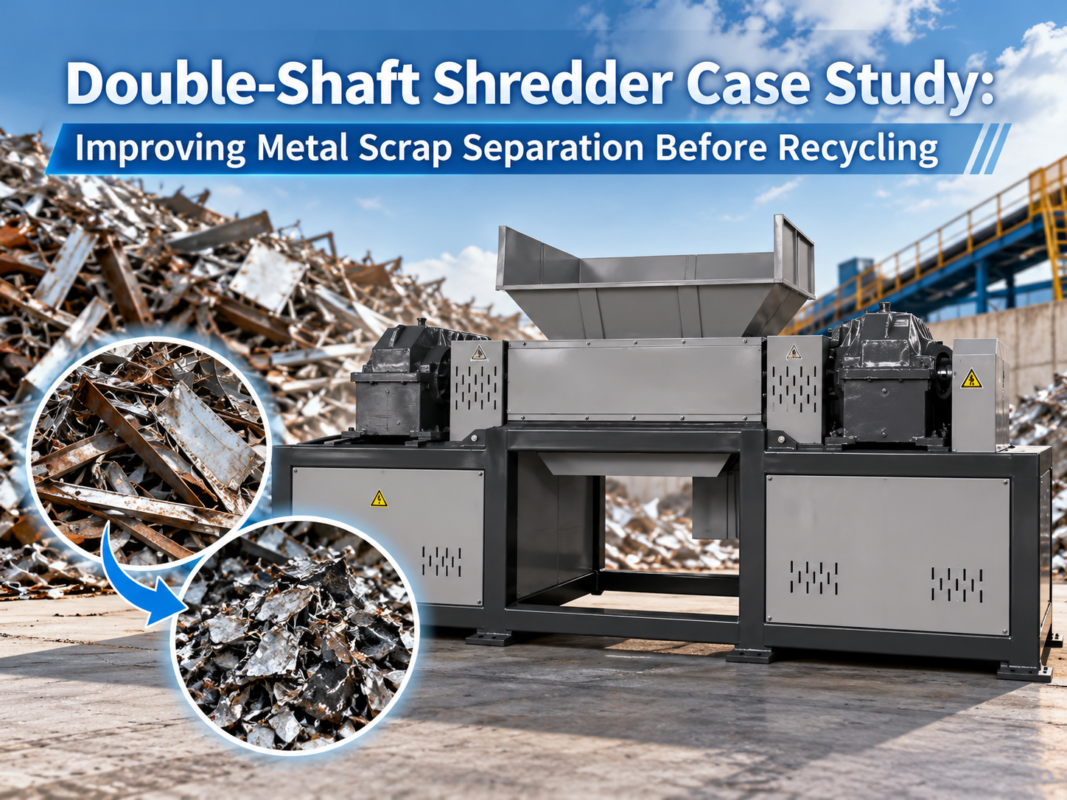
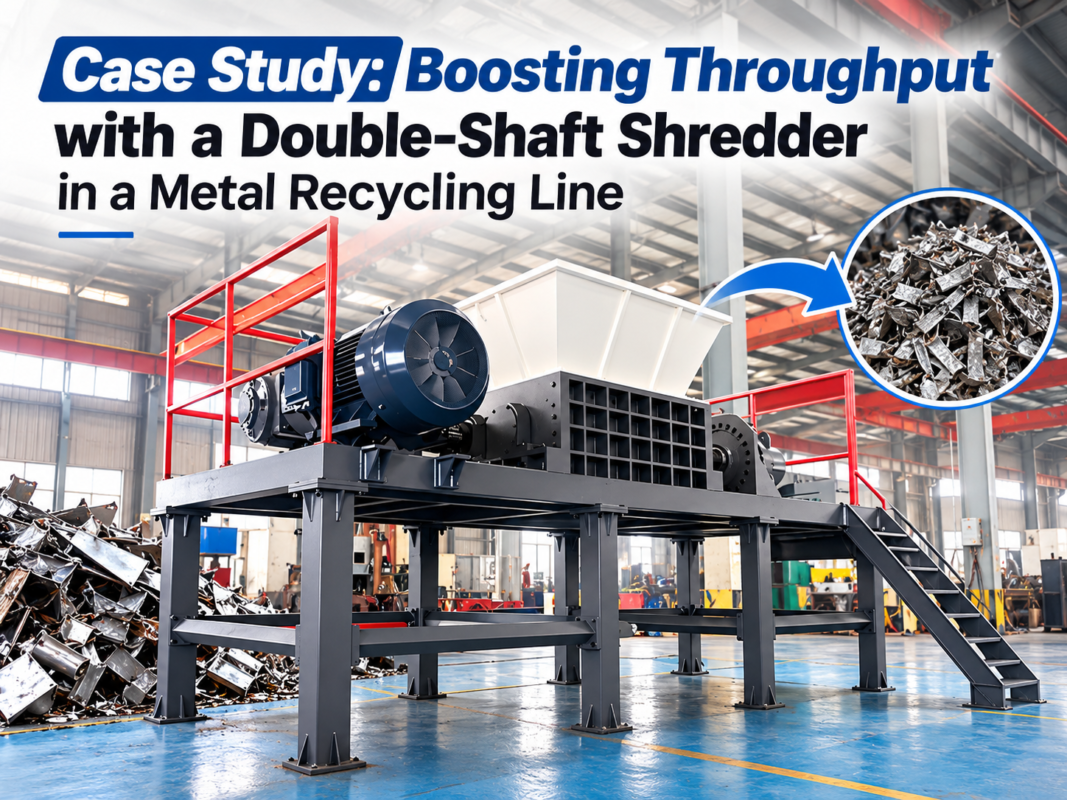
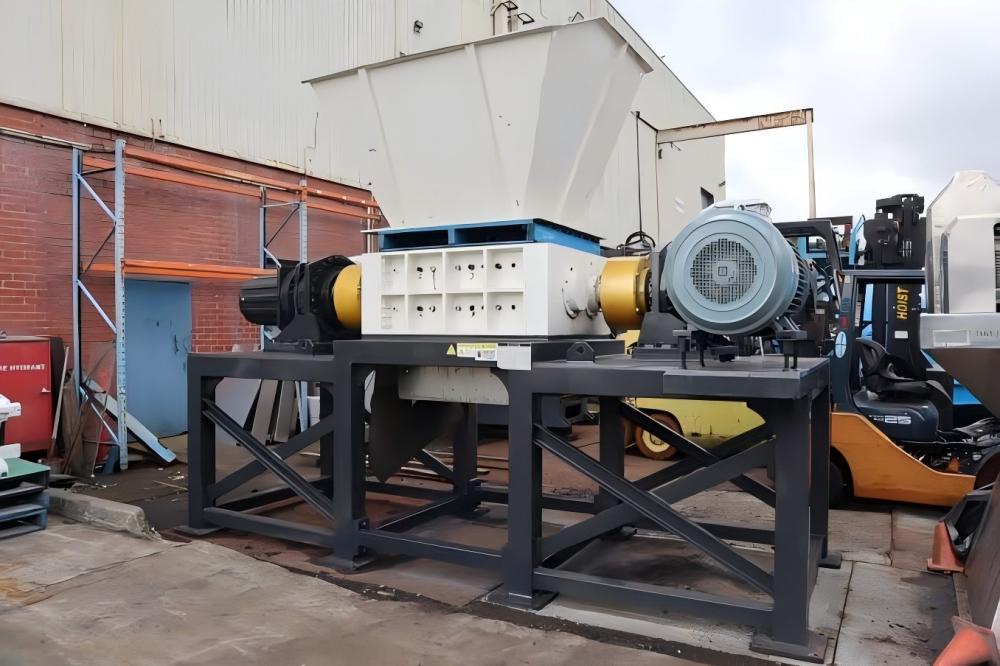
For heavy-duty metal recycling, the configuration of the shredder is the difference between a profitable operation and a maintenance nightmare. HARSLE recommends a double-shaft or four-shaft configuration for most heavy-duty applications. Double-shaft shredders are the workhorses of the industry, featuring two counter-rotating shafts with interlocking blades. This design provides excellent “grab” on bulky items and delivers high throughput. It is ideal for primary shredding of car bodies, tires, and large metal drums.
A four-shaft shredder configuration is often recommended when a consistent output size is required in a single pass. The two secondary shafts help to recirculate oversized material back into the primary cutting zone until it is small enough to pass through the integrated screen. This configuration is particularly effective for E-waste and aluminum scrap where uniform sizing is critical for downstream eddy current separators. The four-shaft design also tends to produce less noise and dust compared to high-speed hammer mills, making it a more environmentally friendly choice for urban recycling centers.
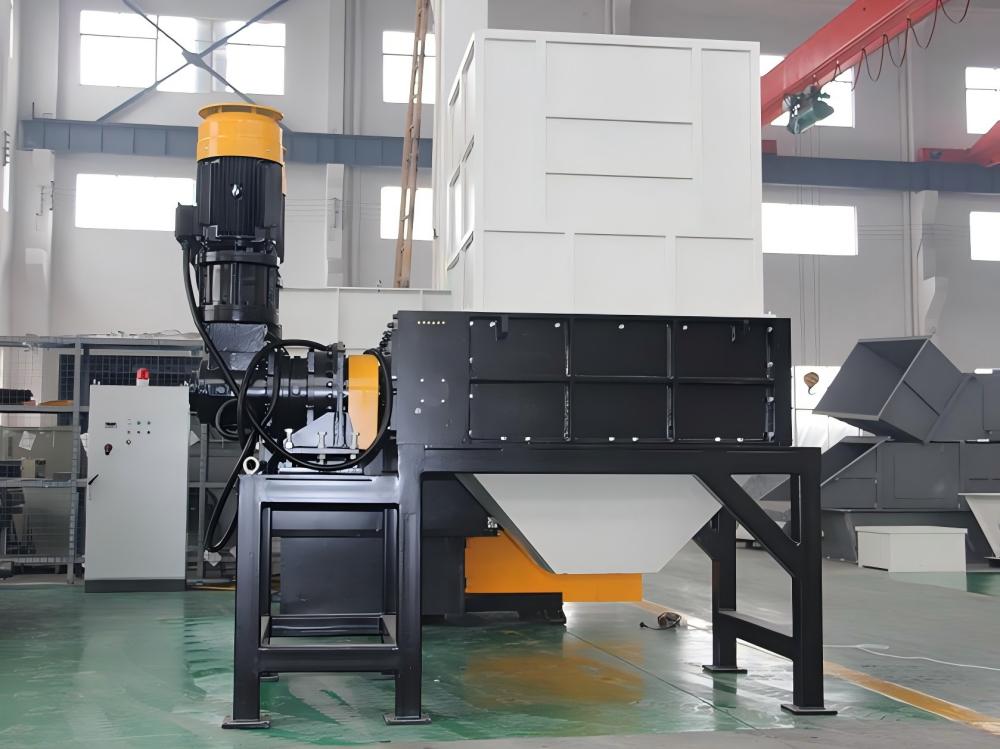
The drive system is another critical component. For heavy-duty lines, hydraulic drives are often preferred over electric drives because they offer superior torque control and can handle frequent stalls or reversals without damaging the motor. However, modern electric drives with Variable Frequency Drives (VFDs) and high-efficiency Siemens motors are becoming increasingly popular due to their lower energy consumption and easier integration into automated control systems. HARSLE machines often feature PLC-controlled auto-reverse functions, which detect overloads and automatically reverse the shafts to clear jams, protecting the machine from damage.
The Workflow of a Metal Recycling Line
The integration of an industrial shredder into a heavy-duty metal recycling line follows a logical progression designed to maximize material purity. The workflow begins with the Feeding Stage. Large-scale operations use heavy-duty conveyors or hydraulic grapples to feed scrap into the shredder’s hopper. It is essential to maintain a steady feed rate to prevent the shredder from running empty or becoming overloaded. Some systems include a pre-sorting stage where large non-metallic contaminants or hazardous items (like pressurized tanks) are removed manually or via specialized sensors.
The Shredding Stage is where the primary transformation occurs. As the material passes through the shafts, it is sheared, torn, and compressed. The resulting fragments fall through the bottom of the machine onto a discharge conveyor. In many heavy-duty lines, this is followed by a Magnetic Separation Stage. A powerful overband magnet or magnetic drum is positioned over the conveyor to pull out ferrous metals (iron and steel). This is often the most profitable part of the process, as ferrous scrap is in high demand for steel manufacturing.
Following the removal of ferrous metals, the remaining material—often a mix of plastics and non-ferrous metals like aluminum and copper—moves to the Non-Ferrous Separation Stage. Here, an Eddy Current Separator uses a rapidly alternating magnetic field to induce electrical currents in the non-ferrous metals, literally “jumping” them off the conveyor belt into a separate collection bin. The final stage is Cleaning and Packaging, where the separated materials are washed, dried, and baled or placed into big bags for shipment to foundries or plastic recyclers. This automated workflow ensures that the industrial shredder’s output is utilized to its maximum economic potential.
Productivity and Economic Benefits
The primary economic benefit of utilizing industrial shredders in heavy-duty metal recycling lines is the massive reduction in logistics costs. Bulky scrap is expensive to move; by shredding it at the source or at a regional collection hub, companies can fit significantly more weight into each truckload or shipping container. This reduction in “transporting air” directly translates to lower fuel costs and a smaller carbon footprint. For large-scale recyclers, the savings in transportation alone can often pay for the shredder within the first two years of operation.
Productivity is also enhanced through material liberation. In its raw form, scrap metal is often bonded to other materials—think of copper wiring inside a plastic sheath or aluminum trim on a steel car door. Shredding breaks these bonds, allowing for automated sorting technologies to achieve purity levels exceeding 99%. High-purity recycled metal commands a much higher market price than mixed scrap. Furthermore, the uniform size of shredded metal makes it a preferred feedstock for electric arc furnaces (EAF), as it allows for more precise charging and faster melt times, reducing the energy cost per ton of steel produced.
Safety and labor efficiency are additional benefits that should not be overlooked. Manual dismantling of large metal structures is dangerous and labor-intensive. By automating the breakdown process with a heavy-duty shredder, companies can reduce the number of workers exposed to sharp edges, heavy lifting, and hazardous dust. A single operator, working from a climate-controlled cabin with a joystick and camera system, can process more material in an hour than a whole team of manual laborers could in a day. This shift from manual to mechanical processing is essential for any recycling business looking to scale in a competitive market.
Case Example: High-Capacity Scrap Processing
Consider a regional scrap yard that processes 5,000 tons of mixed metal waste per month. Before installing a HARSLE heavy-duty shredding line, they relied on manual torch cutting and a small baler. This process was slow, produced significant smoke and emissions, and resulted in a product that was often rejected by high-end foundries due to contamination. The yard faced high labor costs and struggled to keep up with the volume of scrap arriving from local construction sites and automotive dismantlers.
After implementing a HARSLE double-shaft shredder integrated with a magnetic separator and an eddy current system, the yard’s throughput tripled. The shredder was able to process entire engine blocks and structural beams that were previously impossible to handle. The automated separation meant they could now sell clean aluminum and copper at premium prices. Within 14 months, the increased revenue from high-purity materials and the savings from reduced labor and transport costs allowed the company to achieve a full return on investment (ROI). This case illustrates how industrial shredder uses in heavy-duty metal recycling lines can transform a struggling operation into a highly profitable, modern facility.
Frequently Asked Questions
What is the typical lifespan of shredder blades?
The lifespan of shredder blades depends heavily on the material being processed. For light aluminum scrap, blades can last for several thousand hours. However, when processing heavy steel or abrasive materials, blades may need sharpening or replacement every 500 to 1,000 hours. HARSLE uses high-wear-resistant alloys to maximize this interval, and our blade designs allow for easy individual replacement or hard-facing (welding) to extend their life.
Can one shredder handle all types of metal?
While a heavy-duty shredder is versatile, it is usually optimized for a specific range of materials. A machine designed for car bodies might be overkill for aluminum cans, leading to inefficiency. Conversely, a shredder designed for E-waste might struggle with heavy structural steel. It is best to consult with HARSLE engineers to select a configuration that matches your primary material stream while maintaining the flexibility to handle occasional outliers.
How do you manage dust and noise in a heavy-duty recycling line?
Heavy-duty shredding is inherently noisy, but modern designs include several mitigation features. Low-speed shafts produce significantly less noise than high-speed hammer mills. Additionally, HARSLE shredders can be equipped with sound-dampening enclosures and water-mist dust suppression systems. These systems spray a fine mist into the shredding chamber to knock down dust particles before they become airborne, ensuring compliance with local environmental and workplace safety regulations.
What maintenance is required for a heavy-duty industrial shredder?
Regular maintenance is key to longevity. This includes daily inspections of the blade condition, checking hydraulic fluid levels, and lubricating bearings. Weekly tasks involve checking the tension of drive belts or chains and inspecting the PLC logs for any recurring overload warnings. HARSLE provides comprehensive maintenance schedules and training for operators to ensure the machine runs at peak efficiency with minimal unplanned downtime.
Is a hydraulic drive better than an electric drive?
Hydraulic drives offer superior torque at low speeds and are excellent at handling shock loads, making them ideal for the toughest “heavy-duty” applications like engine blocks. Electric drives are more energy-efficient and easier to maintain, making them better for consistent, high-volume processing of lighter materials like E-waste or aluminum profiles. HARSLE offers both options to suit the specific needs of your recycling line.
Conclusion and CTA
The strategic implementation of industrial shredder uses in heavy-duty metal recycling lines is a game-changer for the waste management industry. By selecting the right machine configuration, understanding material requirements, and optimizing the workflow, businesses can achieve unprecedented levels of efficiency, purity, and profitability. As the global demand for recycled metals continues to rise, the role of the industrial shredder will only become more central to the circular economy.
At HARSLE, we are committed to providing the robust, high-performance machinery needed to tackle the world’s toughest recycling challenges. Whether you are looking to upgrade an existing line or build a new facility from the ground up, our team of experts is ready to assist you with technical advice, custom configurations, and world-class support. Contact HARSLE today to discover how our industrial shredders can revolutionize your metal recycling operations and drive your business toward a more sustainable and profitable future.