How Industrial Shredders Support E-Waste and Metal Recovery: A Comprehensive Guide

Introduction to the Role of Industrial Shredders in Modern Recycling
As the global consumption of electronic devices continues to skyrocket, the management of electronic waste, or e-waste, has become one of the most pressing environmental and industrial challenges of the 21st century. From discarded smartphones and laptops to large household appliances and industrial circuit boards, the volume of waste is staggering. However, within this waste lies a treasure trove of valuable materials, including gold, silver, copper, aluminum, and high-grade plastics. The key to unlocking this value lies in efficient processing, and this is exactly how industrial shredders support e-waste and metal recovery.
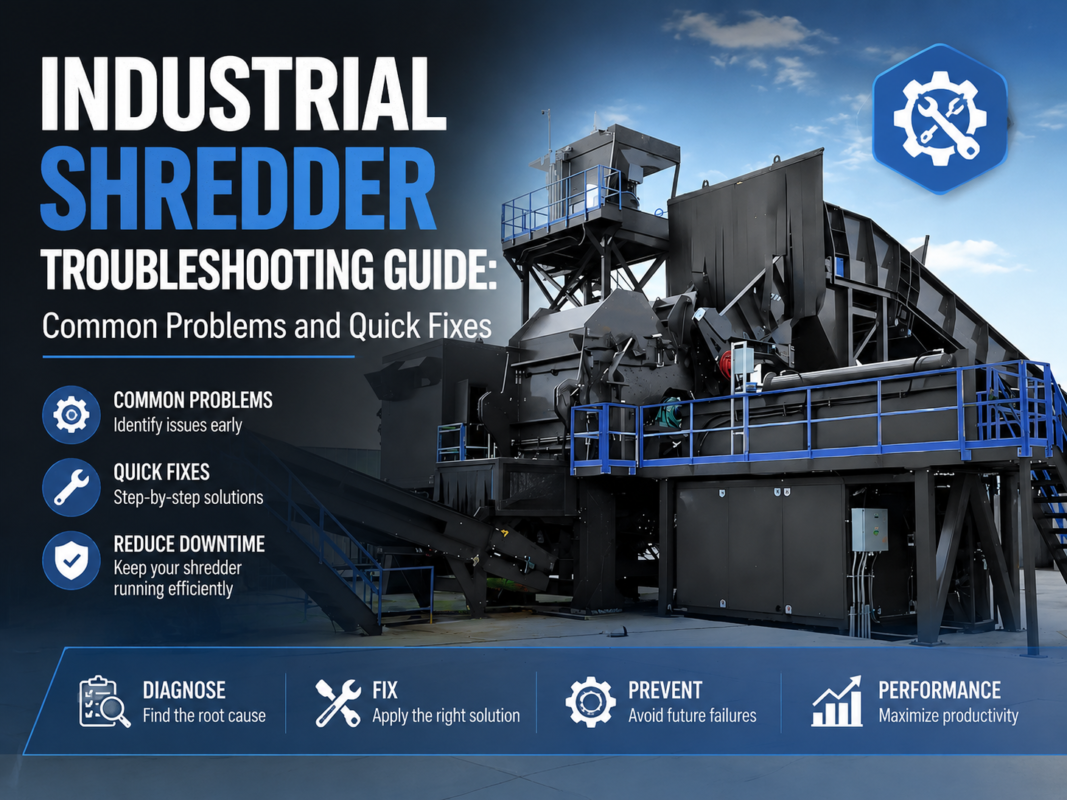
Industrial shredders serve as the frontline of the recycling process. They are designed to take bulky, complex, and often hazardous electronic assemblies and reduce them into manageable, uniform fragments. This size reduction is not merely for the sake of volume; it is a critical preparatory step that allows downstream sorting technologies—such as magnetic separators, eddy current separators, and optical sorters—to function effectively. Without the high-torque, heavy-duty performance of a HARSLE industrial shredder, the recovery of high-purity metals would be economically unfeasible and technically impossible at scale.
In this comprehensive guide, we will explore the intricate relationship between shredding technology and the circular economy. We will delve into the specific application scenarios, the technical requirements of the machinery, and the productivity benefits that make industrial shredders an indispensable asset for any modern metal recovery facility. By understanding the mechanics and strategic implementation of these machines, businesses can optimize their operations, increase their recovery rates, and contribute to a more sustainable industrial future.
Application Scenarios for E-Waste and Metal Recovery
The application of industrial shredders in the realm of e-waste is incredibly diverse, spanning across various sectors of the recycling industry. One of the primary scenarios is the processing of Consumer Electronics. This includes mobile phones, tablets, and personal computers. These items are characterized by their high density of precious metals but also their complex construction, involving glued components, batteries, and reinforced glass. Industrial shredders must be capable of breaking these bonds without damaging the valuable internal components to the point where they cannot be recovered.
Another critical application is the recycling of Large Domestic Appliances (LDA), often referred to as ‘white goods.’ Items like washing machines, refrigerators, and dishwashers contain significant amounts of steel, aluminum, and copper wiring. Shredding these large items requires massive machines with high-torque motors and robust cutting chambers. The shredder reduces these bulky items into small pieces, allowing the ferrous metals to be easily extracted using overhead magnets, while the non-ferrous metals are sorted later in the process.
Urban Mining is a growing field where industrial shredders play a starring role. Instead of traditional mining, companies ‘mine’ old infrastructure and discarded electronics for raw materials. This includes processing old telecommunications equipment, server racks, and industrial control systems. These materials often contain high-grade copper and specialized alloys that are in high demand for the manufacturing of new green technologies, such as electric vehicle components and renewable energy systems. Industrial shredders provide the necessary throughput to make urban mining a profitable venture.
Finally, the automotive recycling industry relies heavily on shredding technology. Modern vehicles are increasingly packed with electronic control units (ECUs), sensors, and complex wiring harnesses. When a vehicle reaches the end of its life, the shredder processes the automotive scrap, enabling the recovery of both the structural steel and the intricate electronic components. This multi-material recovery is essential for meeting modern recycling quotas and reducing the environmental footprint of the automotive sector.
Material and Process Requirements
Processing e-waste and scrap metal is significantly more demanding than shredding paper or plastic. The materials involved are often abrasive, hard, and structurally complex. Therefore, the Industrial Shredders Support E-Waste Metal Recovery efforts must meet stringent material and process requirements. First and foremost is the requirement for High Torque and Low Speed. Unlike granulators that spin at high speeds, industrial shredders for metal recovery operate at lower RPMs to deliver the massive torque needed to shear through steel casings and thick copper busbars.
The composition of the cutting blades is another critical factor. In e-waste processing, blades are subjected to extreme wear from hardened steel screws, ceramic components, and glass. HARSLE utilizes high-strength alloy steels, such as D2 or SKD-11, which undergo specialized heat treatment processes to achieve the perfect balance of hardness and toughness. This ensures that the blades can maintain a sharp cutting edge for longer periods, reducing downtime for maintenance and sharpening.
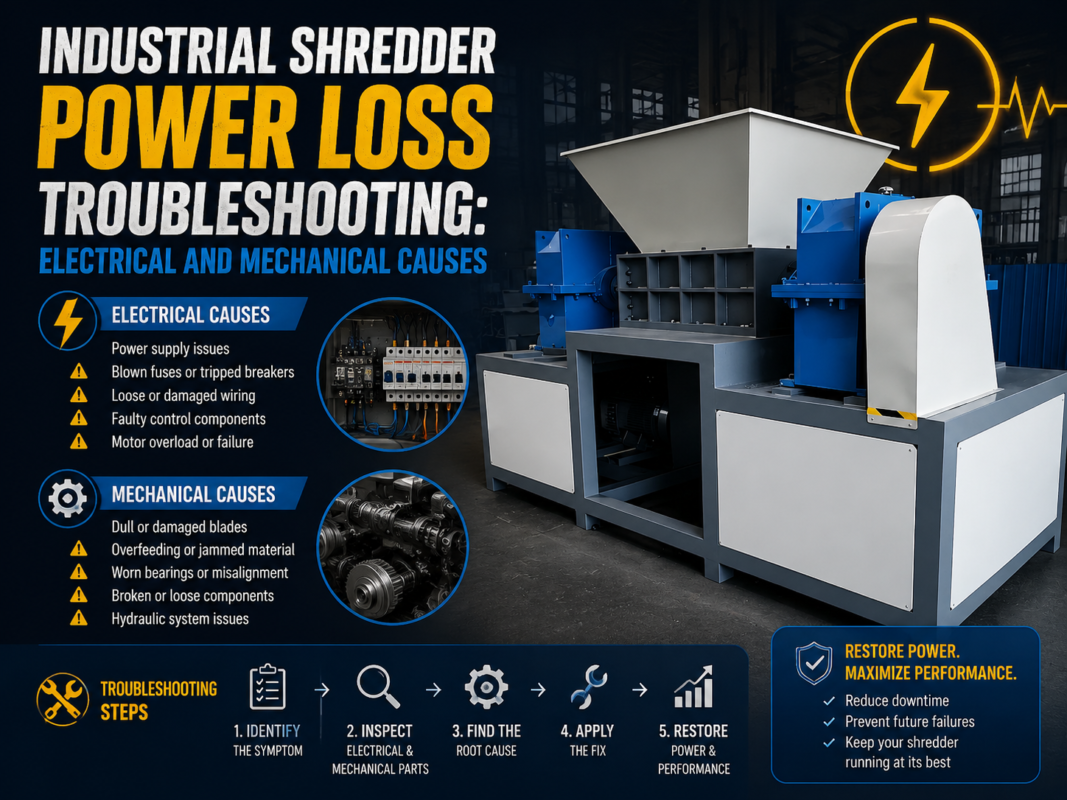
Process requirements also include the ability to handle ‘unshreddables.’ Occasionally, a solid piece of hardened steel or a heavy motor block may enter the shredder. The machine must be equipped with an intelligent control system that can detect a spike in motor load, automatically stop the shafts, and reverse them to clear the jam. This ‘auto-reverse’ function is vital for protecting the gearbox and motor from catastrophic failure. Furthermore, dust suppression and explosion protection are often required, especially when shredding items that may contain residual charges or flammable materials like lithium-ion batteries.
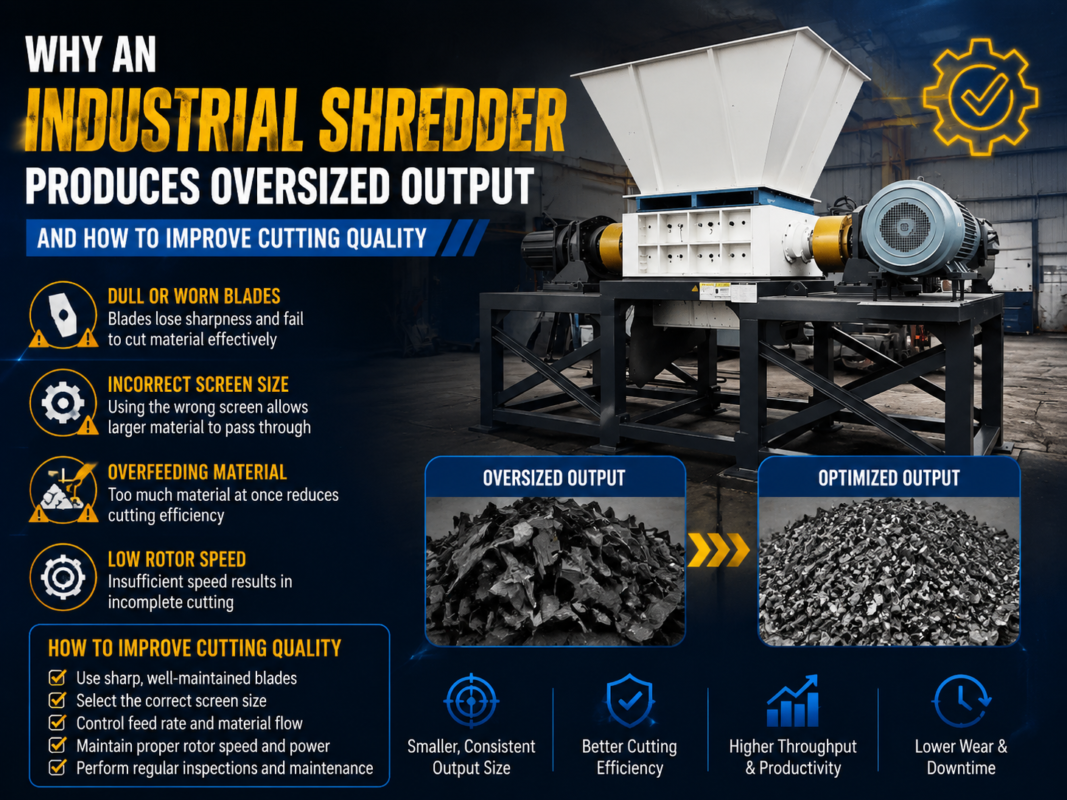
Uniformity of output is the final major process requirement. For downstream separation equipment to work, the shredded material must fall within a specific size range. If the pieces are too large, they may contain multiple bonded materials (e.g., plastic still attached to metal), which prevents clean separation. If they are too small, they may be lost in the dust collection system. Industrial shredders use screen-less or screen-integrated designs to ensure the output meets the precise specifications required for high-purity metal recovery.
Recommended Machine Configuration
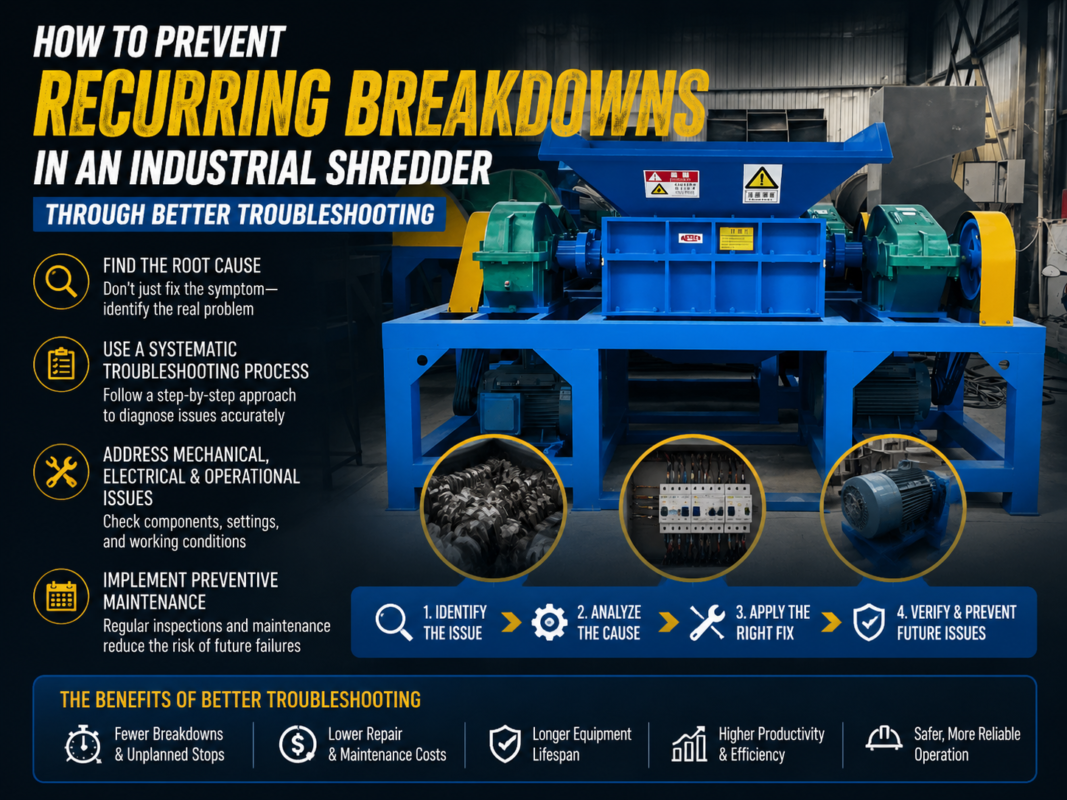
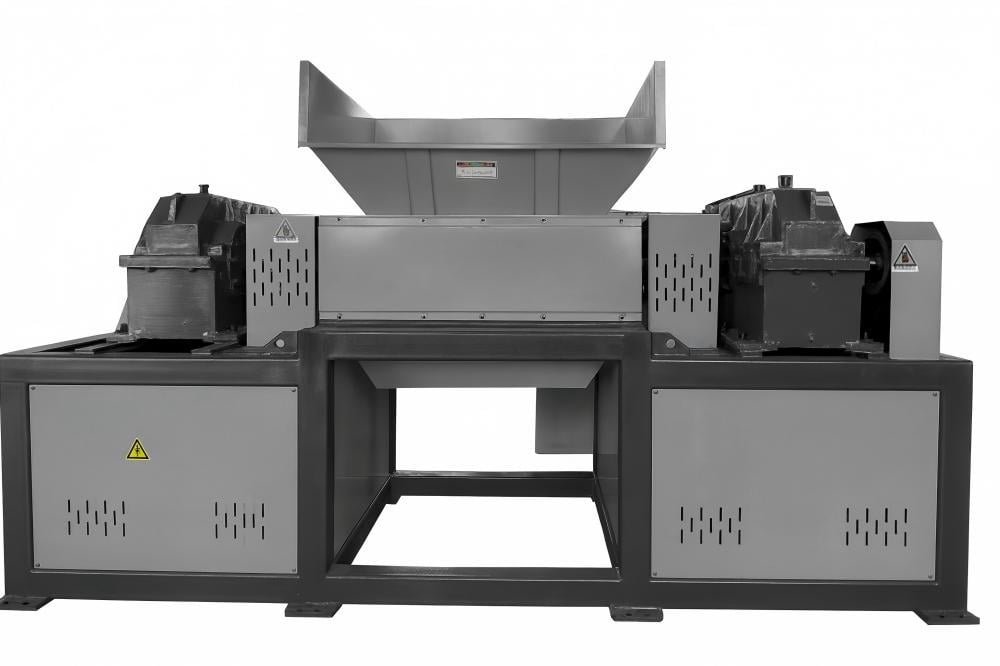
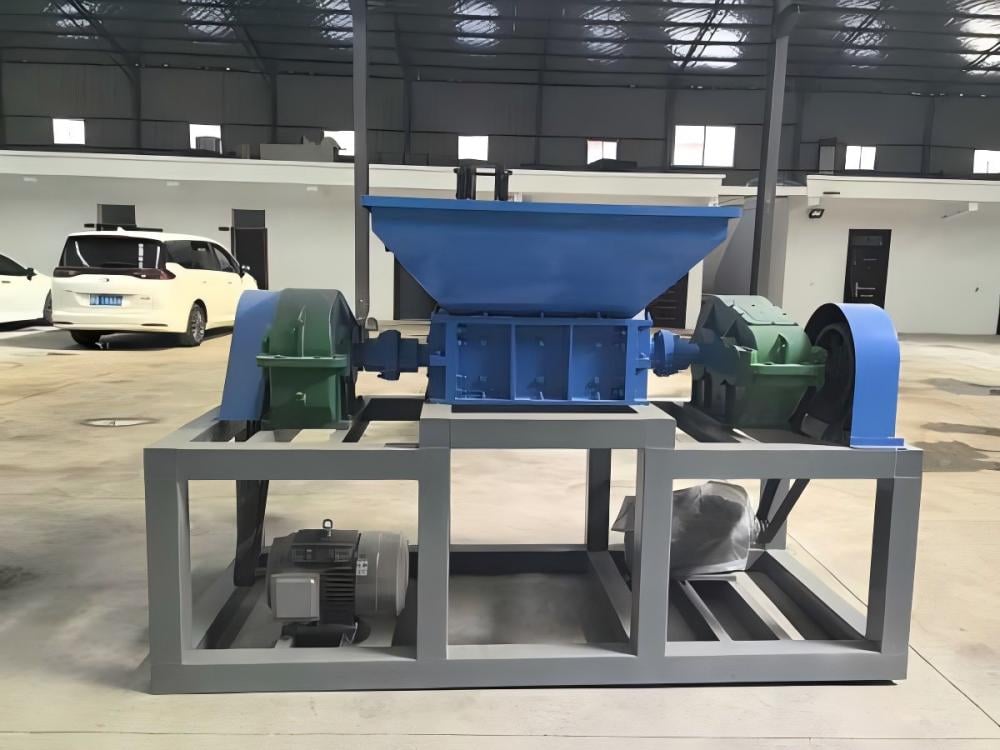
When selecting a machine for e-waste and metal recovery, the configuration must be tailored to the specific throughput and material type. For most e-waste applications, a Double-Shaft Shredder is the industry standard. This configuration features two counter-rotating shafts equipped with interlocking blades. This design is exceptionally efficient at ‘grabbing’ bulky items and pulling them through the cutting zone, making it ideal for items like computer towers, printers, and small appliances.
For facilities focusing on high-purity copper recovery from cables or circuit boards, a Four-Shaft Shredder might be recommended. The four-shaft design provides additional sizing control, as the material is recirculated within the cutting chamber until it is small enough to pass through a sizing screen located beneath the shafts. This results in a very consistent output size, which is perfect for feeding into a secondary granulator or a density separator.
Key Technical Specifications to Consider:
- Motor Power: For e-waste, motors typically range from 30kW to 160kW or more, depending on the required volume. Dual-motor setups provide balanced power to both shafts.
- Blade Thickness and Hook Profile: The number of ‘hooks’ on a blade and the thickness of the blade determine the final shred size. Thinner blades produce a finer shred but are more susceptible to damage from heavy contaminants.
- Gearbox Durability: The gearbox is the heart of the shredder. It must be a heavy-duty planetary or spur gearbox capable of handling constant shock loads.
- PLC Control System: A Siemens or Schneider PLC system allows for automated operation, real-time monitoring of motor currents, and integration with the rest of the recycling line.
The Workflow of an E-Waste Shredding Line
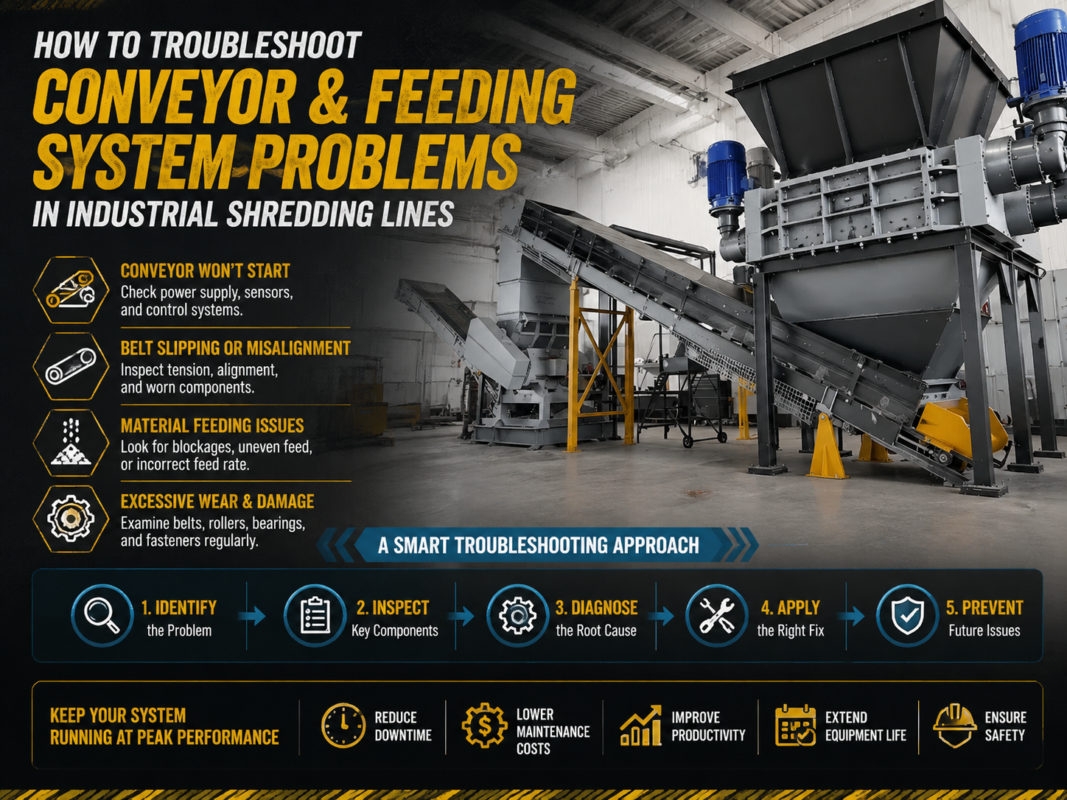
The process of recovering metal from e-waste is a multi-stage workflow where the industrial shredder acts as the primary processor. Understanding this workflow is essential for optimizing the Industrial Shredders Support E-Waste Metal Recovery system. The process typically begins with Primary Feeding. Material is loaded into a large hopper via a conveyor belt or a grapple loader. At this stage, large hazardous components like lead-acid batteries or large capacitors may be manually removed.
The second stage is Primary Shredding. The material enters the double-shaft shredder, where it is reduced to strips or chunks, typically 50mm to 100mm in size. This stage breaks the structural integrity of the electronics, separating plastic housings from internal metal frames and circuit boards. The shredded material then falls onto a discharge conveyor, which often features a Magnetic Overbelt. This magnet pulls out all ferrous metals (iron and steel), which are collected in a separate bin for direct sale to steel mills.
The remaining non-ferrous mixture (copper, aluminum, plastic, and PCBs) then moves to the Secondary Processing stage. This may involve a second, finer shredder or a heavy-duty granulator that reduces the material to less than 10mm. Once granulated, the material passes through an Eddy Current Separator. This machine uses a high-speed magnetic rotor to create induction currents in non-ferrous metals, literally ‘flicking’ the aluminum and copper away from the non-conductive plastics and glass.
The final stage involves Advanced Sorting. The remaining fraction, which contains the precious-metal-bearing circuit board fragments, is often processed using air tables (density separation) or optical sorters to achieve maximum purity. The result of this entire workflow is a series of high-value material streams: clean steel scrap, clean aluminum, clean copper, and a concentrated precious metal fraction ready for smelting. The industrial shredder is the engine that drives this entire sequence, ensuring the material is in the correct physical state for every subsequent step.
Productivity and Economic Benefits
Investing in a high-quality industrial shredder provides significant productivity and economic benefits for recycling operations. The most immediate benefit is Volume Reduction. E-waste is notoriously bulky and ‘airy.’ By shredding this material, facilities can reduce the volume by up to 80%, significantly lowering transportation and storage costs. This allows for more efficient logistics, as more material can be packed into a single truck or shipping container.
Furthermore, the Purity of Recovered Materials directly impacts the market value of the scrap. Smelters and refiners pay a premium for ‘clean’ scrap with minimal contamination. By using a HARSLE shredder to properly liberate metals from plastics and adhesives, recyclers can command higher prices for their output. In many cases, the difference in value between mixed e-waste scrap and separated, shredded metal can be as high as 40-60%, allowing for a rapid Return on Investment (ROI) on the machinery.
Labor savings are another critical factor. Manual dismantling of electronics is slow, dangerous, and increasingly expensive due to rising labor costs. An automated shredding line can process tons of material per hour with minimal human intervention, requiring only a few operators to monitor the system and manage the loading/unloading. This shift from manual to mechanical processing not only increases throughput but also improves workplace safety by keeping workers away from sharp edges and potentially toxic dust found in old electronics.
Finally, there are Environmental and Compliance Benefits. Many regions now have strict ‘Extended Producer Responsibility’ (EPR) laws that require electronics to be recycled properly. Industrial shredders enable facilities to meet these regulatory requirements by ensuring that almost 100% of the metal content is recovered and diverted from landfills. This enhances the company’s reputation as a green-certified recycler, opening doors to lucrative contracts with government agencies and large corporations looking for sustainable waste management partners.
Case Example: Large-Scale E-Waste Facility
To illustrate how industrial shredders support e-waste and metal recovery in a real-world setting, let’s look at a HARSLE client in Southeast Asia. This facility was previously relying on manual labor to dismantle approximately 500 tons of mixed e-waste per month. The process was slow, and they were losing a significant amount of copper and precious metals because they couldn’t efficiently process the small internal components and wiring.
The facility implemented a HARSLE 1200mm Double-Shaft Shredder integrated into a complete recovery line. The new system allowed them to process the same 500 tons in just a few days of operation, effectively increasing their capacity to over 2,000 tons per month. The shredder’s ability to reduce computer towers and server racks into 40mm fragments meant that their downstream eddy current separator could recover 98% of the aluminum and copper content, compared to the 65% they were achieving manually.
Within the first six months of operation, the facility reported a 35% increase in overall revenue due to the higher purity of their metal fractions and the increased volume of material processed. Additionally, the ‘auto-reverse’ feature of the HARSLE shredder saved the machine from damage when a heavy industrial motor was accidentally fed into the hopper, proving the value of the machine’s robust design and intelligent control systems. This case demonstrates that the right shredding technology is not just a purchase, but a strategic upgrade that transforms the profitability of a recycling business.
Frequently Asked Questions (FAQ)
1. How often do the blades need to be replaced in an e-waste shredder?
Blade life depends heavily on the abrasiveness of the material. For standard e-waste, blades can typically last between 1,000 and 3,000 hours before they need sharpening or replacement. HARSLE blades are designed to be hard-faced or rotated to extend their lifespan, and our modular design makes replacement quick and easy.
2. Can industrial shredders handle lithium-ion batteries?
While industrial shredders can physically crush batteries, shredding lithium-ion batteries requires specialized safety configurations, including water misting systems or inert gas (nitrogen) blankets to prevent fires and explosions. It is generally recommended to remove large batteries before primary shredding unless the system is specifically designed for battery recycling.
3. What is the difference between a single-shaft and a double-shaft shredder for metal?
Single-shaft shredders use a hydraulic pusher to press material against a high-speed rotor; they are excellent for achieving a precise, small output size. Double-shaft shredders use high-torque, counter-rotating blades to ‘bite’ and tear material; they are better for bulky, heavy items like metal casings and large electronics because they don’t require a pusher and have higher throughput for primary reduction.
4. How do I choose the right motor power for my facility?
The choice depends on your hourly throughput goals and the toughest material you plan to shred. For example, a 45kW motor might be sufficient for 1-2 tons per hour of light e-waste, whereas a 110kW+ motor is needed for processing 5+ tons per hour or handling heavy industrial scrap. HARSLE engineers can provide a custom calculation based on your specific material mix.
5. Does the shredder produce a lot of dust?
Yes, shredding electronics and metals inevitably produces dust and fines. HARSLE shredders are designed with integrated dust extraction ports that can be connected to a central baghouse or cyclone filter system to maintain a clean and safe working environment.
Conclusion and Call to Action
The transition to a circular economy depends on our ability to efficiently recover and reuse the finite resources found in our electronic waste. As we have explored, Industrial Shredders Support E-Waste Metal Recovery by providing the necessary force, precision, and reliability to transform complex waste into valuable raw materials. Whether you are looking to start a new recycling venture or upgrade an existing facility, the choice of shredding equipment will be the single most important factor in your operational success.
HARSLE is committed to providing the metal fabrication and recycling industries with world-class machinery that combines power with intelligence. Our industrial shredders are engineered to withstand the toughest environments while delivering the consistent performance required for high-purity metal recovery. Don’t let valuable metals go to waste—optimize your recovery process today.
Ready to enhance your e-waste recycling capabilities? Contact HARSLE today to speak with our technical experts. We can help you configure the perfect shredding solution tailored to your specific material requirements and throughput goals. Visit our website to view our full range of industrial shredders and request a custom quote. Let’s build a more sustainable and profitable future together.