Industrial Shredder Applications in Municipal Solid Waste Processing: A Comprehensive Guide

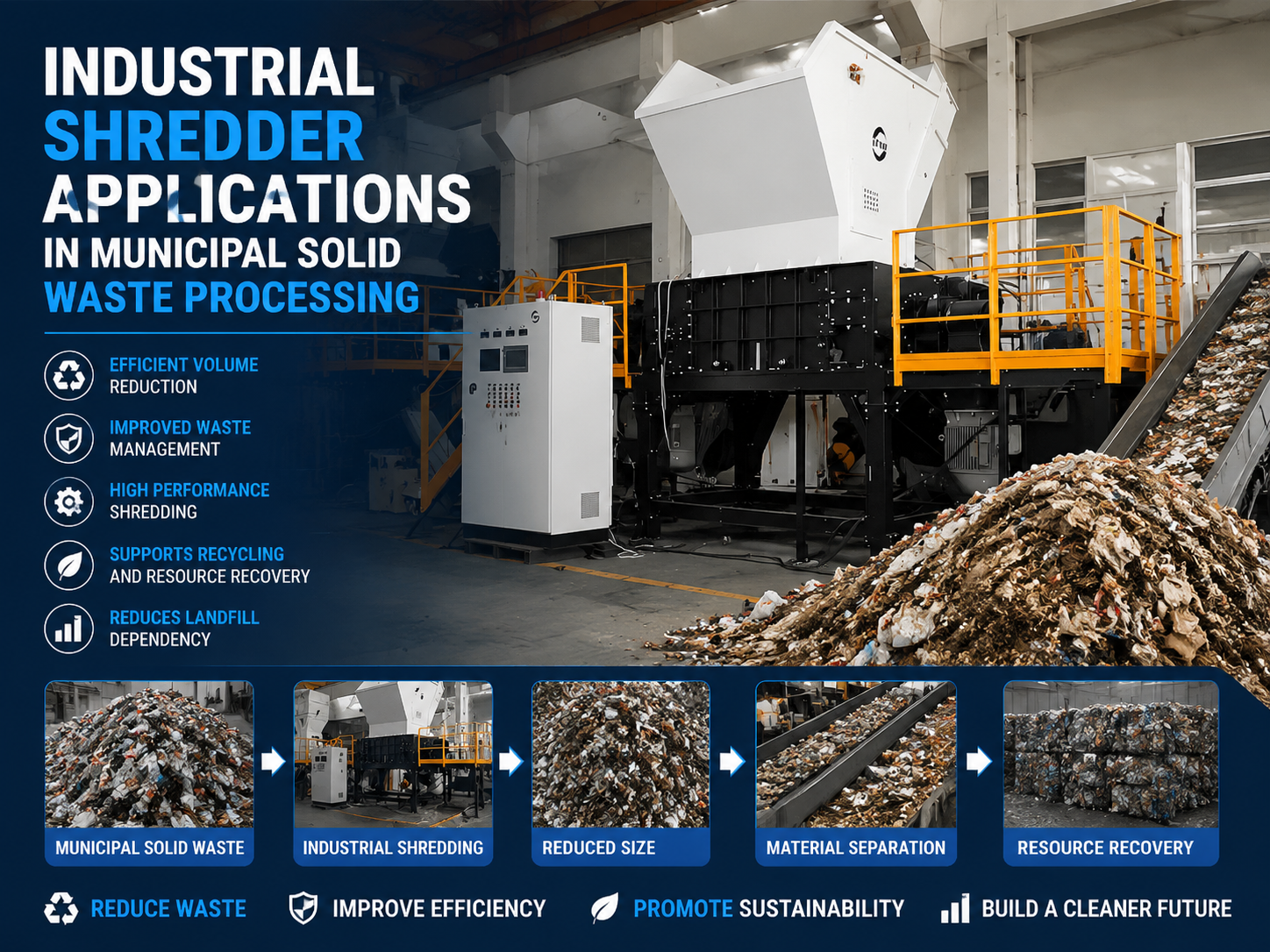
Introduction to Industrial Shredder Applications in Municipal Solid Waste Processing
In the modern era of urbanization, the management of Municipal Solid Waste (MSW) has evolved from a simple logistics challenge into a complex industrial process. As cities grow, the volume of waste generated—ranging from household plastics and organic matter to bulky furniture and electronic scrap—demands sophisticated processing technologies. Central to this evolution is the industrial shredder. Industrial Shredder Applications In Municipal Solid Waste Processing are no longer optional; they are the backbone of sustainable waste management, resource recovery, and energy production.
Industrial shredders serve as the primary stage in waste processing, transforming heterogeneous, bulky waste into a manageable, uniform material stream. This transformation is essential for downstream processes such as automated sorting, composting, and the production of Refuse-Derived Fuel (RDF). By reducing the size of waste components, shredders increase the surface area for chemical or biological reactions and allow for the efficient mechanical separation of valuable recyclables like metals and polymers. HARSLE, a leader in metal fabrication and industrial machinery, provides the robust equipment necessary to handle the high-torque demands of MSW processing.
The integration of high-performance shredding systems allows municipalities to significantly reduce the volume of waste destined for landfills, thereby extending the lifespan of existing sites and reducing the environmental footprint of urban centers. This article explores the intricate details of how industrial shredders are applied within the MSW sector, the technical requirements for these machines, and the immense productivity benefits they offer to modern waste management facilities.
Application Scenarios for MSW Shredding
The application of industrial shredders within municipal solid waste processing is diverse, spanning several critical stages of the waste lifecycle. One of the most prominent scenarios is in Material Recovery Facilities (MRFs). In these plants, shredders are used to break open waste bags and reduce the size of bulky items, ensuring that the conveyor belts and automated optical sorters can function without blockages. Without effective primary shredding, large items like carpets, mattresses, or large plastic containers could cripple the automated sorting lines.
Another vital scenario is the production of Refuse-Derived Fuel (RDF) and Solid Recovered Fuel (SRF). In this context, MSW is processed to remove non-combustible materials (like glass and metals) and then shredded to a specific, small particle size. This shredded material is then used as a high-calorific fuel source in cement kilns or power plants. The consistency of the shred size is paramount here, as it dictates the combustion efficiency and the stability of the energy output. Industrial shredders provide the precision needed to meet these stringent fuel specifications.
Furthermore, shredders are indispensable in organic waste processing and composting. Municipalities often collect large quantities of green waste and food scraps. Shredding these materials increases the surface area available for microbial activity, drastically accelerating the decomposition process. In landfill operations, shredders are used to process waste before it is compacted. Shredded waste packs much more densely than unshredded waste, which can increase the capacity of a landfill cell by up to 30-40%, representing a massive economic saving for the municipality.
Material and Process Requirements
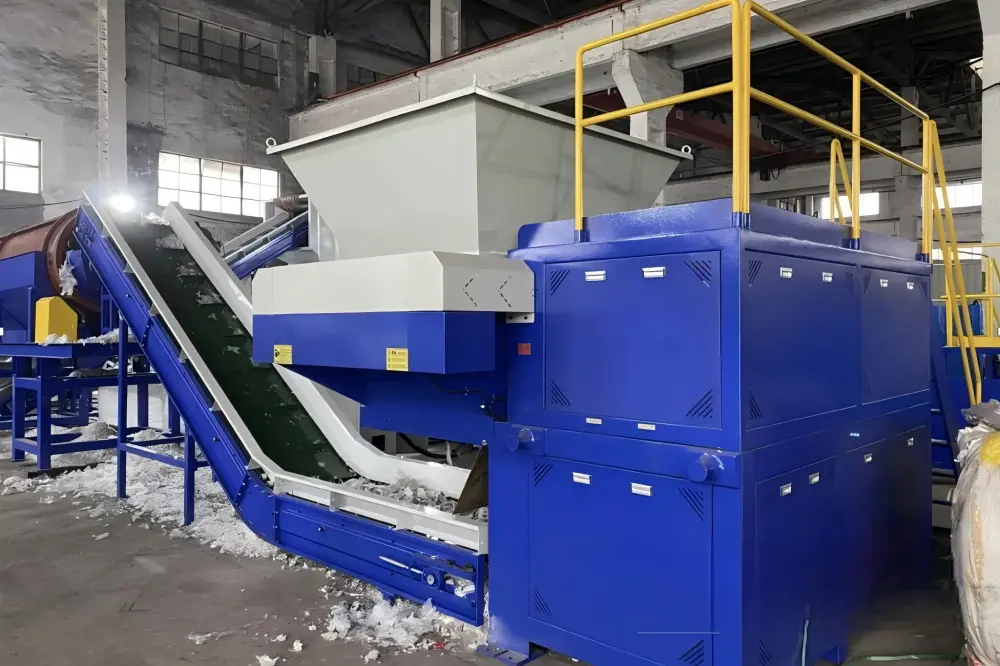
Processing municipal solid waste is one of the most demanding applications for any industrial machine due to the highly heterogeneous and unpredictable nature of the input material. MSW can contain anything from soft organic food waste to high-strength plastics, textiles, and even stray metal components like rebar or engine parts. Consequently, the industrial shredder must be designed with extreme durability and versatility in mind. The primary requirement is high torque at low speeds, which allows the machine to “bite” into tough materials without stalling or causing excessive wear on the blades.
The moisture content of MSW is another critical factor. Municipal waste often has a high moisture level, especially if organic waste is not separated at the source. This requires shredders to have sealed bearings and corrosion-resistant components to prevent premature failure. Additionally, the presence of abrasive materials such as sand, glass, and grit means that the cutting blades must be manufactured from high-grade alloy steels (such as D2 or SKD-11) and be easily replaceable or hard-faced to maintain their cutting edge over long periods of operation.
From a process perspective, the output size requirement varies significantly depending on the end goal. For simple volume reduction, a coarse shred (150mm-300mm) may suffice. However, for RDF production, a secondary shredding stage is often required to bring the particle size down to below 50mm. The shredder must be able to integrate with various screening technologies, such as trommel screens or vibratory feeders, to ensure that only material of the correct size moves forward in the process. This requires a control system that can communicate with the rest of the facility’s SCADA (Supervisory Control and Data Acquisition) system.
Recommended Machine Configuration
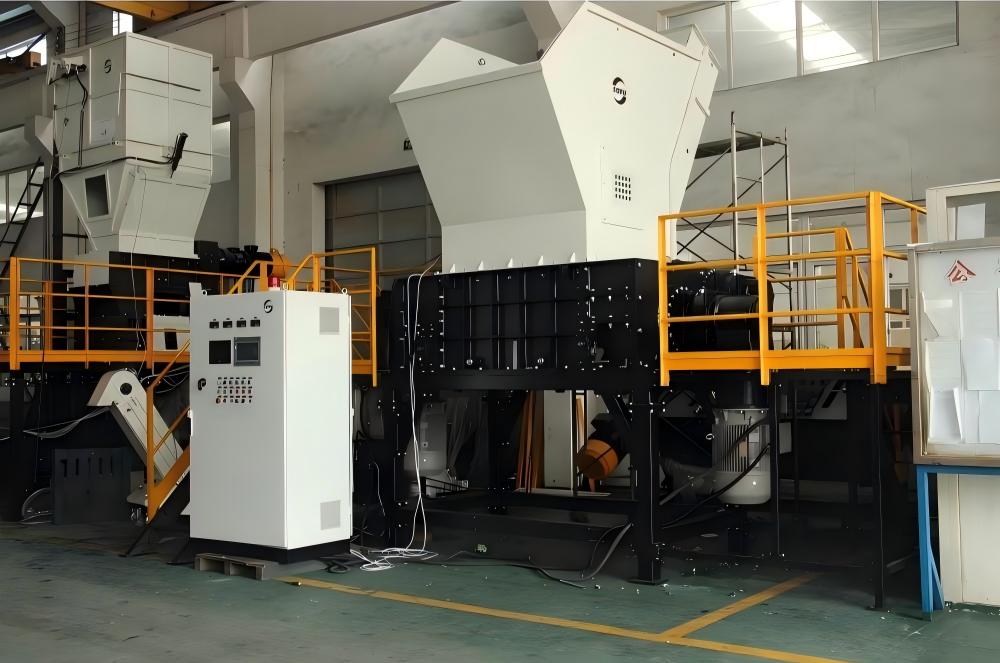
When selecting an industrial shredder for MSW processing, the configuration depends largely on the specific waste stream and the desired throughput. For most municipal applications, a Double-Shaft Shredder is the industry standard. These machines feature two counter-rotating shafts equipped with hooked blades that pull material into the center, where it is sheared and torn apart. This design is exceptionally good at handling bulky, mixed waste because it provides high throughput and can process almost anything that fits into the hopper.
For more specialized applications, such as processing large volumes of plastic containers or IBCs (Intermediate Bulk Containers) found in commercial municipal waste, a Four-Shaft Shredder may be recommended. The four-shaft design includes two primary cutting shafts and two secondary shafts that help recirculate oversized material back into the cutters until it passes through a sizing screen located beneath the shafts. This ensures a guaranteed maximum output size in a single pass, which is highly efficient for specialized recycling lines.
| Feature | Double-Shaft Shredder | Four-Shaft Shredder |
|---|---|---|
| Primary Use | Bulky waste, primary MSW reduction | Precise sizing, IBCs, electronic scrap |
| Torque Profile | Very High | High |
| Sizing Control | Variable (based on blade width) | Strict (via integrated screen) |
| Maintenance | Simpler blade access | More complex due to 4 shafts |
HARSLE shredders are typically configured with Siemens PLC controls and heavy-duty planetary gearboxes. These components allow for automatic reverse functionality; if the shredder encounters an unshreddable object (like a thick steel plate), the sensors detect the torque spike and automatically reverse the shafts to clear the jam, preventing damage to the motor and blades. This level of automation is crucial for 24/7 municipal operations where downtime is extremely costly.
Workflow in a Municipal Waste Shredding Facility
The workflow of an MSW processing plant begins at the tipping floor, where collection trucks discharge their loads. From here, the waste is usually moved by a front-end loader onto a heavy-duty slat conveyor or a vibrating feeder. This initial stage is critical for removing “obvious” contaminants—large pieces of metal or concrete that should not enter the shredder. Once the material reaches the shredder hopper, the primary shredding process begins.
Inside the shredder, the material is reduced to a fraction of its original size. As the shredded material exits the machine, it typically falls onto a discharge conveyor equipped with an over-belt magnetic separator. This magnet pulls out ferrous metals (iron and steel), which are then collected in a separate bin for sale as scrap. This not only generates revenue but also protects downstream equipment from metal damage. In many advanced facilities, an eddy current separator follows the magnet to recover non-ferrous metals like aluminum cans.
After metal recovery, the remaining material—mostly plastics, paper, and organics—may undergo further processing. If the goal is RDF production, the material is sent to a secondary shredder or a granulator to achieve a fine, uniform fluff. If the goal is landfilling, the shredded material is transported to the landfill site where it is spread and compacted. The uniform nature of shredded waste allows compactors to achieve much higher densities, significantly reducing the amount of daily cover (soil) required and maximizing the landfill’s volumetric efficiency.
Productivity and Environmental Benefits
The productivity benefits of implementing Industrial Shredder Applications In Municipal Solid Waste Processing are multifaceted. Firstly, there is the massive reduction in transportation costs. By shredding waste at a transfer station before hauling it to a distant landfill or processing plant, the number of truck trips can be reduced by more than 50%. This leads to lower fuel consumption, reduced labor costs, and a smaller carbon footprint for the municipality’s logistics operations.
Secondly, shredding enables the circular economy. By breaking down complex waste streams, shredders make it possible to recover materials that would otherwise be lost. For example, shredding electronic waste or mixed plastic bales allows for the separation of different polymer types and the extraction of precious metals. This transforms “waste” into a valuable commodity, providing a secondary revenue stream for the waste management facility. In the case of RDF, shredding turns non-recyclable waste into a coal substitute, reducing the reliance on fossil fuels in heavy industry.
From an environmental perspective, shredding plays a vital role in odor and pest control at landfills. Unshredded waste often contains pockets of air and trapped organic matter that lead to uneven decomposition and the production of methane and leachate. Shredded waste decomposes more uniformly and can be compacted more tightly, which reduces the infiltration of rainwater and the subsequent production of contaminated leachate. Furthermore, the lack of large voids in shredded waste makes the site less attractive to rodents and birds, improving the overall hygiene of the facility.
Case Example: Municipal RDF Plant Upgrade
A mid-sized city in Southeast Asia faced a crisis as its primary landfill reached 95% capacity. The local government decided to pivot toward a Waste-to-Energy strategy, requiring the production of high-quality RDF for a nearby cement factory. They integrated a HARSLE Double-Shaft Industrial Shredder into their existing sorting line. The challenge was the high percentage of wet organic waste mixed with tough plastic packaging and textiles.
The HARSLE shredder, configured with custom-designed 50mm wide blades and a high-torque hydraulic drive system, was able to process 20 tons of mixed MSW per hour. By implementing a two-stage shredding process—primary shredding for volume reduction and secondary shredding for RDF sizing—the facility was able to divert 70% of its incoming waste away from the landfill. The recovered ferrous metals paid for the machine’s electricity consumption, while the sale of RDF to the cement plant created a sustainable profit margin. Within 18 months, the municipality reported a 40% reduction in waste management operational costs and a significant extension of the landfill’s remaining lifespan.
Frequently Asked Questions (FAQ)
1. How long do the blades last in an MSW shredder?
Blade life depends heavily on the contamination level of the waste. In a typical MSW environment with some glass and sand, blades may need to be sharpened or rotated every 500-1,000 hours of operation. Using high-quality alloy steels like D2 and implementing a strict pre-sorting process to remove large metal objects can significantly extend blade life.
2. Can an industrial shredder handle large items like mattresses or tires?
Yes, heavy-duty double-shaft shredders are specifically designed to handle bulky items. Mattresses are particularly challenging due to the internal steel springs, but a high-torque shredder can tear the fabric and wood while shearing the springs into smaller pieces, which can then be removed by a magnet.
3. What is the energy consumption of these machines?
Energy consumption varies by motor size, typically ranging from 37kW to over 200kW for large-scale municipal units. However, modern PLC-controlled shredders optimize power usage by adjusting the torque and speed based on the load, ensuring that energy is not wasted during periods of light feeding.
4. Is it better to use an electric or hydraulic drive for MSW?
Electric drives are generally more energy-efficient and easier to maintain for consistent waste streams. Hydraulic drives offer superior shock absorption and are often preferred for extremely heavy-duty applications where frequent jams or very tough materials (like thick plastics or heavy metals) are expected.
Conclusion and CTA
Industrial Shredder Applications In Municipal Solid Waste Processing are the cornerstone of modern, efficient, and environmentally responsible waste management. By transforming bulky, unmanageable waste into a uniform and valuable resource, these machines enable municipalities to save money, recover materials, and contribute to a greener planet. Whether you are looking to produce RDF, increase landfill density, or improve recycling rates, choosing the right shredding technology is the most important decision you will make.
At HARSLE, we specialize in providing high-performance industrial shredders and metal fabrication machinery tailored to the rigors of the waste industry. Our engineering team is ready to help you configure a solution that meets your specific throughput and material requirements. Contact HARSLE today to learn more about our shredding solutions and how we can help you optimize your municipal waste processing workflow.