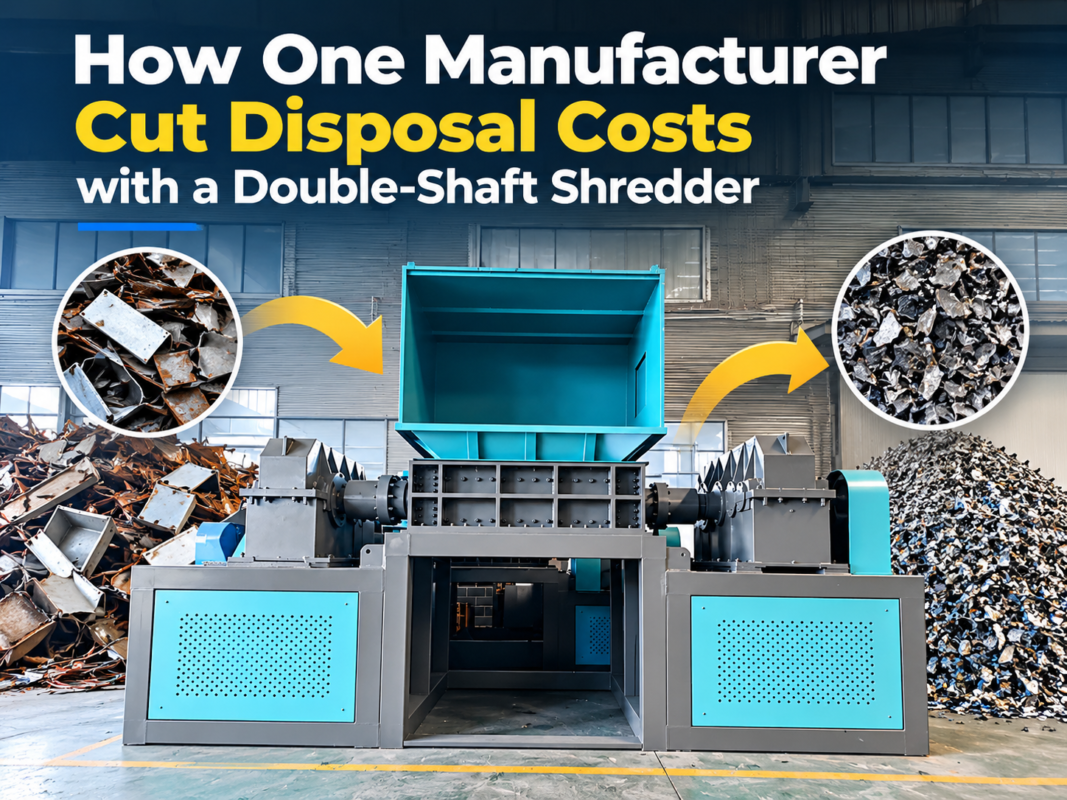
The Ultimate Briquetting Machine ROI Guide for Metal Fabrication Shops

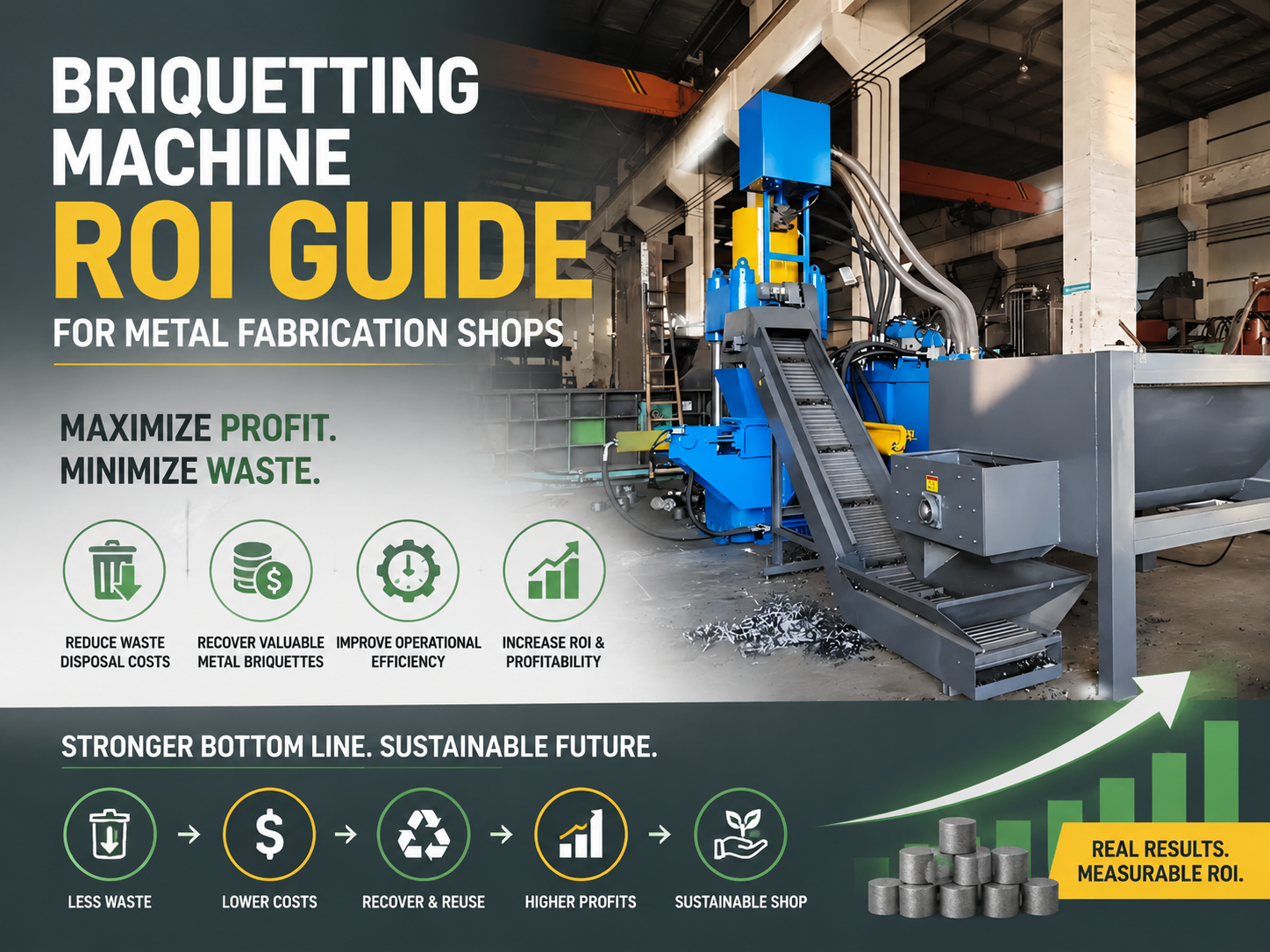
Introduction to Metal Briquetting in Modern Fabrication
In the competitive landscape of metal fabrication, efficiency is no longer just about how fast you can cut or weld; it is about how effectively you manage your waste streams. For many shops, metal chips, turnings, and swarf are seen as a nuisance—a messy byproduct that takes up valuable floor space and leaks expensive coolant. However, with the right technology, these waste products can be transformed into a significant revenue stream. This is where the Briquetting Machine ROI Metal Fabrication Shops guide becomes essential for business owners looking to optimize their bottom line.
A briquetting machine uses high hydraulic pressure to compress loose metal scrap into dense, uniform blocks known as briquettes. This process not only makes the scrap easier to handle but also significantly increases its market value. Smelters and recyclers prefer briquettes because they have a higher melting yield and lower oxidation rates compared to loose chips. Furthermore, the compression process squeezes out residual cutting fluids, allowing shops to reclaim and reuse expensive coolants. In this comprehensive guide, we will break down the financial and operational factors that determine the return on investment for these powerful machines.
Price Range Overview: What to Expect
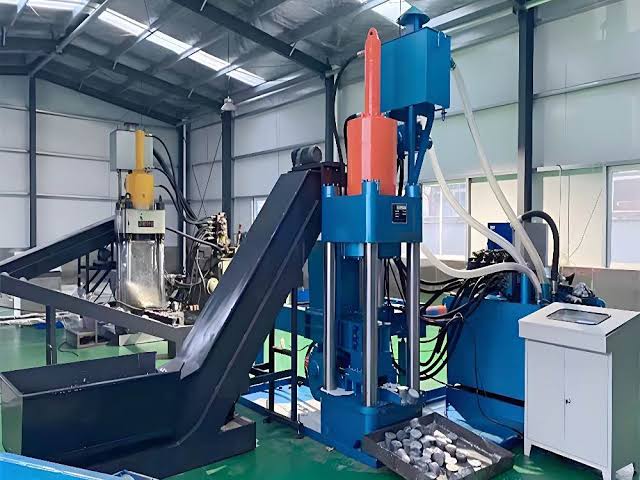
When considering the purchase of a briquetting machine, the initial capital expenditure is often the first hurdle. The price of these machines varies widely based on capacity, pressure ratings, and automation levels. For a small to medium-sized metal fabrication shop, entry-level machines typically start in the range of $15,000 to $30,000. These units are usually designed for lower volumes and may require more manual intervention for loading and unloading.
Mid-range industrial briquetting presses, which offer higher tonnage (around 200 to 400 tons of pressure) and better automation features, generally fall between $40,000 and $85,000. These machines are the workhorses of the industry, capable of handling continuous shifts and processing a variety of materials including steel, aluminum, and cast iron. They often include integrated cooling systems and basic PLC controls to ensure consistent briquette density.
At the high end of the spectrum, fully automated, high-capacity systems can exceed $150,000. These systems are often integrated directly into the shop’s chip conveyor lines, featuring advanced sensors, remote monitoring, and specialized filtration systems for coolant recovery. While the price tag is significant, the Briquetting Machine ROI Metal Fabrication Shops can achieve with these units is often faster due to the massive reduction in labor costs and the sheer volume of material processed.
Main Cost Drivers in Briquetting Technology
Understanding what drives the cost of a briquetting machine is crucial for making an informed investment. The primary driver is the hydraulic system. The quality of the pumps, valves, and cylinders determines the machine’s longevity and its ability to maintain high pressure over thousands of cycles. High-end components from brands like Rexroth or Vickers add to the initial cost but significantly reduce downtime and maintenance expenses over the machine’s life.
The second major cost driver is the frame and structural integrity. Compressing metal requires immense force; if the frame is not engineered with high-grade steel and precision welding, it will eventually warp or crack. HARSLE machines, for instance, utilize heavy-duty cast steel frames to ensure stability under maximum load. This structural robustness is a key factor in the machine’s resale value and long-term ROI.
Automation and control systems also play a significant role. A machine equipped with a Siemens or Schneider PLC and a user-friendly HMI (Human Machine Interface) will cost more than one with simple manual switches. However, automation allows for “lights-out” operation, where the machine can process scrap overnight without supervision, drastically increasing the throughput and the speed of your return on investment.
Configuration Impact: Tailoring the Machine to Your Shop
The configuration of your briquetting machine should be dictated by the type of scrap you produce and your shop’s layout. There are two primary configurations: vertical and horizontal. Vertical briquetting machines, like the Y83 series, are popular because they have a smaller footprint, making them ideal for shops where floor space is at a premium. They are particularly effective for processing heavy metal chips like steel and copper.
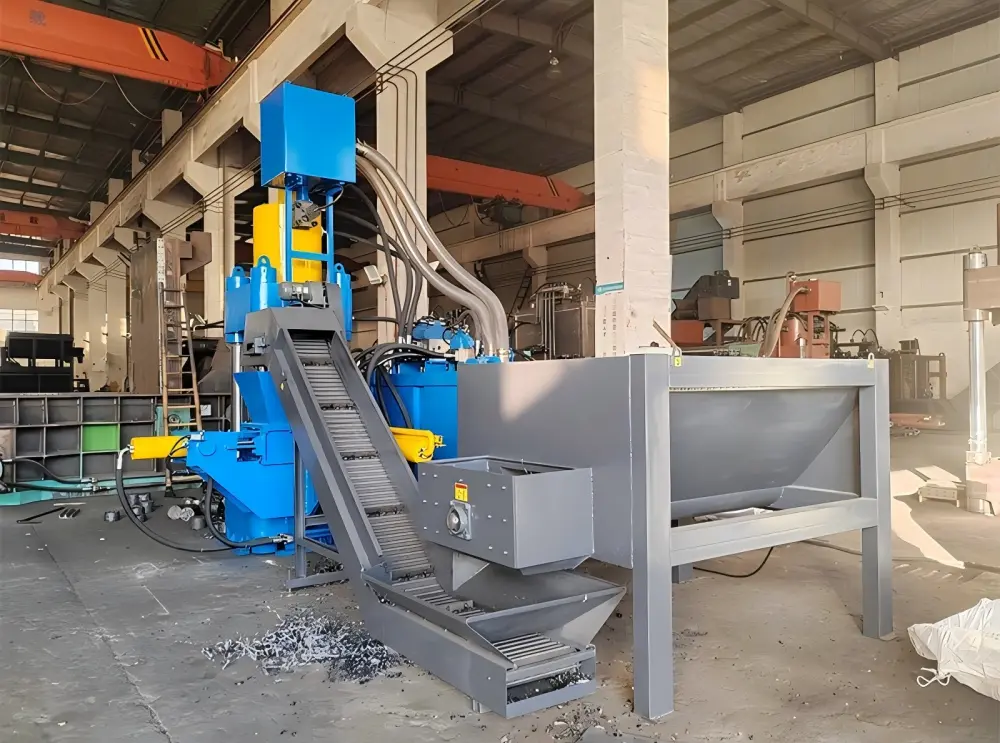
Horizontal machines are often preferred for high-volume applications or for materials that are difficult to feed, such as long, stringy turnings. These machines can be equipped with large hoppers and pre-compression chambers that chop and prepare the material before the final pressing stage. Choosing the wrong configuration can lead to bottlenecks in your production line, negatively impacting your ROI.
Another configuration factor is the cooling system. If your shop operates in a high-temperature environment or runs the machine 24/7, an integrated oil cooling system is essential. Overheated hydraulic oil loses its viscosity, leading to seal failure and reduced pressure. Investing in a robust cooling configuration ensures the machine operates at peak efficiency, maintaining the density of the briquettes and the value of your scrap.
Hidden Costs of Ownership
While the purchase price is the most visible cost, several “hidden” expenses must be factored into your ROI calculation. Installation and commissioning are the first of these. Depending on the size of the machine, you may need a crane for placement and a certified electrician to handle the high-voltage power requirements. Additionally, training your staff to operate and maintain the machine safely is a necessary investment in time and resources.
Maintenance and wear parts are ongoing costs. The dies and punches that form the briquettes are subject to extreme friction and pressure. Depending on the abrasiveness of the metal you are processing (e.g., cast iron is more abrasive than aluminum), these parts will need to be replaced periodically. A good rule of thumb is to budget 3-5% of the machine’s value annually for maintenance and spare parts.
Electricity consumption is another factor. High-tonnage hydraulic motors require significant power. However, modern machines often feature variable frequency drives (VFDs) that reduce power consumption during idle times. Finally, consider the cost of hydraulic oil. A large briquetting press can require hundreds of liters of specialized hydraulic fluid, which needs to be filtered and occasionally replaced to protect the system’s internal components.
Calculating ROI: A Practical Example
To understand the Briquetting Machine ROI Metal Fabrication Shops can expect, let’s look at a hypothetical scenario. Imagine a shop that produces 20 tons of aluminum chips per month. Currently, they sell loose chips to a recycler for $1,000 per ton. By briquetting the material, the recycler offers $1,300 per ton because the briquettes are easier to melt and transport.
- Increased Scrap Value: 20 tons x $300 increase = $6,000 per month.
- Coolant Recovery: Aluminum chips often hold 10% of their weight in coolant. Compressing 20 tons of chips can reclaim approximately 2,000 liters of coolant. At a cost of $2.00 per liter, that is a savings of $4,000 per month.
- Logistics Savings: Loose chips are bulky. Briquetting reduces the volume by up to 90%, meaning 10 truckloads of loose scrap become 1 truckload of briquettes. This can save $1,000 per month in transport fees.
In this scenario, the total monthly gain is $11,000. If the machine cost $66,000 (including installation), the payback period is only 6 months. Even with maintenance and power costs factored in, the ROI remains incredibly attractive, often occurring within the first year of operation.
Buying Advice for Metal Fabrication Shop Owners
When you are ready to purchase, do not just look at the lowest price. Look at the reputation of the manufacturer and the availability of technical support. A machine that breaks down and has no spare parts available in your region is a liability, not an asset. Ask for references and, if possible, visit a site where the machine is already in operation.
Evaluate the specific needs of your material. For example, if you work with titanium or magnesium, you need a machine with specific safety features to prevent fires. If you work with multiple types of metal, ensure the machine is easy to clean between batches to avoid cross-contamination of your scrap. HARSLE provides customized solutions that can be adjusted for different material densities and moisture contents, ensuring you get the highest possible quality briquette every time.
Finally, consider the future growth of your shop. It is often better to buy a machine with slightly more capacity than you currently need than to outgrow a smaller unit within two years. Look for modular designs that can be upgraded with conveyors or automatic bagging systems as your volume increases. This forward-thinking approach protects your investment and ensures long-term profitability.
Frequently Asked Questions (FAQ)
1. What types of metal can be briquetted?
Most industrial metals can be briquetted, including steel, cast iron, aluminum, copper, brass, bronze, and titanium. The density and ease of briquetting depend on the material’s hardness and the shape of the chips (e.g., fine powder vs. long turnings).
2. How much space does a briquetting machine require?
A standard vertical briquetting machine typically requires about 4 to 6 square meters of floor space, plus additional room for scrap storage and operator access. Horizontal units may require more length but can often be integrated into existing conveyor lines.
3. Can the machine handle wet chips?
Yes, one of the primary benefits of a briquetting machine is its ability to process wet chips. The high pressure squeezes out the coolant or cutting oil, which is then collected in a tray for filtration and reuse.
4. How often do the dies need to be replaced?
Die life varies based on the material. For non-abrasive metals like aluminum, dies can last for several thousand hours. For abrasive materials like cast iron or certain steel alloys, dies may need replacement every 500 to 1,000 hours of operation.
5. Is a briquetting machine difficult to operate?
Modern machines with PLC controls are very straightforward. Once the parameters are set for a specific material, the operator usually only needs to monitor the hopper levels and remove the finished briquettes. Many HARSLE machines feature one-button start/stop functionality.
6. Does briquetting help with environmental compliance?
Absolutely. By reclaiming coolants and reducing the volume of waste, shops can significantly lower their environmental footprint and reduce the risk of spills associated with storing and transporting oily loose chips.
7. What is the typical lifespan of a HARSLE briquetting machine?
With proper maintenance and regular oil changes, a high-quality industrial briquetting machine can last 10 to 15 years or more. Many machines are still in operation after decades of service with occasional hydraulic system overhauls.