New vs Used Briquetting Machine: Which One Should You Buy?

Introduction to the Briquetting Dilemma
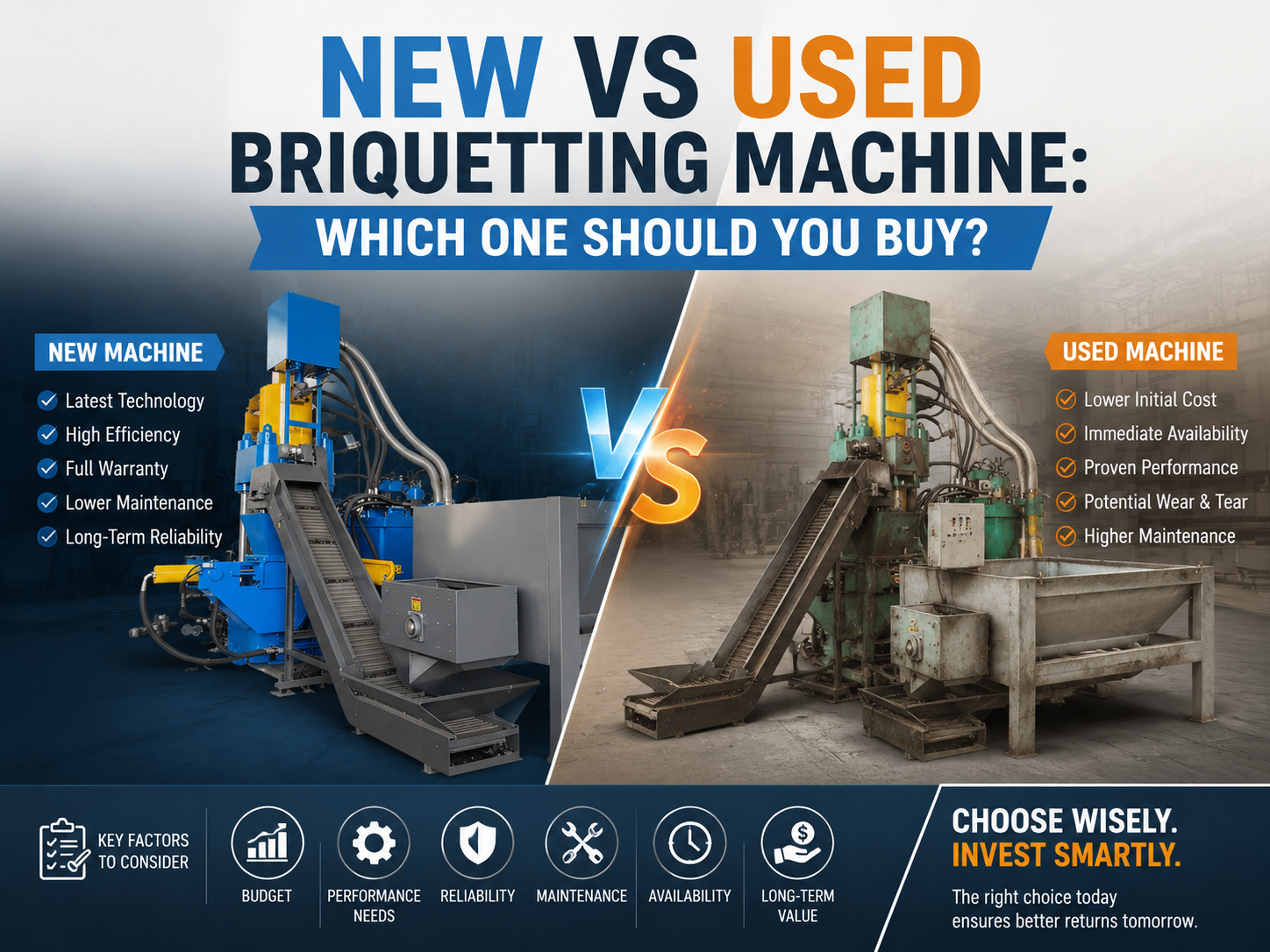
In the modern metal fabrication and recycling industry, the decision to invest in a briquetting machine is often driven by the need to optimize waste management, recover expensive coolants, and increase the market value of metal scrap. However, once the decision to implement briquetting technology is made, a critical question arises: New Vs Used Briquetting Machine: Which One Should You Buy? This choice is not merely about the initial purchase price; it involves a complex calculation of long-term operational efficiency, maintenance requirements, technological relevance, and Return on Investment (ROI).
Briquetting machines, particularly those designed for metal chips, turnings, and swarf, are heavy-duty industrial tools that operate under extreme hydraulic pressure. Whether you are processing aluminum, steel, cast iron, or copper, the machine’s ability to maintain consistent density and throughput is paramount. A new machine offers the latest in PLC automation and energy efficiency, while a used machine presents an opportunity for significant upfront capital savings. In this comprehensive guide, we will dissect every factor influencing this decision to help you determine the best path for your facility.
Price Range Overview: New vs. Used Market Dynamics
The price gap between new and used briquetting machines can be substantial, often ranging from 30% to 60% difference. For a high-quality, new industrial briquetting machine from a reputable manufacturer like HARSLE, prices typically start around $20,000 for entry-level models and can exceed $150,000 for high-capacity, fully automated systems. These prices reflect the cost of modern engineering, high-grade materials, and integrated safety features that meet current international standards.
On the secondary market, used briquetting machines can be found for as little as $8,000 to $40,000. However, these lower prices often come with caveats. A machine priced at the lower end of the spectrum is likely an older model with significant wear on the hydraulic cylinders and seals, or it may lack the sophisticated control systems required for modern lean manufacturing. Mid-range used machines, which are perhaps 5-7 years old, offer a balance of cost and functionality but still require a rigorous inspection of their mechanical integrity.
It is also important to consider the geographical location of the equipment. Shipping a 5-ton or 10-ton machine across borders can add thousands of dollars to the total cost. When buying new, manufacturers often have streamlined logistics and installation packages. When buying used from a private seller, the buyer typically bears the full burden of rigging, transport, and re-commissioning, which can quickly narrow the price gap between a used unit and a brand-new one.
Main Cost Drivers in Briquetting Technology
Understanding what drives the cost of a briquetting machine is essential for evaluating whether a used machine is a bargain or a liability. The primary cost driver is the Hydraulic System. The quality of the pumps, valves, and cylinders determines the machine’s pressing force and cycle time. New machines utilize high-efficiency variable displacement pumps that reduce energy consumption, whereas older used machines often feature fixed-displacement pumps that are louder and less efficient.
Another major factor is the Frame Construction and Material Quality. Briquetting involves immense internal stresses. High-end new machines use heavy-duty steel castings or thick welded plates that have been stress-relieved. Used machines may have developed micro-fractures in the frame over years of operation, which are difficult to detect without specialized equipment but can lead to catastrophic failure under load.
The Automation and Control System also plays a significant role. Modern machines are equipped with PLC (Programmable Logic Controller) systems and HMI (Human Machine Interface) touchscreens that allow for precise adjustment of briquette length, density, and cycle speed. Upgrading an old used machine to a modern PLC system can cost upwards of $5,000 to $10,000, a cost that must be factored into the initial purchase price of a used unit.
Configuration Impact: Vertical vs. Horizontal Designs
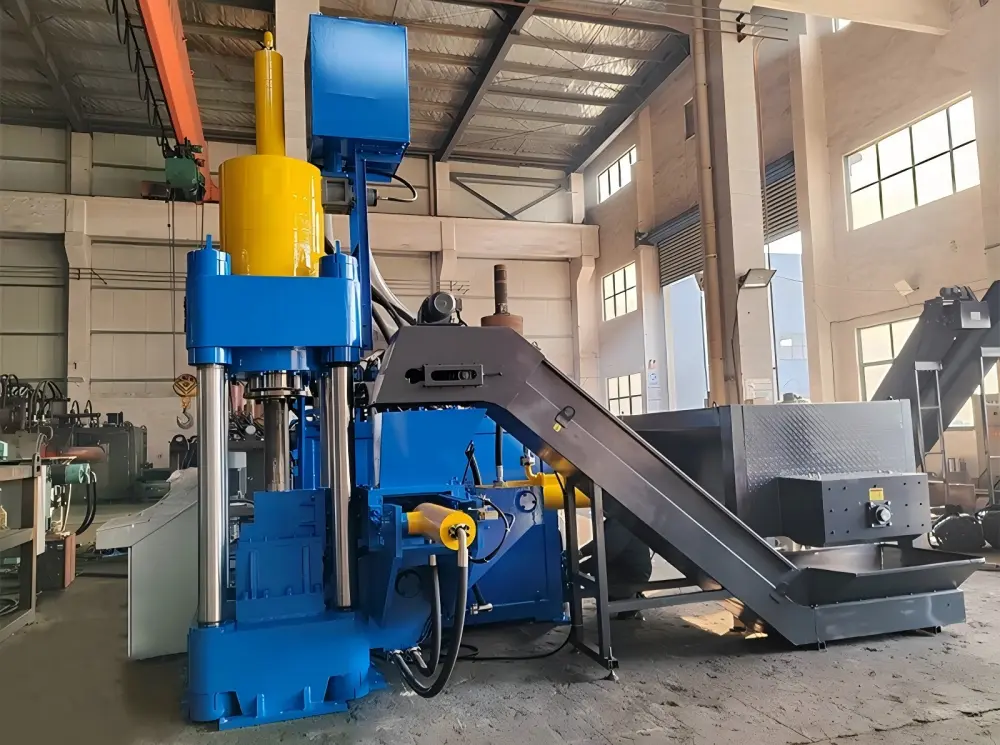
When choosing between new and used, you must also consider the configuration that best suits your floor space and material type. Vertical briquetting machines are often preferred for their compact footprint and ease of integration into existing production lines. They are particularly effective for materials that have a high liquid content (coolants/oils), as the vertical orientation allows for better drainage during the compression cycle.
Horizontal briquetting machines, on the other hand, are often used for high-volume applications where a continuous feed is required. They are generally larger and may require more maintenance on the sliding components. In the used market, you may find an abundance of older horizontal machines, but they often require more floor space than a modern, compact vertical unit. If your facility is tight on space, a new vertical machine might be the only viable option despite the higher price tag.
The configuration also affects the ease of maintenance. New machines are designed with “maintenance-friendly” layouts, providing easy access to filters, oil ports, and electrical panels. Older machines were often built with less regard for ergonomics, meaning that a simple seal change on a used machine could take twice as long as on a new one, leading to increased labor costs and longer downtime.
Hidden Costs of Buying Used Equipment
The “sticker price” of a used briquetting machine is rarely the final cost. One of the most significant hidden costs is Component Wear. Hydraulic seals have a finite lifespan; in a used machine, they may be near the end of their utility. Replacing a full set of seals and refurbishing a hydraulic cylinder can cost several thousand dollars. Furthermore, the hydraulic oil in a used machine may be contaminated, requiring a full system flush and hundreds of liters of new high-grade hydraulic fluid.
Tooling and Dies are another area of concern. The molds and punches that form the briquettes are subject to intense abrasion, especially when processing abrasive materials like cast iron or certain aluminum alloys. A used machine may come with worn-out tooling that produces low-density briquettes, which are less valuable to recyclers. Custom-making new dies for an obsolete machine model can be both expensive and time-consuming.
Finally, consider Energy Consumption and Compliance. Older motors are significantly less efficient than modern IE3 or IE4 rated motors found in new HARSLE machines. Over a year of multi-shift operation, the difference in electricity bills can amount to thousands of dollars. Additionally, older machines may not meet current OSHA or CE safety standards regarding guarding and emergency stop circuits, necessitating costly retrofits to ensure workplace safety and legal compliance.
ROI Calculation: The Real Value of Your Investment
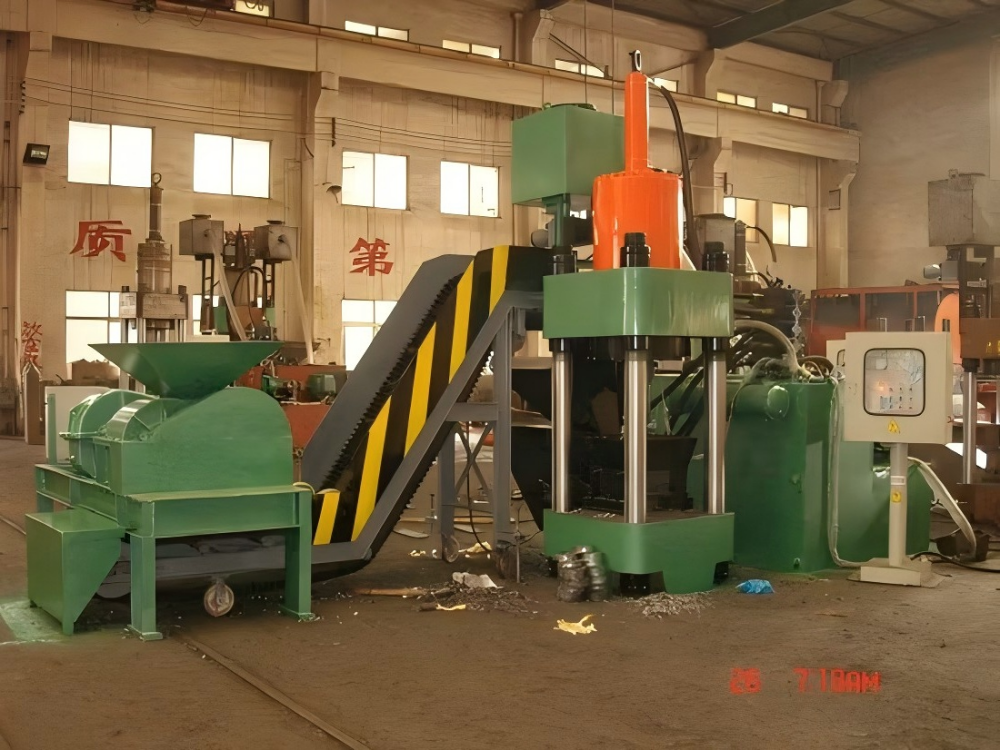
To answer “Which one should you buy?”, you must perform a detailed ROI (Return on Investment) calculation. The ROI of a briquetting machine is derived from three main sources: the increased value of briquetted scrap vs. loose chips, the recovery of expensive cutting fluids, and the reduction in storage and transport costs.
For example, loose aluminum chips might sell for 50% of the spot price of solid aluminum, while briquettes can fetch 75-80% because they have less surface area (meaning less oxidation during melting) and are easier for smelters to handle. If your shop produces 20 tons of aluminum scrap per month, the price difference could be $400 per ton, resulting in $8,000 of additional revenue per month. If a new machine costs $60,000, the payback period is less than 8 months.
With a used machine, the calculation changes. If the used machine costs $30,000 but operates at only 70% efficiency due to frequent breakdowns or slower cycle times, your monthly revenue gain might drop to $5,600. If you then add $10,000 in repair costs in the first year, the “cheaper” used machine might actually have a longer payback period than the new one. Furthermore, the reliability of a new machine allows for predictable production scheduling, whereas the unpredictability of a used machine can disrupt your entire waste management workflow.
Buying Advice: A Step-by-Step Selection Guide
If you are leaning towards a New Briquetting Machine, focus on the manufacturer’s reputation, warranty terms, and technical support. Ensure the machine is rated for your specific material. Ask for a test run using your own scrap material to verify the density and coolant recovery rates. Check the availability of spare parts and the lead time for technical assistance. A new machine is an investment in peace of mind and long-term operational stability.
If you decide to pursue a Used Briquetting Machine, follow this checklist: 1. Inspect the hydraulic oil for clarity and smell (a burnt smell indicates overheating). 2. Check the cylinder rods for scoring or leaks. 3. Cycle the machine under full load to check for unusual noises or vibrations. 4. Verify the PLC program is accessible and not locked by a previous owner. 5. Request maintenance logs. If the seller cannot provide them, assume the machine has been poorly maintained. 6. Factor in the cost of a professional rigger and electrician for the installation.
Ultimately, the choice depends on your volume and business model. For high-volume, 24/7 operations, a new machine is almost always the superior choice due to its reliability and efficiency. For a small job shop that only runs the machine a few hours a week, a well-inspected used machine might suffice, provided the buyer is prepared for the occasional repair and the lack of a manufacturer’s warranty.
Frequently Asked Questions (FAQ)
1. Can a used briquetting machine process different materials than it was originally designed for?
It is risky. Briquetting machines are calibrated for specific material densities and compression ratios. For example, a machine designed for light wood chips will not have the hydraulic force required for steel turnings. Always verify the original manufacturer’s specifications before attempting to switch materials on a used unit.
2. What is the average lifespan of a new industrial briquetting machine?
With proper maintenance, a high-quality new machine from a brand like HARSLE can last 15 to 20 years. This involves regular oil changes, seal replacements every few years, and ensuring the cooling system is functioning correctly to prevent hydraulic component degradation.
3. Is it possible to lease a new briquetting machine instead of buying used?
Yes, many manufacturers and industrial equipment dealers offer leasing or financing options. This allows businesses to get the benefits of a new, high-efficiency machine with a low monthly payment, often making it a more attractive financial option than a large cash outlay for a used machine.
4. How much space is required for a typical briquetting setup?
A standard vertical briquetting machine requires about 4 to 6 square meters of floor space, but you must also account for the feeding conveyor, the discharge bin, and room for maintenance access. Total footprint for a complete system usually ranges from 15 to 25 square meters.
5. Does briquetting really help in coolant recovery?
Absolutely. Depending on the material and the initial moisture content, a briquetting machine can recover up to 95% of the cutting fluids trapped in the chips. This fluid can then be filtered and reused, significantly reducing your shop’s chemical and disposal costs.
6. What are the most common failure points in used machines?
The most common failures are hydraulic pump wear, leaking cylinder seals, and electrical failures in the control cabinet due to vibration or dust accumulation. Additionally, the mechanical linkages in the feeding mechanism often wear out, leading to inconsistent briquette sizes.